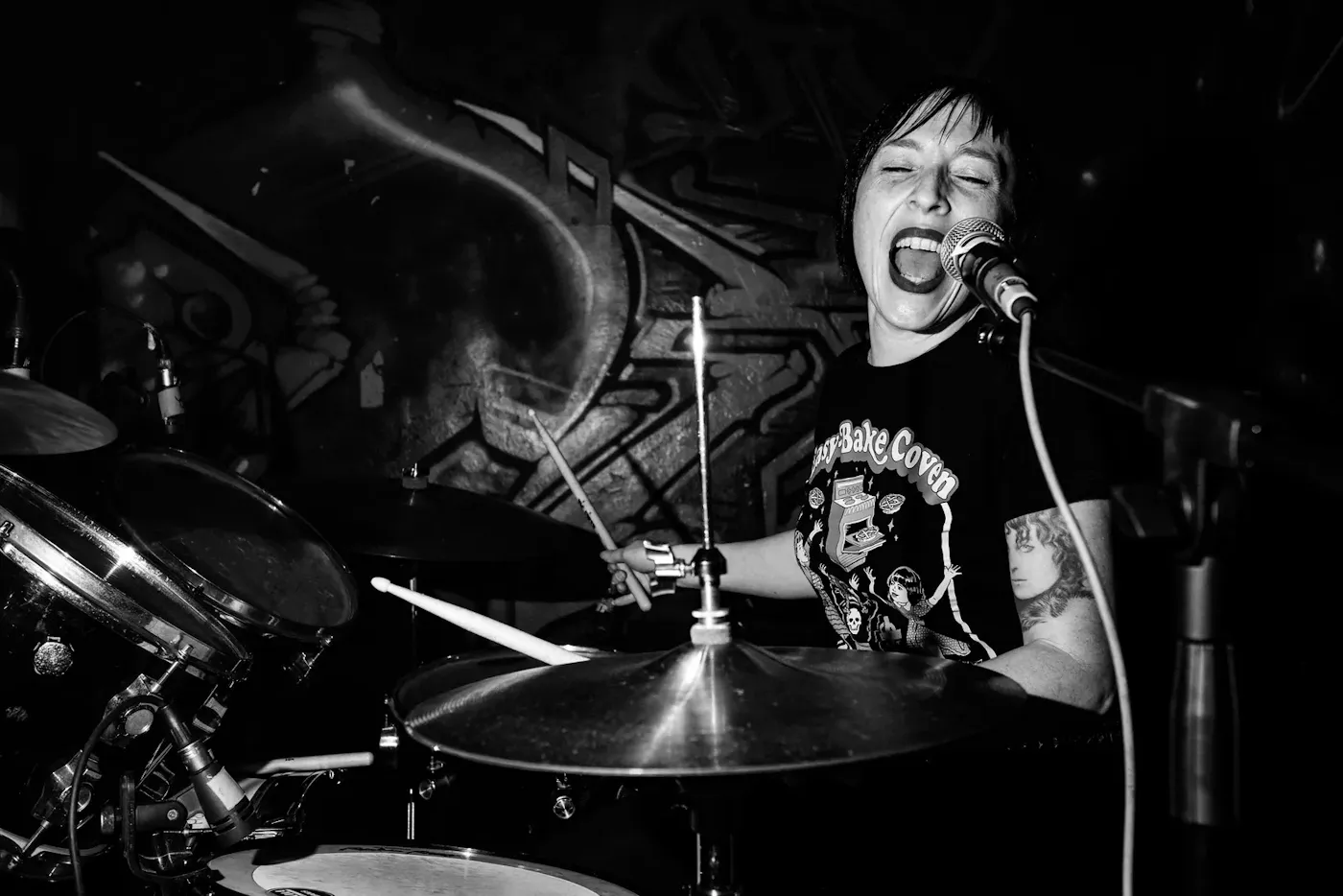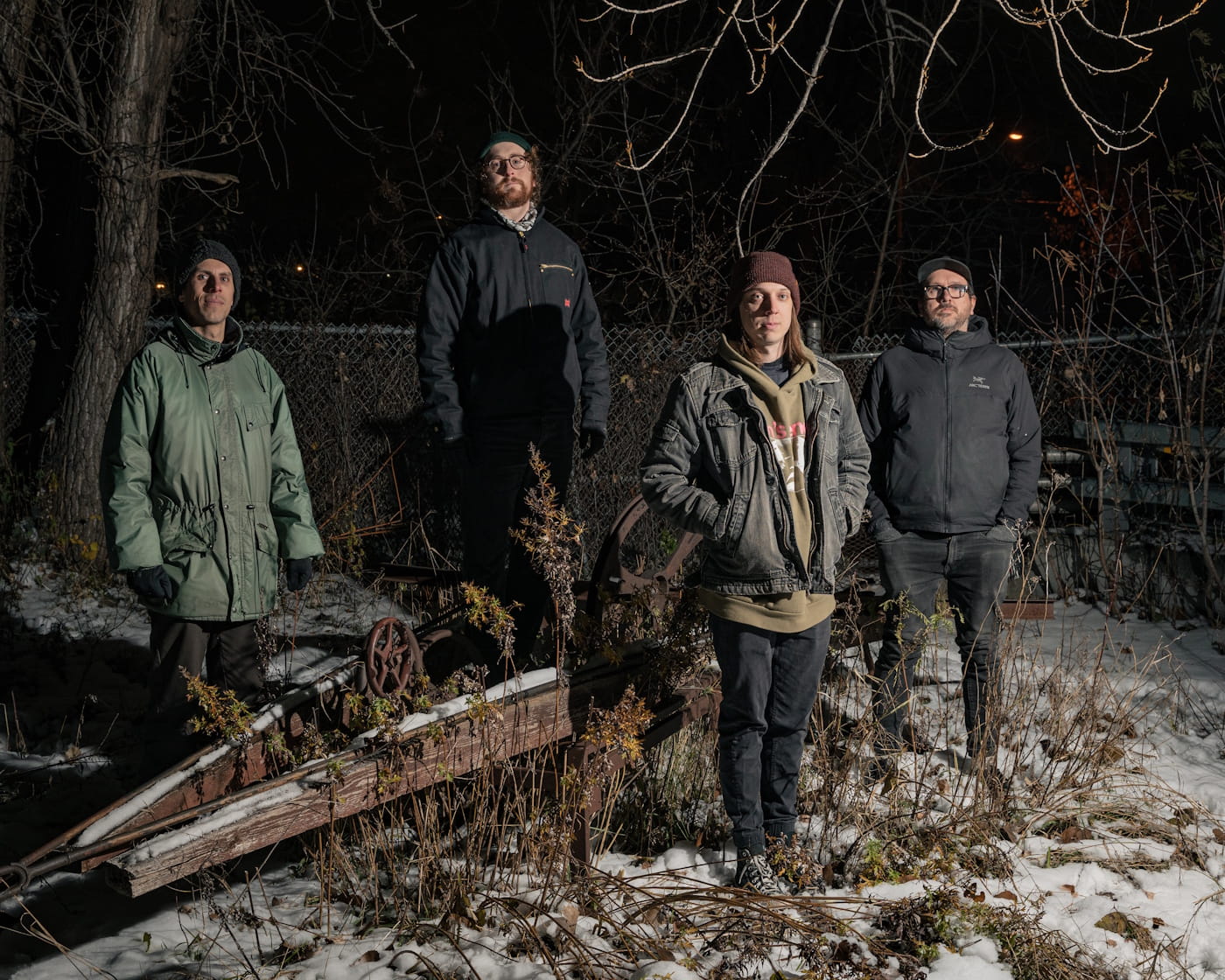


Jimy Dawn describes Shaun Day Woods as both a magician and a musician. The distinction matters when you’re trying to explain how Sixpoints ended up sounding like they do — a blend of post-industrial atmospheres, spoken word, and bluesy low-end that doesn’t fit anywhere cleanly.
Woods builds tracks without samples, layering synths and guitar into something that holds space for Dawn’s voice to move through. The duo’s debut album “Negative Space” treats silence and pauses as seriously as any riff, which makes sense once you hear how they talk about what they’re doing.
The history between them goes back to the early 2000s and a post-rock project called Sylo. They were living rurally in western Canada, aware that grunge was happening in Seattle but unbothered by it. “We weren’t skilled musicians who could rip it up,” Dawn says.
“Rather, we could play well enough to have the freedom to create our own music in whichever way we wanted.” They called what they were making “swamp music” — bluesy, crunchy guitars with melodic bass lines anchored to low E string territory. They loved Slint and Steve Albini’s Shellac, but mostly they were too focused on their own thing to care much about scenes or trends. Dawn didn’t write lyrics back then, so live shows meant improvising whatever storylines came to him in the moment. It forced him into presence, which he says any performer will tell you is necessary if you want to feel anything.
By 2019, Dawn was in Toronto writing poetry, with a couple of published books through Night Forest Press behind him. Woods was still on the West Coast making music. Dawn asked him to send tracks so he could add lyrics, and they liked what happened. They talked about doing shows again if Dawn ever moved back west. He did, in late 2023, and they’ve been gigging since. Dawn’s now playing bass alongside his vocals, and both of them create riffs as starting points. “It always starts with the riff,” he explains. The music keeps changing — there’s more lyrical structure now when he performs, but he still needs room to move during shows.
Wyświetl ten post na Instagramie
Their approach to genre isn’t really an approach at all. “Our genre defying music is just who we naturally are,” Dawn says. “We don’t want any constraints.” He references influences like Sleep and Om but says he’s careful about what he listens to. Woods has his own influences. What matters is following their musical interests without getting trapped by any specific genre expectations. “There’s a lot of cross pollination that’s happening,” Dawn notes. “Once that’s filtered through and processed, there’s the freedom to go wherever we want.”
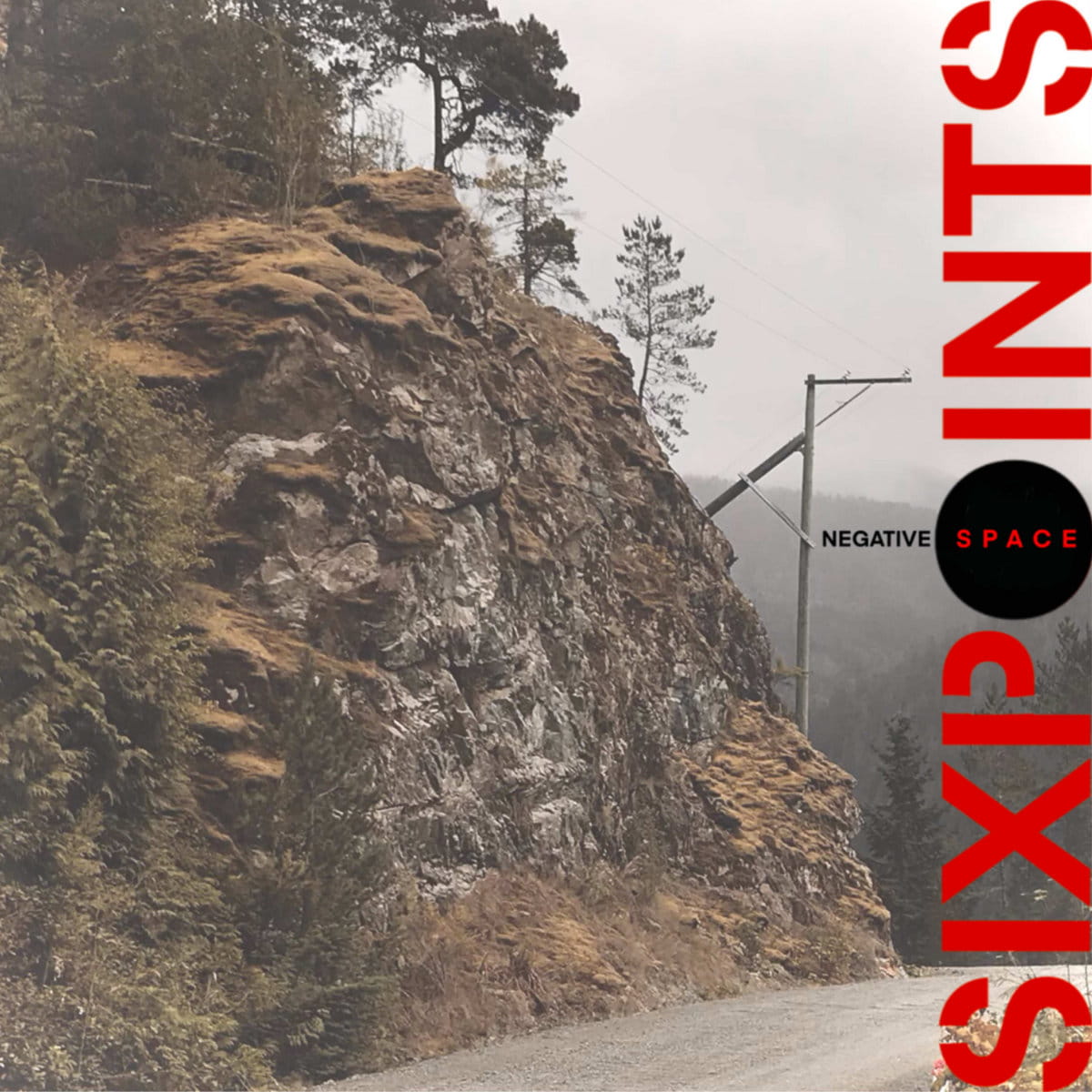
The album title carries multiple meanings. At its base, “Negative Space” refers to pauses and silences in music — the gaps that matter as much as any aggressive section. But Dawn also likes that some people hear “negative” and immediately think of someone being a downer. “It’s a New Agey concept in the worst way,” he says, “and our inane culture is always attempting to over-simplify people and their circumstances into specific categories.” He acknowledges he can be a downer, “but just like Leonard Cohen writes, a beautiful downer too.”
Wyświetl ten post na Instagramie
Live performances function differently than the record. Dawn describes them as rituals, sacred ones. He wants the lyrics clear and understood. “When I perform, my self disappears and then real communication can begin. All the self judgments and shame evaporate.” He’s explicit about art’s purpose: communication, singular goal, nothing else. He references Tolstoy writing “War and Peace” partly because he hated how art of his time focused on creating beautiful, pristine objects. “He railed against that and so should we,” Dawn says. “I can find all the beauty I want when I walk through the forest or go for a swim in the ocean or am hanging out with my wife and cats or whatever. Art should challenge and provocate otherwise it’s useless.”
When asked what the music pushes against, Dawn doesn’t soften his response. “Our culture is empty and dangerous. Everything and everyone is monetized; it’s more racist, violent and narcissistic than ever.” He says we need resisters, rebels, shit disturbers, more artists creating and connecting with each other. “Otherwise, the elite will suck you dry. They’re vampires and they only want one thing and that’s your blood.” He invokes the image of the Leviathan as a snake eating itself, a self-induced annihilation driven by people consumed by wealth. He references Terence McKenna’s concept of the Archaic Revival as something life-affirming worth creating. His stance on song structure follows the same logic: “I’m not going to limit myself to western music song structure (verse/chorus/verse) to create a vibe. Why be so reductive? Art and music should be creating new ways to access people. That’s connection.”
Place matters for this music. Dawn recently moved to a small island after decades in major urban centers — Vancouver, San Francisco, Toronto, Victoria. Woods wrote a book of proverbs called “Dancing and Digging” (Night Forest Press), and one of them reads: “Everyone without a habitat is homeless.”
Dawn says he wants to know every square meter of his micro region, including the mountain a kilometer away, all the trees and rocks and deer trails and wildlife. He’s a night person. After working on bass, he goes outside for a smoke and listens to a hooting owl nearby. “It’s evocative but it gets me high when I should be coming down so I can go to sleep,” he says. “I love that time of night when it feels like it’s just me and that owl. I’m feeling his sounds and rhythms and he’s feeling mine. Playing the bass is a good way to communicate to the animal and spirit world especially when everyone else is asleep.”
The duo entered the studio in 2025 to record two albums. “Negative Space” is out now, with “Lithium” scheduled for late February. The sound pulls from post-industrial textures, spoken word delivery, and that same bluesy foundation they built with Sylo two decades ago, but filtered through everything that’s happened since — the poetry, the years apart, the move back to the coast, the late-night exchanges with owls and whatever else moves in the dark when most people are sleeping.
Keep in the loop!
🗞️ Subscribe on Substack
🔔 Join our Messenger and WhatsApp
📜 Get daily news via Instagram Stories
Your support keeps us alive!
IDIOTEQ is a one-man DIY operation, tirelessly spotlighting the local cultural scenes and independent bands that often go unreported elsewhere. Born in the early 00s, this platform has been committed to giving hard-working artists the high-quality coverage they truly deserve.
No ads, no distractions—just pure inspiration and a genuine focus on independent artists and their stories.
Please consider helping keep IDIOTEQ ad-free and in tune with the indie scene by donating today.
DONATE via PayPal 𝗈𝗋 SUPPORT via Patreon
100% of the funds collected go toward maintaining and improving this magazine. Every contribution, however big or small, is super valuable.
Your support ensures that we continue to be a place where you can discover, learn, and get inspired, without any advertising noise. Thank you for being a part of this musical journey.