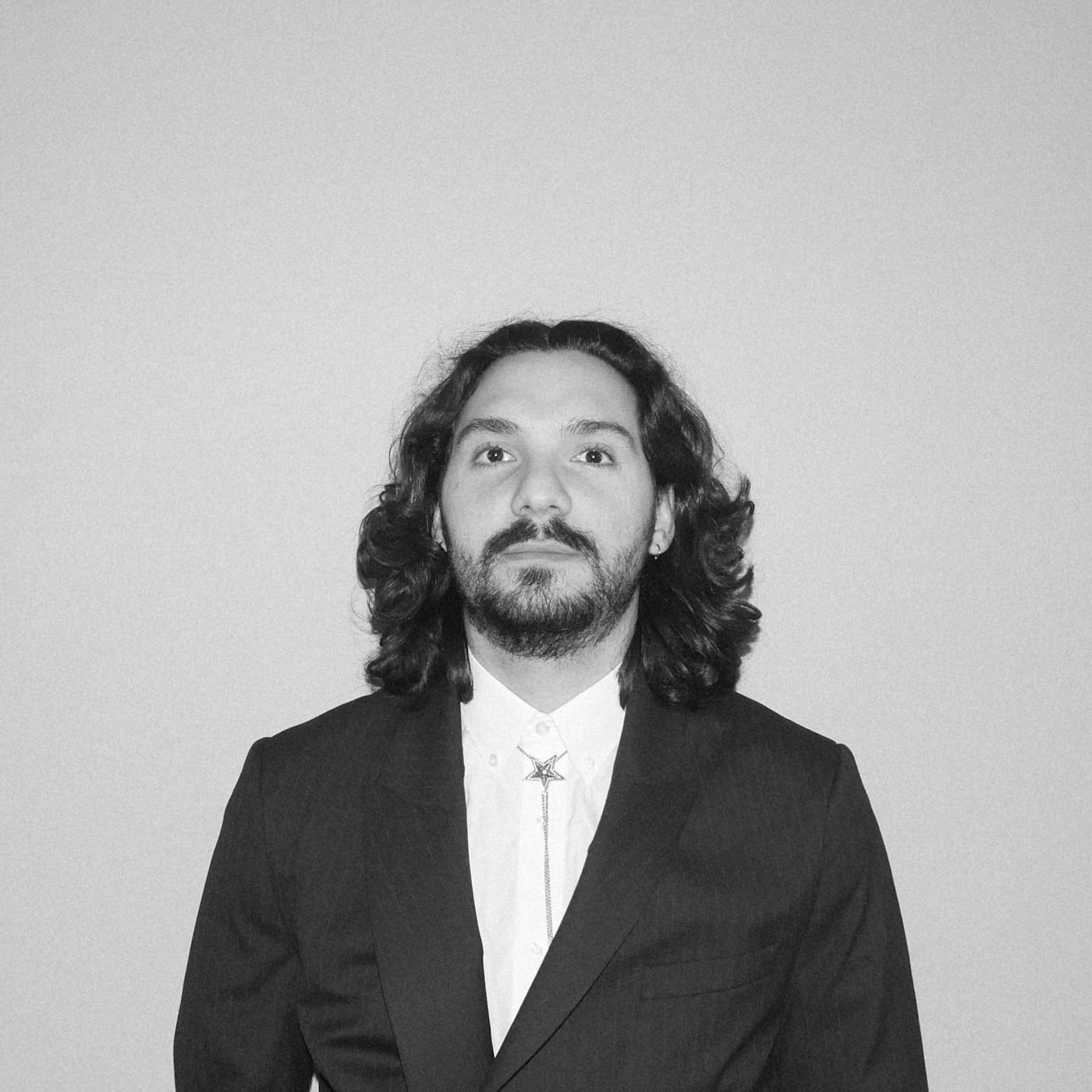


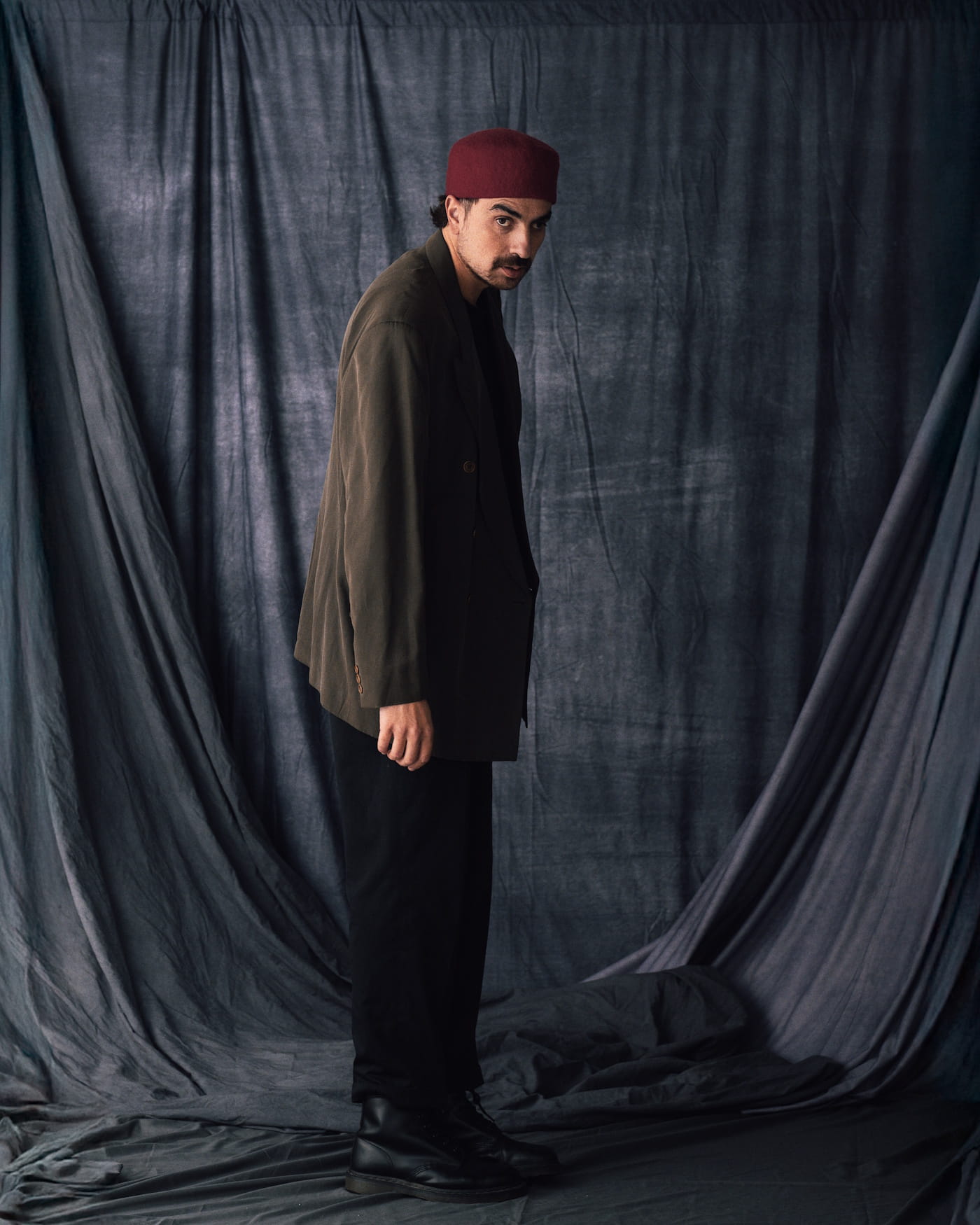
Taroug’s new album starts before he was born, with a story his mother carried into the family before he turned it into music.
“A long time ago my mother decided to hop on her motorbike for a road trip from the north to the south of Tunisia,” he says. “That’s where she met my father and that’s the foundation of my new album ‘Chott’.”
Out March 27 through Denovali, the record is the German-Tunisian producer and composer’s most personal release to date, built from family voices, blurred childhood memories, and the particular weight of place.
The album takes its name from Chott El Djerid, the vast salt lake in southern Tunisia, close to his family’s hometown. Across ten tracks, Taroug pulls traditional instruments into contemporary electronic forms, letting older sounds and newer processes sit together without forcing them into a tidy idea. The record moves between minimal melancholy and heavier, bass-led pressure, but the thread running through it is personal history: who he is, what remains accessible, and what slips out of reach.
“This record is way more than a collection of songs,” he says. “Each track holds a memory, a feeling or an image. It became a form of self-therapy and a way to look inward. A search for who I am, who I want to be, what I’ve missed.”
That search circles back to childhood visits to family in the south of Tunisia, to cousins and aunts, and to memories that no longer arrive cleanly. “These memories are blurred in my mind,” he says. “I don’t always know what really happened and what was simply made bigger through the eyes of a child. Some of it, I will probably never fully understand.”
That uncertainty sits near the center of “1995,” a piece Taroug describes plainly: “1995 is a collection of childhood memories.” He wrote it as a way of preserving time that keeps receding, “to write the diary entries I never wrote,” as he puts it, and to hold onto those moments before memory lets them go completely.
The track reflects on his early childhood in Tunisia; in his own account now, it feels less like recollection in the usual sense than an attempt to keep fragments from disappearing.
Some of those fragments stay attached to people. “Najet” does. “Some of these memories are tied to specific people. Najet is one of them. Or maybe it’s more the feeling I had around her when I was a kid.” The track is one of the record’s heavier pieces, almost overwhelming in places, which makes sense once Taroug describes the person behind it. He remembers her voice first: loud, direct, immediately present. “A strong woman,” he says. “You could feel it immediately when she entered a room.”
There is a child’s perspective in the way he tells it. He remembers watching her shut his father down with a few words, not fully understanding what was happening, only the force of it. “As a child, I didn’t really understand it, I just remember being impressed and a bit scared at the same time.” While shaping the track, he realized it had started to carry that same force. “While I was building the track, it started to feel like her. Not in a literal way, but in its energy.”
That was when he asked Najet to record something for him on her phone. She sent back a voice note that stayed in the piece. Taroug says he still does not fully understand every word in it; the dialect is strong, some phrases remain just beyond him. What he does know is that it is an old lullaby, one his grandmother used to sing to his father. That detail matters not just as family archive, but because it shows what “Chott” keeps returning to: the feeling of being near your own history while parts of it remain partially obscured. For Taroug, one of the most meaningful parts of making the album was keeping Najet’s voice inside the music, then playing it for relatives and watching them smile.
The title track reaches that same place from another direction. Taroug had the instrumental for “Chott” sitting unfinished for some time, already convinced it sounded like the salt lake itself: its scale, its stillness, the distant flicker of heat. He knew the place was in the track, but not yet what would complete it. The answer arrived on a balcony in Germany under a full moon. Looking at the moon’s surface, he was reminded of the shape of the lake. “In that moment the moon felt like a reflection of it,” he says. “It felt like something was being mirrored back to me.”
He wrote a short poem to keep hold of that feeling, and of the fear that once the moon disappeared, the image would go with it. Then he asked his father to help translate the poem into Arabic. They worked through it line by line, and in the end his father recorded it in his own voice. That recording became the missing piece. The title track features the original Arabic poem spoken by Taroug’s father, and the moment clearly carries more than arrangement or texture. “Hearing him speak the words, in his voice, gave the track a different kind of depth,” he says. In his description of the record as a whole, he goes even further: “My roots, or at least the part of them I can access, are something I carry through my father.”
Family memory is not the album’s only source of movement. Taroug also works with the physical sensation of southern Tunisia, the heat and the way landscape presses itself into recollection. Notes around the album point to “Saraab” and “Sirocco” as pieces built around that sensory pull. “Nakhla” takes a more concrete route, using recordings of palm trees transformed into repetitive motion, evoking the palm plantations of southern Tunisia where organic and mechanical sound meet and blur into each other.
Another early entry point into the album was “Cicada,” the first single announced from the record. It carries dense textures, rolling rhythms, and a more futuristic line of sight than the autobiographical summaries might suggest. Taroug also made an abstract visual companion for the track from thousands of satellite textures and Google Earth-derived images, drawing on the microscopic geometry of cicada wings and the patterned surfaces of cultivated land. The result was described as a flickering meditation on transformation, systems, and decay, which fits the album’s broader interest in repetition, erosion, and things half-preserved.
The visual side of “Chott” extends that same logic. For the artwork, Taroug again worked with architect and designer Marie Brosius, assembling an experimental collage from old personal photographs of Tunisia. It is a straightforward choice for a record so occupied with heritage and remembrance, though the word “collage” matters here more than nostalgia does; these are not memories presented as a fixed whole, but gathered, cut, and placed back together.
Taken together, the mystic, often eerie tracks sketch a record concerned less with neat return than with partial contact: family stories, inherited voices, old photos, a lullaby not fully understood, a lake seen again in the face of the moon.
For Taroug, that was enough to turn “Chott” into something more exact than a concept record and more difficult than simple autobiography. It holds memory as memory tends to exist anyway — incomplete, physical, and still close enough to speak.
🔔 IDIOTEQ is ad-free, independent, and runs on one person’s time. If you want it to stay that way: DONATE via PayPal 𝗈𝗋 SUPPORT via Patreon.
Stay connected via Newsletter · Instagram · Facebook · X (Twitter) · Threads · Bluesky · Messenger · WhatsApp.