

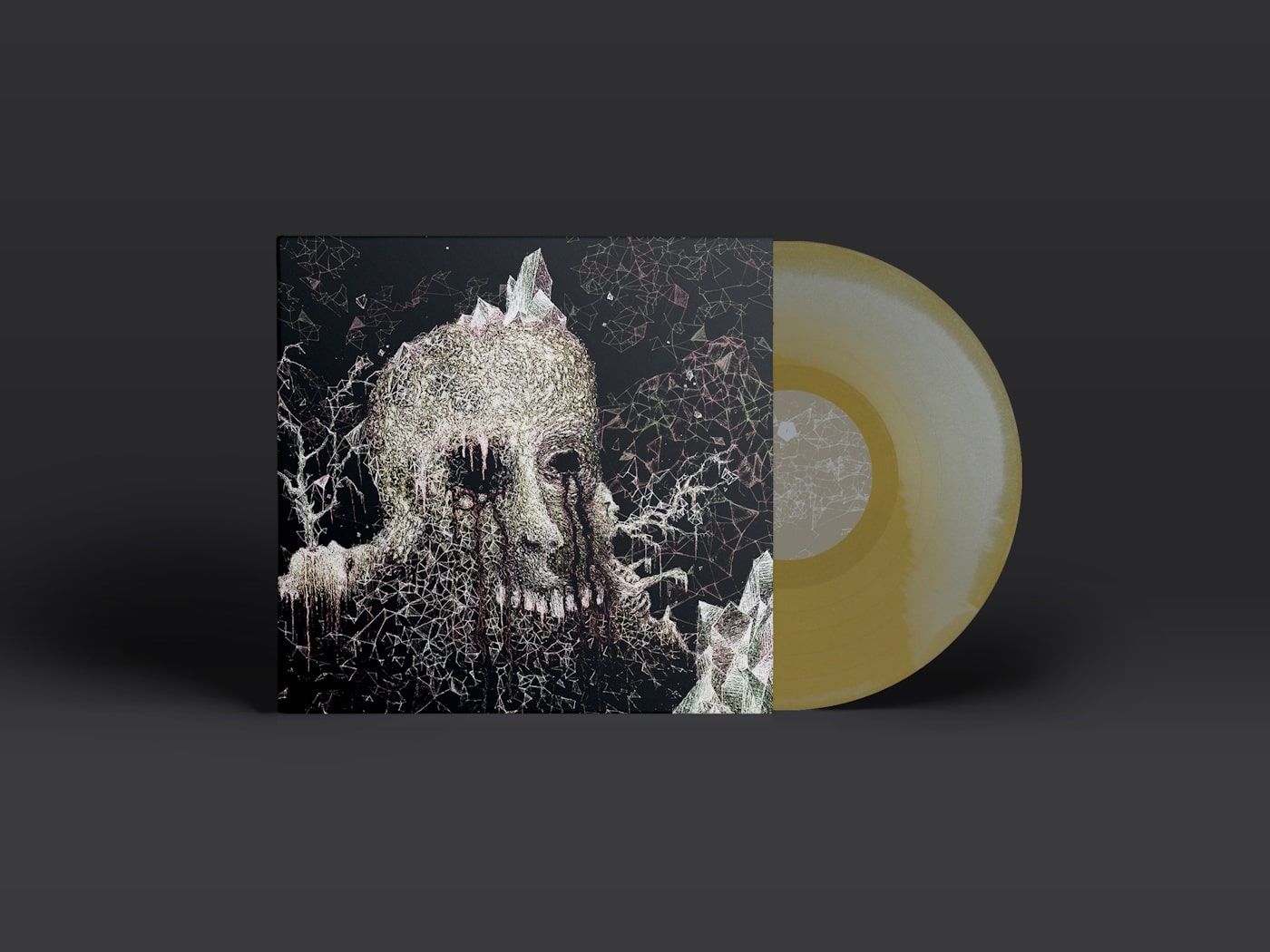
Celebrating fifteen years since its original release, Locrian’s The Crystal World returns June 12 through Utech Records in a newly remastered reissue. For a band that emerged from Chicago’s experimental underground with one foot in drone and the other in metal, The Crystal World marked a definitive shift—from marginal noise duo to fully formed trio with a conceptual, narrative arc.
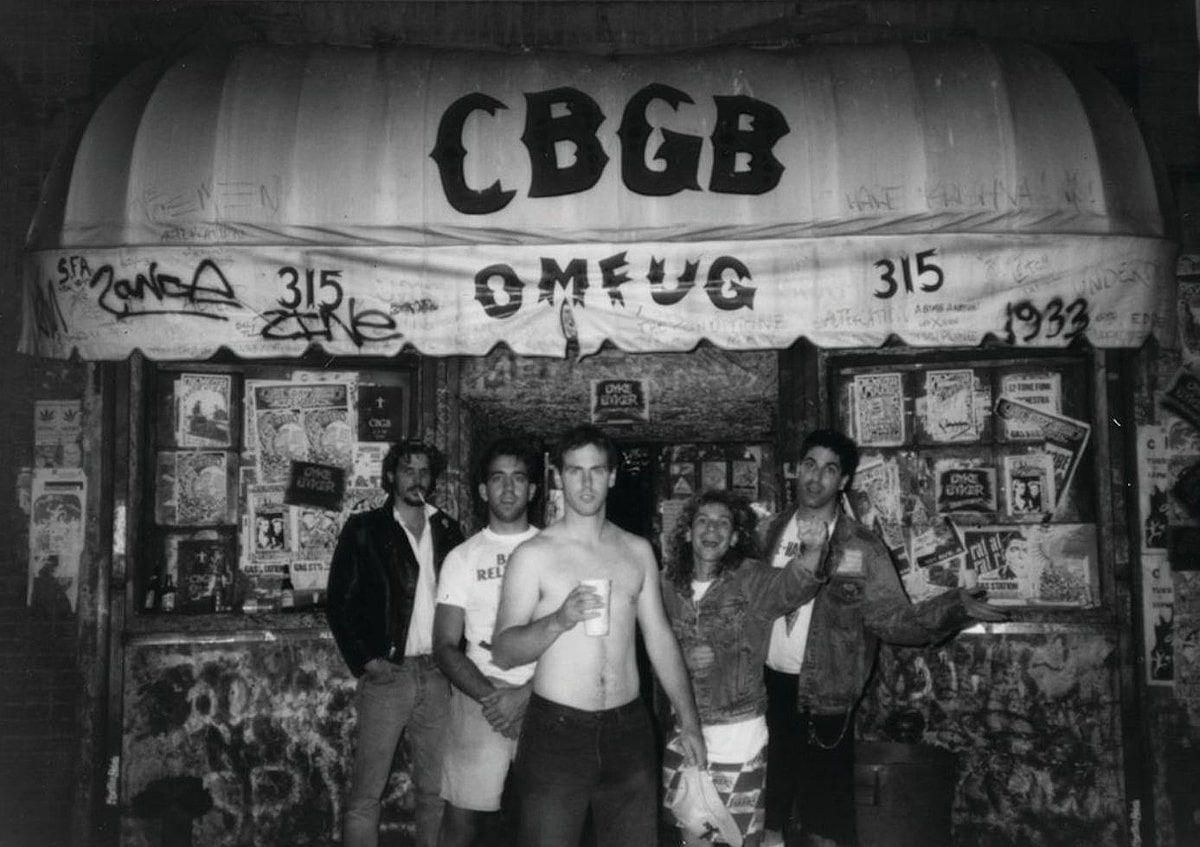
By 2009, Locrian was a duo—André Foisy and Terence Hannum—three proper studio sessions in, still caught somewhere between limited CD-R noise culture and metal’s more defined edges. “We started in 2005 inspired by duos like Lightning Bolt, Yellow Swans and Mouthus who could generate so much sound with so few people,” Hannum writes. “Most of our output was of live recordings, on limited CDRs and Cassettes which was the style in the noise scene of that time.”
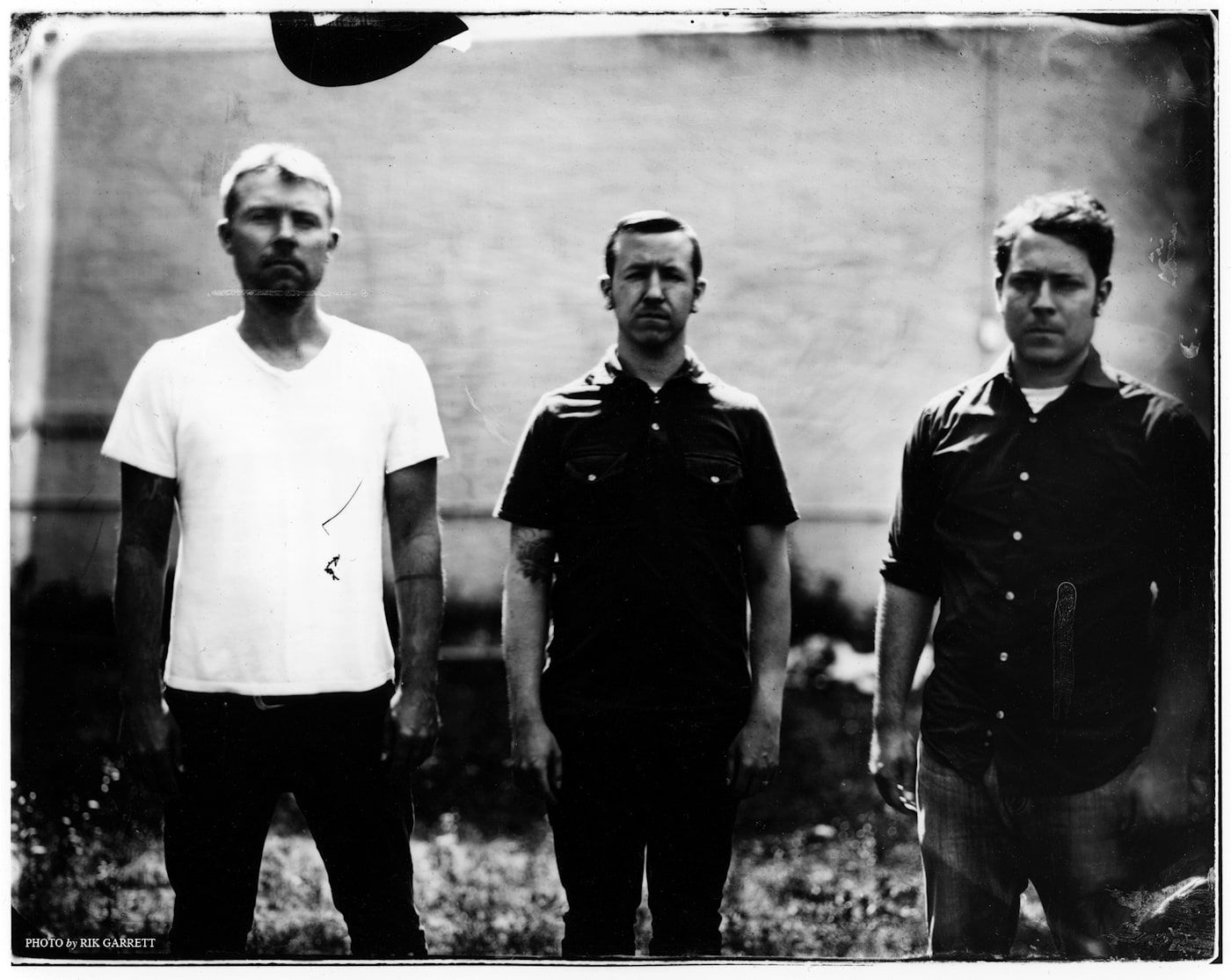
The addition of percussionist Steven Hess broke that pattern. What began as a tentative collaboration became a transformation. “I remember really focusing on how I would approach the drum parts,” Hess reflects. “Minimal, slightly off-kilter, and I wanted them to loosely hold the beat but to also blend in and be more textural, like another layer folded into the overall sound but occasionally piercing through like a shard of glass.”
He’d long admired the band—from owning their early 7”s to catching them live at Chicago’s Empty Bottle. “A song or two ended up being 5–6,” he recounts, “and a few months later, the ‘guest’ ended up being a full-time member of the group.”
Locrian had been watching Hess as well. “One night he suggested to a mutual friend that he’d want to jam with us,” Hannum remembers. “I went to see him play with Haptic, his trio at that time, and he had more electronics than drums and I knew he was our guy.” Hess soon joined Foisy and Hannum at Stray Dog Studio—“a very strange studio on the west side of Chicago,” affordable, gritty, and ideal for long nights of unpolished experimentation.
Though Hess came in mid-session, the chemistry was immediate. “Steven joined the band at this album, and we went from a more improvisational approach as a duo to composing with more structure,” Hannum reflects.
“Even though we started the album as just Andre and I, and Steven came in and played with what we had, and we wrote like half of the record together.” With Hess on board, the band moved past the noise scene’s acceptance of abstraction toward something sharper. “It just felt complete,” Hannum writes. “We were trying to make a claim to some corner of the dark music world.”
That transformation extended into narrative form. The album takes its name and conceptual framework from J.G. Ballard’s novel The Crystal World, a surreal work of speculative fiction where time collapses, and landscapes freeze in crystallized stasis. “The fences along the road were so encrusted that they formed a continuous palisade, a white frost at least six inches thick on either side of the palings,” Ballard wrote. In The Crystal World, entropy becomes a sublime aesthetic—decay made beautiful.
Locrian channel that idea into dense layers of drone and decay, threading sonic collapse with flashes of light and fractured melody. “From the elbow to the finger-tips it was enclosed by — or more precisely had effloresced into — a mass of translucent crystals,” Ballard wrote, “through which the prismatic outlines of the hand and fingers could be seen in a dozen multi-coloured reflections.” That duality—entrapment and beauty—is at the heart of the album’s aesthetic.
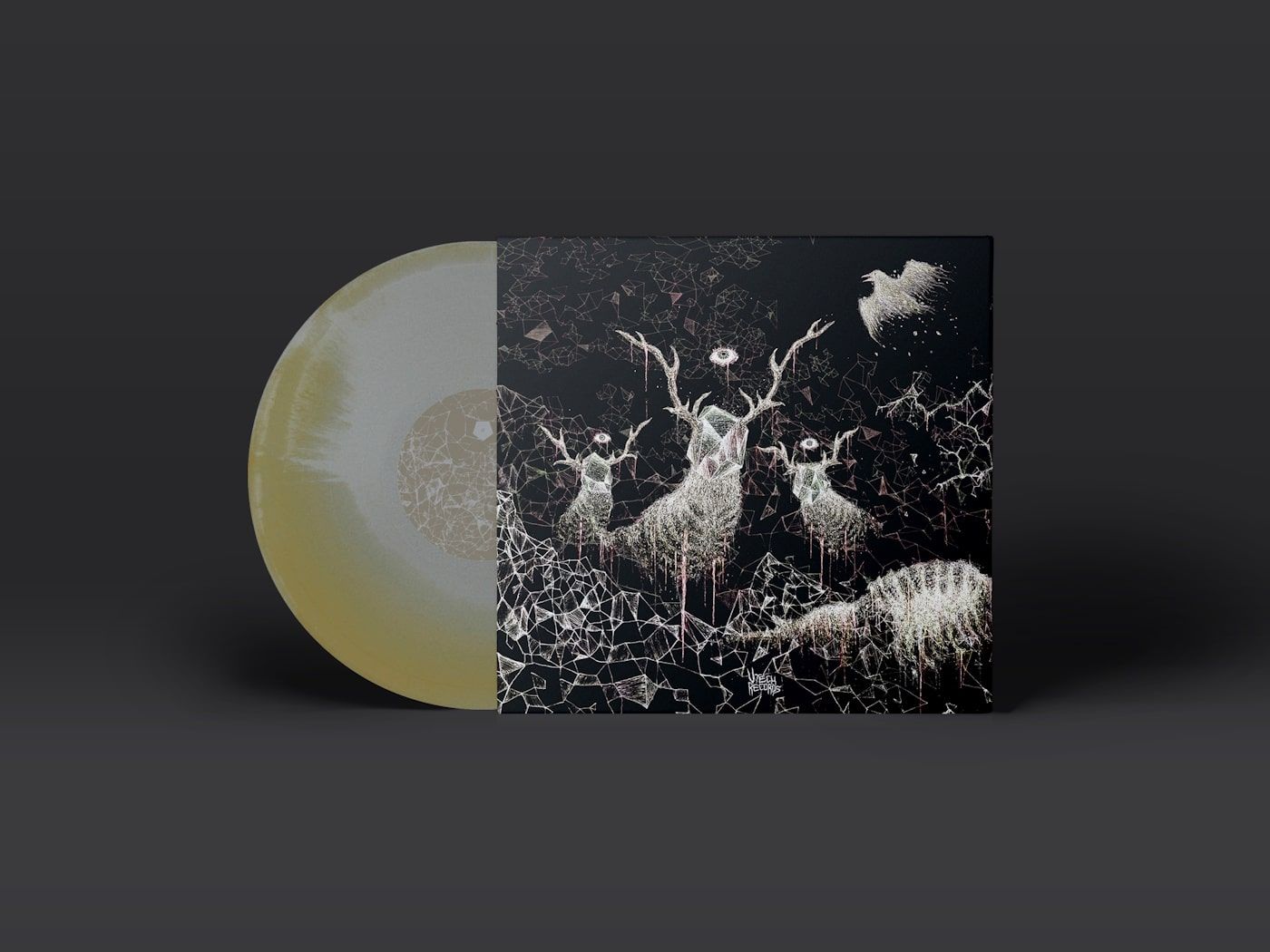
Outside the core trio, the record expands with collaborative textures. Erica Burgner-Hannum adds haunting vocals. String arrangements by Gretchen Koehler, André’s family member, lend depth to “Elevations and Depths.” As Hannum notes, The Crystal World was “curated as much as it is conjured—a textural world meticulously assembled from distortion, drone, and silence.”
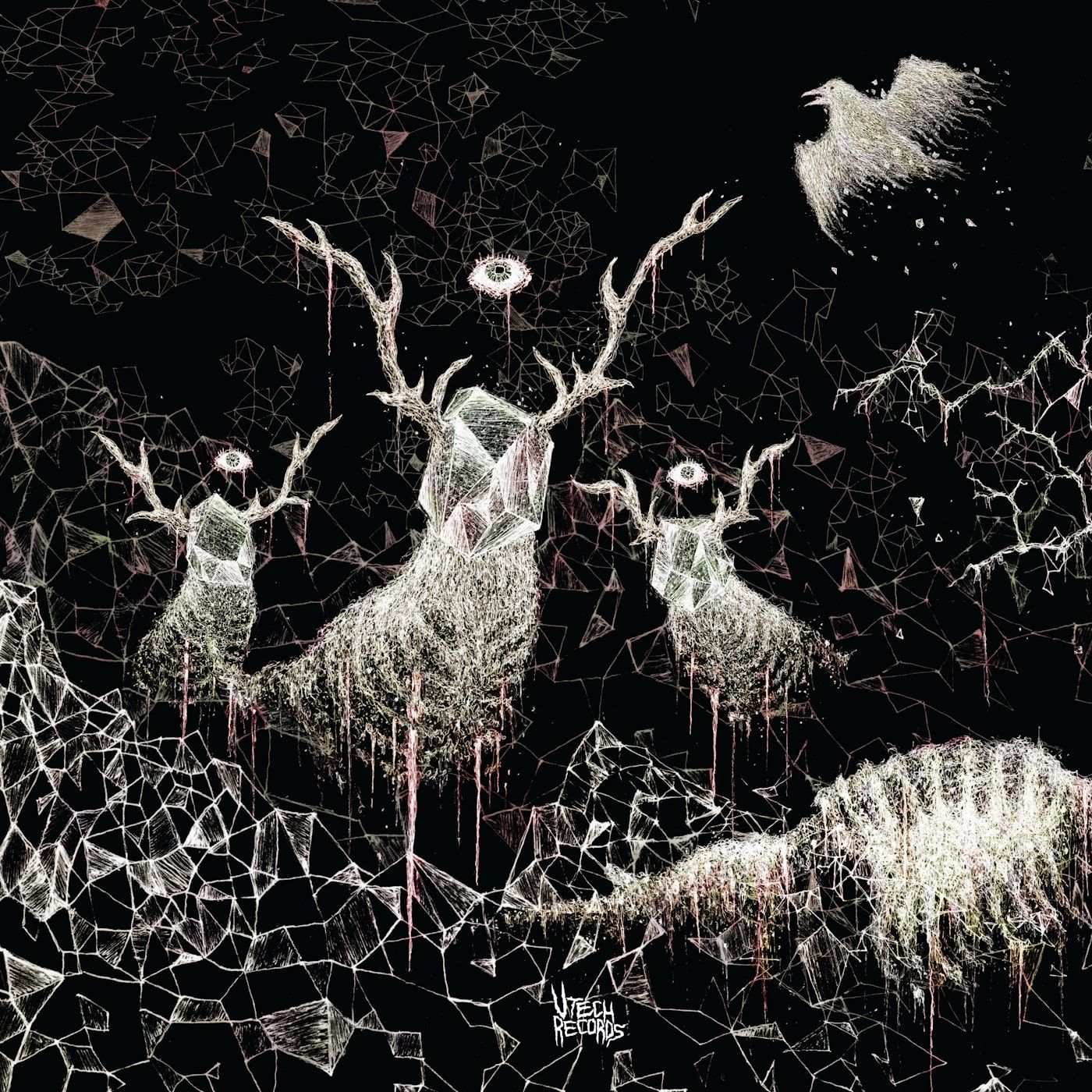
Visuals carried equal weight. Utech Records tapped the late artist Justin Bartlett (VBERVLT) for the cover art. His intricate monochrome design remains one of the band’s most iconic visuals. “Justin Bartlett’s extraordinary artwork for this release perfectly captured the essence of both our sonic explorations and Ballard’s literary vision,” Foisy writes. “His intricate illustrations manifesting the crystallization process visually. Justin was a visionary artist whose contributions to visual culture continue to resonate even after his untimely passing.” Keith Utech adds, “The band were about to discover their powers as a three piece, Utech Records was cementing its reputation… and Justin created one of his most iconic covers.”
At the time, Locrian’s ambitions were modest. “Our aspirations were fairly modest, we really just hoped that the tastemakers at the San Francisco record store [aQuarius Records] would list it in their recommendations,” Hannum writes. “Maybe we could play some shows to audiences searching for what we made rather than crashing a genre-specific noise basement or metal show.”
It was a different time. “Music was not dominated by one site or YouTube reviewer,” Hannum reflects. “Pitchfork could make or break a band but that felt, at least in 2009, exclusively for more indie groups.” aQuarius Records’ weekly list was gospel in that scene. “It was how I discovered Utech Records,” he recalls. “And was shocked that Keith was right nearby in Milwaukee cranking out not just great records but great looking records with great artists.”
Fifteen years later, the landscape has changed. “Looking back at the time of 2009, the music world of that time is long gone,” Hannum writes. “aQuarius is the stuff of documentaries, most of the venues we played at have faded… but so is the niche status of experimental heavy music.” What was once obscurity is now oversaturation. “Everything is important, everything is available, and no one hears any of it.”
But The Crystal World endures. “It felt like something broke for Locrian,” Hannum writes. “Whatever resistance was out there was overcome and we were becoming who we really were. We added a member, enjoyed being in the studio as a creative process, and were tying our apocalyptic ideas to strong visuals.” That fractal vision—obsessions refracted through “thousands of lenses”—still defines the band’s identity.
Fifteen years after its release, The Crystal World is less a relic than a shard of light from another time. A document of transition, a statement of intent, and a still-evolving sound sculpture. Pre-orders are available now via Utech Records. The reissue landed June 12.
“By day fantastic birds flew through the petrified forests, and jewelled alligators glittered like heraldic salamanders on the banks of the crystalline rivers. By night the illuminated man raced among the trees, his arms like golden cartwheels, his head like a spectral crown…” — J.G. Ballard, The Crystal World