

“Hunab Ku” doesn’t feel like a band coming back so much as a band resuming a thought mid-sentence. The album simply exists, arriving on February 16, 2026 via Soleil Zeuhl, carrying the weight of years spent unfinished, paused, and quietly carried forward.
Corima haven’t been active for close to a decade. Releasing new music after a seven–eight year gap came with its own strangeness. “We have all gone through a lot of personal changes since then so releasing this album is relatively refreshing,” they say. Not cathartic, not triumphant — just refreshing. That tone runs through the entire record.
They were genuinely relieved when Soleil Zeuhl agreed to release the album. “Hunab Ku” mattered to them well before a label was involved. The band describe it as a kind of internal reference point — a “spiritual joining” of all their previous albums into one piece. It stays loyal to the way Corima have always written, but it also pushes into areas they hadn’t touched before. Nothing about it feels like a stylistic pivot; it feels more like a widening of the same path.
Structurally, “Hunab Ku” is one composition, divided into seven sections — “Yok’hah”, “Xock’ab”, “Manla”, “K’iik’”, “Inlilnaluk”, “Ho-Huitzilopochtli-Tlaloc”, and “Kultunlilni”. The splits exist mostly for practical reasons. The intention was always an album-length piece rather than a set of songs competing for attention.
The way the album was completed explains some of its unsettled energy. Most of the main structure was recorded years ago, but vocals, overdubs, edits, and mixing were left unfinished. Around 25% of the album was completed during the pandemic, long after the original studio sessions.
Each member recorded parts at home and sent them to Patrick Shiroishi, who assembled everything piece by piece. The process stretched on for months. “There were moments where I thought that this album would never come out,” the band admit, plainly.
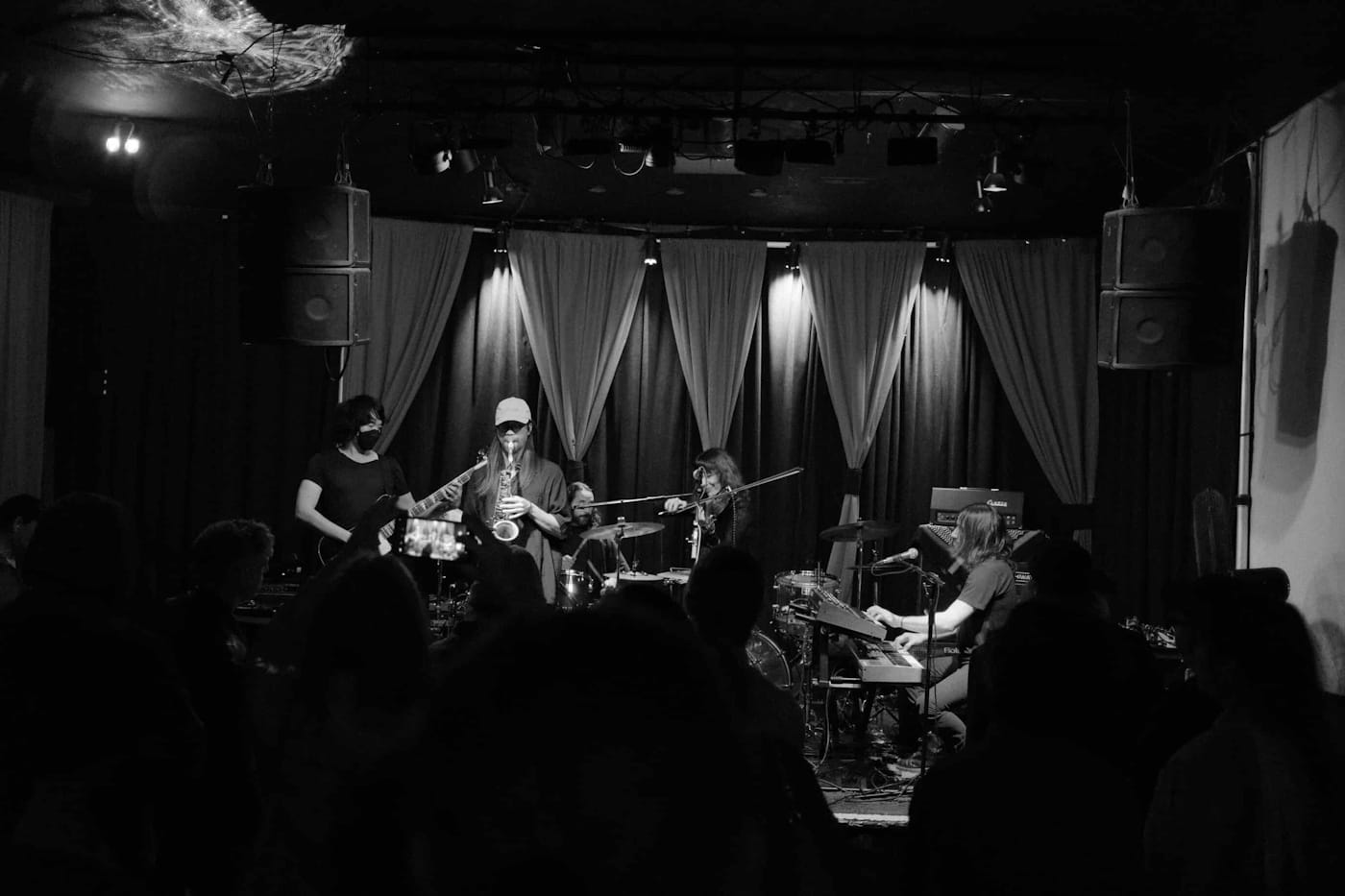
What kept Corima together through that slow process was their attachment to Zeuhl itself — not as a historical genre, but as an idea. They describe it as music that goes against convention, and that stubbornness mattered. Even with practical issues still in play — including one member living outside the country — they’re willing to keep investing time and effort. Continuing to play this music, they say, feels like contributing “to something good in the world.” Not in a grand sense. More in the basic, unfashionable idea of making music for its own sake.
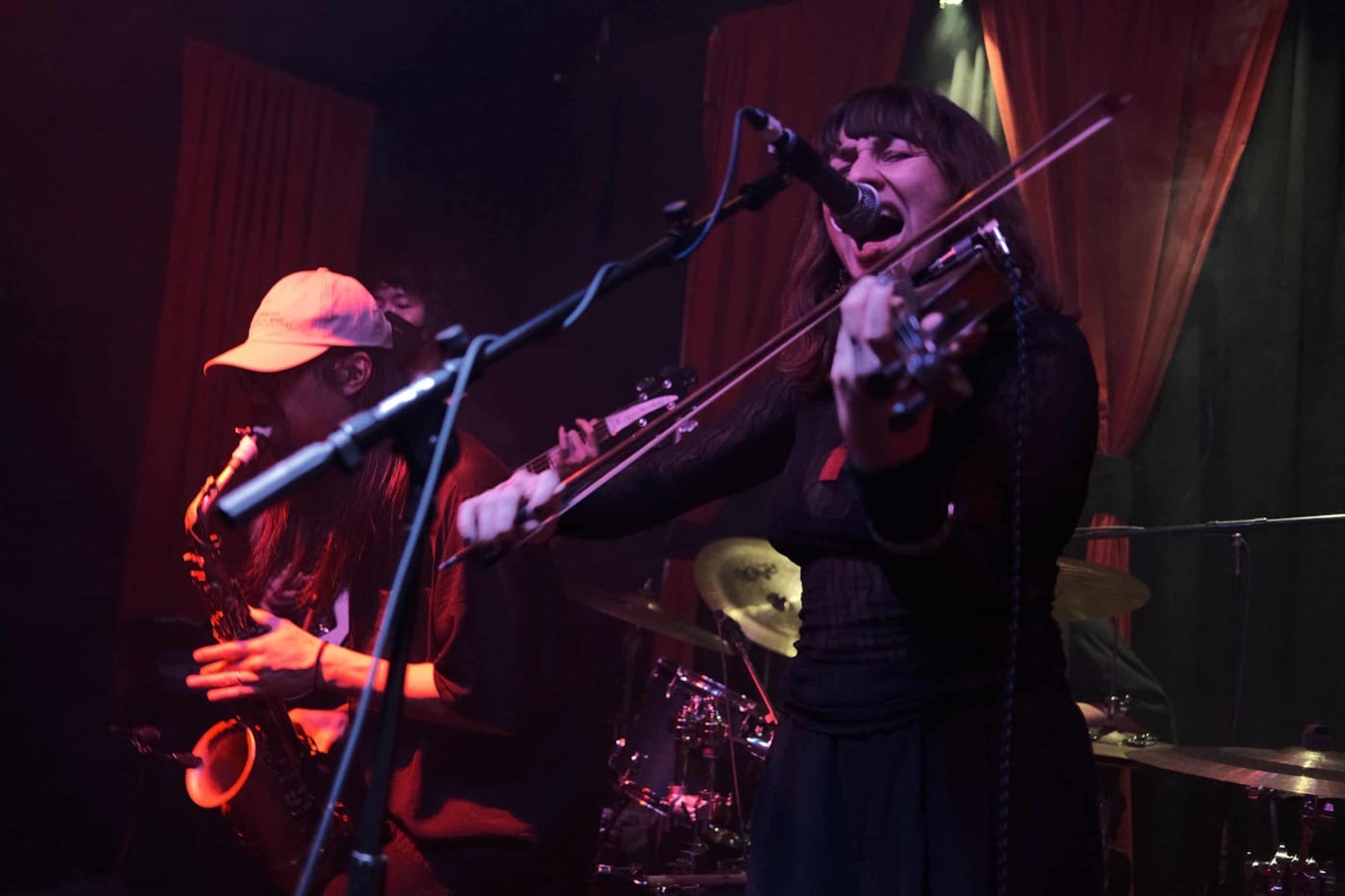
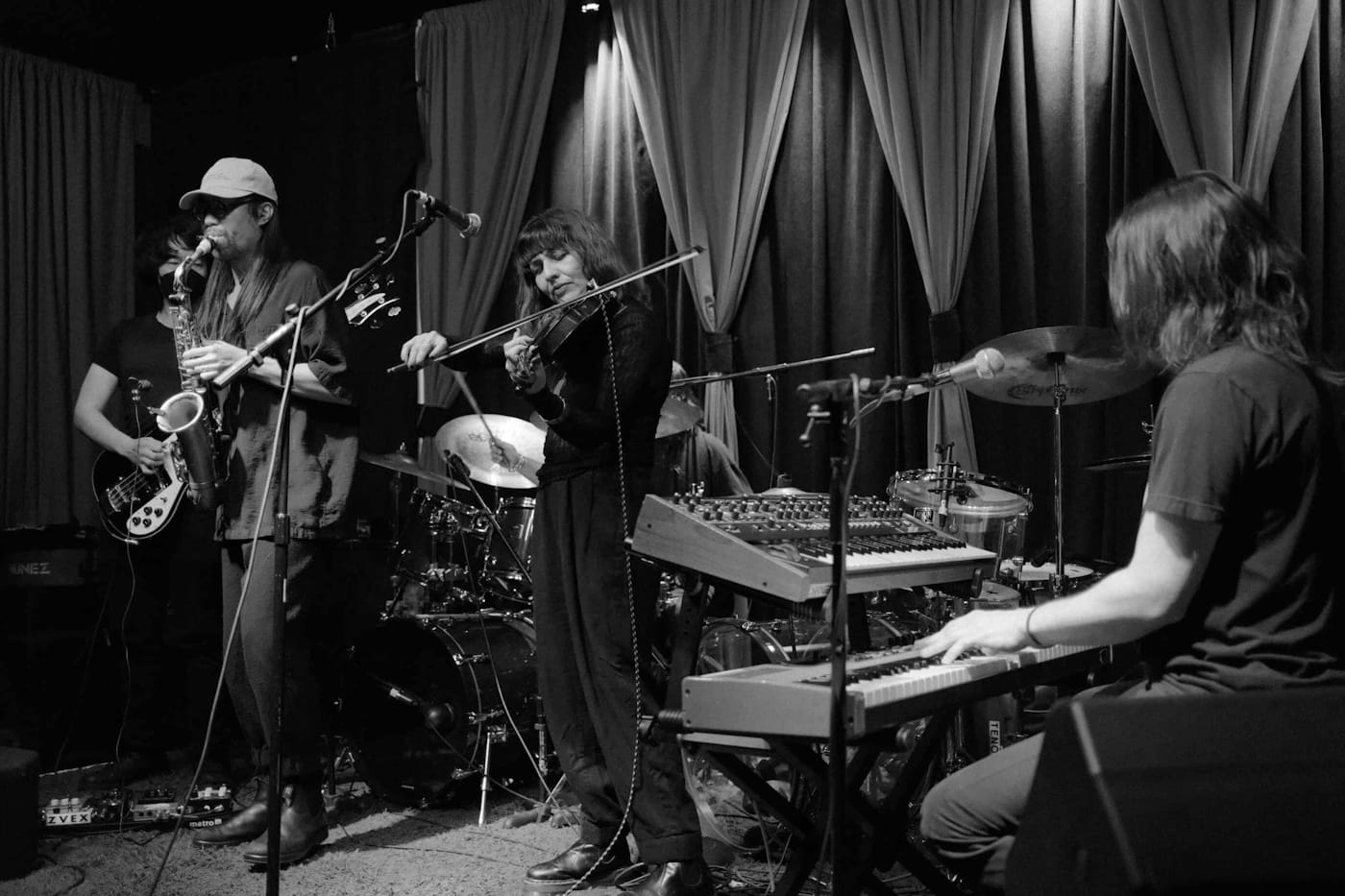
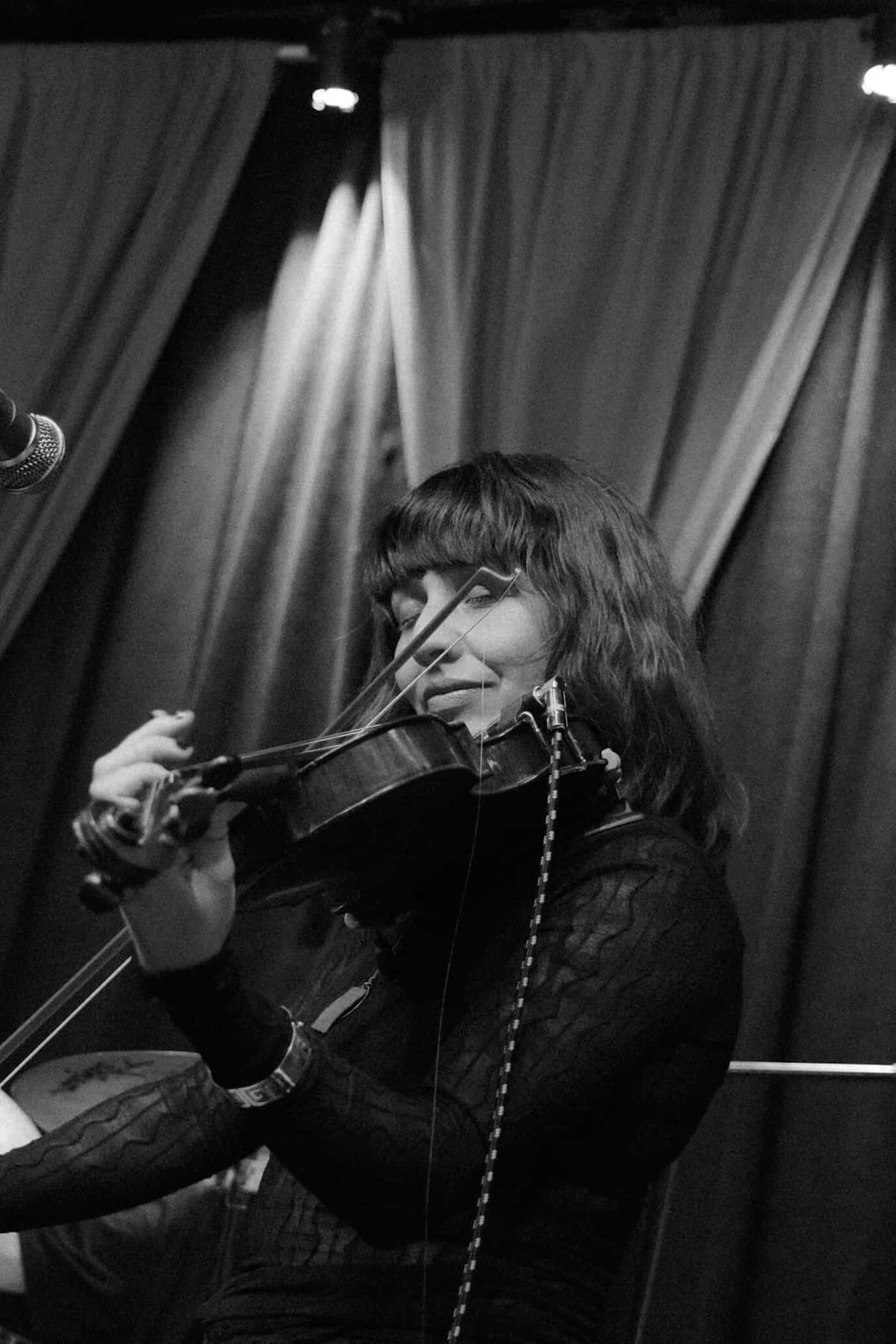
Musically, “Hunab Ku” sits in a space where art rock, progressive structures, and Zeuhl logic overlap with something that feels almost exotic — hints of Middle Eastern phrasing, ritual repetition, and influences that don’t point back to Los Angeles at all. Andrea Calderón’s violin does a lot of the heavy lifting, creating tension and a near-psychedelic edge, sometimes bordering on frenzy.
View this post on Instagram
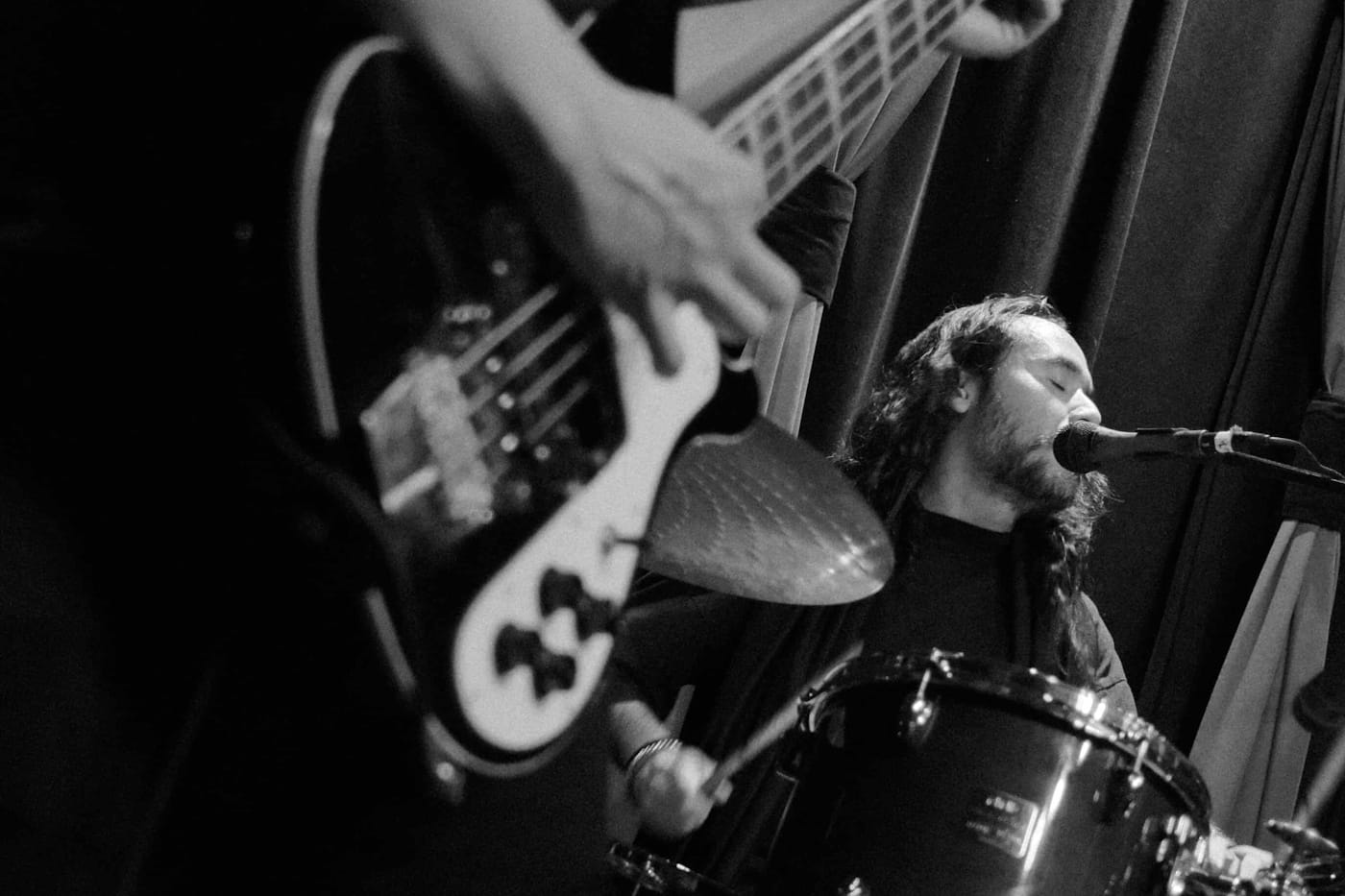
Paco Casanova’s keys, synths, and organ lock into tight cycles with Ryan Kamiyamazaki’s bass, while Gopala Bhakta’s drums and tabla keep everything moving forward without softening the edges. Shiroishi layers saxophones and guitar in angular patterns that occasionally drift into free-jazz territory before snapping back into motion.
The vocals function less as storytelling and more as texture — communal, mantra-like, another instrument in the blend. Across its seven sections, the album keeps shifting shape without losing momentum, built on repetition, speed, and forward motion rather than release or resolution.
View this post on Instagram
“Hunab Ku” was recorded by Jason Schimmel, mixed and mastered by Vincent Sicot-Vantalon, and produced by Alain Lebon together with the band. The cover art was created by Jee-Shaun Wang. The lineup remains unchanged: Andrea Calderón on violin and vocals, Paco Casanova on keys, synths, organ, and vocals, Patrick Shiroishi on saxophones, guitar, glockenspiel, and vocals, Ryan Kamiyamazaki on bass, and Gopala Bhakta on drums, tabla, harmonium, and vocals.
“Hunab Ku” feels more like a record that waited until it could exist on its own terms — not loud about it, not apologetic either. Just finished and ready to share its mystic pulse. Finally.