

The first thing that grounds “Autoreverse” is how plainly it comes together: a new project, UN–Ter, formed around Samuel Etienne (Seitoung) and three members of Flying Nuns (see our full feature here), tracked at home in Saint-Malo in the summer of 2025, mixed on instinct, and mastered by Jeff Ferrand at Woodbox Studio.
It’s Samuel’s first collaborative work since 1992, when Paneuropean Architecture — the short-lived industrial harsh-noise duo he created with a friend — cut a 45-minute cassette of distorted plundered fragments that later resurfaced on a mini-CD. This time the terrain is closer to the soft blur of Slowdive and the shadowed silhouette of the Sisters of Mercy, his longtime favorite band, but the practical constraints are the same: limited gear, improvised processes, and a sense of learning on the fly.
“Autoreverse” arrives with this new music video we’re premiering above, directed by Samuel.
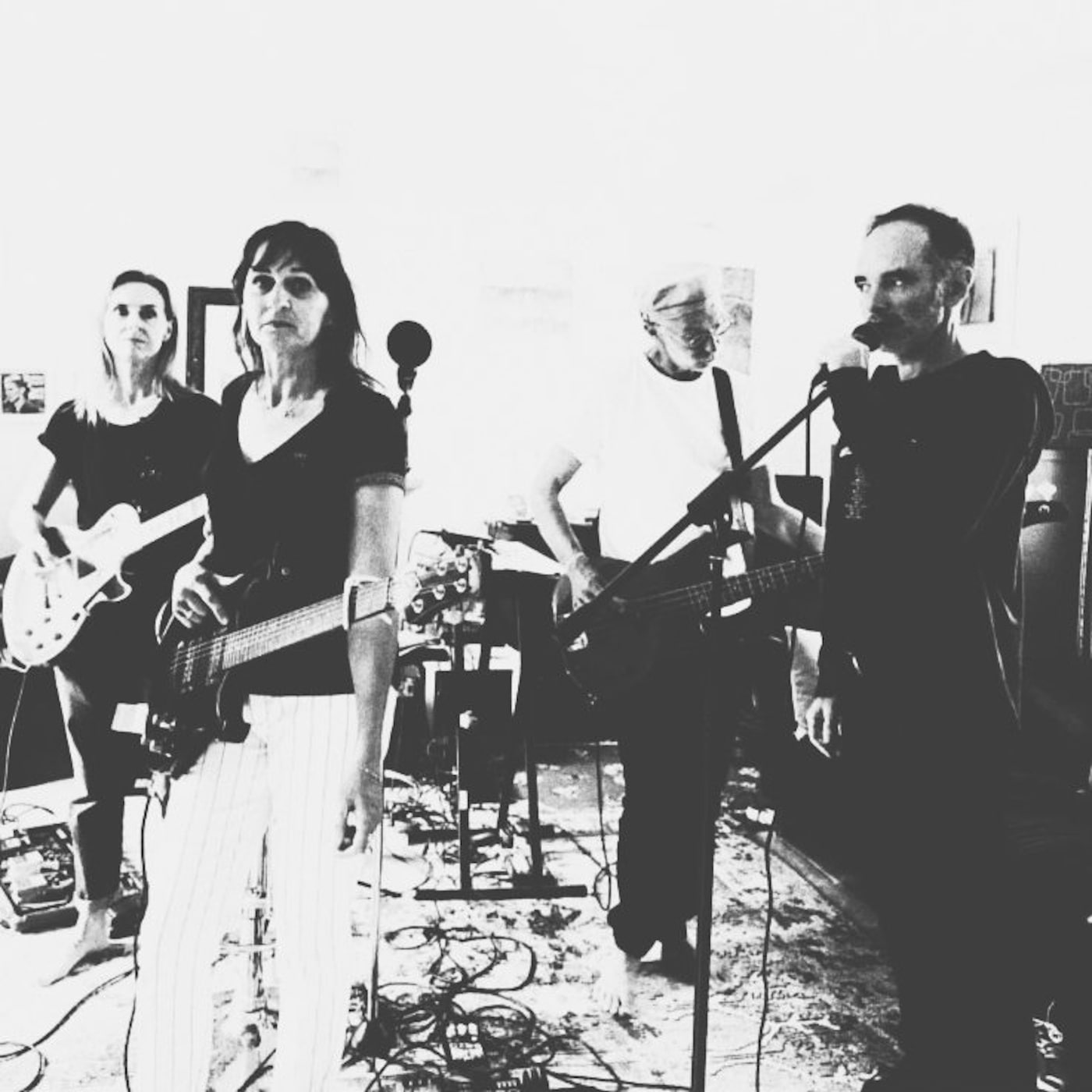
UN-Ter is introduced as a “dark shoegaze band from France, composed of 1 @seitoung + 3 Flying Nuns,” and the track carries exactly that format — a blend of UN-Ter’s darker frame with the Nuns’ heavy-delay guitars, rougher textures, and instinct for melody. The full credits leave nothing ambiguous: vocals by Samuel and Nathalie Fiault; guitars by Nathalie and Isabelle Fiault; bass and drum programming by Frank Brochard; keyboards by Frank and Samuel; sound effects by Samuel.
How the collaboration actually happened
Samuel says the whole thing began after he directed Flying Nuns’ “Tempérance” video last year. Nathalie reached out in early July 2025 asking if he wanted to co-write a song that would sit inside the musical universe he wanted to establish for UN-Ter.
“It was a wonderful gift and I immediately accepted,” he recalls. He suggested the mood of Slowdive’s “Souvlaki” and the vocal approach of Arab Strap’s “Another Clockwork Day.” Nathalie brought the first melody on guitar. Samuel wrote the lyrics. Frank added drum machine and bass in rehearsals at the end of July. By August, Isabelle joined to develop the arpeggios and help finalize structure. In September they tracked the whole thing at Samuel’s home.
He laughs at the speed and the limitations: “I had never recorded bands before, I didn’t really know how to do it and I don’t even have the ideal equipment to do it.”

Frank explains that Flying Nuns typically leave little room for improvisation — their workflow is quick and structured. “In Flying Nuns’ pop music, Nat’s voice is extremely important, so it’s added in the first hour or two of rehearsal when we’re creating a new song.” Even in this collaboration, he says, the chorus came from having her voice in his head before it existed on tape.
Isabelle points out that this was still new territory: “The challenge was to transcribe Samuel’s musical universe without making it sound like Flying Nuns.” She adds that despite the polished final mix, the track also works as a raw four-piece version — guitars, bass, and drums — without losing its shape.
The tape-eating car radio and the generational logic behind the lyrics
The seed for the lyrics came during a mundane moment. Samuel was driving and streaming music when the playback suddenly cut. He instinctively flashed back to the 90s car-stereo rule: if the cassette stopped mid-song, trouble was coming.
He lays out the memory with accuracy: the tape caught around the playback heads, the panic, the pen used to rewind the mangled ribbon, the irreversible audio damage. “This song is about those painful moments when a cassette, often a precious one, was devoured and then had to be taped back together and rewound with a pen,” he says.
But the chorus ties that analog panic to a modern habit — doom-scrolling. Samuel imagines the absurdity of treating cassettes the way we treat phones: switching tapes every five seconds, copying messages through degraded cassette-to-cassette transfers. The line “black and white rivers on the screen” comes directly from his experience of watching a tenth- or twentieth-generation bootleg VHS of a Sisters of Mercy concert in York, 1984 — a blurred mass of snowy figures and dropping image speed.
“I must have watched this concert 50 or 60 times, feeling like a privileged fan,” he says. Today the same show is on YouTube, clean and accessible, but without the strange weight that scarcity once created.
Moving from harsh-noise experiments to dreamy guitar territory
Samuel is self-deprecating about his musical background — “I’m not a musician at all” — and recounts Paneuropean Architecture as a Saturday-afternoon explosion involving a bass, a bad microphone, a TubeScreamer, a toy synth, a CD player, and an analog telephone that somehow became the speaker for the final output. The idea, following John Oswald’s plunderphonic logic, was to “crush” industrial and EBM tracks (Einstürzende Neubauten, In Sotto Voce, Boris Mikulic) until they survived only as faint traces.
In 2013 he attempted a one-track-per-day challenge using the non-saving trial version of Ableton Live, capturing each piece in real time. The result became “Jökulhlaup,” inspired by southern Iceland, where he spent years in the 1990s and 2000s.
This new project, he says, “was very stimulating and demanding for me,” shifting from saturated noise into something closer to shimmering guitars, shifting pedals, and layered voices.
Flying Nuns on stepping into UN-Ter’s darker frame
Nathalie wanted a sound deeper and slower than their usual Nuns material. She borrowed Slowdive-like rhythmic ideas, added a capo, and moved toward a more melancholic approach: “Even the rhythm had evolved. The effects had to be languid too, heavy, even dark.” She experimented with pedals, then Samuel built digital layers on top.
Frank says the melody hooked him quickly and the trio built the structure the way they always do, but they purposely kept it from drifting back into Flying Nuns’ pop tendencies.
Nathalie adds that “Autoreverse” pushed her pedal use further than before. She had taken a masterclass earlier in the year with Jonathan Siche of Totorro, which helped her fine-tune phasers and delays — including a Small Stone Electro-Harmonix — to find the darker tones she needed.
Isabelle says she found the first version “very dark,” but grew into it as they played: the chorus, rhythm guitars, and Nathalie’s voice anchored it enough that she could find her place.
Returning after decades
The discussions around their recent return as Flying Nuns also color this collaboration.
Frank remembers recording “Tempérance” after years of inactivity: “It was a bit surreal to plug our instruments back in and continue the Flying Nuns adventure as a trio.” The video shoot, again with Samuel, brought momentum, and now they’re working on new tracks like “Vegvisir,” recorded with Julien — a drummer with sound-engineering experience — and due out in December.
Nathalie notes that “Vegvisir” connects to Icelandic mythology, tied directly to Isabelle’s tattoo and Samuel’s long familiarity with Iceland. It is a long, slow, cinematic piece with a dialogue between two voices.
Samuel mentions that the video for “Vegvisir” was actually filmed in Iceland before the track was recorded.
Isabelle adds that more archival releases are coming: old demos, the 2006 album “Ladies in Black,” possibly a mini-album of covers. They’re preparing a set for 2026 concerts and have another collaboration planned with Jimmy Arfosea in the spring. She says UN-Ter may continue as a contemporary-art-linked project. “Above all, we try to have fun, as we’ve always done, letting ourselves be carried along by our desires and encounters.”
A compressed portrait of the French underground, 1990–2025
Samuel ties his history to the places he lived. Nantes in the 90s had strong chanson (Dominique A, Philippe Katerine), indiepop (Little Rabbits), punk (Zabriskie Point), and post-rock/hardcore scenes (Room 204, Chevreuil, Papier Tigre). The Lithium label was pivotal for him. Angers had the Thugs on Sub Pop and the Black&Noir grunge network.
In Clermont-Ferrand, he created the noise label lesdisques71 in 2006, releasing artists like Torturing Nurse with tiny 29-copy physical runs he assembled manually — sometimes literally cutting discs by hand. Half the catalog would be digital pay-what-you-want.
Saint-Malo, where he’s lived for 13 years, is quieter but anchored by the long-running indie festival La Route du Rock. Strandflat, the post-rock label he founded in 2014, produced three vinyl releases, including Have The Moskovik and Seilman Bellinsky, a math-rock/hardcore meta-group pulling members from Papier Tigre, Fordamage, and Goudron.
Frank adds a recommendation of his own: An Ocean of Embers, Jimmy Arfosea’s new project from Nantes. He highlights their “Heterochromy” EP for its dreampop-shoegaze blend and “soft female vocals floating above layers of guitars.”
“Autoreverse” — the lyrics
The full text by Samuel Etienne sits inside the release — a mix of tape-mechanics, reverse-motion imagery, and the logic of memory degradation. The chorus repeats the cycle of “Autoreverse scrolling,” pairing analog failure with digital distraction: don’t walk backwards, no more looking back, don’t think forward, black rivers on the screen. The verses follow the physical actions — twisting a pen inside a cassette’s notched hole, blue ink smearing, re-taping damaged ribbon — and the sense of life glitching into loops.
This is a tightly documented collaboration built on shared history, a specific generational reference point, and a quick, DIY recording window. Every detail — from Nathalie’s pedal experiments to Samuel’s analog memories — feeds directly into how “Autoreverse” sounds and why it lands the way it does.