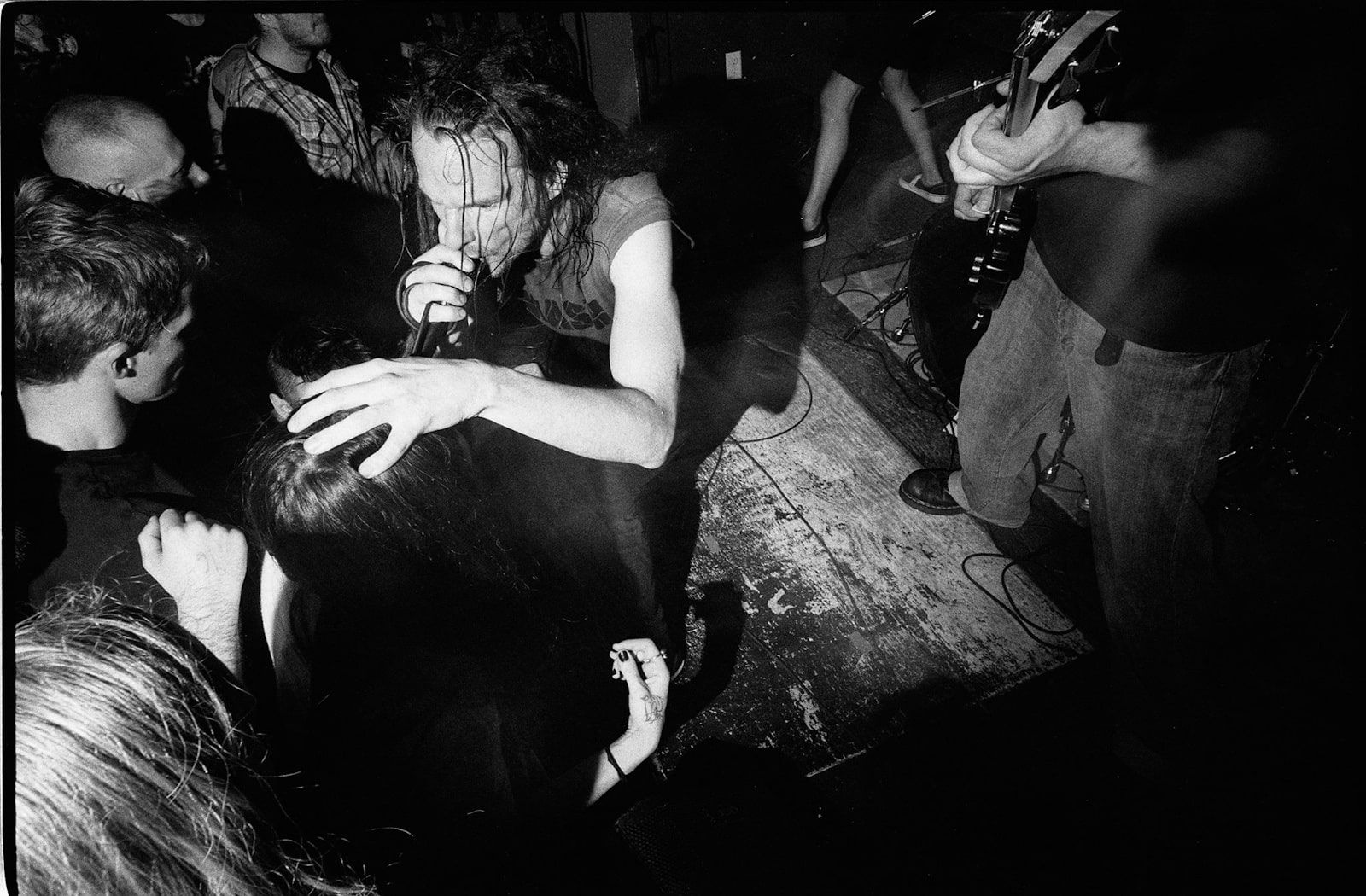

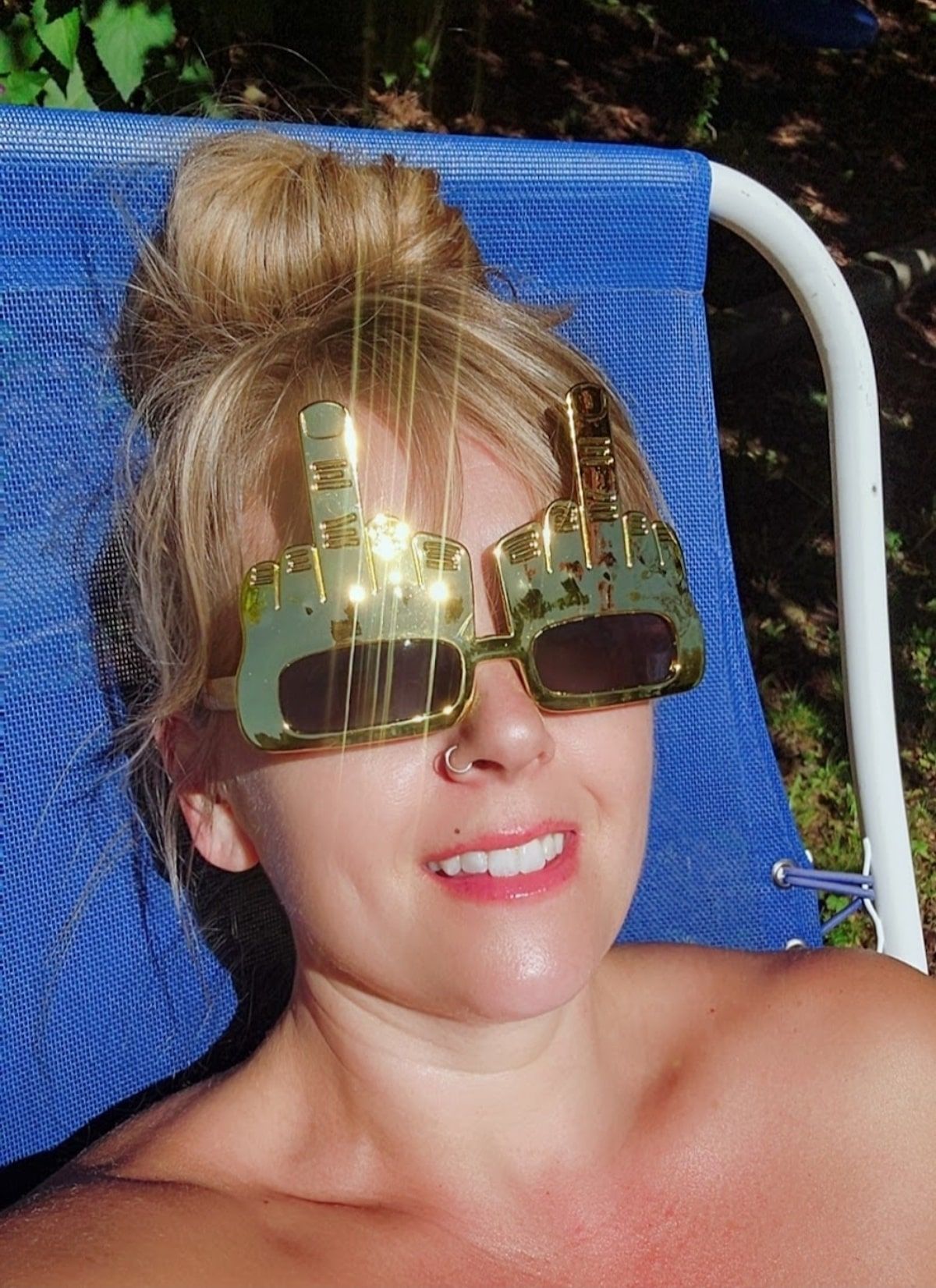
It was an icy Friday night in December 2024 at Mulligan’s, a frequent checkpoint for anyone looking to knock back a few cheap beers and a couple of hours of punk rock in Grand Rapids, Michigan. I stood by the back door to the stage with a couple of my girlfriends, waiting for the show to start. My band would be closing that night, and most of the people who had arrived at that point were still at the front of the pub, standing in line at the bar, or chatting with friends at side tables. A group of young men in their twenties approached us and asked me, “Do you know who’s playing tonight?” I responded with enthusiasm; I sure did know – it was RTNR, a catchy, mathy punk band from our hometown in Muskegon, as well as our sassy friends in Something is Waiting from Chicago. Lastly, I added, “My band Tonguecutter is closing things up.”
With a surprised look on his face, he said, “Wait…YOUR band?” He took a step back and sized me up for a moment. “Let me guess…” he said. ”You’re the singer.” My best friend Jenna smirked, and I could tell she wanted to interject, but I let the game go on a bit longer as I nodded my head no. “Bass?” he continued. I shook my head again. “GUITAR??” he sputtered.
“That is correct,” I answered. “Oh wow!” He responded. “That’s cool.” There was a beat of silence as he cocked his head to the side. I knew what was coming next. It was a question I had heard for 30 years.
“Do you play lead?”
Now, it’s relevant to say that this line of questioning was one I was exceedingly familiar with. I had been asked this same question dozens of times over my career as a woman lead guitarist, particularly in heavy punk or hardcore bands. “Do you play leads?” or “Do you play lead?” or “Do you write your own riffs?” or even “Do you play sweeps or tap, though?” Additionally, I had been checked at the back door on many occasions and informed there were “no plus ones or girlfriends” for the evening, as I was loading in my full stack and preparing to perform. I had many soundmen offer to “set my gear up” for me, or even tune my instrument, which makes me laugh. I can’t imagine this happening to a man!
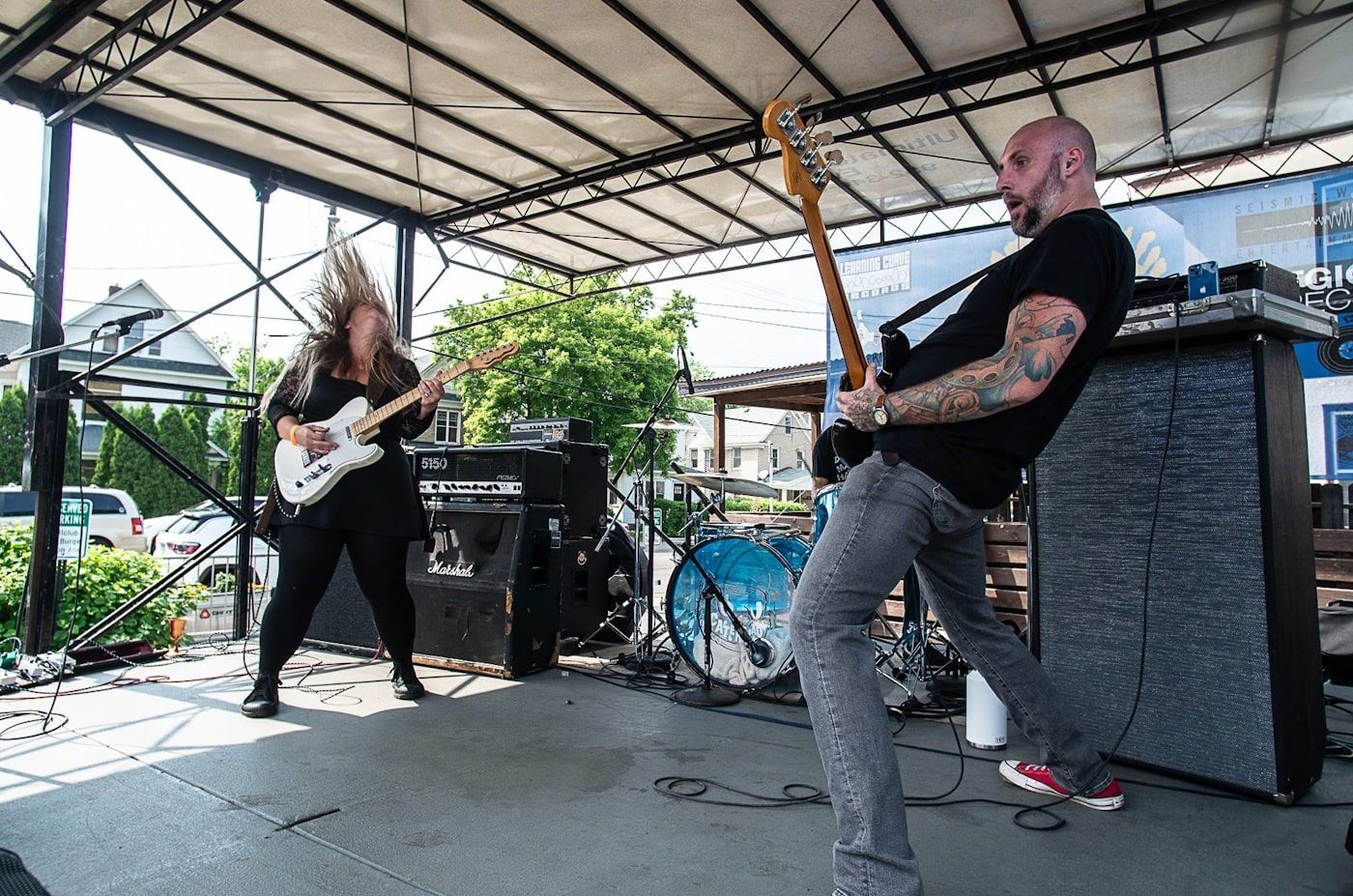
The query was so common that, the very evening that I was hearing it once more at Mulligan’s, my band was performing a song from our new album that I had written entitled–you guessed it– “Do you play leads?” The piece was a long time coming–three decades of explaining my position, defending my gear choices, and having my musical sensibilities under the lens of extreme critique. The song didn’t pose a question; instead, it was the tale of a lifetime of microgressions.
Do You Play Leads (lyric excerpt)
I don’t care
About your sweeps and bends, and little magic tricks….
I came to play, pushing it down
Bury the thought, settle down
At 46, after being in bands for 33 years and performing regularly, you could say that I’ve developed a thick skin for this brand of interrogation. It bothers me less and less, and I focus instead on finding it funny and ironic, particularly when I know I’ll be singing about it in an hour or so to the person who asked. Yet, it illustrates how the constant irritating scrape of 80-grit sandpaper continuously smooths down the sharp points of so many women. Though a recent 2025 study by Fender found that half of aspiring guitarists are women, the number of lead guitarists in regularly performing bands is much lower, and it doesn’t take much to arrive to that conclusion on your own, particularly if you happen to be the only woman in the room. At the same time, I’ve seen a change in the scene for the better since my riot grrrl days in the nineties. Back then, even our progressive fight was problematic, steeped in third-wave feminism, and it was often judgmental and combative to the other women we met (even rarely) along the way. Thanks, patriarchy.
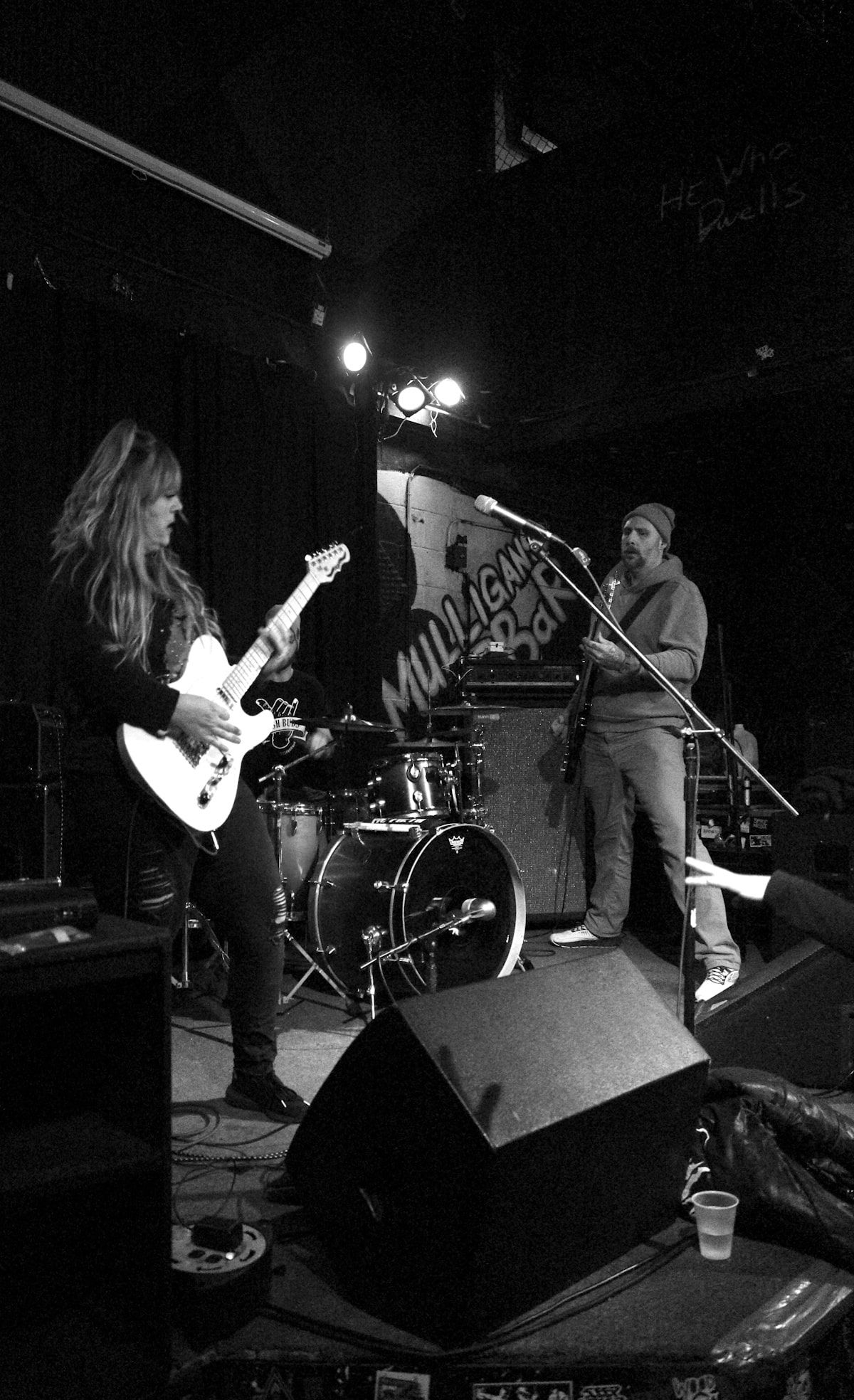
My advice to the other women players out there who aren’t taken seriously or afforded the same respect as their male counterparts is to ignore the chatter, to a certain point. Though it isn’t acceptable in the least when you’re mistreated by a sexist soundman or worse yet, harassed by a creepy show promoter, there will be many “mild” incidents that will reek of “Do you play leads?” energy. I’ve taken quiet joy in showing, not telling, and allowing that surprise to linger. I’m okay with awkward silence.
Do no harm, as they say. But take no shit. And remember that you don’t need permission to take the lead.
Chantal Roeske plays guitar (yes, lead) and fronts the riffy, mathy grunge 3-piece Tonguecutter from Muskegon, MI. Check out their latest full-length album, Minnow, released on Learning Curve Records in May of 2025.