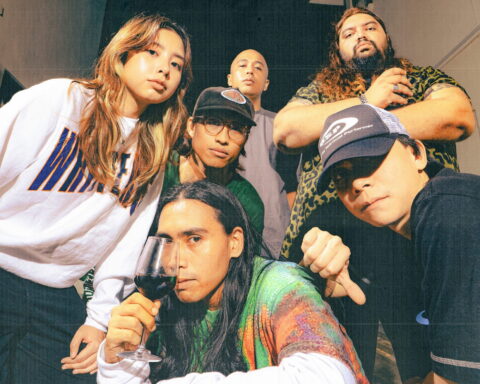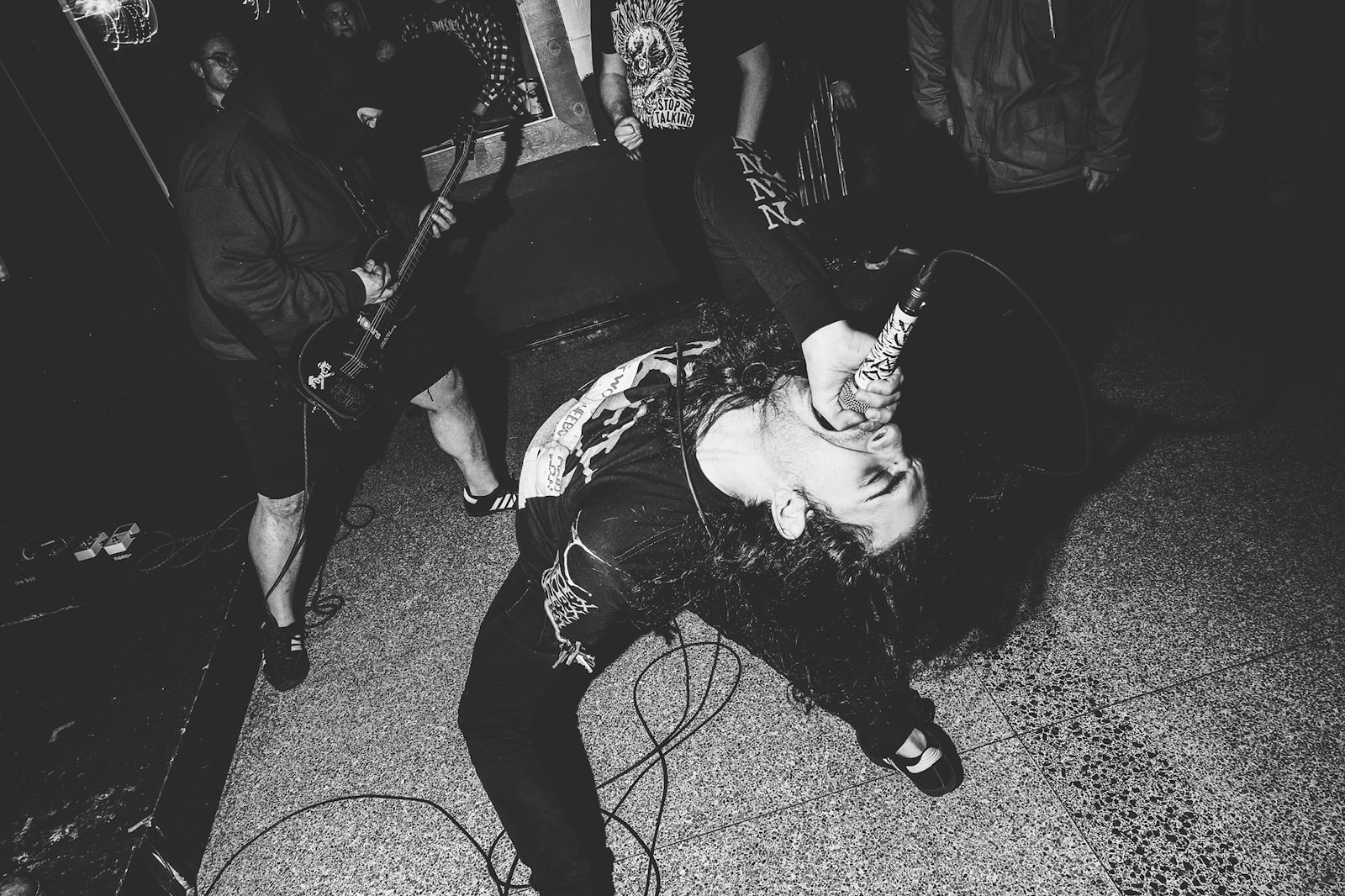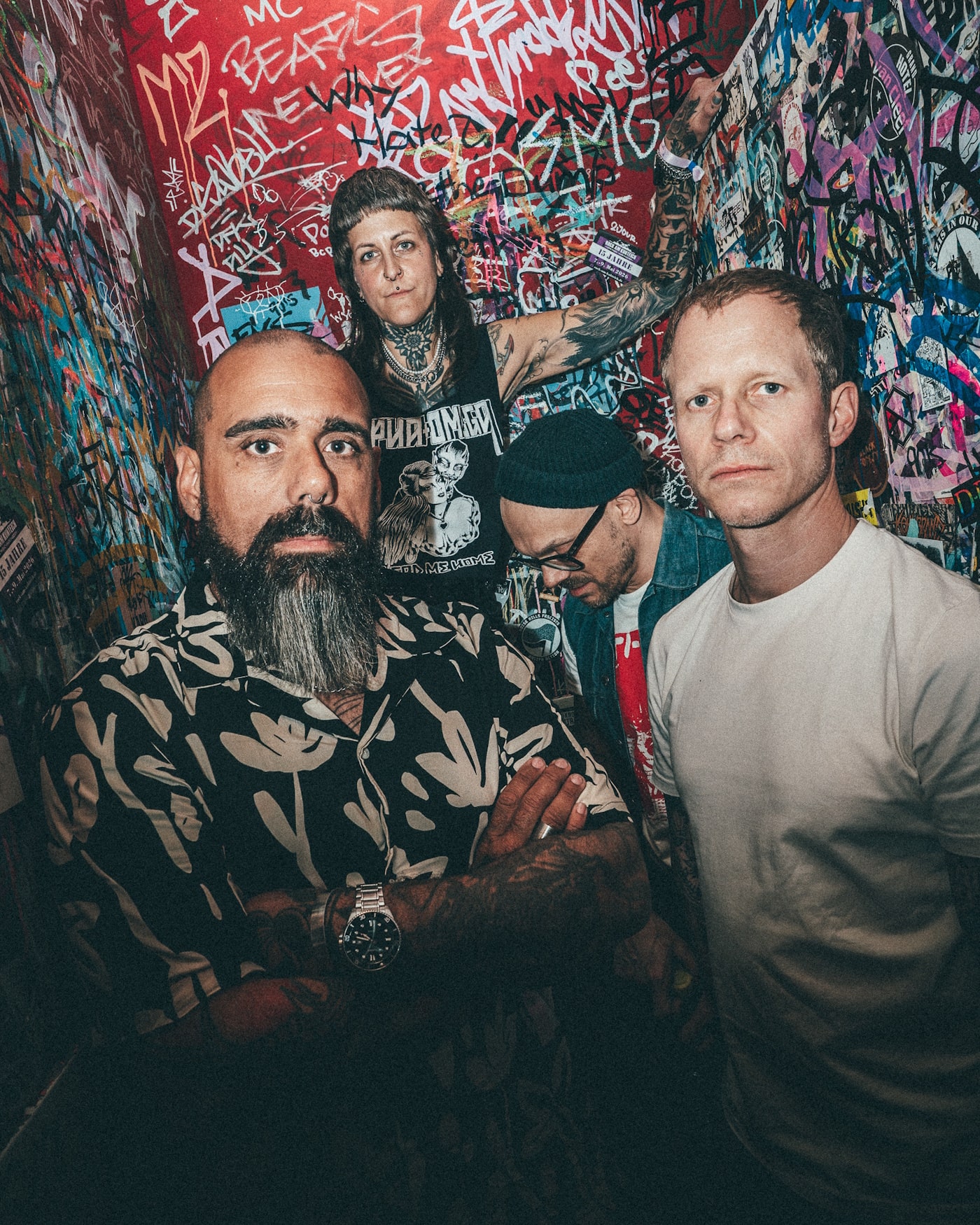


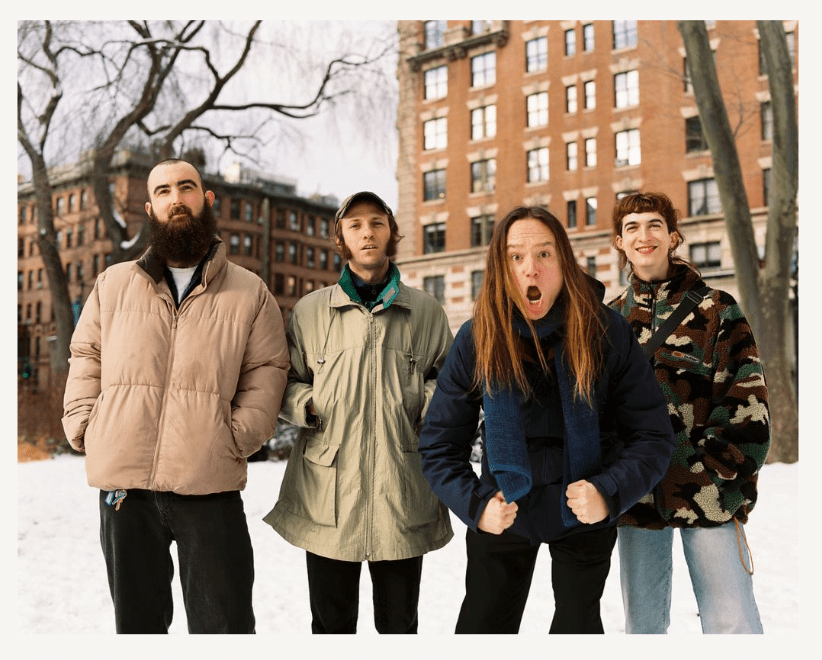
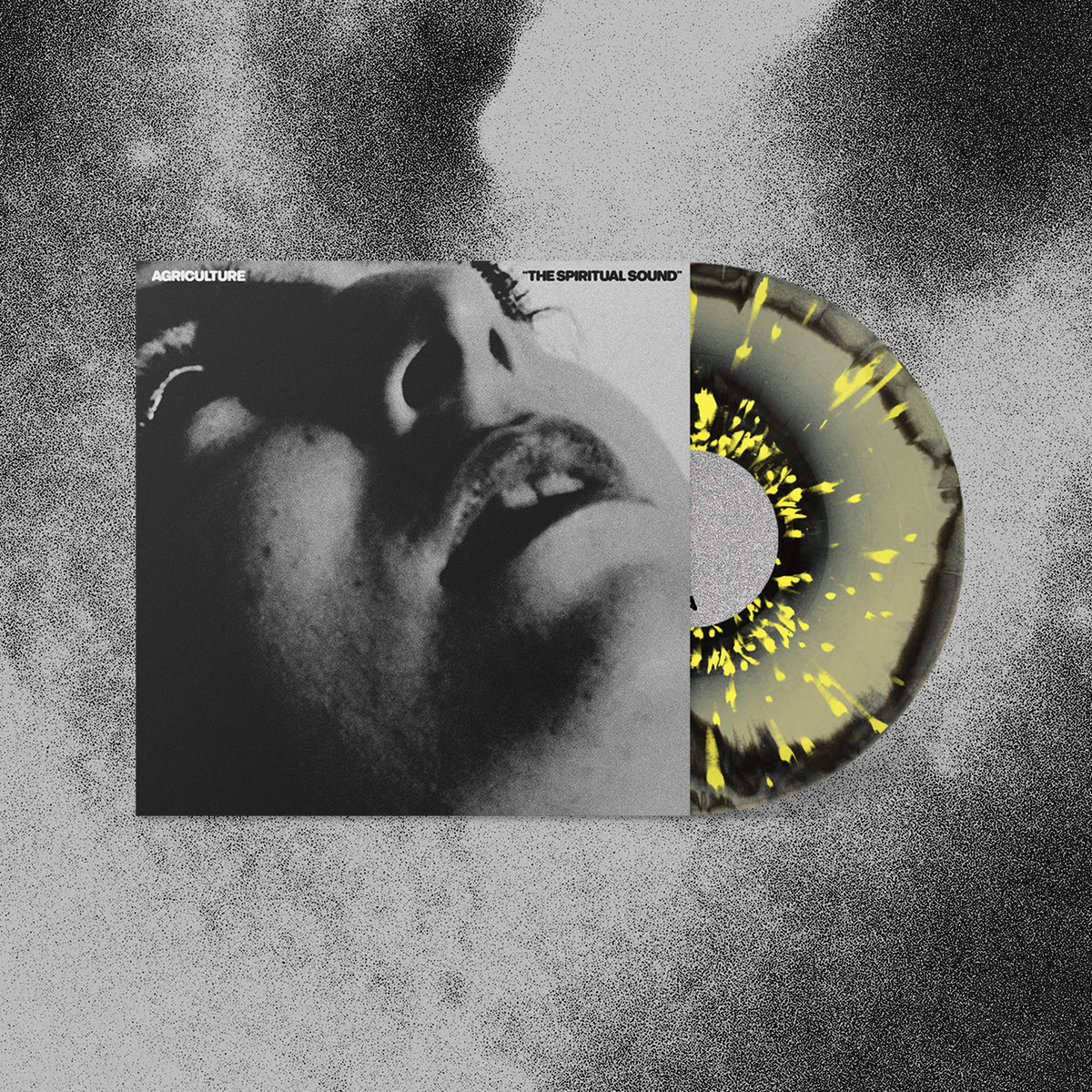
Los Angeles band Agriculture release their new full-length “The Spiritual Sound” on October 3, 2025, a record that carries a sharp sense of demand—both in its structure and in its themes—drawing together searing catharsis and devotional undercurrents. The album is shaped by the two principal songwriters, Dan Meyer and Leah Levinson, whose approaches differ but converge into one grammar. Dan writes toward collapse and Zen emptiness, channeling grief and history. Leah’s songs lean on queer history and AIDS-era literature, with an attention to daily survival.
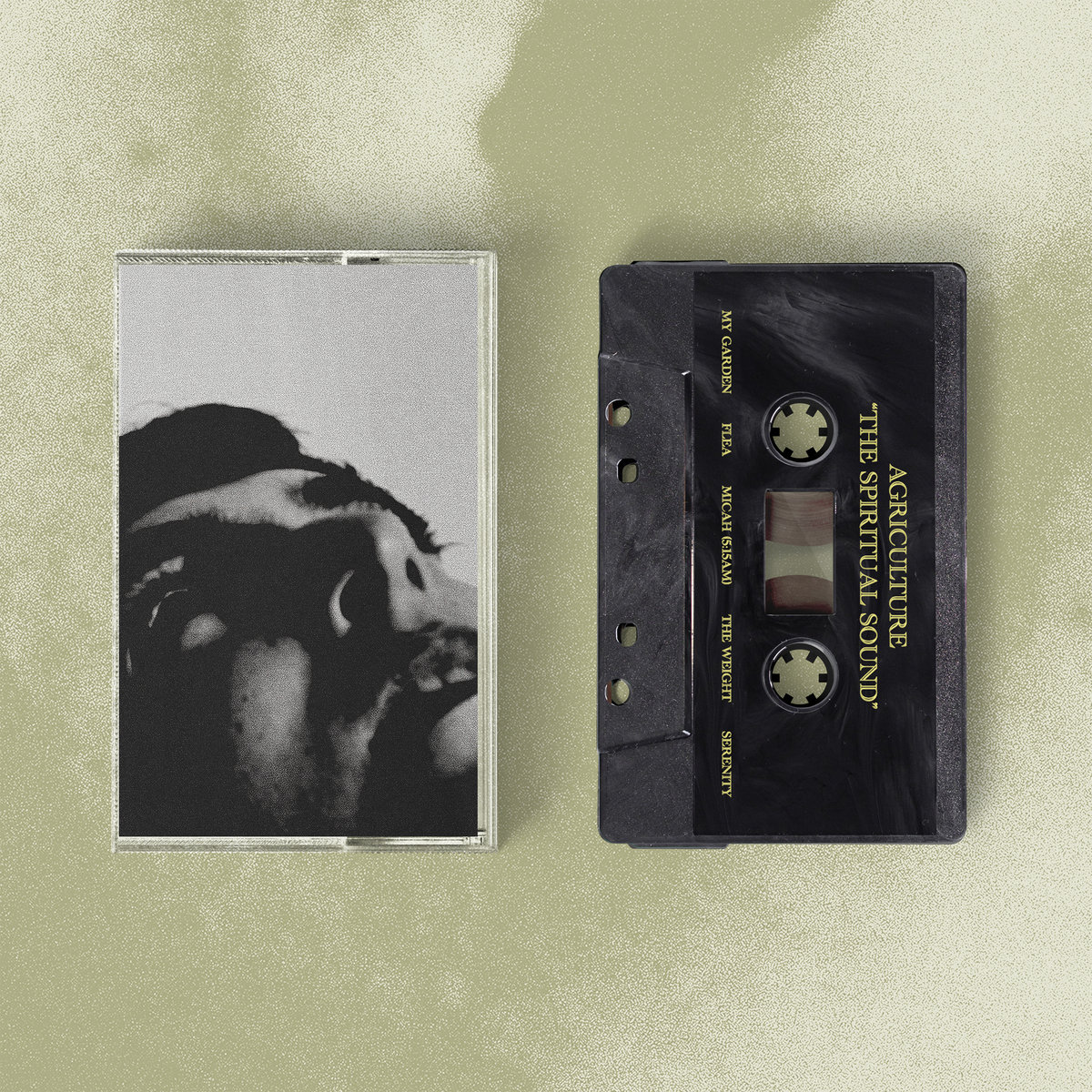
The record runs through ten tracks, from the opening “My Garden” through the brief title piece “The Spiritual Sound” and into the closer “The Reply,” featuring guest vocals from Emma Ruth Rundle. Its construction reflects a process the band describes as dismantling and rebuilding—songs are brought in, pulled apart, and reshaped until they emerge as collective expressions. Guitarist Richard Chowenhill, who also produced and mixed the record, called this “a merging of our individual identities in a way that generates potent results. Trust and fellowship are important during this process, and the construction of each song brings us closer together.”
View this post on Instagram
Leah noted that the tension inside this collaboration is part of what makes the band work. “Creative differences help the work grow. A lot of difficulty that has come with that friction has been, in part, growing pains as we’ve learned to work together and also grown together. We’re still a relatively new band. We’ve just worked incredibly fast and hard for the few years we’ve been together.”
Lyrically, Levinson avoids slogans. She explained that queerness is rarely named outright in her writing: “It becomes a kind of ‘show, don’t tell’ thing because then, as a writer, I have to actually get into the aspects of it I want to write about. The one moment I really use language like that is when an outside character uses a slur in ‘The Weight.’ That feels telling in some way.” For her, the aim is to place lives before categories, to avoid turning personal experience into branding.
The band’s imagery often lingers on the mundane. Gas station snacks, mildew clubs, sleeping floors, broken vans—all become part of the spiritual texture of the music. Leah said of the “Bodhidharma” video that “spiritual experience isn’t achieved through some transcendentally pure set of conditions. It’s something we seek through daily practice, labor, and experience.” Richard added simply, “there is definitely something grounding about the banal and the quotidian.”
Agriculture formed out of the Los Angeles noise scene, beginning with Kern Haug and Meyer before Levinson and Chowenhill joined. Their earlier work, from “The Circle Chant” through “Living Is Easy,” established a foundation of ecstatic black metal that the new album deepens. The band doesn’t offer resolution or salvation here. Instead, “The Spiritual Sound” confronts the unbearable and insists on presence, echoing the Buddhist line: “the only way out is in.”
In the full interview below, the band expands on the weight of extremes, how queer survival can be written without simplification, the role of friction in their songwriting, the influence of their local scenes, and the small, unglamorous details that keep their music rooted in the real.
When I listen to this record, it feels like you’re both dragging listeners through fire and pulling them out into light, almost in the same breath. Did you start writing with that sense of extremes in mind, or did it just emerge from the way your lives collided at that time?
Leah: I think that’s a big part of what we try to do. The world we live in can be pretty intense if you really take it in. In my own experience, extreme music and art can engage the part of me that has witnessed that and sort of meet me where I’m at. Or at least where some deeper part of me is at. I think part of our project is engaging that and then directing that energy elsewhere. We’re not trying to make music that is extreme for its own sake. It’s not a pissing contest.
Leah, you mentioned wanting to write about transness and queer life without falling into slogans or tired tropes. That feels like a tricky balance—how do you know when a song has crossed the line into honesty, instead of performance or branding?
Leah: I agree it is tricky, lol. I think one thing that has helped me is avoiding direct language around queerness. I don’t think I ever use the terms queer, gay, trans, etc. in an Agriculture lyric even though my lyrics for the band are often stemming from or oriented around those aspects of my life. It becomes a kind of “show, don’t tell” thing because then, as a writer, I have to actually get into the aspects of it I want to write about. The one moment I really use language like that is when an outside character uses a slur in “The Weight.” That feels telling in some way. When I’m writing, I’m trying to put the lives before the categories.
View this post on Instagram
The whole band has this process of tearing songs apart and rebuilding them communally—it sounds messy, even painful sometimes. Do you think that friction is the real engine of what makes these tracks alive, or would you secretly love for it to be easier?
Richard: I think this is an important part of how we work. It allows for a merging of our individual identities in a way that generates potent results. Trust and fellowship are important during this process, and the construction of each song brings us closer together.
Leah: I think our friction in collaboration has definitely made us a more interesting and better band. Creative differences help the work grow. I think a lot of difficulty that has come with that friction has been, in part, growing pains as we’ve learned to work together and also grown together. We’re still a relatively new band. We’ve just worked incredibly fast and hard for the few years we’ve been together. We’re all pretty open and caring people and we’re also all pretty good communicators. Some bands build up baggage over the years that just makes things harder. We have a pretty good track record so far at working against that trend.
I like that the record never pretends to be some “map out of the fire”—instead it’s just presence, confrontation. Did you have moments in making it where you thought, “this is unbearable, this is too heavy,” but kept going anyway?
Richard: There were moments – when our city was on fire, during the last election cycle, during the ongoing international conflicts – when the heaviness of reality felt more present than ever, and that is just life. If the music reflects any of that, it is an honest reflection.
View this post on Instagram
The imagery of gas station snacks, mildew-smelling rooms, broken vans—it’s almost like the spirit is hiding in the grime. Do you think that everyday dirt, that cheap and imperfect stuff, is part of what keeps your music honest instead of drifting into abstraction?
Richard: There is definitely something grounding about the banal and the quotidian.
Leah: I think it’s just the truth of the world that dust gathers, things decay, and there is no perfection. Resorts and palaces require immense amounts of labor just to create the illusion of perfection. I think the mundanity in the lyrics and video for “Bodhidharma” is a good example of how spiritual experience isn’t achieved through some transcendentally pure set of conditions. It’s something we seek through daily practice, labor, and experience.
There’s something about the way your songs fuse grief with devotion—like the more unbearable it gets, the closer it feels to joy. Do you think suffering itself is a necessary ingredient in what you do, or could you ever write music from pure calm?
Richard: I have never experienced a state of pure calm so I couldn’t tell you!
Leah: I’ll second Richard’s response, but also say that I don’t think a present experience of heightened suffering is necessary to make good art. I strive to live a comfortable life and do live a relatively comfortable one. I also want to continue making good art in my relative comfort. I think what’s most important is to continue challenging oneself artistically.
The record has this dual grammar, two voices that shouldn’t blend but somehow do. How do you decide when a song belongs more to Dan’s side of the spectrum, or Leah’s, or when it needs to collapse both worlds into one?
Leah: It’s usually based on who the material originally came from. We often turn to each other for input or occasionally to help finish writing a part. That’s usually based on a vibe or when one of us gets stuck or cloudy in the process.
Richard: As Leah mentioned, a song may initially come from one person, but it is eventually filtered through all four members of the band, each with our own set ethics, playing styles, and compositional perspectives. We work together to shape a song into its final form, contributing parts and reshaping sections, and this results in the cohesion you are referring to.
The lyric video for “The Weight” hits with such directness—it doesn’t decorate the pain but also doesn’t wallow in it. Do you think listeners are ready for music that refuses to simplify queer survival into either tragedy or triumph?
Leah: I hope so! A lot of the work that I look up to hovers in that difficult space. I think it’s a major trap of representation that we end up turning to those poles to justify our presence or to make our case.
Moving a bit to your surroundings: Los Angeles has this reputation of being both a machine that chews artists up and a place where wild, fringe scenes thrive. How do you feel your local noise and heavy community has shaped you, and where do you see it shifting right now?
Leah: To your point, we all have different smaller scenes and communities we’re a part of when we’re home. You really can’t generalize or paint LA as any one thing, it’s just so big and diverse. The music I’m around a lot at home is very creative and generally very separate from broader trends and scenes in music. That specificity and locality inspires me and keeps me going as a person.
Who have you stumbled across in 2024 or 2025 that feels like they’re carrying some of the same fire—artists from your scene or beyond that people might not know but should?
Richard: Machukha, who we brought on tour with us in Europe this year, is a fantastic band made up of really nice people who play very compelling music. (see IDIOTEQ featured here)
Leah: We also love Senza from the Pacific Northwest and Lagrimas from LA.
Touring across mildew clubs and sleeping floors always sounds poetic until you’re the one dealing with the smell and the stiff back. How do those lived, unglamorous details feed back into your vision of what’s “spiritual” in this music?
Leah: We played a show on a recent tour that was at a particularly dingy and ramshackle venue. In the midst of a long tour it felt a little tough to set up and load into. It ended up being among our favorite shows we’ve played, namely because it was in a place bands often don’t visit and the enthusiasm and connection from the audience was that much more present. I also love any time that the source of our sound can be the amps and drums themselves. In general, the less we have to rely on the monitors, mics, and PA, the more I feel connected to the music.
View this post on Instagram
Do you ever worry about the weight of documenting queer life, grief, collapse—like you’re archiving something bigger than yourselves—or do you try to keep it grounded, not let it turn into myth?
Leah: I don’t really think about it like that because I just try to speak for my world, my knowledge, and my experience. I can’t ever represent, speak for, or stand in for anyone else. I can only be present and visible as myself and let others take from that what they will.
And just on a personal note: when all the songs are done and the record’s pressed, do you still hear your own pain and stories in them, or do they belong to the crowd the moment they leave your hands?
Richard: They go from being personal to being shared in a way that reinforces the fellowship we have with our listeners.
Catch the band live at the following dates:
View this post on Instagram
Oct 8 Brooklyn, NY — Union Pool (Record Release Show)
Oct 27 San Antonio, TX — Paper Tiger $
Oct 28 Austin, TX — Mohawk $
Oct 30 Atlanta, GA — Masquerade $
Oct 31 Saxapahaw, NC — Haw River Ballroom $
Nov 01 Silver Spring, MD — The Fillmore $
Nov 02 Philadelphia, PA — Union Transfer $
Nov 04 Louisville, KY — Zanzabar
Nov 06 Oklahoma City, OK — 89th Street
Nov 08 Albuquerque, NM — Launchpad
Nov 09 Phoenix, AZ — Valley Bar
Nov 11 Denver, CO — Hi-Dive
Nov 13 Salt Lake City, UT — The State Room
Nov 14 Boise, ID — Neurolux
Nov 16 Seattle, WA — Madame Lou’s
Nov 18 Vancouver, BC — Fox Cabaret
Nov 19 Portland, OR — Mississippi Studios
Nov 21 Sacramento, CA — Cafe Colonial
Nov 22 San Francisco, CA — The Chapel
Dec 04 San Diego, CA — Soda Bar
Dec 05 Los Angeles, CA — Lodge Room
$ with Boris