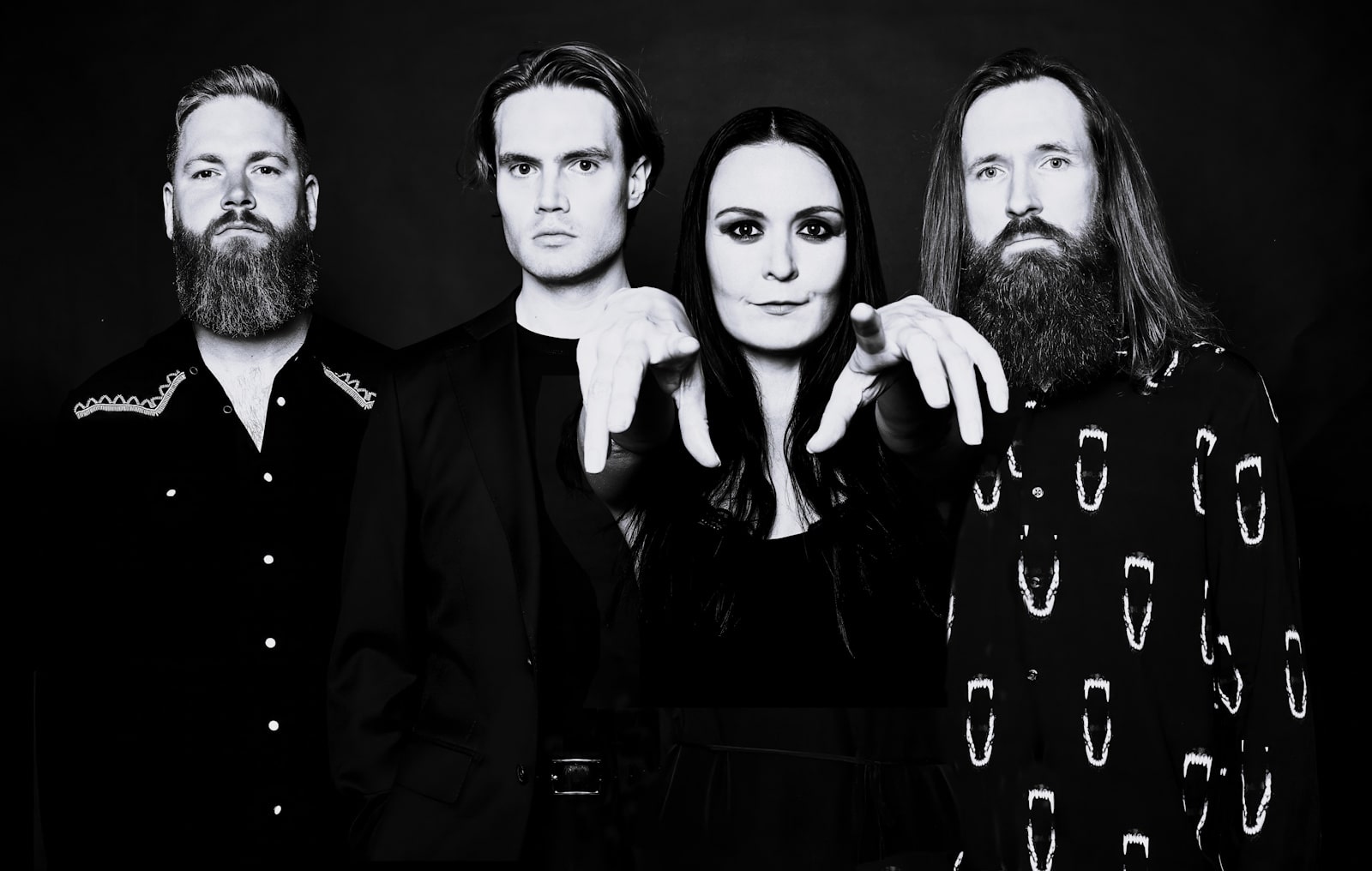


Main Era’s second full-length album, “Four of Wands,” comes out of a year when the Boston-based experimental-rock quartet decided to live under the same roof in Allston and build a record from the inside out. They tracked and produced it themselves between December 2024 and July 2025, turning their house and rehearsal space into a working studio.
They describe it as a document of that period — a stretch marked by touring more seriously, absorbing the influence of progressive and avant-garde projects in Boston, New York, Philadelphia, and Montreal, and learning to trust the idea that “you can really do whatever you want with music – there are no rules.”
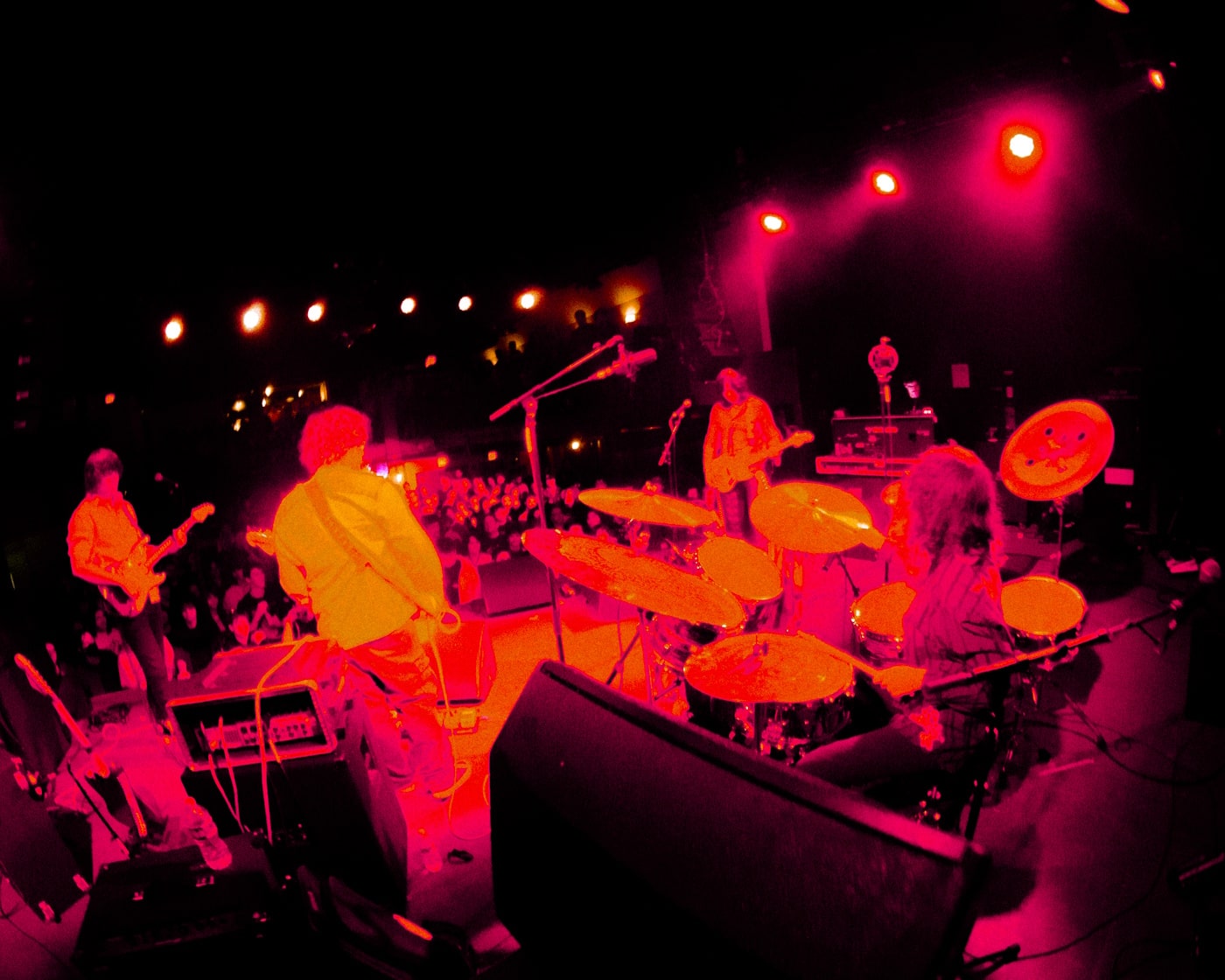
Last year’s touring pushed their sense of direction, especially nights spent with groups like Walk me Home, The Fringe, Bloodsports, Wiring, Microgoblet, and Boyscoutmarie. Those shows reshaped how they approached sound and loosened whatever definitions they thought they were supposed to follow.
They described it as a transition out of the habits built during earlier releases “Archie” and “The Bank, a Farmer,” both tracked live to tape with Andy Davis at Submodern Audio. That earlier workflow had its charm, but the new material called for the freedom and trial-and-error that only a shared basement could give them.
They started piecing together a studio from scratch: some microphones, a beat-up multitrack interface, piles of cheap blankets from Goodwill, and an 8-by-8 room that forced them to figure out mic placement by feel. They kept recording rough ideas whenever work schedules lined up. They said it felt like circling back to the way they began during the lockdown era — improvising, tinkering, and letting accidents lead the way.
Reinvention runs through their catalog, something they reflected on while looking at how little their releases resemble one another. They admitted it makes older sets feel out of step with what they’re doing now, but they’ve started to see that restlessness as a strength. “I guess we never reached a sound or aesthetic that we wanted to stick with… I don’t think any of us are comfortable settling on being one thing in particular.” The new album takes that instinct and pushes it into a more intentional shape, merging everything that influenced them into what they consider a cohesive story.
The title “Four of Wands” came from a tarot card they drew in Chicago while touring with Wiring — a night they described as charged, one of those rare moments when everyone in the room seemed aligned. The card’s association with celebration, community, and milestones felt like it matched the meaning of the record.
The band pointed to the support around them: the mixing handled by Nate Scaringi and Cameron Woody, the album cover shot by JJ Gonson with visuals by Digital Awareness, and the decision to release it on their own tape label Interluxe Distribution to support their peers’ physical media projects. They talked about how these connections shaped the album’s sense of direction: “We’ve been so lucky to meet and work with so many amazing artists… Four of Wands as a whole is a representation of that seeking.”
They describe the record as a reflection of the times — confused, loud, and cyclical. The album leans into the idea that modern life feels unprecedented but also echoes older patterns. They call it a kind of sound collage, mirroring the overwhelming noise of the present back onto itself, drawing patterns only because people are wired to try to make sense of things that barely line up. Much of the songwriting frames reality as something processed through subjective filters, shaped by fear, memory, repetition, and attempts to find clarity.
View this post on Instagram
“Erasure” sets that tone through a short narrative of Thomas, drifting through a morning that doesn’t recognize him. The lyrics slip into scenes of blank spaces and disappearing identities: “Picture a place / Clinical and white / Where you can erase everything / To purify your mind.” Later lines shift into confrontation, fractured memory, and a sense of being hunted by the past: “Get out / You only show up when you need something… I know what you did.”
“You Must Be Patient” leans into a hall-of-mirrors perspective: a character sprinting through rooms that fold into each other, caught between reflection and distortion. Lines like “A thousand eyes in reflection / And as I move they follow suit” point to the album’s larger theme of losing track of what’s real while trying to hold onto some sense of continuity. The refrain “Everybody’s waiting for you to be patient” comes off more like a warning than comfort.
“To Love Again” breaks into something more direct — a self-reckoning about vulnerability and identity: “i’m full of love / and i’m sick of pretending that i’m not.” It’s stripped back, circling around the idea that learning to love someone else requires learning to understand your own patterns.
“Double Dragon,” the lead single, moves between mundane routines and larger, existential weight. The lyrics jump from internal monologue to bleak humor and resignation: “simple dreams / learn to worship / doesn’t matter… convenience / is it worth it?” Midway, the song drifts into scenes of neighborhood life — dogwood branches, new families next door, small dogs on morning walks — before widening again into lines about meaning, noise, and self-perception. One line from the band frames that tension directly: “when I first knew you, you tried to find meaning in a lot of the noise… you became more and more attuned, and you realized there was so much bullshit in the noise.”
The repetition that closes the song — “Everything / reminds me of” — loops until the phrase becomes its own kind of fog, a nod toward the album’s fascination with obsessive thought and the inability to fully detach from experience.
“Four of Wands” arrives in January through Interluxe Distribution. The record sits inside the band’s year of shared rooms, self-recording experiments, new scenes, and the feeling that identity never stays still long enough to define it. The band frames it as a milestone, but one shaped as much by uncertainty as celebration — a moment where all their influences, their community, and their shifting vision came together in one place, even if only briefly.