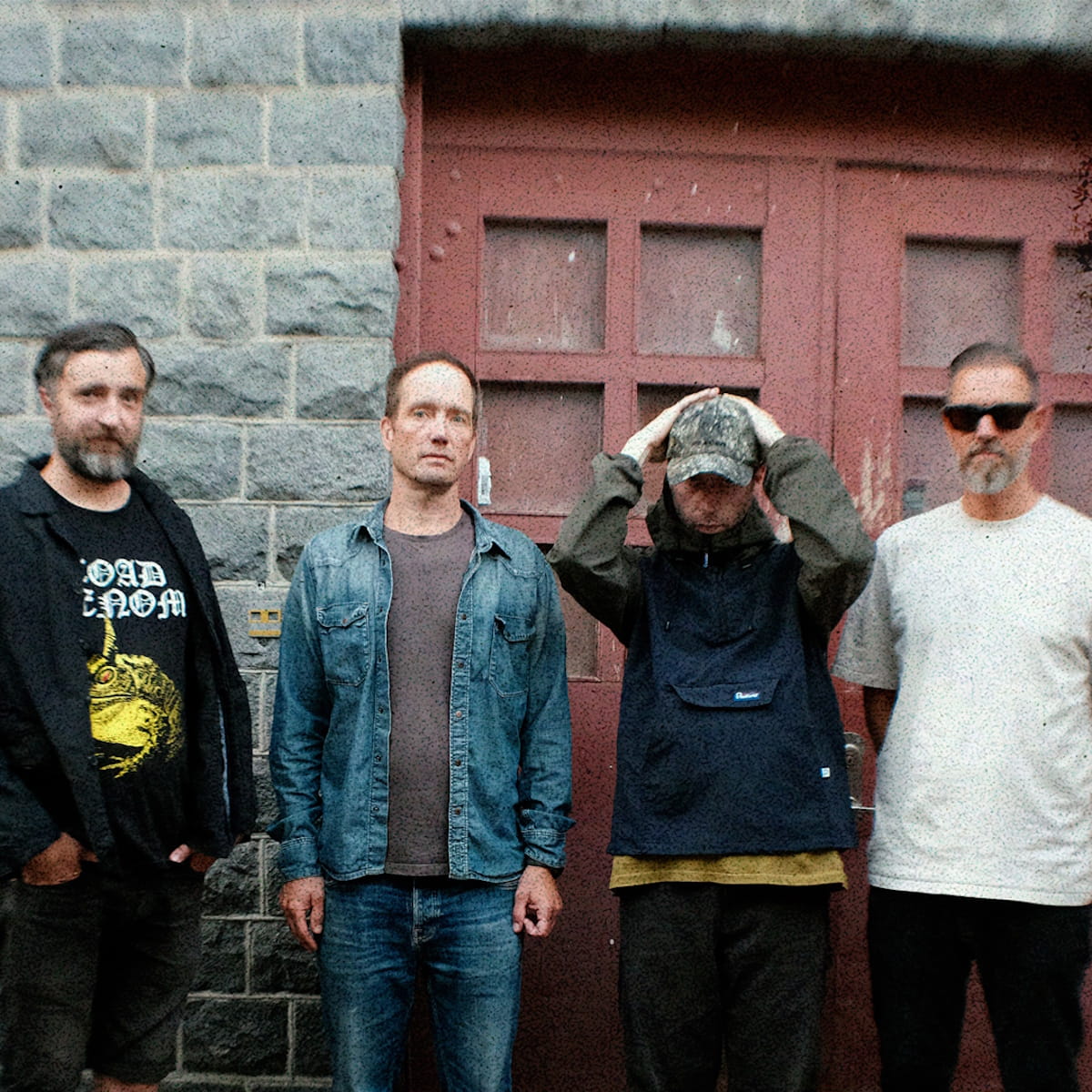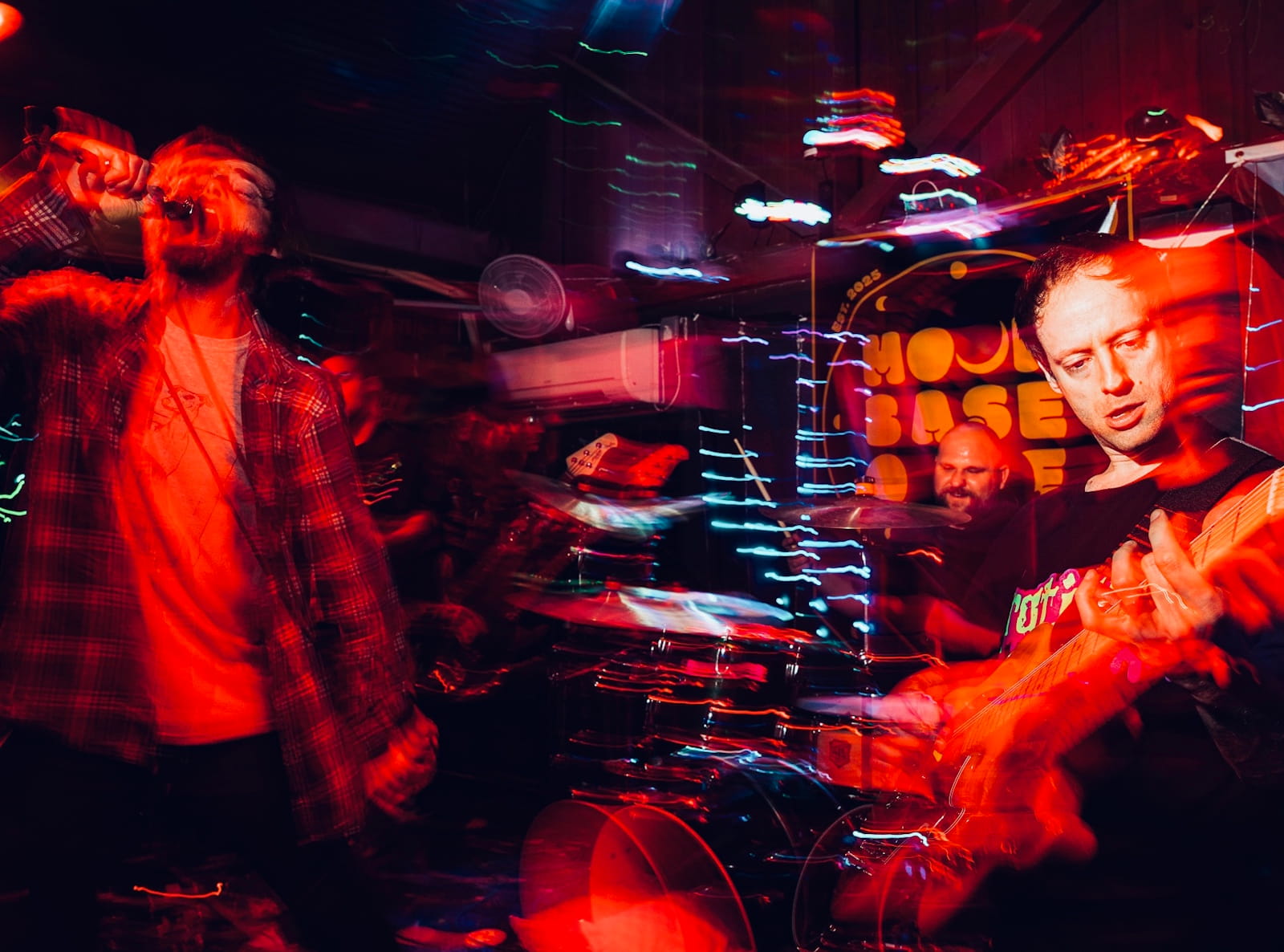

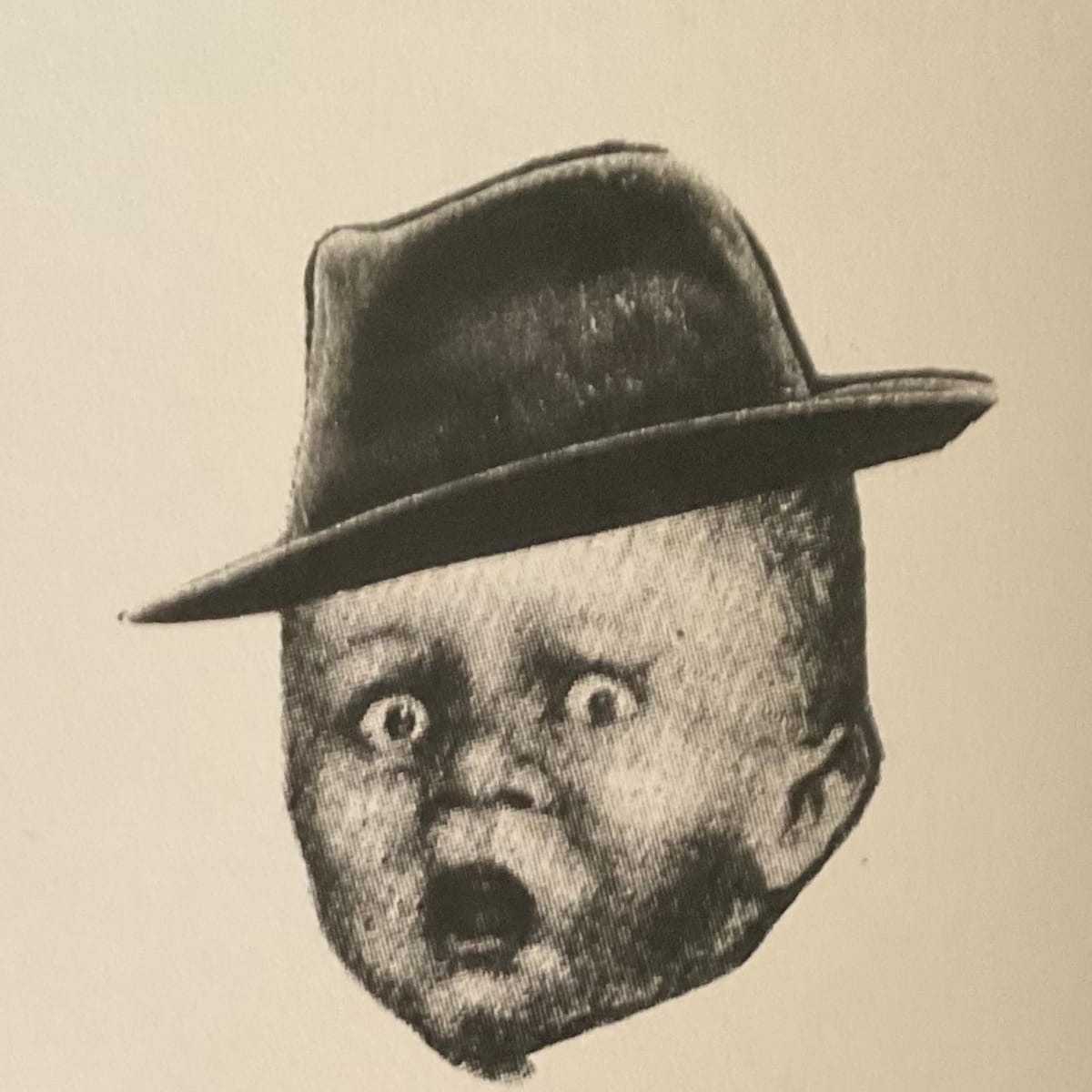
Van Gogh on the cover, Throbbing Gristle inside, a turtle, a balloon, and a proverb: anyone without a habitat is homeless. Shaun Day Woods assembled the zine that accompanies “Lithium” planning for Jimy Dawn to contribute an artist statement — they’re both writers, both published through Night Forest Press, and the project felt like it asked for two voices on the page.
Dawn decided not to. So Woods worked through it alone, pulling imagery he cared about and lining it up against his own thinking about music and rebellion and DIY culture, and somewhere in the process the document stopped being a companion piece and became something harder to categorize. “The zine became a sort of music autobiography,” he says, “because that’s what I had to do to start figuring out who I was in relation to music.”
The Van Gogh figure on the front represents, in his words, “existentialism, loners, outsiders.” Van Gogh once wrote to his brother Theo: “I can write poems with colours.” The turtle is the indigenous expression of Turtle Island, the land they live on.
The balloon stands for playfulness and openness to wonder. Nothing was chosen casually — “all of the imagery has specific meaning,” Woods says.
He wanted to pay homage to DIY culture, to art and music and rebellion, to artists he felt were totally free. He writes about mental health. He references Throbbing Gristle. Everything is fluid, he concludes. Even truth.
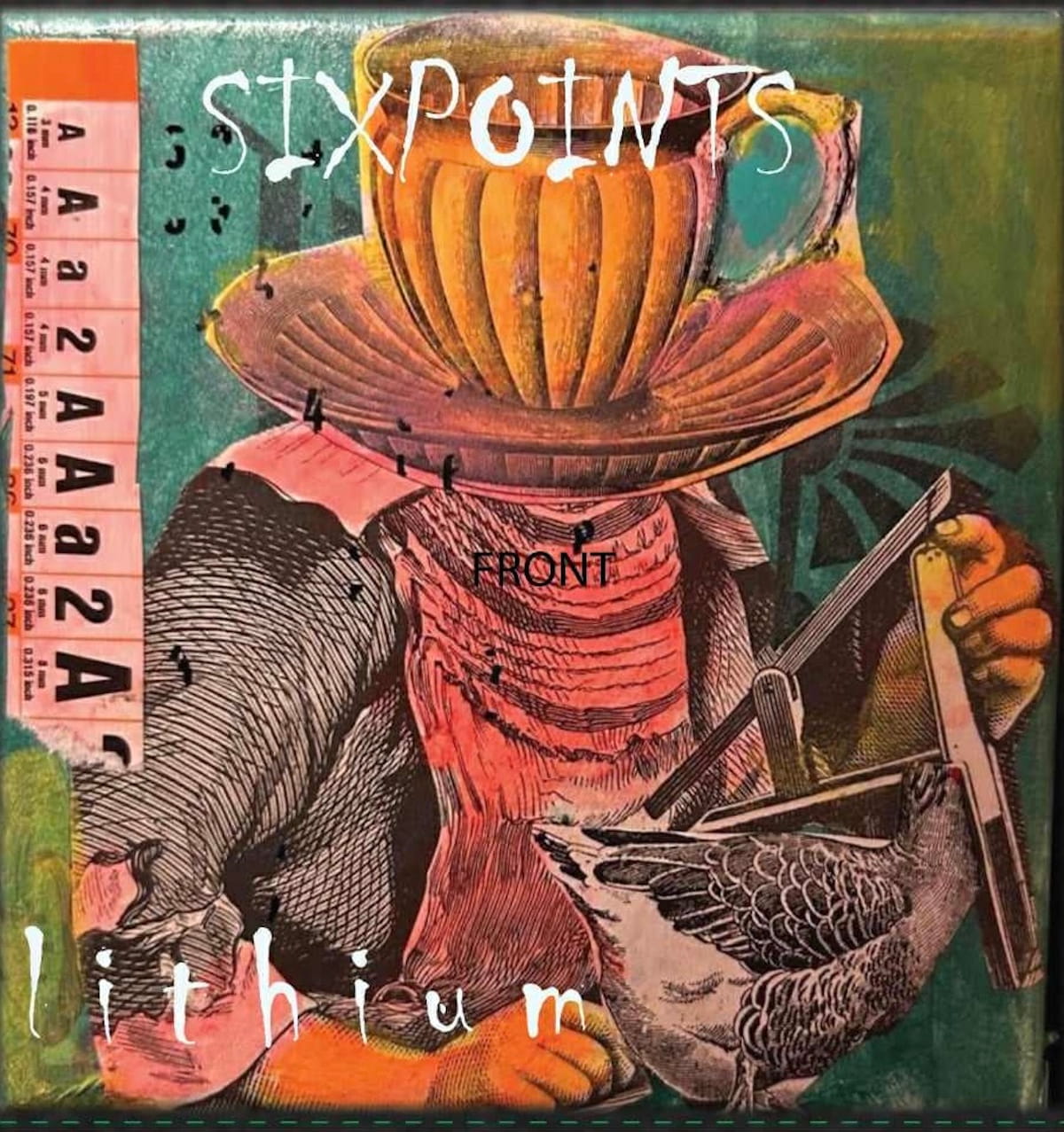
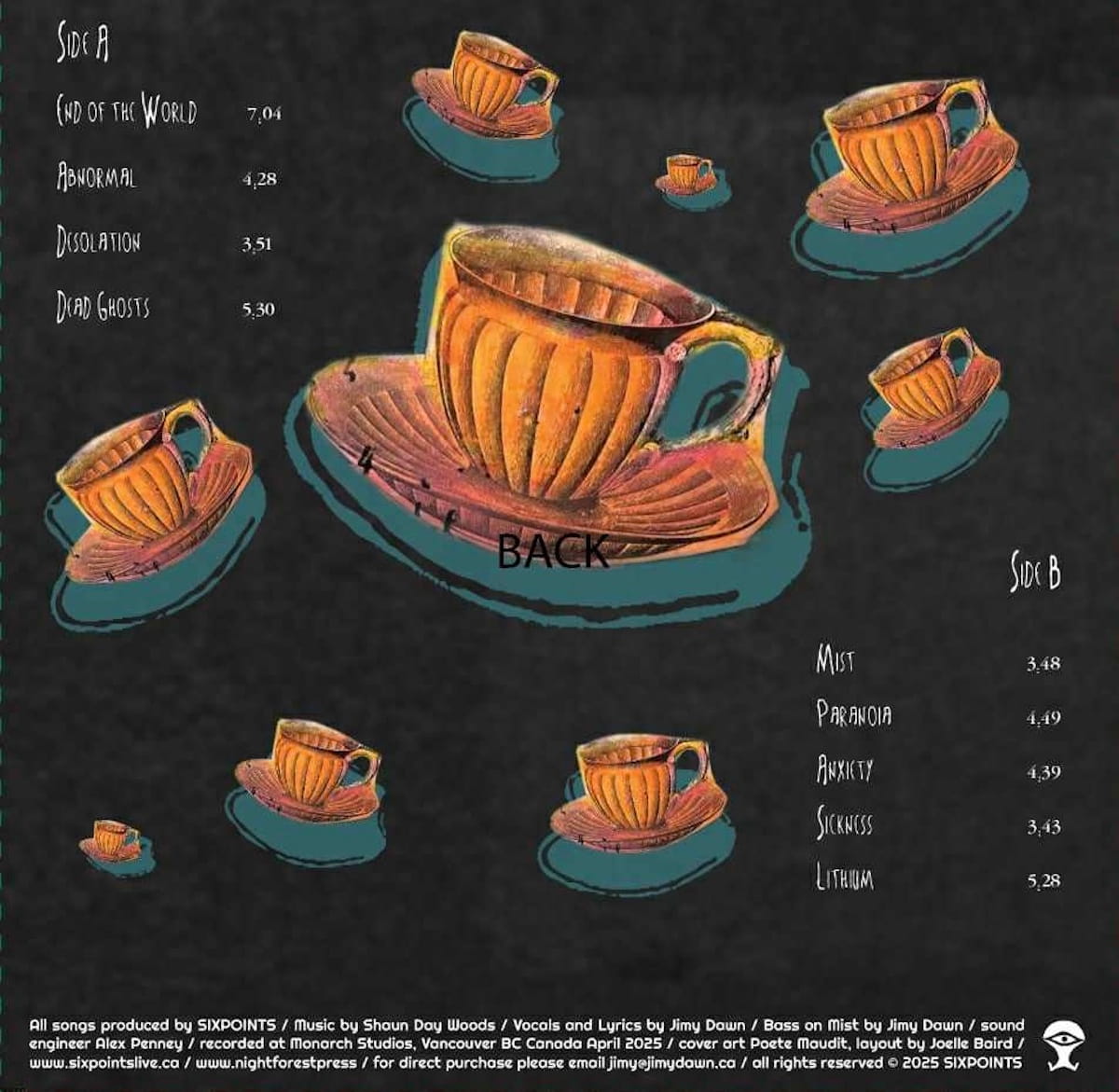
“Lithium” is Sixpoints’ second album, out February 19. They released “Negative Space” in early February — [we covered it here] — and both records were tracked, mixed, and mastered at Monarch Studios by Alex Penney. Layout, design, cover art, and all collages for the zine are by Woods.
The album title works on two levels simultaneously. As Dawn put it in the release statement: the lithium in the title is the gargantuan wound in the earth’s skin torn open to mine for it — proof that the dream of a techno utopia carries a heavy cost. And lithium is also a mood stabilizer, a reminder of how fragile mental health is. Both things are true at once. “Music is both an escape from these gloomy thoughts and a way to confront them,” Dawn writes. “It is alchemy. It has always been a bringing together, it connects hearts. It reveals the invisible. It can speak to ghosts and animals.”
That last line belongs to Woods. Asked to unpack it, he doesn’t reach for easy ground: “There is something both spiritual and magical about music. In a very deep way I don’t feel responsible for what I create. It’s something like discovering. It’s already there.”
He describes composition the way someone might describe moving through unmarked terrain — going off the beaten path, making risky moves, finding waterfalls no one has seen, ancient trees at remote viewpoints.
Woods calls what he makes “Surrealist Hashcore” — a term he uses with both self-awareness and conviction. “I’m in kinship with surrealist ideas and practices and I often smoke hash when I create,” he explains.
“A surrealist belief is that we can find the marvellous in the unexpected, and music can be like a dreamscape, rife with such moments of discovery.” When he composes, he says he’s searching for emptiness — working inside it without conscious ambition, without trying to be original, without a target. “I am not creating for anybody or for any ambition.”
He plays without counting bars, moves rhythm as the sound asks him to, never loops more than occasionally, and doesn’t build around verse-chorus-bridge. “I took the easy route and decided not to create music based on preconceived notions of what a song is.” He also distinguishes between the tools: he’s been playing instruments — primarily guitar — for fifty years, but doesn’t consider himself a guitarist. “I’m a sound artist, I guess. For my purposes and pleasure the guitar is really just a specific shape with six strings stretched across it.”
“Music is an extra-rational or a-rational experience,” he says. “It’s outside normal realms of reason and science.”
He invokes Sun Ra: music is a spiritual language. And he holds that seriously enough that performance functions differently for him than composition — he performs to share, to create spaces for sharing, to support Dawn, who he describes as “an accomplished stage artist.” At their best, he says, music events “can be revolutionary happenings. They can be part of what sustains radical ruptures, and cultures of resistance.” But composing alone is where he’s happiest — no judging eyes, no ulterior motives, “seeking only the immediate joy of the creative process.”
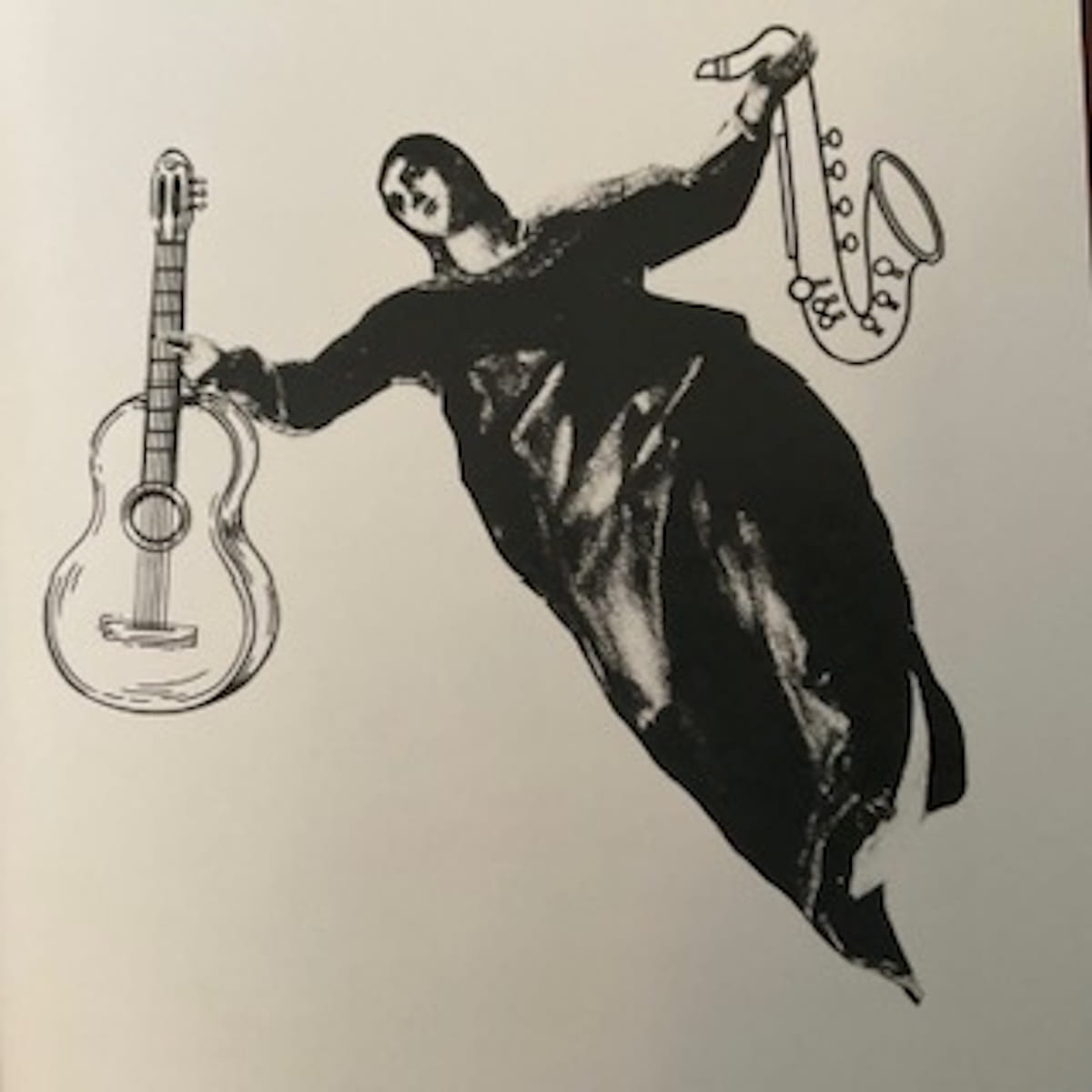
One track from “Lithium” he points to specifically is “the end of the world” — a piece built around a dual meaning: the end of the civilized human world, and the end of the punk world. “I think the coming apocalypse will also bring chaos, wildness, and freedom as it clears the table for the next feast,” he says. The whole thing was made with just fingers on a laptop keyboard, no midi. “It’s also announcing the end of punk, because you don’t need guitars or drums or anything analogue really, just an old laptop and a couple of fingers.”
The process between them has shifted since “Negative Space.” Woods was originally uploading tracks solo under the name Maps of Tomorrow on SoundCloud when they decided to reconnect — picking up a dynamic they’d built decades earlier in their post-rock project Sylo, in rural western Canada in the early 2000s.
The model was clean: Woods sent files, Dawn picked his favourite, added vocals, sent it back. For a couple of years, the only request from Dawn’s side was that the songs be longer. “Which isn’t easy,” Woods notes, “when you have eight tracks that each need to be stretched out.”
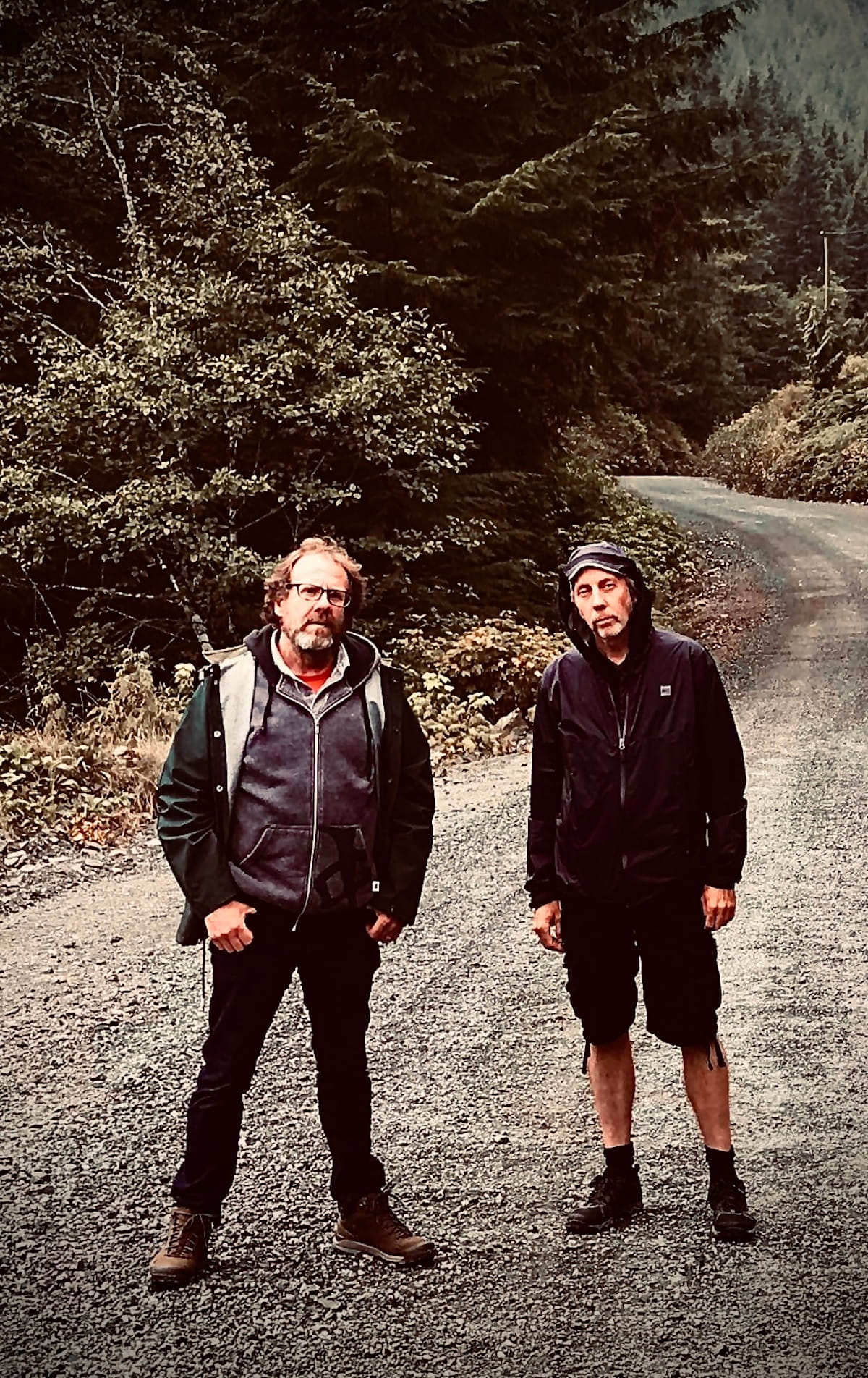
Then Dawn started playing bass, and the dynamic got more complicated. He’s been contributing bass lines and taking more interest in shaping the music, particularly in the final stages of recording. Woods names the friction plainly: “We had a few tensions around areas of control. Perhaps unfairly — I’m still thinking about it — but I felt I needed to push back against his desire to be a bigger part of the music aspect.”
The model he’d had in mind was the Sleeford Mods: one person handles the music, the other handles lyrics and voice. Clean division of labour. “There is an appealing simplicity to that. But life and art often make other demands, tease us with new ideas and possibilities.”
Woods also clarified, separately, that the composer credit isn’t static going forward. Dawn has been playing bass for a couple of years and doesn’t want to be confined to vocals and lyrics. And Woods hasn’t ruled out eventually contributing words or voice himself. What “Lithium” costs, creatively, is some of the simplicity the first record had.
But it doesn’t break them. “We are brothers and old friends and have collaborated on many things besides music,” Woods says. “We both recognize that our creative output is embellished or elevated by each other. Behind the scenes in many ways is where the guts of the output happens. We talk, we jam, we dream, etc. So I see the tension as a natural part of creating great collaborative art and being free.”
He also draws a distinction that matters for how you hear the record: a song, in his definition, has vocals and lyrics — a composition doesn’t. The two are different things. What’s on “Lithium” is the result of their entire lives, he says — not just time spent with instruments, and not only the collaboration itself.
“We are both writers, philosophers, poets, artists, animals,” Woods says of the pair, and that range is visible in the zine’s logic. Dawn has a background in art; when he talks about it, Woods says he’s “always entranced and blown away.” His own background leans toward reason. “He has taught me a lot about seeing the world through a different lens than merely a rational one.” The zine is the space where those two orientations meet on the page — the artist’s eye and the philosopher’s questions sharing collages cut from the same table.
Both of them live on separate islands in the Pacific Northwest, and neither are scenesters. Getting to Vancouver means a full day with multiple ferries. That geographic reality makes conventional audience-building basically unreachable, but it also means the work happens with no milieu pressing in on it. “I’m home alone on my island in my little studio,” Woods says. Dawn has a garage, a microphone, a bass, and a lyric book. When they play live, they find local friends — “not internationally known,” Woods says. “Just local free artists doing their thing.” Woods puts it bluntly in the zine: “I’ve never been in a scene except the anarchist one, and I’m a little bit of an outsider there.”
He grew up in l’Acadie, where music works differently — everyone participates, there’s no shame in imperfection, the point is collective expression and shared bonds. That early experience sits alongside a memory of a Korean friend from 1975-76 who wrote beautiful folk songs and made a pilgrimage to New York to be heard. Record companies and café owners told him his work was impressive but that as a Korean, he wasn’t marketable. “That hurt his soul,” Woods writes.
The influences he names are spread across decades and don’t form a coherent scene: Neil Young as a starting point, Captain Beefheart and Patti Smith as early reference points for outsider experimentalism, and then in 1982, Grandmaster Flash’s “The Message” — “lyrically and musically, wow.”
In 1980, at twenty years old, he made a trip from his small Canadian mill town to the Mudd Club in New York — “I had to pay the doorman a big tip to get in as it was quite exclusive” — where David Bowie, Jean-Michel Basquiat, and Debbie Harry moved through the same space. Around 1995, he saw Scorn in Prague. Later: Godspeed You Black Emperor!, Mogwai, Tortoise, Slint, Shellac, Boards of Canada, Joy Division, Nick Cave, PJ Harvey. He also names Bill Callahan as a reference for how simplicity can hold complexity — “placing silence in exactly the right spot in sparse music is a skill. You don’t have to be a virtuoso to express profound or beautiful or relatable emotions musically.” But now: “To be honest I don’t listen to much music. I find a song I like and listen to it a million times. But I am almost exclusively fixated on and interested in creating my own sounds, which I do every day.”
The island feeds directly into the work. Woods’ book of proverbs, “Dancing and Digging” (Night Forest Press), includes the line he uses as a sign-off: anyone without a habitat is homeless. He wants to know every square meter of his region — the mountain a kilometer away, the deer trails, the wildlife.
“This was my first encounter with the racialized hierarchy that rules the dominant reality, including the culture industry.” The experience lodged. A lot of his music gets described as dark or moody, and he doesn’t argue with that. “I feel a deep hostility to the civilization I was born into and am in constant illness and recovery mode from the emotional and psychological pain it inflicts.” The connections to European avant-garde movements of the 1920s and 30s are ones he acknowledges without claiming direct lineage — he shares the interest in rebellion, the rejection of sanctioned structures, the belief that artistic experimentation is itself a form of dissidence.
“Unlike them I’ve never found milieus very interesting or inviting,” he says. “The dissidence that is socially consequential is usually widespread and on multiple fronts.”
He works late into the night, and after a bass session he’ll go outside for a smoke and listen to an owl nearby. “It’s evocative but it gets me high when I should be coming down so I can go to sleep,” he says. “I love that time of night when it feels like it’s just me and that owl. I’m feeling his sounds and rhythms and he’s feeling mine. Playing the bass is a good way to communicate to the animal and spirit world especially when everyone else is asleep.”
“Lithium” is available at sixpoints.bandcamp.com. Find them on Instagram and YouTube at @sixpointslive.
🔔 IDIOTEQ is ad-free, independent, and runs on one person’s time. If you want it to stay that way: DONATE via PayPal 𝗈𝗋 SUPPORT via Patreon.
Stay connected via Newsletter · Instagram · Facebook · X (Twitter) · Threads · Bluesky · Messenger · WhatsApp.