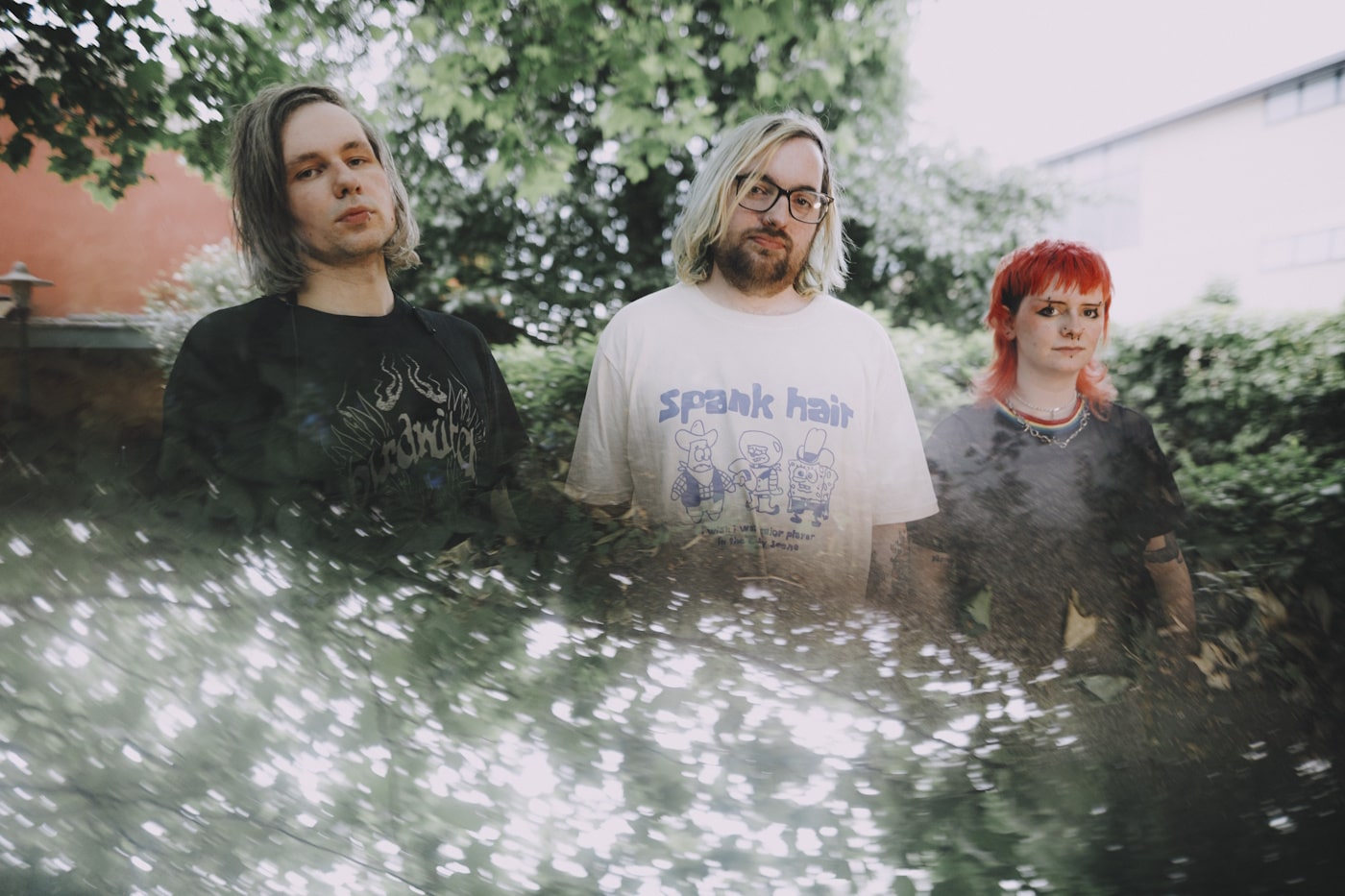

“Flattened” landed on December 8, 2025, as MPB’s third album and their first return to English after two Swedish-language records. The shift comes from a stretch of upheaval that pushed the band into a sharper, more immediate place.
Recorded under a bus terminal south of Stockholm with producer M Lindberg, the album moves with a heavier swing, built around a rhythm section that sounds like one shared pulse and a guitar voice carried over from years in earlier bands.
The first cracks in the new direction showed up after a funeral. Viktor Ahnfelt describes it: “We were in the early stages of writing our third album, tossing ideas around without really committing to any direction. That fall, I went to a friend’s funeral, someone I’d known since I first started playing music in my early teens. That event was kind of devastating, and in the days that followed, I made a more conscious decision to focus on making music, to carry on for those who can no longer do so.”
The service ended with “Marquee Moon,” and for him it wasn’t nostalgia so much as a quiet shove. “In a way, that moment pointed me toward what I wanted to write next.”
He went home and wrote the riffs for the opening track, “Breaking your nose breaking the news,” and “The spirit of giving (in)” almost immediately. He also revived an older riff that had never worked for MPB. This time the pieces aligned: “I wanted to tap into more of the urgency and immediacy of old noise rock and sludge, and everything started melding together in a new way.” It brought him back to an early mode of writing from QGMR in the late ’90s — instinctive, fast, and barely filtered. “The first demo we made was extremely primal and written in a flow. We haven’t written that way since then.”
Jonas Eriksson Slove and Mathias Rask–Andersen leaned in quickly. Years of overlap in MPB and Culkin make their interplay feel more fused than cooperative. Mathias says: “Me and Jonas played together in Culkin. He’s kind of a living juke-box for any song that was on TV or in magazines/fanzines in the early to mid 90s. And always with the correct essential detailed knowledge & timing. I can only aspire to the same. He’s way ahead.”
Their shared references run deep enough that rehearsal talk often dissolves into shorthand: “Sometimes we only talk in references for long periods of time, like fake Italian, lines from the movie Snatch, Alejandro Fuentes Bergström, etc. I have to make an effort to speak normal when we hang out.”
His approach to this record was to give Viktor room: “Viktor had something he wanted to pursue here so I wanted to give him space. Usually, we would play whatever riff someone vomited out that day and that would be the song, but here I would step back a bit.” What followed was a set of sketches that hardened once the three played together; the rhythmic cohesion arrived without negotiation, as if the old habits and shared muscle memory handled the structural work on their own.
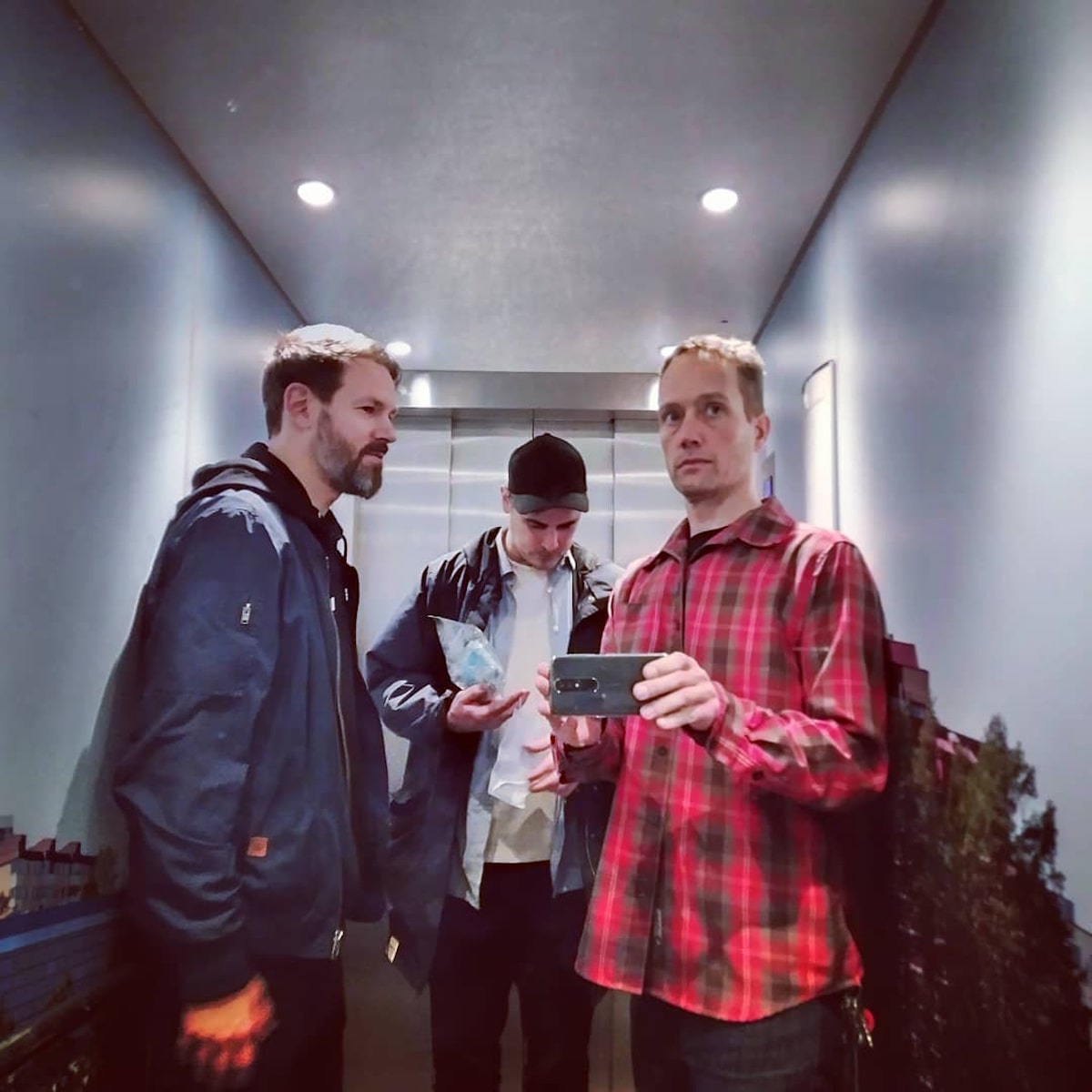
Guitarist Viktor Ahnfelt (Legbiter, Bughouse Park) carries the same raw, unvarnished playing he had in Quagmire — direct and instinctive, framing Jonas and Mathias with lines that stay close to the bone. Mathias (Statues, Circular Ruin, TT Reuter) and Jonas (Legbiter, Bughouse Park, TT Reuter) keep the songs anchored, often blurring who’s leading which turn. The band’s communal structure, active since 2014, shows up in the way the tracks unfold: not polished, not tentative, just lived-in enough to feel deliberate.
The language shift matters too. Viktor sees it as a reconnection rather than a pivot: “Singing in English rather than Swedish also felt like a way to reconnect with how we first started making music. So many bands sing in English, and the language is widespread in both Swedish culture and rock culture. In a sense, it feels less restrictive than our native tongue.” On “Flattened,” the English phrasing gives the songs a different kind of edge — not brighter or cleaner, just more immediate in the way the themes land.
Taken together, it’s a record shaped by crisis rather than commentary — pushed forward by personal shock, old patterns of writing, and a rhythm section that keeps the rawness from drifting.