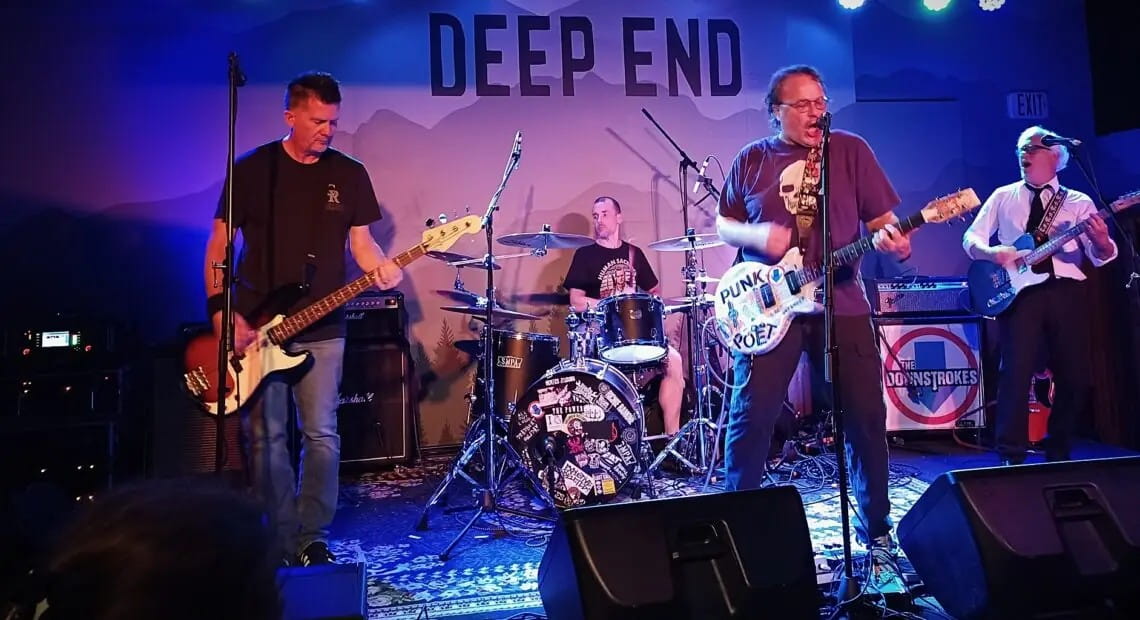


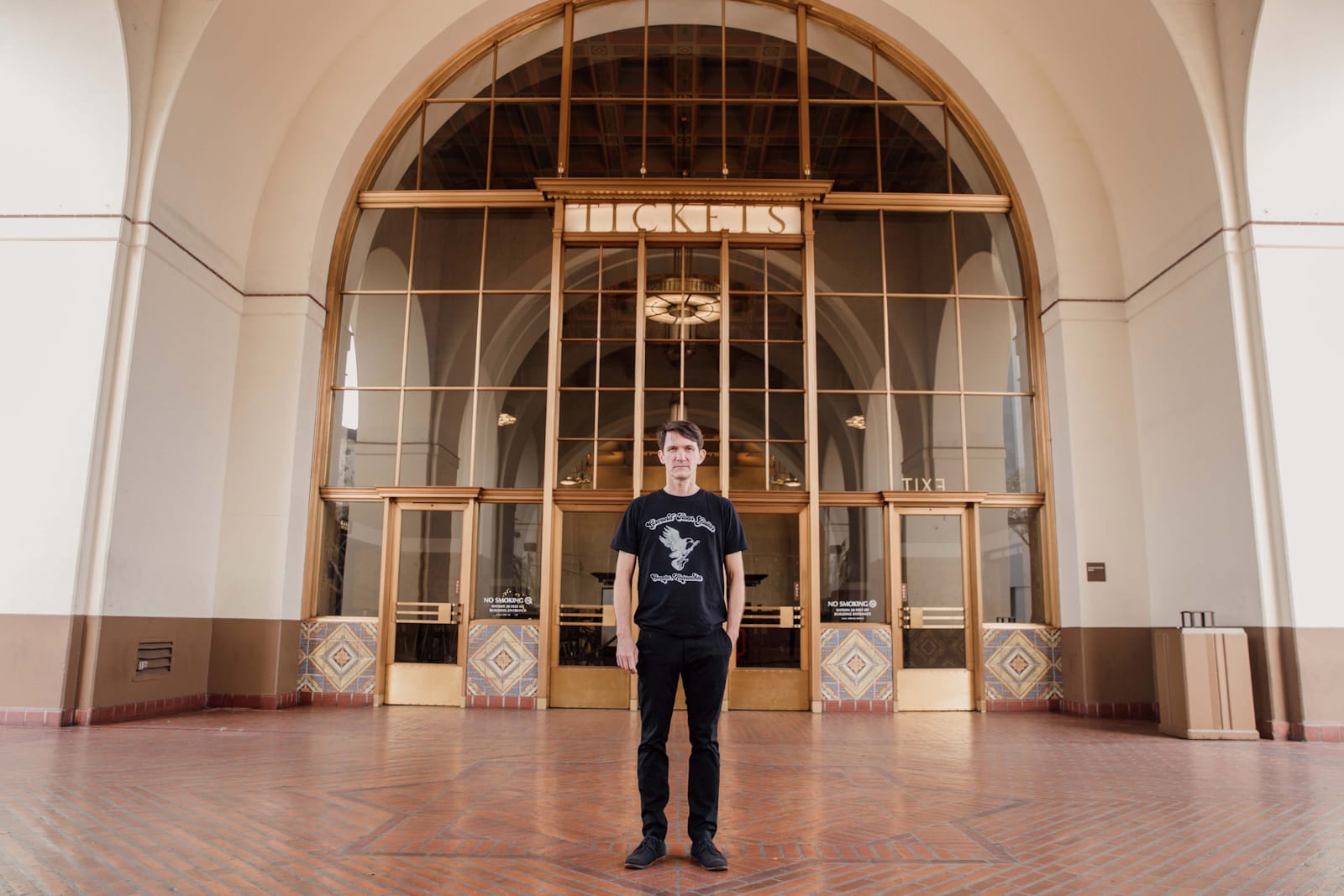
He didn’t ease into it. By the time the first song started taking shape, Tim Kasher had already been sitting on the urge to write for months, “champing at the proverbial bit” after more than half a year away from a focused album process. What could’ve been a stunt—writing a full record in a single long weekend—landed closer to release than experiment almost immediately.
That pace held. Four songs on day one. Four more on day two. Enough to hit the minimum he’d set for himself, but not enough to stop. “I still had to feel excited about the stuff,” he says. “I didn’t want to just write any old thing and say, ‘yep, that’s a song.’” Even under a clock, instinct didn’t get replaced—it got sharpened.
The record, released under Tim Kasher’s home phone, is called “Sponges of Experience,” arriving May 22 via Born Losers Records. It comes with an unusual condition: it won’t be available on streaming platforms at all. Two of its songs, “The Dying Animal” and “The Collapse,” surface first, both written during that same compressed stretch.
The idea traces back decades, to an offhand comment from Elvis Costello about writing an album over a weekend. Kasher carried that line around long enough for it to turn into a question he couldn’t shake.
“I recognized that I was fairly prolific… so it made my ears prick up,” he says. “I was never confident about it, more curious.” Thirty-five years later, he gave himself four days instead of two. “Perhaps that’s a cheat,” he admits, “but as it turned out, I absolutely needed those extra two days.”
Day three nearly shut the whole thing down. Not from doubt, but from exhaustion. Pushing late into the second night—helped along by a few drinks—left him empty the next day. “I simply could not muster anything clever that I was interested in.” One song, barely.
Then day four snapped back into motion. “The Collapse” and “Don’t Hang Up” both came out of that last stretch, part of a pattern he recognizes from nearly every record he’s made. “At the end of a writing period you already have a mass of ideas that you’re juggling in your head… a bar has been set,” he says. “You’re trying to reach that bar, trying to exceed it—and if you don’t, scrap that idea and move on.” In this case, nothing got scrapped.
Wyświetl ten post na Instagramie
That’s the part that still sits strangely with him. Kasher is used to overwriting, then cutting hard. Here, he kept everything. “I’m a harsh editor… It wasn’t easy for me to let all these songs be released.” Some wouldn’t have survived under normal conditions. “There are songs I absolutely would’ve cut… a few less inspired, less interesting.” But none crossed the line into embarrassment. The decision shifted from taste to documentation—let the weekend exist intact.
That sense of documentation was reinforced in real time. The entire process unfolded in front of his Patreon community, Tim Kasher’s home phone, where he’d go live to perform each song as soon as it was finished. “Receipts,” he calls it. The audience wasn’t passive. “An ‘audience’ of some sort will always shape what I write… I was most definitely affected by what the Patreon group was reacting to.” Not in a direct, conscious way, but enough to bend decisions at the edges.
Performing the songs immediately after writing them closed off any escape routes. “I had to truly finish the songs in order to perform them,” he says. No half-built bridges, no placeholder verses. “There’s a lot of shit in this world that we will say is ‘finished’… This stuff had to be finished.”
The year that followed was quieter. Arrangements came later, without rules or deadlines. Some songs required effort just to justify that second phase. “I could tell they weren’t very precious songs for me,” he says, but he pushed himself to treat each one seriously. The approach stayed minimal: if a song felt like a full band piece, it got drums, bass, and “one extra thing for counter melody.” Nothing more.
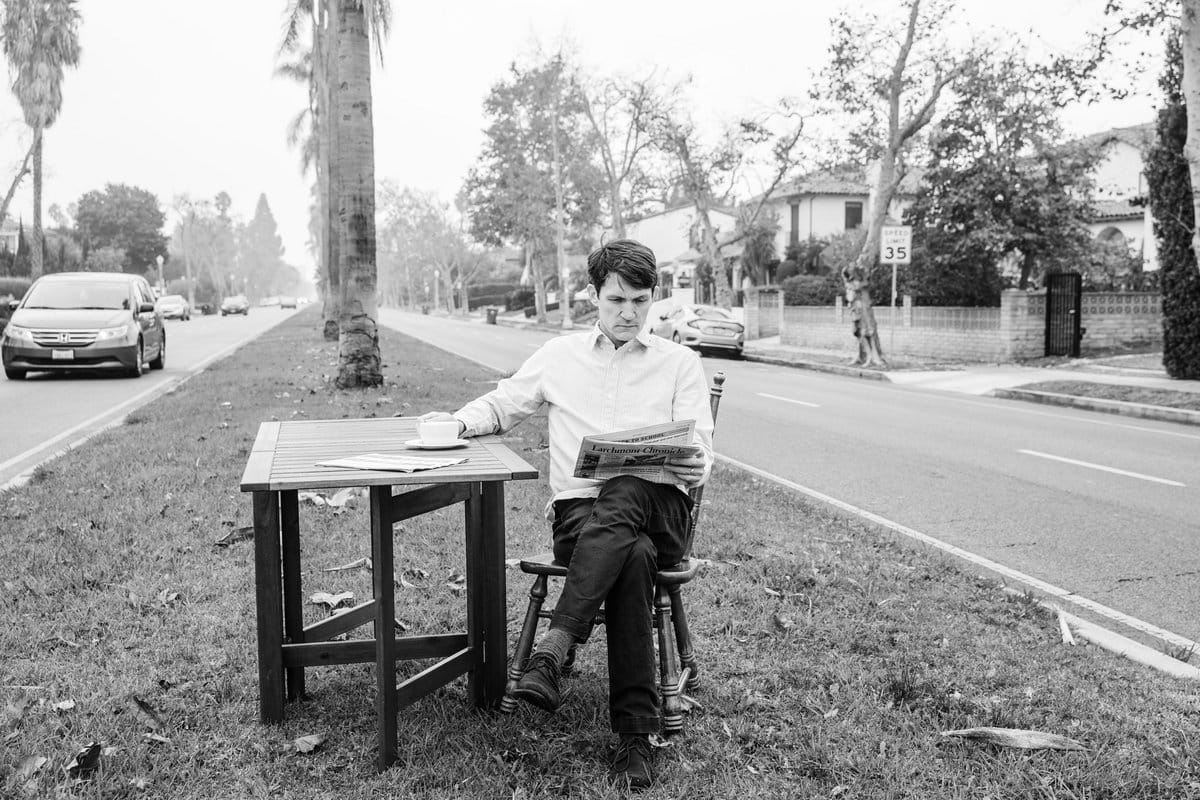
The result sits in a strange place—both loose and deliberate, shaped by fatigue as much as momentum. It also loops back to something earlier in his writing life. “I’ve never felt more reconnected to my teen songwriter self,” he says, pointing toward echoes of Slowdown Virginia in the DNA of these songs.
That sense of looking backward without staying there extends to how the record is being released. Keeping it off streaming isn’t framed as a statement so much as a preference. “Don’t we all kinda love/hate the streamers?” he says. This one stays closer to the people already paying attention. “I’m not looking for new fans for this… rather, sharing something with those interested parties who have been checking out my music over the years.”
The process left a mark. Not just as a challenge completed, but as a shift in how he treats his own output. “The major takeaway being that I think I trash WAY too much music,” he says. His next solo record was written differently—fewer ideas discarded, more allowed to stand. “All due to the positive experience I gained from this writing project.”
He’s already been nudging other songwriters toward the same experiment. No detailed instructions, no formula to follow. “Just do it,” he says. “You can learn a lot about your writing, have a lot of fun, push yourself.” He compares it to 24-hour film challenges—contained, slightly reckless, revealing.