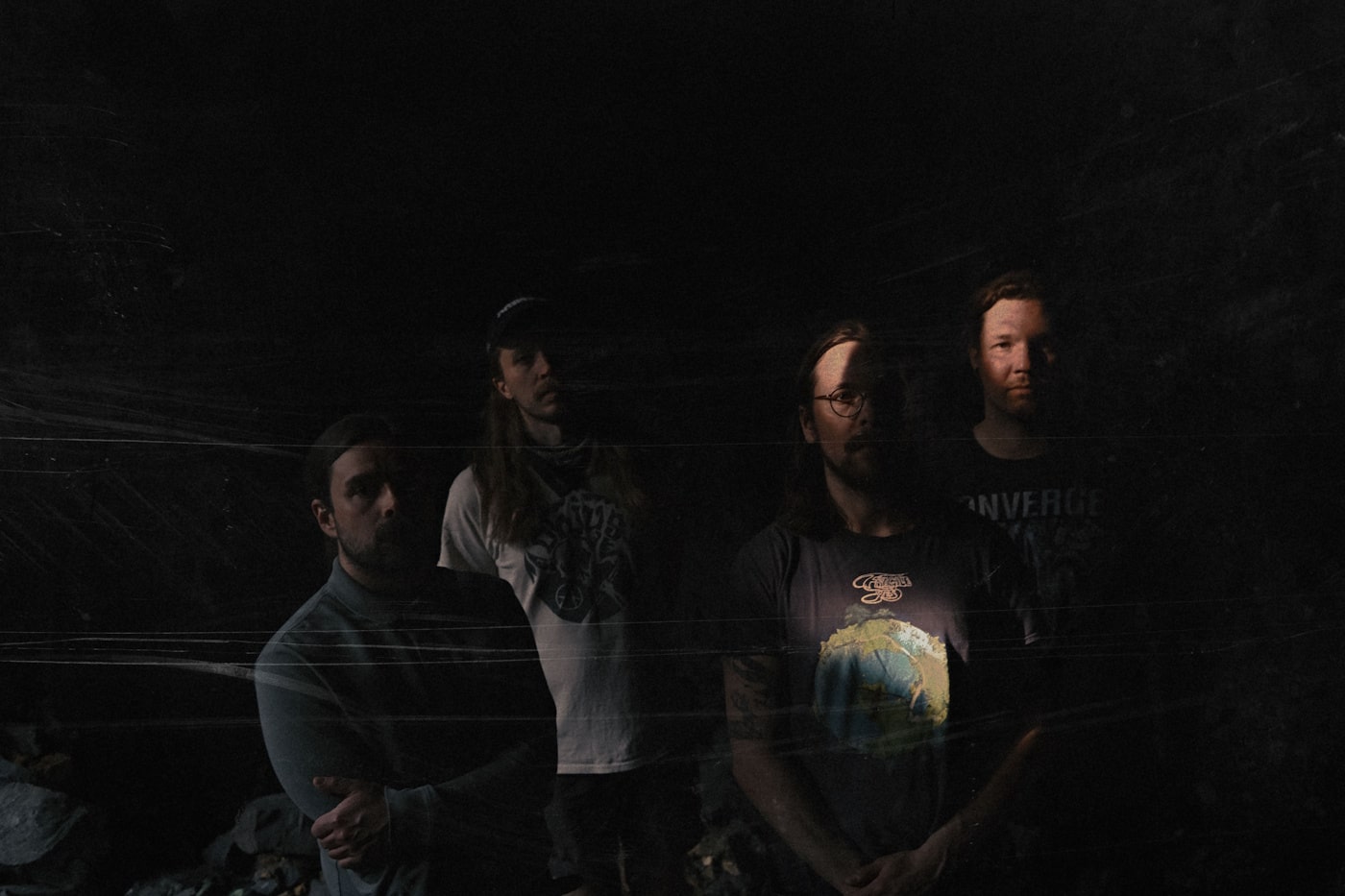


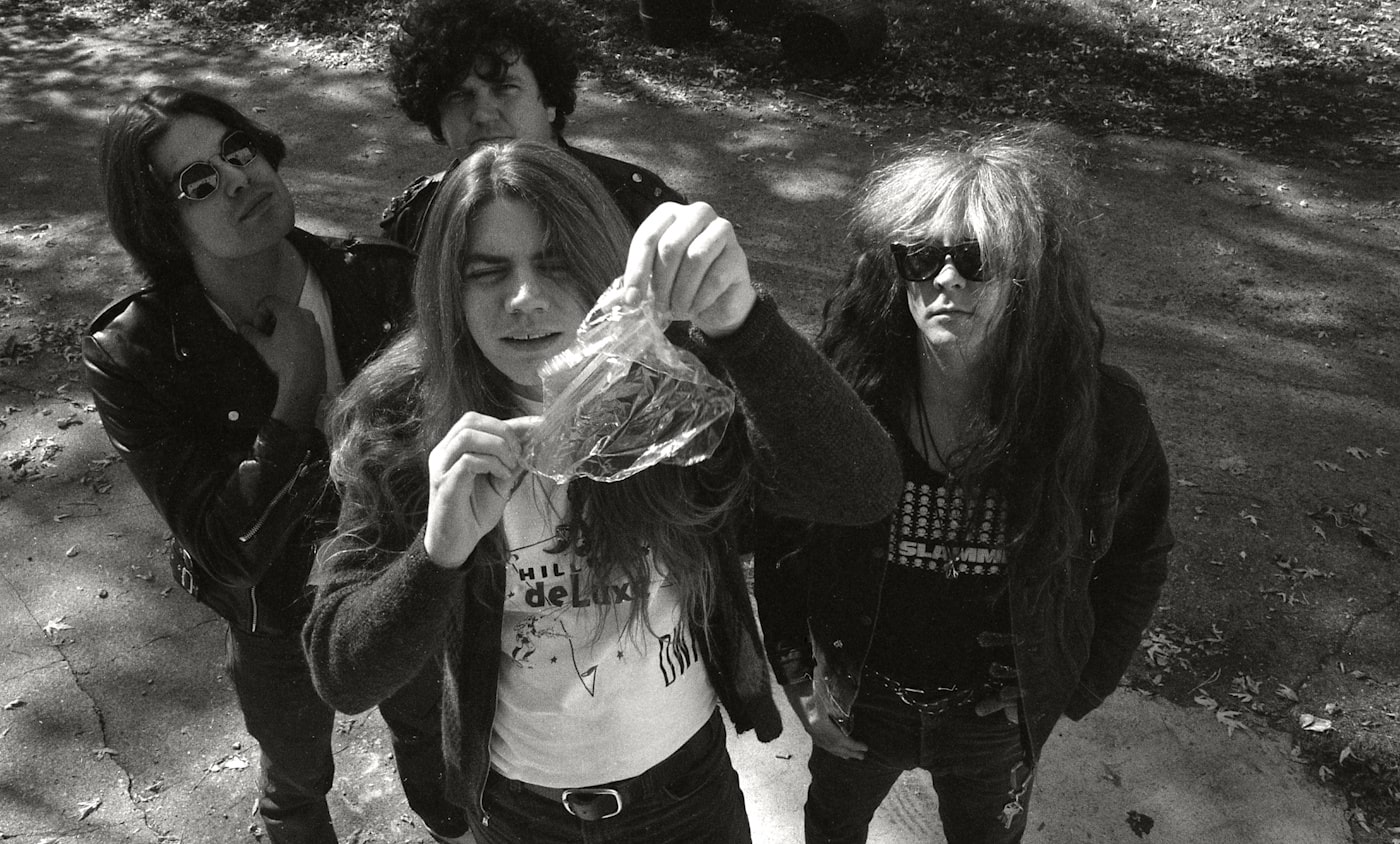
“Playback Is Hell,” out October 10 via Secretly Canadian, collects material from Zero Boys’ 1991 album “Make It Stop” and 1992’s “The Heimlich Maneuver,” newly remixed and remastered by frontman and engineer Paul Mahern.
Alongside these recordings, the release also surfaces two tracks that never made it past the archive stage: “Make It” and “In the Back of My Mind,” both taped in the early ’90s and unreleased until now.
Mahern explained that the idea came while digitizing the old reels. What began as an archival task turned into something larger when he discovered the forgotten songs: “During the process, I noticed two songs that had never been released, which got the wheels turning on the idea that this long-out-of-print material should be made available.”
The frontman was also candid about why the mixes needed new attention: “I never liked the mixes on ‘Make It Stop’ or ‘The Heimlich Maneuver.’ The initial mixes were done too quickly. I knew that if we were going to bother to rerelease, I would need to remix the tracks.” He emphasized that nothing was re-recorded apart from a background part on “Make It.” Everything else remains as it was captured in the early ’90s.
View this post on Instagram
Hearing back the old tapes brought unexpected moments. Mahern admitted he didn’t even remember the unreleased songs, calling them “a gift from the past,” with lyrics that “resonated with my current thoughts.” That thread of continuity runs through the record’s title as well. As he described it: “So yes, Playback is Hell. But not the hell of torment. The hell of fire. The hell of transformation. The heat of memory and meaning suddenly rising again.”
f
Looking back, the band’s shift from hardcore bursts into more open structures reflected a different mindset after reforming in 1991. Mahern noted how time away and the absence of guitarist Terry “Hollywood” Howe shaped their direction: “When the ZB’s got back together, we were very different people… we were just trying to be honest.”
View this post on Instagram
That honesty carries through the politics too. Asked about lyrics that still cut in the present day, Mahern replied, “We have been stuck in a cycle of greed and classism since before I first opened my eyes in this lifetime.”
The full interview with Paul Mahern dives into the rediscovery of those reels, the balance between producing and fronting a punk band, teaching the history of punk at Indiana University, and what keeps the Indianapolis scene moving in 2025. It also touches on the artists who excite him now, from Lambrini Girls to Pat and the Pissers, and the bands he’d most like to share a stage with again.
View this post on Instagram
You’ve been sitting on those early ’90s tapes for decades — what finally made you want to dig them out and give them new life now? Was it curiosity, necessity, or just the right timing in your head?
Initially, I was digitizing the old reels for archival purposes. During the process, I noticed two songs that had never been released, which got the wheels turning on the idea that this long-out-of-print material should be made available.
When you went back into those mixes, what surprised you the most — like, hearing your younger self with older ears? Was there anything you felt you had to correct versus anything you wanted to preserve in all its roughness?
I never liked the mixes on “Make It Stop” or “The Heimlich Maneuver.” The initial mixes were done too quickly. I knew that if we were going to bother to rerelease, I would need to remix the tracks. I didn’t do any rerecording or “fixing”. I sang a background part on the song “Make It,” but everything else remains as it was recorded in the early ’90s.
Those two unreleased songs, “Make It” and “In The Back Of My Mind,” feel like little time capsules cracked open — do you remember the headspace you were in when those were tracked? What was going on around you back then that might have slipped into those riffs or lyrics?
Honestly, I did not remember those songs at all. They are like a gift from the past. I was surprised by how much the lyrics resonated with my current thoughts.
The way you’ve described this record — “hell of fire, hell of transformation” — makes it sound almost spiritual. When you look back at that era, do you remember chasing something beyond just music, some kind of inner searching?
I was raised by a very spiritual mother. Not religious necessarily, but a true spiritual seeker. I attended Buddhist Temple, Quaker meetings, and Gurdjieff-Ouspensky centers in my youth, and I received my Transcendental Meditation mantra at the age of 9. I have always been chasing something beyond just music, I suppose.
I’m curious about the shift in songwriting in that period — Zero Boys moving from pure hardcore bursts into more open structures. Did that feel like risk at the time, or more like survival, like the band had to grow or burn out?
The band broke up in 1983 and did not record again until 1991. I had mostly left the hardcore scene and spent a lot of time listening to psych records and playing in my band Datura Seeds. When the ZB’s got back together, we were very different people, and of course, we no longer had Terry “Hollywood” Howe in the band. In a lot of ways, Terry was the driving force on Vicious Circle. I don’t think we thought much about what we were doing; we were just trying to be honest.
Does it sting or satisfy you that the political edges in those songs still cut today? Like, the fact that lines written 30 years ago could still be shouted in the streets right now — is that proof of their strength, or proof we’re stuck in the same cycles?
I guess it is oddly satisfying to know that I feel the same way I did back then. We have been stuck in a cycle of greed and classism since before I first opened my eyes in this lifetime.
You’re teaching the History of Punk at Indiana University — how does being in the classroom shape the way you think about Zero Boys’ legacy? Does talking about punk in that academic setting ever feel surreal, or do you see it as a natural continuation of the movement’s influence?
I love teaching the history of punk rock. The students seem to love it as well, but I don’t think about Zero Boys’ legacy, and I don’t talk much about the band. There are plenty of other great artists to cover, and it is helpful that I am a true fan. But yes, it is surreal!
How do your students react when they connect the dots between the lectures and the fact that you’re the guy who lived through the things they’re studying?
I think they appreciate that I am not coming from academia but from lived experience. I think they also appreciate seeing someone of my age who still holds the same principles I had at 16.
I wonder how you personally balance the producer’s brain with the frontman’s heart. You’ve worked with Mellencamp, Neil Young, Willie Nelson, Iggy Pop… does being in the studio with those people change how you approach Zero Boys, or do you treat it like two different worlds?
I have learned a great deal from the people I work with, and I am extremely grateful for the job I get to do in the studio. Everything I’ve learned has shaped me. It is amazing to work with people who are using their tenacity to accomplish their dharma. The more I learn, the better I can help younger musicians. This is what I live for.
Production is usually about clarity, but punk lives on chaos. Do you ever feel that tension when you’re shaping your own band’s sound?
I think the Zero Boys have always been pretty tight and technical. We couldn’t be sloppy and chaotic if we tried. That being said, some of my favorite records are a bit of a mess. I am most interested in amplifying what is real and honest.
Shifting to the here and now — what’s the pulse of your local scene these days? Indy’s always had a certain scrappy DNA, but how’s it breathing in 2025?
Indianapolis has always had a great music scene. Bands come and go frequently because many of the musicians are not careerists and rarely tour outside the state. This is definitely a pet peeve of mine.
Who are the younger bands or artists from around you that have caught your ear lately? Sometimes the best recommendations come from people who’ve seen wave after wave roll through.
The Indy punk scene is alive and well. Some of my current favorites are Pat and the Pissers, Bingo Boys, and Wet Denim.
And outside Indiana, have you discovered any new artists in the last year or two — 2024, 2025 — that gave you that same spark you remember feeling when you first heard punk as a kid?
Lambrini Girls, Sunny War, Cori Elba, Linda Lindas, and Church of the Cosmic Skull are all amazing for different reasons.
Last one for fun — if you could throw a show tomorrow where Zero Boys shared the bill with one new band and one old band you wish more people still talked about, who’d you pick?
That is a fun question. I’ll go with Dow Jones and the Industrials and Pat and the Pissers!