



Nogato’s new album “Lo que he ganado, lo que he perdido” (“What I’ve Gained, What I’ve Lost”) takes shape as a collection about time, endings, and the strange calm of moving forward when not all pieces are in place. The Madrid band describe it as “about the passage of time, letting go of people you thought would always be there, welcoming new ones, and growing up.”
That tone of constant transition defines the record. Relationships dissolve and reform, friendships linger through fractures, and the weight of being in a band—deadlines, costs, self-imposed pressure—threads through the lyrics. “It’s also about everything we’ve poured into this: countless hours, money, and the stress of booking shows almost a year in advance, only to end up feeling like you’re always barely making it to every deadline you set for yourself,” the band explain. Still, there’s recognition of why it continues: “It’s all worth it when you’re on stage, sharing that rush with your friends and the crowd.”
View this post on Instagram
The album closes with “Las piezas que faltan” (“The missing pieces”), the only track fully written by the current lineup. The band frame it as a moment of reconstruction: “It’s about rebuilding yourself even when you don’t have all the pieces.

Those ‘missing pieces’ are everyone who’s been part of this project at some point. It also touches on that weird pressure of feeling like everyone around you is moving forward while you’re stuck.”
View this post on Instagram
“200X,” the opening track, sets a tone of breakups and pauses, framed by a Final Fantasy X sample: “It begins, don’t cry.” Roca explains that after a nine-year relationship with Micho ended, Nogato became the project that held them together. “It was a project that fulfilled us both equally, and we didn’t want to destroy all the work, time, and care we had put into it.” The song reflects on how both sides share pain after separation, but life continues to shake you in new ways.

Other tracks point outward as much as inward. “Al otro lado del andén” looks at the moment where silence and hesitation turn into permanent distance: “It’s about accepting that you can’t always remain in someone’s life, and that this doesn’t have to be a negative thing,” Roca says. “Sometimes, the most honest choice is to step back and let the other person continue on their way.”
Not everything leans heavy. “Reactor Mako” reads as an ode to video games and shared joy, built on countless references hidden in the verses. “Every verse hides a reference to a title that was important to me, and it speaks about how all those moments gain a special meaning when you share them with someone,” Roca notes, recalling playing with his roommate and even receiving acknowledgment from the composer of Outer Wilds.

Across the album there’s travel, memory, and the inevitable blurring between affection and obsession. “Garabato” maps out the way dedication to someone can collapse into clumsy, unreadable scribbles. “Esta lluvia” captures estrangement from someone you love. “Una astilla” holds onto humor through personal crisis. “Ni desde aquí se ven las estrellas” relives tour life and winter shows with Laid and Comic Sans, when, as Xián puts it, “smiles won the day.”
The record carries its own backstory of instability. After their debut, the pandemic halted everything. Zumaco (drums) and Enrique (guitar) left, leaving only Roca and Micho to hold things together. When Alex and Xián joined, the band describe that first rehearsal simply: “There was a spark that made us all know this was the lineup.”
“Lo que he ganado, lo que he perdido” doesn’t erase those years of fracture but folds them into its structure. The tape rewinds at the end, signaling that another chapter is waiting, this time with a lineup that feels steady. “We still have a lot to say,” they conclude.
The full track-by-track commentary from the band follows below.

200X
“200X” is the opening track of the album and one of the few songs we had already been playing live for a while along with “Al otro lado del andén” with the original lineup. It begins with a Final Fantasy X sample that says “It begins, don’t cry,” which we thought was the perfect way to give our listeners a heads-up before diving into the album for the first time.
Micho and I were a couple for nine years, and part of the reason we value Nogato so much is because it’s what kept us together after the breakup. It was a project that fulfilled us both equally, and we didn’t want to destroy all the work, time, and care we had put into it. That’s why, after the pandemic, and after Zumo and then Enrique left the band, we found ourselves back to just the two of us, refusing to let everything collapse once again.

“200X” explores the idea that sometimes it’s necessary to take a break, and that after a breakup from such a long relationship, both sides share that pain. After going through something tough, you might feel like nothing will ever move you in the same way again, but the truth is there’s always something new, for better or worse, that shakes you to the core. And without wanting to sound too existential, I think that’s precisely what being alive means.
Roca
No me digas
“No me digas” was the first single from our second album. It’s one of those songs that had been left unfinished with the original lineup, along with “Una astilla”, “Esta lluvia”, and “Reactor Mako”, and that we eventually reworked and refined during the band’s new phase.
For us, it speaks about that intimate relationship, whether family or friendship, that sometimes doesn’t understand what drives you or why music can become such an essential part of your life. It’s a song that conveys a desperate sense of frustration toward those who seem incapable of making the effort to truly understand you.
We thought it was the perfect choice for a first single, also as a way of saying: “we may be going at our own pace, we may have taken a long time, but we’re doing things the way we believe they should be done.”
Roca and Alex

Al otro lado del andén
“Al otro lado del andén” is a farewell song. For us, it speaks about those moments when you slowly start noticing that the path you once shared with someone you thought was special begins to split. It’s about accepting that you can’t always remain in someone’s life, and that this doesn’t have to be a negative thing. Sometimes, the most honest choice is to step back and let the other person continue on their way, even if that means being left out of the picture. And it’s not told from resentment or sadness, but from a calm place. From that point where, even if it hurts a little, you know the best thing to do is to let go and simply wish them the best from afar.
Roca
Reactor Mako
“Reactor Mako” is an ode to video games. Every verse hides a reference to a title that was important to me, and it speaks about how all those moments gain a special meaning when you share them with someone. I’ve played countless games with Santi, my roommate, and I know that when we stop living together, I’ll remember each of those play sessions fondly, no matter how much time goes by.
Of all the games we’ve shared, Outer Wilds holds a special place, which is why the track closes with that melody. Also, during one of the shows on “La gira de la amistad,” a friend of ours shared a video of us playing the ending of the song on Twitter, and against all odds, Andrew Pharlow, the composer of the Outer Wilds soundtrack, also shared it and It felt almost as thrilling as landing on the quantum moon for the first time.
Roca

Esta lluvia
“Esta lluvia” conveys a feeling of estrangement toward someone you love. Whatever the reason may be, bonds change and the desire to care can eventually run out. How much is a person willing to give before that happens?
Realizing that little by little a relationship becomes unsustainable is suffocating, forcing you into a kind of preventive grief filled with contradictions and doubts. And as painful as letting go can be, sometimes it’s necessary for both sides to move forward.
Xián
Garabato
“Garabato” is a metaphor for how sometimes we think we’ve found someone worthwhile and pour all our energy into getting their attention. It’s like starting a shared drawing where only one side is putting in the effort. At first it seems like that dedication might give it shape, but over time the insistence turns into clumsy strokes and layers that overlap without meaning. Little by little, smudges appear, stains that erase the things that once felt cool, until the drawing ends up as an illegible doodle, a jumble of lines where nothing of the original meaning remains.
At its core, it’s about that blurred line between affection and obsession, and how the urge to hold on to something that isn’t mutual can end up destroying what you were trying to build.
Roca
La melodía de las 5
In 2018, Roca and I traveled to Japan. It was time to fulfill a dream, and we decided it would be a humble yet ambitious trip in the sense that we wanted to see as much of the country as possible. From Sendai to Kagoshima, we aimed to make our journey a canonical experience and wanted to do it in the most special way possible.
One thing that caught our attention was the “Goji no chaimu” or “5 o’clock chime”, a little tune that plays over the public address systems in Japanese cities, neighborhoods, and towns at five in the afternoon. It signals the end of the day so children know they need to return home. In reality, it is a daily test of the communication system and its disaster prevention measures. The first time we heard it was in the Sendai region, more specifically in Ishinomaki, a small city that served as our gateway to Tashirojima, commonly known as The Cat Island. The humidity and heat were present but not overwhelming, and the sound of cicadas blended with the public announcements. Every day at five, the world around us seemed to pause.
Seven years have passed since then, and sometimes amid the bustle of Madrid, we close our eyes and feel as if we are still there, among centuries-old trees and peach-colored skies.
Micho
Una astilla
It was one of the lyrics we spent the most time on, and although we kept the original chorus, we changed everything else, both in lyrics and melody. I wanted to make it a bit lighter, even though I was going through a personal crisis about everything. I chose to approach it with humor, knowing that in the end, those true friends would be there even in the worst moments.
In the end, “Una astilla” became a reminder that, despite all the bad, sometimes you need to put things into perspective and focus on the good things you have. Just like when you have a splinter stuck, that pain is always there, bothering you and distracting you from what really matters.
Roca
Ni desde aquí se ven las estrellas
“Ni desde aquí se ven las estrellas” is the story of our past winter. We were lucky enough to play several shows across the peninsula with two of our favorite bands, Laid and Comic Sans, as part of the “La gira de la amistad” tour. Smiles won the day.
There’s nothing we love more than going out to play and spending time with our friends, so this was a chance for both to come together. When you’re so completely caught up in the absolute joy of doing what you love most in the world, nothing else seems to exist. It’s a moment to forget all work and emotional obligations.
We wished our Sundays would never end.
Xián
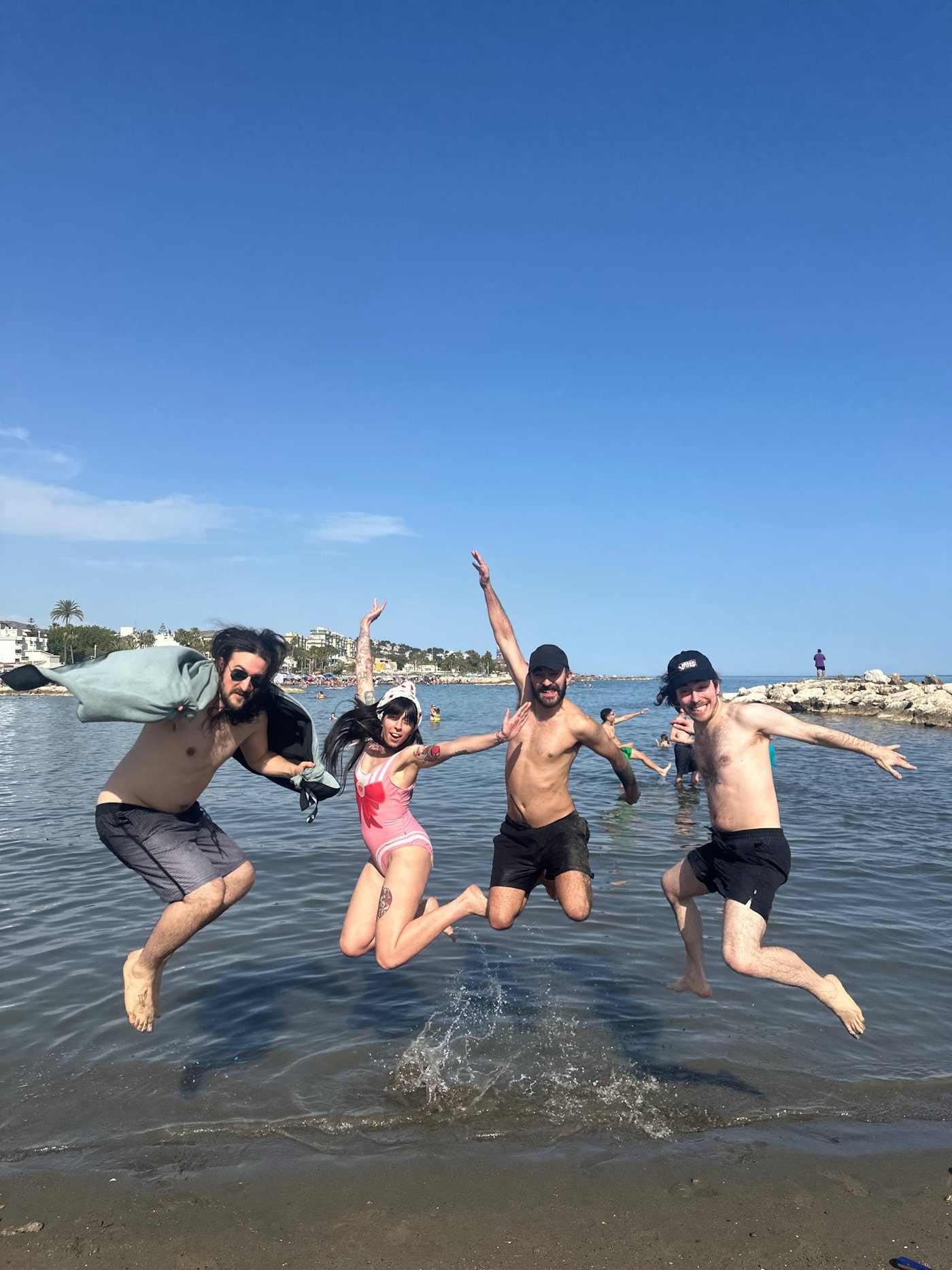
Las piezas que faltan
“Las piezas que faltan” is the final chapter of the season, where the protagonists are finally together after the last battle and look ahead with uncertainty at what’s to come. It’s the bridge to a future we don’t yet know but that excites us at the same time. Being the only song composed entirely by the current lineup, it’s a statement of intent, full of memories and farewells, where we leave behind what we once were as a band to become something new and real, always carrying friendship and music as our guiding principles.
It’s curious how, at our last concert with the original lineup, and as if by fate, both Xián and Alex were in the audience that day, on the threshold of another reality for the band. The album ends with a tape rewinding, suggesting that once this story has been told we return to the beginning, ready to tell a new one. The four of us together this time.
Micho
Keep in the loop!
🗞️ Subscribe on Substack
🔔 Join our Messenger and WhatsApp
📜 Get daily news via Instagram Stories
Your support keeps us alive!
IDIOTEQ is a one-man DIY operation, tirelessly spotlighting the local cultural scenes and independent bands that often go unreported elsewhere. Born in the early 00s, this platform has been committed to giving hard-working artists the high-quality coverage they truly deserve.
No ads, no distractions—just pure inspiration and a genuine focus on independent artists and their stories.
Please consider helping keep IDIOTEQ ad-free and in tune with the indie scene by donating today.
DONATE via PayPal 𝗈𝗋 SUPPORT via Patreon
100% of the funds collected go toward maintaining and improving this magazine. Every contribution, however big or small, is super valuable.
Your support ensures that we continue to be a place where you can discover, learn, and get inspired, without any advertising noise. Thank you for being a part of this musical journey.