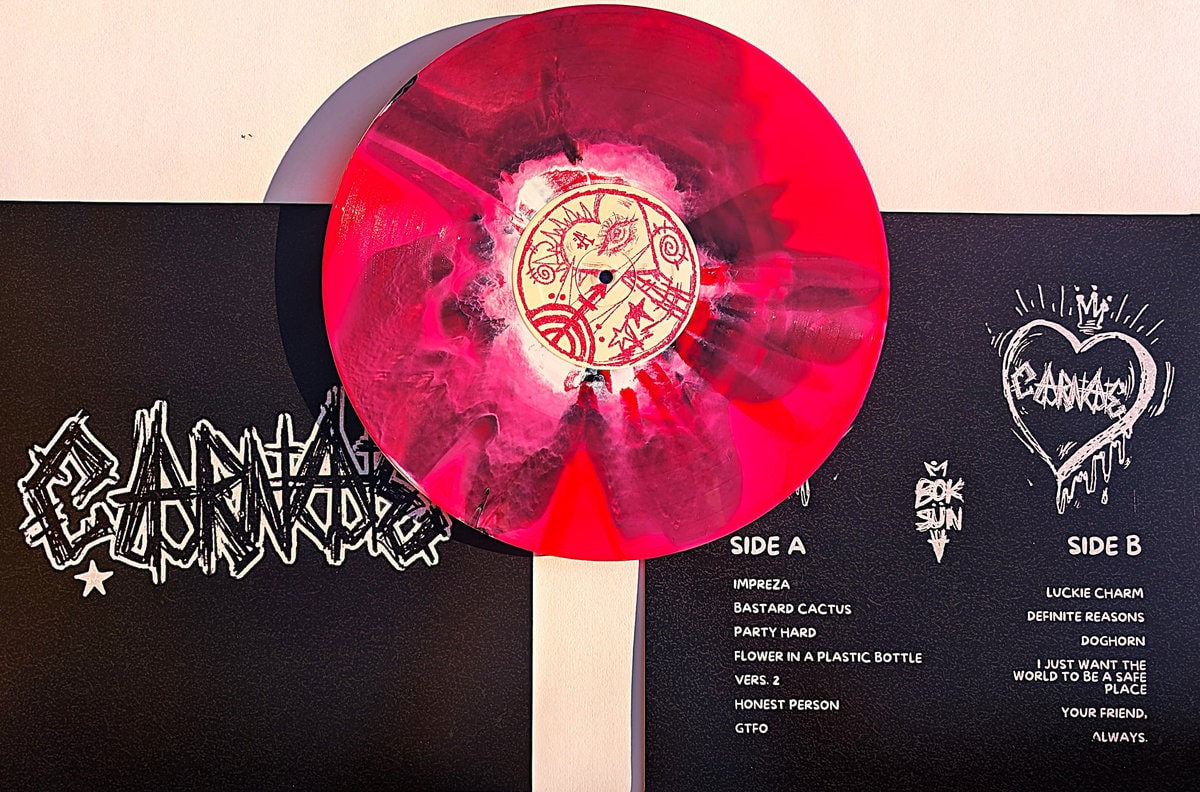
“Carnate” isn’t the kind of title you forget. It lands like a pulse — raw, tactile, something that bleeds. For Seattle-based artist Bok Suna, the word became more than just an album name; it turned into a framework for how music can be built and inhabited. “Writing music feels almost anatomical to me,” she said. “You start with a skeleton—a riff scribbled on the back of a receipt, the bones of a structure. Then you layer sound, texture, distortion—muscle and flesh. Eventually, you’re breathing life into this strange being that feels alive.”
The new album, out now via Play Dead and Softseed Music, turns personal trauma and psychosis-induced dreamscapes into acts of composition.
Bok Suna’s songs, formed from a mix of pain and process, reflect an ongoing effort to transmute chaos into something tangible. “Carnate,” she explained, was written in pursuit of taking dark themes like suicide, substance use, and toxic relationships, and “repackaging them into testimonies of hope and resilience.” It’s a kind of sonic anatomy lesson—mapping survival into sound.
Part of what makes her work distinct is how seamlessly it merges inner hallucination and external art. Living with schizoaffective disorder, she speaks openly about how that shapes her universe. “The surreal and hallucinogenic qualities come naturally,” she said. “What might look otherworldly to others often feels like home to me.” What began as zines and guerrilla publications evolved into a self-contained world of sound and imagery—where drawn symbols, fevered textures, and distortion loops share the same bloodstream.
That same instinct carries into the visuals surrounding “Doghorn.” The video, built from a collage of animated diary fragments, feels ritualistic—like a ceremony half-remembered from a dream. “They started as private diary fragments,” she said, “but when I was recording Carnate, I noticed the overlap—the themes in the animations and the songs were circling the same orbit. Compiling them into the video was less about designing a ritual and more about archiving one that was already happening inside me.”
View this post on Instagram
In the broader picture, Bok Suna sits slightly outside her city’s gravitational pull. “Seattle has a rich history, and there are incredible communities here, but my work has always leaned toward outsider art,” she said. “My orbit tends to be a little off-axis—collaborating across states, online, or with folks who also don’t quite fit neatly into a ‘scene.’” Still, she carries clear admiration for other artists shaping the underground: baan from Busan, Emma Goldman from Vancouver, Melrose from Victoria, and Zarelli from Tacoma.
Her relationships with Play Dead, Softseed, and Zegema Beach feel more communal than transactional. “These labels don’t just move records—they build relationships, nurture art, and help create space for artists to thrive,” she said. “It feels like being part of a small ecosystem that values sincerity over profit.”
There’s no fixed message she wants to leave behind. “I’d rather listeners take what they need and filter it through their own lives,” she said. “If the songs end up meaning something completely different to them than they do to me, that’s the point—the art becomes theirs once it leaves my hands.”
The full interview below dives deeper into that idea of transformation—into how “Carnate” took form, the ritual behind “Doghorn,” her connection to hallucination as an artistic tool, and the strange relief that comes from letting go once the music is alive.
I always liked the word “Carnate”. It feels heavy and raw, almost like flesh itself. What pulled you toward that word, and how do you see it shaping the way people enter the album?
I named the album CARNATE because writing music feels almost anatomical to me, like you’re building a body. You start with a skeleton—a riff scribbled on the back of a receipt, the bones of a structure. Then you layer sound, texture, distortion—muscle and flesh. Eventually, you’re breathing life into this strange being that feels alive. By the end, the album becomes a carnation of something that once only existed in fragments. I wanted the name to carry that visceral weight—flesh, bone, and breath.
When I listen to “Doghorn,” I get this strange mix of sorrow and resilience—like it’s soaked in sadness but doesn’t drown in it. How do you walk that line when writing, turning the darker stuff in your life into something that still feels like survival music?
I think writing about the “darker” stuff in one’s life is a testament to survival. Pain has a way of consuming space, but once you transmute it into music, it shifts—it becomes less about what hurt and more about what you did with the hurt. The act of writing reclaims power. It says: this pain didn’t end me, I bent it into sound. That’s the resilience. The song may carry sorrow, but it also carries the proof that I lived through it.
You’ve described your songs as a way of “transmuting pain into grateful tokens of memory.” What does that process actually look like for you—do you feel relief after writing, or is it more like carrying those moments differently?
It’s messy at first—lots of screaming, crying, letting things spill out in an unfiltered way. But once a song comes together, the weight shifts. The memory stops being just a wound and becomes a marker of growth, like scar tissue. Music doesn’t erase what happened, but it reshapes how I carry it. Suddenly, that pain has purpose—it’s a token I can hold with gratitude instead of dread.
There’s an otherworldly fever-dream atmosphere in your music, almost like hallucinations put to sound. Do you see that as a reflection of your inner world, or are you building a completely separate one for listeners to step into?
Both. BOK SUNA isn’t just music—it’s a universe I’ve been building for years, starting with zines and guerilla publications. When I began releasing music under the same alias, it expanded that universe into sound. The surreal and hallucinogenic qualities come naturally—I live with schizoaffective disorder, so hallucinations and delusions are part of my daily life. Strangely enough, they’ve given me some of the most vivid and influential “memories” I have. They shape the landscapes of my art. What might look otherworldly to others often feels like home to me.
The “Doghorn” video feels almost ritualistic, like an intimate ceremony caught on tape. Can you walk me through how it came together—were you aiming for that surreal effect from the start, or did it take shape as you filmed?
The video came from a practice of making animation “journal entries.” I’d create 5–30 second clips capturing feelings, symbols, or strange imagery from a given day. They started as private diary fragments, but when I was recording CARNATE, I noticed the overlap—the themes in the animations and the songs were circling the same orbit. Compiling them into the “doghorn” video was less about designing a ritual and more about archiving one that was already happening inside me.
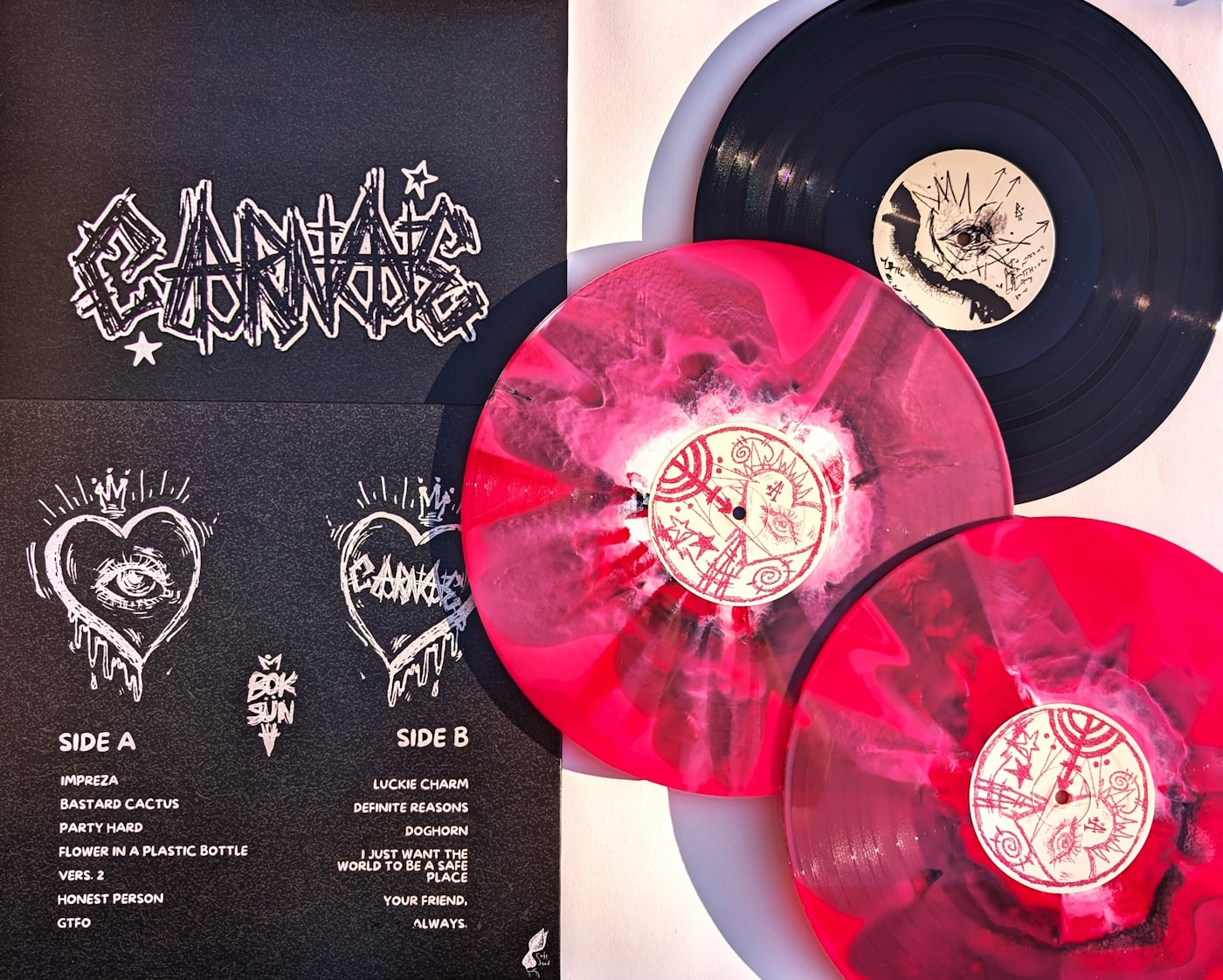
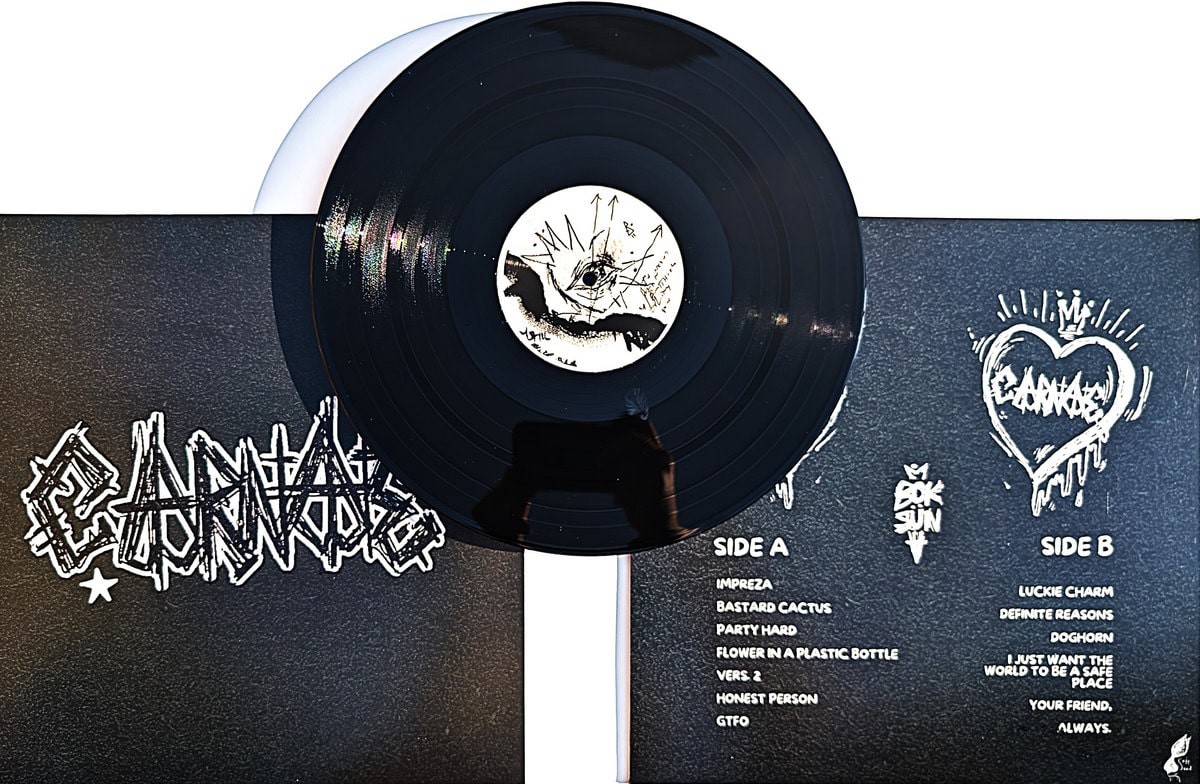
Visuals seem to carry a lot of weight in your work—those sketched hearts, the jagged lettering, the symbols. Do these images arrive alongside the songs, or do they take on meaning only once the music is done?
They feel like siblings—sometimes one shows up first, sometimes the other. A lyric might inspire a drawing, or a scribbled symbol might later reveal itself inside a song. They share DNA, even if they’re born at different times.
You’ve spoken about writing with a backdrop of heavy themes—suicide, toxic ties, substance use—but the record feels less like confession and more like testimony. Do you think of your songs as meant for yourself first, or are they written as offerings to others?
I write songs for myself and as an offering to spirit. Everything else is a blessing.
Seattle has its own history of dark, emotional music, but scenes shift over time. Where do you feel yourself sitting inside today’s local scene? Are you connected to a community there, or do you see yourself more on the fringes, orbiting around it?
I’d say I exist more on the fringes. Seattle has a rich history, and there are incredible communities here, but my work has always leaned toward outsider art. I love connecting with people locally when it happens, but I don’t feel tethered to any one scene. My orbit tends to be a little off-axis—collaborating across states, online, or with folks who also don’t quite fit neatly into a “scene.”
Every year new voices bubble up in the underground—who have you stumbled upon in 2024 or 2025 that really floored you? I’m always curious about those fresh names that haven’t yet made the rounds but deserve to.
baan (Busan, South Korea) I feel obligated to mention by sound alone.
Emma Goldman (Vancouver, B.C.) I recently saw at a house show and felt they absolutely obliterated.
Melrose (Victoria, B.C.) and Zarelli (Tacoma, WA) are also just really exceptional artists I’ve been blessed enough to cross paths with.
The record is coming out through Softseed and Play Dead, with Zegema Beach in the mix. Do you feel labels like these are more collaborators than just distributors? What does the relationship feel like on your end?
Absolutely collaborators. These labels don’t just move records—they build relationships, nurture art, and help create space for artists to thrive. It feels like being part of a small ecosystem that values sincerity over profit. That’s the kind of support system I want to root my work in.
When people hear your work for the first time, what do you hope lingers after the record ends—the sound of it, the mood, or something else entirely?
I don’t really set expectations for listeners. I’d rather they take what they need and filter it through their own lives. If the songs end up meaning something completely different to them than they do to me, that’s the point—the art becomes theirs once it leaves my hands.
And maybe to flip it—what’s the piece of yourself you’re most scared, or maybe reluctant, to have people notice on this record?
Everything and nothing. Part of me worries it could fall short, or that people won’t connect at all. But at the same time, there’s nothing to fear—once it’s out in the world, it doesn’t belong to me anymore. I give it to the universe and subject it to whatever that entails.