


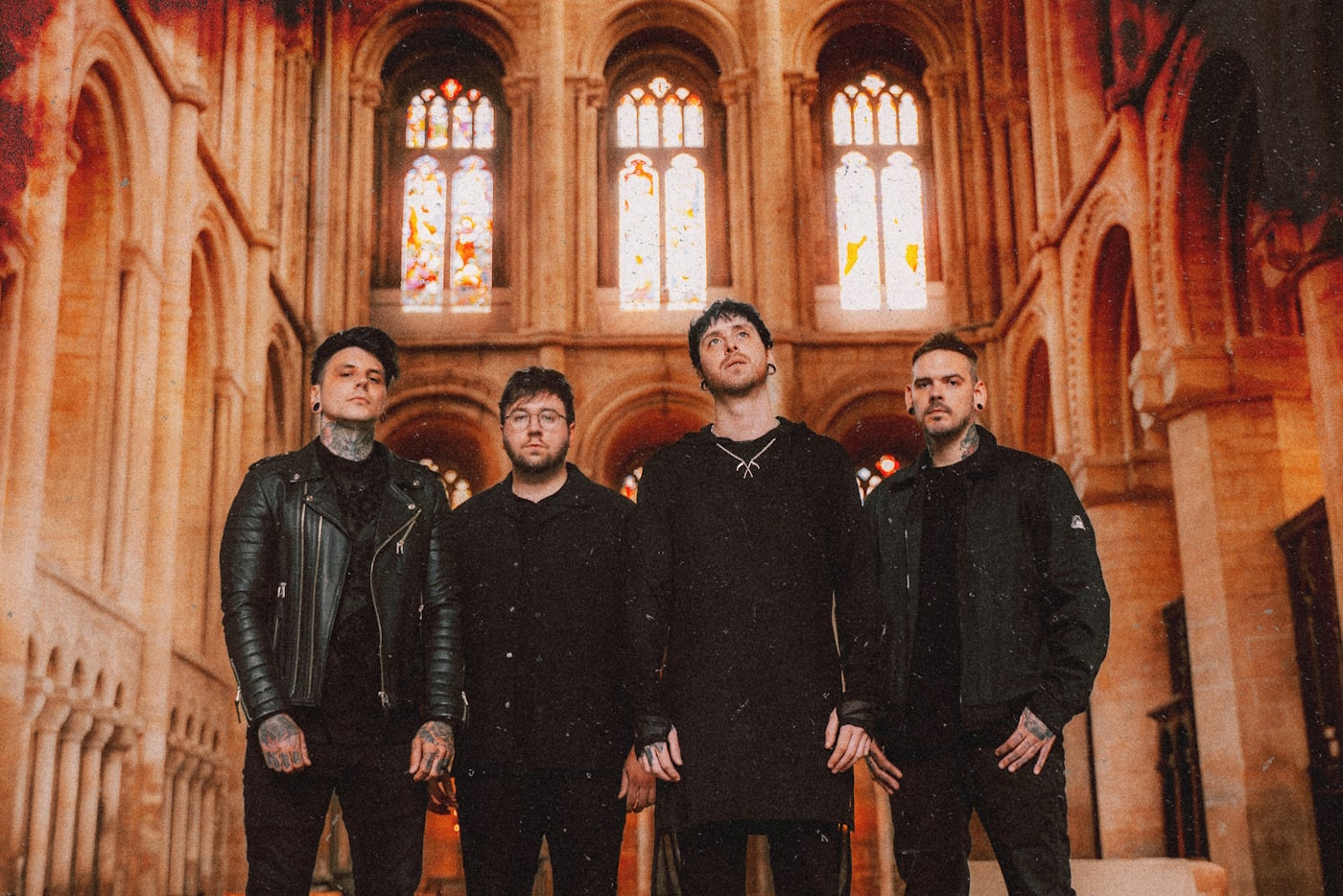
Out November 7 via Sharptone Records, “The Only Heaven You’ll Know” arrives as Caskets’ next step after “Reflections,” leaning into the same emotional charge and synth-layered post-hardcore inspired pop rock they’ve been building since the rebrand.
The singles “Make Me a Martyr” and the title track keep that familiar push-and-pull between melody and anxiety, and vocalist Matt Flood frames the album less like a dramatic reinvention and more like an attempt to survive his own noise. “This record is the sound of me falling apart in real time,” he says, calling each song “a confession” about love that eats away from the inside and the struggle of pretending everything’s fine while drowning. He adds, “These songs are my scars, proof I made it through, even when I thought I was doomed.”
He leans deeper into identity on the single “The Only Heaven You’ll Know,” admitting he didn’t realize how badly he needed to say these things out loud. “I find it hard to let myself be me – out of pure anxiety, fear of rejection, the ever growing weight of being misunderstood,” he explains. The track, he says, is about grieving parts of himself and “finally trying to let the walls fall” so there’s some peace left. It’s not about salvation; it’s the moment he stops running from his truth.
The vibe around the band hasn’t shifted radically. They’re not here to reinvent the scene, and people online joke about AI-trained post-hardcore whenever polished melody meets hazy electronic production. Even some reviews call them derivative or stuck in a safe lane, but that’s part of the landscape now: a lot of artists are orbiting the same sound, and evolution isn’t happening at the pace people expect. At the same time, Caskets sit in that mid-2000s lineage that was built on emotion first, gloss second. And if you listen to their influences, the picture makes more sense.
Asked to list five key early/mid-2000s post-hardcore records, Flood points straight at the era that shaped him:
1. Fightstar – “Grand Unification”
He calls it an easy choice. The first listen “completely blew my mind,” he says. It’s the heaviness, the honesty, the way Charlie’s vocals cut through huge guitars. It felt cinematic without losing sincerity, and he still hears that power years later.
2. Funeral for a Friend – “Hours”
For him, this defined the genre. Raw emotion, melody, chaos, and vocals that sounded like personal letters. Flood points out how the lyrics could’ve been anyone’s heartbreak. It’s the most nostalgic one on his list, taking him straight back to being a kid.
3. My Chemical Romance – “Three Cheers for Sweet Revenge”
Flood loves the theatre of it. Chaotic, emotional, unapologetic. He talks about the storytelling and visuals elevating it beyond music, and the vulnerability in Gerard’s voice standing out immediately. It still carries the heart-on-sleeve energy that pulled a generation in.
4. Enter Shikari – “Take to the Skies”
This one cracked the scene open. Flood says it redefined what post-hardcore could be, smashing aggressive guitars into electronic chaos and unpredictable turns. Raw, political, emotional. At the time, it felt fresh in a space afraid of experimentation.
5. Saosin – self-titled
Pure energy, he explains. Cove’s vocals weaving with tight guitars, intense without losing melody. Aggressive hooks that hang in your head. For him, it’s the sound that made him fall in love with the genre in the first place.
Looking at those roots, you understand why Caskets stay close to shimmering synths, big choruses, and emotional framing. It’s the comfort zone of a scene built on early heartbreak, anxiety, and big guitars washing over the rest.
“The Only Heaven You’ll Know” includes features from Make Them Suffer on “Our Remedy,” along with tracks like “Closure,” “Sacrifice,” “Escape,” and “Broken Path.” Flood insists he’s “smashed his heart on his sleeve” this time, describing it as “real, raw, [with] real-life passion and trauma,” hoping it’s believable rather than theatrical. Some listeners feel the genre’s exhaustion creeping in, but Caskets keep working the same vein — melody, confession, pressure — trying to make sense of their own internal wreckage while the rest of the world scrolls past.
They’re not breaking the mold, and they’re not pretending to. But if you grew up on those five records — the towering choruses, the cinematic sadness, the shimmer of electronic tension — you’ll recognize the blueprint instantly. And maybe that’s the only heaven some people know: the space where those old influences still hit like they once did.
“The Only Heaven You’ll Know” lands November 7 on Sharptone Records.