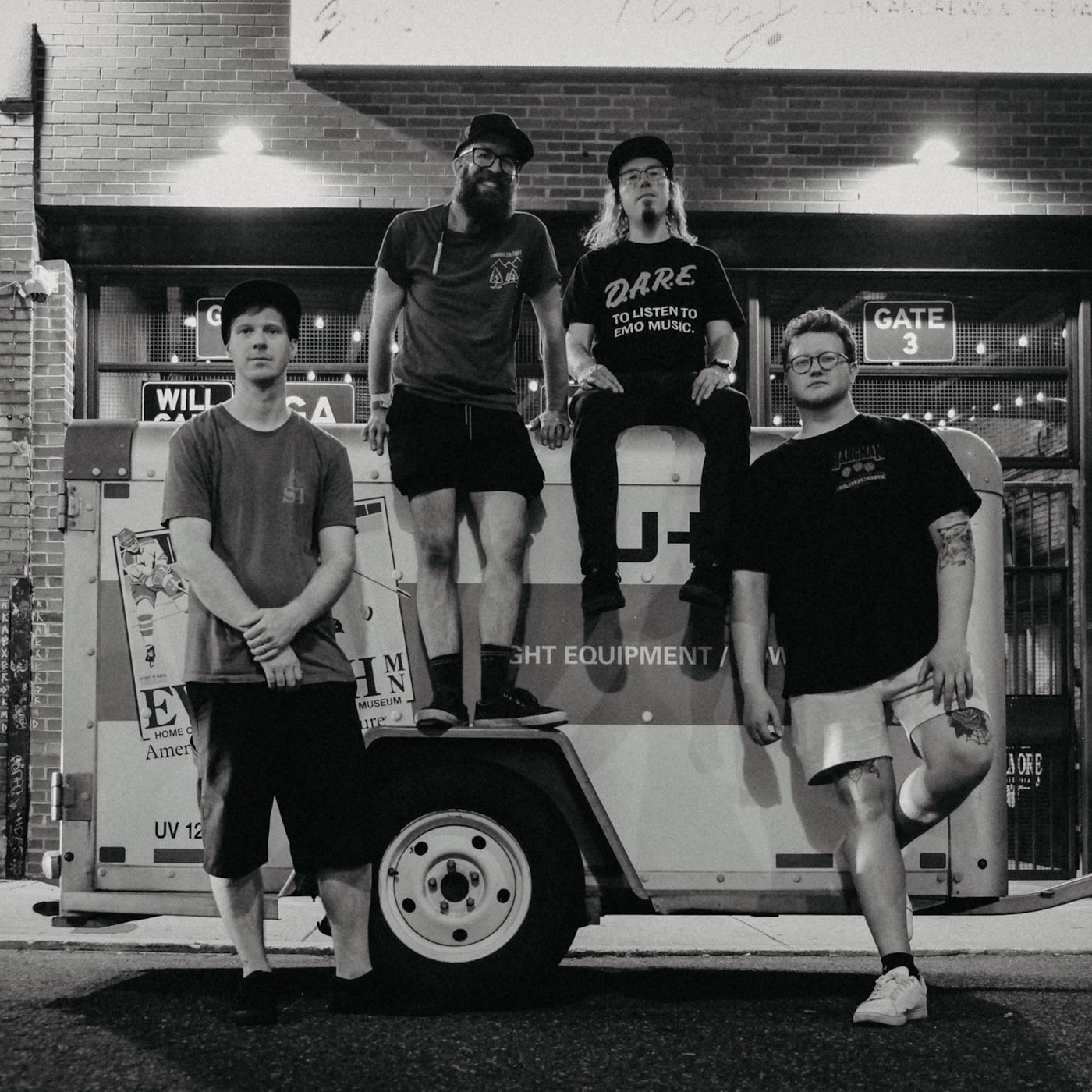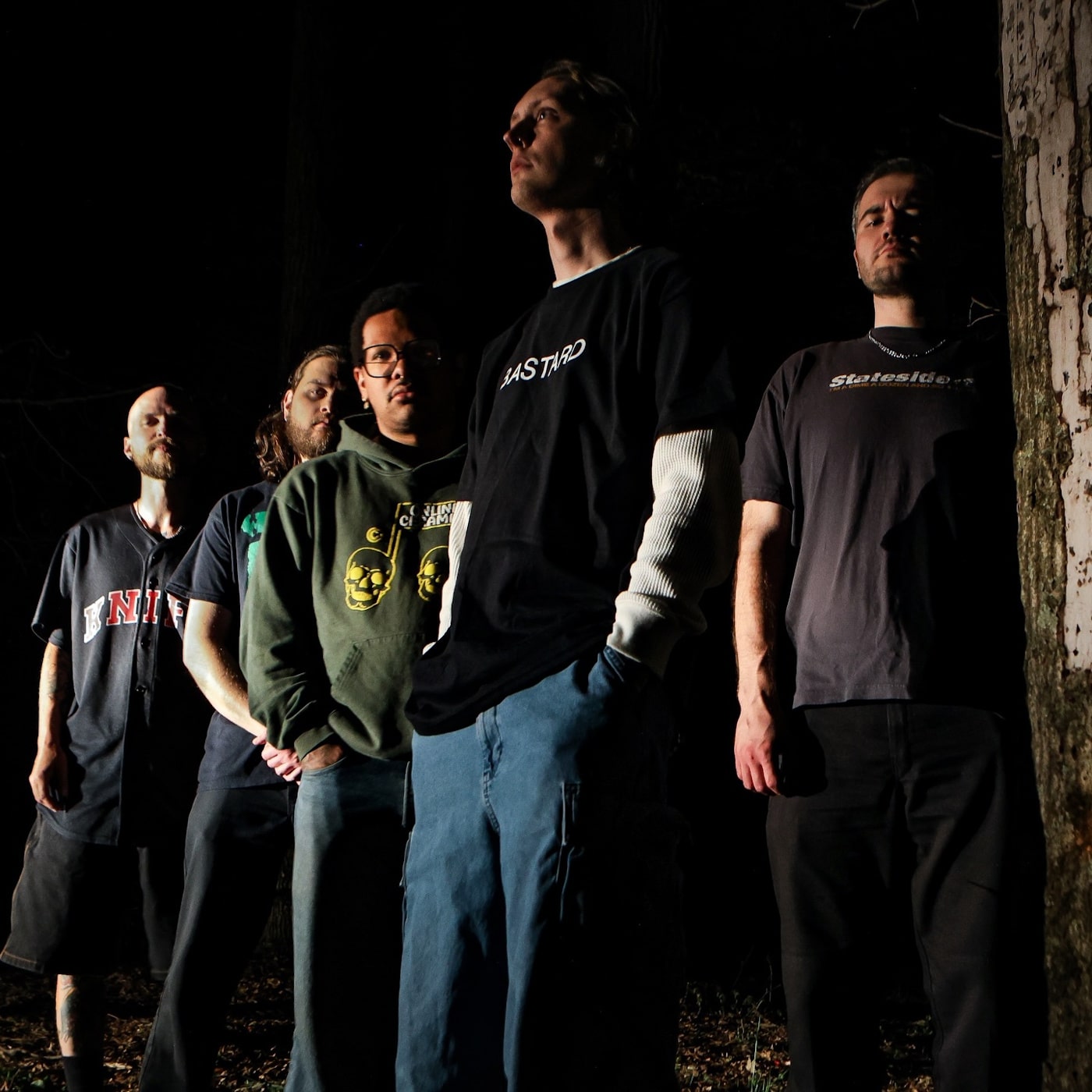


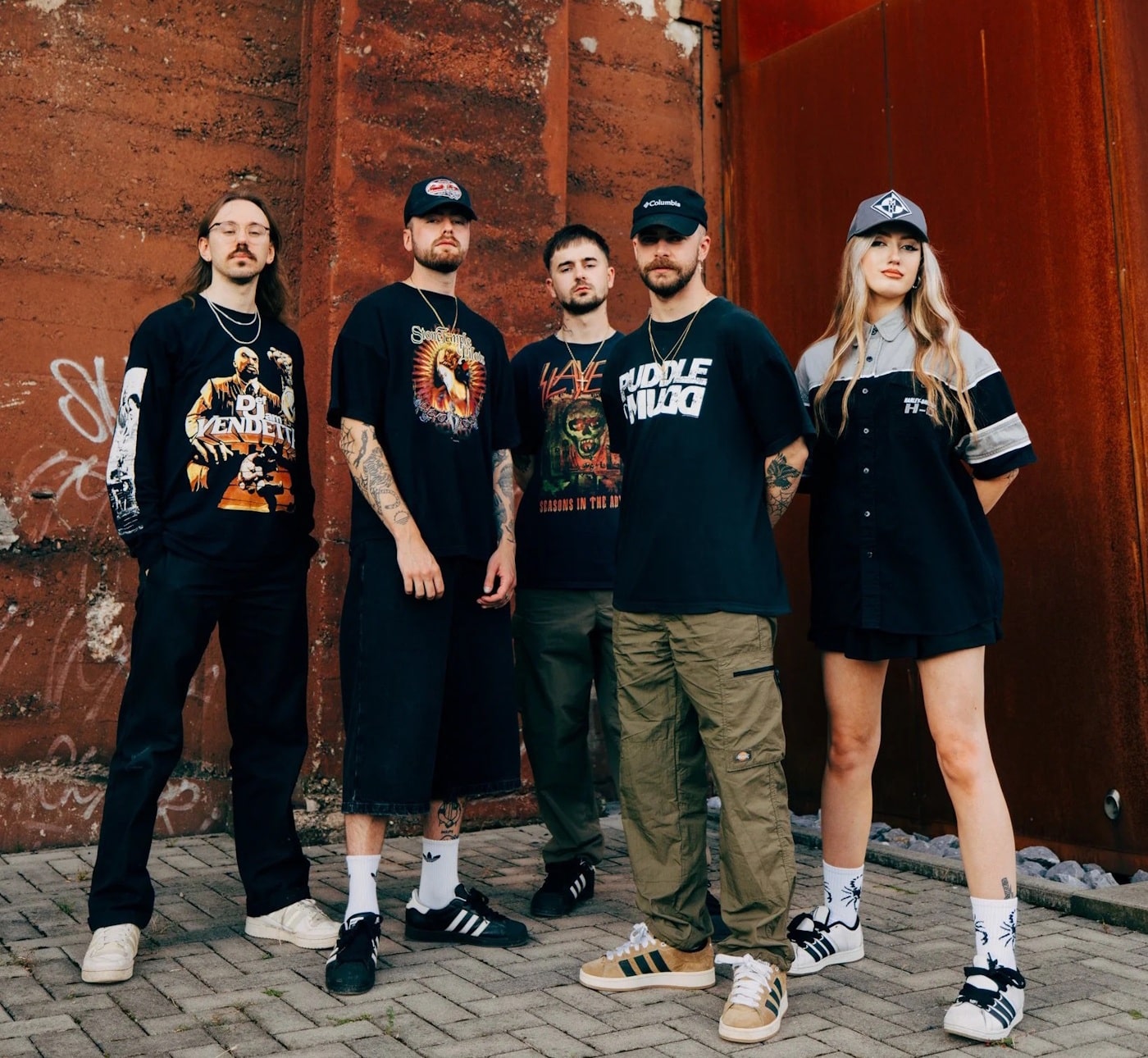
Back in September, GUILT TRIP confirmed a global signing with Roadrunner Records and introduced the partnership with “Burn,” their first single for the label. The news landed alongside a dense run of tour dates and festival appearances, marking a clear shift in scale without reframing what the band already were.
December now brings the full context into view, with the band on the road again and reflecting on how a decade of steady pressure led them here.
The Roadrunner deal didn’t arrive as a sudden rupture. Jay Valentine pictures it as cumulative momentum rather than a breakthrough fantasy.
Nearly ten years in, the pace has accelerated, but the foundations are old. The period following “Severance” is where things compressed. According to Valentine, the last three years “feels like we’ve accomplished 1000 times more in that time frame than the whole 6–7 years prior,” a sense of acceleration rather than reinvention.
Early shows in Manchester didn’t come with guarantees. Valentine recalls playing to rooms of twenty, ten, sometimes nobody at all. He’s careful not to mythologize it or blame the scene. Support had to be earned, and watching bigger bands fill rooms was less discouraging than instructive. That baseline—turning up regardless of turnout—still underpins how GUILT TRIP talk about progress.
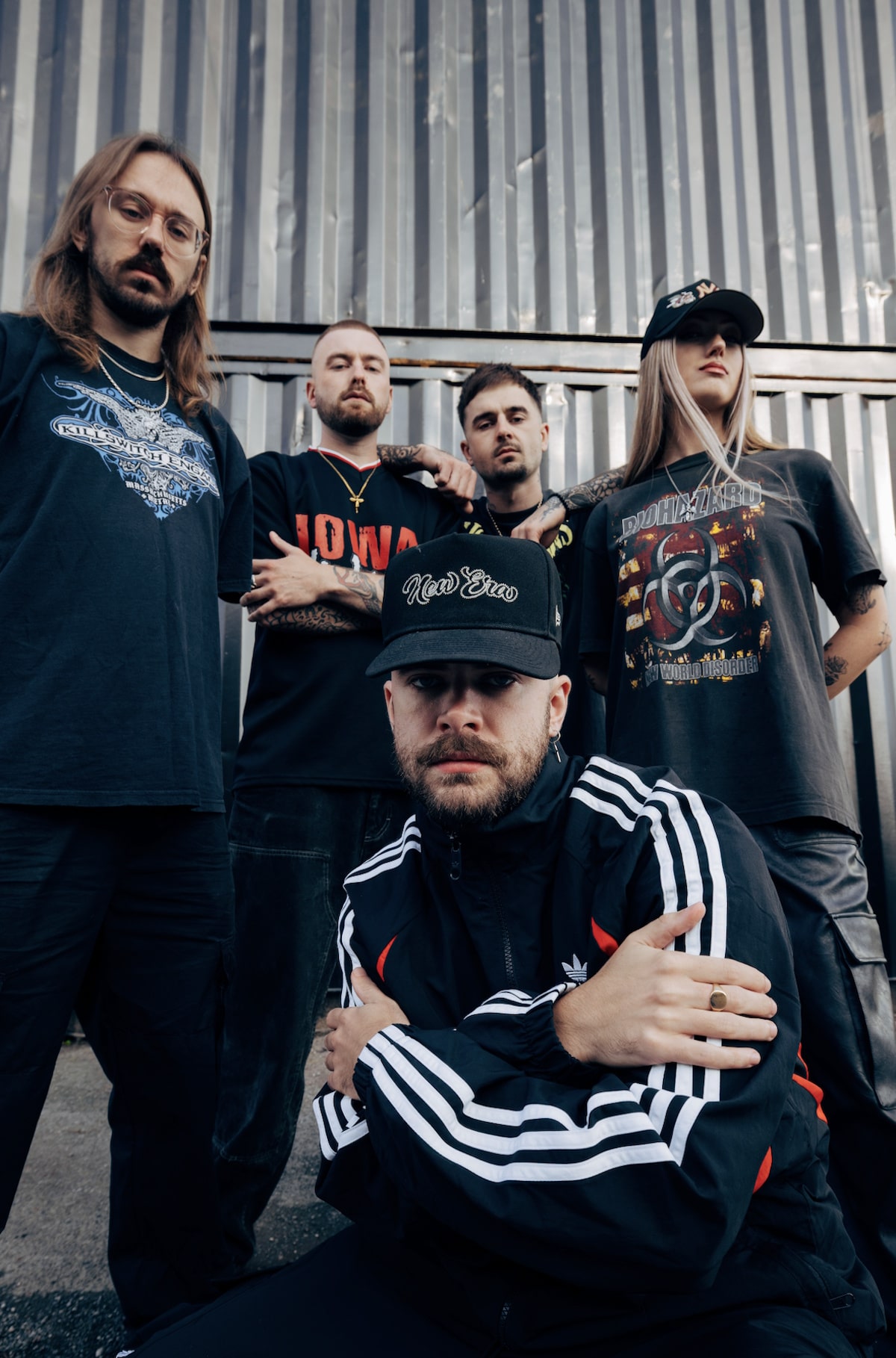
Manchester’s role, as Valentine explains it, is less about sonics than posture. The city didn’t dictate riffs or structures, but it did shape how the band approach work. He describes a place defined by working-class persistence, where effort is expected rather than celebrated. Their musical influences were never local by design; Leeds, London, Europe, the States all mattered equally. What stuck was the insistence on getting after it.
View this post on Instagram
Certain hometown shows still stand as markers. Headlining the Star and Garter in 2019, after years of watching bands like Broken Teeth and Survival tear it apart, felt significant. So did selling out Gorilla for two nights in early 2025, echoing memories of seeing Your Demise there a decade earlier. Playing the Ritz carried similar weight. These were checkpoints in a long, internal timeline.
View this post on Instagram
When Roadrunner entered the picture, it didn’t redirect the writing process. If anything, it clarified it. Valentine says the band felt like they’d already been writing Roadrunner records for years.
The label’s catalogue shaped their listening habits early on, and the alignment felt mutual. The only real shift was pressure—working harder to justify the trust placed in them. “It was a feeling of being understood,” he says, not a cue to self-edit.
“Burn” emerged from constant touring rather than conceptual planning. The band had been playing relentlessly since “Severance,” and the song became a container for improved musicianship and tighter instincts. Valentine describes it simply as reaching a potential they’d been circling for years, calling it their strongest track so far without dressing it up as anything else.
Live response was the real test. They’ve learned not to overpredict how a song will land, regardless of how it feels in the studio. Certain sections are written with movement in mind, but certainty only comes once it’s played in front of people. “Burn” hit immediately, and that reaction settled any lingering doubt within months of its creation.
View this post on Instagram
Balancing melody against blunt aggression hasn’t been accidental, but it hasn’t been over-engineered either. Valentine says most of their material comes together instinctively, though the melodic side took years to refine. The challenge was avoiding predictability without sanding down impact. That tension remains central to how GUILT TRIP write.
View this post on Instagram
The response to “Severance” confirmed what the band already believed rather than changing course. Larger crowds and stronger reactions brought confidence, but more importantly, validation. Valentine doesn’t overstate it, but he’s clear that seeing the work land outside the band matters. “It’s hard to explain how it feels when all the work you put in is appreciated like that,” he says. “It’s special.”
Recent touring with KUBLAI KHAN, DRAIN, and GIDEON reinforced that sense of alignment rather than chaos. Valentine describes the environment as welcoming and calm, matching GUILT TRIP’s offstage rhythm.
Personally, Valentine doesn’t frame touring as something that requires escape or balance rituals. Six weeks in the U.S. felt closer to a holiday than a test of endurance. Being on the road with friends, playing the music he cares about, doesn’t demand recovery time. That clarity carries into how he talks about global audiences as well. Australia, Europe, the States—places that once meant empty rooms now feel familiar, with crowds that respond like locals.
View this post on Instagram
When asked what outsiders often miss about UK hardcore, Valentine points to density. On a small island, the number of active, compelling bands creates constant overlap. Shows clash. Decisions have to be made. That wasn’t always the case, and the current saturation feels like progress rather than noise.
The Adidas collaboration sits slightly outside the usual band narrative, but Valentine grounds it in personal relationships rather than branding logic. A handful of people who genuinely liked the band opened doors, invited them in, and built something slowly. The connection made sense culturally—Adidas was omnipresent in the bands they grew up on—but it wasn’t treated as a trophy. Just another extension of shared history.
On authenticity, Valentine’s answer stays practical. Nothing dramatic needs protecting if nothing fundamental has changed. Same friends, same shows, same reasons for doing this. Growth hasn’t required distance from where they started.
Heavy music, in his view, is in a strong moment. Popularity doesn’t dilute its value for him; it underlines it. He talks less about trends than about people—bands he’s met, scenes he’s watched develop, artists finally able to live from work that once felt marginal.
Looking ahead, the goals remain direct: a better record, new places, more touring. Not milestones, just accumulation. When the noise drops away, grounding comes from home. Time with family is what makes leaving worthwhile and returning meaningful.
View this post on Instagram
Below, you’ll find the full interview, where we dig deeper into Manchester shows that shaped them, the writing instincts behind “Burn,” life on tour with KUBLAI KHAN and DRAIN, the Adidas collaboration, and the bands—UK and international—that currently have GUILT TRIP’s attention.
Answered by (Jay Valentine):
So you’re fresh off signing with Roadrunner — that’s massive. Did it feel like a natural evolution, or more like someone suddenly hit fast-forward on everything you’ve been building these past few years?
I think when you look back on everything it’s definitely natural, we’ve been around for almost 10 years now so it’s not something that came easy although the last 3 years has flown by, it feels like we’ve accomplished 1000 times more in that time frame than the whole 6-7 years prior so in a sense it feels like we’ve hit fast forward since the latest record, Severance.
When you think back to the early days of playing tiny local shows in Manchester, what’s the first image that comes to mind? Something that captures what that scene really felt like before all this momentum kicked in?
One thing I’ll never forget is playing to 20, 10, 2 people, even nobody, and that’s not a fair reflection on the scene as such, but just getting heard and supported in the beginning, it takes a lot to get to the point where people are showing up for your band, no one should expect different though. Just because you start a band doesn’t give you a right to have support from anywhere. I’ve always believed in proving yourself to get what you want from anything in life. But seeing the bigger bands of the time play the packed rooms fueled us to work towards that; it was really all we ever strived for at first.
A lot of bands talk about “the Manchester sound,” but you’ve always felt heavier, meaner, more rooted in the concrete side of it. What part of your city actually shaped how you sound — the weather, the people, the streets, the attitude?
I wouldn’t say Manchester shaped our sound, just the attitude and work ethic we have towards our craft, Manchester is full of working class go getters, we’ve all been brought up in and around that and it’s instilled in the people here to get after it. Our sound was always forged by the music we liked, no matter if it was Manchester, Leeds, London or the States or Europe it didn’t matter where the bands came from. We’ve been influenced by music from all over the world.
What’s the weirdest or most defining show you’ve ever played there — one that maybe no one outside the city would ever understand but still shaped your identity as a band?
There’s been a few defining shows for us here; we’d go to Star and Garter to watch bands like Broken Teeth and Survival frequently, and it was always insane, so to headline there in 2019 was massive for us. We saw Your Demise play their last tour in a venue called Gorilla in maybe 2014, we headlined there for two nights early 2025 so that was a nice full circle moment 10 or so years later. Then probably our first time playing the Ritz, again we’ve seen so many bands play there, it never gets old playing these venues.
When Roadrunner came into the picture, did it change how you approach writing, or did it more feel like someone finally understood the chaos you were already creating?
When Roadrunner entered the picture it already felt like we’d been writing Roadrunner music for years, we grew up on it, there would be no Guilt Trip without Roadrunner so it never changed how we approach writing in terms of stylistically, only to work harder this time to repay the trust they’ve put into us for the next record. It was a feeling of being understood. We’ve worshipped Roadrunner bands for years, and it was nice to feel like they could hear that in our sound already because it has always been there.
“Burn” feels like a statement track — big, direct. What did you want to burn down with this song? What needed to go?
Burn came quite naturally for us, we’ve been playing shows constantly since Severance and typically the more you play the better you become not just at performing live but musicianship in general, Burn felt like a place we just shoved all that improvement and it came out just how we wanted, to us it’s reaching a potential we know we have and as of right now I believe it’s our best track to date.
Jak said it had that “old Machine Head” feel — when you build a song like that, what’s the thing that tells you, yeah, this one’s gonna destroy live? Is it a riff, a rhythm, or just the way it makes your body react?
We’re seasoned enough now to understand no matter what you write in the studio there’s no telling how it will come across live, we try to implement sections that we feel will move the crowd but until that live performance you really can’t know for sure. Fortunately for us the song hit the very first time we played it, it had everything the crowd wanted and the more we played the better the reaction became so it was only months after its inception we could finally stop worrying about how it would be received live, although we definitely had a feeling it would translate well.
You’ve got that rare balance between melody and blunt-force aggression — does that come from instinct or constant tweaking until it just clicks?
I would say most of our material is instinctual, the specific sections we can kind of just tell when the melodic parts should come and when it should just be raw aggression but the melodic aspect of our sound is definitely something we’ve been working at for years, it’s not easy to implement in this style of music without sounding typical or predictable but it’s absolutely a part of Guilt Trip so we’ll try to capture that on every record.
After Severance, there was a real sense that people finally got what you were doing. Did that change your confidence, or just confirm that you were already on the right path?
Of course when you see more and more people start to support your band, more people at shows, better reaction when you’re supporting and opening it give you such a confidence boost, we’ve been sure of our sound for years but having the validation from outside the band means everything and it’s hard to explain how it feels when all the work you put in is appreciated like that, it’s special.
View this post on Instagram
Touring with KUBLAI KHAN, DRAIN, and GIDEON right now — what’s the energy like backstage or between shows? Who’s the biggest chaos magnet on this tour?
Touring with Kublai Khan, Gideon and Drain was great, everyone was so welcoming and made us feel at home, we never felt like strangers in a strange land and that’s thanks to the guys in those bands and the way they treated us, they’re our friends but funnily enough no one on the tour was chaotic, everyone was chilled and that matches our vibe off stage for sure which is probably why we have such a strong connection with those bands.
And between all that madness, how do you personally keep your head straight — is there a ritual, a reset, something that keeps you grounded when every night’s just violence and sweat?
For me personally there is no ritual or reset, I’m away with my friends playing the music I love with the bands I love, being supported by people every show it’s a dream come true, I’m extremely privileged to be in this position and I’ll never take it for granted, we just spent 6 weeks in America and it felt like a holiday, I don’t need a reset from that.
You’ve been on a pretty global run lately — has anything surprised you about how scenes outside the UK receive you? Like, any city that went harder than expected?
Everywhere we go has been a surprise, we spent years playing these far away places to literally nobody, or 5 – 10 people at most so it’s always a shock to return to a place to see 500 people, or go to somewhere new and feel like we’ve been playing there every week for 9 years. Australia, the States, Europe they felt like local shows every night.
And flipping that around — what’s something about UK hardcore that you think outsiders never really grasp until they experience it firsthand?
I think something about UK hardcore especially these days is just the amount of good bands, I can’t really speak for anywhere else, obviously America is so vast there are so many bands there but to have such a selection on a tiny island like ours is impressive, it feels like every show is a banger and back in the day that was definitely not the case. Way more sick bands it’s actually hard to decide on which shows you’ll have to miss because you can’t attend them all unfortunately.
It’s wild seeing hardcore collide with fashion more naturally now — that Adidas collab felt like a real cultural moment. How did that come together, and what did it mean to you to merge that street identity with the band’s sound?
The Adidas collab will always be crazy to us, and it all came down to just a few guys who liked our band, Ben, Joe and Miguel. They’d been attending our shows for a few years then one day just reached out to us and asked if we wanted to see the headquarters whilst we were on tour nearby and from there our relationship grew and we became really close friends. They’ve bent over backwards to provide for us and to make the collab happen and we’re beyond grateful for it, not many bands can say they have a collaboration with Adidas. But again, we grew up on KoRn, Slipknot, Limp Bizkit, Adidas was everywhere back then so to get that opportunity is massive for us.
On a deeper level, do you think hardcore’s relationship with image and fashion is evolving? Like, less about “uniform,” more about self-expression that still hits with the same rawness?
I think fashion has always been a part of hardcore, dating all the way back to the start whether it was seen as ‘fashion’ at the time or not it was a statement, you knew what bands someone liked just by how they dressed and it’s still the case today, its expression just as it is at the show when you want to mosh or jump off the stage. I wouldn’t say it’s evolving though, I think it’s just always been that way, it’s two things that go hand in hand and like I said guys were doing this at the very start of it all.
Every band that breaks out of the underground hits that weird line where success starts feeling strange — how do you hold onto the grime and authenticity when everything around you starts getting bigger, cleaner, more visible?
I think it’s easy to hold onto the authenticity when you’re just being yourself, we haven’t changed as people and our music is the same now as it was barring natural evolution, we still attend the same shows, have the same friends that stuck around and we’ll never forget where we came from or where it all started so for us it’s easy, just do us and we’ll still remain our authentic selves for as long as we’re here.
What’s something about the current heavy scene that excites you — maybe a band, a mindset, a new direction people are taking?
Heavy music is so exciting at the moment and I think the rise in popularity again is great, some people may not like that or be against it and I fully understand that but for me I love seeing heavy music do well, I think it’s some of the most interesting and thought provoking art on the planet and I’ve always felt it deserves every ounce of success it gets. I’ve met a lot of amazing people doing this, in other bands and such and I love to see them do well and thrive, it feels incredible to do this for a living and I think some of the people I’ve met through this deserve that too so for me it’s just thrilling and I’m looking forward to the future of heavy music.
And since we’re wrapping 2025 and stepping into 2026 — what smaller or newer UK acts have caught your attention recently? Who’s doing something honest or raw that deserves way more light?
I’ve got a few favourite acts at the moment, not all necessarily heavy but all alternative, Mouth Culture have been one of my favourite bands over the last 18 months, Negative Frame and Long Goodbye are some of the best hardcore and metalcore bands from around our UK scene currently, and then a band called Drenched from the UK are the most underrated band on the planet, they also have a side project called Overgrown. I think everyone should be checking these bands out.
What about outside the UK — any bands you discovered this year or on tour that blew you away, or reminded you why you started doing this in the first place?
Plenty international bands I’m into at the moment too, we just toured with Big Boy and Whispers, two of the sickest bands around, a band called Lower Heaven from Kansas City, Chamber from Nashville, Mindwar and Sorcerer are two of the best European bands I’ve seen and obviously Speed, all acts I think should be on everyone’s radar.
Looking ahead, what’s the next thing you want to conquer — not in a “career milestone” way, but more like a personal itch that still hasn’t been scratched?
Next up for us is a bigger and better record, hit some places we’ve never been and again just tour and tour, we want to accomplish everything possible for Guilt Trip and thus far each year keeps getting better and better, we just want to top last year, tough ask but I think we’ll do it.
And last one — when all this noise fades for a night, what’s your quiet moment? The place, the habit, or the headspace where it all finally makes sense again?
For me when I’m home it’s just being around my family, spending as much time with them as possible before I go back on tour, that’s always what makes coming home so worth it for me, I’d tour forever if I didn’t have them to ground me so that’s a massively important part of my life and somewhere I can wind down and take it all in.