


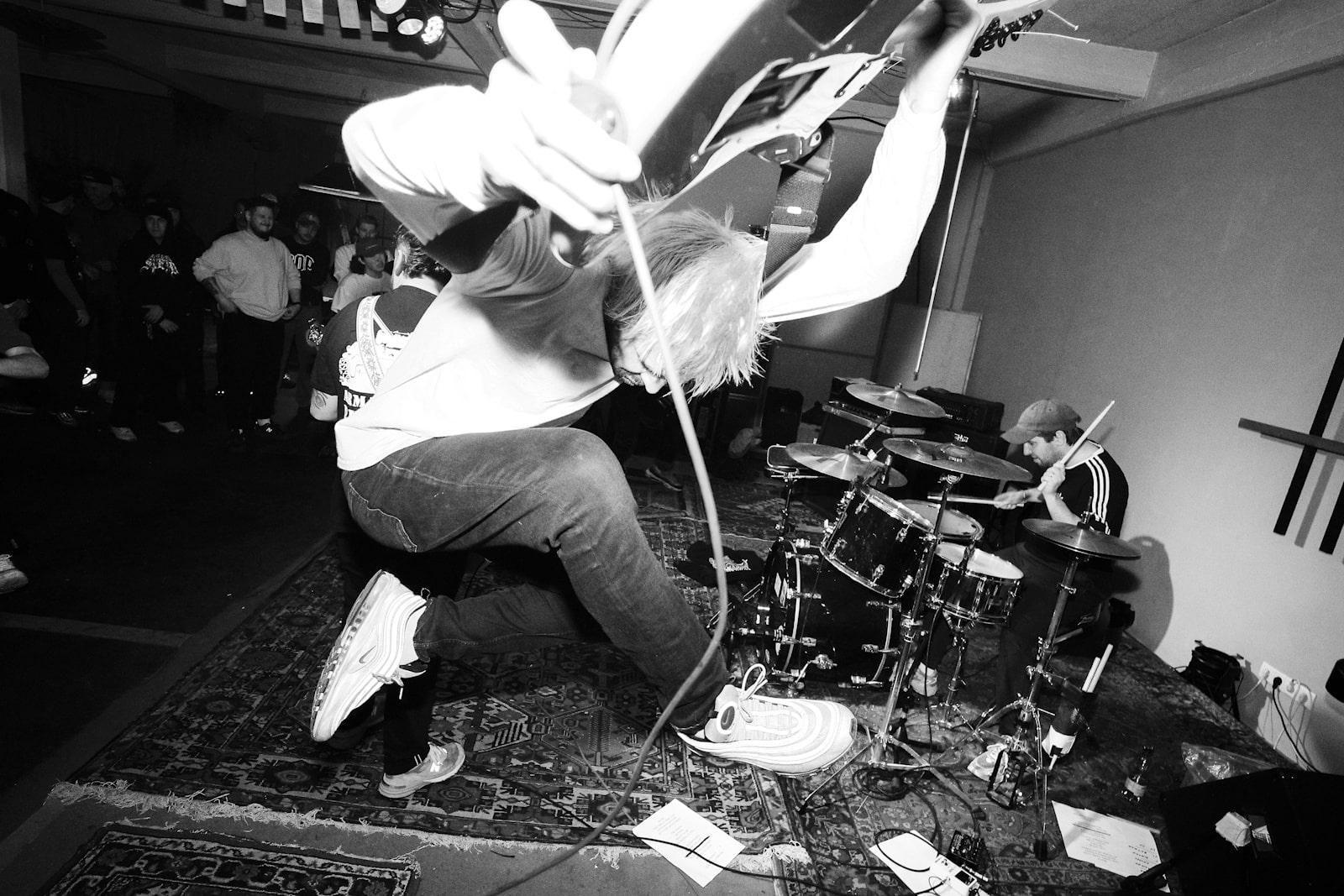
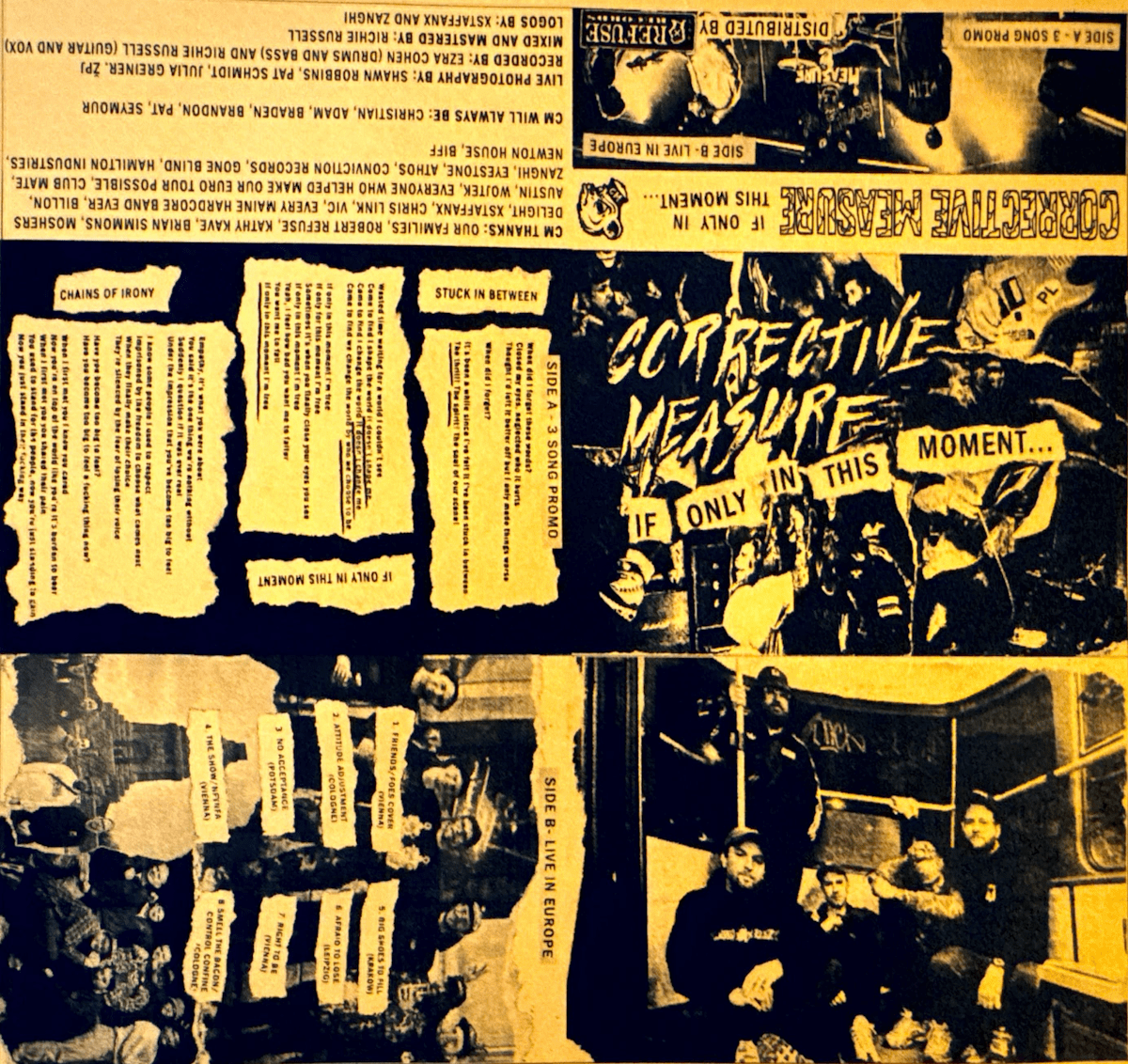
Main hardcore band Corrective Measure are preparing to release a new three-song tape, planned for late December, with the intention of having it out just ahead of a benefit show on January 3. The songs are currently presented via a video that the band plans to use as the release vehicle, and we’re stoked to give it’s first official airing right here!
The release comes after a stretch of activity that included a European tour in October, several locally significant Maine shows, and ongoing involvement in benefit events tied to their community.
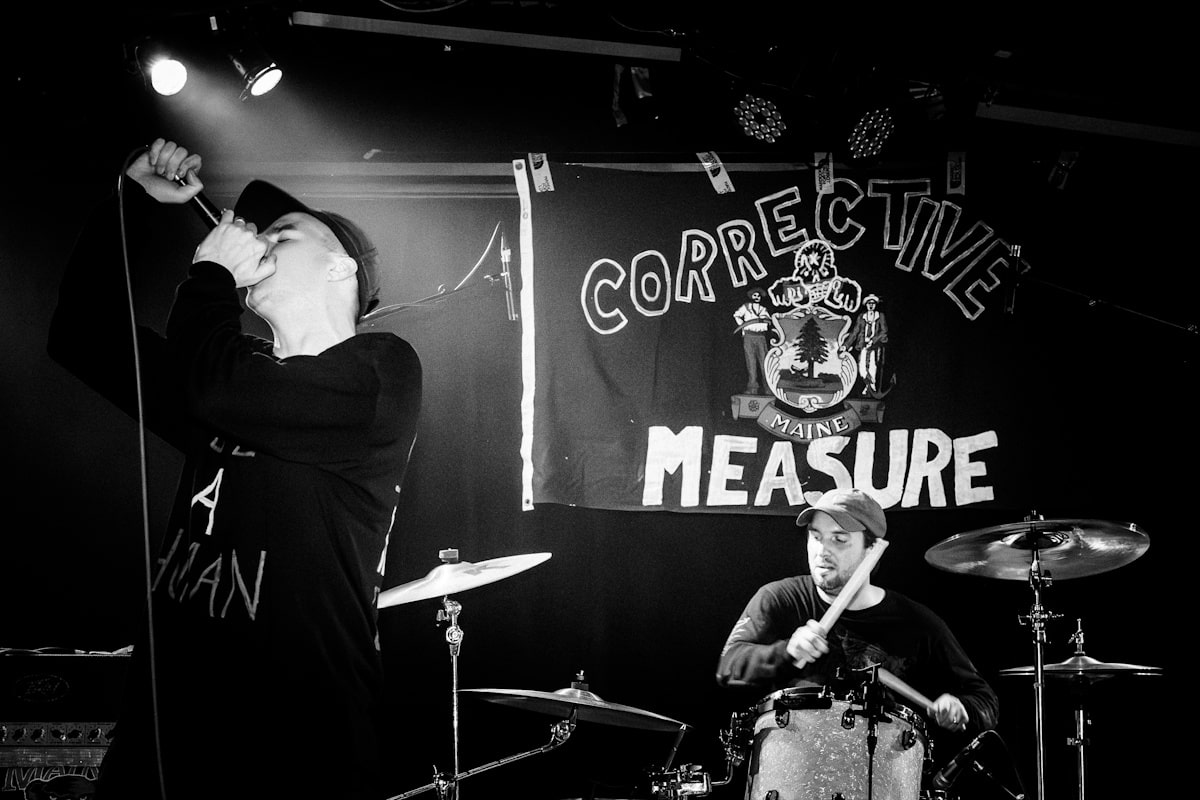
The European tour shifted their understanding of what touring meant to them. Initially, the idea of touring had felt straightforward: bringing the band’s music to new places.
By the end of the run, that framing had changed, and the emphasis moved toward what they returned with, both individually and collectively, as people, as a band, and as participants in their own hardcore scene.
They point to a renewed drive to write and record, paired with an increased appreciation for the everyday structures that supported shows across Europe.
The band describe a consistency of care: a place to sleep in each city, meals before shows, and people who actively wanted to share their local environments and scenes.
Those details stayed with them after returning home. They directly connect that experience to the efforts of Robert of Refuse Records, crediting his sustained work in making those kinds of tours possible for bands.
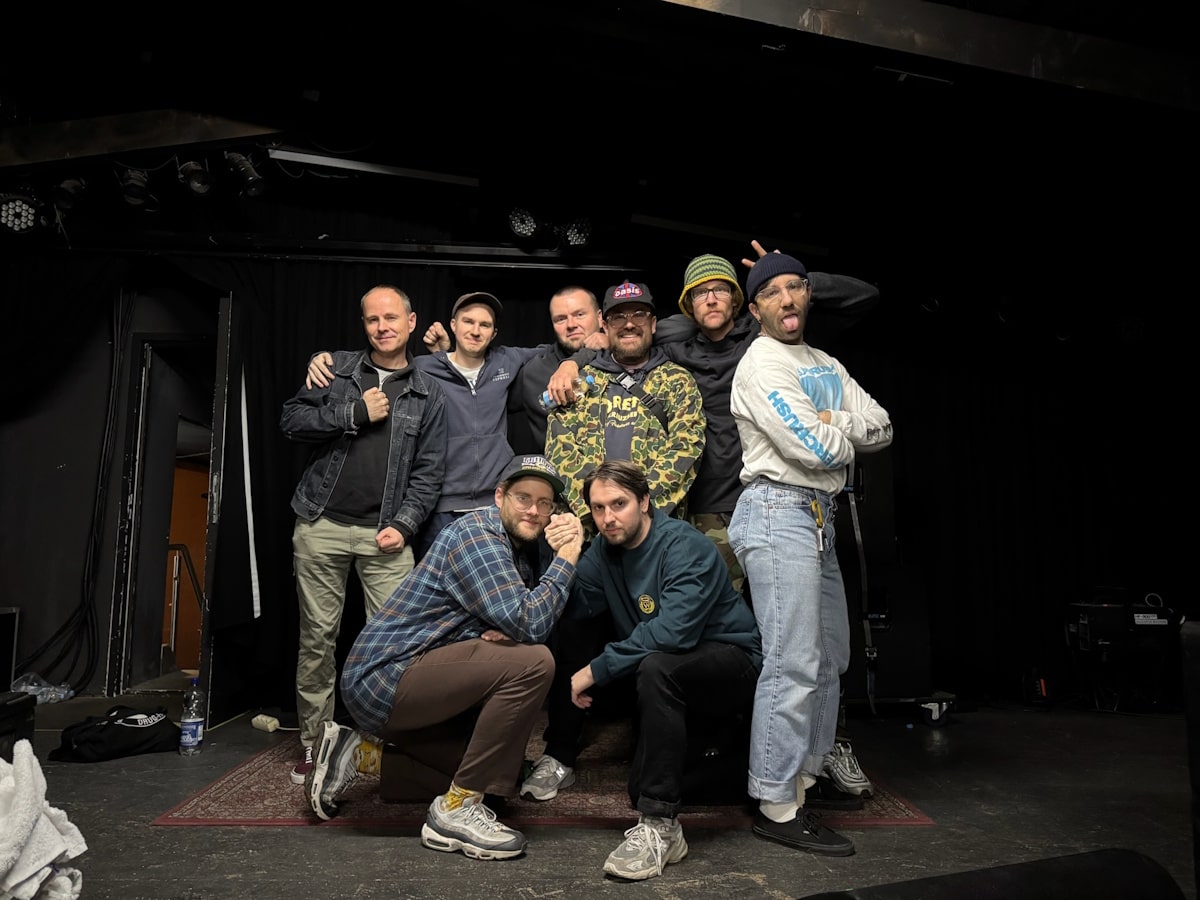
They also single out their friend Wojtek, who drove them throughout Europe and, in their words, consistently helped, taught, and went out of his way to make the tour feel like more than a sequence of van rides and shows, even if those rides and shows were memorable in their own right.
Coming back from Europe, Corrective Measure stepped into a dense run of Maine-based shows. The first was an all-local, sold-out benefit held a week after their return, organized to raise money for their friend Ryan Eyestone, who is undergoing cancer treatment.
𝙶𝙾 𝙷𝙴𝚁𝙴 𝚃𝙾 𝙷𝙴𝙻𝙿 𝚁𝚈𝙰𝙽
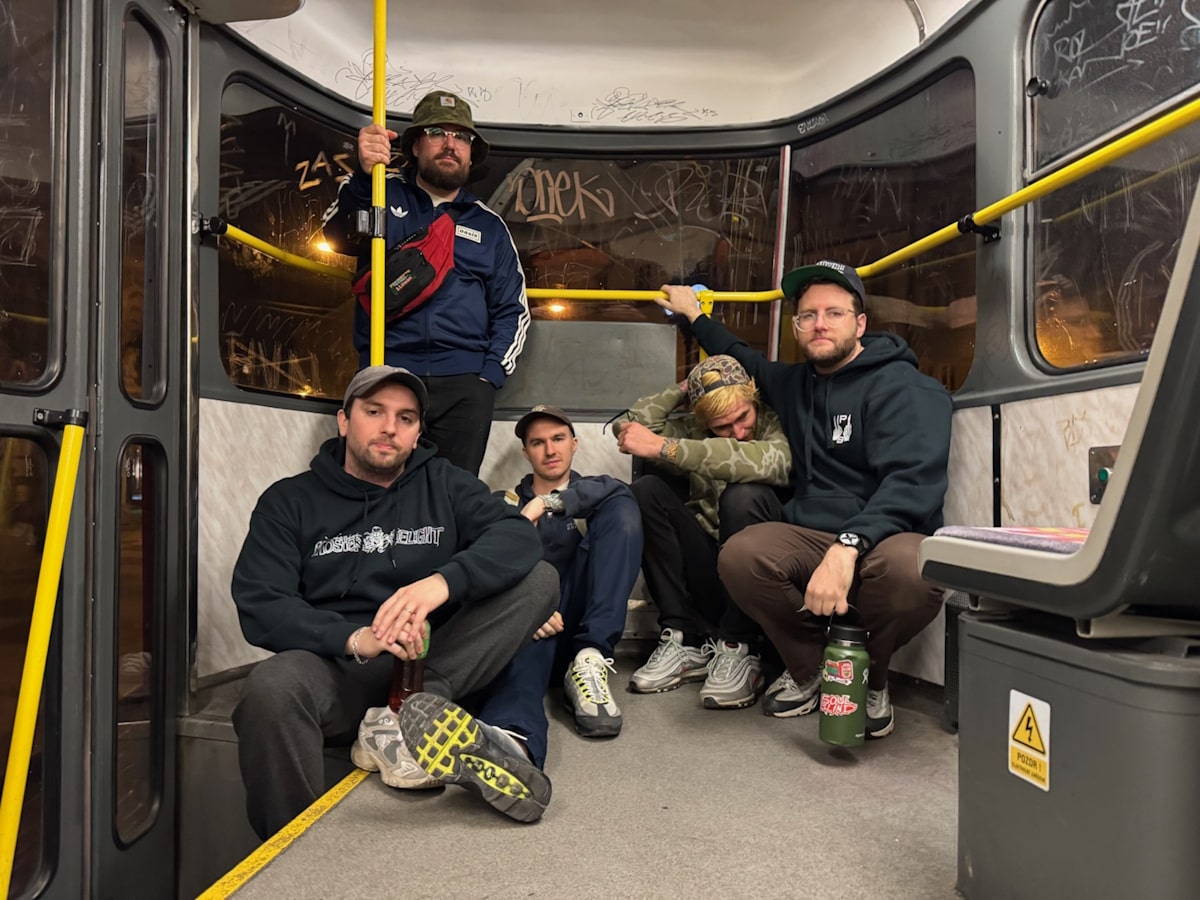
More than $7,300 was raised through ticket sales, raffles, and merchandise. Shortly after, they played the final show of the season at Squashed Warehouse, a venue operated by Vic. It’s Vic’s unheated garage and emphasize how closely it reflected the hospitality they had encountered on tour: bands being housed and fed, and shows existing as safe, all-ages environments. Despite freezing temperatures outside, the space was filled with kids to the point that the cold became irrelevant.
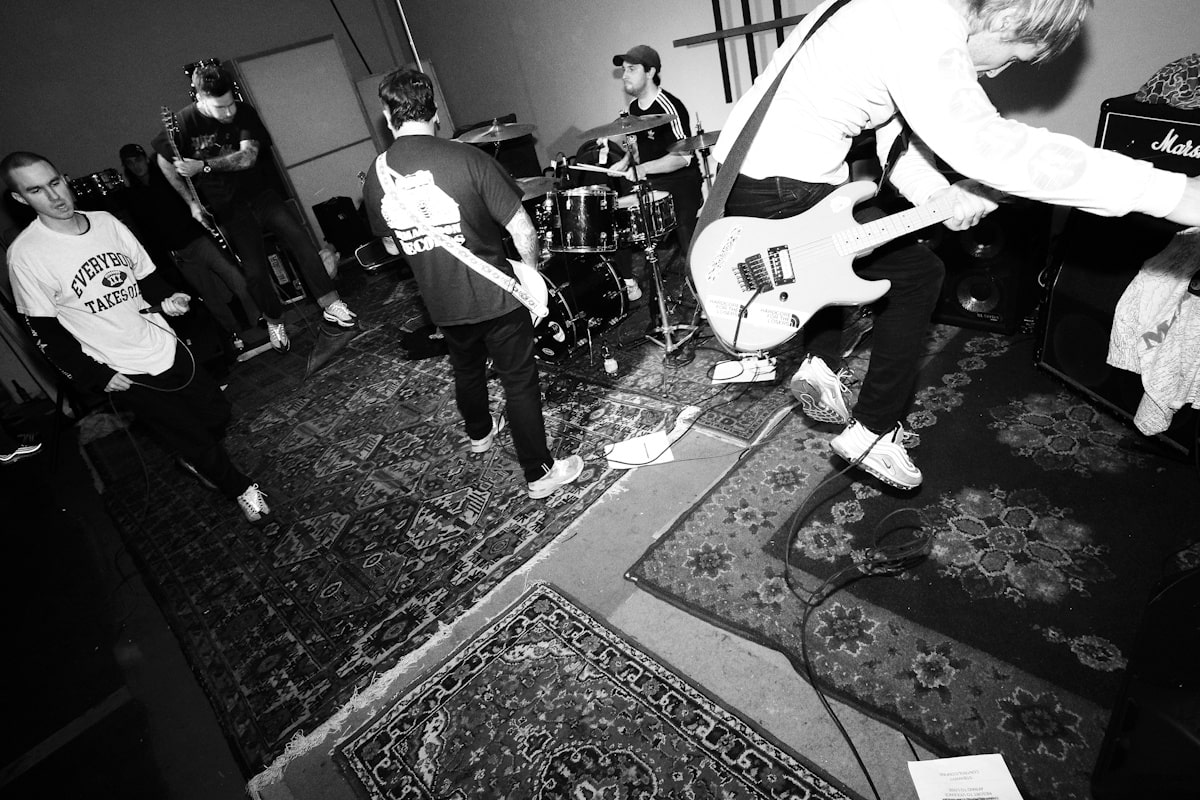
A few weeks later, they played with Fiddlehead at a small, sold-out, all-ages venue in Portland. The show had no barriers, and it was organized by friends who run Cheap Life Records. For Corrective Measure, the show mattered as an opportunity to host a band like Fiddlehead in Maine and to present what their local scene looks like when it is functioning on its own terms.
The upcoming January 3 event is positioned as the second part, sometimes referred to as the “South,” of the Eyestone benefit shows. It’s potentially one of the most important hardcore shows they will ever attend.
View this post on Instagram
Ryan Eyestone is a central figure in Maine hardcore, known for photographing and archiving shows at The Kave, a long-running hardcore venue, and for creating artwork for bands such as Outbreak and Cruel Hand.
For younger attendees coming into the scene, Eyestone represented an example of how sustained involvement could shape both a local community and the broader underground. The band emphasize how strongly the scene has mobilized around him, highlighting the scale of participation and mutual support.
Wake Up Call will be playing the benefit, “the best band to come out of Maine” that’s actually a small part of a larger collective effort.
Local bands are producing merchandise specifically to raise funds, while Bently, who sings in Peace Breaker and runs a screenprinting shop, is printing merchandise for free so that all proceeds can go directly to Eyestone. The band describe this coordination across different roles in the scene as both moving and instructive.
The three new songs themselves are a distillation of what Corrective Measure have been expressing over the years.
“Stuck In Between” is an introspective look at drifting in and out of hardcore, and the sense that returning to it often feels like finding something that has simply been waiting. The band reflect on how discussions around hardcore can sometimes imply a constant obligation to be present or to meet specific expectations, even though many people are drawn to the music for reasons that can require periods of social withdrawal. They describe punk and hardcore as structures that extend beyond music, touching relationships, creativity, travel, and personal interests, and argue that this breadth makes it unrealistic to expect uniform engagement from different people.
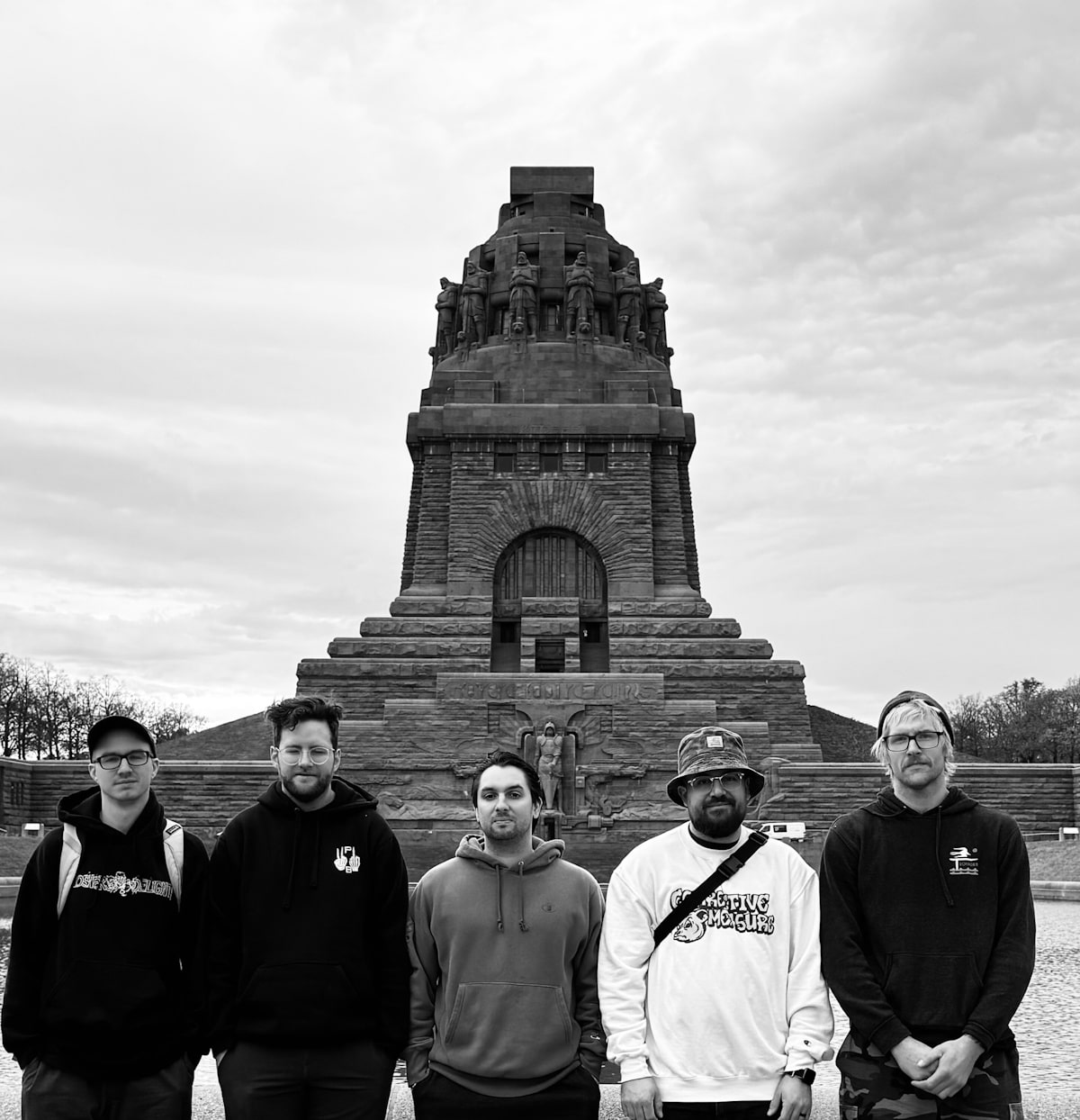
“If Only In This Moment…ujkp8” grew from a conversation with guitarist Christian and centers on rediscovering joy in playing together. It focuses on the specific sensation of playing hardcore, when attention narrows and everything else temporarily drops away. There is an unresolved tension in that experience: standing on stage is one of the most public and vulnerable things the band does, yet those moments also feel private, almost sealed off from the room around them.
The final track, “Chains of Irony,” turns toward disillusionment. It addresses the familiar realization that people once respected often reveal the same shortcomings found everywhere else. The song is particularly concerned with figures who build entire identities around empathy and sincerity, only to retreat from those values as their platforms grow. When the fear of losing that platform outweighs the willingness to use it, the contradiction becomes complete.
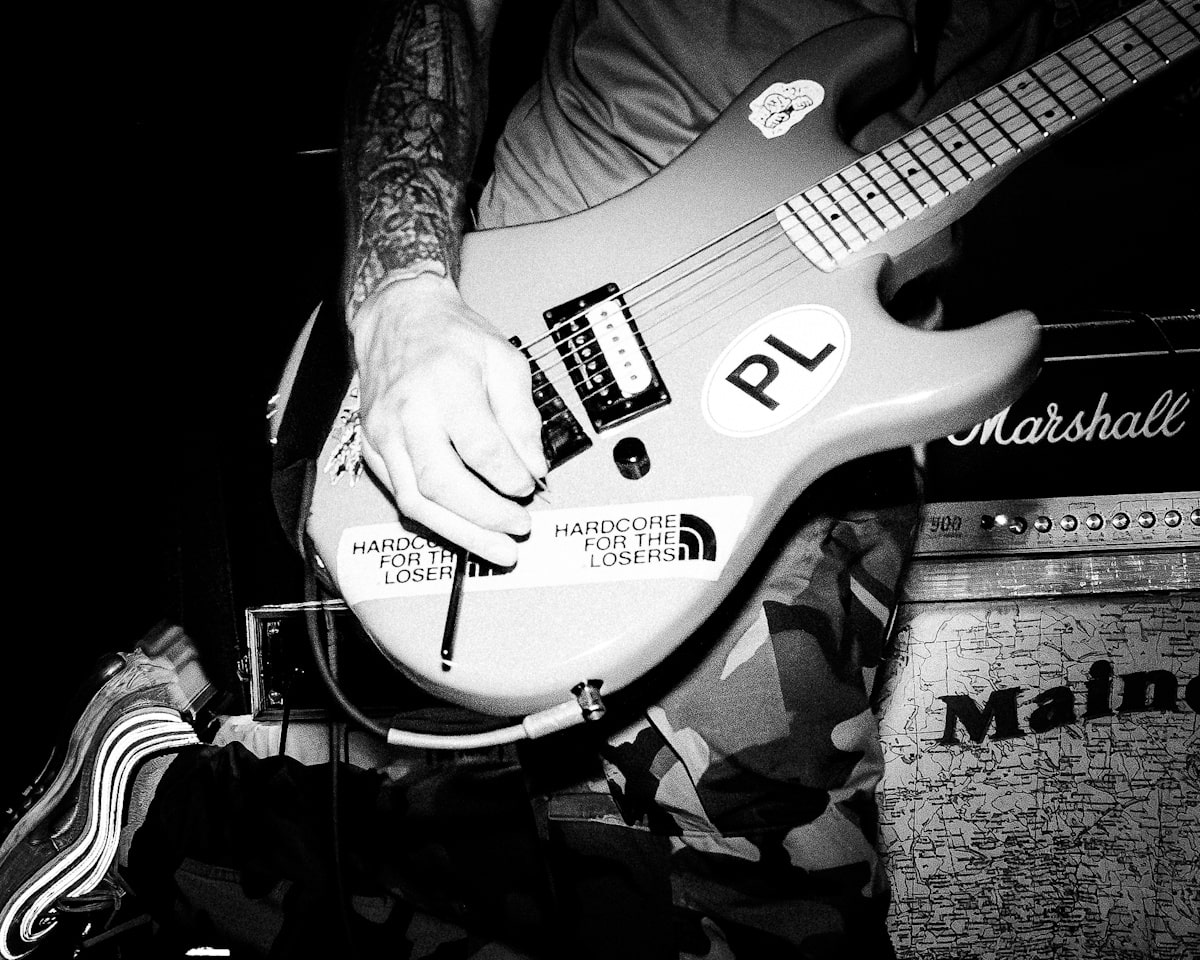
Seen together, the tour, the benefit shows, and the timing of the tape form a continuous thread rather than separate chapters. The European run fed directly into renewed writing and recording, which in turn folded back into a local cycle of shows, shared labor, and mutual support in Maine.
The same patterns repeat across contexts: people opening their homes, feeding bands, moving gear, printing merch, driving vans, and creating the conditions for shows to happen.
In that sense, the new three-song tape sits less as a standalone release and more as a document emerging from motion — carried from city to city, then brought back home, shaped by what Corrective Measure encountered, relied on, and participated in along the way.