
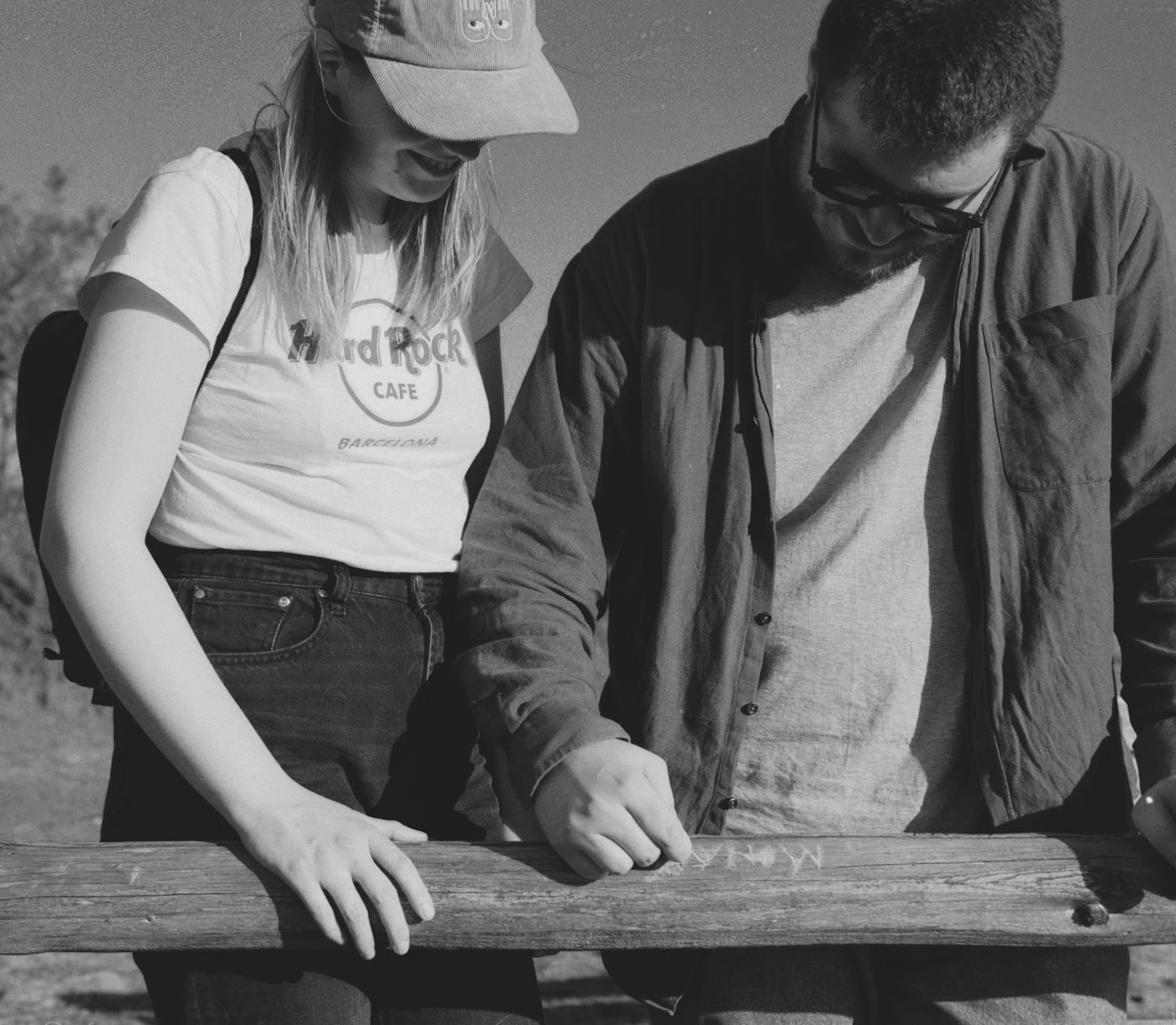
It didn’t start with a plan to become a band, and it definitely didn’t start with a debut in mind. motte grew slowly, unevenly, in between studies, friendships, lockdowns, and long stretches where nothing quite worked. Since meeting in 2019, Mona and Max kept returning to music even when forming a stable group felt strangely out of reach. Songs existed before the structure around them did.
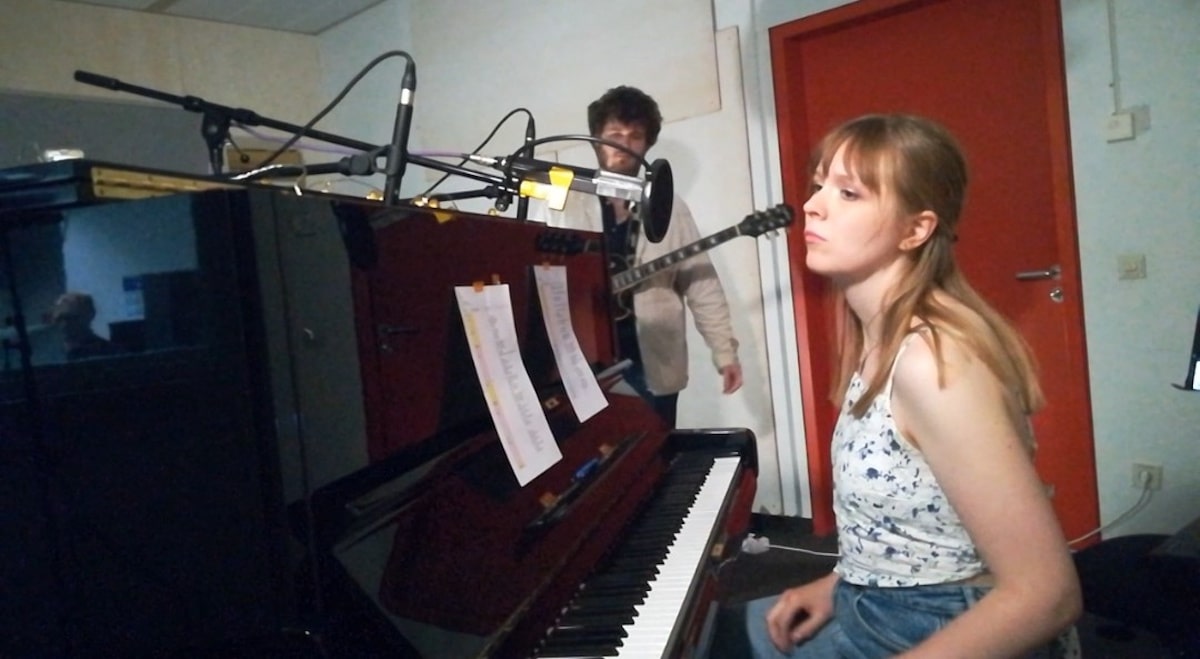
What eventually became the EP began as four live sessions recorded across several years in Bremen. Each session happened under different circumstances, with different friends stepping in, shaping the sound almost accidentally. Instead of smoothing those differences out, motte kept them intact. The recordings don’t represent a single phase, but a sequence of moments. That’s why the tracklist runs backwards in time — the newest song first, the oldest last — like flipping through a diary from the present toward the past.
You can hear that shift clearly. Some lyrics come from Mona as a teenager, others from her mid-twenties. The voice changes, the confidence changes, the way emotions are handled changes. What stays consistent is the decision not to rewrite history. The songs were left close to how they sounded in the room, closer to a rehearsal than a studio artifact. Capturing that rawness mattered more than tightening edges.
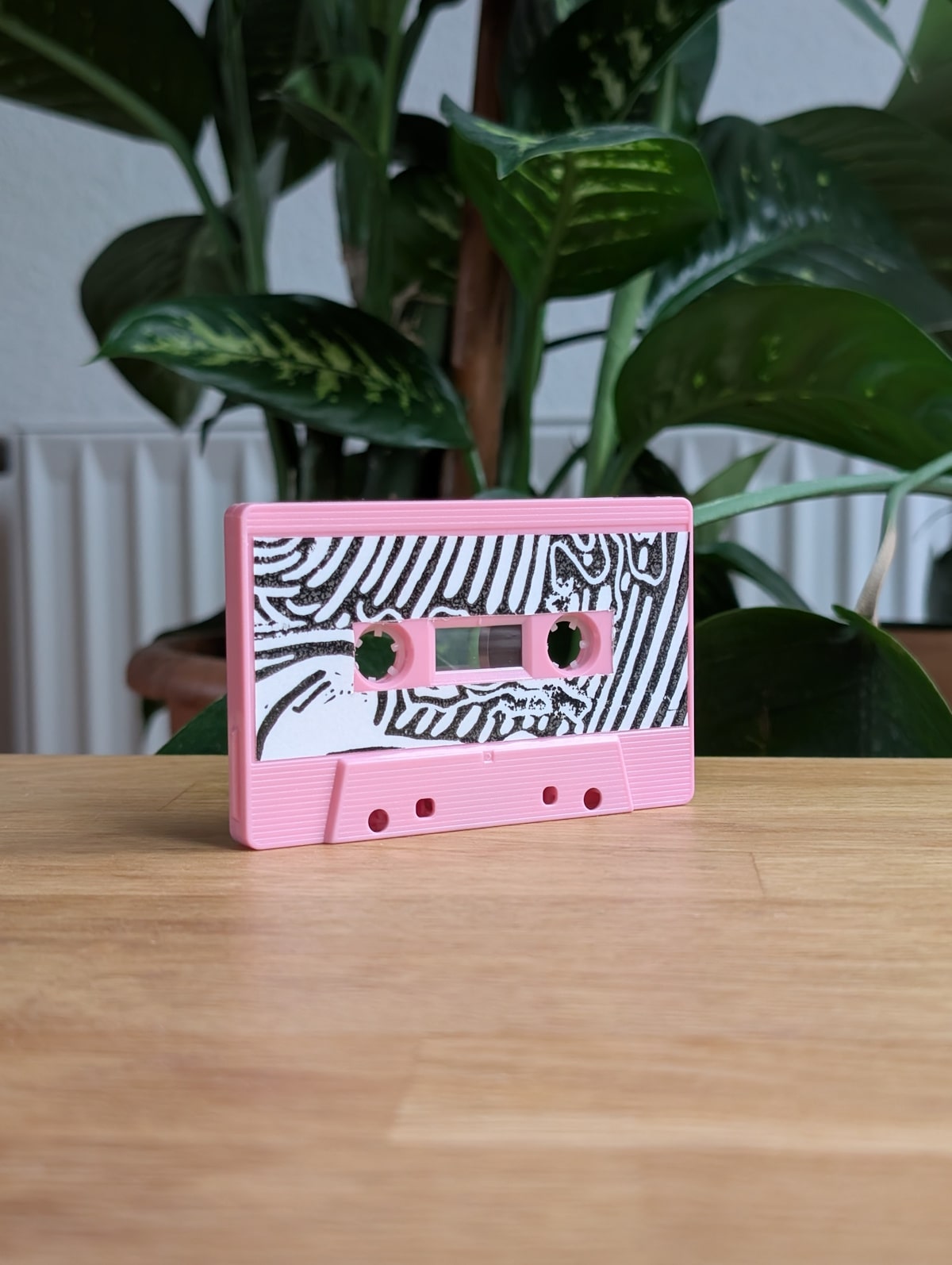
The physical form of the EP grew from the same instinct. The idea of a cassette stuck early and wouldn’t let go. Not as nostalgia, but as resistance — something tactile, slow, and deliberately imperfect. A cassette ages, stretches, drifts in pitch. Every playback alters it slightly. That fragility wasn’t a flaw; it was the point. Recording tapes by hand, reusing cases, assembling everything manually became part of the statement. In a moment where automation and artificial perfection dominate, the cassette stood for something stubbornly human.
That medium pushed the visual side forward too. While researching DIY tape releases, Mona encountered linocut for the first time. The process — carving, inking, printing again and again — felt almost mechanical, yet never fully controllable. Each print carried small errors, tiny differences that made every copy singular. That contradiction became central to the artwork.
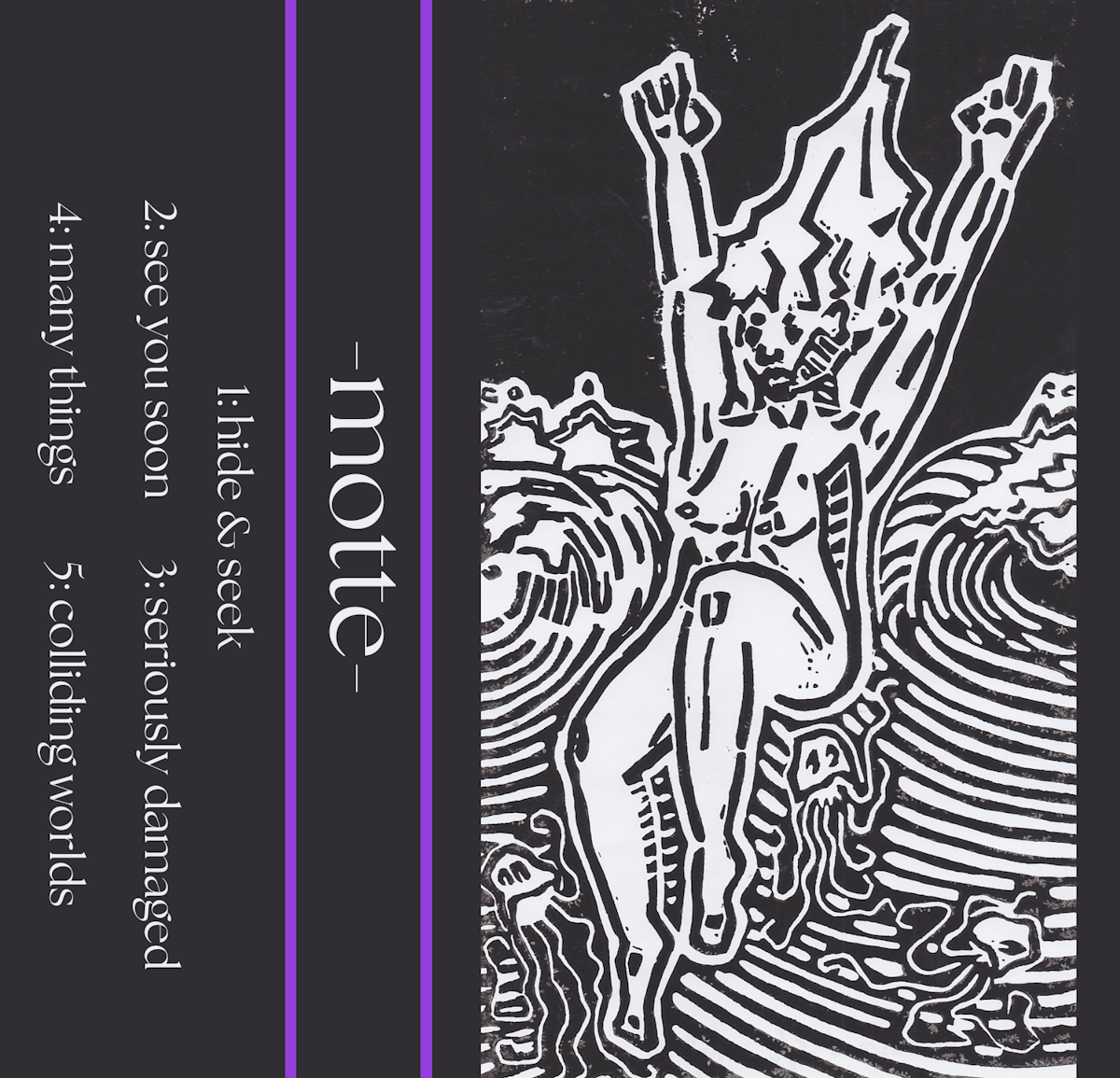
The image that emerged — the “water woman” — started as an older sketch and slowly took shape through careful cutting. The figure represents anger, an emotion rarely granted space to women, despite its power to break stagnation and provoke movement. The background was finished later, during a semester abroad in Avignon, and the wave motif — inspired in part by Hokusai — pulls the figure back toward her origins. When the first prints were finally pulled at the end of 2024, it became clear this image belonged on the cover. It wasn’t decoration; it was the final entry in the diary. “Colliding Worlds” had been written years earlier, as a teenager. Now the same person was nearly 28, looking back.
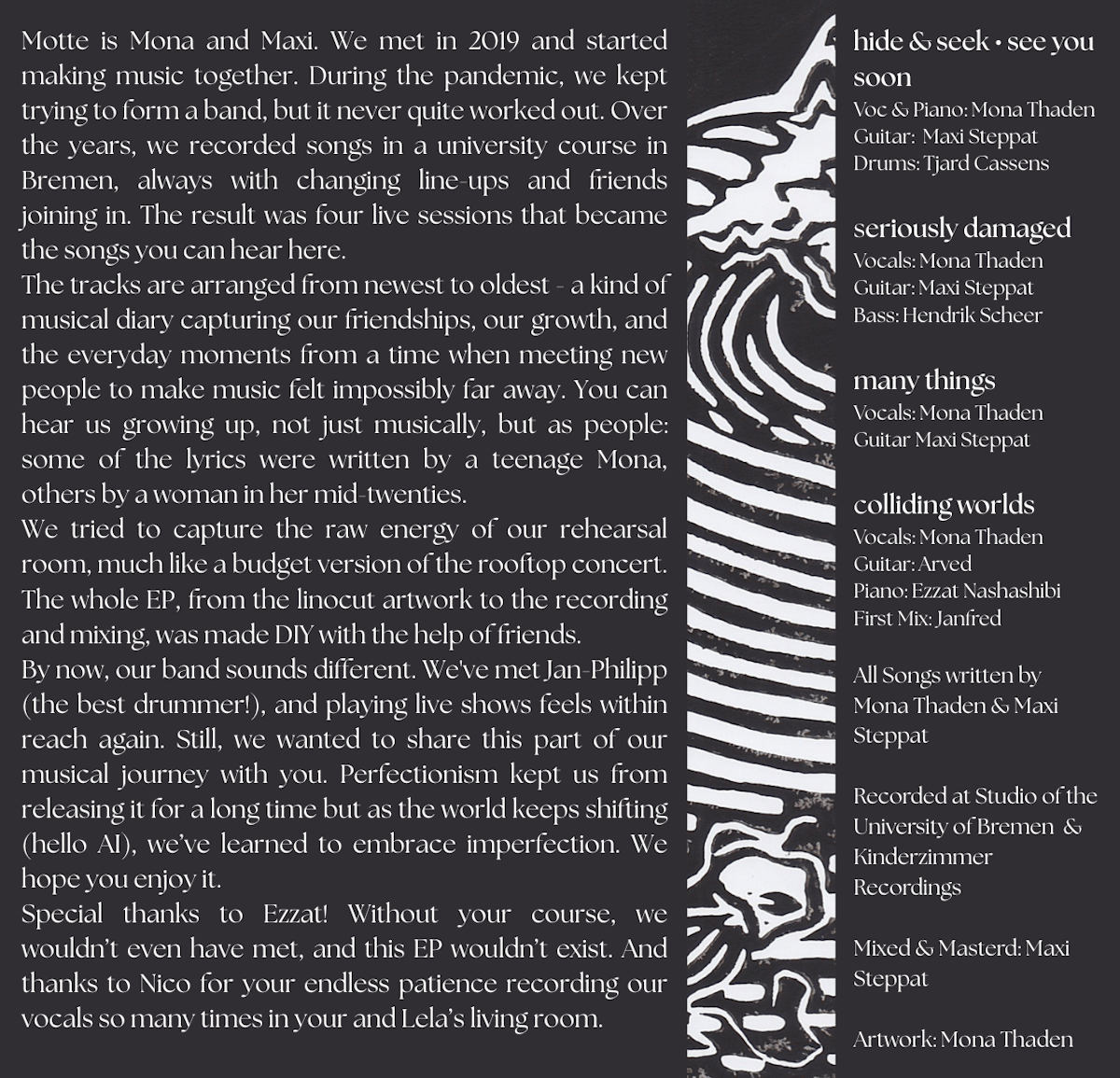
That artwork reopened another door. The linocut led Mona back into visual work, sketching watercolors daily, showing prints and zines at small markets in Hamburg and Bremen. The EP wasn’t just closing a chapter — it quietly unlocked another.
Max’s role took shape in the cassette’s design. The J-card was treated seriously, studied down to its exact dimensions, rooted in childhood memories of radio-play tapes like Die Drei ???. Typography and color choices drew from vinyl records he grew up with — VIOLENT FEMMES, THE SMITHS, PATTI SMITH, KATE BUSH — records where accent colors mattered as much as images. Purple and pink against black and white weren’t aesthetic flourishes; they were signals that this object belonged to a specific physical tradition, even when viewed digitally.
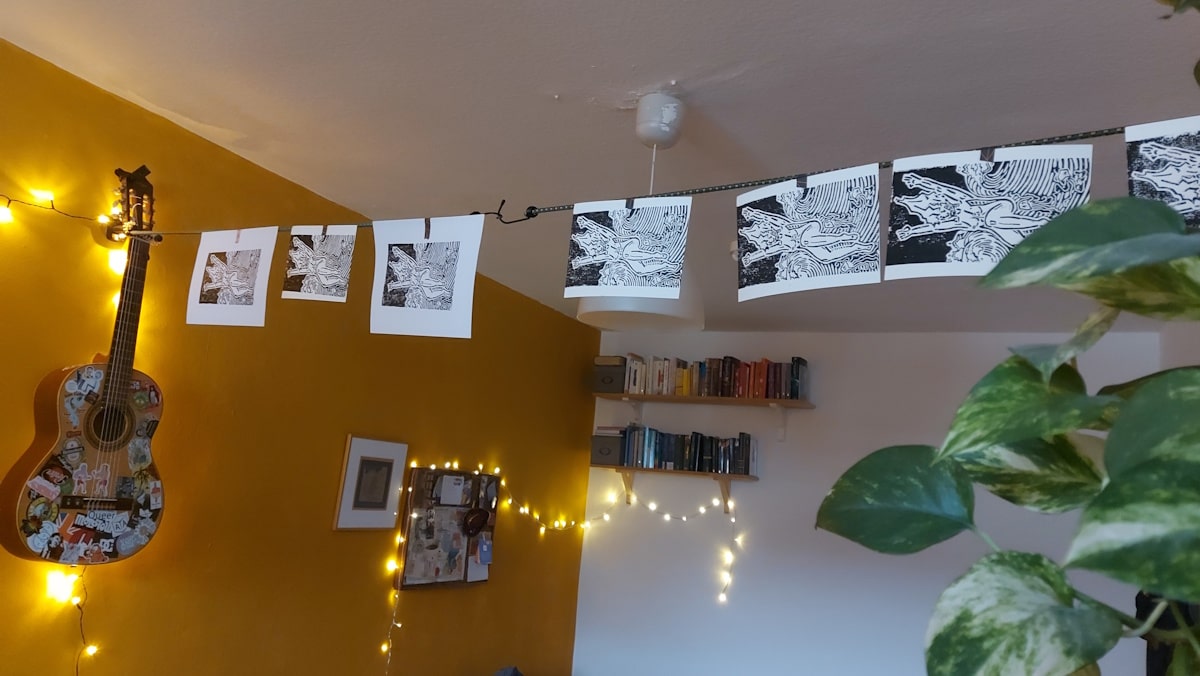
motte never positioned themselves as part of a punk lineage, but the DIY ethos came naturally, influenced by friends in the emo scene and the simple necessity of doing things themselves. Everything — recording, mixing, artwork — happened with the help of people close to them, in living rooms, classrooms, borrowed spaces.
Today, the band already sounds different. There’s a new drummer, new work, the possibility of live shows ahead. But this EP remains as it is: a document of persistence during years when nothing aligned properly, when perfectionism delayed release, and when learning to accept imperfection became the most important step forward.