
The first time elbowsway put their music out, it felt almost weightless. No expectations, no plan beyond finishing something and letting it exist.
“When we released our first single, I personally did not have any expectations. It was my first experience sharing my creative work publicly. I simply enjoyed the music and felt proud of what we created.”
That moment has now stretched. What started as a private process now pulls in listeners from far outside Tashkent, reshaping how the band sees itself and what it’s part of.
“Later on, we saw more people reaching out with kind words of support. At that point, we realized we should try to spread the word about what we do.”
They leaned into that shift directly—short-form clips, fragments of songs, glimpses into rehearsal rooms. The response wasn’t just numbers, but names. Connections. A scattered network forming in real time.
“I started making more short-form content to share our art. It allowed us to connect with a huge range of incredible artists around the world. Some of them include Sunlotus, Chlorine Eyes, Strayline, Draining, Aaron Vigil, Miriam’s Early Garden, Vixsin, Narcolepsy, and many others.”
The scale of it reframed things. Not career, not exposure—something closer to recognition between people making similar sounds in different corners.
“In moments like those, you start seeing the true value. Music is not just about becoming famous. It is about building a community.”
That idea turned into something practical. A playlist, “digital haze,” quietly collecting artists who might otherwise stay buried.
Wyświetl ten post na Instagramie
“That is why we decided to start a playlist called digital haze to promote the music of artists we like and those who deserve more recognition. The scene cannot evolve without celebrating itself. When people from all over support your early attempts at becoming someone, that is all you need.”
At the same time, something else shifted closer to home. “sleep debt,” their second single, started moving through algorithmic loops they hadn’t expected.
“In addition, the algorithm has been quite kind to our second single sleep debt. A lot of people, specifically the American audience, seem to enjoy it. For the local audience, validation from external listeners proved that our music means something, which has driven more interest at home as well.”
Shows followed—March, April, the first real stretch of playing in the region. A different kind of feedback.
“Now we have a couple of shows scheduled for March and April in the region. I am still curious to see what people think of our upcoming release.”
That release arrives today, April 8th: “common sense,” a debut EP that sits somewhere between exhaustion and distortion, between daily survival and something harder to name.
Five tracks moving through social isolation, physical burnout, surreal disaster, and quiet resignation, closing with a loose, unsettled reflection on your mid-twenties.
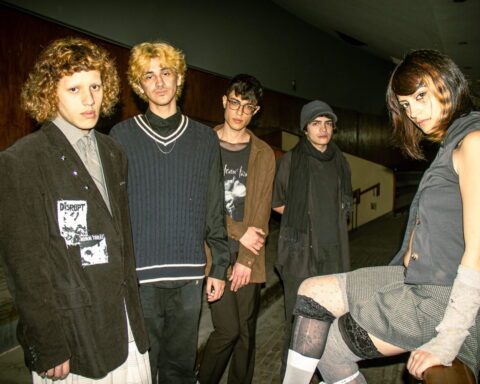
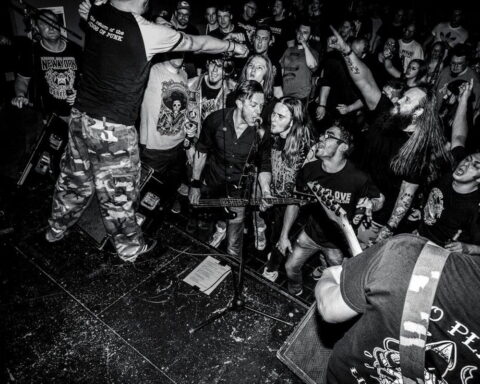
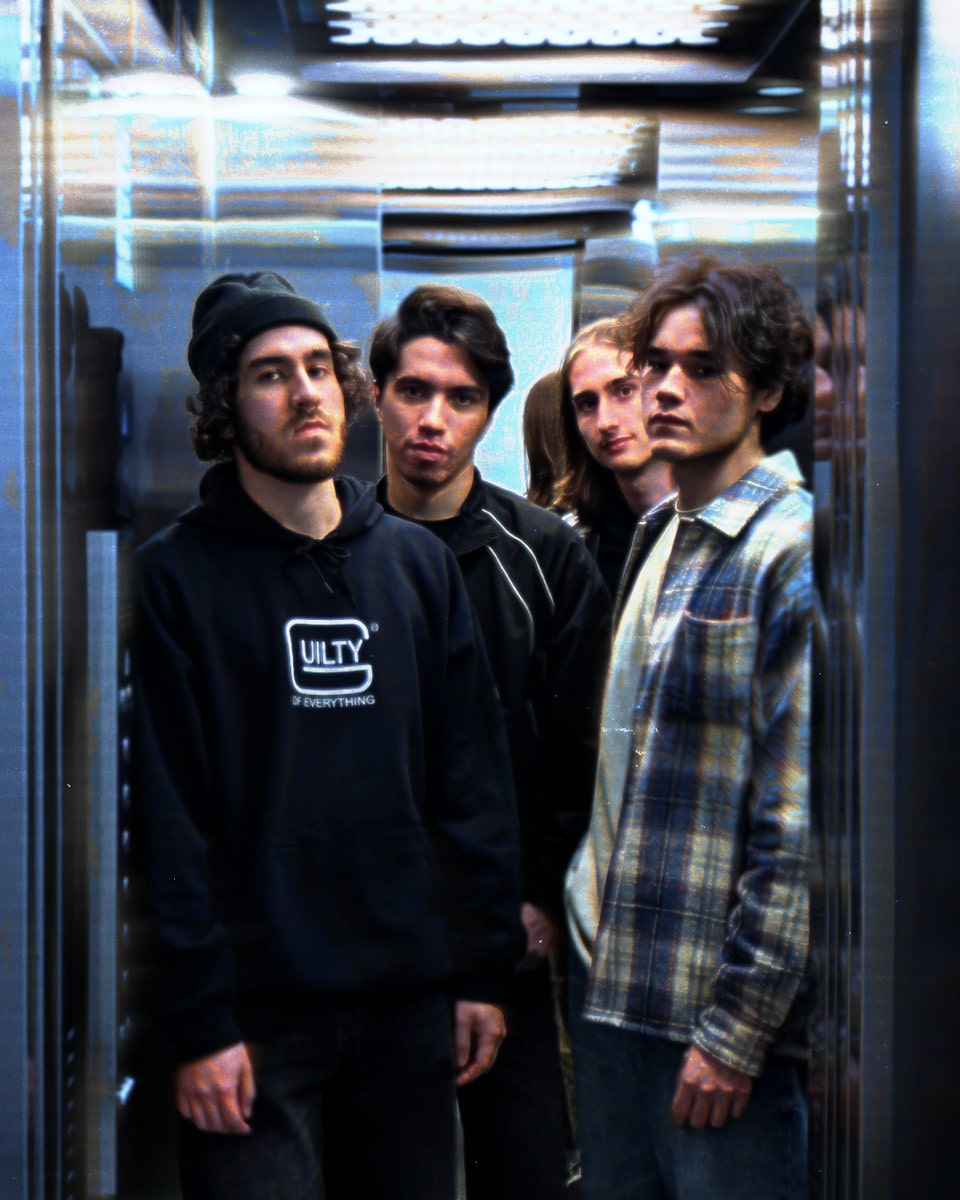
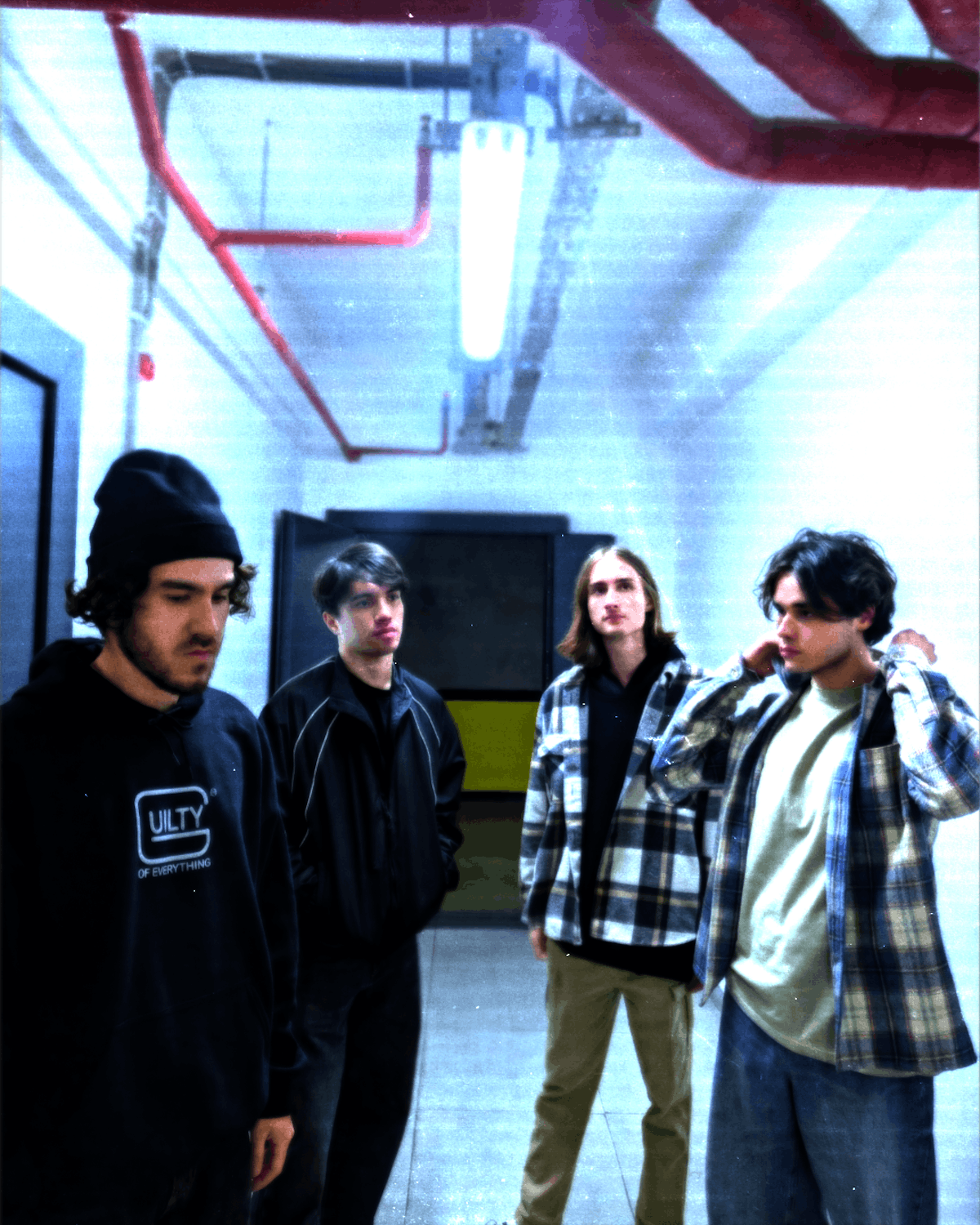
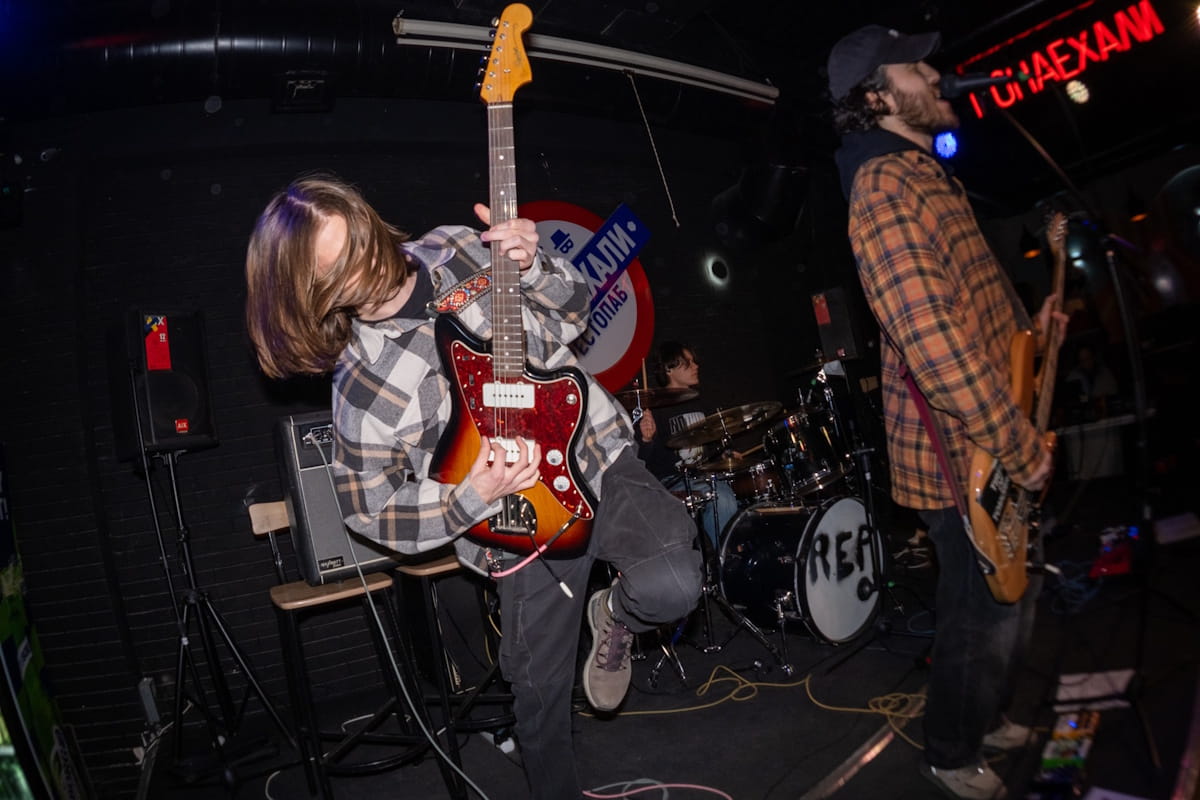
The project grows out of a specific trajectory. Tomas Mollaev, originally rooted in extreme metal, shifts direction after moving from Turkmenistan to Tashkent. A mosh pit injury—an elbow fracture—leaves behind more than a bruise; it becomes the band’s name and a pivot point. With Aziz Ganiev (St. Waters), Roman Shirshov (Bu Qala, Flyin Up), and later Amir Shaykhutdinov completing the live lineup, elbowsway begin stitching together shoegaze, emo, post-metal, and fragments of blackgaze and dreampop into something that feels heavy without collapsing in on itself.
Anton Suraev, guitarist of Wyym, anchors that process behind the scenes and in the studio.
“Anton Suraev has played a huge role for our band. We sound the way we sound only thanks to his broad experience. He helped us shape our tone and provided the necessary technical knowledge that was required for the recording. And he personally oversaw the whole recording process. Right now, he’s assisting us with the mixing process, and provides valuable suggestions.”
The EP itself moves in fragments, each track carrying a different kind of pressure.
“common sense,” written in 2024, started as Tomas’ first complete idea—lyrics and arrangement sketched before being passed to Aziz.
“Originally written in 2024, this was technically my first song. I developed the lyrics and initial arrangements before sharing the demo with Aziz, who found it interesting. From there, we began working on the song further.”
The image behind it is simple but tense: a fast, indifferent city, suddenly slowed down just enough to notice its weight.
“When writing it, I wanted to combine the aesthetic of a big, fast, and sometimes cruel city with the feeling of seeing everything finally slow down.”
The references stretch outward—Have a Nice Life, The Angelic Process, DSBM acts like Lifelover and Apati—before folding back into a core that still holds onto shoegaze.
“Musically, I wanted to bridge the influences of Have a Nice Life and The Angelic Process with elements of DSBM, specifically bands like Lifelover and Apati, while keeping the core sound as shoegaze as possible.”
The track only locks into place once the band becomes a full unit.
“The track reached its final form rhythmically once Roman joined the band and we improved the song together.”
“sleep debt” reaches further back. Aziz wrote it in 2023 as something quieter, almost incidental.
“This is our oldest track. Aziz came up with the idea in 2023, originally as an acoustic version without a specific plan for its release.”
It changed shape through collaboration—emo first, then gradually submerged in layers.
“Once he shared it with me, I really enjoyed the blend of emo and shoegaze vibes. While it was more emo-leaning at the start, our collaboration added more shoegaze elements throughout the arrangement.”
Its references are more specific: Cursive, Mineral, Braid, alongside Nothing’s “Vertigo Flowers” and Whirr’s “Ease.” The result stays close to a single idea—being stuck, unable to rest or move forward, suspended in a loop.
“It captures the stagnant reality of just surviving instead of living.”
“trees” pulls away from structure almost entirely. The writing follows instinct, starting with a lead guitar line and building outward from there.
“I did not want to overthink this track; I simply followed the emotions of the moment. The songwriting process began with the lead guitar part, focusing on capturing a sense of skull-crushing despair.”
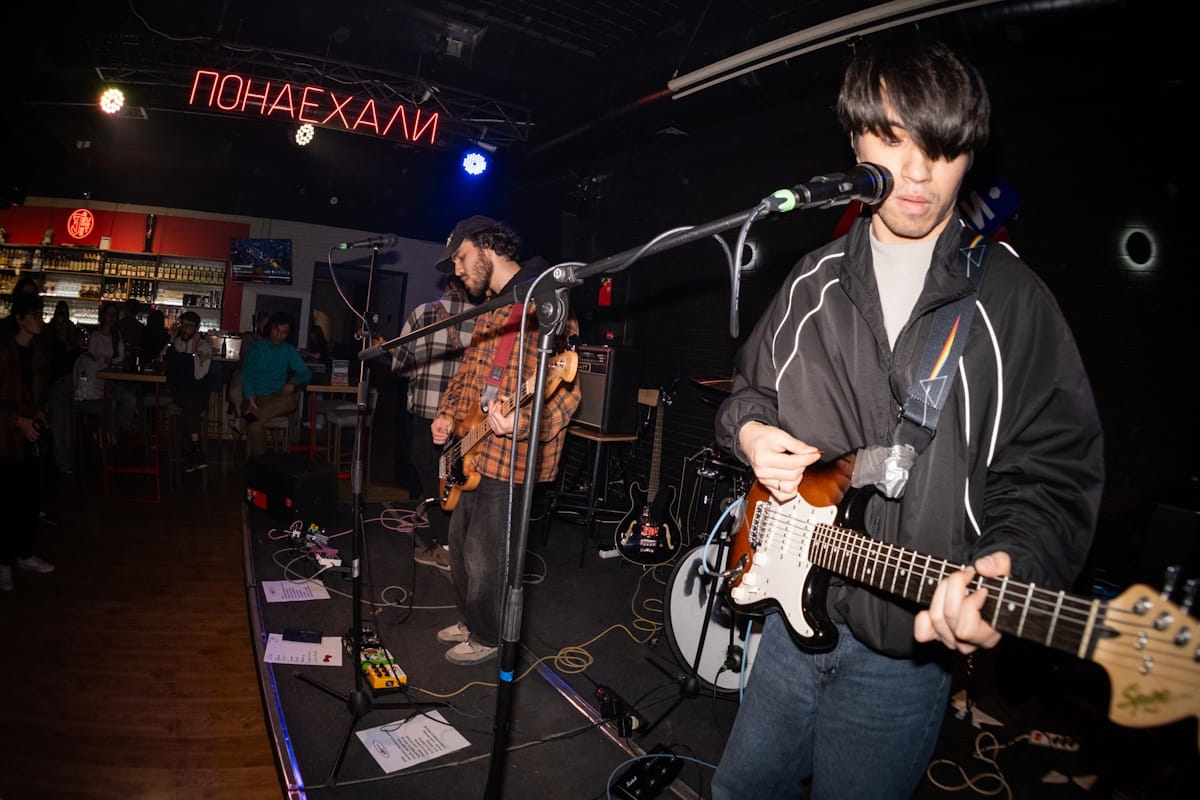
The lyrics come from something local and immediate—a child killed by a falling tree, an event tied to worsening weather patterns in Uzbekistan.
“The lyrics were inspired by a tragic event where a child passed away from a fallen tree near where I lived. Given the harsh weather conditions in Uzbekistan, this has unfortunately become a more common problem.”
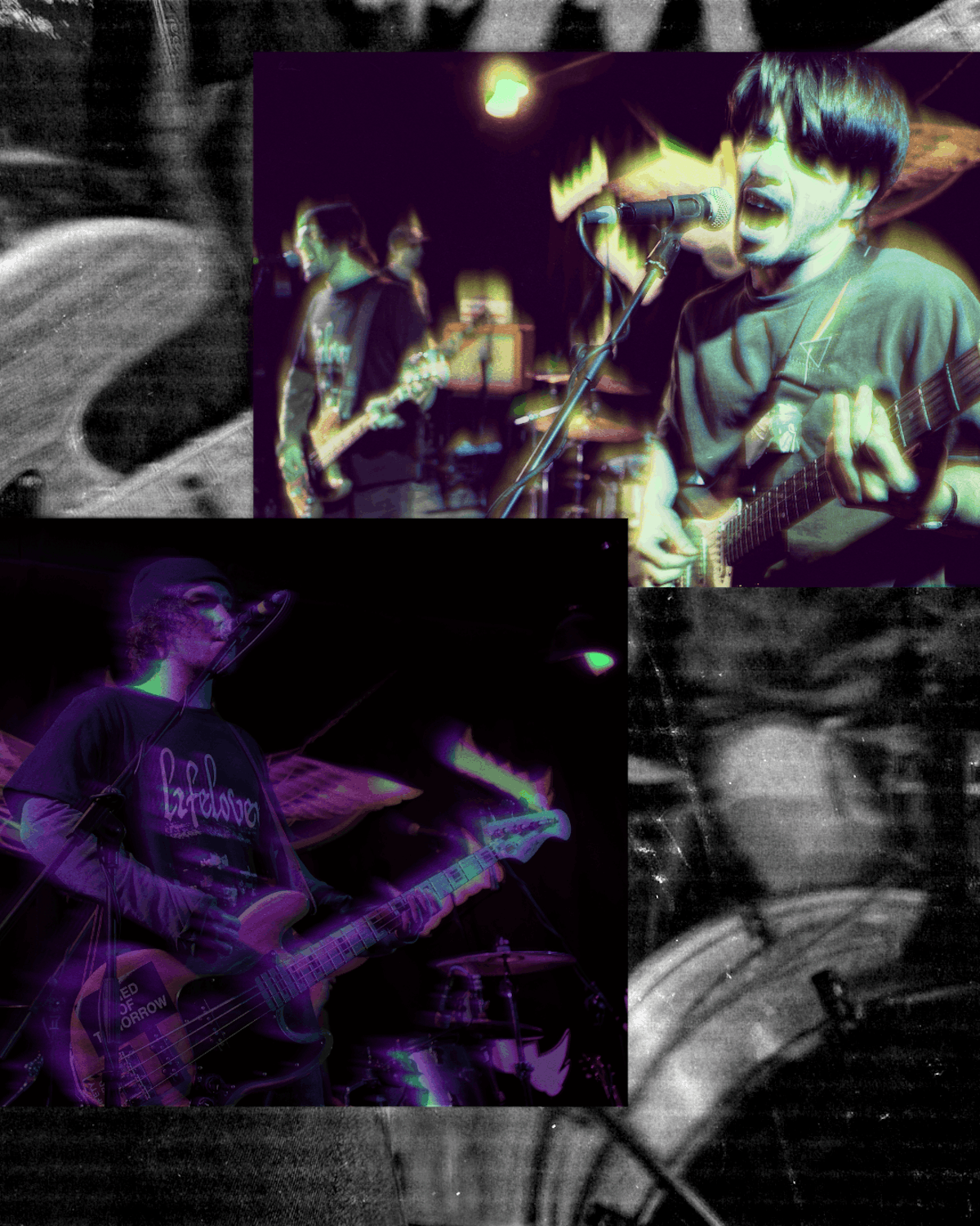
The song turns that into something wider, almost cinematic.
“I wanted the song to capture a cinematographic apocalypse. Inspired by the surrealist horror of David Lynch, the track uses the imagery of falling trees as a metaphor for an inescapable, logic-defying disaster.”
“ward” shifts inward. Written late in 2024, it begins with a bass progression and comes together quickly—two hours, the full band building on a single idea.
“Written in late 2024, this song started with a chord progression on the bass. From that starting point, the band came up with the rest of the ideas together in a single two-hour session.”
Its reference point is clear: Silent Hill. Not as a visual, but as a feeling—clinical space, decay, acceptance.
“As a fan of the Silent Hill series, I wanted to lean into that specific aesthetic of psychological horror and physical decay. It lives in the clinical, foggy space between life and death—a study of terminal acceptance.”
“blunt knives” arrives last, early 2025. Faster, more direct, but still circling uncertainty.
“Aziz developed the demo for this track in early 2025. He wanted a fast, emotional song that captured a very specific aesthetic of mid-life anxiety.”
It functions as an ending without closure.
“Over a couple of subsequent sessions, we finished the track by applying everything we had learned as a band up to that point. It serves as a brief epilogue and a stream-of-consciousness reflection on being suspended in your twenties.”
The image is simple and stays that way.
“The song explores the act of looking back to see how you reached this point in life. Though the knives are blunt and the notes are taken, the message is that you have pushed on and will continue to do so.”
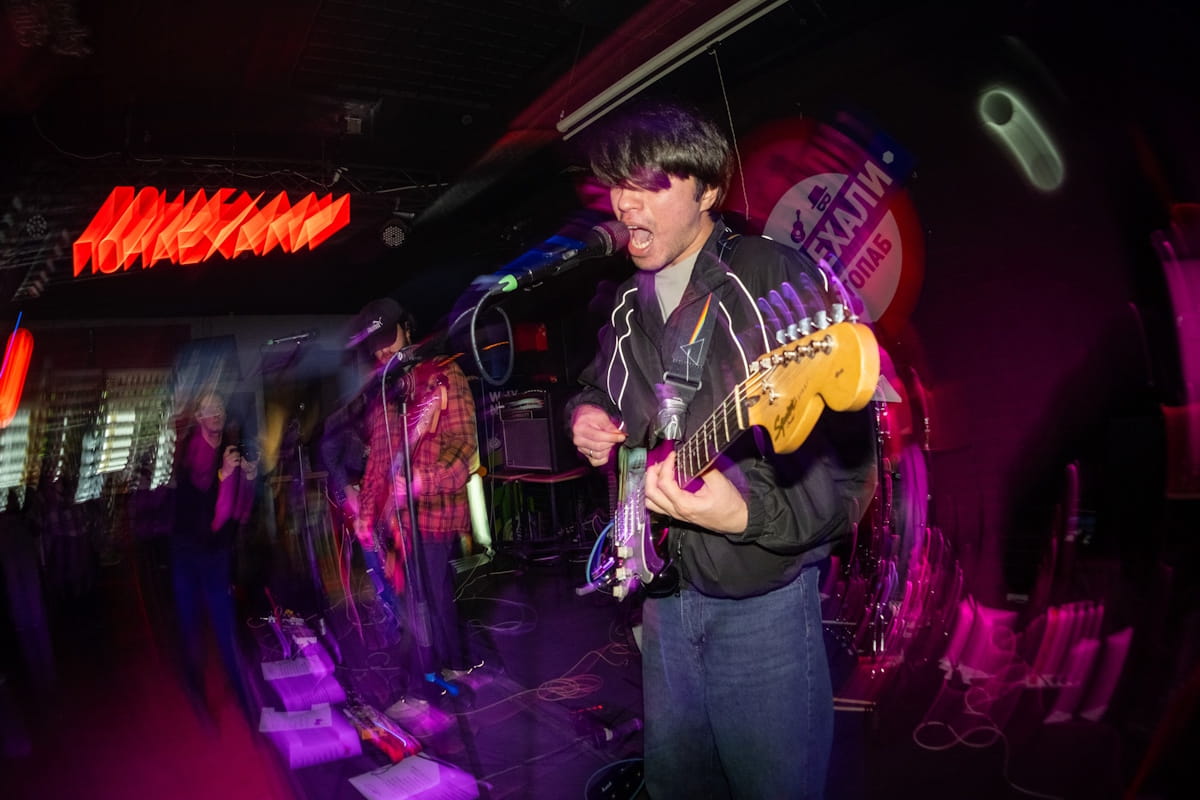
All of it sits inside a broader setting that still feels unfinished. Tashkent’s alternative scene is growing but uneven, with limited venues and a cautious audience. elbowsway move inside that space without trying to smooth it out—balancing day jobs, late rehearsals, and a network that stretches far beyond the city.
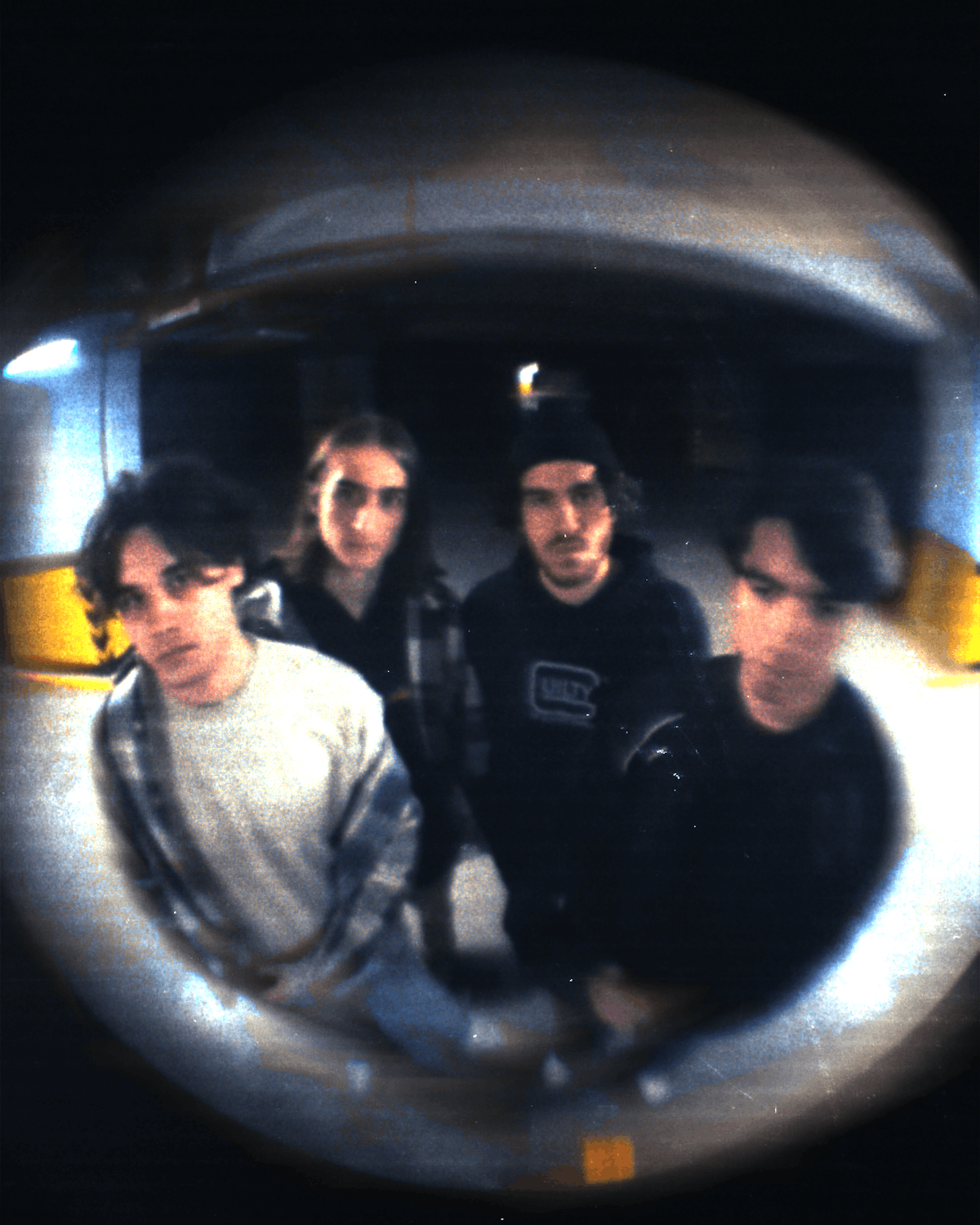
Their earlier introduction with “common sense” and “sleep debt” marked them as one of the first bands to treat shoegaze as something local rather than imported. Now, with the full EP arriving April 8th via Boshqa Musiqa, the shape is clearer: not a scene fully formed, but one learning how to recognize itself while it’s still happening.
elbowsway are Tomas Mollaev (bass, vocals, composer, lyricist), Aziz Ganiev (guitars, vocals, composer, lyricist), Roman Shirshov (drums, composer), and Anton Suraev (guitars, composer, production, backing vocals), with mixing and mastering handled by Mikhail Skurikhin.