

The Municipal Market of Vic isn’t there anymore. Power Burkas watched the demolition happen, then wrote a song about it.
“When you witness, with a kind of macabre fascination, the destruction of a part of your city; the sensation that this urban void leaves in your body, the points it illuminates, and the scenes of curious passersby and protocol-driven workers who appear for a few days,” is how the band describe “Rega runa,” one of thirteen songs on their fourth album “Amb la fi al davant,” out May 29 on BCore Disc.
The plot where the market used to stand is now becoming a CAP, a public health center.
Power Burkas have a take on that too: the city is putting up a clinic, “I suppose to treat the aftereffects that the amputation of one of the city’s ugliest yet most beloved buildings may have caused.” The album title is buried in the same song, in a line about being “a bunch of cross-eyed folks facing the end.”
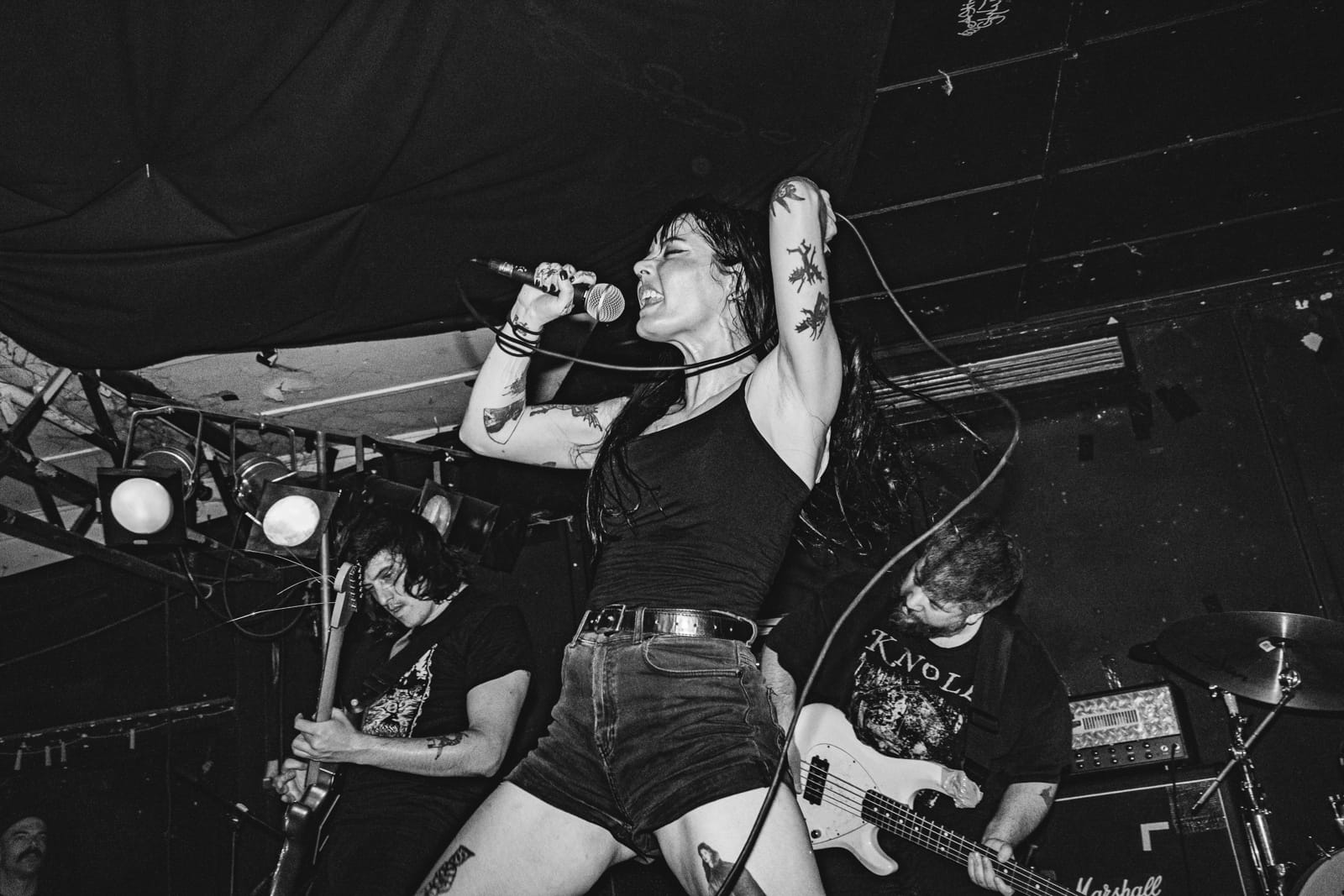
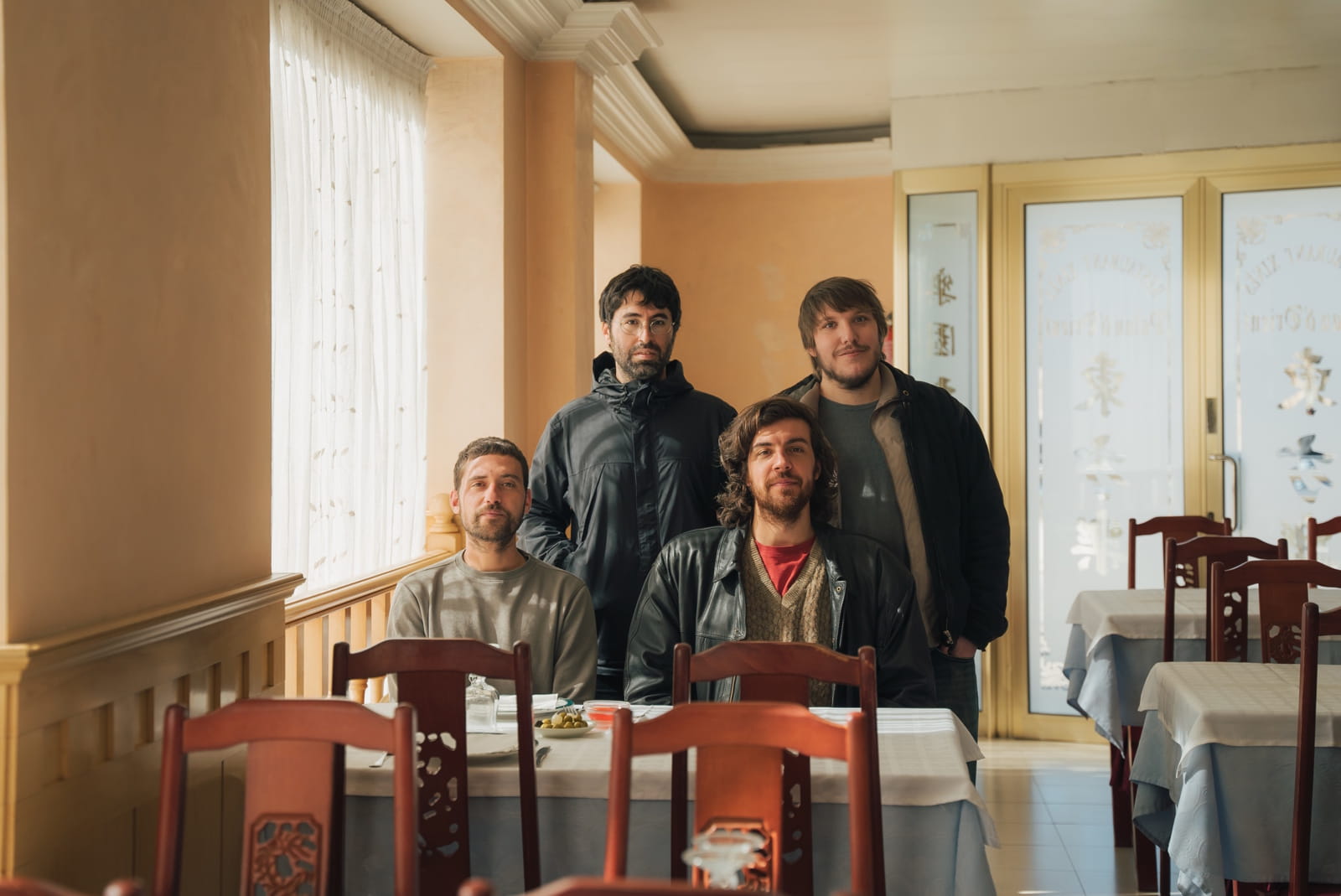
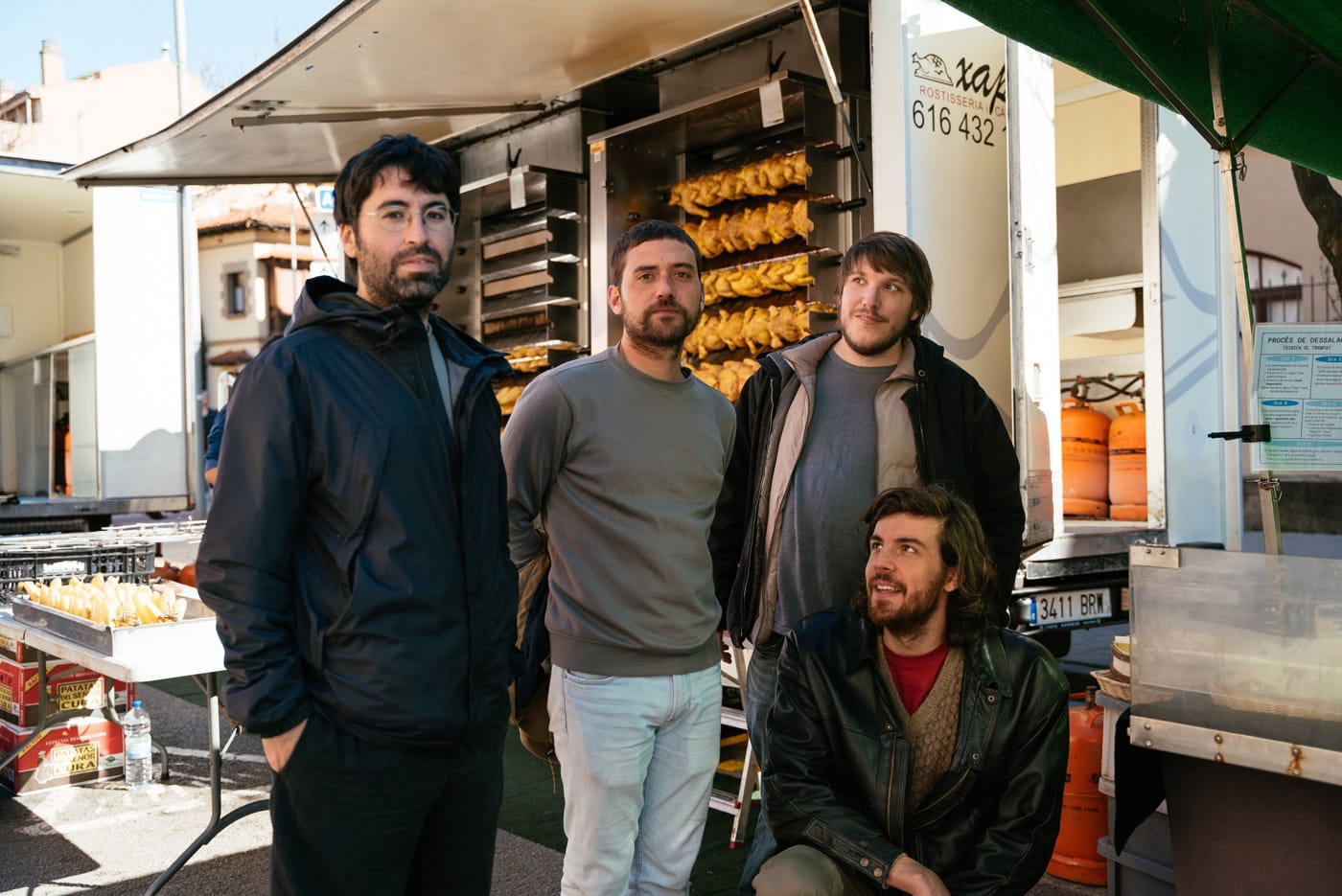
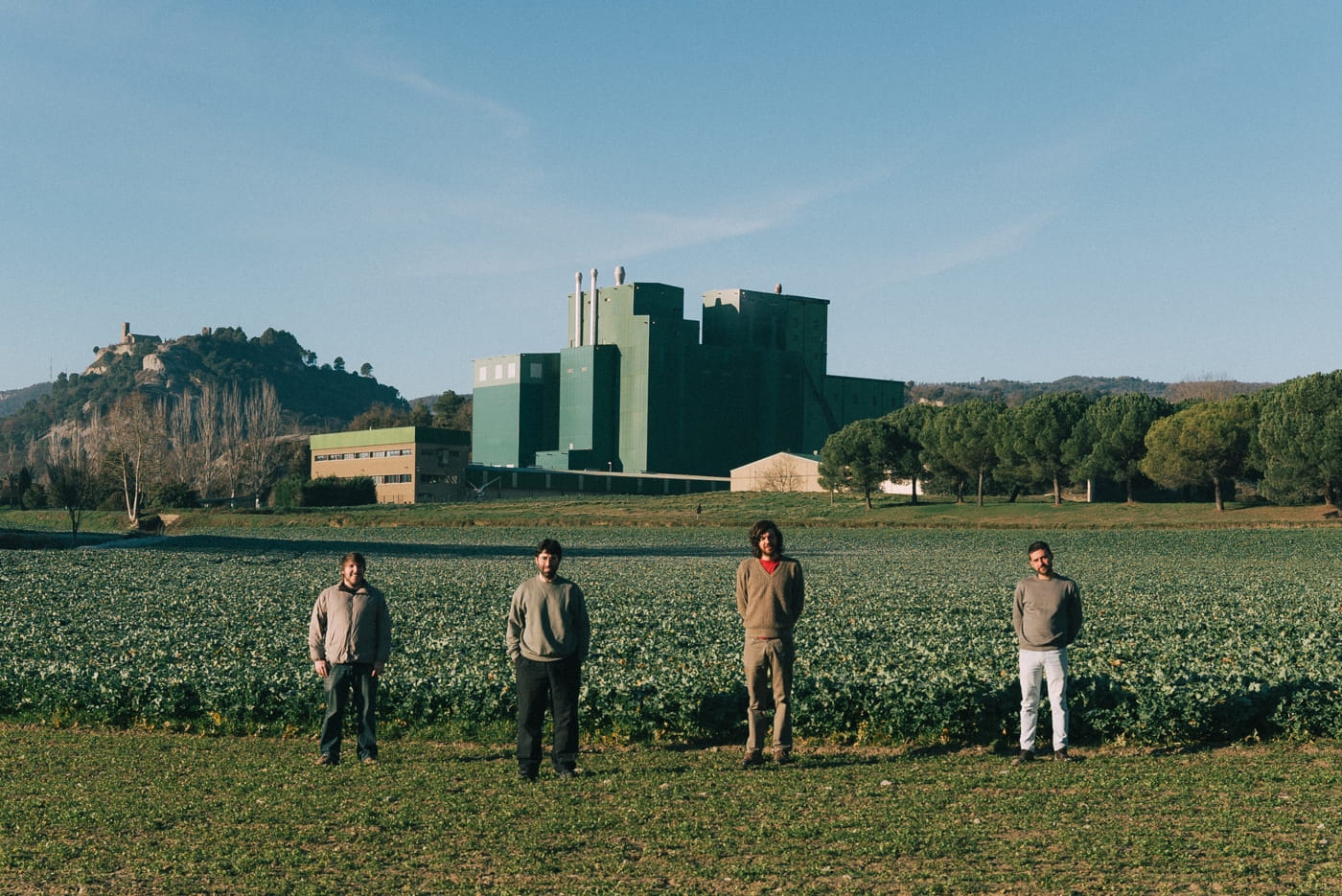
Power Burkas are Claudi Dosta and Aleix Marbán on guitars, Martí Ferrer on drums, and Marcel Pujols on bass and vocals.
Thirteen years deep, all of them from Vic, a town about 70 km from Barcelona with its own deep musical history (most of which runs through more mainstream channels). “Amb la fi al davant” is their first full-length since 2021’s “Naïf, potser.” Five years between records, but the band say the rehearsals never stopped and the songs never stopped piling up. A few got out during the stretch, like the standalone “El conte de Nil Nadal” and a devotional cover of Sirles. The rest waited.
It does shape them, they say, even now. An accent, a place from which to see the world, a reality. “I think it shapes us more now than before,” the band note, since three of the four members live in the Plana these days, whereas a few years ago all four were in Barcelona. They rehearse there, work outward-facing jobs there, observe everyday life from up close. When it comes to actually getting the band organized, though, they’re less convinced any of it helps. “I don’t think there’s any geography capable of making us get our act together.”
They sing in Catalan, and they make a point of distancing themselves from “rock català,” the umbrella term coined in the 90s to bracket Catalan-language pop. Power Burkas don’t fit the label and don’t want to.
Their reasoning is plainer than the genre debate makes it sound. “We are Catalan people who speak Catalan with the vast majority of people in our lives. It’s only natural that we use our own language in the songs we create,” they say. They started out in English a long time ago, the band add, but barely remember it now. Catalan, for them, is a living language they use as it comes, and they’d rather not have to justify it or feel special about it.
The rock català wave itself feels distant to them, partly age, partly approach. Other waves that came after feel just as far off. The bands and voices they actually pull from come from different generations and different scenes, picked up one at a time.
What they do is take very ordinary stuff (cooking, exercising, shopping, watching TV, sitting in old-men’s bars, walking past demolition sites) and bend it sideways. Their own description of the album’s outlook reads: “we look at a world that collapses, that pushes, that indulges compulsively, that prepares itself, that leaves, that repulses us, that moves us, and that makes us want to keep playing.”
Wyświetl ten post na Instagramie
“Pont del blanqueig” was called “Green Day” on the rehearsal room chalkboard for a long time. The song deals with what happens when you get pulled between self-loathing and self-satisfaction, but the band say it’s also tied to a real piece of Vic geography: the bridge that crosses the river Mèder, where the bus from Barcelona makes its first stop.
“With the lyrics, the green gradually faded into white, and the setting became fixed in a very specific spot in Vic,” they explain.
“No em venguis res” was written by drummer Martí Ferrer while he was setting up his own shop. That’s not a punchline, that’s the actual context, and it gives the song its bite. “People, things, places ask us for little moments, coins, or thoughts that keep spinning away in circles,” the band write. Someone tells you “I’m not buying that,” and all you’ve said is hello. They call the song “a liberating way of stating the intentions of the band.”
Martí also has lyric credits on “Farandulera,” which the band describe as “the final fake concert of our friend Andreu (aka Ubaldo).” A friend keeps insisting you come to his last show ever, you finally show up after enough phone calls, and it turns out it isn’t his last show. The lyric measures the whole thing against twelve years of human connection.
Elsewhere on the record: “Hac muda” is an ode to the unpronounced letter (“can I get close to your skin without sound, silent music, latent fire”). “Sembla que plourà” takes place in old-men’s bars, around fricandó on the stove and the R3 train line stuck somewhere between Tona and Hostalets, with Jaumet and his walking stick saying “it looks like it might rain.” “Crossfit Taradell” is exactly what it sounds like: Marcel singing about being a calf today, full of rage, “two sets of clothes and one skin.” “Hi ha gana” goes through hunger, simmering, and the case for not needing to be Ramon Pellicer to make a picada. “Un estornut” tackles waiting. “Doma natural” deals with anger.
Wyświetl ten post na Instagramie
The record closes on “L’escudellòmetro,” which sets a monologue by Catalan writer Santiago Rusiñol to music. The band describe it as “full of lunar tearfulness” and call working on it “great fun to put together.” It’s also the track where guest vocalist Nutri’s screams go off, alongside another blow-up on “Super vivència.”
The record was made slowly. The songwriting stretched over years. Most of it was tracked in January 2025 in Avinyonet, and the lyrics, written almost all at once, are around a year old now. The band say it’s the album they’ve spent the most time on. They won’t claim it’s more solid than the previous ones. “As of now, for us, it feels that way,” they say. “It represents us.”
Recording happened at Music Lan with Joan Solé tracking instruments, then moved to Joan Peiron’s place for vocals. Peiron mixed and mastered, and shares a production credit with the band. “Working again, as always, with Joan Peiron, recording vocals at his place and explaining to us with surgical precision how he makes everything explode,” is how they sum up that part of it.
“Música, feta de joc” is a phrase Power Burkas sing on “Teloners del final,” and they say it remains their guiding principle 13 years in. Music made of play. “Amb la fi al davant” is out May 29 on BCore Disc, on 12″ vinyl and digital.
🔔 IDIOTEQ is ad-free, independent, and runs on one person’s time. If you want it to stay that way: DONATE via PayPal 𝗈𝗋 SUPPORT via Patreon.
Stay connected via Newsletter · Instagram · Facebook · X (Twitter) · Threads · Bluesky · Messenger · WhatsApp.