

The drums on most of “Auralux” are demos. Michael Smyth went up to his practice space, re-skinned the kit, put fresh cymbals on it, and re-recorded everything for what was meant to be the proper album sessions. Played the takes back the next day. Hated them. They were tighter. They were emotionally dead. Four of the six songs on the record use the original demo drums.
That story tells you most of what you need to know about the way “Auralux” was made, which is also most of what you need to know about Silk.
The Belfast shoegaze project is run solo by Smyth, formerly of the now-defunct Virgins, who plays everything on the record (drums, bass, guitar, vocals), recorded all of it live in his practice space, and trusts feel above almost anything else.
The mini-album comes out May 7 via Blowtorch Records (vinyl, Ireland) and Shoredive Records (CD, UK). Limited splatter pressing of 200, purple, gold, orange and white. Mixed by AJ Das of Dublin emo-gazers Picture Postcard. Mastered by Dan Coutant at Sunroom Mastering. Six tracks. An Irish and UK tour through May and June. GazeFest in late August. EU dates already booked into early 2027.
If you’ve heard the singles, you know the kind of shoegaze this is. Not the dream-pop revival that’s been driving the conversation for the last three years.
Heavier, denser, sat closer to the fuzz-saturated end of the genre where Whitelands and Sunstinger live. “Auralux” leans further in that direction.
Walls of fuzz stacked into other walls of fuzz. Drums that sound like a person hitting them, irritated. Vocals two floors below the mix doing what classic shoegaze vocals do, which is provide melody as texture rather than message. The thing the record pulls off best is making density feel weightless. Tracks crush you and float at the same time. The closer, “Pleasures,” ends on what feels like an infinite fade out. That mood holds across a release built on the back of mortality, memory, loss, love and time, in roughly that order.
Smyth started Silk after Virgins ended, on the back of what he describes as “marking a significant amount of years circling the sun” and a decision about how he wanted to spend the time he has left.
Live, the project picks up other people: Cameron Leggat on guitar, Shane McMullan on bass (both of whom also play in Broncos with Smyth), and ex-Virgins drummer Matthew McMullan.
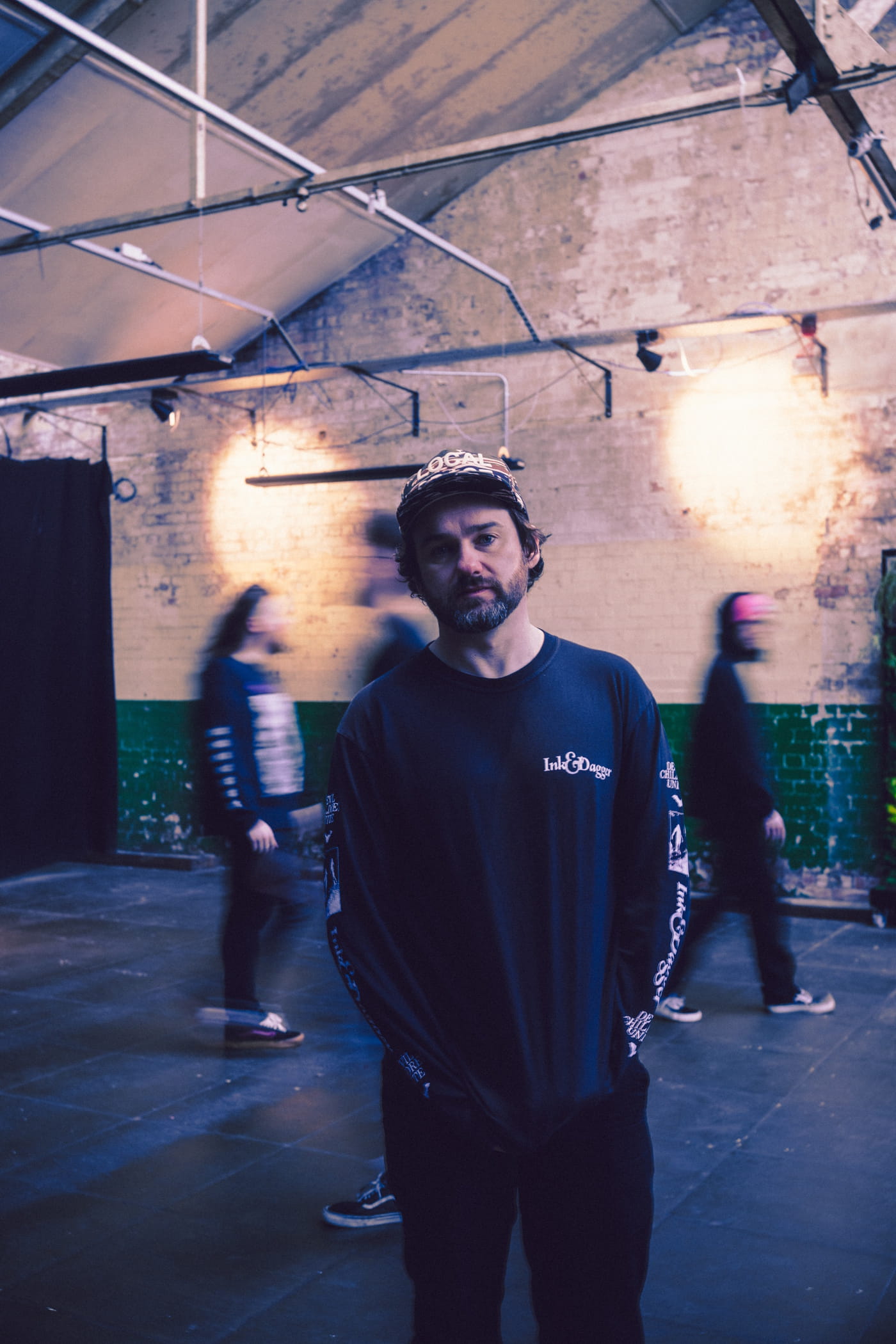
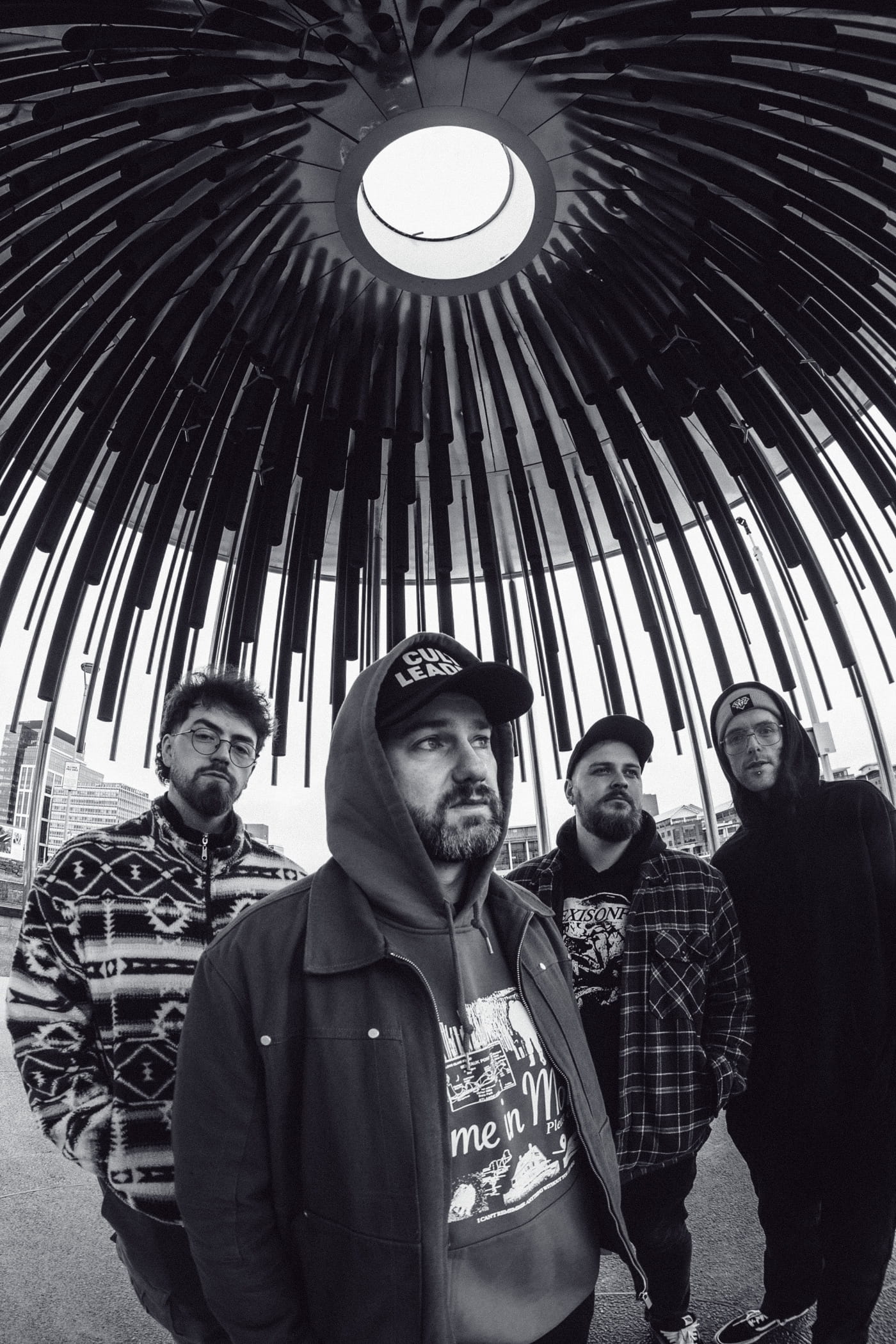
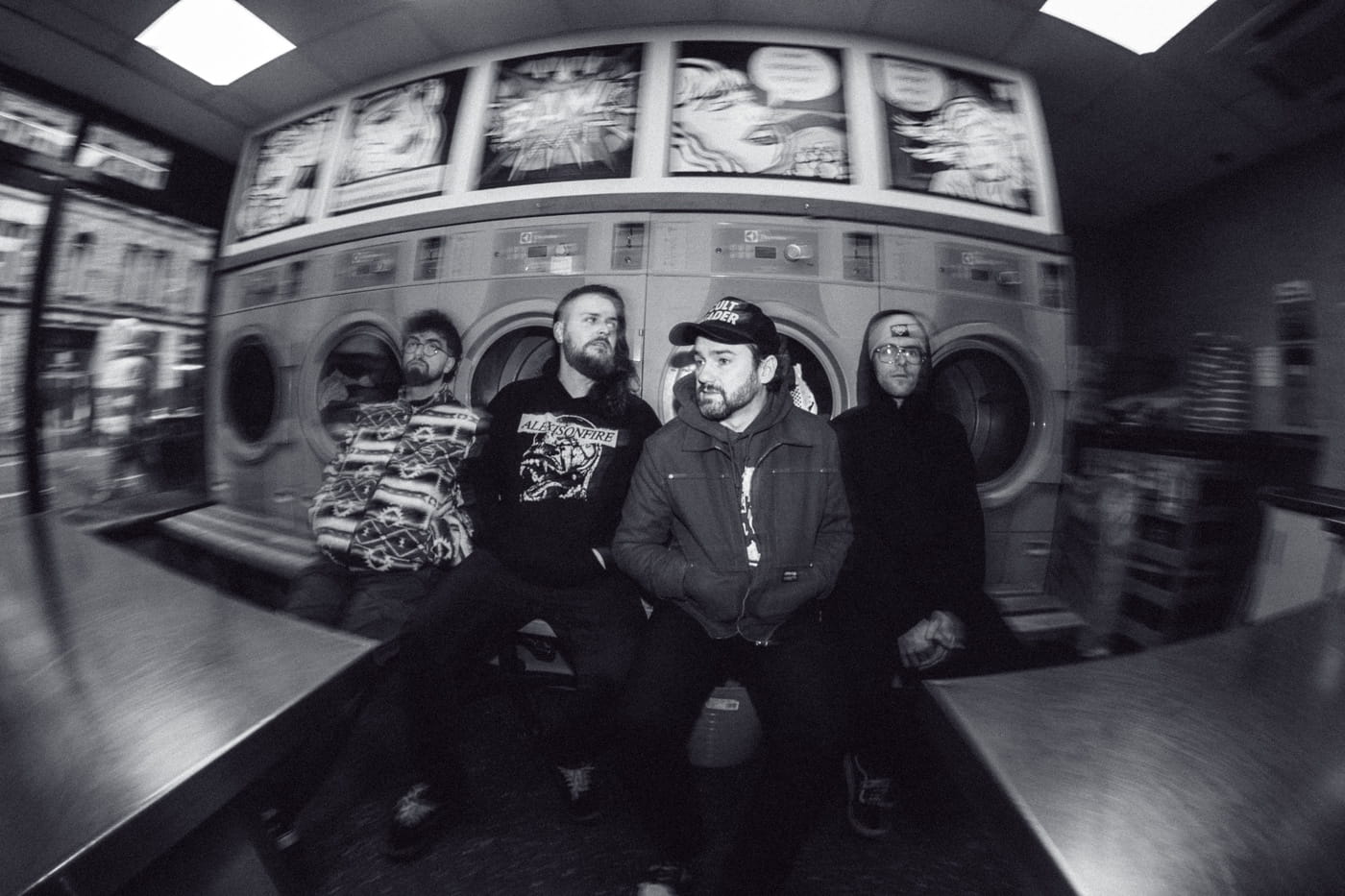
The visual side of the project is built with Anna Burnett (@annalouge.jpeg), who came on tour with the band early on and ended up shooting promo photos around Belfast and the “Clementine” video, the latter filmed in an abandoned office block that now doubles as a TV-drama police station and houses a few artist studios. Cover art is by Smyth himself.
Below, he walks through how the record came together, why he won’t make the same one twice, and a few words on every track.
No beauty in perfection
“As I started recording the songs for Auralux I wanted the recordings to focus on capturing performance and feeling. All the instruments are live, there’s no programming, there’s no amp sims or digital amps, it’s the sound of a mic in front of an instrument or amp, being played by a person. That human element is one of the most important parts of music to me, I want the music to be a visceral self-expression, whether I’m drumming or playing guitar or singing, they all take on equal importance.
Wyświetl ten post na Instagramie
“When I decided I was going to record the songs myself I knew that I was inviting challenge to the process. There’s a part of me that enjoys when something is difficult, I feel like overcoming that struggle helps add validity to the process and to outcome, I want to learn and get better and the only way to do that is by doing. That said, I’m aware of the limitations that accompany choosing to do this all myself. I’m no engineer but over time I’ve taught myself basic recording techniques and to use the tools I have to try and capture the sound in my head. The positive to approaching the recording process this way is that I’ve spent time recording in my practice space, I know how that room sounds, I know where the drums sound best in the room and I know how to make the most of the equipment that I’ve got. They say two wrongs don’t make a right, but sometimes twenty wrongs do.”
Working at the speed of inspiration
Because Silk is one person, the songwriting happens through recording. Smyth has always written everything in the bands he’s been in (drums, bass, guitar, vocals), recorded it, and then taught the band the parts. The difference now is there’s no band to play it back to him.
“You do lose getting to hear and feel those songs live in the room with other people playing them. The song does take on a life of it’s own when it’s with people, it’ll be a little faster or slower and find it’s own natural tempo. One of the challenges in Silk then becomes keeping that feeling through the recording and song writing process.
One of the ways I try to keep that energy and freshness is to work fast. I like the spontaneity that comes with working quickly, capturing that excitement and hopefully what I thought made the song special in the first place and not over working it. Having the space to record and ability to do it myself means I can work almost at the speed of inspiration. Two songs on the record went from concept to recorded in less than a week. ‘July’ was originally released as a single, I wrote it on Thursday and by the following Thursday it was recorded, mixed and mastered. It was very exciting.
Some songs need weeks or months of work, when you tweak and struggle and refine, and there is merit to that process as well and it can yield great results. But I love that instant approach, does it feel good, does it sound good? Then it’s done.
‘Clementine’ was the last song written for the record and it underwent a similar process, bouncing a different track off the track listing in the process! That track felt so different and so vital to the album. It really adds a different colour to the album. It’s the darkest track for sure, just in terms of sound.
That was something I was conscious of, across the 6 tracks, making sure they all covered different territory but felt coherent. This isn’t just a collection of songs, it’s an album, that’s meant to be listened to in that order. I feel it picks you up at one point and sets you down in another.”
The demo drums won, and Bill Murray gets the credit
Once Blowtorch confirmed the album was going on vinyl, Smyth assumed he’d re-record everything. He had eight songs on file, all already tracked as what he considered demos. He went up, spent a day re-cutting drums to fresh scratch guitars with new cymbals and re-skinned heads, expectations set high. Then he listened back.
“To me, they sounded so bereft of any real feeling, like the parts were there but there was just no life to the playing. I listened to the ‘demo drums’ and they felt energised, and a little dangerous because a lot of the time when I record drums it’s the first, second or third time I’m playing the track so there’s this edge to the performances. The tracks that were meant to be perfect might have technically been better in parts but they didn’t offer anything emotionally to me.
Ultimately I ended up using ‘the demo’ recordings on 4 of the 6 songs, with July and Clementine being the exceptions. I’d a similar experience when it came to do the guitars, I placed all this expectation on a session and I’d completely overworked the guitars. The next session I got it all done in two days, just taking the approach of ‘Does it sound good? Does it feel good?’ Expectation is dangerous thing. Bill Murray said, ‘You’ll always do your best work when you’re relaxed.’ I’ve a Bill Murray sticker on my laptop, it’s from Stripes, he’s kinda pointing his finger at you. Like he’s saying ‘You got this kid, you can do it’. Bill is the guiding light. Maybe I should’ve credited him on the album..”
The same logic runs through the way the songs sit time-wise. If a take speeds up five BPM by the last chorus, it stays. If a fill changes between passes, it stays.
“I mean, plenty of my favourite records speed up, there’s Pumpkins songs, Zeppelin, Dinosaur Jr and no one thinks oh that sucks they’ve sped up 5BPM because they got excited during that part. It adds to the excitement, its reactive and full of feeling, and as a listener Im right there with them. Same with the vocals, vocals are a struggle for me, it’s a relatively new thing for me, so I’m still exploring and figuring out my voice so maybe there’s parts aren’t perfect but the emotion, delivery and intent are correct. That’s much more important. The only real currency any artist has is their voice, what they’re trying to say and how they say it. I’m much more focused on that. What weight the part of the song has emotionally, not necessarily if it’s sitting perfectly on a grid. Emotions don’t sit on a grid, they’re wild messy and unpredictable.”
Mixing with AJ Das
For the mix Smyth turned to AJ Das of Picture Postcard. They go back. Their old bands shared bills, and Silk and Picture Postcard have played shows together since.
“It was important for me to work with someone who understood the genre and why the song needed 24 guitar tracks and how sonically it should all fit together. I had done a mix of the album myself to give him a starting point but ultimately I told him there’s a few things in each track I might need to happen a certain way but he’s a mix engineer, I’m not and I went to him for a reason so I let him bring his talents to it and it came out exactly how I had it in my head. There were a few conversations back and forth about drum sounds or how loud vocals should be, but I don’t think any song had more than two or three small changes. A lot of my notes were more around how things should feel. He tightened up one or two things but nothing major and it was small changes. As any record would have.”
Why Silk exists in the first place
“The impetus for starting Silk and allowing myself to take the risk of doing it all myself and taking on vocal responsibilities was really because I constantly feel like I am rushing towards the inevitable infinite oblivion. Further exacerbated by the marking of years spent circling the sun. To that end, it’s important that I fill the time remaining with joyous, creative acts. The sharing of ideas is an essential part of that, which brought us to Silk. There’s a line in a Refused song ‘not even failure’, I think of that constantly. I’d rather have tried and failed, then have been tempered into inaction by fear.”
The order of the record, and the shape of it
Smyth thinks in sides. Side A opens with “Auralux.” Side B opens with “Slide Away.” Both choices are about the needle drop.
“It seemed to present itself pretty naturally. I’ve had versions of the songs in a Dropbox folder and I’ll listen to them while I’m driving around in the van and switch them around if needs be. When it comes to order, I always think in terms of sides of the record, I always knew I wanted Auralux to open the record and Slide Away to be track three.
Having the pretty shimmering guitars on Auralux open the record on Side A, and then having Slide Away be the needle drop for Side B which opens with those heavy stabs is a nice juxtaposition. It’s important to me that the songs make sense as a side and then as a record. It’s not a concept record but there’s definitely a chronology to it.
This terrible event occurs in Auralux, and then in Clementine we wrestle with coming to terms with that and memory, July moves between anger and collapsing in on itself then Slide Away is about being left behind and abandoned, August becomes the low point and on Pleasures there’s a light to things.
So it really is a journey and whether or not that is consciously realised by the listener I think even musically you feel those ups and downs, the light against the dark and the respite at the end. Oddly, when we play live we play the songs in a different order. I think live they take on a slightly different life. I’m sure we’ll do it in sequence once or twice.”
Wyświetl ten post na Instagramie
Track-by-track
1. “Auralux”
Title track, Side A opener. A choir of shimmering guitars layered into each other before the banks burst and walls of fuzz come in alongside huge drums. The verses are a call and response between vocals and guitar, with Smyth singing “keep me out of heaven / its just another place.”
The chorus is an exercise in maximalism. Fuzzes stacked on fuzzes. Dreamy leads punctuating vocals that sit two floors below the mix the way classic shoegaze vocals do, washed in reverb until they become part of the wider weather of the song. Lyrically it cuts across loss and acceptance. In Smyth’s chronology, this is where the terrible event happens. Everything that follows is the response.
2. “Clementine”
The darkest track on the record, in sound, and the last one written for it. Smyth bumped a different song off the listing to make room. From concept to recorded inside a week. Opens with feedback that doesn’t sit politely. Fuzz guitars thick enough to test speakers.
Pummelling drums driving the verse, modulated reverb wrapping around the lead lines. Gnarled bass providing melodic counterpoint to the vocals. The chorus opens out into something cinematic. The midsection collapses into what Old Crows describe accurately as “a crushing exorcism-by-endless-reverb.”
Lyrically it’s about memory, with “Eternal Sunshine of the Spotless Mind” as the explicit reference point. In the album chronology, this is the wrestling with what just happened.
Wyświetl ten post na Instagramie
3. “July”
The song that gave Silk its voice. Originally released as a single, written and recorded inside seven days. Re-recorded and remixed for the album, leaning further into a classic shoegaze shape. Chorus front and centre from the start. Tremolos rising out of the song’s wider weather. A wailing line in the bridge work that sounds, by the press release’s description, like signals from space. The kick drum holds it all together with relentless simplicity. Smyth’s chronology: anger, then collapsing in on itself.
4. “Slide Away”
Side B opener. The needle drop. All instruments hammering the point before the song opens out into something more expansive. Two guests on this one: Shane McMullan, who plays bass in the live band, on bass; and Taylor Wright of Scottish heavy-gazers Sunstinger doing the response vocals on the call-and-response chorus, plus the third verse outright.
Smyth’s drums across the album are simple and muscular by design, with fills appearing only as pounding toms or snare rolls used as accents. Lyrically the song is about the fragility of human connection set against desire and the preservation of self. In the chronology: being left behind and abandoned.
5. “August”
The oldest song on the record, written long before Silk existed. Heaviest on the album, jostling with “Slide Away” for that title. Huge fuzz under gnarly bass chords. Smyth sings “Splendor revealed, constantly at arm’s length / I don’t want to know.” A single-note lead guitar wails through the chorus and seems to hold the anguish of the lyric in place. The middle section opens, briefly, into clarity, with light getting through. Album low point.
6. “Pleasures”
Closer. Driven by dreamy distorted guitars. Blooms like an irradiated sunrise, in the press release’s words. Chorus is just “we are in love.” More alt-rock in shape than the rest of the record, with “Siamese Dream”-era Smashing Pumpkins peeking through, including a guitar solo that Old Crows note (parenthetically and reasonably) might not be allowed in shoegaze. One foot still in the poppier MBV territory. Feels like it could fade out forever. Album resolution. After everything that’s happened, light.
Wyświetl ten post na Instagramie
The next record is already a reaction
“For me, when I’m writing and recording material, especially a larger body of work, I’m so focused on those songs, scrutinising them individually and then as part of the bigger release there’s no opportunity for distance or reflection on the work.
The songs need to be completed, recorded, mixed and mastered. Once they’re at that stage they become trapped in stone somewhat. The recording process freezes those songs and then the process of releasing begins, all the logistical side of things.
Once I have them to the point of mastering I can listen to them more as a listener and that gives me some distance from the work. In that, comes time to reflect on the work, what I think worked really well or what didn’t. I guess like any project, you evaluate, learn lessons and move onto the next thing.
I love the record I’m very happy with it, but they are, essentially, the first real set of songs I’ve worked on for this project so there’s other areas I want to explore sonically. In doing that I don’t want to repeat making a record, I’ve made ‘Auralux’ I don’t see why I would want to do it again, I’ve other things to say and other ways to say it.
So the next record has to be a reaction sound wise against the first, I’ve already a handful of new songs and they sound nothing like anything on Auralux. It’s still shoegaze and there’s still fuzz and reverb but its all applied in a different way. I think in terms of approach, that’s something I’m going back and forth on. Time will tell on that one.”
The album is up for pre-order from March 5 via silkband.bandcamp.com or blowtorchrecords.com, with the limited splatter vinyl pressing of 200, and on very limited CD via shorediverecords.bandcamp.com.
Tour dates
May 14, Galway, The Ol’ 55
May 15, Cork, Fred Zeppelins
May 16, Waterford, GOMA
May 28, Dublin, Whelans Upstairs
May 30, Belfast, Ulster Sports Club
June 16, Glasgow, Hug and Pint
June 17, Hull, The New Adelphi
June 18, Northampton, The Lab
June 19, Brighton, Folklore Rooms
June 20, London, Folklore Rooms
June 21, Edinburgh, Banshee Labyrinth
August 28, Dublin, GazeFest
August 29, Belfast, GazeFest
🔔 IDIOTEQ is ad-free, independent, and runs on one person’s time. If you want it to stay that way: DONATE via PayPal 𝗈𝗋 SUPPORT via Patreon.
Stay connected via Newsletter · Instagram · Facebook · X (Twitter) · Threads · Bluesky · Messenger · WhatsApp.