


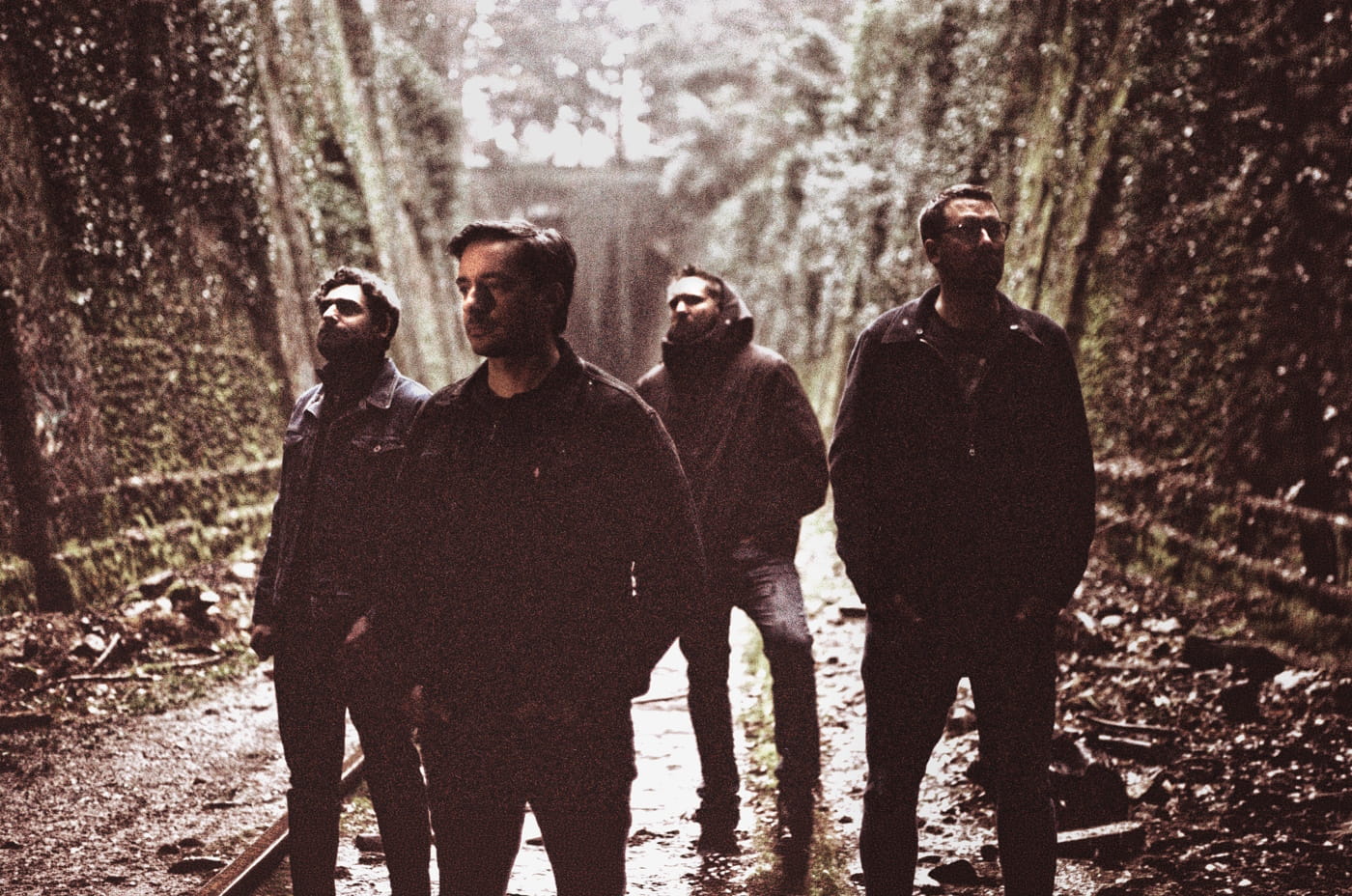
Maxime Ingrand had been thinking about the spelling for three or four years before he finally said it out loud to the rest of the band. He didn’t dare bring it up earlier.
Lost In Kyiv, then still Lost In Kiev, had always positioned themselves as a band without a political vocation, and changing a name across streaming platforms and social media is, in his words, “a real obstacle course.”
The name itself came from an anecdote. In 2010, the band’s former guitarist Vincent got stuck in Kiev by a massive snowstorm while travelling to meet his wife, who is from the city. At the time the band wasn’t even aware of the “Kyiv” spelling. “The city was called ‘Kiev‘ to us, and that was the international standard in English,” Ingrand says. After 2014/2015 a handful of messages started arriving explaining that they should use “Kyiv,” but in common usage the older spelling held on for most people.
Then Russia invaded Ukraine.
By the time the French post-metal band started writing their new album “We’re All Going To Be Fine,” out June 19 via Pelagic Records, the conversation was no longer hypothetical. “It just felt absolutely obvious that we needed to change it now,” Ingrand says. “It was the right moment: it allows us to mark a new era with our new line-up, to give a fresh musical momentum, while finally being aligned with our perspective on the situation in Ukraine today.”
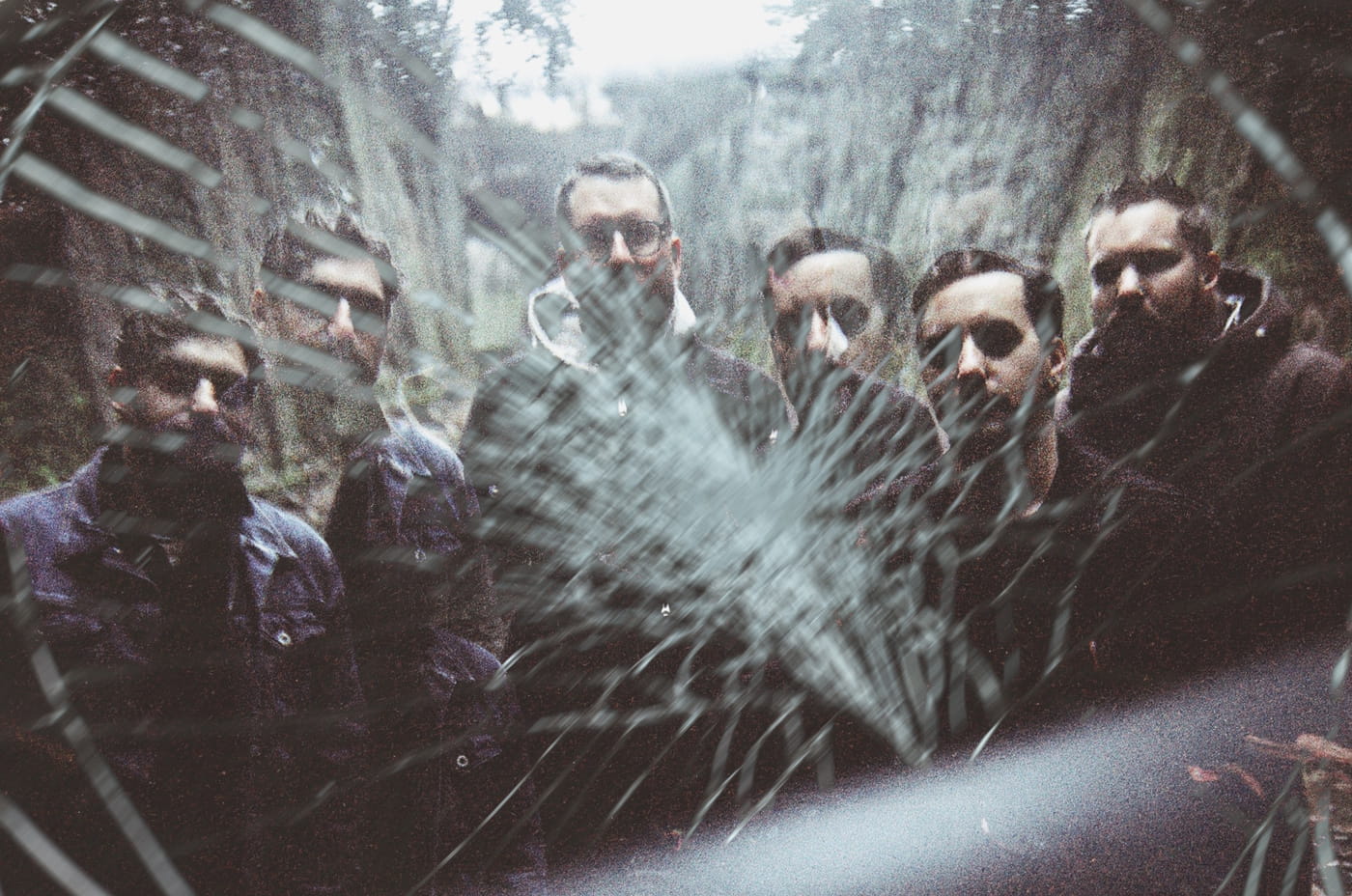
Asked whether the older spelling became uncomfortable gradually or all at once, the band says it’s a bit of both. “At first, we didn’t want to give in to a form of external pressure because the origin of our name was intimate and anecdotal, not political. But whether we like it or not, the very spelling of this city has become a political act. We were feeling increasingly uncomfortable with this discrepancy. Once you start feeling that unease and questioning yourself regularly about it, it’s a clear sign that something needs to change.”
Being a French band carrying the word Kyiv in the name in 2026 comes with a responsibility they approach with humility. “We are very aware of our position: we are a French band, we don’t live this tragedy on a daily basis. Before, this name evoked a distant memory for us, an almost cinematic atmosphere tied to coldness, isolation, and melancholy.
Today, this word carries a different weight regardless of our initial intent.” They note the strange echo with the album’s themes, the tension between destruction and hope. “Carrying the name ‘Kyiv’ today is no longer just an aesthetic reference; it’s a word loaded with a reality that we cannot, and will not, ignore anymore. We carry it with respect and solidarity.”
The album marks a reset in more ways than the spelling. Founding member Yoann left the band. Jérémie Legrand came in on drums and programming. After four albums the writing needed somewhere else to go. “Our influences had evolved,” Ingrand says. “We naturally started composing things a bit differently than before. In the middle of this creative process, the idea of updating the name naturally imposed itself due to the context in Ukraine. Everything just clicked together. We really felt like the planets were aligning to mark this true turning point in the band’s history.”
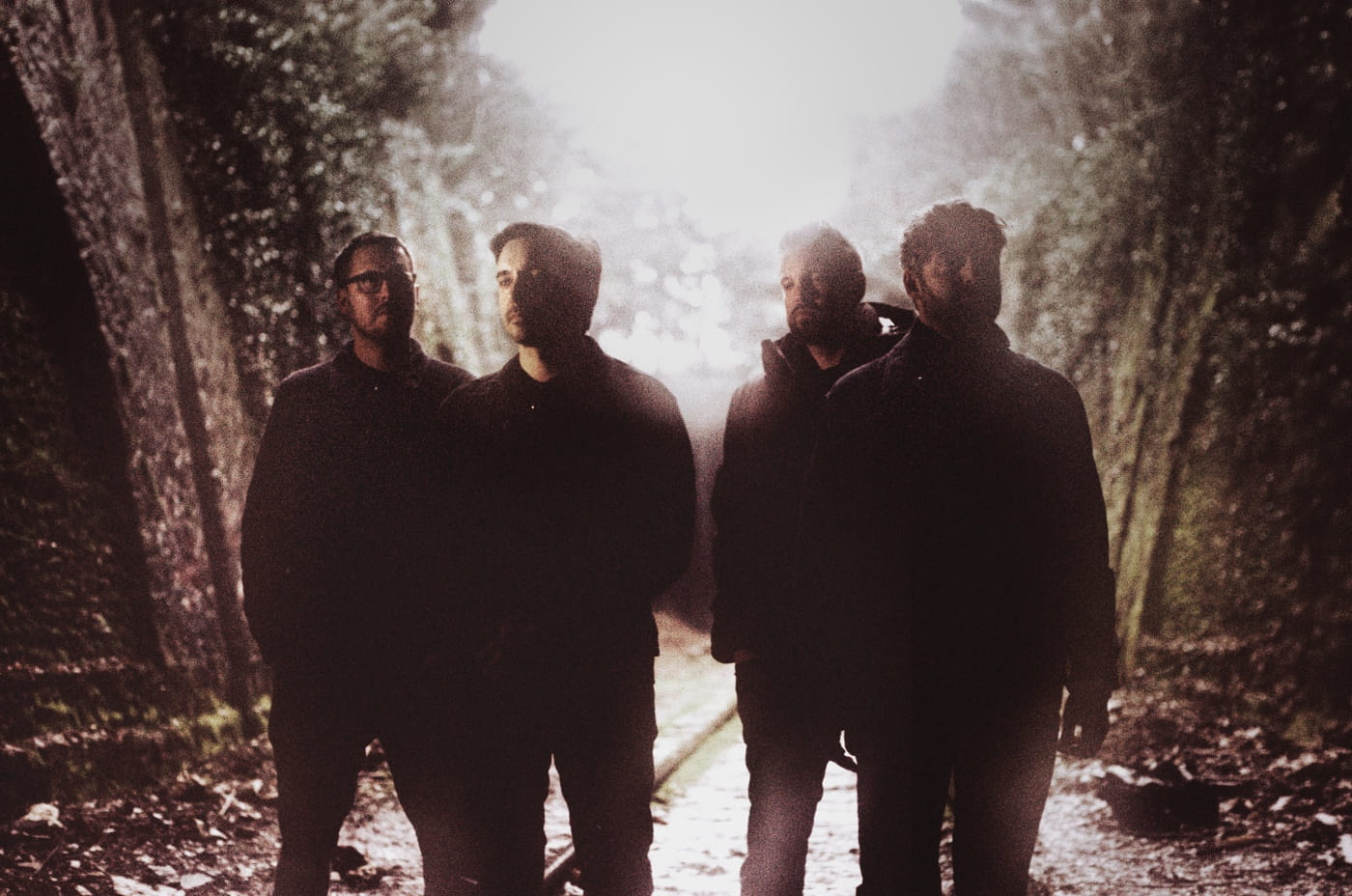
The album’s inward focus wasn’t planned around the name change. “We were already reflecting on this theme and wanted to explore it long before we considered changing the band’s name. I think even without the name change, we would have ventured into this introspective territory.” But the two intertwine. “Changing your name also means changing your identity a bit. It involves doubts and uncertainties: ‘Is this the right decision or not?’ You never know in advance, and that in itself is a real internal struggle to finally make a choice. So in a way, this personal journey did resonate with the album’s themes.”
In their own words: “We’re All Going To Be Fine explores the tension between hope and inner collapse, and how modern life can disconnect us from ourselves and each other. The songs were inspired by personal experiences, societal pressure, and the idea that we often become our own worst enemy.”
Wyświetl ten post na Instagramie
Ingrand adds: “We always wanted to write music around strong themes, and for the first time, we decided to focus on something more internal than on previous albums. Our last four albums, except maybe Nuit Noire, were more about broader and more general themes. This time, we wanted to explore the fragility of mental health and the human psyche, the relation we have with ourself.”
Two reference points sit underneath the record. The first is the Swiss psychiatrist Carl Gustav Jung, who is the voice at the end of the album. “His ideas came up quite early during the album’s creative process,” the band says.
“We found many of his reflections particularly accurate and interesting regarding mental health and human interactions. His words often resonated with us and helped us better grasp, musically, what we wanted to convey. Ending the album with this Jung sample, in addition to being emotionally very powerful, felt like the perfect conclusion for this record.”
Wyświetl ten post na Instagramie
The second is cinema. Eternal Sunshine of the Spotless Mind and Melancholia both sat in the background. “These are two films that deeply impacted me,” Ingrand says. “To be completely honest, they didn’t have a direct or conscious impact on the album’s creative process in a clinical way. It’s more that their themes, this intimacy in the face of an inevitable collapse, or the fragility of memory, and their atmospheres are part of a broader emotional baggage. They are reference points that I personally held onto to build the mood of the album and draw a form of organic inspiration from.”
The shift toward heavier territory came in part through Jérémie. “I love math rock, post-metal, and metalcore,” Legrand explains. “Since I joined the band, Max and I have specifically discussed moving towards a heavier version of Lost In Kyiv. My influences and drumming style made this possible, and it became a logical step in our composition process.”
His geography shaped the process too. Legrand lives in Toulouse, so before the studio he programmed the entire drum part of the album in Logic.
“Programming electronic drum parts was fun, but it’s also interesting because, before recording in the studio, I had programmed everything in Logic. Since I live in Toulouse, this was much more practical for everyone. However, programming drums also opens up new possibilities: you write parts and fills that you would never naturally play because, in a rehearsal room, your playing stays within your comfort zone. Having a blank grid to fill is challenging and fascinating; even a ‘misclick’ can create a new groove.”
The pull between organic and synthetic has been the band’s territory for over a decade now, and the press release calls it a trademark sharpened further here. The band agree. “We’ve been working with machines and synths for a long time. It has really become one of our trademarks, and it’s a very natural process for us. Today, we are able to define with much more precision what type of sound should come in at what specific moment. The goal is to only place electronics where they are absolutely necessary for the song’s emotion, without ever forcing it or saying to ourselves: ‘Hey, we absolutely need to squeeze a synth in here because we haven’t used one in a while.'”
Across the seven tracks the writing moves with patience. Quiet motifs come in low, sometimes on acoustic guitar over a sequenced synth pulse, before the heavier parts arrive in stacked distortion and harmonic overtones. The pacing is closer to a film than a record. Silences sit where a lot of post-metal bands would put another wave of cymbals. By the time a climax does hit, you’ve been waiting for it long enough that the impact lands as architecture, not noise for its own sake. Acoustic instruments share space with sequenced synth lines and arpeggiators that keep a forward pulse running even when the rest of the arrangement is collapsing.
“Becoming,” the third single they’ve shared from the record, sits at the heart of all this. In the band’s own description: “If the album explores the tension between hope and inner collapse, ‘Becoming’ is the moment the glass shatters and your eyes finally open. It is our most atmospheric and melodic song on the album, elevated by our first-ever collaboration with a female singer. Rebecca Need-Menear perfectly embodies this fragile state between dreaming and living.”
Inside the album’s structure the song works as a release valve. “‘Becoming‘ is a real tipping point in the album. The track comes in the middle of the record, like a moment where you pause to take stock of your life before moving forward again. Musically, it arrives right after three very dense, frantic, even violent tracks. It acts as a transition after the end of ‘Eclipse’ to bring in a touch of light. That doesn’t mean it’s a completely positive track, but it offers a real melodic breathing space, a breath of fresh air. It’s a suspended moment in the album, entirely dedicated to reflection.”
Need-Menear’s voice is the band’s first collaboration with a female singer. They had collaborated with male vocals before, with Loïc Rossetti contributing to “Prison of Mind” on their previous album, but the right opportunity, and more importantly the right song, hadn’t arrived. “While writing this new song, we felt it was very promising, but it lacked something to truly reach its full potential. That’s when we thought, ‘This is the right time.'”
The choice of Need-Menear came together fast. They had just been listening to the new album from her project i Häxa and were captivated. “We reached out to pitch her the track, she quickly agreed, and we started collaborating. It was a fantastic experience because Rebecca is an extraordinary artist on every level. We gave her carte blanche for the lyrics, while sharing our themes and the overall direction of the song, and everything happened very naturally.”
They note what vocals open up that instrumental writing doesn’t. “Having vocals definitely allows you to go much further in expressing and detailing a specific theme. Purely instrumental music leaves more room for interpretation, but confronting these two approaches on the same album is a fascinating exercise for us.”
Across the track itself the acoustic guitar breathes between the heavier moves. Need-Menear’s voice enters sitting close to the mic, holding back, the synth pulse low underneath. The arrangement grows slowly, the way a held chord accumulates harmonic overtones if you leave the amp running. The heavier guitars come in later, in wide arcs, but they don’t trample the vocal. The song stays a melodic break in the album’s heavier weather.
The album title carries its own strange pressure.
Asked whether “We’re All Going To Be Fine” reads as reassurance, denial, survival instinct, or irony, Ingrand answers: “It’s a bit of all those things at once. It took us quite a while to find the album title, and after several attempts, this was the one that stuck. It comes from the end of the voice samples in the middle of the track ‘Mantra.’ It sounds almost like an injunction to ‘be okay’ in a faltering society where appearances seem paramount, even if it makes us forget how we truly feel deep down. It’s a very common phrase that can indeed carry an ironic undertone, but it also acts as a survival instinct or a form of comfort. It’s what we tell ourselves or our loved ones to reassure them, even when we know perfectly well that things aren’t necessarily going to get better.”
For the recording the band returned to Amaury Sauvé at The Apiary.
“This is what we loved during our first experience with Amaury: using live recording as the main framework gives a dynamic and a homogeneity that we couldn’t find anywhere else. On top of that, Amaury really knows how to push each musician to their limits to get the absolute best out of them. It’s a method that is sometimes very hard, both psychologically and physically, but we absolutely wanted to try this experience again, especially with Jérémie joining on drums.” They also flag Thibault Chaumont’s mastering work, which they describe as “very attentive” and “extremely complementary to Amaury’s vision.”
Lost In Kyiv are Maxime Ingrand on guitars, synths, machines, and programming; Dimitri Denat on guitars; Jean-Christophe Condette on bass and synths; and Jérémie Legrand on drums and programming. “We’re All Going To Be Fine” is out June 19 via Pelagic Records.
🔔 IDIOTEQ is ad-free, independent, and runs on one person’s time. If you want it to stay that way: DONATE via PayPal 𝗈𝗋 SUPPORT via Patreon.
Stay connected via Newsletter · Instagram · Facebook · X (Twitter) · Threads · Bluesky · Messenger · WhatsApp.