

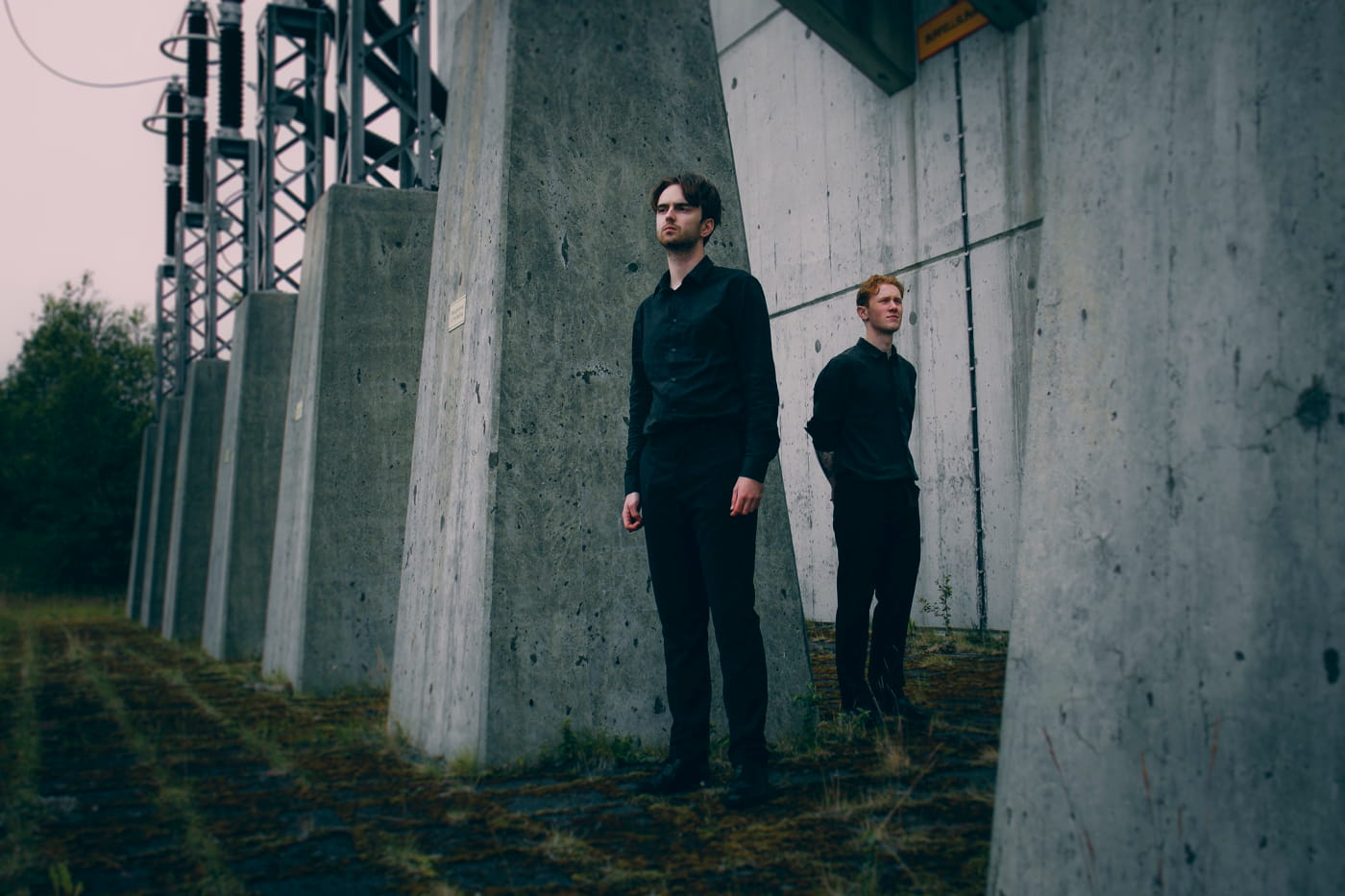
The volume on “Fragment” starts low, and Astoria left it that way on purpose. The intro sits at conversation level for close to a minute before Magnus Kallar‘s toms arrive and the reverb starts to widen. It builds through several stages, each louder than the last, until the climax breaks. The gap between the opening bars and the finale is bigger than most modern mixes will let a song get away with.
That gap is the point. On “Colder Than Before“, the Oslo duo’s upcoming EP, dynamics are the spine of the record. Edvard Mortensholm and Henrik Nilsen Mortensholm built the whole thing around loud/quiet contrast rather than surface texture, and Fragment, the lead single, is the clearest statement of what they mean by it.
Edvard wrote the opening section at the end of 2023 with no plan for where the rest of the song was going. He tracked the vocal melodies first and let the lyrics come as he sang them. Nothing was written down before the first draft, and the words never changed after that. What he did not know at the time was that they would eventually mean something to him.
“Almost feels like my subconscious latched onto something thematically before I really understood it myself,” Edvard said. The lyrics didn’t hit him personally when he recorded them. A few years later they started to.
Magnus Olsen Kallar, a longtime friend of the duo who plays in Oslo shoegaze band Astronomies, handled the percussion. He is finishing a musicology degree at the University of Oslo, which gets him into studios most bands their size can’t book, and the Fragment drum session happened in one of them. Magnus set up the room, mic’d it himself, and played the toms and cymbals across the whole song.
Astoria have never used a traditional drumkit. Electronic drums have been part of their identity since the beginning, and stepping past that on Fragment was a considered move rather than a departure. Edvard listened to a lot of orchestral music while working out how the percussion should sit in the arrangement, looking for ways to use the drums to underline what was already there instead of stacking new elements on top of it.
The mix took a while. Edvard did the first draft, then brought Magnus back in for technical clean-up and a second set of ears. Around the time they were settling the volume balances, Edvard had been listening to early MONO records.
“Ashes in the Snow was actually my reference track for getting the volume right,” he said.
Wyświetl ten post na Instagramie
The intro sits noticeably quieter than what recommendation algorithms would prefer. Edvard was aware of that when he signed off on the mix, and did it anyway. He wanted to trust the listener with a record that had a real dynamic range instead of one flattened for playlist survival.
“I really don’t mind turning up the volume a bit for a quieter section, and the loudness of other parts just hit even harder when I do,” he said.
The other reference point was closer to home. In earlier Astoria releases, Edvard said, the live versions have often felt like the definitive read of a song. The build stages come across sharper in a room than on record, and he wanted Fragment’s studio take to do something closer to that.
“I was trying to replicate the feeling of our live shows,” he said. The band will play it live for the first time this autumn.
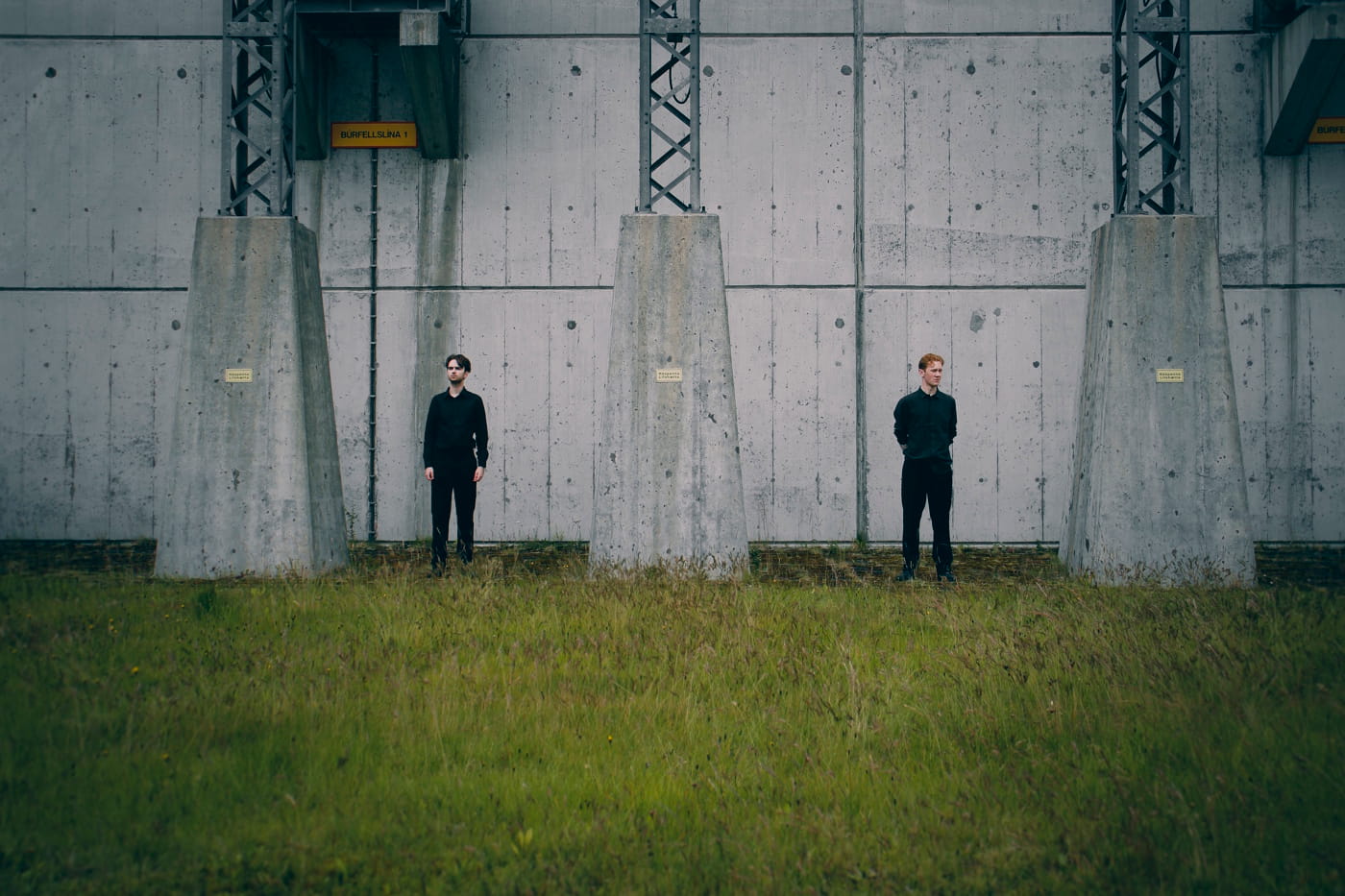
Fragment was actually the last of the main songs to have its structure finalised, but it landed at the top of the tracklist and as the lead single because Edvard felt it summarised where Astoria are now more clearly than anything else on the record. It marks a step away from Crystalize, their 2023 album, toward something more organic, more spacious, more reliant on reverb. It takes longer to open up than their older stuff, and the payoff is bigger for the same reason.
Some of that shift comes with a passport stamp. Astoria travelled to Iceland to shoot the video for Fragment and ended up playing a set at Gaukurinn in Reykjavík. It is, by Edvard’s own reckoning, the most Nordic they have sounded so far.
Absence Song, the second track, leans hardest into their shoegaze side. Edvard wrote the main riff the day he bought a new delay pedal and had the structure down not long after. His reference points were modern Slowdive and, more surprisingly, a post-punk rhythm through the electronic drums and delay-heavy guitars. Henrik wrote the bass part on this one. In the second verse he lifted a trick from Radiohead’s “Airbag”: the bass drops out for a few seconds before returning, a rhythmic gap in the middle of an otherwise floating section. The vocals are processed with phasers and reverb, deliberately abstract. Astoria first played it live in 2023 opening for Norwegian rock band Seigmen, and Edvard said the way the distorted guitars sounded on that stage fed back into the final mix.
Alone was the first song Edvard wrote for the EP, in early 2023, and it shows. Of the five songs it sits closest to Crystalize, built around pulsing synths and electronic drums with what Edvard describes as a Depeche Mode influence.
Guitars came in late in the process and did more work than expected. The chorus is easily the most immediate thing on the record. Edvard admits it randomly gets stuck in his head. The outro went through several drafts before he settled on the current version, a calm reflective coda with a bowed guitar figure that leans Sigur Rós. An earlier version had a much more intense climax with bright synths. He preferred the quieter option.
Cry (Reprise) came in last, once the four main songs were sequenced. Edvard felt the record needed a connective piece to hold it together, and wrote the interlude in one sitting. It calls back to Fragment, using the same chords and melodies as a piano pad through a Yamaha CP Reface run into a Strymon Nightsky reverb pedal. It sits before the closer as a small breath.
Stagnation was not supposed to be nine minutes long. Edvard started with a short demo of drums, synth bass and vocals, and the song kept growing.
“We had zero intention of making this a long song, it just happened naturally when writing,” he said. He is glad they let it. A planned nine-minute song, he said, would have felt forced.
It shifts between loud and quiet without clean seams, and the outro is the most exposed writing Edvard has committed to record: grand piano and voice, no scaffolding. One of the vocal lines gives the EP its title.
“It’s getting cold / Colder than before.”
“It was almost uncomfortable, definitely new territory for me in terms of direct writing,” he said. He wanted the record to end on something that felt like a real conclusion rather than a fade-out.
Because the writing stretched across three years, the final mixing stage did a lot of the work of pulling the five songs into one record. Edvard used the same reverb presets across different sources so the room feels consistent even when the instrumentation isn’t. He also rerecorded a lot of the vocals in 2025 using a better microphone, both to keep his voice sounding of a piece across the record and because he now had a better microphone.
“Colder Than Before” runs 28 minutes and comes out August 7.
🔔 IDIOTEQ is ad-free, independent, and runs on one person’s time. If you want it to stay that way: DONATE via PayPal or SUPPORT via Patreon.
NEW: IDIOTEQ Explore 🗺️ Browse 15+ years of our archive by city, country, and style. Find artists on the world map or trace related sounds through the styles map.
Stay connected via Newsletter · Instagram · Facebook · X (Twitter) · Threads · Bluesky · Messenger · WhatsApp.