
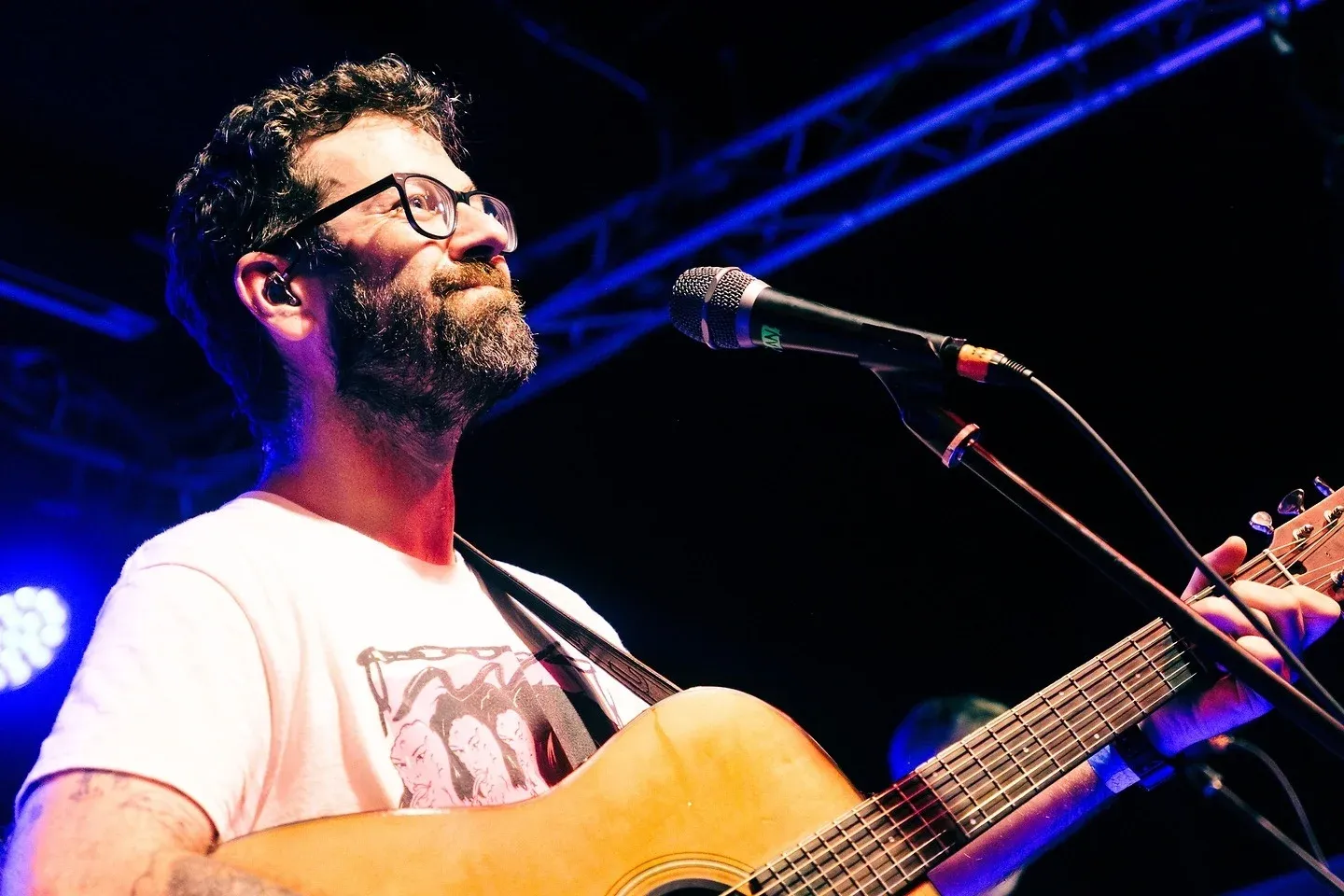
AJJ, the band formerly known by the self denounced name Andrew Jackson Jihad, helped ground me during trials and tribulations of my life, namely twice. AJJ has a career spanning decades from their start in 2005, and interacted closely with me during my time in college and in August of last year when they performed at a sold out show here in Louisville at Zanzabar.
Defined by their anxious high strung existentially angst ridden lyrics with a jolt of nervous energy that courses through in performances, their importance lies beyond the local splash they made in August of 2025 at Zanzabar.
Wyświetl ten post na Instagramie
Internally the pathos of their work has etched itself deep into my psyche. Sometimes a band speaks to you in ways that are difficult to articulate due to how uniquely subjective that experience is. The irony of that statement is that lyricists often have to strike a balance between conveying a feeling that is universal, but also speaks to the individual listener’s particular life. Some music doesn’t attempt this as it is focused on being a piece of a song that stays with you due to a combination of the whole sound of that piece. Lyrics, in this case, are a single element that melts into sonic waves that can wash over you pleasantly, splash you passively, or be a tidal wave that takes you under. Other times lyrics are the spear tip that penetrates the shell of what we like to call the soul, the core of what we are, and acts as a catalyst for conjuring up feelings that summarizes segments of ourselves.
AJJ did this for me when I first listened to their song People II: The Reckoning off their 2007 album People Who Can Eat People Are The Luckiest People In The World. I struggle with bipolar disorder and so does my mother, potentially my grandmother as well. A generational genetic psychological curse is what it feels like when you can’t maintain the energy to work your miserable menial job to keep the lights on or when you can’t focus on anything except the racing thoughts of a project that will decay and disintegrate once the depression has returned. Or at least that is how the story goes.
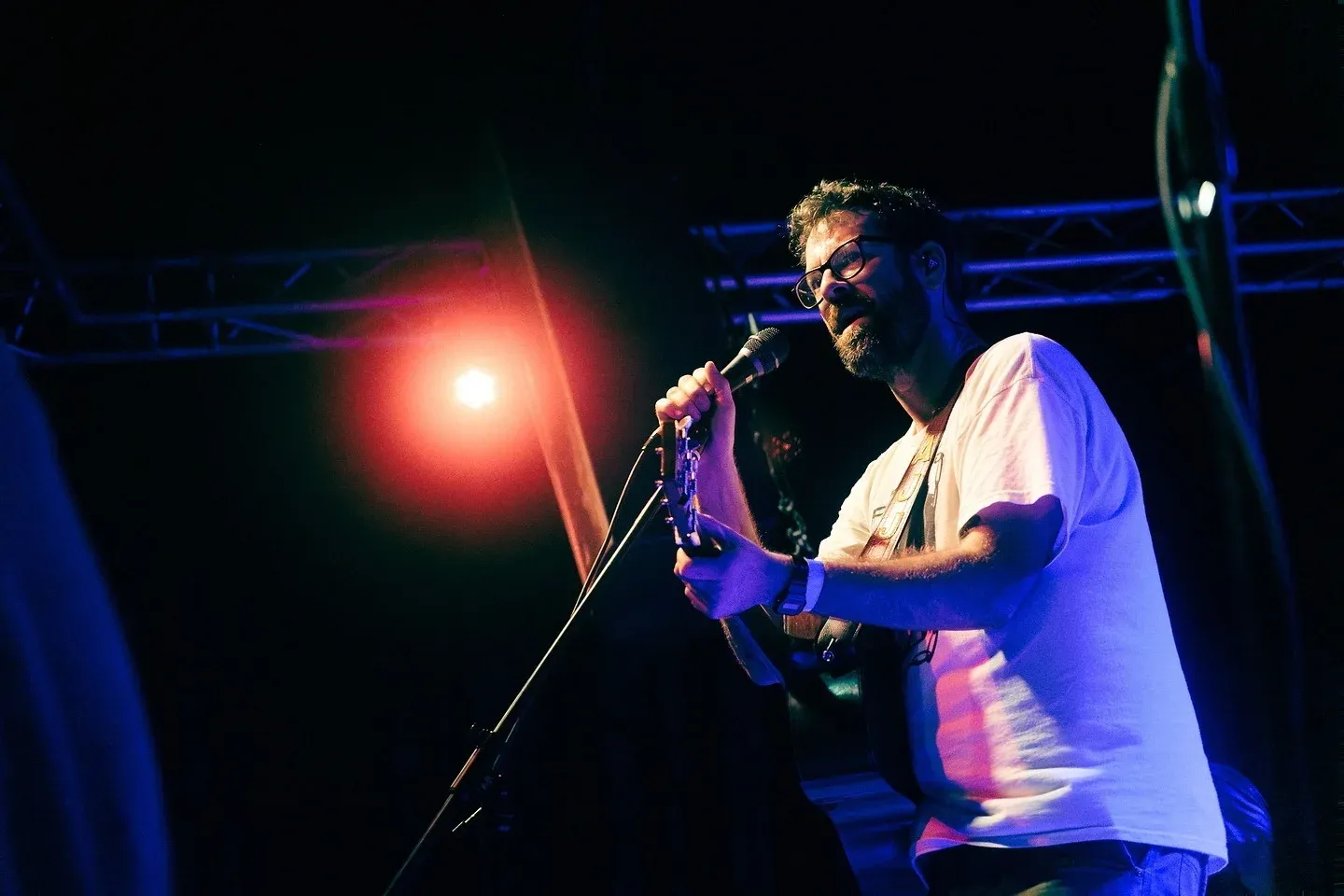
The old outdated term manic-depression feels like a fitting summary, more visceral, more earthy, and more punchy than the more clinically cold term bipolar disorder. The song is a sincere earnest, but dark humorous portrayal of struggling, which is punctuated by front man Sean Bonnette’s quivering, but powerful voice that breaks and aches as he coos the chorus,”and your bipolar illness, it comes and it goes, and your parasympathetic nervous system reacts, and you’re in fight or flight mode.”
The middle portion of the work breaks the fourth wall and uses meta commentary on the singer’s difficulty to capture the essence of a powerful opus of music, and leads into a portion of the song that speaks to the darkness within all humanity with caricatures of vile actors, such as Nazis being listed inside your head, trying to “struggle you.”
To me this reflects struggles with intrusive thoughts that often cast shadows of negative self reflections onto the psych. I know the feeling, as within my comorbid diagnosis with OCD’s intrusive thoughts, repeat on a loop, making me relive every mistake I have made or spinning a narrative of myself as a malefactor until ritual is undertaken: members of my support system reassure me I am not a monster.
The song ends with a parody of Simon and Garfunkel’s Hello Mrs. Robinson with a refrain that irreverently mocks the plight of the titular woman. This song captured my struggle with mental illness, and as a result drew me to become a fan of AJJ.
I remember first listening to AJJ during my time working at Western Kentucky University’s library (during 2020 or very late 2019). I struggled at my work as a desk clerk due to the heightened workload and stress of outside factors. I was homeless and had to return to the campus dorm under an emergency placement, which I received through advocacy from one of the academic advisors of one of the LGBTQIA clubs I was a part of. I believe it was the Queer Student Union. This situation happened after years of declining mental health, first starting with having a bout of manic frustration boarding or was in fact psychosis. I ceased my medication regimen and alienated my family and my friends over my four years on campus through toxic behavior.
After the emergency placement on campus, I started to rebuild my life, made new friends in the dorms, and with the ones I had repaired my relationships with encouraged me to seek therapy and medication, and get back in touch with my family.
At the time, I styled myself as an anarchist, believing in mutual aid of community instead of the bondage of capital and the state. I researched bands that shared the sentiment, and it first started with Anarcho-Punk bands, bands that were aggressive and choppy sounding, with punchy beats and lyrics before my discovery of the Wingnut Dishwasher Union, an album and project under musician Patrick “Pat the Bunny” Schneeweis. Patrick’s works deal with issues such as mutual aid and anarchist sentiments in an interpersonal way, such as the role of local collective relationships supporting individuals with substance abuse issues instead of policing, as discussed in the song “My Idea Of Fun.” Patrick spoke further about a world where people build a new economy “where everyone finally gets enough to eat.” Patrick also sang about interpersonal failures such as in the bluntly titled “I’m Not A Good Person,” a title that spoke to my feelings of myself at the time, and a feeling of utter dejectedness that was sold by Patrick’s raspy voice, which developed into a crying yelp of pain. The further I dived into the Folk Punk genre on YouTube, a band titled Andrew Jackson Jihad was recommended to me, and then I listened to People Who Can Eat People Are The Luckiest People In The World, the album that started my relationship with the band that would later be renamed AJJ (after ditching the offensive and optically poor but evocative prior moniker). I found myself preferring AJJ’s reflective, complex, sentimental, anxious, melodic, sometimes manic sound, which I have found more dynamic than Patrick’s matter of fact stripped down rough sound. AJJ feels more like Folk Rock punctuated by the sound and the aggression and speed of punk (as if Dionysus inflicted the curse of psychosis onto Paul Simon, who madly scribbled lyrics before he dragged Art Garfunkel out to sing his inner screaming thoughts on key in a haunting manner).
I rebuilt my life listening to that cannibalistically titled album. I listened to it again as I struggled at my job at the county clerk’s office in the wake of my grandfather’s death (in April of last year). I was given quotas, and I was too distracted and too exhausted to care about them. I was about to be fired, so I quit before they could put me out of misery, and so I could job hunt freely. I was out of money, and living in a house that was in the process of being sold, and I am convinced that was haunted, not by my loving grandfather’s loving spirit (no that was no longer dwelling in the home I have known my entire life,), something eerie and voyeuristic had entered in his place and was watching me. I returned to my art of writing and music to save me, to transport me to a place of serendipity. As it turned out, AJJ was coming to town playing at a well known local venue Zanzabar (colloquially called Z Ba), and I was dead set on seeing, hearing, and experiencing their sound first hand. I also wanted to dissect a deeper understanding of the artistic process of Sean’s songwriting and to understand the origin of my favorite song. I emailed AJJ for an interview, and they responded affirmatively.
I called Zanzabar ( Z Bar) to arrange to see the show as press, and was given no direct answer until tickets sold out. In desperation, I turned to my friend Lee H., (my good friend) for help and to inquire if he would join me. He and his partner were strapped for cash, but still in the spirit of solidarity, funded the gamble of looking for second hand tickets.
With a huff and a gruff groan, I made a post in the AJJ reddit asking if anyone had a spare ticket and the messages trickled into my inbox. As I sorted through the messages, I relaxed a bit. Lee’s apartment was a second home for a period of time, warm meals, good conversations, emotional support and listening, a true hearth to heal in spite of my trials and tribulations of defeat and decline. Lee has been a major advocate for me since we met in the Live Action Roleplay scene in town, and a fast friend despite our intergenerational and life differences. Lee (being in his mid 40’s and I dwelling in the last embers of the dying heat of my 20’s.
Lee (a mature man of a working class background), hails from Nashville, and is a tech savvy, subtle, and subdued individual. Calm and composed, standing at around 6 feet even to my diminutive 5’7 on a good day. His STEM background, and collected cool demeanor blended well with my reactive and anxious temperament (me holding an undergraduate background with a humanities focus), we made an odd couple. When I started my hobbyist endeavors and began to write on the music scene in town, he accompanied me to each show, stood with me, encouraged me to speak and network. When I faltered in fear of engaging conversationally with performers, he spoke up for me and smoothly interjected a comment that would build the launching pad for interactions with my subjects, and break down conversational barriers. That night we failed and were scammed out of dozens of dollars, and we didn’t cease being fooled early until early morning. Lee laughed at the situation, but my blood was boiling and I was crippled my common sense. I admitted defeat on the scalper front and was about to abandon the interview. Lee again encouraged me to interview the band and see if they could help get me in, I decided to make an earnest attempt and at least walk away with an interview with Sean.
I entered the building and made my way to the auditorium past the bar. It was around two hours before the show (as one enters through the double doors of the auditorium, one can hear the cacophony of instruments being strummed and moved into place), and light dialogue between the musicians warming up, and roadies hauling around and positioning amps and assorted sound devices. Huddled in the corner ,cross legged, tuning an acoustic guitar was a respectfully fully bearded man. He cut an unassuming impression of an average man with me clothed in a white T, grey cargo shorts, and sneakers. He looked up, smiling, to greet me, and spoke in a gentle intonation, and he introduced himself as Sean Bonnette of AJJ.
With an awkward candor, I fished for narrative leads by asking Sean if AJJ had played Louisville before. AJJ had played in Louisville a number of times, typically playing at a venue called Skull Alley, which was shut down in 2010 after two years of hosting hard-core bands and promoting punk acts. I feel a mournful minor moroseness mildew in my mind. That’s a shelter for a subculture gone in the era of endless entertainment. The Covid pandemic killed off many artistic venues that could sustain themselves and some are now years from. A solid connection that related AJJ to my city was through one of their rotating drummers, Mike Harpring, who is a native of the city and a member of the pop punk band Good Luck. I wondered, what a transient life is like on a tour from town to town, especially during your genesis and ultimate germination as a musician in a certain city music scene.
Wyświetl ten post na Instagramie
AJJ first formed when Sean and Ben Gallaty worked at a coffee shop in Phoenix, Arizona. The smell of burnt bean juice and the clinks and clacks of cups must have floated through the air as the young male musical minds materialized notes over the drudgery. The two found enough similarities with the music they liked and “started hanging out after work.” Sean eventually worked up the courage to show Ben a few songs he had written, triggering Ben to leave the room and come back with a large upright bass. Together, Sean learned how to write songs while Ben taught himself bass and the rest was history. AJJ is a collaboration versus a single person lead project, though Sean is the principal songwriter, “but that doesn’t mean I’m the engine that keeps going,” Sean clarified.
The DIY mentality of self education and cooperation felt very “punk to me.” This is fitting, as the act is often defined as a folk-punk band. Sean feels that AJJ is a “folk band” and a “punk band.” Sean is unsure if AJJ sounds like a folk punk band, but they feel the descriptor does get to the “spirit” of their sound. Sean summarized the feeling of punk with a quote from the emo band, The Anniversary, who were doing “their own version of punk rock,” a phase that resonated with Sean. “It’s such an interesting genre (punk rock) that’s not sonically bound by any kind of constraints, and you kind of decide that is your punk rock.”
When asked the ubiquitous question “what is punk?” He generally agreed with the notion that punk is a “ left leaning working class music”. After my description of it being a genre of DIY left leaning sort of music, he felt some there “were some people who like punk to be deliberately offensive edgelord paradise.” Sean feels that punk “is so nebulous that it’s hard to find a be all, end all definition,” but he does view punk as “liberation theory…liberating yourself from dogma and constraints.”
As for the folk component of AJJ, Sean had an epiphany and moving experience from a single record that generated his connection to folk. Sean elaborated,“For folk music, the big record that set me free was Simon and Garfunkel’s Live in Central Park Record. Up till then I had been listening to a lot of extreme music like Slipknot, Korn, and Deftones. All bands that I love, but that “pussy shit” I listened to that day. I’ll say that in quotes, but you know that’s how we would talk about Simon and Garfunkel back then…Something about that record was magic to me and it kind of changed the way I look at art and music.”
Wyświetl ten post na Instagramie
Resonating with this reflection, I recalled my love of the dynamic duo of my melancholic memories. I remember in the dead of winter during my deep depression of my senior year of high school slamming the door to my room and blasting “I Am a Rock,” and how it summarized my alienation and myself imposed exile to the school library. I remember during my junior year I sent my crush Emily, the song “For Emily, Whenever I May Find Her”, due to how heavenly the harmony of the duo was without fully comprehending how saccharine the line,”I love you, girl” was. I remember my mother showing me for the first time the Boxer, and how she and I despite our mental illness, despite the psych wounds that lined our mind, like a bruises and scares and scars on a boxer body, even if he have to retreat momentary, like in the last lyrics of the song,”A fighter still remains.” asked Sean what was so magnificent about the album. Sean said it was the “the emotion and the melodies that pull on one’s heartstrings.” A lot of the other musical tastes of Sean’s were influenced by skateboarding “and reading the music pieces in the back of Thrasher magazine.”
Understanding the inspirations of Sean,I was deeply curious about the artistic process of his songwriting. For many years I wondered how he captured anxiety, angst, panic, and humor in such work in such a captivating and grounded manner. When asked about what inspires him to write about the existential themes of his work, he stated,”I was trying to figure out one’s place in the world and develop a philosophy through the act of creating art, try to find some kind of self expression because it’s a way to connect to oneself. And as a result of that to connect to the greater whole of humanity. Mostly, I get haunted by jingles.” Sean, expressed that repetition and practice refines the process of developing songs.
I recalled our early conversation about punk rock working class left wing nature, I thought about AJJ’s Good Luck Everybody (2020). In reference to this album, Sean stated that AJJ wanted their stance on the record for what was going on at the time, in the hopes of being able to clear the air for more pleasant topics, though Sean ended his thoughts with “politics are impossible to ignore” (Sean requested I throw a “free Palestine in there for me” for good measure.) For reference, to you, the audience of the Louisville Independent, the album is critical of the Trump presidency.
My mind fixated on one last question, about the song that helped carry me through college during the height of mania and the plunging valley of depression; People II: The Reckoning. He was transparent and kind enough to share that a close family member struggled with Bipolar disorder. This was most likely the point of origin for the condition being mentioned in the song.
I told him that the song helped me a great deal during the aforementioned manic depression tribulations of my younger years, and he responded that others had echoed the same sentiment over the years to him. I asked him as a person who is bipolar and into folk music what was his inspiration for the sardonic parody of Simon and Garfunkel’s Mrs. Robinson within the verses of the song, and what was the genesis for combining it with a deeply empathetic understanding about bipolar disorder into a piece of music? “It was mostly a lucky time and place thing.
I was looking to finish that song out with, so I threw in the Mrs. Robinson because it turns that song into a second person, because you are talking to someone. But then I found out Paul Simon was dragging along a verses in that song, “Where have you gone Joe DiMaggio/The nation turns its lonely eyes to you,” and when he was writing the Mrs. Robinson song he didn’t know how to end it. So he tacked on “Where have you gone Joe DiMaggio” and pulled the lens out of the song from a pretty myopic second person to turn it into something greater.
I think our band in a funny synchronicity did the opposite, using Paul Simon’s own words kind of in the opposite way he had done with his songs.” Sean ended the conversation offering to include me and one additional person into the show on the band’s guest list. I invited Lee, who had never seen or listened to AJJ live to accompany me.
After my conversation with Sean, I saw a femme with neck length cropped black hair in overalls observing sound check with a notebook in hand. She had a little lean in her stance as she zeroed on the sound board in front of her, accompanied by a green fanny pack to her side. She approaches me, bemused, finding it amusing that we are both individuals observing and note taking the same scene.
She is Katie McTigue of Pacing, the accompanying act on tour with AJJ, which she brands as an anti-folk project to convey the vibe of the band as being “imperfect and messy…kind of whimsical.” It started with Katie solely when she moved to San Jose from Florida, and found home in the punk DIY scene, despite the city being in the shadow of the rest of the Bay Area. The band had now evolved into a touring trio of Katie and her compatriots, Ben on guitar, and Bonnie on drums.
Wyświetl ten post na Instagramie
Growing up in Florida, she played in the folk scene, she got used to playing a variety of instruments and played in a bluegrass band in high-school as well. Only vaguely familiar with anti folk from the fame of Regina Spektor, I asked Katie to elaborate a bit on the genre. She feels “genres are bullshit” and that the term “anti folk” is useful to communicate to people that songs that fall into the genre are “kind of funny and don’t take themselves very seriously.”
She continued to explain and summarize that “Antifolk is described as you take all the typical folk instrumentation, but the lyrics are conversational and candid, like maybe not all earnest.” This was her first time in Louisville, with her enjoying touring a great deal, feeling like it “ruined having a regular job” for her and felt melancholy about the tour coming to an end with AJJ. She was introduced to AJJ through Asian Man Records, the former label that AJJ released albums under, owned by Mike Park.
The label also released her two albums under as well and this is their second major tour. She then departs to attend to her duties, and I go back to watching the sound check.
Sean takes center stage, starting with the opening notes of Smoke on the Water before transitioning to singing aloud the old big band staple,”That’s Life” made famous by Sinatra. He then began to sing,”Body Terror Song,” with lyrics that speak about the pains and failures that having a physical form entails. Then the band fully kicks in as the song progresses, and out of the corner of my eye, I spy Katie locked in, nodding along with the beat, and singing along.
I waited for Lee out near the pinball machine gallery towards the front of Z Bar. Lee has been my emotional support during times in which my anxiety made it difficult to deal with approaching strangers. My boldness as a journalist and ability to report had atrophied with age and lack of practice, but with a support system like Lee it’s easier to be able to enter the events.
Zanzabar Set List
by
in
ajj
We, in a single file, enter into the packed auditorium. We are shoulder to shoulder almost like sardines in a can. Katie plays first in her trio. The lyrics are clearly audible despite the buzz of hundreds of warm anonymous bodies. Her style is almost conversational except melodic, and has a pleasant tone to it. One song that stands out of the setlist is the song, Pl*net F*tness, whose lyrics of ‘professional membership canceller’ caught my ear, and after learning the lore that the memberships she is canceling are her deceased father’s is retroactively heartbreaking. It made me recall an email from Life Alert asking for my deceased grandfather to pay an outstanding bill of over $300.
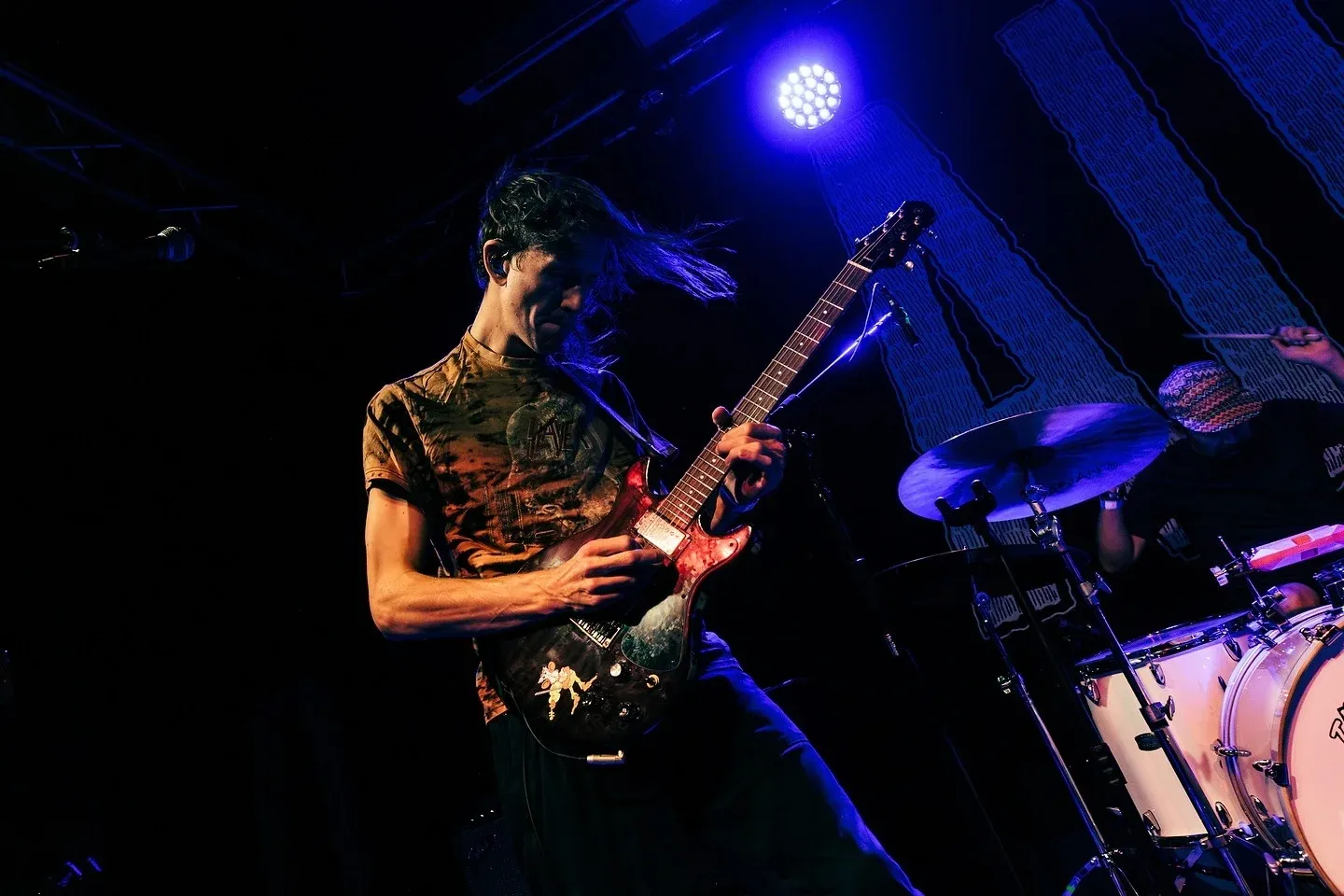
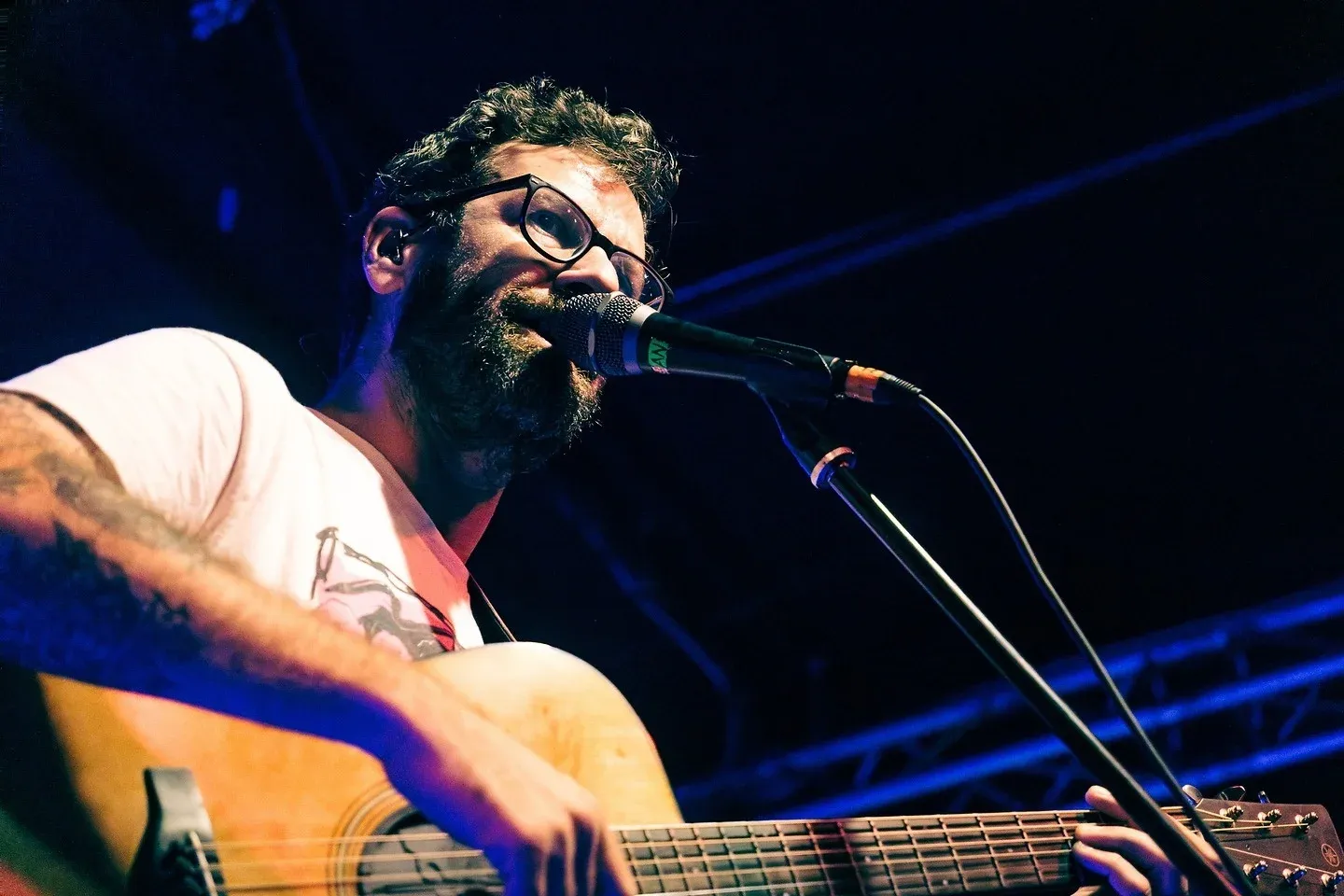
After a brief intermission, AJJ took the stage and a surge of energy electrified the audience, who sang along with every lyric uttered by Sean. This was especially the case with my favorite number People 2: The Reckoning. AJJ played about three or four songs from every album except from their first album. Slower songs that somberly stung me, included Backpack, which deals with the narrator dealing with their deceased loved one’s body, which has been mutilated and carried on their back.
The beautifully simple Linda Ronstadt, which is about the narrator of the song breaking down in tears over a music installation dedicated to the titular woman and her musical output. The song that drew my tears was the strangely titled Big Bird. The song consists of a list of fears that Sean sings in a strained and pained voice as the somber music builds to crescendo.
“I’m afraid of the way I live my life, I’m afraid of the way I don’t, I’m afraid of the things that I want to do, but I don’t.” My mind cuts to me dragging myself out of bed and rushing to work late. It cuts to me shutting a laptop on this and other pieces I may never finish, or closing an audio file of Sean and Katie on my phone. “I’m afraid of the loved one I made to leave,” images of the faces of ex partners and friends I drove away due to my mania, of cross words I said. I recall my ill temper, my delusions of grandeur.
“I’m afraid of my grandfather’s cancer,’ I see him lying in bed, wondering who I am, where he is. “I’m afraid of my mom’s dying arm,” I imagine my mother on a feeding tube in my childhood home’s basement den during those four years of estrangement as she battled chronic health issues. “I’m afraid that I’ve somehow caused my family harm.” I hear the condemning words I said to my stepfather on the phone I can’t bear to repeat. “I wish I were a little less of a coward.”
I feel the tears welling up. “The Big Red Bird who lives under the city doesn’t give a damn about me and it dies every night by burning alive …” a phoenix that represents each day in a cycle of repeating suffering…”So I bought a knife, am I knife, I am knife man!” Sean with each punctuation of the word knife, belts out words that details action. The rest of the feverish ballad is a confession of reactive fear, at the end the narrator “bought a knife” he did action, he “is a knife”, he is a sharp weapon. He can defend himself proactively against a cruel repetitive world.
The tears come, and still do when I hear Sean sing those fears out loud. Or maybe it was the moving melody, but I feel the emotions rush out of me. I feel pain, remorse, and regret after years of numbness, after four years of destroying my life, and I feel now when I didn’t feel anything at my grandfather’s funeral staring at his corpse. I feel and I weep. I left that show with Lee and I feel, I know I can rebuild.
Since the Louisville show covered above, AJJ have moved into their next chapter. The band will release their new album, Dirty Old Power, on September 25, 2026.
The 12-track record was produced and recorded by John Congleton at Animal Rites and mastered by Alan Douches at West West Side Music. Sean Bonnette, Ben Gallaty, Preston Bryant, Mark Glick and Grant Bubar perform on the album, with Jeff Rosenstock and Morphia Slow appearing on “Window in Yr Mind.”
Two tracks, “Beauty and Truth 2” and “Phlamethrower,” are already available. Dirty Old Power can be pre-ordered and streamed via AJJ’s Bandcamp.
Wyświetl ten post na Instagramie
🔔 IDIOTEQ is ad-free, independent, and runs on one person’s time. If you want it to stay that way: DONATE via PayPal or SUPPORT via Patreon.
NEW: IDIOTEQ Explore 🗺️ Browse 15+ years of our archive by city, country, and style. Find artists on the world map or trace related sounds through the styles map.
Stay connected via Newsletter · Instagram · Facebook · X (Twitter) · Threads · Bluesky · Messenger · WhatsApp.