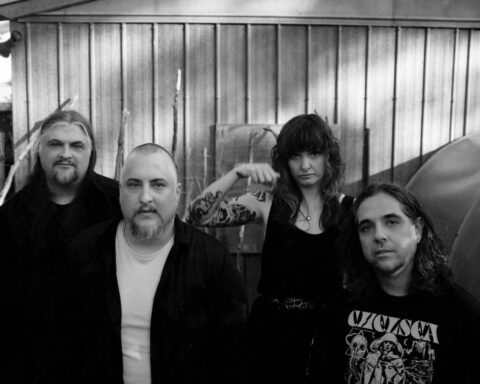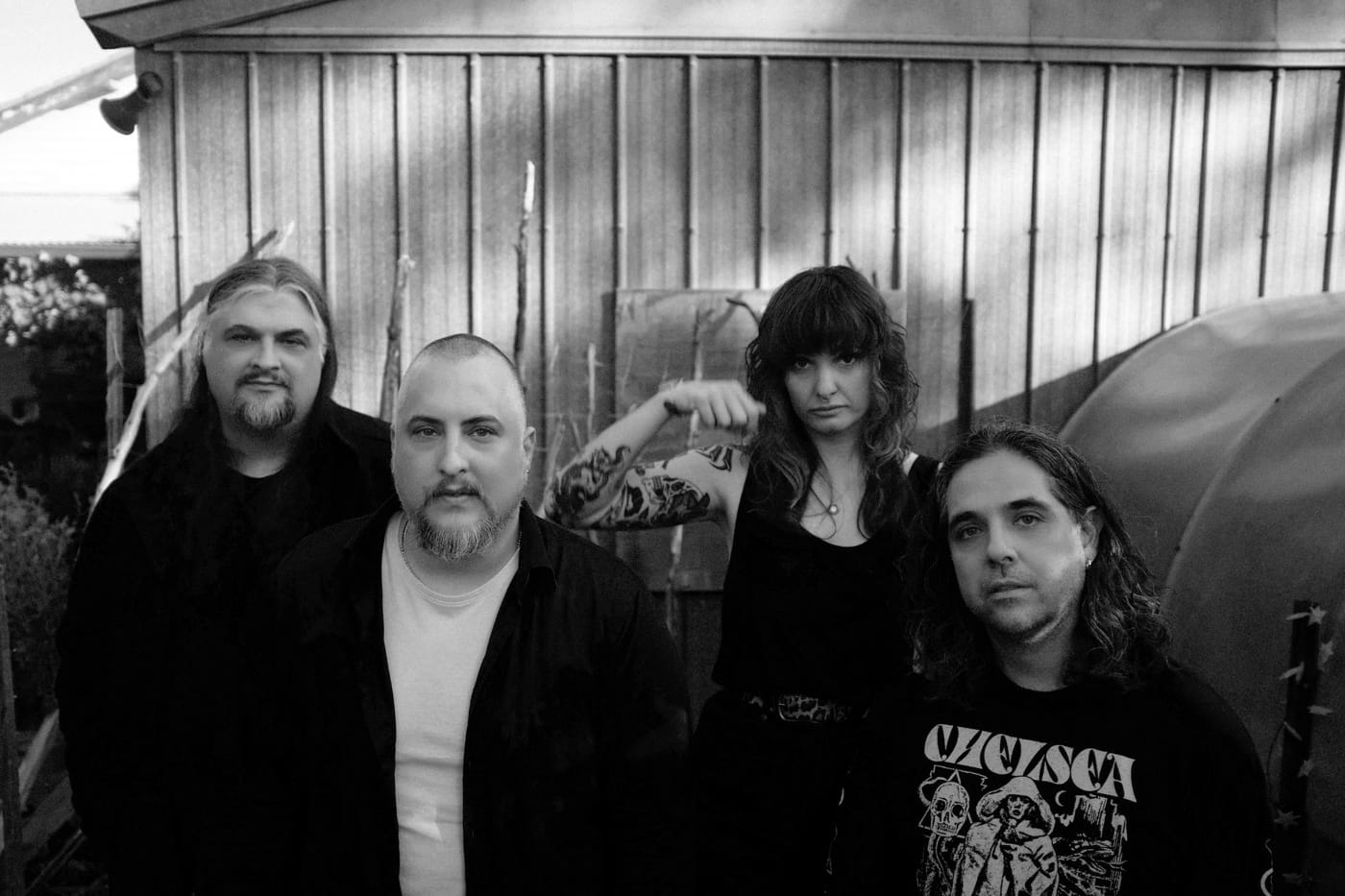


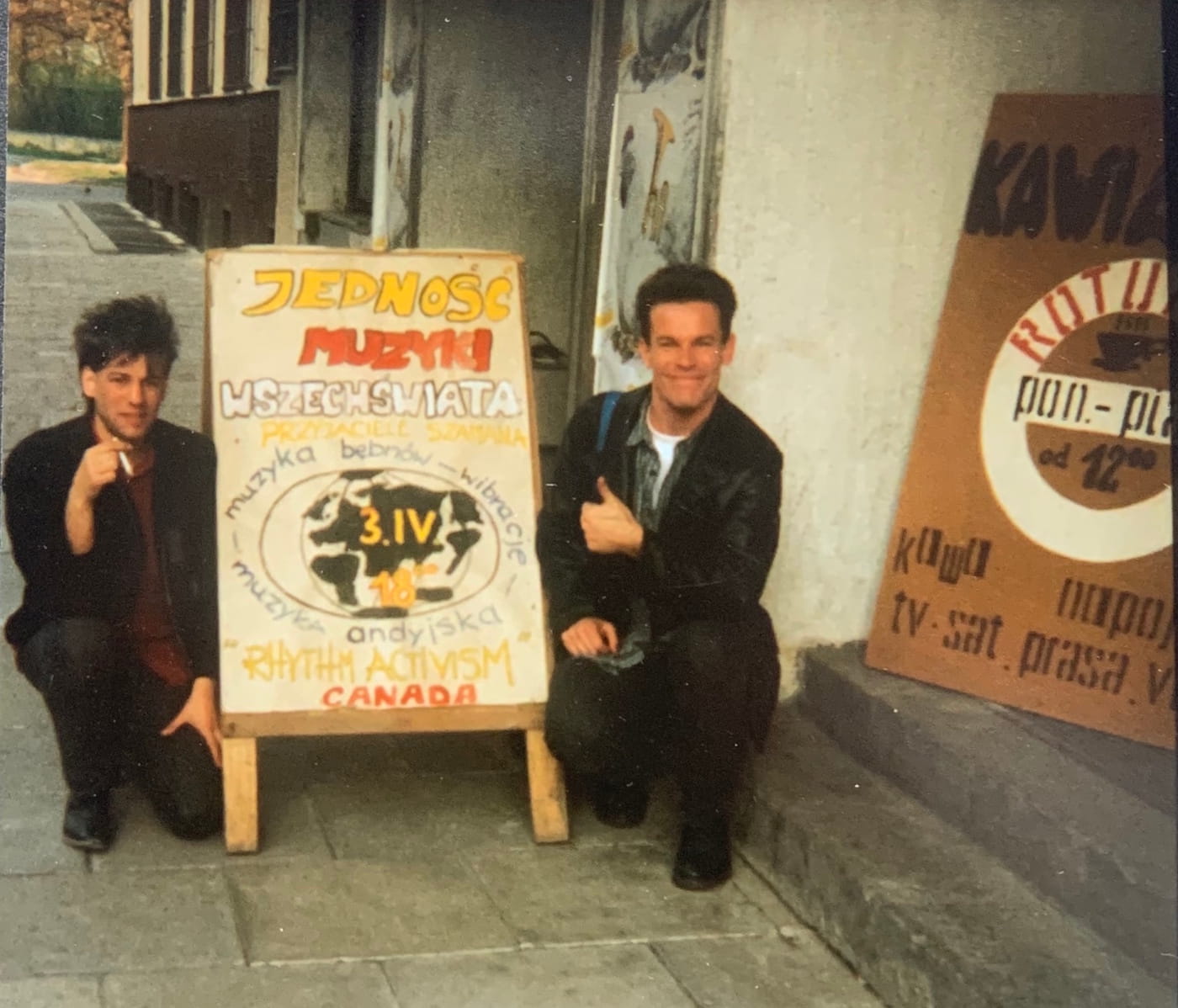
The Nawrockis recorded most of “Kapusta” with Norman Nawrocki on violin and his sister Vivian on a full drum kit, playing together in the studio and keeping the improvisations they made in the room. Vivian had only started playing a full kit in 2025. The violin Norman used is around 125 years old and came home with him from Kraków after Rhythm Activism’s only Polish show of 1988.
He found the violin behind the counter of a pawn shop or music shop. Three stars had been carved into the back and filled with pieces of abalone shell, a decorative pattern Norman later learnt was common in folk work from the Tatra region. The neck had already been broken and repaired, and he paid about 50 Canadian dollars for it.
Back in Montreal, a luthier got his measuring tools out and laughed. “Look at this and this and this,” he told Norman. “The proportions are all wrong.” The f-holes, bridge and neck did not line up properly, the neck had been glued on badly, several kinds of wood had been used, worms had eaten into parts of the instrument and the varnish was uneven. The luthier put it at around 1900 and valued it at no more than $100.
Norman named it “Janosik” after the folk hero. It has since travelled through dozens of countries in cars, vans and planes, through subzero winters and hot summers, outlived three cases, played thousands of shows and appeared on dozens of records. A small copper medallion of Janosik stays inside each case “for protection”.
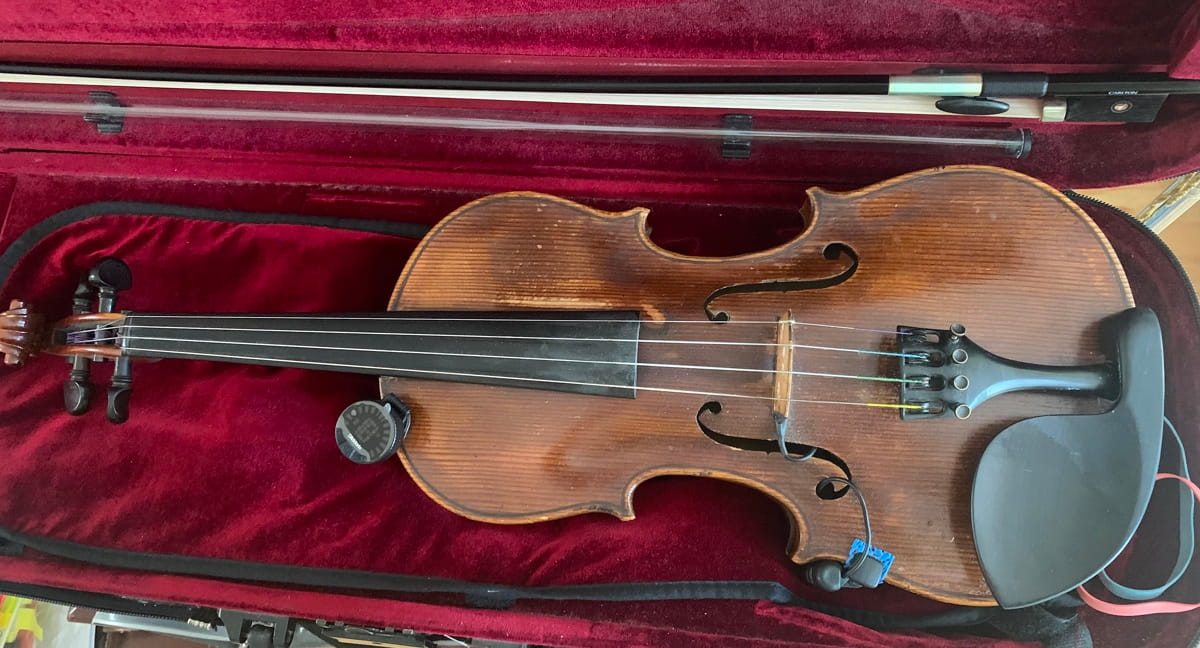
That same battered old violin is the one facing Vivian’s drums on “Kapusta”.
The current setup is treated violin, drums and whatever extra instrument makes sense in a session. “Kapusta” has eleven improvised pieces, with Greg Anderson Smith mixing the recordings after Norman and Vivian make the basic performances together. Most of the album was recorded with both siblings in the same studio, including sessions in Vancouver, Montreal and Casa del Popolo. Vivian plays a full acoustic kit there and uses digital drums at home.
Her first month behind a full kit was spent learning what each drum sounded like. “The first month of playing the drums was learning about each drum and the sound it produced. This was all totally new to me, and I had a lot of fun exploring their sounds. I suppose I equated each sound/drum to the notes/keys on the piano.”
Piano came first. Vivian had studied classical music, composition and some jazz improvisation, and had played ukulele on and off. She had also always counted rhythms instinctively, tapping fingers or feet and following beats without thinking much about it. Composition usually began with whatever mood she had in her head, then basic decisions about melody, harmony and whether major or minor chords fitted it. With Norman she listens to the violin first and finds something on the kit that can accompany it, answer it or push the piece somewhere else.
A second take barely enters her mind. “Funny, I don’t think of that at all. I am totally in the moment, sometimes I don’t even ‘think’ of what I am doing or try to analyze it, I just listen and play along. Contributing to what is already going on.”
The siblings can also play from opposite sides of Canada. Those remote sessions are mainly for practice, though they sometimes record them: FaceTime or Facebook Messenger carries the live sound while each sibling records locally, they count in together and play the complete piece, then Vivian sends her recording to Norman and the shared count gives him the point he needs to synchronise both tracks. Between takes one of them might suggest slowing down, adding more cymbal crashes or letting the other person start. Vivian reports very few real disagreements and usually trusts Norman’s experience from years of bands, touring and recording.
The calls also give them time together as siblings. “Working with Norman is basically fun,” Vivian wrote. “Often he is not only on the other side of the room, but on the other side of the country.” Playing together reminds her of a conversation: one person begins, the other listens and responds, and the piece moves from there.
“Thrunkit!”, their third full-length, was the first Nawrockis album with Vivian on drums and already pushed further into experimental rock and improvisation. “Kapusta” continues with that same basic way of working.
During one session Norman pulled a sound from the violin that Vivian heard as an air-raid siren. After the piece ended, she told him what she had heard and asked him to repeat it. He used the sound again on the next recording, and Ukraine was already in her head: “I started thinking about the war in Ukraine and how the people must feel when they hear that – the fear and absolute terror, the pain, and then anger that this was happening to them.” She thinks she may have mentioned Ukraine to Norman at the time. The association itself was immediate.
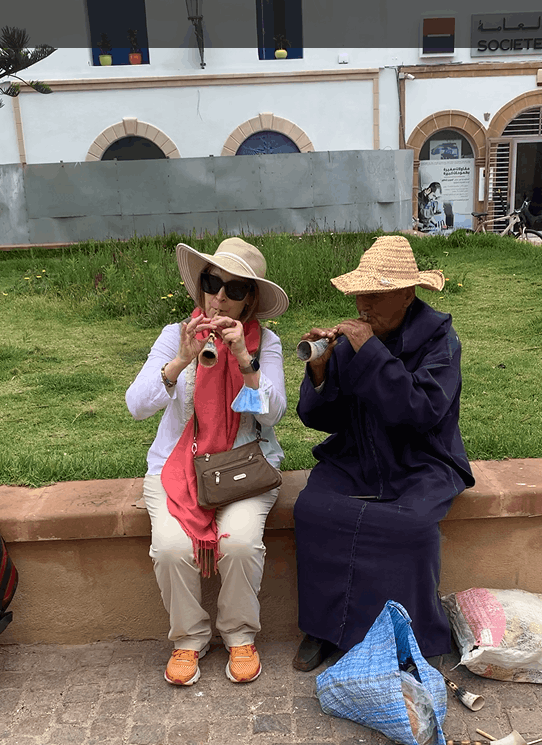
Another instrument on the record came from Essaouira, Morocco. Vivian heard a distant horn while walking around the city and followed the sound until she found an elderly man who came down from the hills to sell instruments he made himself. They were traditional Berber horns made from wood and animal horn. The one Vivian bought was extremely loud and had only a few finger holes, which limited how much melody she could play on it. She brought it home, later took it into the studio, and Norman played violin with it on a recording they kept.
Norman photographed Vivian with the maker in Essaouira, sitting beside the bags containing his horns and supplies.
Vivian’s first attempt at percussion had happened years earlier, when Norman bought her bongos for her birthday. She got a book, sat on the floor in their parents’ living room and tried playing along with songs on the radio until she got bored and put the bongos away. Much later, Norman and Vivian were playing violin and ukulele during one of his visits to Vancouver when their regular studio happened to have a full drum kit sitting there. At the end of the session Vivian tried a few rhythms, Norman picked up his violin and joined her, and they kept doing it.
Music had been around their family home throughout childhood. Norman remembers the upright piano as one of the first pieces of furniture he noticed. Their father would come home from work and sit down at it, later bought a Hammond organ, and played Chopin as well as Polish melodies and his own improvisations. Their mother sang and hummed Ukrainian folk songs.
Vivian wanted piano lessons, but her father initially warned her that they were expensive and that she might lose interest. She started learning by watching his hands, copying the notes and asking questions. He eventually paid for the lessons and picked her up afterwards, while their mother sometimes did the dishes so Vivian could keep practising. She still recognises something familiar in the way her father would take a known melody and move away from it.
Norman started violin at six, dropped it at twelve for football and returned to the instrument at twenty-eight. Their father even learnt some violin himself so he could follow what Norman was learning. He had wanted to become a musician when he was young, growing up in a poor working-class family in Wielkopolska and living in Wolsztyn, Rawicz and Poznań before emigrating to Canada shortly before the Second World War. His own mother objected to his plans for a life in music, and Norman is keeping the details of that story for the novel he is currently writing.
The songs never disappeared. Their father wrote and composed music that was never recorded, and Norman still has his notebook. He built speaker cabinets and assembled a hi-fi turntable from a kit too. When Norman and guitarist Sylvain Côté later made Rhythm Activism’s first spoken-word and music cassette, his father listened and gave them a review: “It’s good, but the orchestra is too loud.” Rhythm Activism started calling themselves a “rebel news orchestra”.
By the time Rhythm Activism reached Poland in 1988, the Nawrocki family had already been travelling there for years.
Norman first went with his father in 1971 to visit relatives, then returned alone later in the 1970s and spent more time there after meeting a woman from Kraków and falling in love. His father had never taught him Polish, so Norman learnt through friends, visits and letters. For a while he sat with letters from his Kraków girlfriend, a dictionary and a blank sheet of paper, translating what she had written and slowly assembling his own replies. “Love is great for language learners.”
Poland looked different on each visit. In 1971 Norman remembers poverty and bread queues, with the family’s colourful Western polyester clothes standing out. Later in the 1970s he saw more goods in shops and met people who dressed better than he did. By 1988 some of the people around him appeared considerably wealthier than Norman and Sylvain, two underground musicians from Montreal travelling cheaply.
Vivian remembers the 1970s through food queues and her grandmother’s home. Her grandmother would get up very early to queue for basics such as milk and meat, and Vivian understood that one extra visiting child also meant another person to feed. She felt guilty about it. On one train ride into Poland, soldiers carrying rifles were standing nearby when Vivian started eating an orange she had brought with her. One soldier stared.
“I’ll never forget the shocked look on the soldier’s face when I started to eat the orange. I was surprised and thought of offering it to him, but I was genuinely afraid he would point his rifle at me if I approached him.”
Her father later explained that oranges were a luxury for many families and could be something people saw once a year around Christmas. Vivian wished she had offered him one. When she returned to Poland in 2018, food was everywhere, people seemed relaxed and the restrained, tense feeling she remembered from childhood had disappeared for her.
Rhythm Activism arrived in October 1988 as a two-person “cabaret rock ‘n roll” band: Norman Nawrocki and Sylvain Côté.
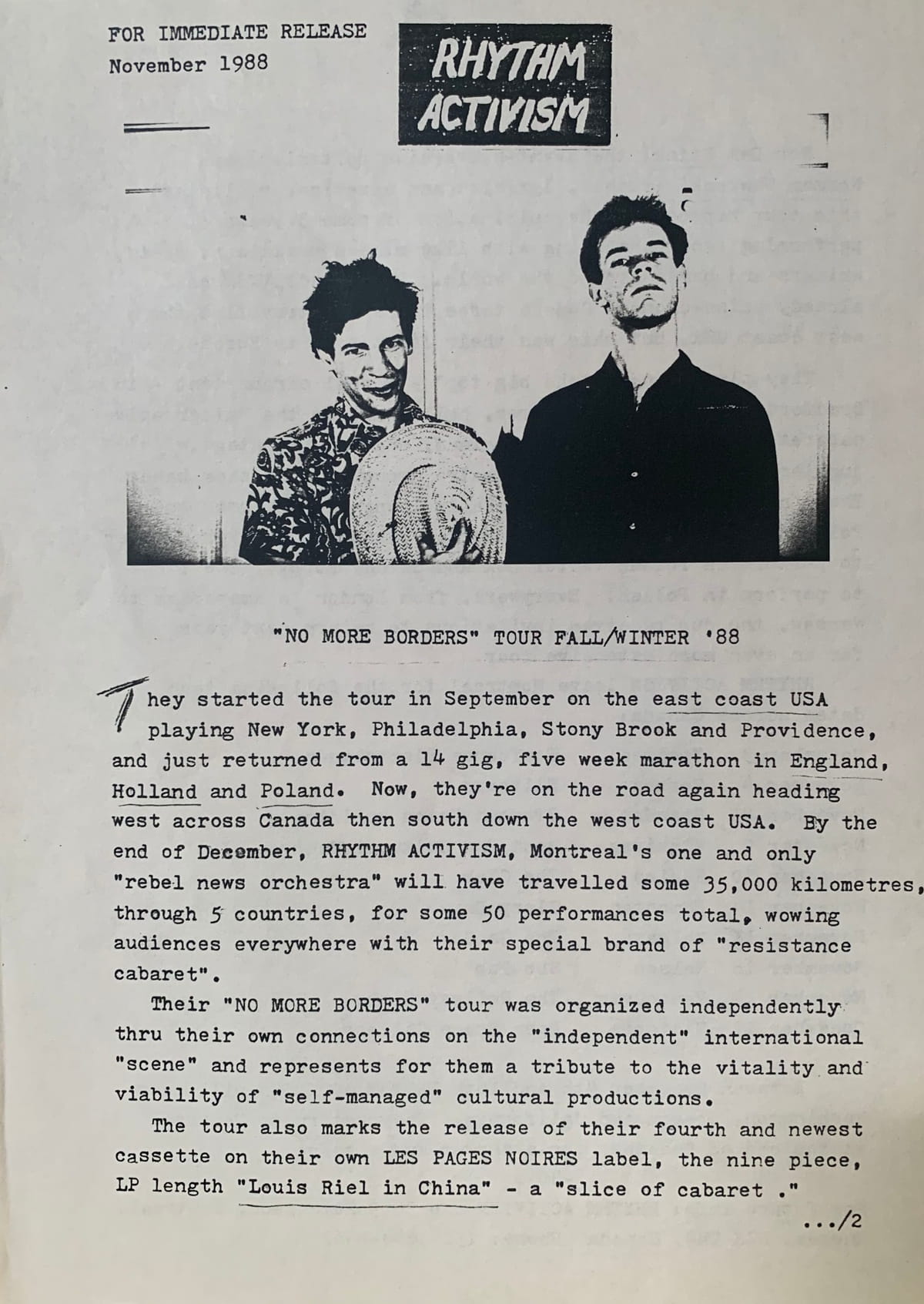
Norman believes Rhythm Activism were the third Canadian independent band to play in communist Poland, following Skinny Puppy and DOA in 1987. DOA were friends and mailed them Polish contacts after their own trip. Maczek at Warsaw’s Remont eventually replied and booked Rhythm Activism.
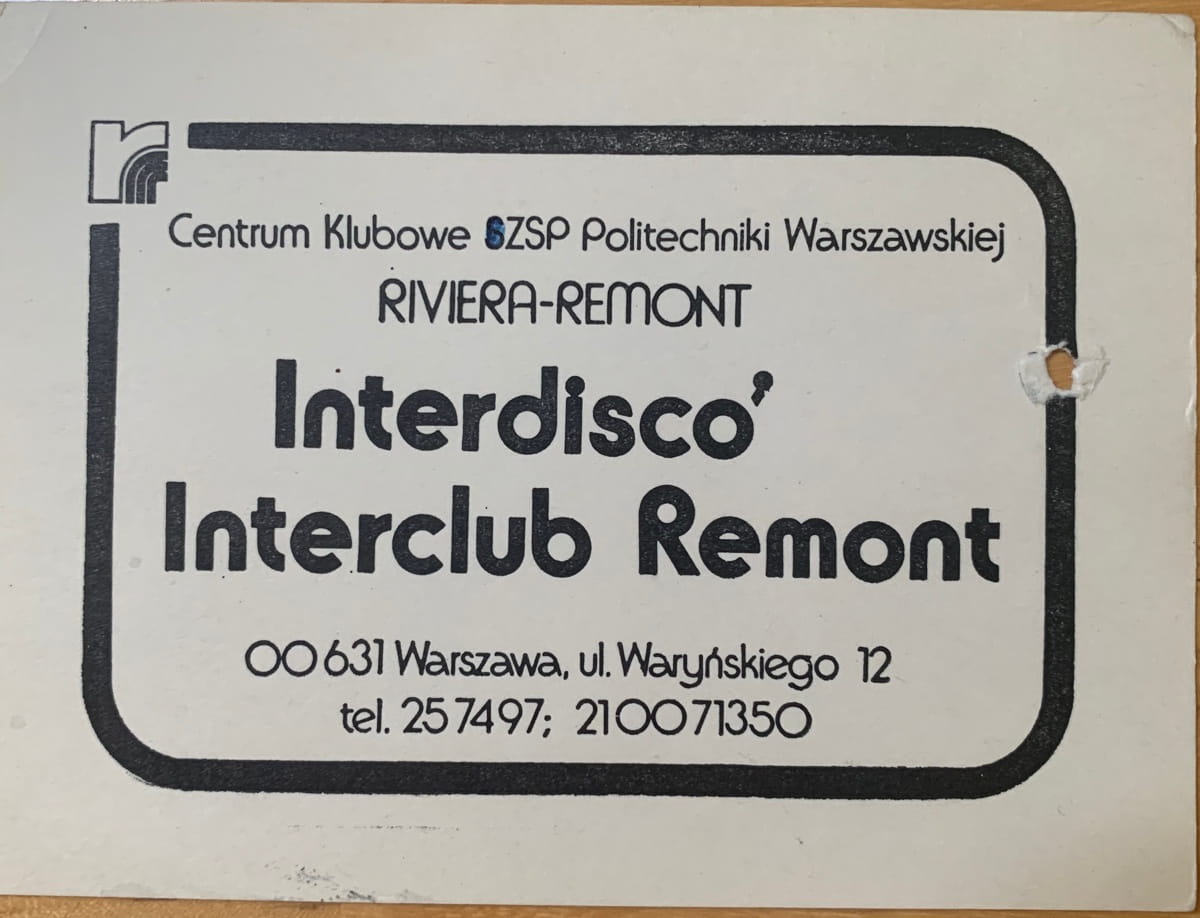
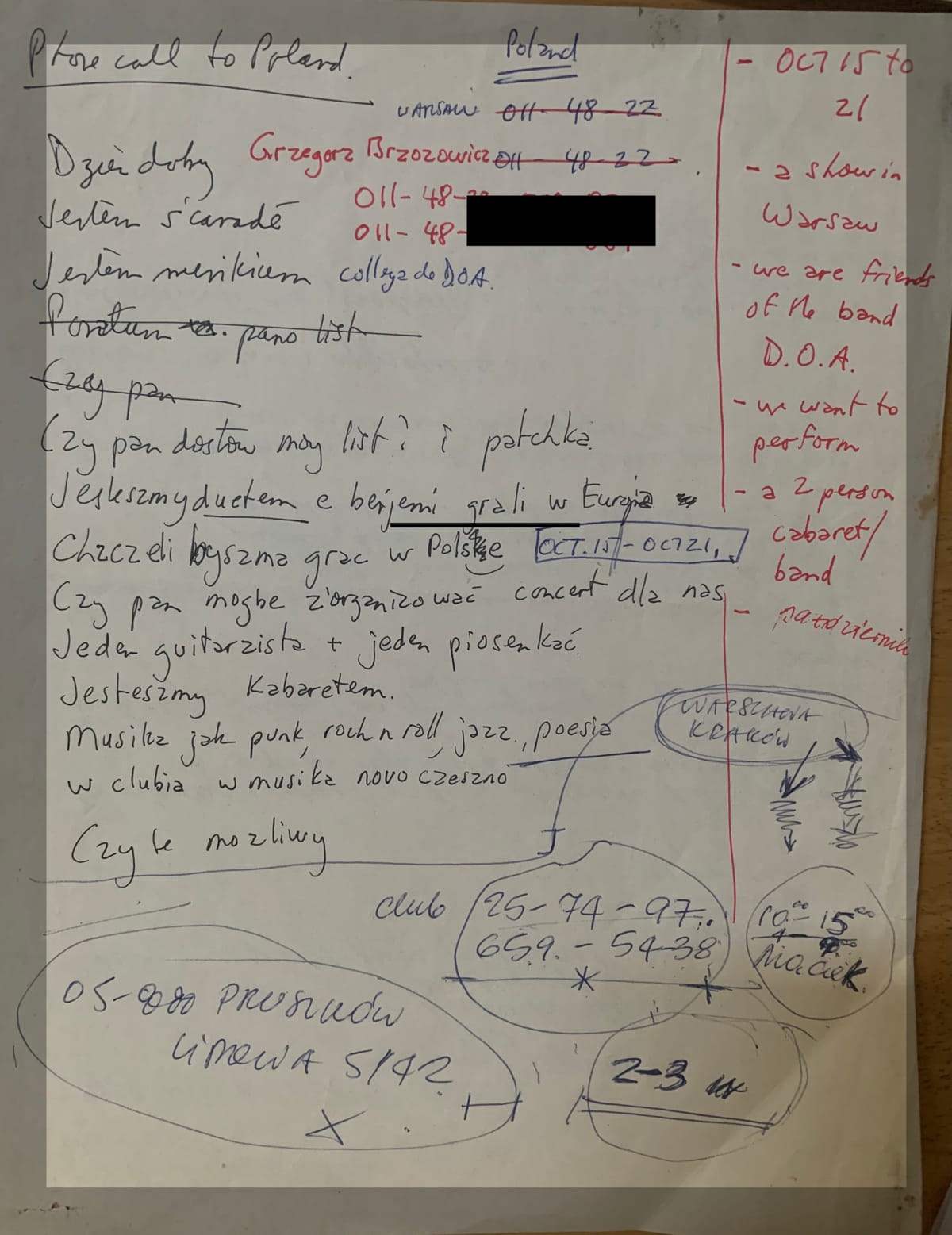
Everything happened by post. Norman and Sylvain had no internet, fax or mobile phones, while international calls were expensive and awkward enough that letters carried most of the planning for both Polish trips. Sometimes a reply took a month. They expected little money and were more interested in meeting people, playing to a new audience and adding contacts to the DIY network they were already building through bands, fans, organisers and small venues.
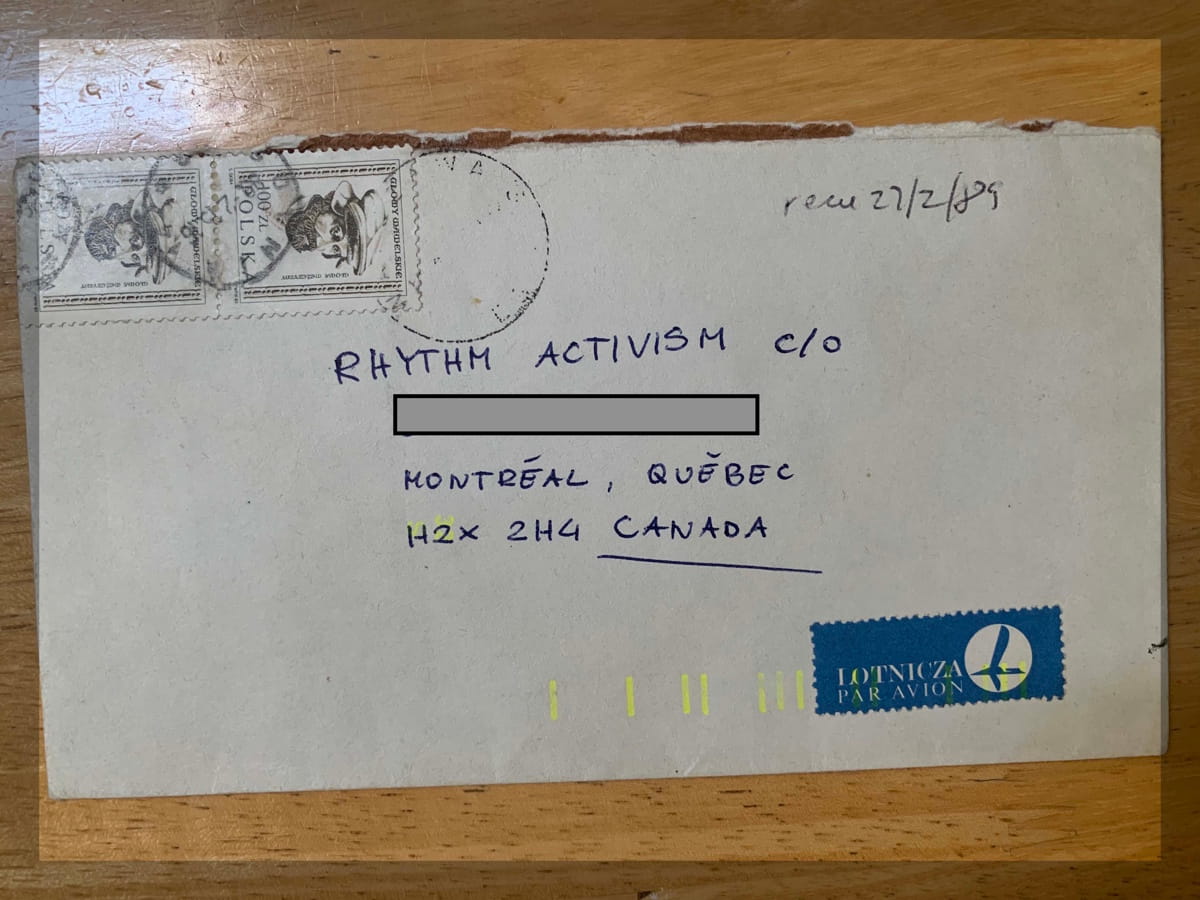
Norman’s notes for phone calls were part of the same process.
Before Poland, Rhythm Activism had played a ten-day, ten-city cabaret tour in England after a run on the East Coast of the United States. Norman had crossed between West and East Berlin before, but Sylvain had not, and guards checking their documents with machine guns in hand made an impression on him. Norman remembers Poland in 1988 as still visibly controlled by the communist state while strikes and street demonstrations were happening around the country. The pair heard fragments about the unrest earlier that year and noticed that some people were careful about speaking openly to two Western visitors.
On 14 October 1988, Rhythm Activism played Riviera Remont in Warsaw to around 150 people. The guitar amp they had requested never arrived.
Sylvain normally used a Fender Twin. Someone found a portable ghetto blaster instead, so he plugged his guitar into it and played the show. Rhythm Activism mixed music, spoken word, theatre, comedy and political satire, with Norman moving between characters while Sylvain’s guitar playing was equally physical and theatrical. The ghetto blaster survived, the audience responded well, and several guitarists approached Sylvain afterwards and treated him, in Norman’s memory, like a “guitar god”.
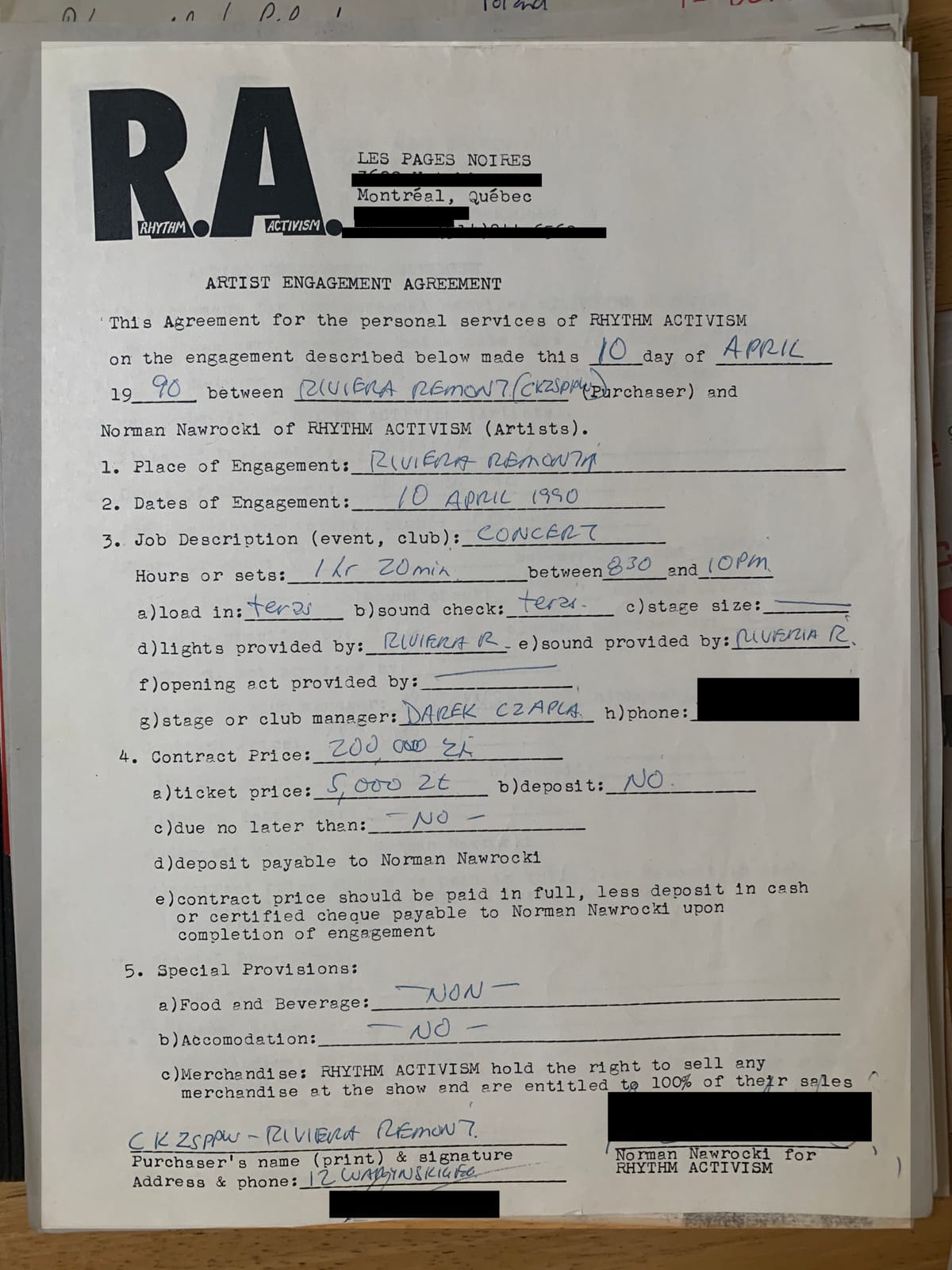
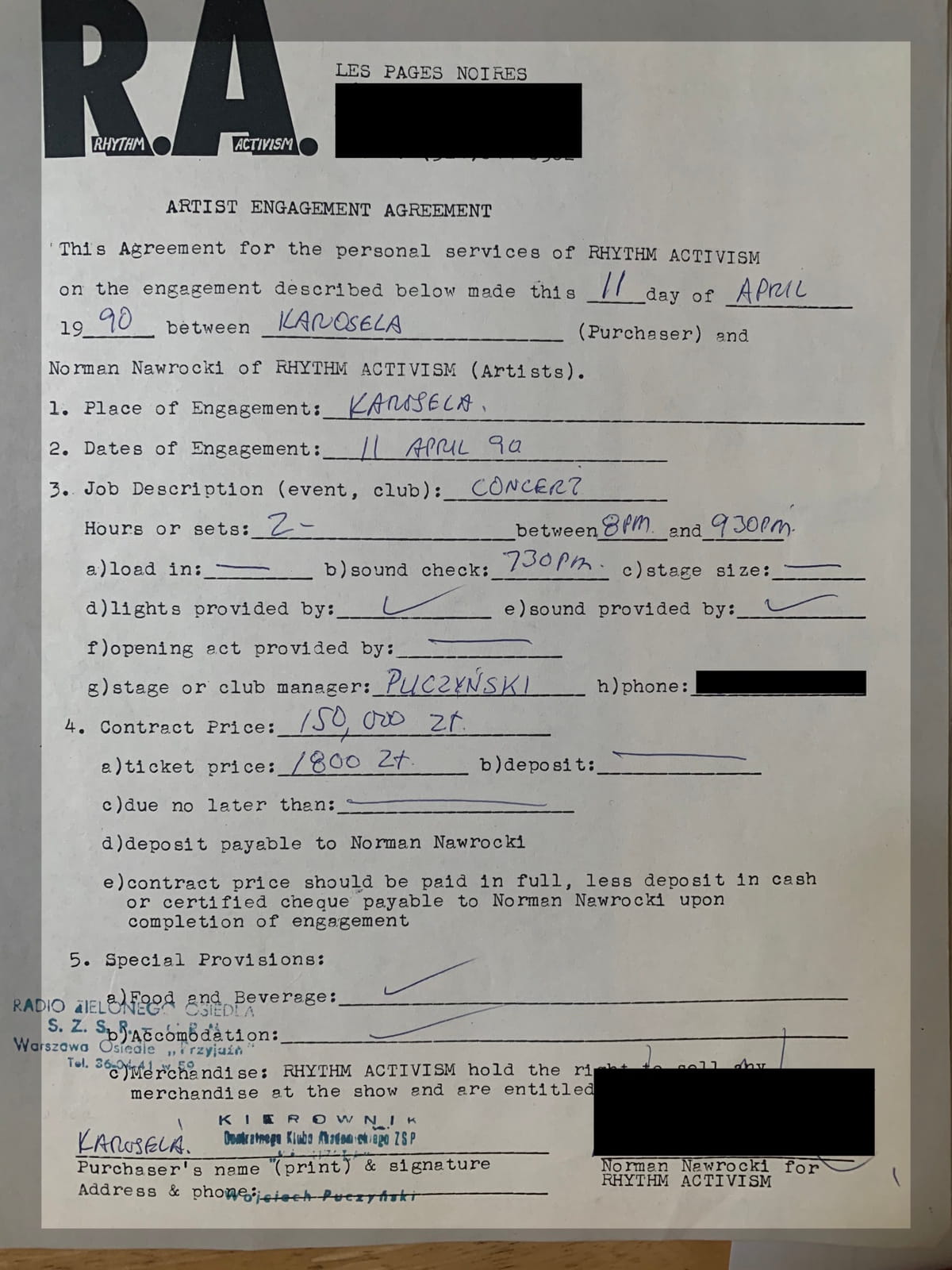
The promoter disappeared after the show. Rhythm Activism had accommodation for three days and received no performance fee, even though roughly 150 tickets had been sold. They already knew unreliable promoters from North America, but when they booked Poland again they made sure there was a written contract.
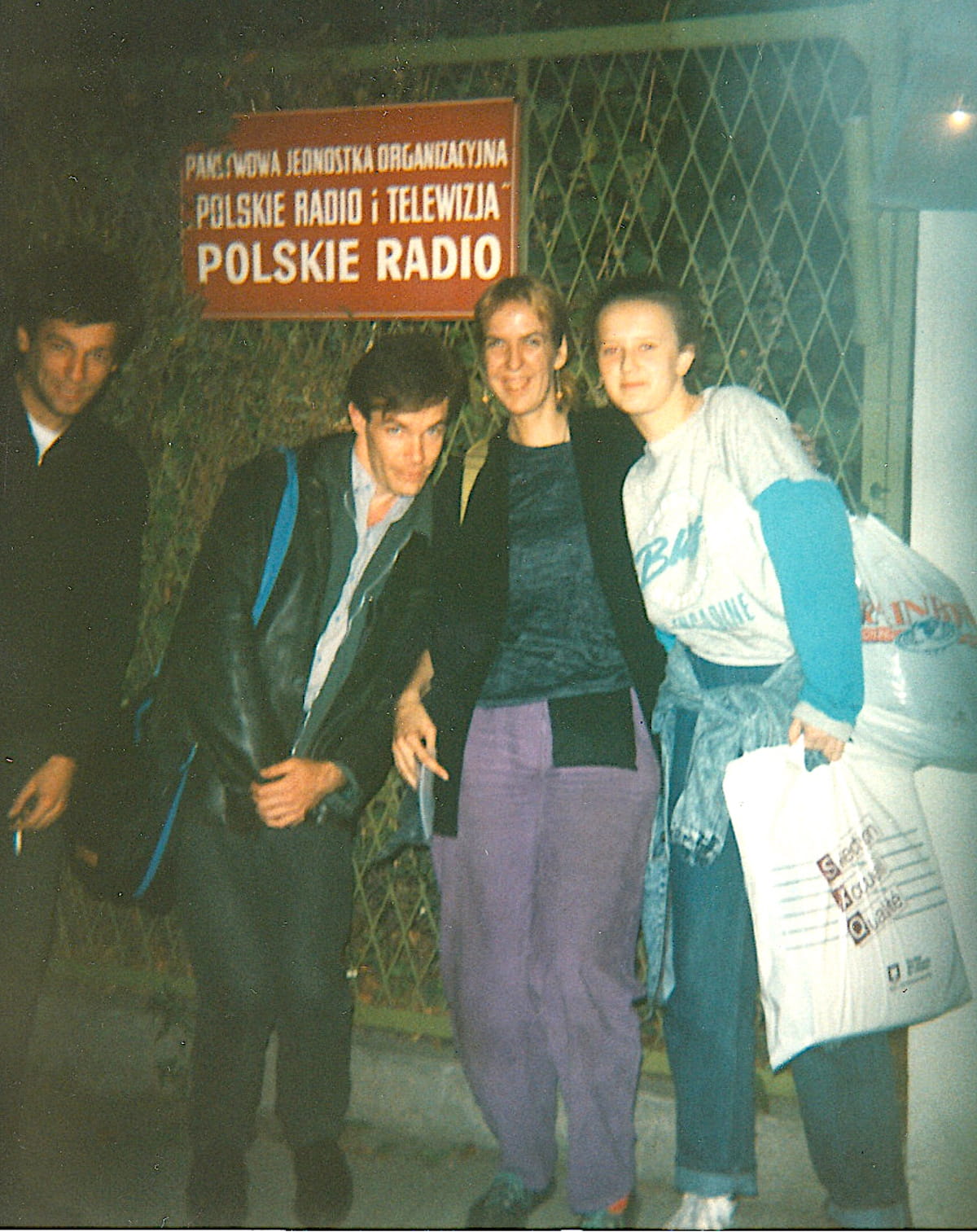
Grzegorz Kowalczyk had been at Remont that night. A student, part-time radio DJ and cabaret performer, he invited Norman and Sylvain to Polish Radio and stayed in touch afterwards through letters sent from his student address on Waryńskiego in Warsaw. Norman remembers him working with little beyond his own contacts: “A poor student, part-time radio DJ, part-time cabaret artist himself, who had a network of contacts, that’s it. No office, no government or private funding, no fax machine, no free calling plan.”
Kowalczyk had a programme called “Magazyn Miedzynami” on Program IV, and Norman did the interview in broken Polish. Rhythm Activism also performed a new song they had just played at Remont.
“Polski Fiat”.
Kowalczyk recorded the song and later used it on air. He also played “Louis Riel in China”, including “Krakow Noire”, an instrumental for violin and guitar. Norman remembers the radio collection stored in bulky brown envelopes on shelves above the microphones.
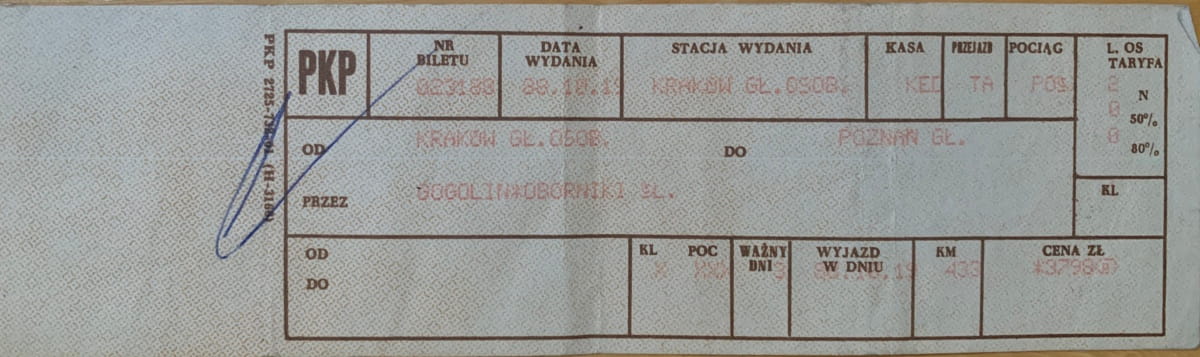
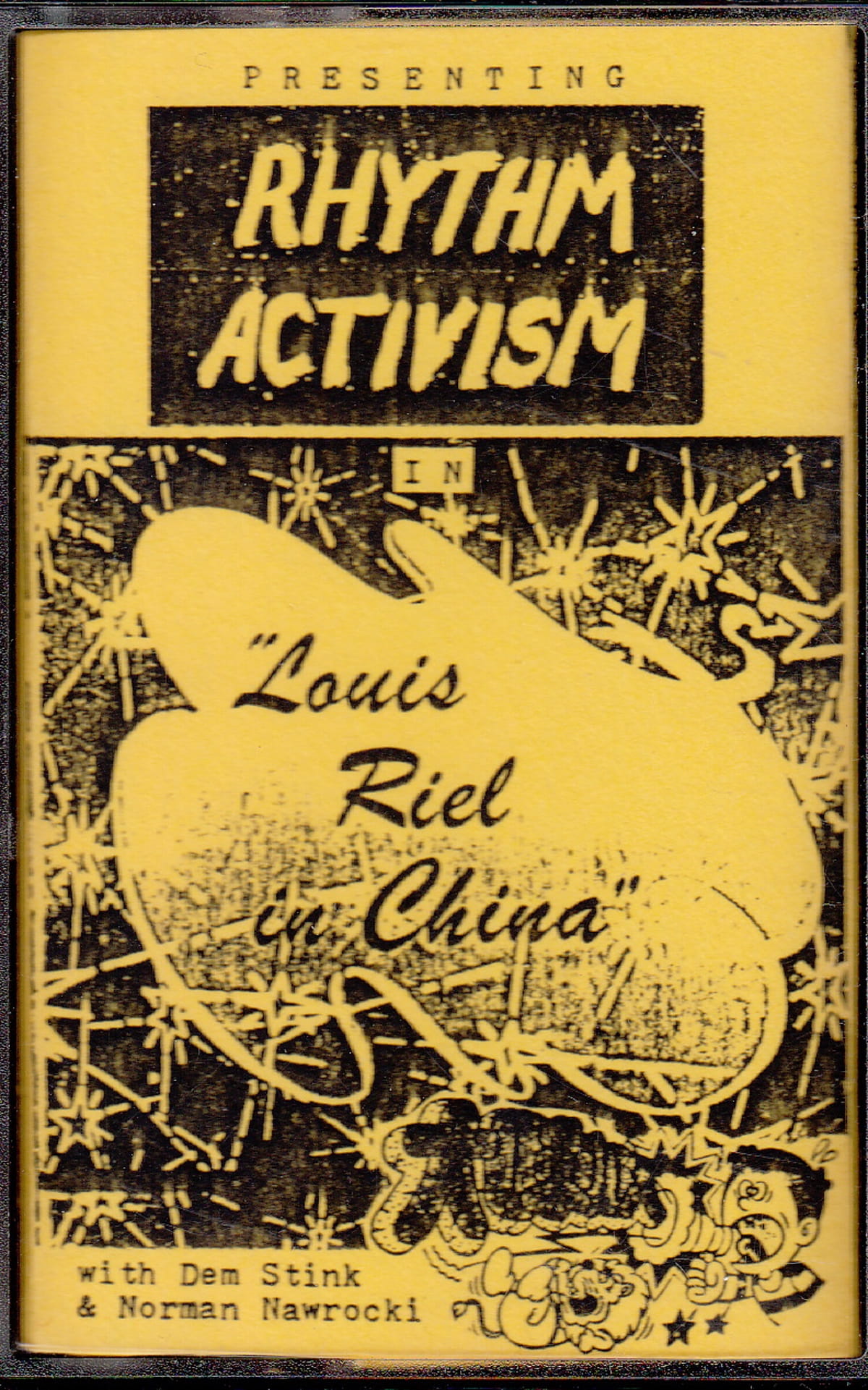
The cassette had already had one unlikely playback before Warsaw. On the KLM flight from Montreal to Amsterdam, Norman asked a flight attendant whether “Louis Riel in China” could be played on the plane. Passenger aircraft still had cassette decks in their entertainment systems, the flight attendant agreed, and Rhythm Activism’s cassette went through the cabin speakers somewhere over the Atlantic. A few days later Kowalczyk was playing it on Polish radio.
“Polski Fiat” came from Norman’s earlier family visits. His uncle Tadeusz in Poznań owned one and once took Norman, Vivian and their father on a fast ride through the city. “What an unforgettable hair-raising ride!” Norman saw Polski Fiats everywhere on later visits: some running, some broken down or stripped for parts, others repaired with wire and rope holding doors, bonnets, mirrors or other pieces in place.
Polish cabaret gave him another part of the song. Norman had been watching cabaret performances and had also attended small shows held quietly in private homes, where jokes, symbols and ordinary objects could carry political messages between the lines. For him, the Polski Fiat looked like late-1980s Poland: battered, repaired again and again, still moving.
The song quickly started getting recognised. Kowalczyk later told Norman about a friend of a friend running up to him and demanding the “little Fiat”: “Where’s the little Fiat?” Kowalczyk answered, “What Fiat?” The exchange went back and forth until the other person finally explained, “No, not a car, the song! I must have a copy of it, please!”
Several versions of the title appeared in later references and memories, so Norman went back to the original cassette liner while checking the archive for IDIOTEQ. The title printed there is “Polski Fiat”. Around 2006, two people on a Polish internet forum tried to identify an old song one of them remembered hearing on the radio, with the phrase recalled as something close to “jestem polski fijat”. Their discussion eventually led back to Rhythm Activism. In 2021, Trójka played “Polski Fiat” again during a programme about foreign artists recording Polish material.
Norman passed the news to Sylvain. “I’m very happy to hear this. It means our music touched listeners, was memorable enough to survive the decades.” He doubts the metaphor would work automatically for younger listeners now, because the everyday sight of battered Polski Fiats and roadside repairs belongs so strongly to that period.
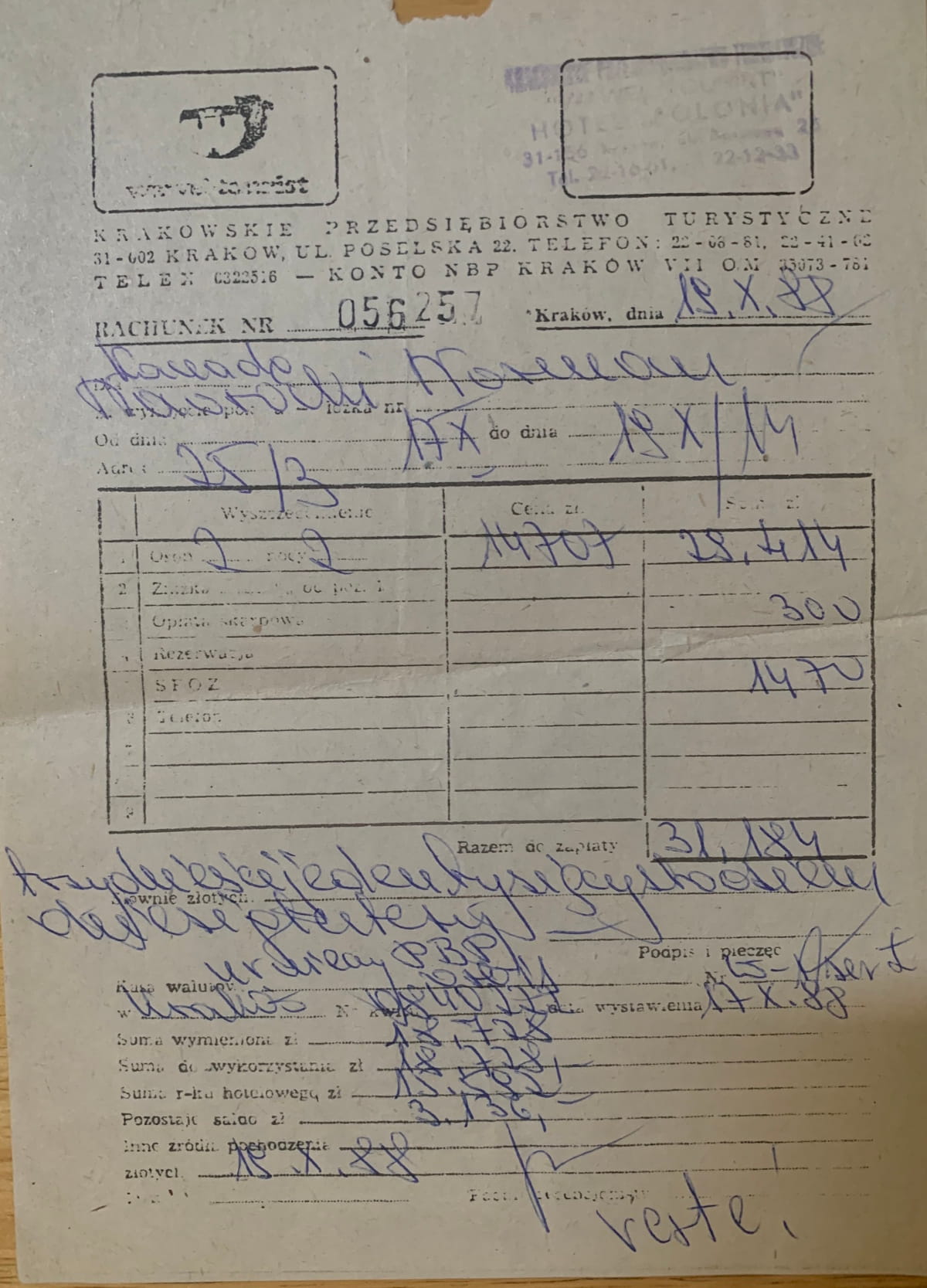
After Warsaw, Norman and Sylvain went to Kraków as tourists. That was when Norman bought Janosik, the violin that eventually came back to Montreal with him and stayed. Kowalczyk stayed in touch too, and by early 1989 he was discussing a proper return tour, with Warsaw, Kraków, Bielsko-Biała and Gdańsk among the possible stops.
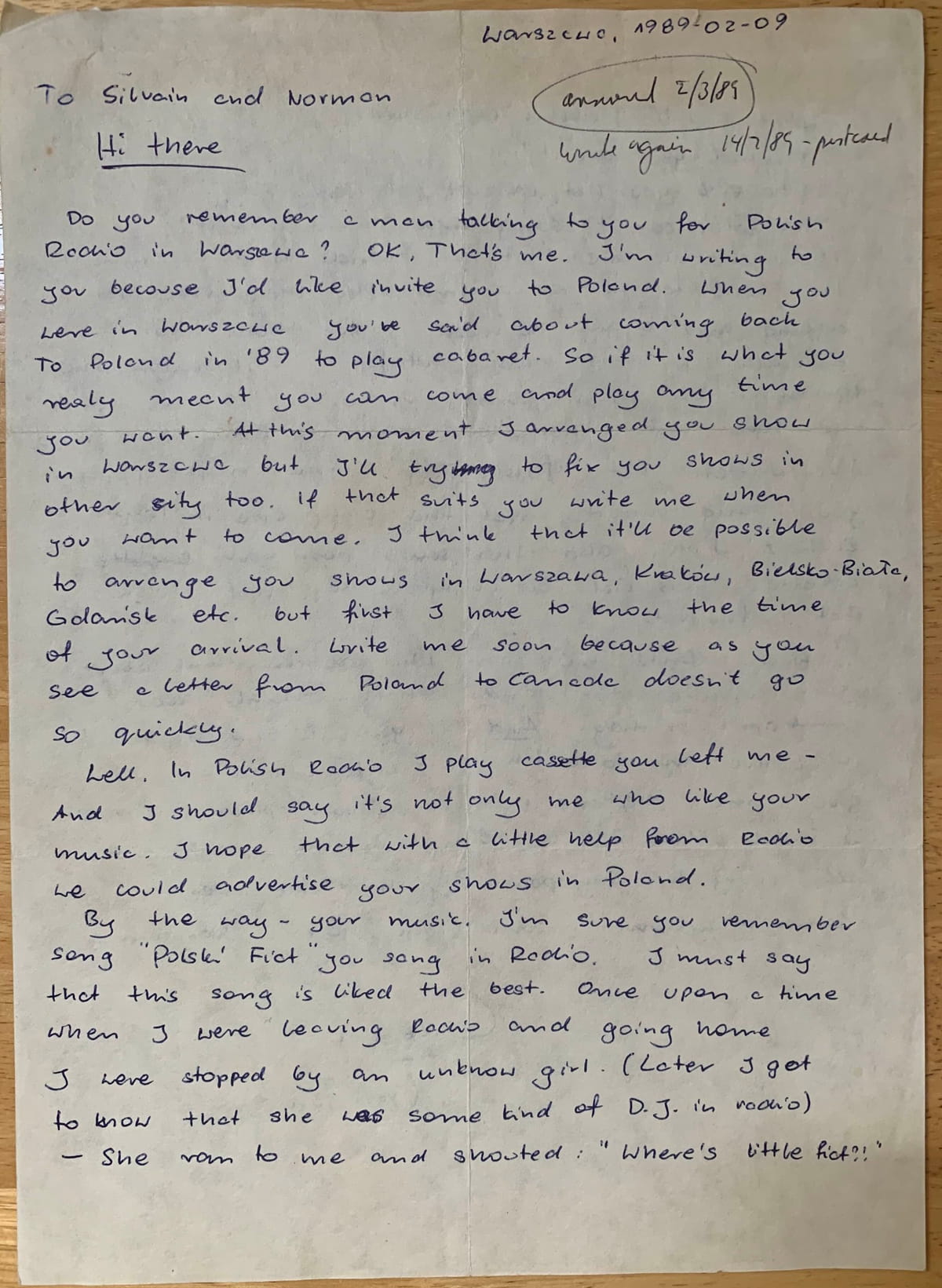
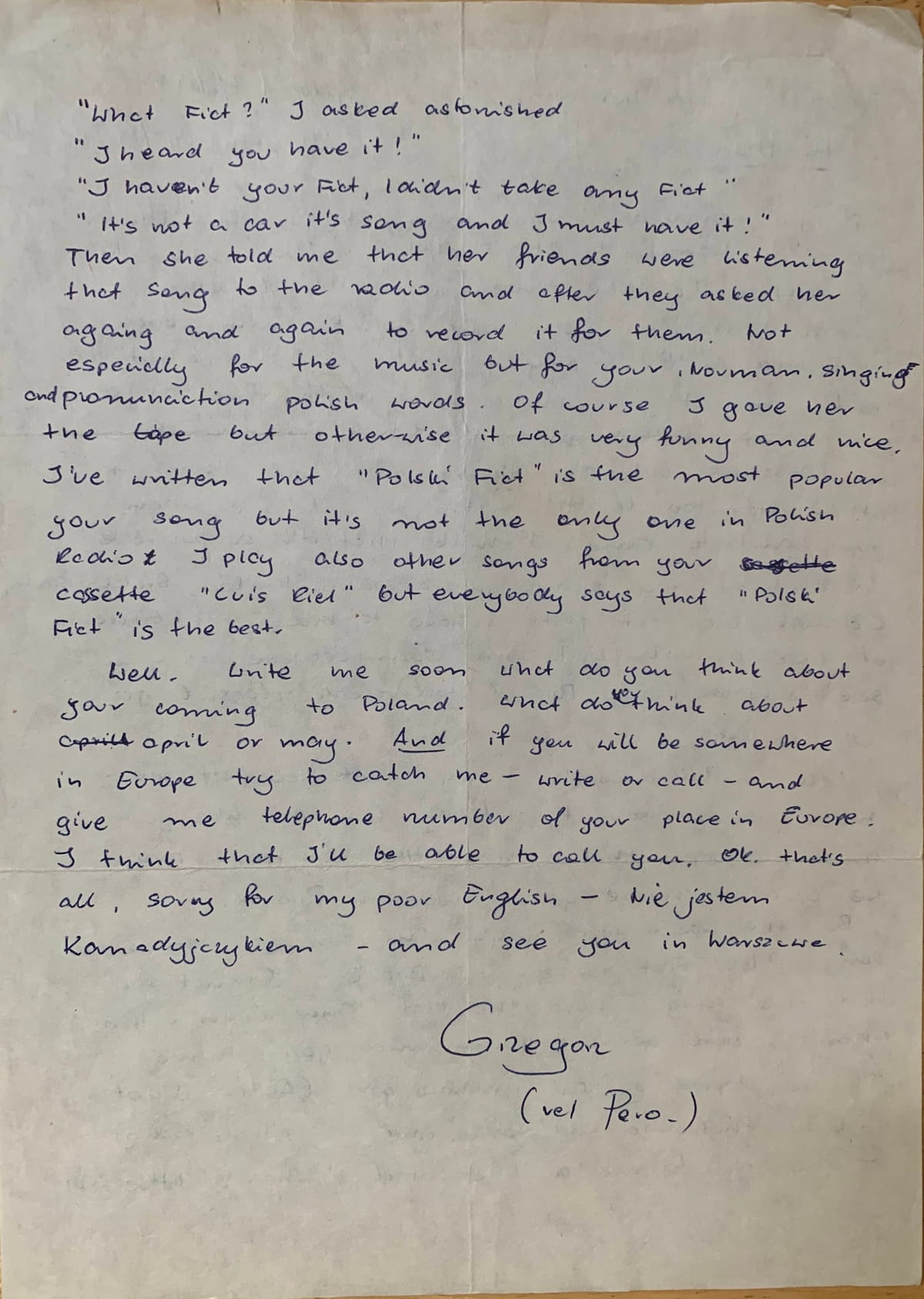
Correspondence travelled slowly, and cassettes sent for Polish radio could disappear into the post for weeks.
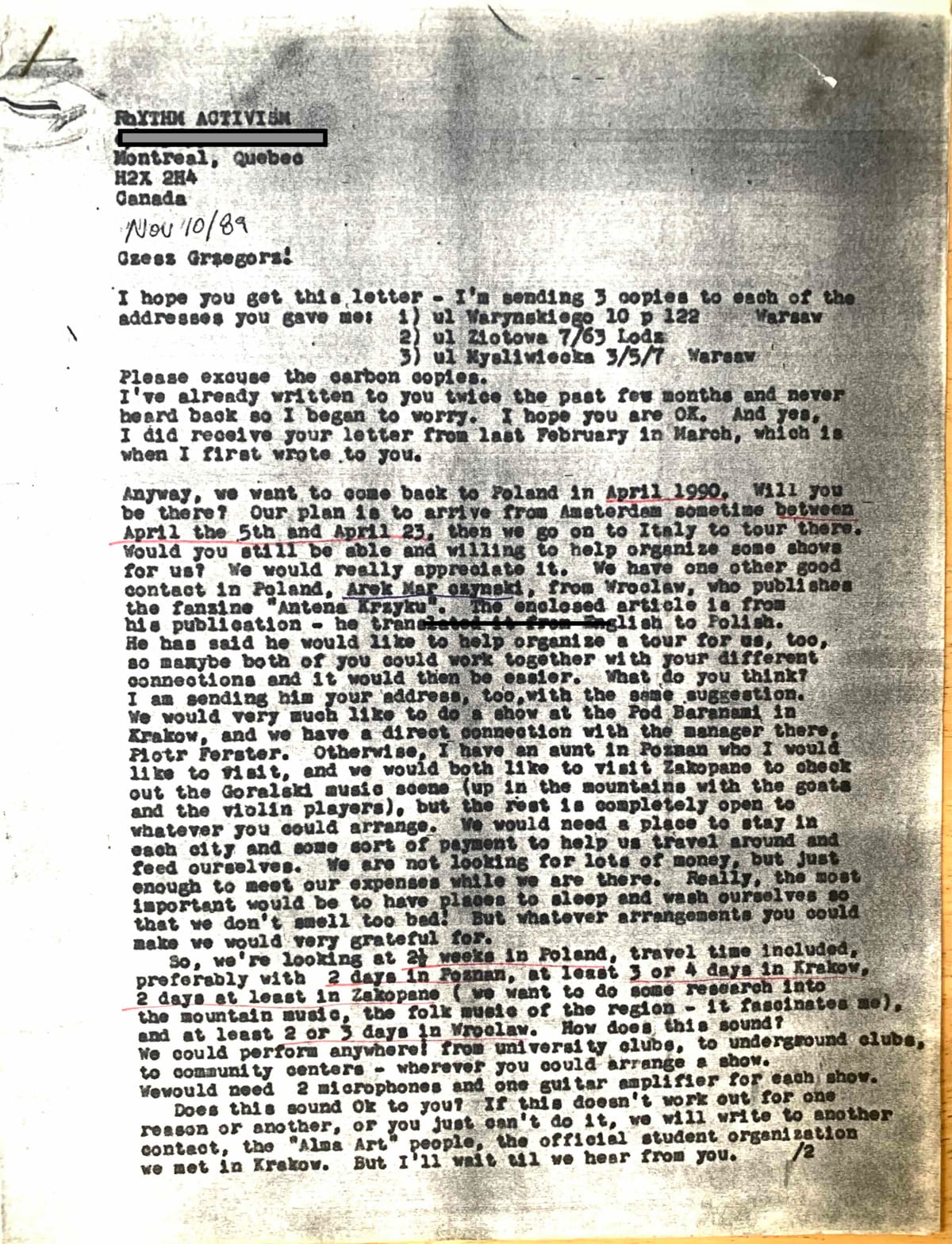
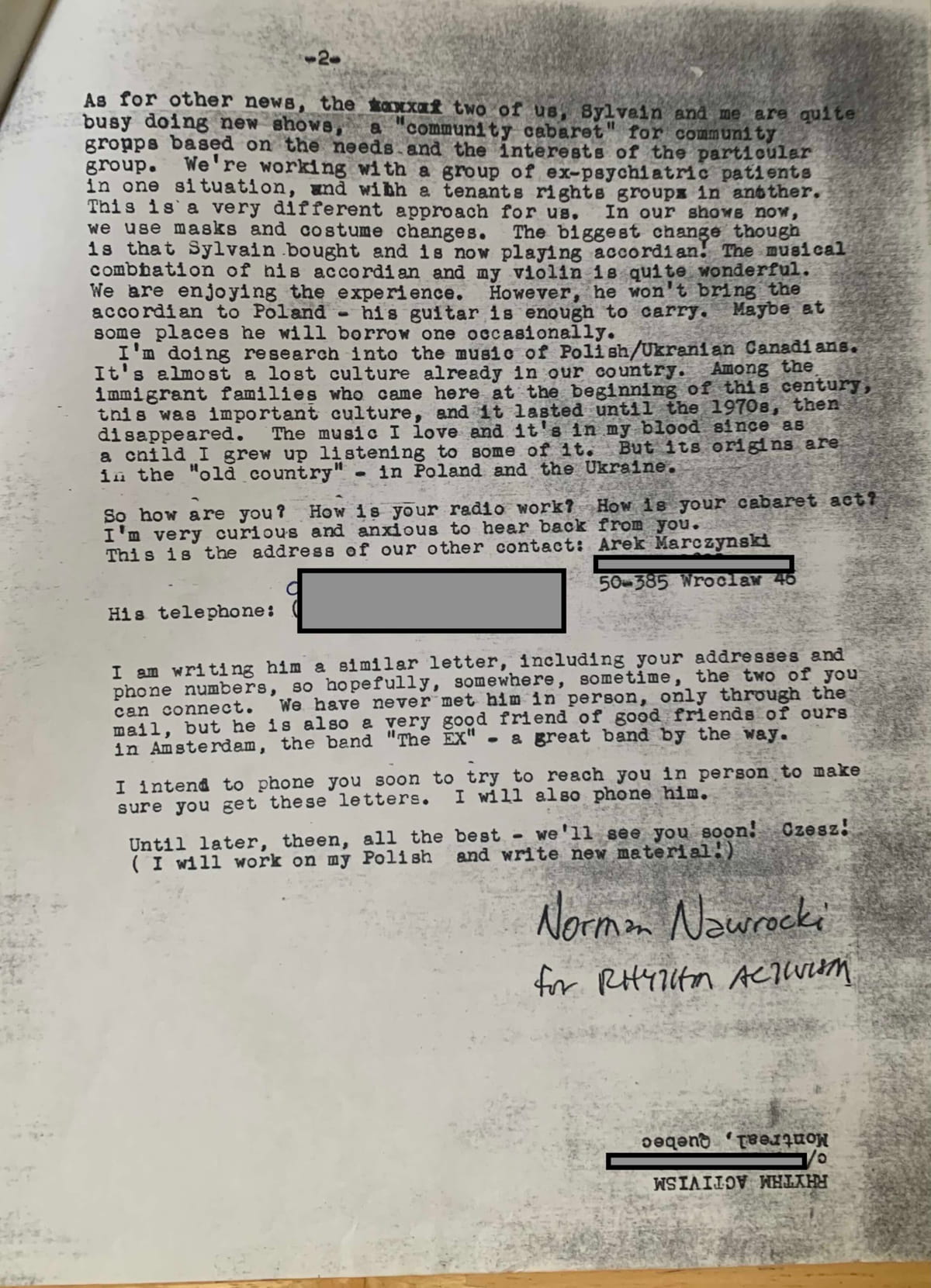
Arek Marczyński from Wrocław’s “Antena Krzyku” contacted Rhythm Activism through a mutual friend in the Netherlands, mailing copies of the zine, information about Polish anarchist groups and contacts that could help with shows in Wrocław and elsewhere. Rhythm Activism contributed an article to “Antena Krzyku” issue #7. In Kraków they were also dealing with Alma Art and its director Ewa Jurek.
Back in Montreal, Rhythm Activism met Piotr Ferster while the Piwnica pod Baranami cabaret troupe was visiting Canada. Norman and Sylvain gave him a cassette and asked about possibly playing Piwnica during their next trip, but no show was booked.
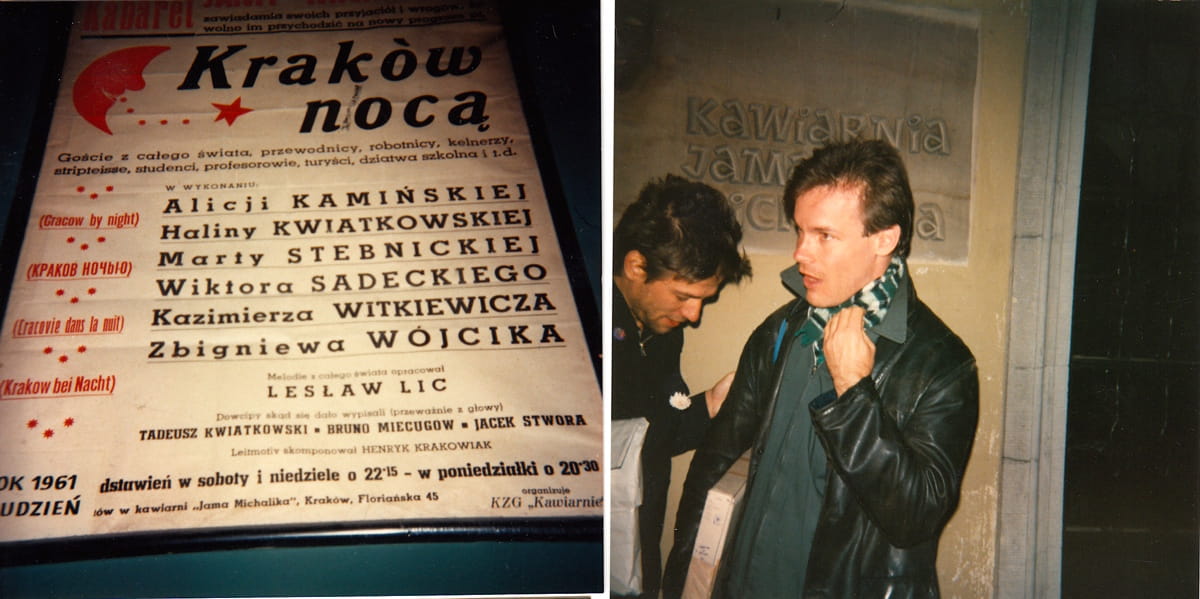
When Norman went back through his archive for this interview, one of his first memories stopped matching the photographs and notes. Rhythm Activism had visited Piwnica pod Baranami, taken photos on the stage and briefly seen Piotr Skrzynecki. Norman thinks he may even have recited a poem or two while messing around there as a tourist. They did not perform a concert at Piwnica pod Baranami.
The same applies to Jama Michalika. Norman and Sylvain visited it and took photographs, but Rhythm Activism did not play there.
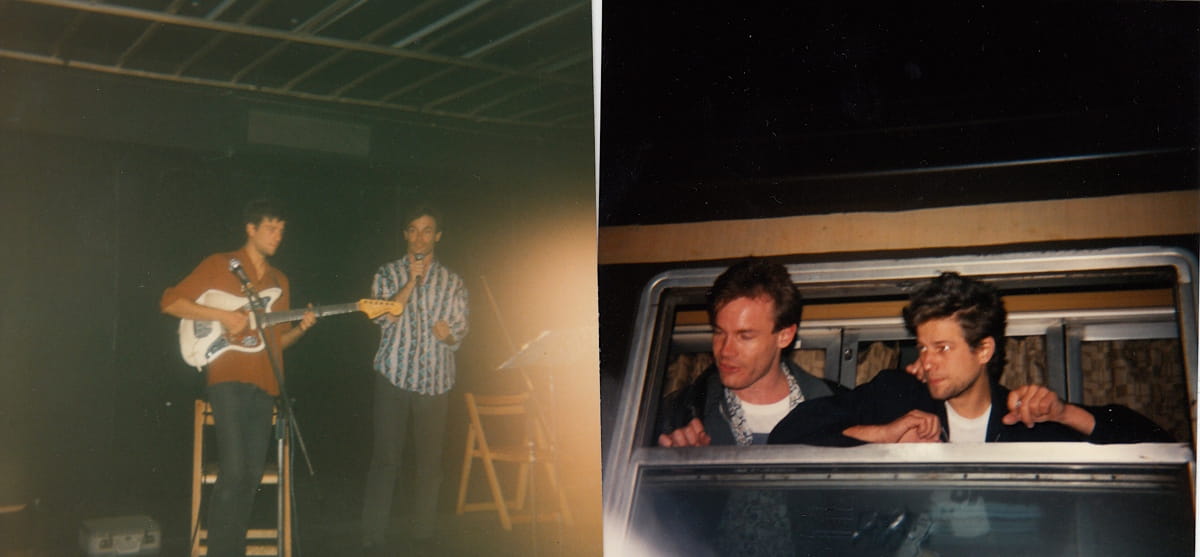
Another photograph genuinely shows them performing in front of two wooden chairs. Norman cannot identify the venue and does not want the picture assigned to one without evidence.
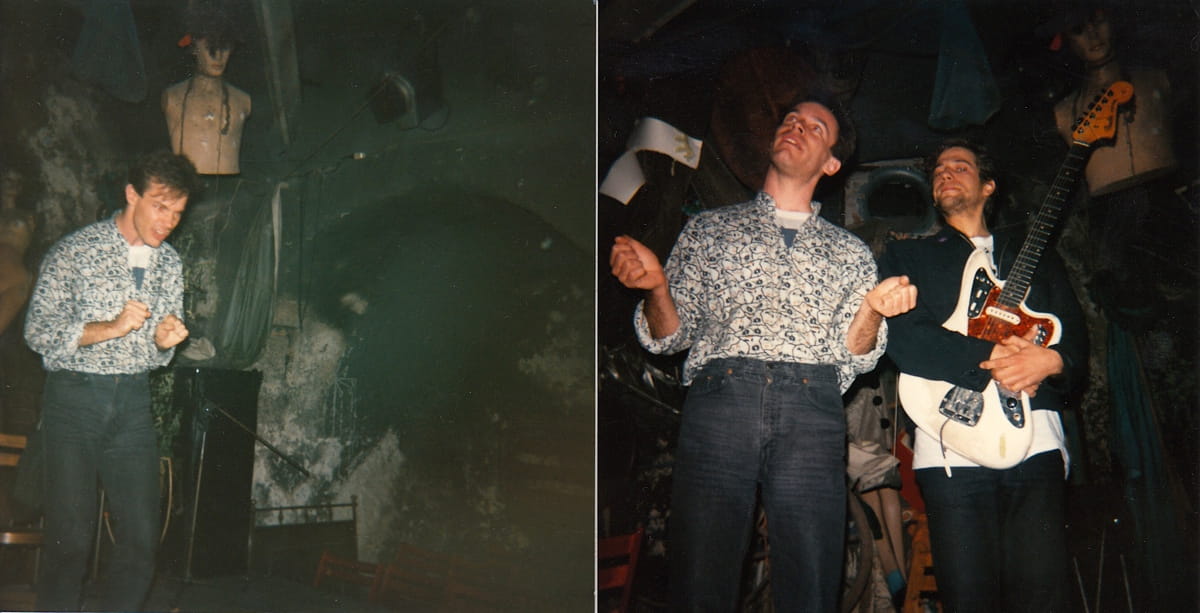
Rhythm Activism returned to Poland from 3 to 21 April 1990. They called the tour “Welcome to Capitalism Poland”.
They brought a new cassette, “Pierogies, Pasta & Liberty”, with songs in several languages. “Sto Lat” was part of the live set, and Norman thought their version would be an easy winner with Polish audiences. Other pieces included “Welcome to Capitalism Poland”, “Oh Poland”, “Jerzy Urbain”, “Modlitwa (Prayer)”, “Tamto / Lolek & Bolek” and “Nie ma”.
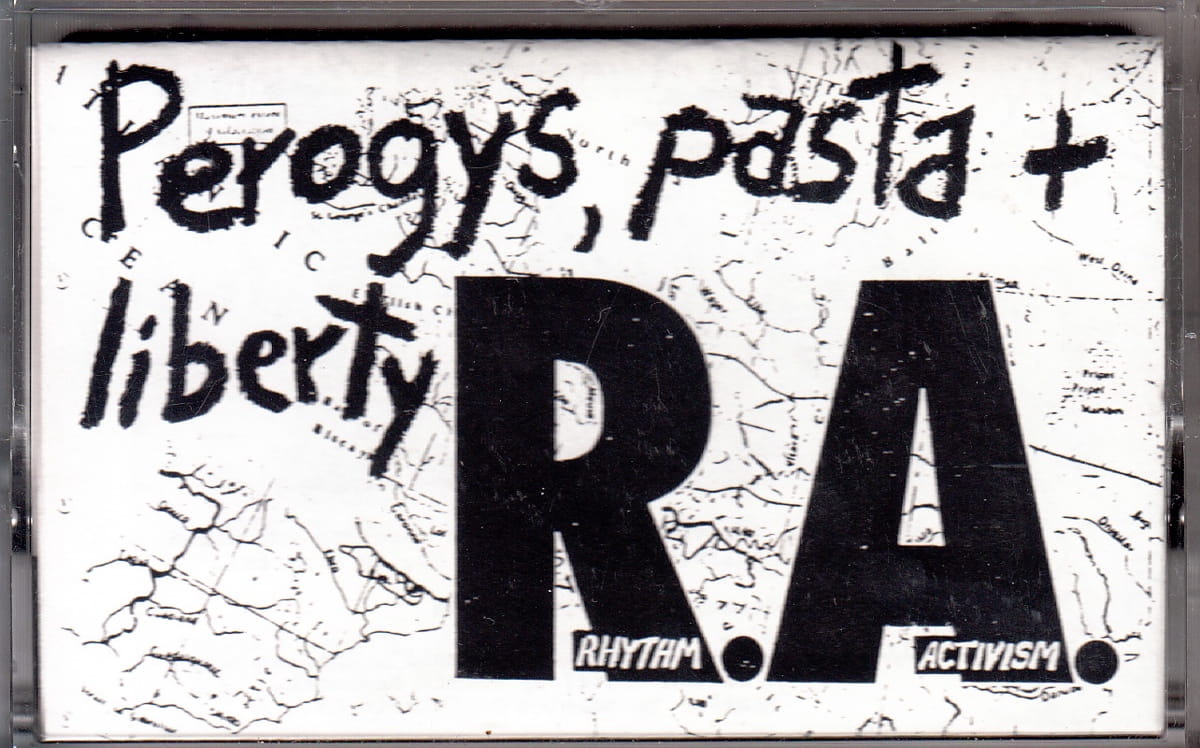
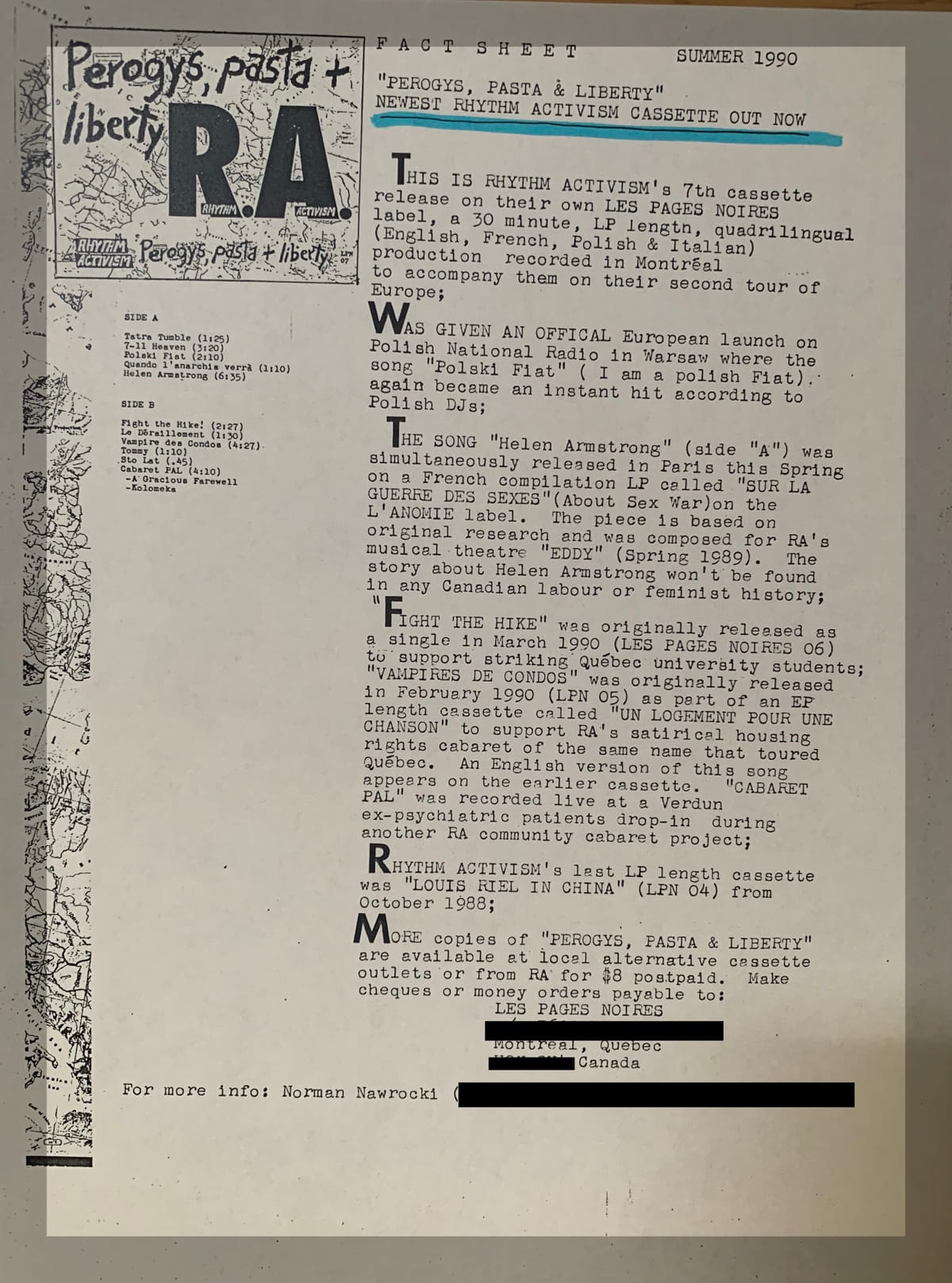
His surviving tour log is more precise than memory alone.
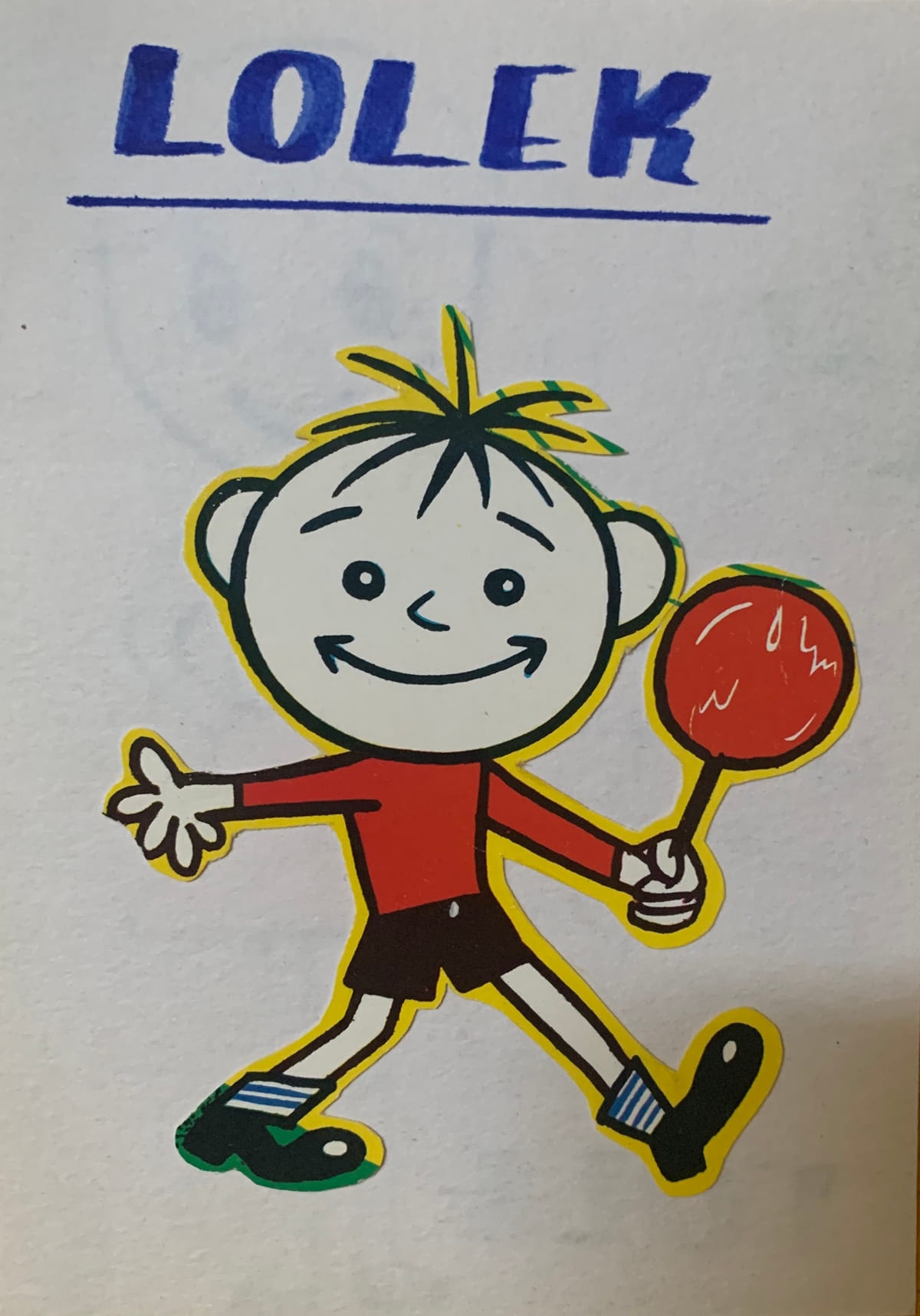
3 April: Rotunda, Kraków. Around 200 people. 200,000 złoty.
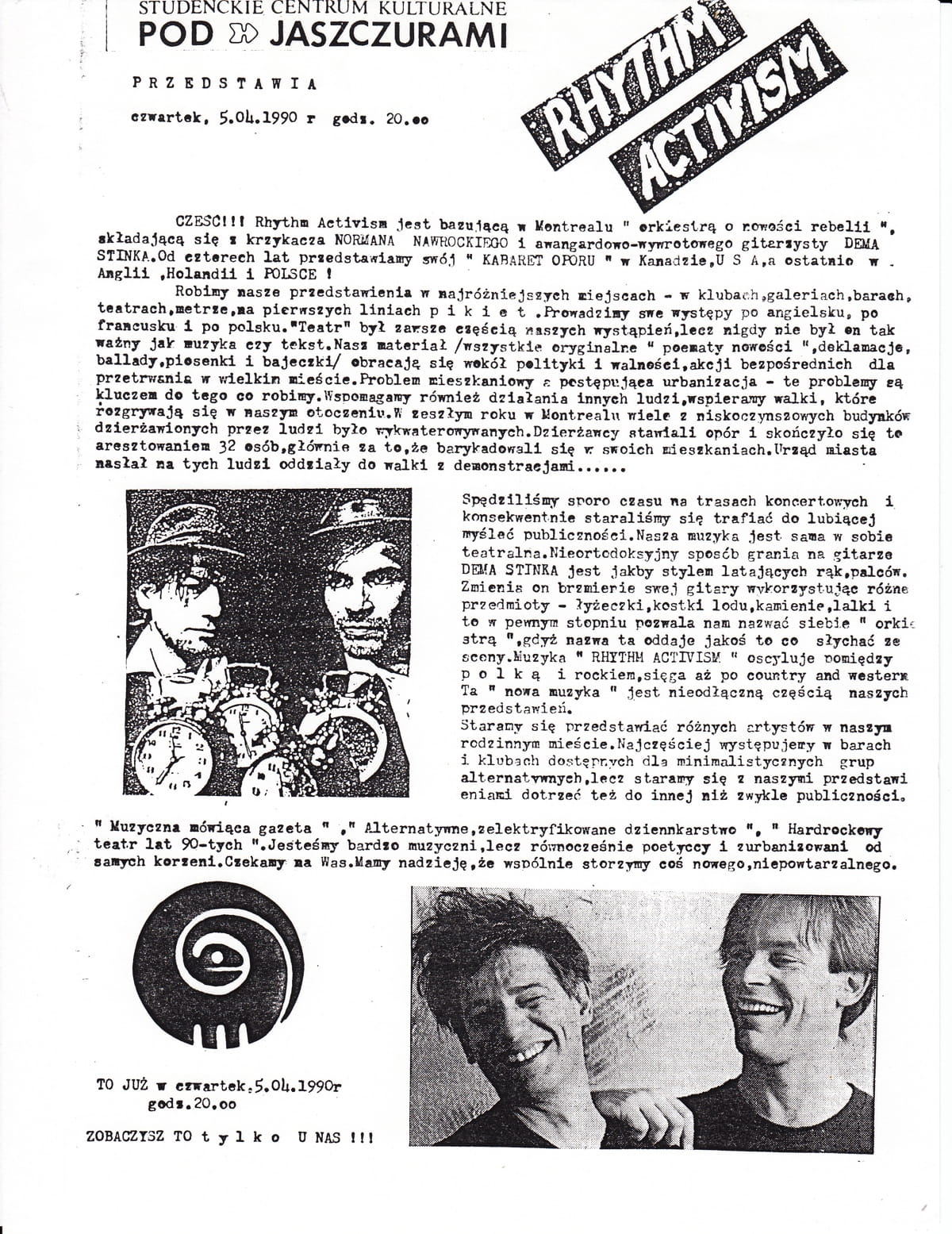
5 April: Pod Jaszczurami, Kraków. Around 100 people. 200,000 złoty.
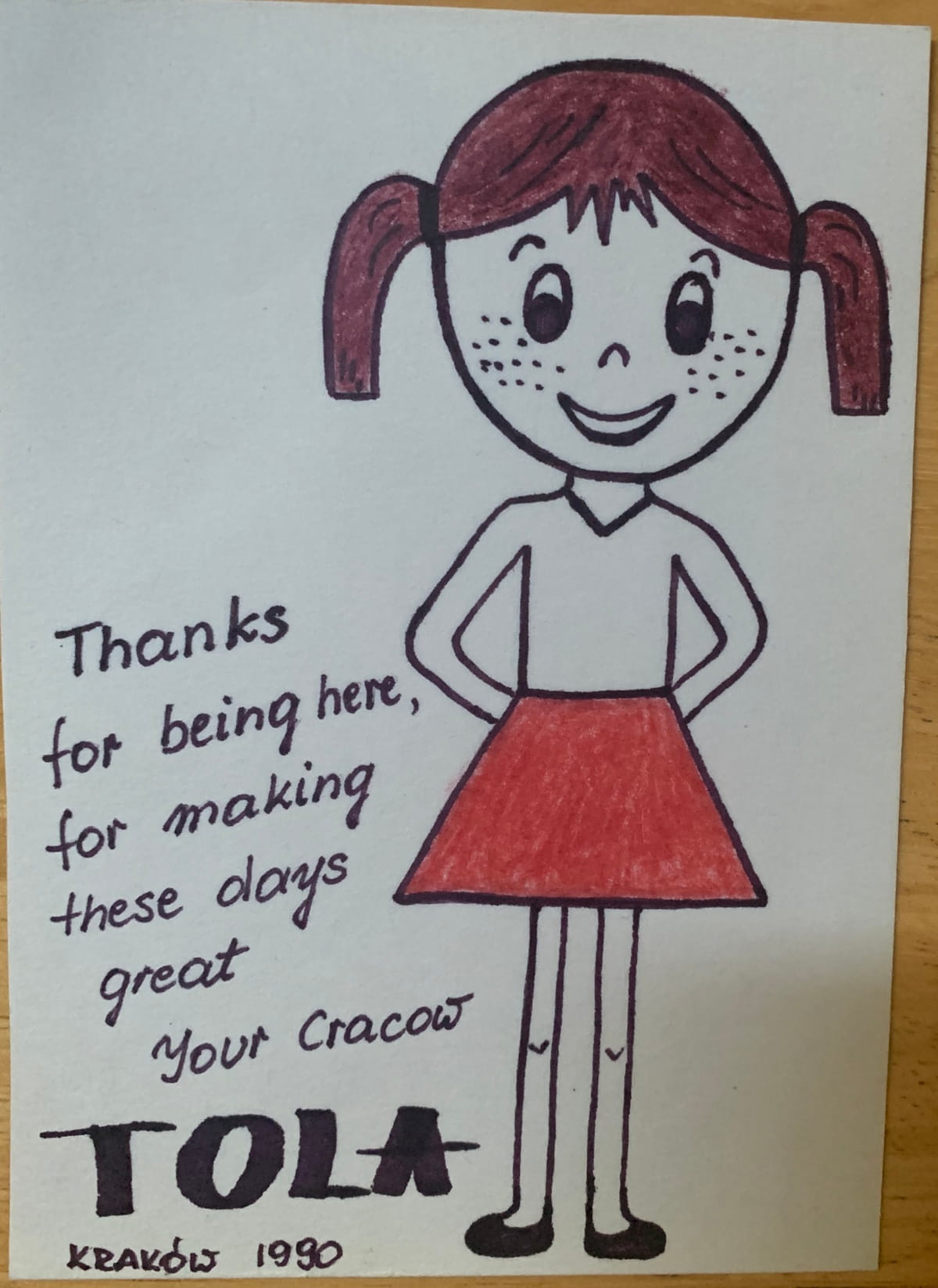
9 April: Warsaw. Polish Radio interview and the radio launch of “Pierogies, Pasta & Liberty”. 10 April: Riviera Remont, Warsaw. Around 50 people and 200,000 złoty. 11 April: Karuzela, Warsaw. Around 50 people and 200,000 złoty. 19 April: Club Best, Bielsko-Biała. Around 70 people, with train fare and lodging covered. 21 April: Kabaret OTTO / Kawiarnia O.K.O., Warsaw. Norman’s old notes leave a question mark beside payment.
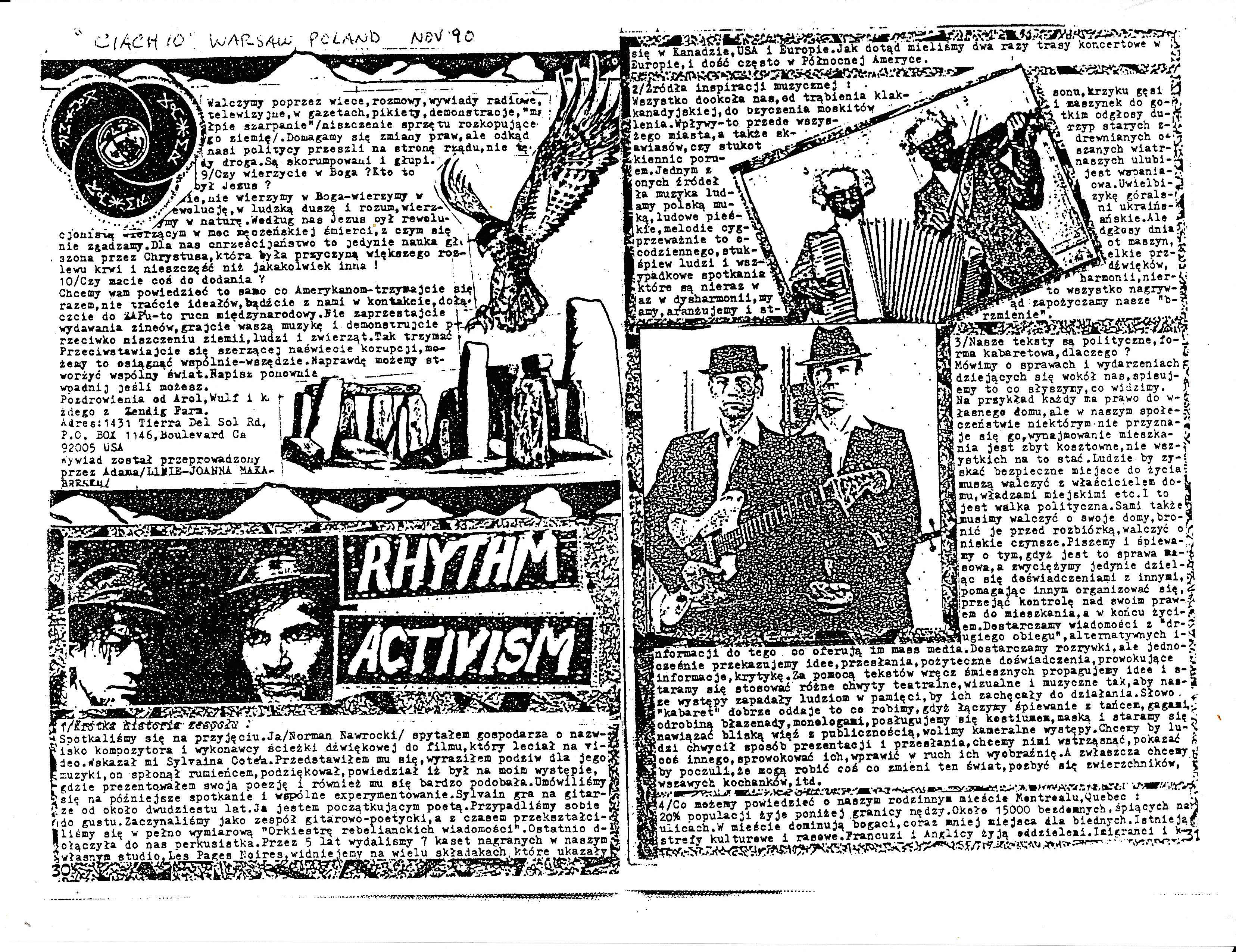
He also remembers a performance in a student residence connected with Jagiellonian University, though it does not appear in the same surviving dated list. Earlier plans had mentioned Gdańsk and other possible venues as well.
Eighteen months after the first Remont show, Norman saw more goods in shops, more Western products, more food, newer cars and people wearing clothes that were well outside Rhythm Activism’s budget. Prices were part of what he noticed too. His shorthand for the mood was blunt: “Buy, buy, buy, spend, spend, spend, work, work, work, so that they could spend some more.”
“Welcome to Capitalism Poland” turned those observations into cabaret. Consumer goods, Levi’s, imported electronics, cars, religion, emigration, housing and foreign investment all appeared in the set. Some people laughed and some were offended. Norman already worked with anti-poverty and tenants’ organisations in Montreal, and Rhythm Activism played benefit events connected with that work. He had seen expensive neighbourhoods and restaurants close to people sleeping outside, searching for food or living in overcrowded housing.
One Polish routine turned shopping into a prayer, with a character promising God that he would stop drinking and beating his wife in exchange for Western goods, Levi’s or an American car. Other pieces dealt with foreign companies buying businesses and property, housing costs and stories Norman was hearing about hazardous chemical waste being brought into Poland. He worried about unemployment, rising prices and who would end up owning property and resources as the economy changed, and remembers meeting people in anarchist groups who were organising around those issues. Those were Norman’s politics, and Rhythm Activism put them directly into the show.
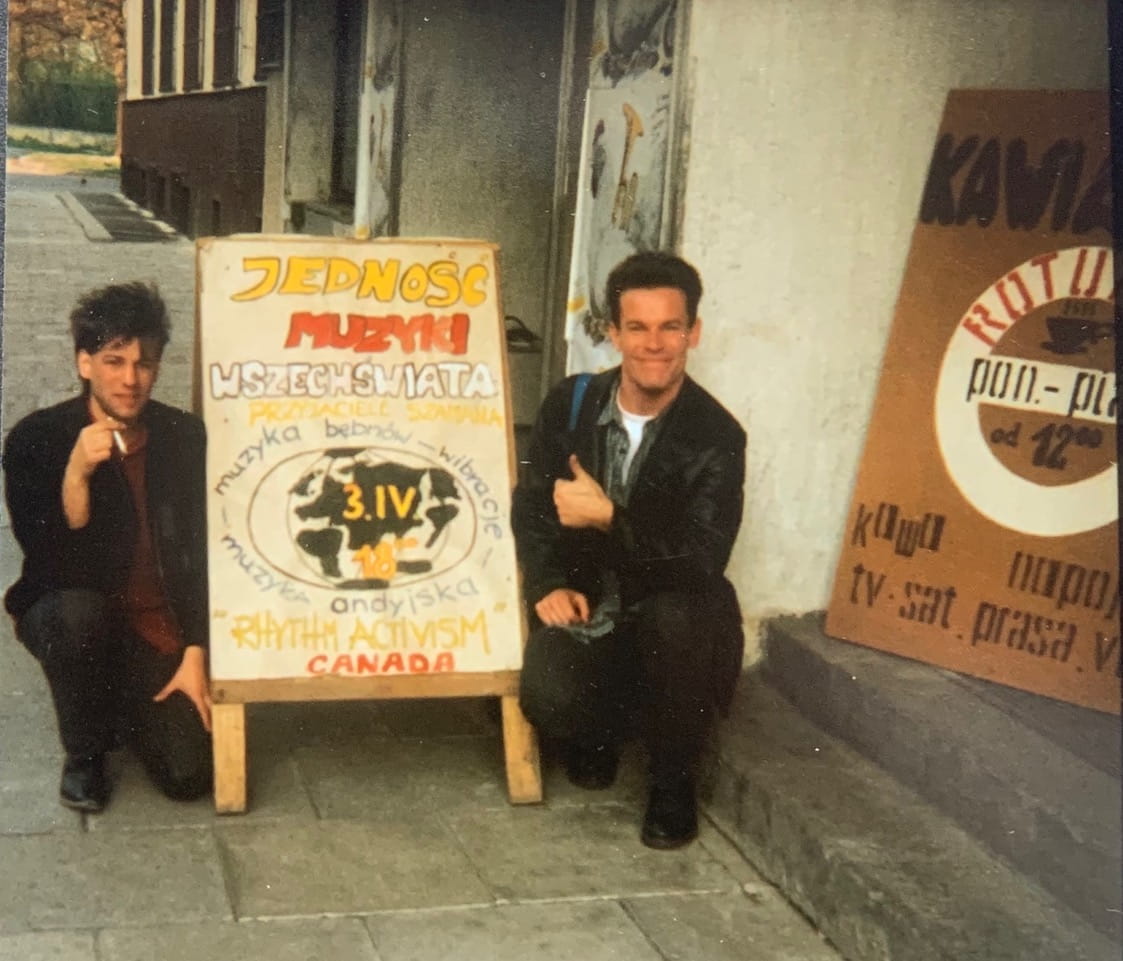
For promoters, the band’s requests stayed basic: a guitar amplifier, two vocal microphones, a student, punk or community venue, somewhere to sleep, food and enough money to reach the next town. A car cost too much, so Norman and Sylvain took trains, buses and taxis carrying knapsacks, violin and guitar. There was no tour van, driver or sound engineer.
Norman actually found entering Poland easier than some crossings into the United States, where border guards had searched their belongings, questioned them and sometimes gone through vehicles piece by piece. For Poland they travelled on visitor visas. Nobody caused problems over the instruments or demanded a formal invitation for a band performance.
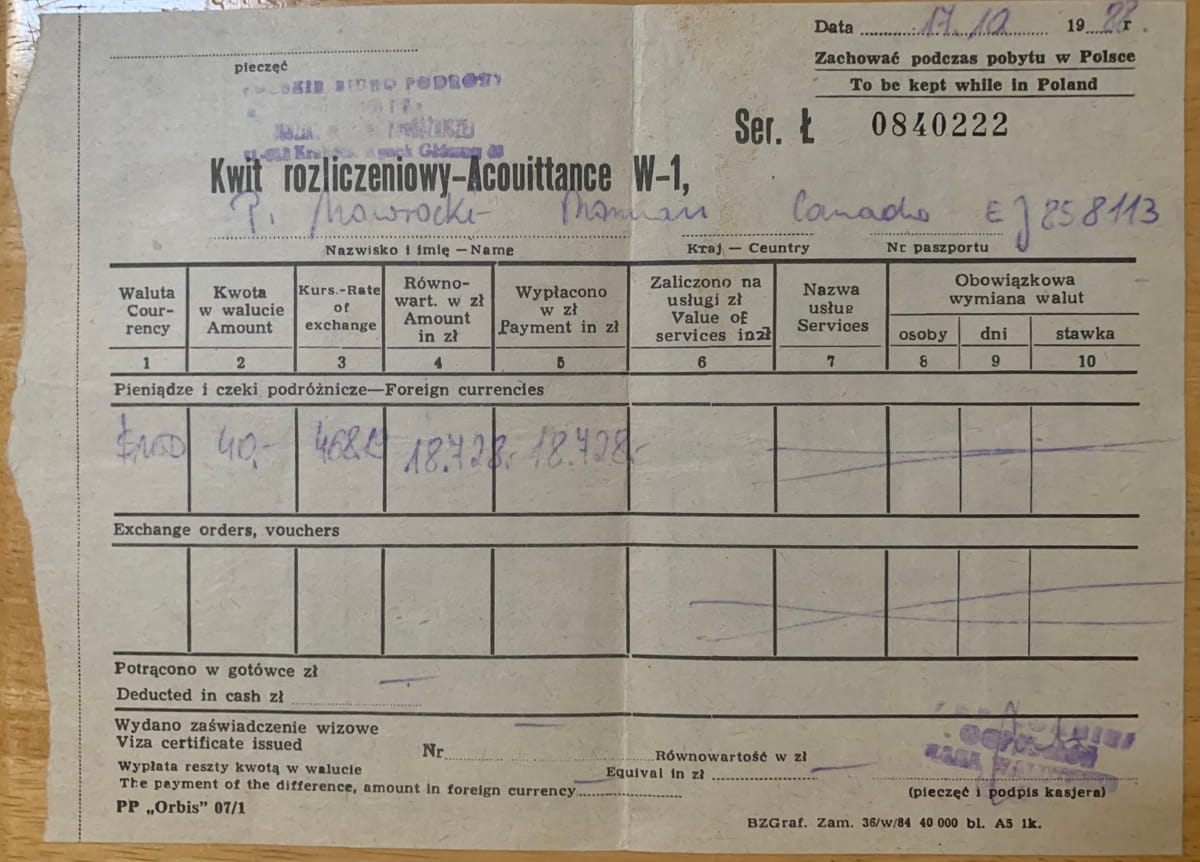
“And we paid no bribes to any border guards either.”
Promoters paid in złoty, which Rhythm Activism spent on trains, buses, food, accommodation, books, records, posters and art.
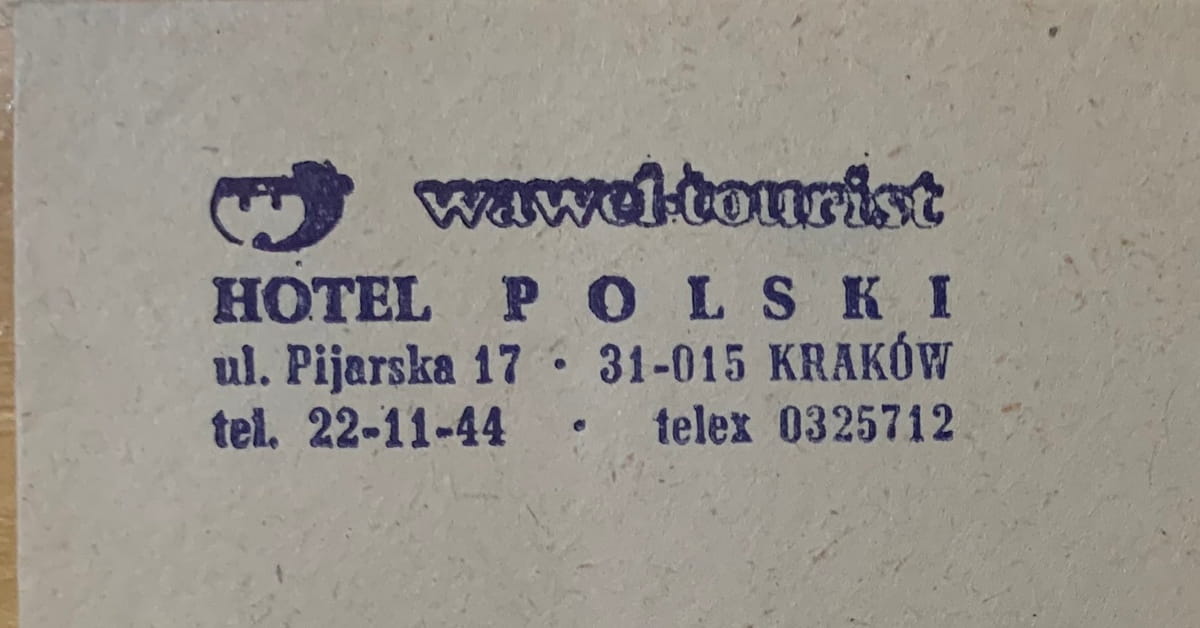
Foreign currency could stretch a long way. Norman remembers exchanging dollars on the black market and finding hotel rooms for both musicians at around ten US dollars a night.
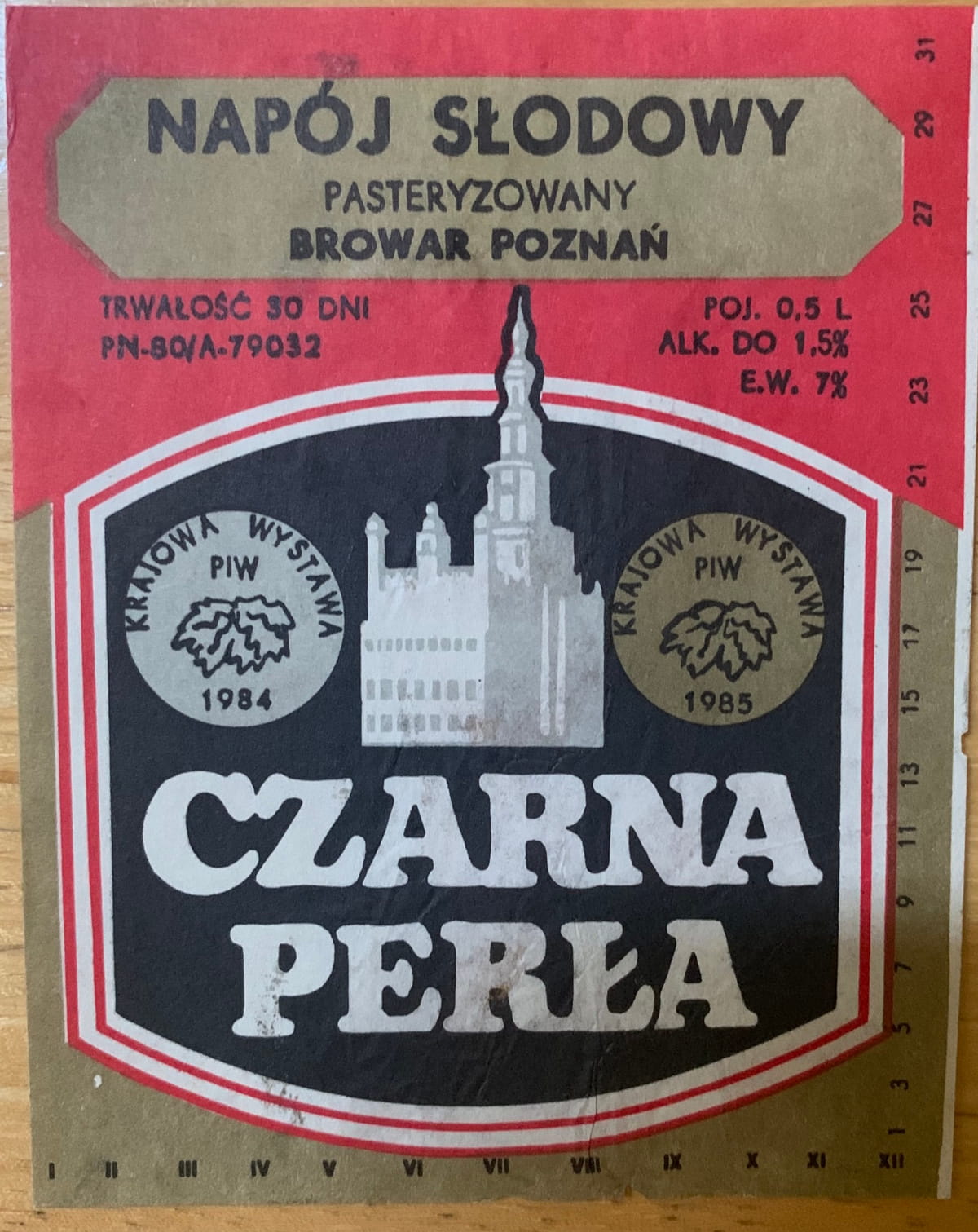
Other nights meant student dormitories with eight bunk beds and a wooden table in the middle. They ate often in milk bars: bigos, naleśniki with or without jam, cold spaghetti with milk and sugar, juice, poppy-seed rolls and pączki. They stood at counters beside workers in overalls or asked strangers if two free seats at a table were available. Norman already knew the habit of wishing people a good meal before eating and thanking them when leaving from his earlier family visits. In Kraków they occasionally spent more and went to a Hungarian restaurant that served vegetarian pancakes.
Even with cheap food and accommodation, the Polish dates could not cover the flights from Canada. Rhythm Activism were spending money to make the trip happen.
In Zakopane, Norman and Sylvain were sharing vodka in an old hotel room while a bedside radio crackled through Polish songs. The programme suddenly stopped and a voice announced that Germany had invaded Poland. Norman translated the announcement for Sylvain, and neither of them could tell whether the station had played an original archive broadcast from 1939 or a later recreation. The music eventually resumed, leaving them sitting there trying to work out exactly what they had just heard. Norman never forgot it.
DOA had also passed them Dezerter’s contact details. Norman remembers meeting the band, exchanging cassettes and getting on well with them, and Dezerter gave Norman and Sylvain white silkscreened shirts with a blue sunflower and an @ symbol. Norman initially told IDIOTEQ that Rhythm Activism had also played with Dezerter, but after checking the archive he withdrew that part.
“It could have been on the second tour and maybe we were a last minute addition or maybe we only played one or two songs before their show, or maybe we met up and played on the same bill at a festival in France or Germany or the Netherlands. . . . I can’t be certain anymore and can’t find the documentation in my archives.”
The bands later crossed paths while touring Europe, sometimes finding themselves one venue or one city apart. When they met, there were hugs and old conversations to pick up again. Norman kept the Dezerter shirt and wore it years later to see Hańba in Montreal, where he unexpectedly ran into Arek Marczyński again.
Arek’s connection to Rhythm Activism survives much more clearly in letters and print, including the band’s contribution to “Antena Krzyku” #7. In 1996, Nikt Nic Nie Wie released Rhythm Activism’s “Blood & Mud” in Poland as NNNW 45. Norman cannot remember exactly how the deal happened and suspects the route may have passed through Konkurrel, the Dutch label Rhythm Activism were working with at the time. Polish listeners wrote to the band after buying the cassette.
Rhythm Activism were handling their own recording, touring and communication, and Norman did not keep a detailed map of how every cassette moved from one country or label to another. “Garaż” reviewed “Blood & Mud” in Poland. The album’s political context included Chiapas, which Norman discussed elsewhere, but that part of the story is outside the focus here. Pasażer Records later put a Rhythm Activism song on “Pasażer HC/Punk #13” in 1999, and again Norman cannot reconstruct exactly how it reached them.
Rhythm Activism lasted fourteen years. Across his other work, Norman puts his own total at roughly 70 records and twelve bands, with labels at different points including Konkurrel, Sudden Death, G7 Welcoming Committee and Howl Arts. Other bands included DaZoque! and Crocodile, and he also toured with groups including The Ex and Dog Faced Hermans.
Moving from Vancouver to Montreal helped him keep doing it because rent, rehearsal rooms and everyday costs were cheap enough for musicians to play constantly without much money. Norman remembers Godspeed You! Black Emperor and Arcade Fire before either band had an international audience, when their members were simply other people playing around Montreal. Angine de Poitrine were part of the same world for him. Cheap rent is still part of the equation: he now lives in a non-profit, self-managed housing co-operative.
Norman and Vivian grew up with Polish and Ukrainian family histories that their parents did not always feel safe advertising.
Their mother’s Ukrainian family had faced discrimination and workplace abuse after arriving in Canada, and first names were changed to make them sound English. Wasyl became Bill. Marusya became Mary. Norman remembers the insults people used: “dirty Bohunks”, “stinking garlic-eating Ukrainians”, “damn foreigners”. His mother told him not to tell other children that he was Ukrainian, so for a while he called himself “Austro-Hungarian” because it stopped people asking more questions.
Their father was mocked at work for his accent and Polish background. Inside the family home the children still heard Polish, Ukrainian and English and celebrated two Christmases. Their working-class Vancouver neighbourhood had families with English, Italian, Portuguese, Chinese and other backgrounds living beside one another. Their parents wanted the children to succeed in English-speaking Canada and did not teach them Polish or Ukrainian fluently.
Norman and Vivian grew up pronouncing their surname “NA-ROK-EE” because that was how their parents used it in Canada, and some classmates thought the name was Japanese. Norman learnt the Polish pronunciation later when people corrected him during visits to Poland. He describes himself as Polish-Ukrainian first and has never felt strongly attached to a simple Canadian identity.
His 2026 memoir, “The East End Rules: An East Van Memoir”, published by Black Rose Books in Montreal, covers his life up to the age of 22. He is now researching a novel that reaches back around 150 years through the family’s Polish, Ukrainian and Canadian history, going through letters, photographs, books, newspapers, magazines, journals and archive material, and he hopes eventually to find a Polish publisher for it.
Songs keep turning up in that research. Norman has been reading about and listening again to pieces including “Warszawianka” from 1879, “Rota” from 1910 and “Bal na Gnojnej” from 1934, and some may eventually find their way into The Nawrockis’ improvisations.
Traditional music had already been moving through Norman’s bands for years. Rhythm Activism rearranged Ukrainian songs for electric guitar, violin, bass and drums, sometimes speeding them up considerably, and Norman remembers audiences dancing to them in Berlin and New York, including venues where people told the band the audience usually stood still. “What is this crazy danceable music?”
He also spent time playing in a klezmer band in Montreal, where arguments over the national ownership of melodies could go in circles. One person would insist, “No, this song is Polish, I know for a fact.” Someone else would answer, “This one is Ukrainian, I swear.”
“Music defies borders. So do we.”
The Nawrockis started with more recognisable Polish and Ukrainian traditional songs before their improvisations grew looser. By “Thrunkit!”, Vivian’s first full-length on drums, they were already leaving larger spaces for whatever happened in the studio. “Kapusta” still carries short pieces of older melodies: a bar, a chord change, a refrain, a little motif or an opening figure that Norman recognises from decades of family songs, records, radio, touring and live performances.
His collection at home runs to thousands of LPs, CDs and cassettes. During an improvisation the thought can be as simple as “Quick, find that song! Fit in it’s hook. Somehow, somewhere!” He also jokes about trying to get enough garlic, onion and kapusta into the music. “Eat Your Kapusta” has a repeating figure that reminds him of a Polish folk melody, though he cannot put a title to the exact tune. “Karrots and Kapusta” brings up specific pictures for him: fields and forests seen through the window of a Polish train, the inside of Wawel and the shoreline of the Wisła.
Vivian puts her own relationship with that heritage more simply: “Drumming, for me, is me. When Norman plays the violin, I do hear Polish-Ukrainian melodies that feel familiar to me.” Then she listens for the part she can add.
Her adult life had mostly been outside bands. She studied nursing, later completed a master’s degree and never followed rock scenes closely, while piano, jazz improvisation and ukulele stayed in her life without becoming a professional music career. That made one early comparison of her drumming especially funny: “My first thought was ‘who is Meg White?'” Vivian went online, looked Meg White up and listened to The White Stripes. Then she understood the compliment.
That lack of scene baggage is still there when she plays with Norman. She listens for his melody, his rhythm and familiar Polish-Ukrainian turns without trying to categorise every reference. Their father had played Chopin and Polish songs, then moved into his own melodies. Their mother sang Ukrainian songs. Norman has spent decades carrying both through punk, cabaret, experimental music, klezmer, spoken word and improvisation.
Today Norman calls The Nawrockis his “main musical constant”.
“The Nawrockis is now my main musical constant. And it’s all connected by that initial love and inspiration handed down from our parents and the fact that I still have cheap rent (in a non-profit, self-managed housing cooperative)!”
Vivian and Norman Nawrocki also recently sat down with Nash Holos Ukrainian Roots Radio to talk through the story behind Kapusta, the ideas that shaped the album, and the Ukrainian-Polish connections running through it. Watch the full conversation below.