


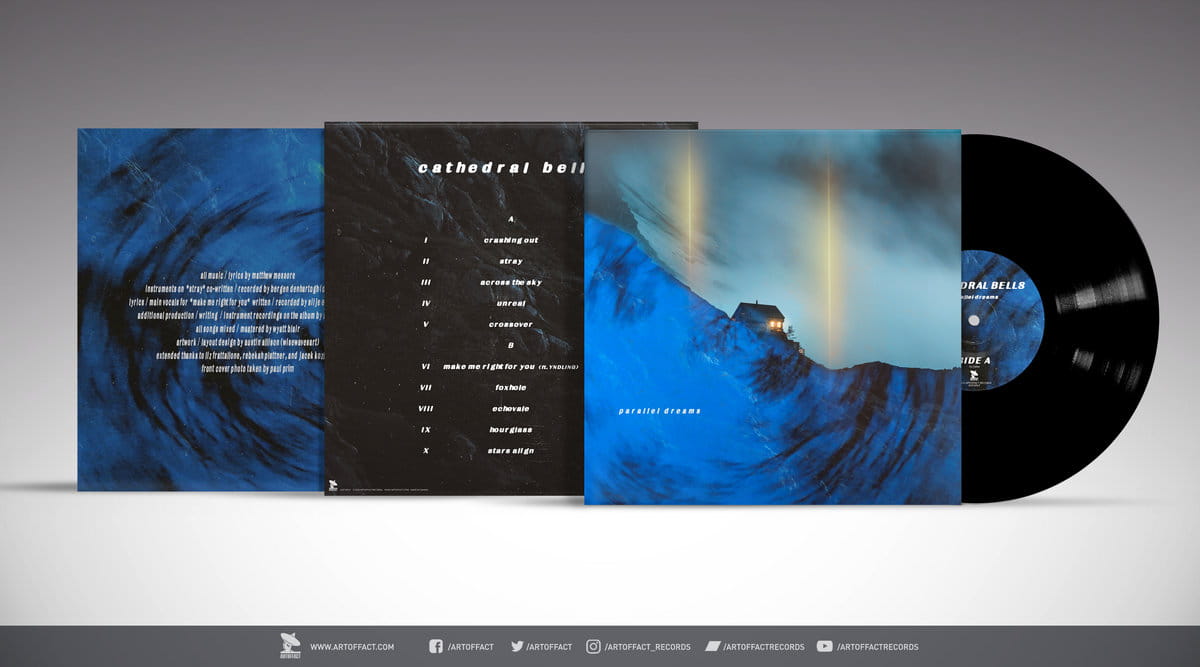
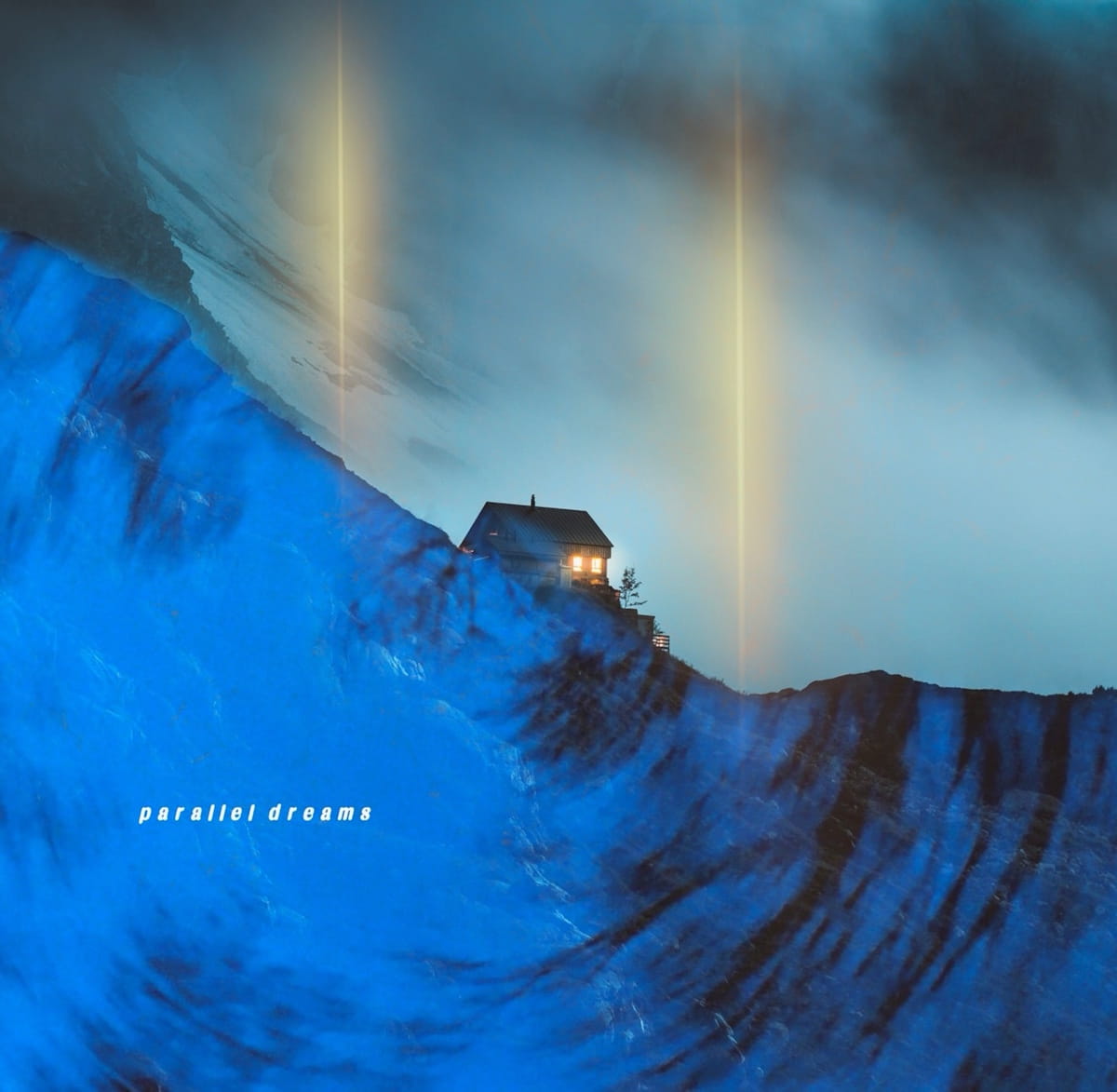
Three years ago, Cathedral Bells were mapping out a hazy interior world—pulling from dream pop and post-punk, letting songs bloom slowly, almost reluctantly. That language is still here, but “Parallel Dreams” feels like it’s been thinned out, left alone longer, pushed closer to the point where songs almost disappear before they decide what they are.
The record, released April 10, 2026 via Artoffact Records, took shape over nearly two years, in a series of returns, false endings, and quiet revisions. Matt Messore describes it as a process of letting songs sit in unfinished states—sometimes for months—until something small shifted.
“This record took a long time to become what it is, and not in a deliberate way,” he says. “A lot of the songs were started a couple years ago and just kind of sat in different states—some of them felt finished at the time, some of them didn’t make sense anymore, and a few of them I almost completely abandoned.”
What changed them wasn’t overhaul, but detail. A layer removed. A single tone introduced. A tempo nudged just slightly off where it was.
“Sometimes months after not opening the session, something would click in a really small way that changed the whole direction.”
That patience runs through the entire record. Songs don’t announce themselves. They hover, stretch, then lock into place almost by accident. Messore leaned into that uncertainty instead of correcting it. “A lot of the process was just sitting with things longer than I’m used to—not forcing them into a finished state, but letting them exist half-formed until they kind of revealed themselves.”
The shift toward slowcore shows up in how little the songs insist. Guitars and synths still blur together, but there’s more space between them now. More air. The band worked against their own instincts at times, stripping things back when they had already spent hours building them up.
“There were definitely moments where things were overbuilt,” Messore admits. “A few tracks ended up with too many layers competing for attention, which buried what made them special.” Fixing that meant removing things they had grown attached to. “Once we did, the core of the song felt much clearer—it was a reminder that the song was often already there, it just needed space.”
Wyświetl ten post na Instagramie
That approach reshaped the emotional weight of the record. A pad taken out could expose something more fragile. A distant guitar line could tilt a song into a different register entirely. Even minor tempo changes—just a few BPM—shifted how the songs felt internally.
“There wasn’t really a clear vision for the record at the start,” he says. “It only started to make sense once a few of the songs began to line up with each other, and even then it kept shifting.”

By mid-2024, the sequence began to settle. Some tracks had been there from the beginning—“Across the Sky,” “Crossover,” “Make Me Right for You,” “Foxhole,” “Hourglass,” and “Stars Align.” They didn’t need much rebuilding, just subtle adjustments so they could live alongside newer pieces. They became anchors, holding onto earlier versions of the band while everything else moved around them.
Others changed more drastically. “Stars Align” and “Make Me Right for You” were restructured repeatedly, reshaped until they fit the internal logic the album slowly developed. The version that exists now isn’t the result of a single idea, but accumulation—small corrections, second guesses, decisions made late.
Even toward the end, the doubt shifted.
“Toward the end, the uncertainty was less about individual songs and more about whether they all belonged in the same world,” Messore says. “We spent a lot of time on the flow and transitions to ensure the record felt cohesive without sounding too repetitive.”
That cohesion comes from trusting the differences rather than smoothing them out. The record moves carefully, but not uniformly. Each track sits at a slightly different distance from the listener—some closer, some blurred out at the edges.
Messore doesn’t present it as a fixed statement. If anything, it feels like a record about not having one.
“The through-line ended up being that feeling of not being entirely sure where something is going, but trusting it enough to keep following it,” he says. “Looking at it now, it feels like the record is more about that process than any one fixed idea—just the accumulation of those small shifts, second guesses, and moments where things suddenly felt right.”
“Nothing on it came together quickly, and I think you can feel that in the way it moves.”
🔔 IDIOTEQ is ad-free, independent, and runs on one person’s time. If you want it to stay that way: DONATE via PayPal 𝗈𝗋 SUPPORT via Patreon.
Stay connected via Newsletter · Instagram · Facebook · X (Twitter) · Threads · Bluesky · Messenger · WhatsApp.