

There’s a moment in “F Me Tender” where the language drops any metaphor and just states it: “I starve myself.” No distance, no cover. But the song isn’t interested in documenting illness as a fact. It circles something else—hunger as a signal, a body asking for something it never received.
Ellen Wallace keeps coming back to that distinction. “I think what I really want to talk about is the feelings above the illness,” she says. “Feed me with your love, I wanna get full of love.”
The physical collapse is there, but it points somewhere deeper—toward a need for safety that never settled in. Growing up around violence leaves its mark in ways that don’t switch off later. “When I say ‘my safety feels so boring for me’, it means that I was raised in such an unsafe space… and now I have to tell my body that safety is a very nice place to be actually.”
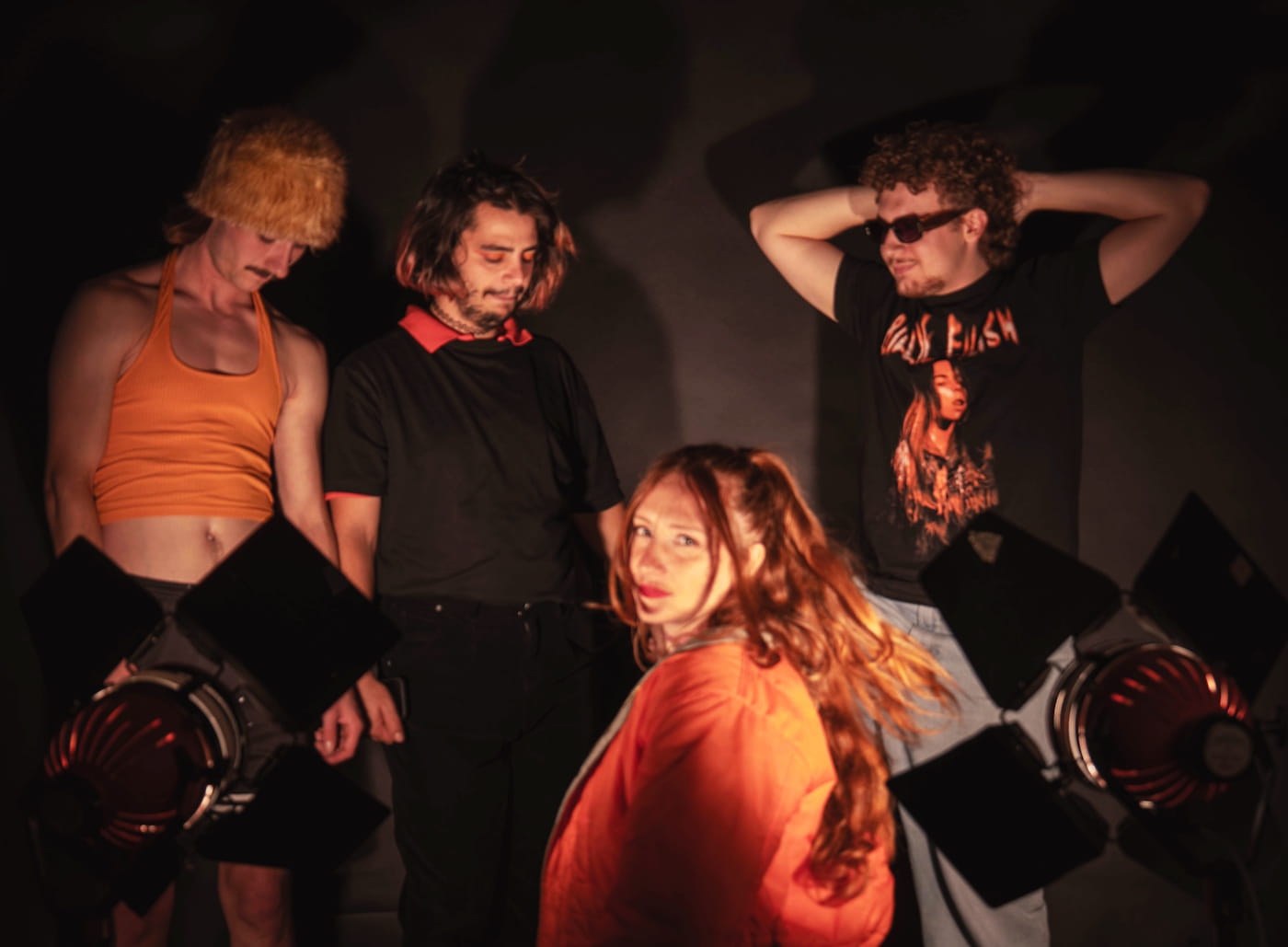
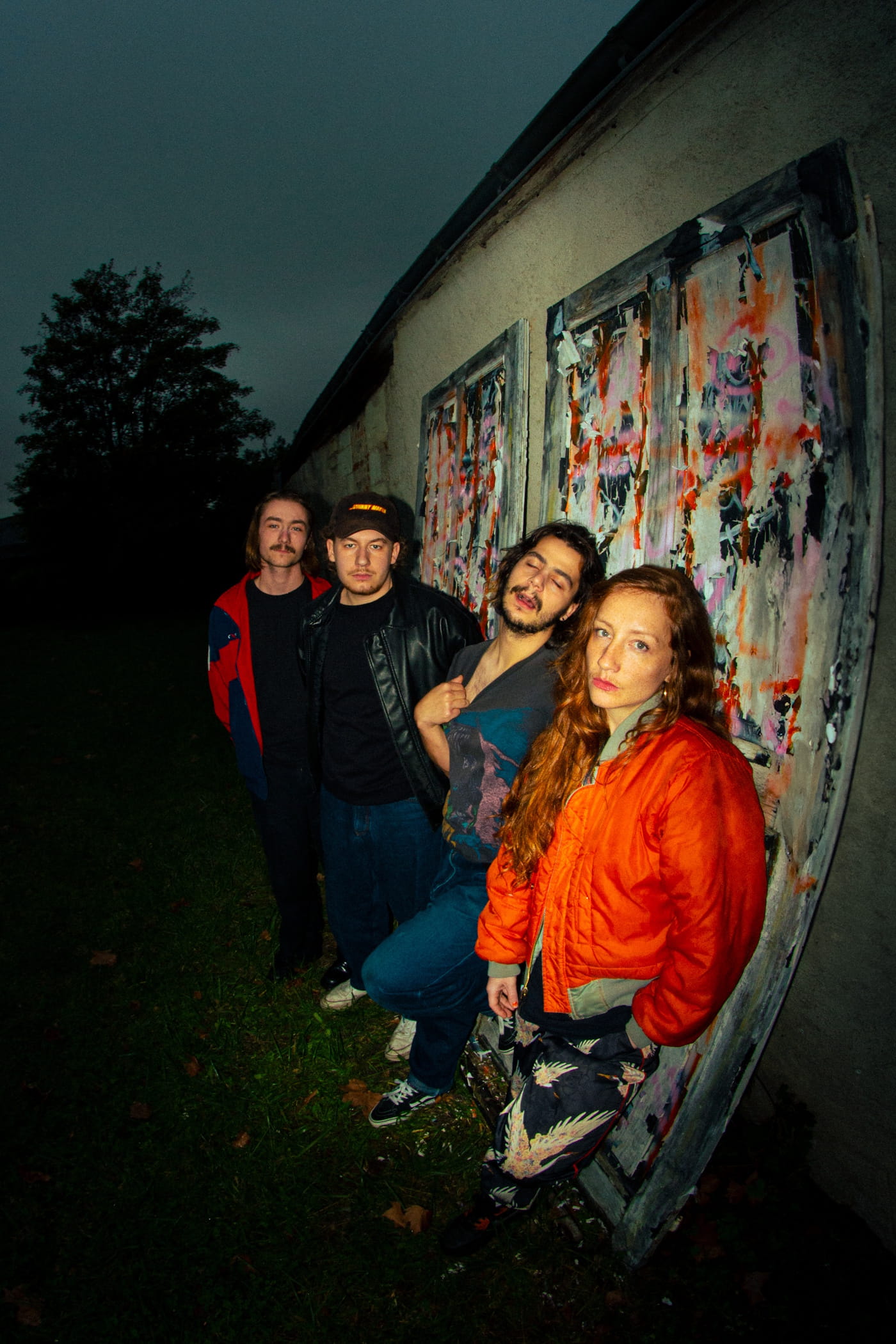
“SEXY BUT SAD”, the debut EP from Ellen and the Boyz, sits inside that tension. Seven tracks, released via Monomaniac on April 10, move between tight post-punk structures and something looser, shifting from airy pop moments into sharp turns of noise and pressure. The band builds everything collectively, instinctively, pulling from the UK circuit—Idles, Ditz, Fontaines D.C.—but never settling into imitation. The movement matters as much as the sound. It’s meant to hit in the body.
Wyświetl ten post na Instagramie
Wallace’s writing keeps returning there too. The body as archive. The body as problem. The body as something shaped by outside forces—patriarchy, expectation, violence—and then expected to perform anyway. “I am deeply connected to my physical body, where all sensations and emotions come from,” she says. “So yeah we can say that I write about my body.” Sometimes that turns into direct confrontation, sometimes into sarcasm, just to make it bearable to say out loud.
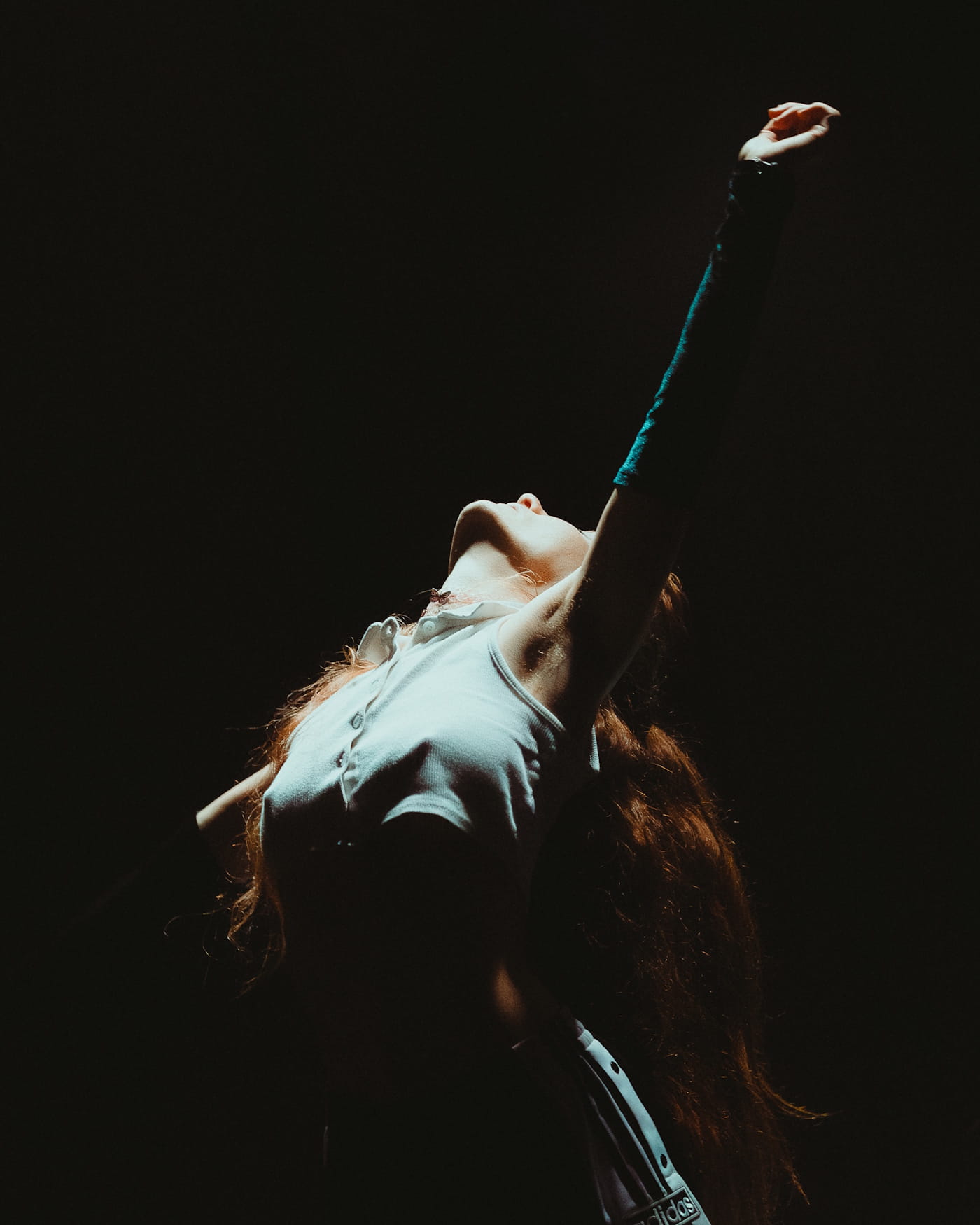
On stage, it doesn’t translate as confession. Not exactly. There’s a distance, but it’s not cold. “Being able to say things to people who are listening is part of a healing process,” she says, then pulls back from the idea. “But I believe that when you’re on stage… this is not the place to do it.” What happens instead is closer to a shared discharge. “It’s to try to create a collective catharsis more than personal.” The songs aren’t there to fix anything for her. They’re there to open something up in the room, for whoever needs it.
Wyświetl ten post na Instagramie
That line—between processing and performing—never fully settles. Some nights it connects, some don’t. “The bad gigs are when it’s fake in the body,” she says. “When it’s not coming from the body.” Wallace’s background in circus and theatre shows up here, not as spectacle but as control. She knows how to move, how to hold attention, but the real work is finding something that feels true each time, even when repeating the same words.

Across the EP, the body keeps reappearing in different states: damaged, exposed, shaped by expectation. “SEXY BUT SAD speaks to the paradox of our generation,” she says.
“The world is burning, and we’re taking selfies.” There’s anger in that, but also recognition. A generation that grew up inside violence—structural, domestic, environmental—and is only now starting to name it. “We are sexy because there’s beauty in trying to show ourselves as we are… with all our flaws, scars, and traumas.” At the same time, the pressure hasn’t gone anywhere. Stay young. Stay desirable. Stay visible.
Wyświetl ten post na Instagramie
The word “sexy” splits in two for her. On one side, it’s about showing up as you are, scars included. On the other, it’s the constant demand to stay desirable, to never age, to never fall outside the frame. “It’s kind of sad trying to stop aging or feeling deeply anxious about not being sexy anymore,” she says. Social media sits right in the middle of that contradiction—warping self-image while connecting people across it.
“I feel sexy but and sad,” she says. “I feel profoundly confused about the world we live in and about my own life.” That confusion is where the songs start. Not as answers, just as a place to stand and describe what it feels like from inside. “I’m as many of us… feeling really fucked up inside, but also hypersensitive and aware about the fact and the reasons I’m like that.”
There’s still something that keeps it moving forward. People protesting. “No kings.” A sense that something is shifting, even if slowly. “What gives me hope is that people stand against fascism… what gives me hope is my daughter.” She mentions the election of Bally Bagayoko in Saint-Denis. Small signals that not everything is locked in place.
The band itself came out of that same need—to build a space where all of this could exist without being cleaned up. Ellen and the Boyz formed around that idea of catharsis, not as a slogan but as a method. Songs about violence, love, eating disorders, toxic relationships—stuff that doesn’t resolve neatly—played loud enough to make it physical.
The reference points that fed into it are scattered but obsessive. Fontaines D.C., Idles, Ditz, Sorry, King Krule, Lana Del Rey—periods of listening to the same songs on repeat until they settle somewhere internal. Kae Tempest’s writing, “simple but brutal.” Films like “Eternal Sunshine of the Spotless Mind” and “Into the West,” memorized down to the dialogue. Artists who create something strong enough to pull you through a bad stretch. “I get very very linked to people that I don’t even know but who create something that makes me wanna live,” she says. “I’m just a random obsessive fan.”
“SEXY BUT SAD” holds that same kind of attachment outwards. Not as a solution, not even as comfort. More like a shared condition.
The EP is out now on Monomaniac, on CD and digital, with seven tracks that will get you hooked instantly.
🔔 IDIOTEQ is ad-free, independent, and runs on one person’s time. If you want it to stay that way: DONATE via PayPal 𝗈𝗋 SUPPORT via Patreon.
Stay connected via Newsletter · Instagram · Facebook · X (Twitter) · Threads · Bluesky · Messenger · WhatsApp.