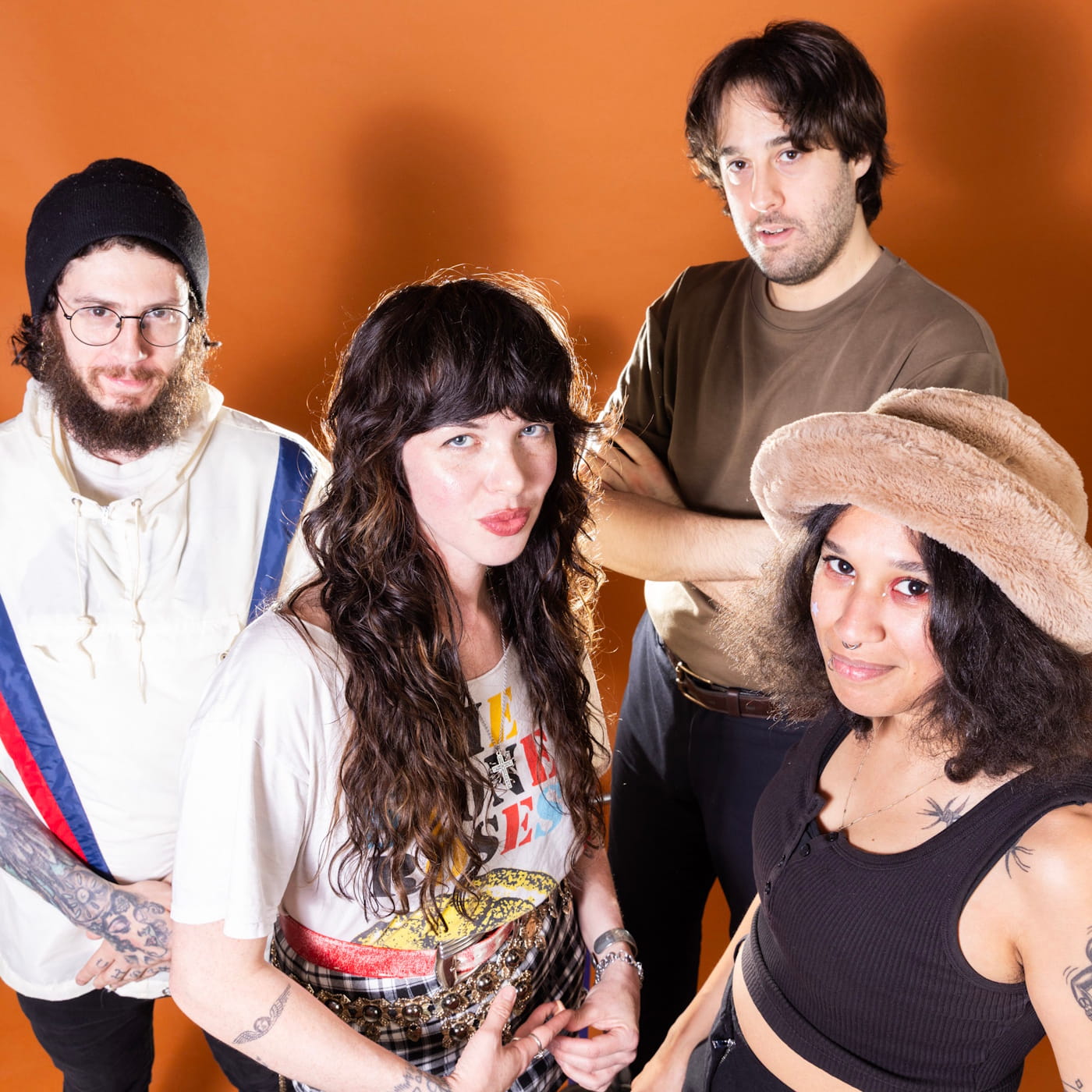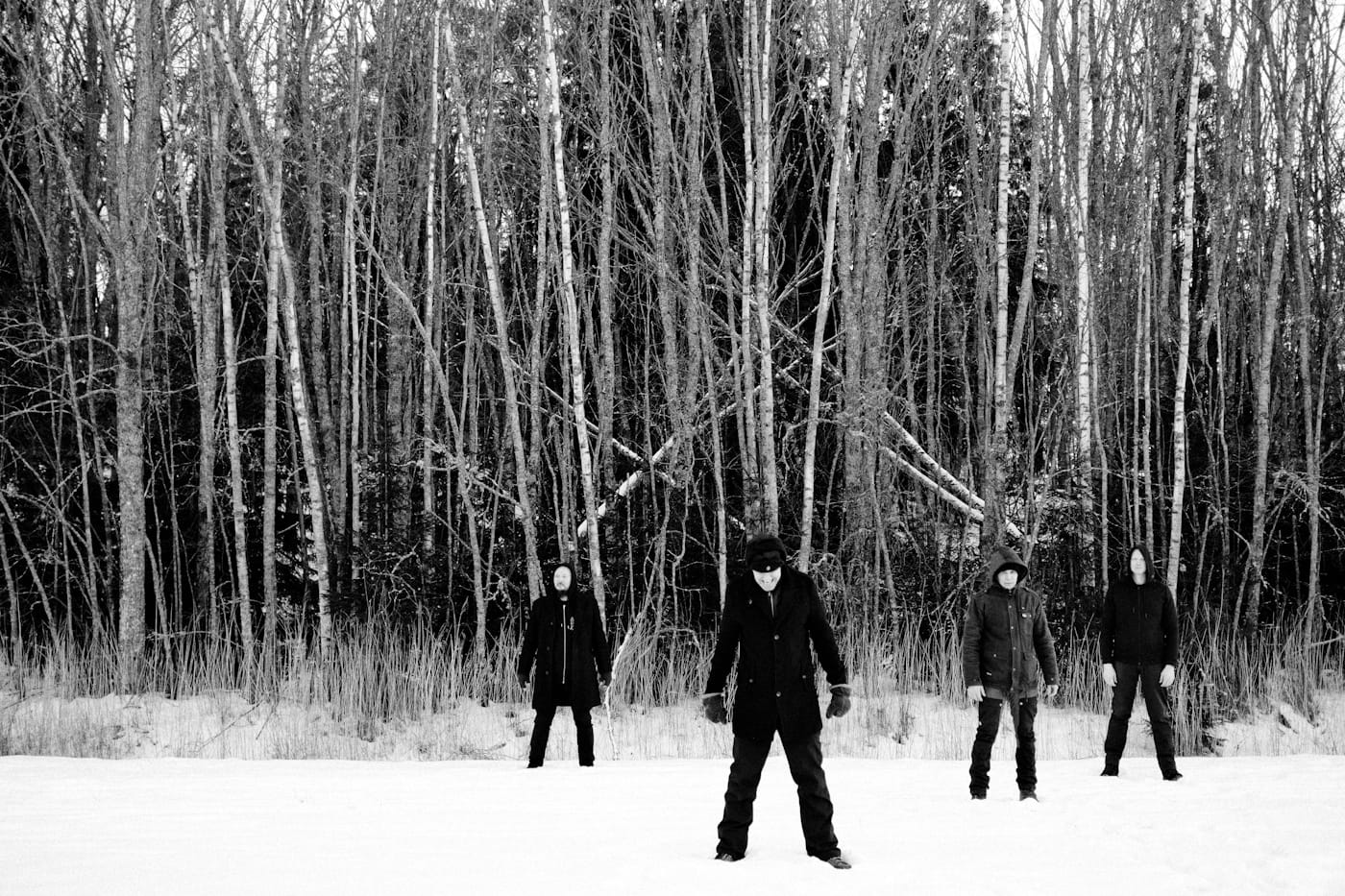

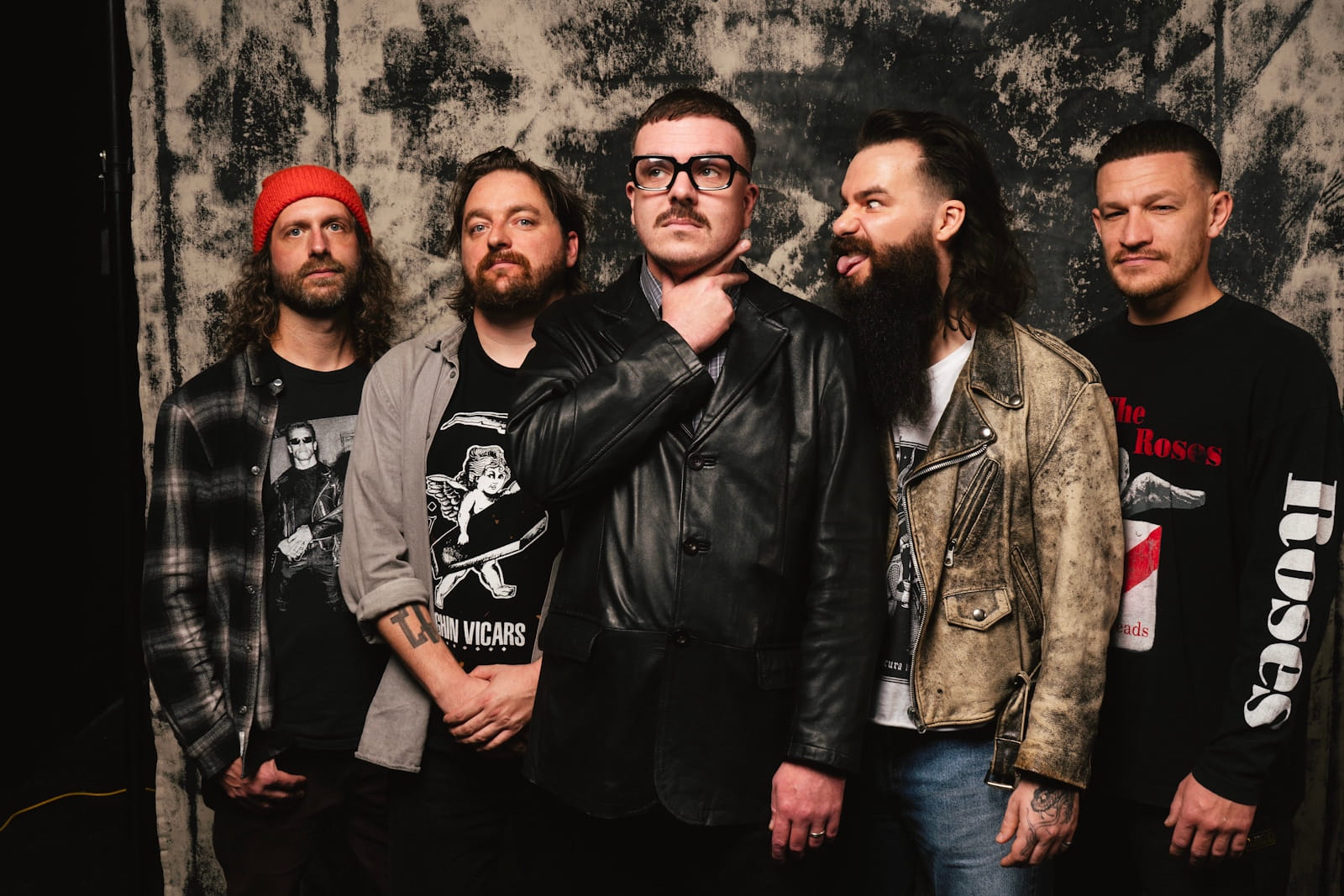
“We Need You To Bleed” isn’t being dusted off so much as put back where it belongs. Flesh Creep’s debut album gets re-released on February 20th, 2026 via Music For Nations, with a single London headline show set for March 29th at Blondie’s Brewery. Same record, same intent — just landing in a world that arguably caught up with it.
The band came together in Birmingham when scenes were barely breathing and everything felt provisional. The songs written in that stretch move fast and hit bluntly, but they don’t sound like they were made to audition for anything. There’s no sense of trying to earn credibility or fit neatly into a lane.
Wyświetl ten post na Instagramie
“King Of The Hill,” shared again alongside the reissue, gets straight to the point. It’s short, sharp, and uncomfortable without dressing itself up as a slogan. The song looks at exploitation and power without pretending the band are standing outside it all.
Tom Bienkowski is clear about that: “My lived experience is that I am the king of the hill. The beneficiary of global exploitation.” It’s not framed as guilt or confession — more like refusing to lie to yourself. As he puts it, the “luxuries we’ve come to view as necessities are paid for by the blood, sweat and tears of the global south.”
That angle runs through the record as a whole. “We Need You To Bleed” was written during Covid, when a lot of people felt boxed in and disposable, and it carries that sense of having nothing left to negotiate with. The album doesn’t circle around society’s problems — it names them and pushes back, from the perspective of people who’ve watched small amounts of power rot things quickly. The reference points make sense in that context: the physical urgency of bands like Gulch, the sharper thinking of Nation Of Ulysses, body-horror imagery, flashes of pro wrestling. It’s all confrontation, but not for show.
The way the record was made matches that attitude. Drums and vocals were recorded quickly, in full takes, without sanding down the edges. Click tracks were ditched. Mistakes stayed in. Tempos breathe, sometimes lurch. The band have talked openly about how polish can get in the way of feeling, and you can hear that decision all over the album — it sounds like something that happened, not something assembled.
Wyświetl ten post na Instagramie
Outside reactions picked up on different sides of the same thing. Louder described it as “a fuzzy onslaught of riffs and slobbering, rabid energy,” while Clash pointed out that “beneath the laser-sharp guitars lies an urge for restitution.” Neither feels exaggerated. Both get at why the record still lands: it’s aggressive, but it’s pointed.
Wyświetl ten post na Instagramie
To mark the release, FLESH CREEP will play a single London date at Blondie’s Brewery on March 29th, joined by SUNDAY BEST, MISGENDERED, and BULLET — a lineup that reflects the spaces they actually move through, not a polished narrative.
For the interview below, we talked with the band about anger that stops being cathartic and starts being deliberate, about watching power get weaponised in everyday settings, and about why compassion inside the band matters more than proving anything to a scene. We also dug into recording choices, Birmingham as both home and pressure cooker, queercore as a lived space rather than a label, bands that still feel genuinely dangerous, and what they won’t compromise as things scale up. The full conversation is below.
Picking up from what Tom said about factory work and watching people flip overnight — when that kind of thing happens right in front of you, does it change how you look at anger in hardcore? Like, does it stop being cathartic and start feeling more surgical, more deliberate?
TOM: That’s a difficult question and something I think anyone making punk or hardcore ought to ask themselves… if anger is the baseline, how do we express ourselves when things really hit the fan? We’re living through unprecedented times and nothing (especially in so far as our ability to express ourselves) should be business as usual right now.
That idea of someone getting a tiny bit of power and instantly weaponising it is all over WE NEED YOU TO BLEED. Do you ever catch yourselves worrying about becoming that person in other contexts — bands, scenes, even just day-to-day life — or is that fear part of what keeps you sharp?
JACK: I often think about this and believe power dynamics should be an ongoing concern. We don’t want to feed into hierarchical systems – claiming to be purveyors of taste, pseudo-intellectuals or glorified as more than the people we are. Reality is… this band would be very very little without the people who support it… we try to erode any pedestals others or ego might want to put us on.
Jack mentioned ditching click tracks and polish in favour of rough brush strokes. When you listen back now, are there specific moments on the record where you can hear something technically “wrong” that actually feels like the point?
JACK: All the drums and vocals were recorded in one morning in complete takes. Whatever’s being felt in that moment will sneak its way into affecting tempos, delivery etc, this could be excitement, anxiety… – as much as click tracks and editing provides the most palatable guidelines to follow, they can also be a barrier to emotional performances. We wanted to make something we couldn’t replicate again if we tried, capturing as honest as possible performances… a few flub notes, improvisations and unruly feedback keeps us honest
There’s a tension on the album between control and collapse — songs feel tight but also like they could fly apart at any second. When you were writing together, did you ever argue about reining things in versus letting them get ugly?
SAM: I don’t think many conscious decisions were taken to reign anything in when writing this album. The only element of control I recall us exercising was making more informed songwriting choices, you know, like verse lengths, or making a riff slightly better or more engaging. It sounds cliched to say, but it came together as a body of work pretty organically looking back. We had the opportunity to use our old drummer’s business premises within a bleak industrial unit to rehearse and write in regularly at that time, and that definitely created a certain atmosphere for the music I feel. It’s easier to feel and sound ugly in a cold room in the wastelands of the Black Country.
Hardcore often talks about authenticity, but it’s usually framed as aesthetics or sound. For you, does authenticity live more in process — how you record, how you rehearse, how you treat each other — rather than in how heavy or fast a song is?
JACK: 100%! Compassionate band culture is something we actively work on together and want to promote – it’s hard to be authentic without being vulnerable… bands can ruin friendships through internal politicking and disposing members like trash under the guise of “opportunity”. With FLESH CREEP, we try to support each other for each individual challenge and success, to care for the person behind the musician. This shows in our writing process as every member contributes songs and ideas that are uniquely valuable to who they are as people… we don’t want to cosplay as any other band.
Wyświetl ten post na Instagramie
You’ve said you don’t feel the need to re-prove your hardcore credentials. Do you feel like that confidence only comes after years in the scene, or did starting FLESH CREEP during lockdown kind of fast-track that mindset?
MATT: It’s a really interesting one because I think we’ve probably been through about two or three waves of Birmingham hardcore since the band was started, but it really did feel like a new world when the band started gigging in 2021. There’s certainly something about the confidence you gain from being around the scene for a longer period of time, and growing with each show and each new opportunity. You get FLESH CREEP with no bullshit, warts and all, at every show, and I think that’s something we’ve probably leaned into a little more as we’ve evolved as a band. That all being said, the band was started as a sort of last chance saloon opportunity to have a crack at ideas we’d all be harbouring, separately, for a long time. I’d personally played in alt rock and post hardcore bands previously, and we all have quite varied musical backgrounds. So, the opportunity to play punk and hardcore tunes that we’d used as catharsis through lockdown, coupled with what felt like a scene starting again from scratch around one of our most beloved venues, Centrala, helped us hold that attitude in some form from the very beginning.
WE NEED YOU TO BLEED was written in a moment where people genuinely felt they had nothing left to lose. Now that some distance exists, does the record feel like a snapshot of survival, or more like a warning that nothing actually got fixed?
TOM: I feel like this is a bleak answer but since we wrote this album, almost every societal concern I’d addressed lyrically has gotten much worse. As pessimistic as the present may be… I can only hope we meaningfully contributed to a conversation and hopefully anyone who engaged with the lyrics took something away from them.
KING OF THE HILL is blunt about global exploitation, but it doesn’t come off as a slogan. How conscious were you about avoiding preachiness and letting lived experience do the talking instead?
TOM: My lived experience is that I AM the king of the hill. The beneficiary of global exploitation. Can you be grateful that you didn’t have to grow up in a mine whilst also acknowledging that the reason people are in those mines is to provide luxuries for people like yourself? I think it’s important to be self aware and turn the finger inwards sometimes…
Wyświetl ten post na Instagramie
Birmingham comes up a lot when people talk about the band, not just as a location but as a pressure cooker. What is it about that city — socially, culturally, economically — that seeps into your writing whether you want it to or not?
TOM: It’s our home and has a musical heritage (past and present) that we’re proud to be a part of (the rest of the guys are Sabbath heads, I am a huge Duran Duran fan). There are of course frustrations, especially when music venues and art spaces struggle for business and much of the city’s old charm is being paved over into a slick, corporate hell. Of course, Birmingham’s beating heart lies at Cafe Soya.
Coming out of the Birmingham underground, did you ever feel underestimated or boxed in before signing to a bigger label, or did that space actually give you room to figure out who you were without outside expectations?
JACK: Not overtly as the band has crossed between scenes and sub-genres, playing shows with the likes of: Destiny Bond, EYEHATEGOD, The HIRS Collective, Chat Pile, Witch Fever etc. On a personal note, queercore has provided spaces that I can feel comfortable in without having to mask, this has been crucial in living an authentic life and bringing that back to the band.
Looking around your local scene in 2025, which bands made you stop and think, “okay, something’s actually shifting here,” not just musically but in terms of attitude or community?
MATT: We’ve been blessed to play with, and make friends with, some amazing bands in our scene and there’s a really healthy blend of new bands coming through which is super refreshing to see. There are far too many to mention here but in and around Birmingham we’ve been inspired by Hollow Bones, The Big Hell, Uptight, Misgendered, Anaemia, Total Luck and Meatdripper amongst many others. They all bring a different flavour, but the tie that binds them is a real authenticity about what they each do and we couldn’t be more proud to share stages with them all.
Outside Birmingham, were there any UK or European bands you crossed paths with recently that reminded you that hardcore can still feel dangerous and necessary, not just well-rehearsed?
SAM: We’ve enjoyed playing UK shows with a few international bands, but the two that spring to mind immediately are Violencia (US/Mexico) and Caloris Impact (Austria)! Both have a lot to say, and they both deliver it all with visceral ferocity. A few UK and Irish bands I’ve caught tearing up venues recently are: Gluebath, Poser, Feral State, Vulgar. In terms of Europe… our Californian friends Corrupt Vision graciously took us with them across the mainland for a few dates in France, Belgium and Germany. We got to play with Jodie Faster on a couple of shows, and they are just incredible: fast, aggressive, socially and politically charged. An awesome father-son duo in Paris called Ovearth – a potent reminder of what playing music is fundamentally all about. We’d love to get back out there soon and discover some more local gems!
As FLESH CREEP gets bigger rooms and bigger platforms, what parts of this band feel non-negotiable — the things you’d rather lose opportunities over than smooth out?
JACK: We don’t feel like these things are “opportunities” if it goes against our beliefs. Compassion, inclusivity and creative integrity is more important than any show or band – we have and will continue to say no.
Finally, sitting here now with the record about to be re-released into a very different world than the one it was written in — does WE NEED YOU TO BLEED feel like something you survived, or something you’re still very much inside of?
TOM: The conviction is still there for sure. We certainly haven’t changed our minds on anything and there’s a part of all of us eternally imprinted in this record. With that being said, we aren’t ones for nostalgia and the focus remains on the future. We are very much just getting started…