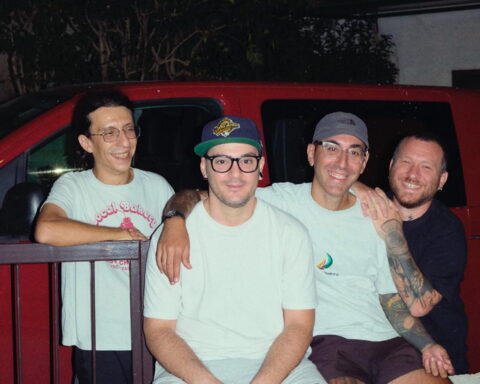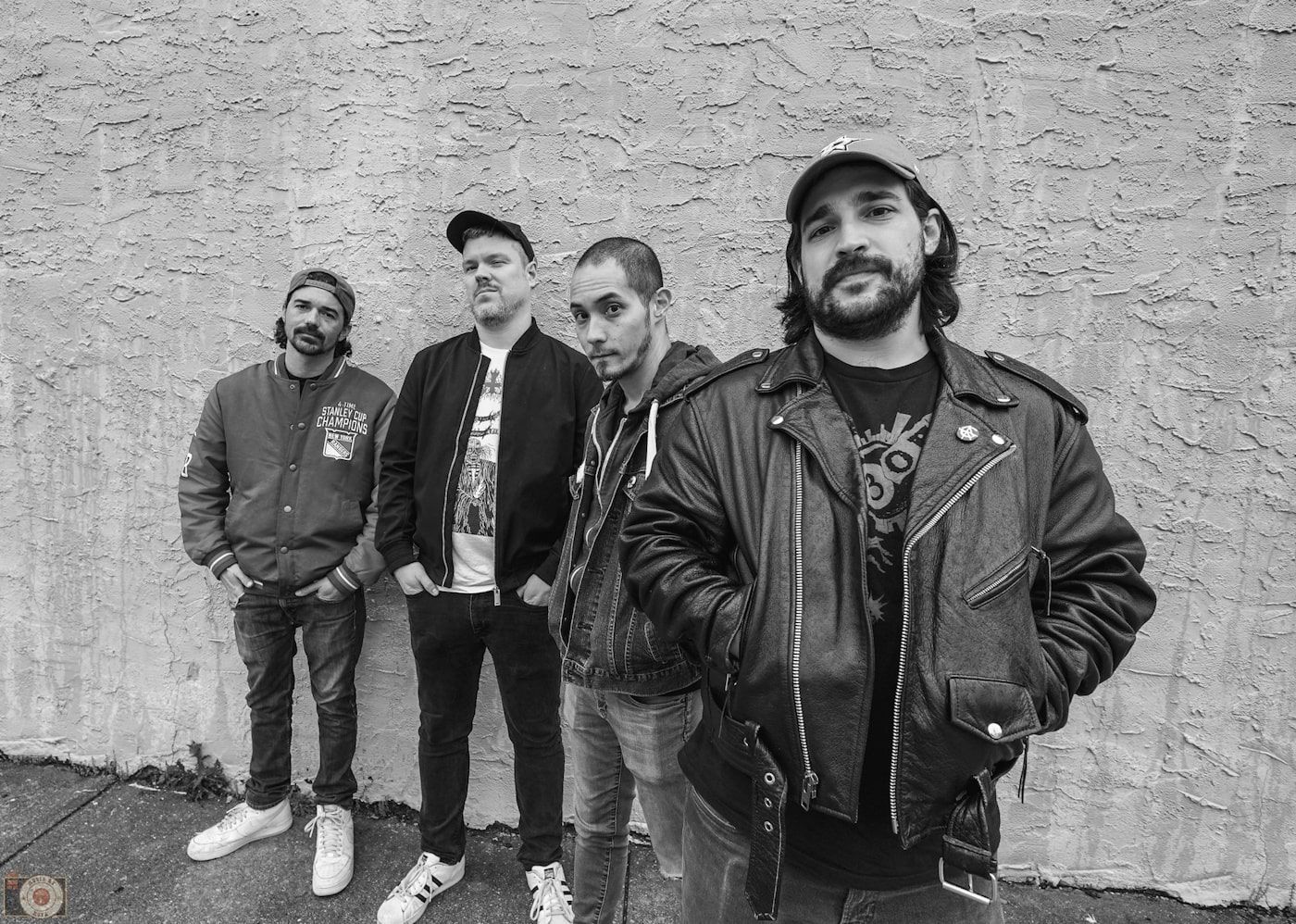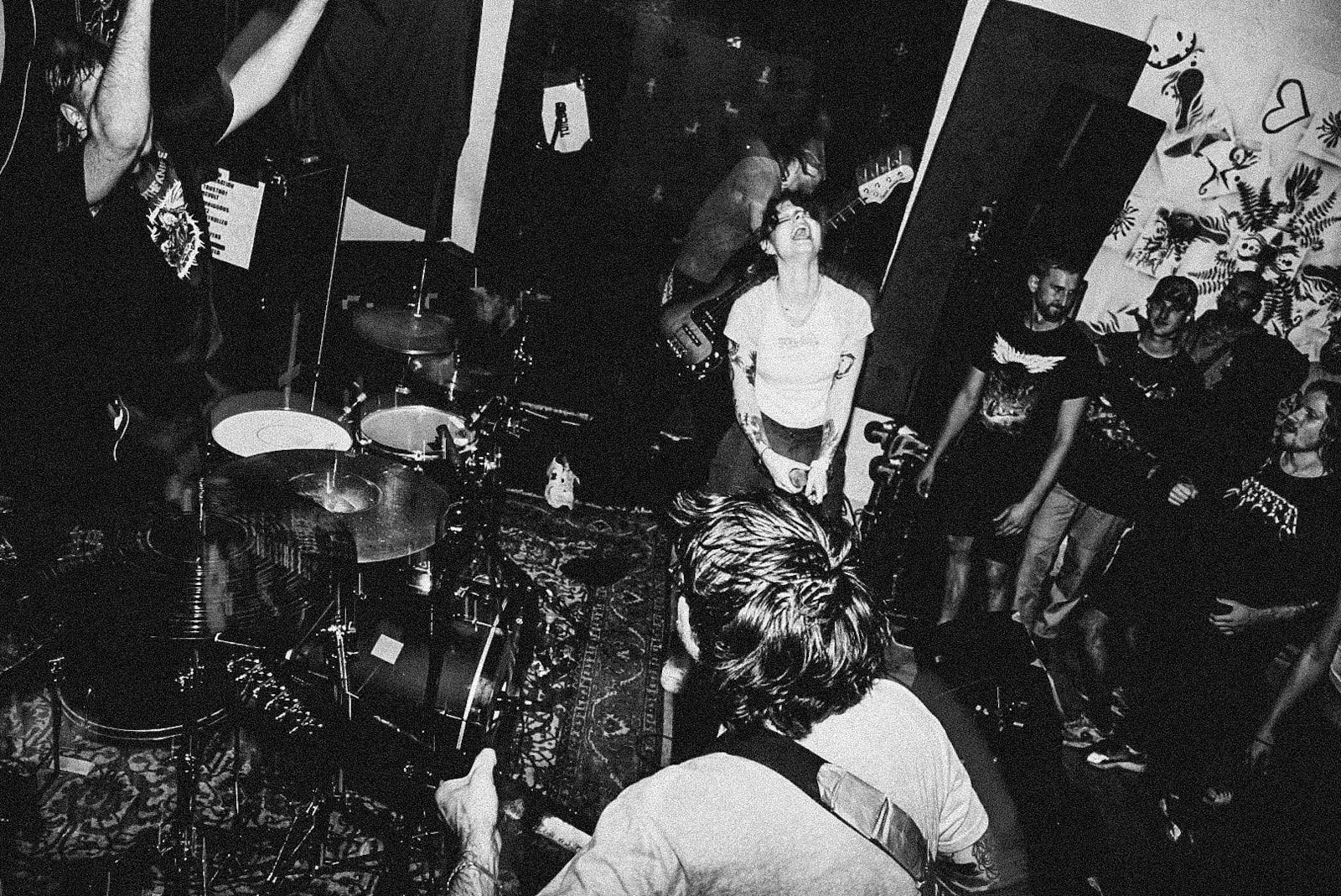


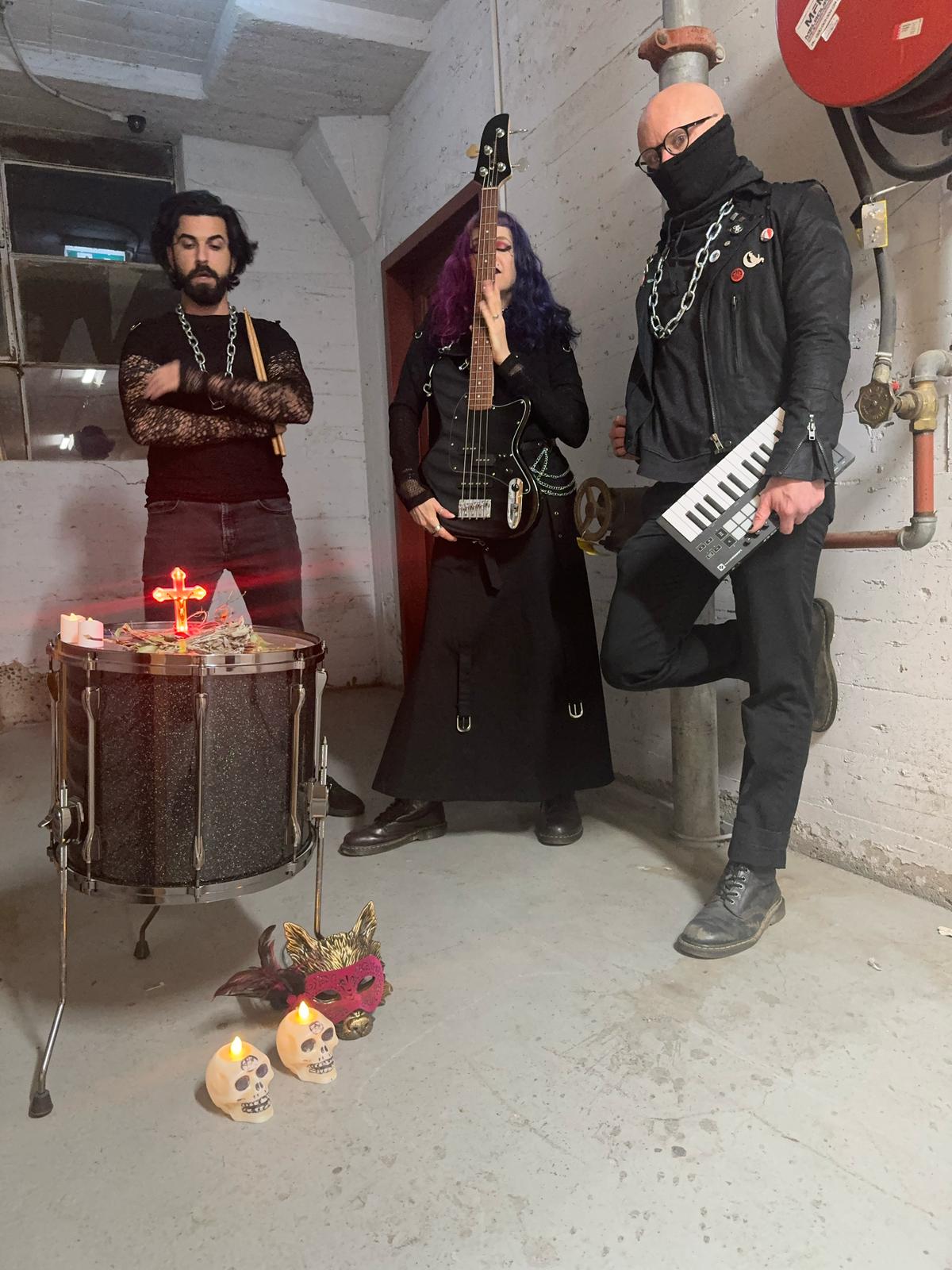
Blood in the Champagne, a gothic post-punk trio from Naarm (Melbourne), have dropped Evolve Like a Chrysalis, a five-track EP full of fire, fallout, and fragile hope.
Built on conversations about politics, resistance, queerness, and decay, it doesn’t offer easy answers. It just asks you to feel, maybe act. “We always write about things that are very pertinent to us,” they say. “We’re also a very political project and this makes its way into the music and lyrics.”
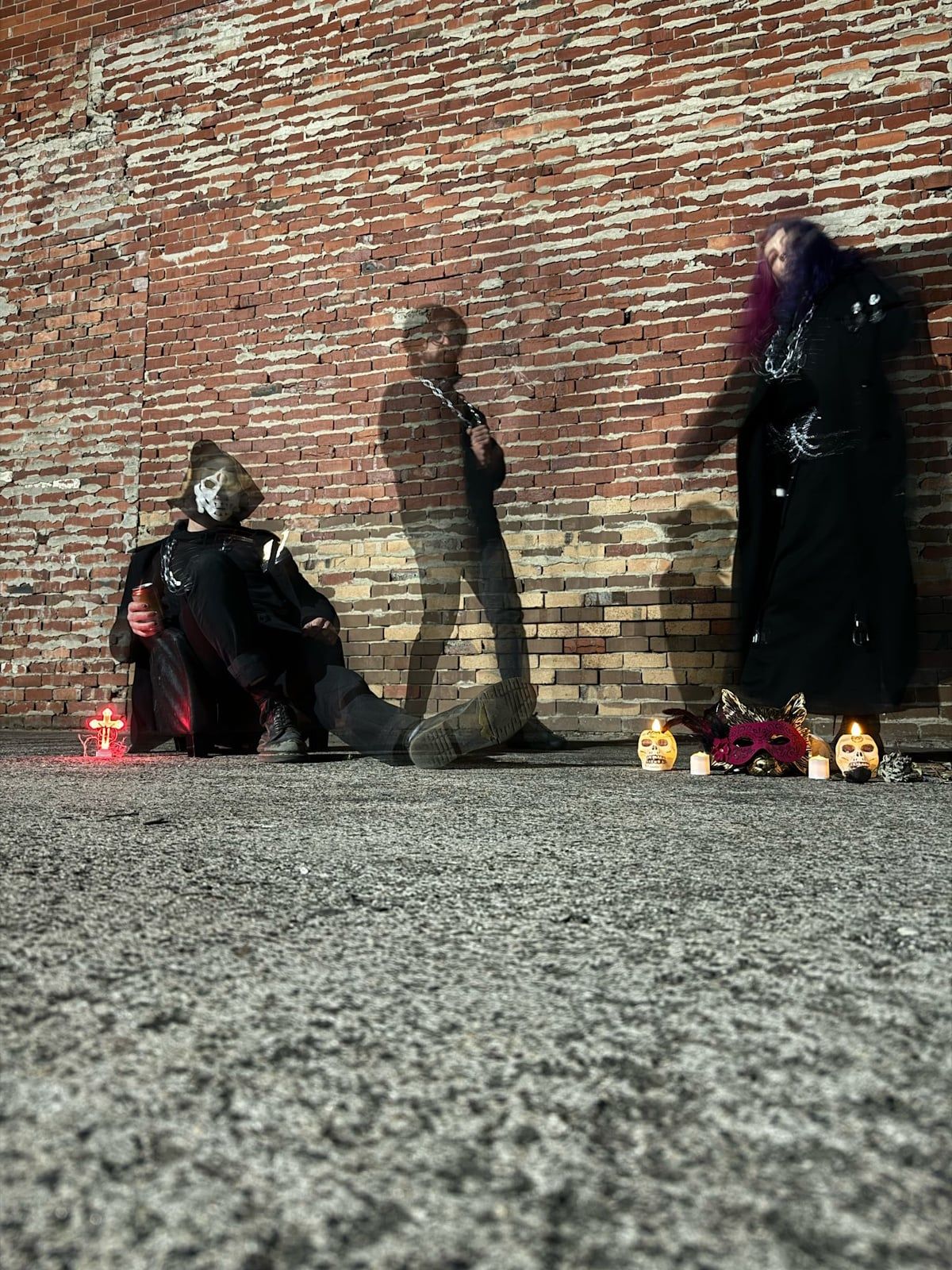
The EP is thick with themes: love in the midst of collapse, tearing down the patriarchy, crying at the sight of solidarity, the slow rot of digital addiction, a woman breaking free from expectation. The stories are deep in it, dragging their boots through the dust and still finding ways to move forward.
Red Dust sets the tone. Inspired by desert winds sweeping into Kymin’s place in Werribee, it’s a picture of climate collapse, fires in the mountains, the quiet hum of something ancient and warning.
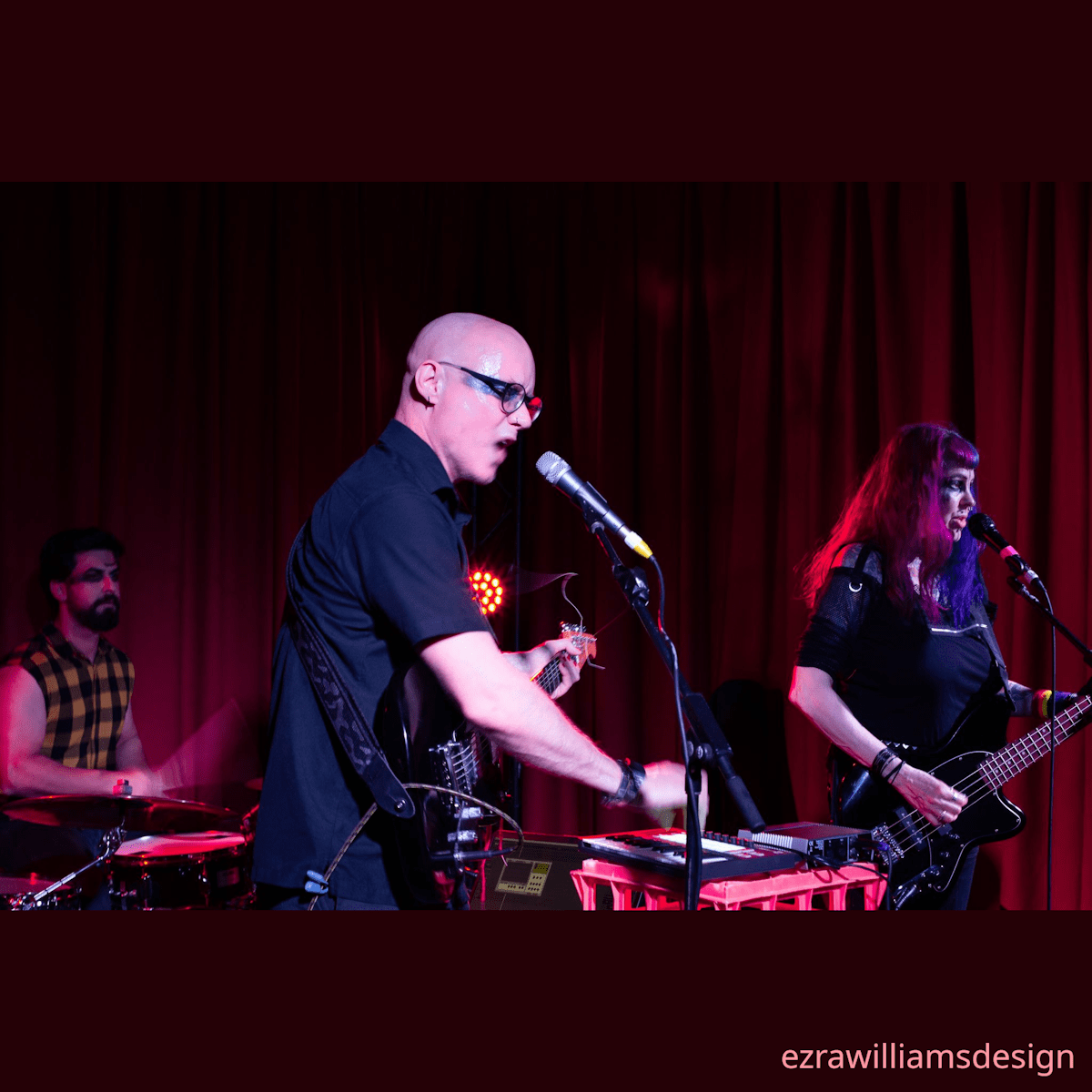
Fallout Day captures that primal charge of protest, Chrysalis is for the queers and femmes, the people torn up and stitched back together by the weight of gender expectations. No Reflection collapse inward and tackles addiction, screens, numbing out.
Dying of the Light tells a story of a woman growing up in a patriarchal household in West London, expected to drop out at sixteen and take dictation for the rest of her life, surrounded by people who refuse to choose a side.
The band calls this EP an evolution, so let’s dive into the details behind the stories—some personal, some imagined, all coming from a place where things are still broken, but maybe not forever.
Red Dust
Red Dust was inspired by the red dust from the desert that came in through the windows when Kymin lived in Werribee. It is a story about climate change and how this is happening and changing our environment into a post-apocalyptic hellscape. It is a story about two people lost in the wasteland.
The red dust that is left after the plants have died while the red mountains burn with fire. It is also a story of hope as well. The two souls who meet in this red windswept landscape come together to make a change and fight to rebuild their world. It is a song of a possible future, the idea that it is never too late to change what we do to the earth and work together.
It is a warning that the earth has a message for us and we should listen as it calls on us to run into the night of the unknown to challenge what reality is. We made a short video for this song of us playing in a car park and dancing the visual image of this is gritty, gray and chaotic, a bit like the theme of the song. You can see it on our youtube channel.
Fallout Day
There’s something about it – large groups of people and the feelings you get from them.
It’s very primal, and can be glorious or terrifying in equal measure, depending on what that group of people are doing and, chiefly, whether you’re part of it, or outside it.
When you’re part of it, it can be particularly powerful. There’s the sense of raw power and the elation of coming together. Shared goals. Shared passions. The fact that you’ve all decided to be there, in one place, for one thing, at the same time, so you can do it together.
Whenever I get this feeling, I’m usually in one of two types of events: big gigs and big protests.
In both cases, I always feel like crying. The almost animalistic channelling of energy and the potent, focused emotion and sense of purpose can be overwhelming.
This song was written with these thoughts and drives in mind.
When I sing it, I have a particular protest in particular in mind – Worker’s day. London, 2002.
The singing. The solidarity. The sight of a yellow line of hi-vis cops, closing your path, ready to kettle you and the scramble to escape it with as many comrades with you as possible. Ducking truncheons. Helping each other up after a cop has knocked someone down. And doing it again and again all day.
And the elation of the aftermath. Adrenaline-fuelled celebration as the scathing evening papers come out informing you how much money you have cost the corporate class that day.
The pats on the back. The hugs.
And more singing.
That’s what this song is about.
Chrysalis
Chrysalis is for all the queers and femmes, women and men who have been affected by the patriarchy. It is a poem and call to action. It tells the story of fighting back tooth and nail, It advocates crashing feminist waves over culturally biased views toward women and queers. It is a call to destroy the old ways of gender roles and replace these with safer spaces and mutually inclusive diverse spaces. DESTROY!
No Reflection
This isn’t just a song. It’s a mirror you might not want to look into.
“Used to be so fun to get high…
Now the trouble begins.”
You’re flying. Then falling.
Chasing the next hit, the next trend, the next “like”—until there’s nothing left but a fogged-up screen, a floor you can’t get off of, and a face in the mirror that’s no longer yours.
“NO REFLECTION” is a visceral plunge into the quiet devastation of addiction—both the chemical kind and the digital kind. It’s about the crash after the rush. The hunger that won’t die. The illusion of control when you’re walking a thin white line.
“Smoke and mirrors. No reflection.
Wither away.”
No reflection doesn’t ask politely. It claws at your comfort. It whispers what you’ve been trying not to hear:
It’s time to throw it all away.
Dying of the Light
“This song’s about…”
“Your MUM!” came the heckling response from the audience.
I was about to call the heckler out, before I thought for a second…
“Yeah. It kind of is. This song is about my mum.”
See, my mum grew up in West London in the 40s and 50s. A lower middle-class, patriarchal, catholic family.
She was the oldest of five kids, four of them girls.
Back then, girls didn’t go to university. They left school at 16 and became secretaries, and that is exactly what my mum was expected to do.
So, when she declared that she wanted to stay on at school and, even more scandalously, wanted to go onto university to study philosophy, my grandad, her dad, put his foot down.
Well, he tried to, at least. But my mum was not having any of it.
She had to fight hard, but she won. She got to finish school and she went to university, where she joined CND, met my dad and enjoyed three years of her life that both her and my father still look back on with fond memories.
I’m sure this struggle for an education fuelled her solid feminist values, which I’m happy to say she has passed onto me and my brother. It also paved the way for her sisters to finish school and go to uni, too.
This song is about a woman who is surrounded by those who hide from the political. Those who, as Dante puts it, never take a stand in life and only drift, concerned only with themselves.
And she decides to turn her back on them, pulls her head out of the sand and puts a wrench into her hand.
Catch the band live at the following shows: