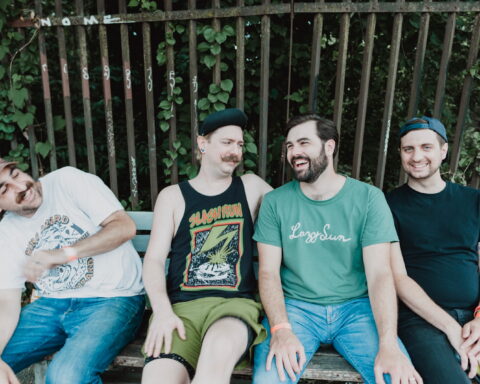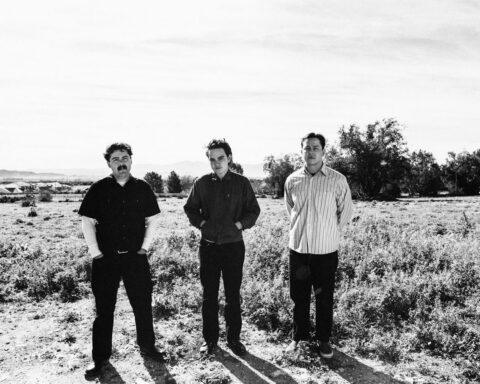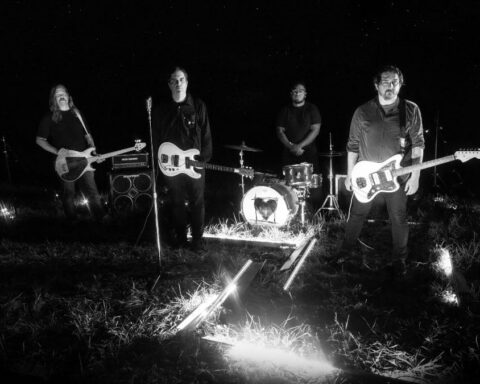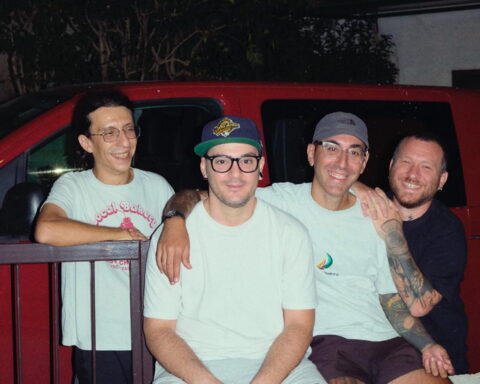

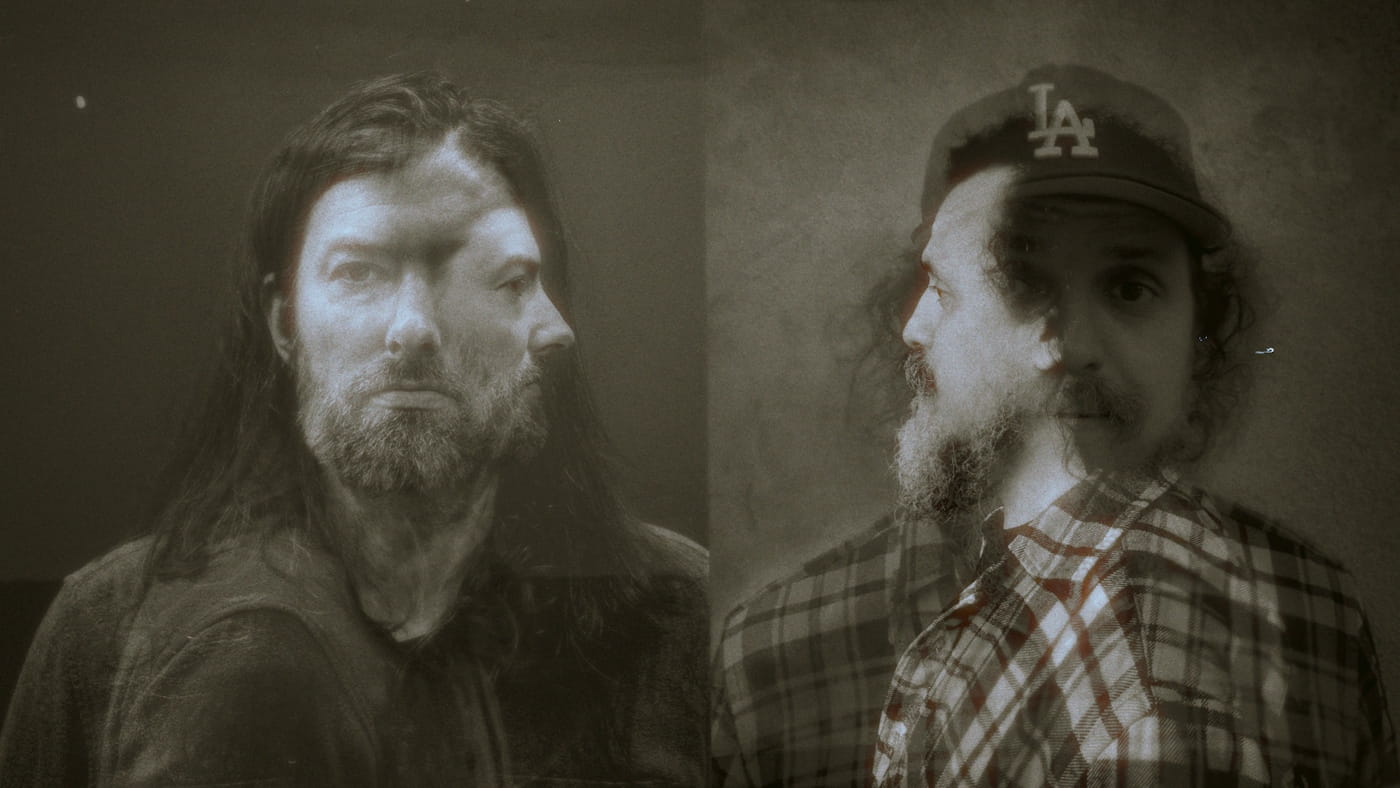
Jagged City started as a long-distance conversation between two people who’d spent years in different corners of guitar-driven music—Jake Woodruff from Defeater, Carlos Torres from his time touring with Explosions In The Sky. Spring or early summer 2023, Woodruff reached out to Torres about joining something new. Torres heard the initial demos, then the rough versions with drums and bass, and that’s when it became clear this wasn’t just another side project. It needed its own space.
“There Are More Of Us, Always”, their debut EP out January 30th on Pelagic Records, is instrumental post-rock that doesn’t lean on volume or sweep to justify itself. It carries a strong sense of restraint—holding back, not trying to overwhelm, but presenting a unique, organic sense of clarity that we love so much in more clearer parts of post hardcore and less explosive takes on post rock.
It’s not a reaction against the louder, more maximal instincts both musicians developed elsewhere. They’ve both played in projects that were more restrained too, so each track was finished in a way that made sense to the individual song. It’s freeing to do that in a new project where they’re not yet accounting for what the band “is.”
The EP title comes from Hanif Abdurraqib’s book “There’s Always This Year”—a passage about police brutality and oppression, particularly of Black people, in Columbus, Ohio: “There are more of us, always. There is no corner of this jagged city that can take us all.” Frustration and solidarity, but also endurance and survival. The band name followed from the same source.
Distribution wise, the band did a smart move worth flagging too: instead of quietly pulling their music from Spotify over disagreements with the platform’s ownership, politics, and investments, the band left short excerpts there that lead into a genuinely thought-provoking public announcement—way more effective and engaging than simple absence, so check it out for yourself, and then head over to Bandcamp where the full experience really lives.
Woodruff and Torres talked about going fully instrumental after years in bands where lyrics carried narrative and moral gravity. For Torres, whose previous band Cross Control used lyrics to critique and bludgeon, instrumental music allows the listener to create their own narrative. He can provide information about what his inspiration was on a certain track, but the listener can build their own story. Music is personal to the individual listener.
Woodruff, who’s been part of projects that did and still do use lyrics, found it relieving rather than risky—more freeing because the listener can have their own experience. The band is just nudging and offering the space for that.
Torres viewed the EP as a series of vignettes that fit as a whole—series or stories that take place in the same universe but not necessarily on the same planet. The EP served as a conduit for connection with those involved: Melissa, Jake, Urian, Taka, Michael, Will, Dave, Ryan, the Pelagic people. The connections involved in the process are hopefully reflected in the music itself.
Wyświetl ten post na Instagramie
“Imaginary Lines” deals with borders, divisions, the idea that much of what separates us is invented. Woodruff mentioned this concept early on—it was even the working title of the project for a while. For Torres, it’s something he’s thought about since he was young, growing up in dusty western Texas. If he’d been born just 310 miles west, he would have been born into a different country, different mores, different culture. Being able to travel and be exposed to different cultures affirmed his belief that borders are a construct created by humans to divide and control.
The mid-song PSA on Spotify was a deliberate friction point. Once news broke of Spotify’s AI weapons investment, that was the last straw. Woodruff and Torres didn’t want to put the record on Spotify at all, but they’d already signed with Pelagic, who didn’t want them to skip it entirely. Through dialogue, they came up with this option—using the platform against itself, keeping the full versions of the songs off the streaming service. They’re okay with frustrating some listeners, especially when anyone still using Spotify can just listen on Bandcamp on the same device they’re already using. They’re a giant corporation, Woodruff says, and the band is just trying to keep their little corner of the world a little cleaner.
Wyświetl ten post na Instagramie
We’re in an era where so many apps and platforms have a massive hidden exploitative cost, Woodruff notes. It’s up to all of us to at least try to choose ways of living and interacting that don’t harm each other. Torres has always been under the assumption that if you have a platform and it can be used for good, then you should try to promote good. Resistance can be difficult—trying to be consistent and without contradiction gets harder day by day. He’s not ready to go full hermit, so he must adapt to the environs that surround him.
Urian Hackney’s presence reshaped the record once the trio locked in. He truly made the record possible, Woodruff says. His engineering and drumming were both energizing. He didn’t necessarily “change” the songs, but he saw their vision and catapulted the tunes to where they envisioned them. Recording happened in two intense days at The Box studio in Burlington, Vermont. Torres recorded bass in Los Angeles alongside longtime musical colleague Michael James from Explosions In The Sky, while Woodruff added further guitar textures from his home studio.
After years embedded in different scenes—hardcore, post-rock, punk-adjacent spaces—neither of them is trying to plant a flag anywhere. Torres likes the idea of floating between the spaces, not handcuffing the music. Allowed to flow freely in between the lines, adjacent and allied to many scenes. All those scenes have very porous boundaries, Woodruff adds. They’re just here to rock.
Looking at their local environments, there are things that worry them. Support for live music can wax and wane. Torres worries about mom-and-pop venues surviving, bands being able to continue to create due to financial limitations, the toxic environment social media has created for artists. Woodruff’s losing the warehouse that throws a lot of practice room shows near him, and smaller venues are closing and reopening frequently. That’s disturbing because we need those community spaces on so many levels. But people keep creating—we all keep making music and art, whatever the restrictions of physical space are. We’re all getting smarter about how we share that creativity with each other and not feeding a machine that’s eating us in the process.
Looking forward, Woodruff doesn’t think the two options are mutually exclusive—music and creativity are there for reactions, for refuge, and for dreaming. Torres sees Jagged City as a place that can constantly adapt and change. He’s as malleable as tinfoil.
Read the full interview below, where Woodruff and Torres discuss the specific moment Jagged City became more than a side thing, the emotional balance of instrumental music without sentimentality, recent records that stuck with them longer than expected, and what excites and worries them about the current state of small venues and live music.
Answered by: C = Carlos, J = Jake
– So let’s rewind a bit to the moment this stopped being just two people with long histories talking ideas, and actually became Jagged City. Do you remember the exact point where it clicked and you both felt, yeah, this isn’t a side thing, this deserves its own space and its own weight?
C- I remember when Jake had asked if I would be interested in joining up with him. I believe there had already been previous plans with previous players, this had to be back in Spring or early summer of 2023. For me, it was after receiving the initial demos, and then after hearing the rough demos with drums and bass, I knew that we had something that should be shared.
J- Just jumping in to say that there was never another bassist! There have been a few different drummers in play but I knew if Carlos was down, I wanted to collaborate with him.
– Coming from bands where lyrics carried a lot of narrative and moral gravity, did going fully instrumental feel like relief, or did it feel risky, like stepping into a room where you can’t hide behind words anymore?
C- My previous band, Cross Control, used lyrics to critique, and to bludgeon. With instrumental music, it allows for the listener to create their own narrative. I can provide information about what my inspiration, or influence was on a certain track, but the listener can create their own story. Music is personal to the individual listener.
J- Every other project I’ve been a part of did/does use lyrics, so this felt relieving. It didn’t feel risky, it felt more freeing because the listener can have their own experience, we’re just nudging and offering the space for that.
– When you were shaping this EP, did you think of it more like a series of songs, or more like a continuous emotional arc — almost scenes that bleed into each other the way memory does when you’re not trying to organize it?
C- For me, I viewed it as a series of vignettes that can fit as a whole. Series, or stories, that take place in the same universe, but are not necessarily of the same planet.
– There’s a strong sense of restraint in the first single, like you’re deliberately holding back rather than trying to overwhelm. Was that a conscious push against the louder, more maximal instincts you both developed in previous projects?
J- We’ve both played in projects that were more restrained, as well, so we were just finishing each vignette in a way that made sense to each individual song. It’s freeing to do that in a completely new project where we’re not taking into account what the band “is” yet.
– The title “There Are More Of Us, Always” feels quietly confrontational without shouting. Where did that phrase come from emotionally — was it born out of hope, frustration, solidarity, or something darker that later softened?
J- The EP title and band name are actually taken from a Hanif Abdurraqib book, “There’s Always This Year.” The specific passage is talking about police brutality and oppression, especially of black people, in Columbus, Ohio, and reads “There are more of us, always. There is no corner of this jagged city that can take us all.” We took it to be born out of frustration and solidarity but also deep and powerful endurance and survival.
– Imaginary Lines deals with borders, divisions, and the idea that a lot of what separates us is invented. Did those themes come from specific real-world moments you were reacting to, or did they grow more subconsciously out of how the last few years have felt to exist in general?
C – Jake had mentioned this imaginary lines concept early on. I would even dare to say that this was the working title of the project for the first little while. It is a concept that I have always thought of ever since I was a young pup growing up in dusty western texas. If I was born just 310 miles west, I would have been born into a different country, different mores, different culture. Being able to travel and be exposed to different cultures, has affirmed my belief that borders are a construct created by human to divide and control.
– The mid-song PSA on Spotify was a bold move, especially knowing it would frustrate some listeners. Did you debate internally how confrontational to be, or was the decision immediate once the idea surfaced?
J- Once the news of Spotify’s AI weapons investment came out, that was kind of the last straw. Carlos and I didn’t want to put the record on Spotify at all, but we had already signed with Pelagic and they didn’t want us to skip it entirely. Through dialoguing with them we came up with this option, which uses the platform against itself and keeps the full versions of the songs off of the streaming service. We’re ok with frustrating some listeners, especially when anyone who still uses Spotify can just listen on Bandcamp on the same device they’re already using.
– There’s something punk about using Spotify itself as the vehicle for criticizing Spotify. Did that contradiction feel uncomfortable at any point, or was the tension part of the point from the start?
J- We just tried to do the best we could at that moment. It’s exciting to do something new like that, but also they’re a giant corporation and we’re just trying to keep our little corner of the world a little cleaner.
– More broadly, do you think musicians still have a responsibility to take public stances like this, or are we at a point where even resistance risks getting absorbed into the same systems it’s pushing against?
J- We’re in an era where so many of the apps and platforms we interact with have a massive hidden exploitative cost. It’s up to all of us to at least try to choose ways of living and interacting that don’t harm each other.
C- I have always been under the assumption that if you have a platform and it can be used for good, then you should try to promote good. Resistance can be difficult, as trying to be consistently and without contradiction gets harder and harder day by day. I am not ready to go full hermit, so I must adapt to the environs that surround me.
– Shifting gears a bit, how did Urian’s presence reshape the band once the trio locked in? Was there a moment where his drumming changed the emotional language of the songs in a way you didn’t expect?
J- Urian truly made this record possible. His engineering and drumming were both so energizing. I’m not sure he “changed” the songs, but he saw our vision and catapulted the tunes to where we envisioned them. I hope we get to play and/or record with him more.
– You’ve both spent years embedded in different scenes — hardcore, post-rock, punk-adjacent spaces. Do you feel like Jagged City belongs to any scene at all, or is it intentionally floating between them?
C- I rather like the idea of floating between the spaces. I would not want to handcuff the music. To be allowed to flow freely in between the lines. Adjacent, and allies to many scenes.
J- All those scenes you mentioned have very porous boundaries- neither of us is trying to plant a flag anywhere, we’re just here to rock.
– Looking at your local environments right now, what excites you about the scenes you’re part of, and what worries you? Are there things you feel are quietly breaking or quietly growing that people aren’t talking about enough?
C- Support for live music can wax and wane sometimes. I worry about mom and pops venues surviving, and bands being able to continue to create, due to financial limitations. I worry about the toxic environment that social media has created for artists. I am excited that I still see young folks making music, playing real instruments and going for it. I am happy to go see a band like unwound or the circle jerks and see generational diversity in the audience.
J- It’s definitely an unusually tough time for small venues- we’re losing the warehouse that throws a lot of practice room shows near me, and smaller venues are closing and reopening pretty frequently. That’s disturbing because we need those community spaces on so many levels. What gives me hope, though, is that people keep creating- we all keep making music and art, whatever the restrictions of physical space are. And we’re all getting smarter about how we share that creativity with each other and not feeding a machine that’s eating us in the process.
– Thinking specifically about 2025, were there any artists or records you stumbled upon that genuinely surprised you — not hype-driven discoveries, but something that stuck with you longer than expected?
C- I can’t get enough of this album called ok, the fire by trellion and danny lover. Billie Woods Golliwog is a fascinating listen. Chat PIle and Hayden Pedigo, brought the emotions and elicited memories, and it will be like now by vulture feather. With the overabundance of entertainment options, I still enjoy discovering new music. There is so much music to discover and not enough time, these records stuck with me and I am sure will still be with me in 20 years.
J- I second the Chat Pile/Hayden Pedigo album, that’s such a beautiful record. I really loved “Diamond City” by Will Johnson- that gets a lot of airtime around our house. “Only Dust Remains” by Backxwash and “Against” by AGYT.
– This EP feels grounded in human connection without being sentimental. Was that balance something you actively wrestled with, especially in a time when sincerity can easily tip into cliché?
C- I would hope the variables that are involved with human connection are evident in the listening of the EP. Communication, respect, empathy, trust, sharing.. For me the EP served as a conduit for connection with those that were involved- Melissa, Jake, Urian, Taka, Michael, Will, Dave, Ryan, the pelagic peoples. The connections involved in the process is hopefully reflected in the music itself.
– Finally, looking forward without turning this into a roadmap, do you see Jagged City as a place where you can keep reacting to the world as it changes, or more as a fixed emotional refuge you return to when everything else gots too loud?
C- I see it as a place that can constantly adapt and change. I am as malleable as tinfoil.
J- I don’t think those two options are mutually exclusive. Music and creativity are there for reactions, for refuge, and for dreaming.