

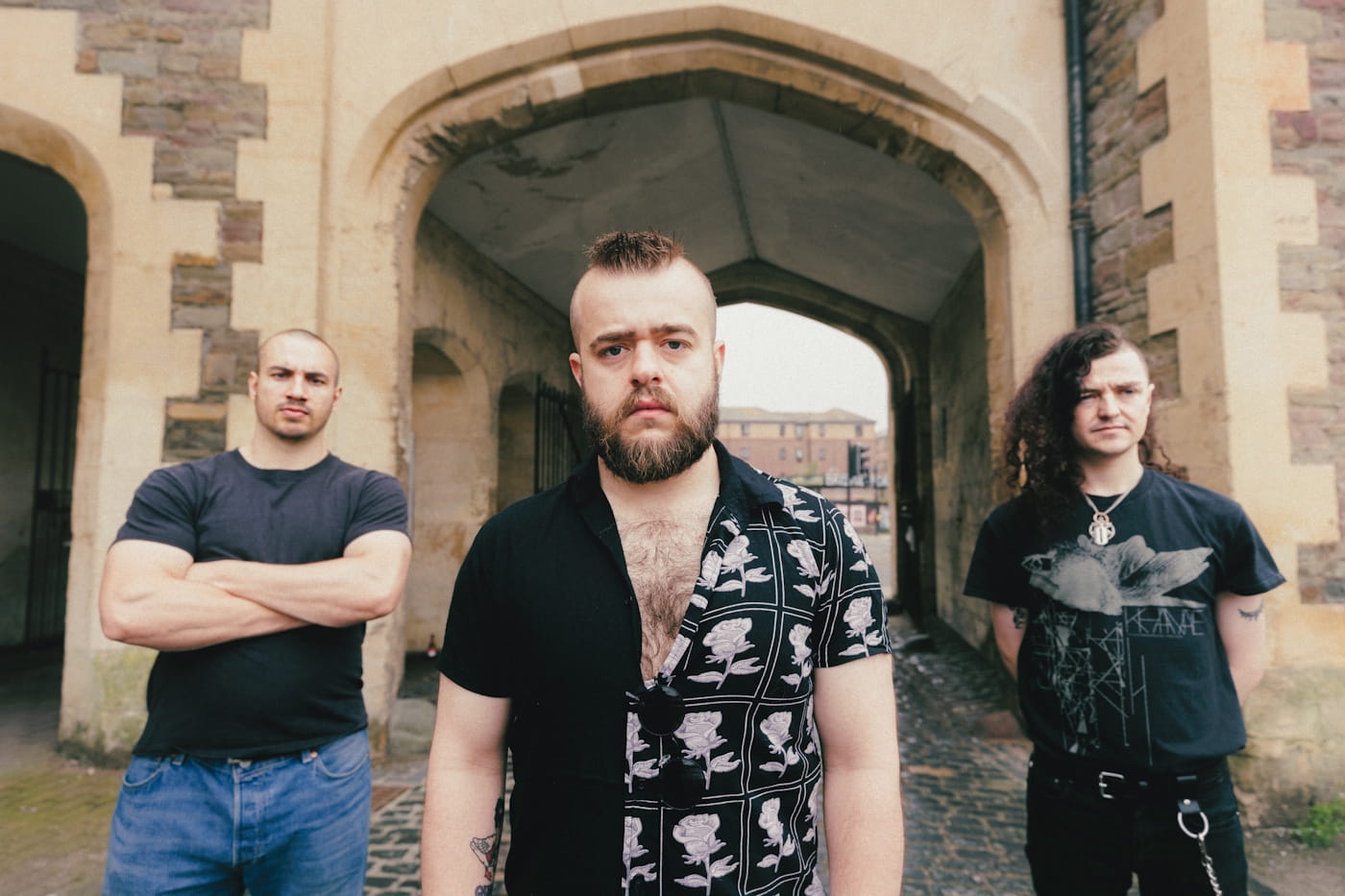
Bristol trio Epimetheus play in drop F. The guitar is a self-assembled baritone with an aluminium neck. The bass sits in C standard, and the gap between those two tunings quietly dictates how the riffs get divided up and where the dynamic shifts land. None of this is accidental — but very little of it is conventional either, which is more or less the running theme behind “Perseus 9,” their debut full-length, out 6 February via self-release.
The record was tracked live in a practice studio — not a recording studio — in Bristol, using a DIY flight-case rig built around a second-hand Behringer interface and a bank of preamps totalling 16 simultaneous inputs. Just enough for drums, two guitars, bass, room mics, and not much else. “The kind of people that come to our shows will appreciate the fact that the guitar sounds like a train derailment,” says guitarist Cillian Breathnach. “Our tone is a huge focus — that element is very present in our identity. People often ask how we do it with just the three of us.”
The short answer: volume, tuning, and a willingness to let things bleed. Epimetheus play loud — as loud as they can get away with — and the band describe the crossover between mics as “desirable.” Every mic becomes a room mic. There’s a subtle airiness to the record because of it, a slightly filtered wash of everything else sitting underneath each instrument. The bass amp did get pointed at a foam pad mounted on a massive piece of unfinished lumber — too big for the door, so they had to screw it together inside the room — but that was more about controlling the quality of the reflections than stopping them entirely.
On the mic front, the setup was a grab-bag of whatever they had lying around: SM57s, a bunch of SM57 clones, a pair of cheap pencil condensers for overheads. Cillian’s first guitar amp — a tiny 10-inch Stagg thing — got rewired into a microphone by connecting the speaker leads to an XLR jack, essentially turning it into a sub-bass pickup for the kick drum. Engineer Stan Braddock brought along some shotgun shell mics — tiny cartridges installed inside otherwise empty (hopefully) shotgun shells — which served as extra room mics with a lo-fi character.
Braddock handled the engineering and mixing across two days of tracking. The plan was to arrive on day one, set up, bash out as many songs as possible, play a gig that evening, come back, finish the rest, pack down, and go to the pub. The title track, “Perseus 9,” was recorded in a single take — the first one they did — because they had to leave for soundcheck. “We knew we couldn’t fuck up,” the band note, adding that knowing everyone’s time was limited turned out to be a surprisingly effective way of getting into a creative flow state.
Almost nothing was recorded to a click. When they did use one, only drummer James Jackson heard it — Cillian and bassist Ben Price played to him. That made mistakes harder to fix. Freehand splicing is doable, but bleed complicates things fast: you can’t easily cut a guitar mistake if it’s also sitting in the snare mic, the overheads, the kick and the bass. Braddock apparently pulled off some impressive edits regardless, stitching together tracks where the band had stumbled five minutes into a song.
Guitar overdubs were added later in a separate practice studio — rhythm guitar panned opposite the live take, then solos, then a minimal selection of textural layers. A couple of moments on tracks like “Calling” and “Held No More” got some extra layering where the songs called for it, but the commitment was to keep things sparse. No solo sections got a rhythm guitar underneath, because the band already write around their three-piece format. “Something interesting always needs to be going on that makes sure that the sound hasn’t suddenly got really thin,” Cillian says. “We wanted to make something that sounds exactly like we do live.”
Vocals were tracked in Ben’s attic, in a booth made out of blankets. The band weren’t chasing vocal fidelity — they wanted the voice to sit in the mix the way it does in shoegaze, another reverb-soaked layer floating through distortion and low-end. Mastering was handled by Chris Fielding, a former member of Conan. “Conan are another drop F band, and so we very much trusted his unique experience in getting us the right final sound.”
As a three-piece, Epimetheus lean into the space that format provides. Cillian describes having room to experiment with odd fuzzes and heavily saturated tones that would get buried in a two-guitar band. Ben’s bass playing borrows what the band call “Geezer Butlerian embellishments” and runs a relatively bright tone, which gives the guitar freedom to wander off into tremolo-picked, reverb-drenched territory without leaving a hole in the low end. Ben and James, as a rhythm section, keep things nailed down — the word they prefer is “together” rather than traditionally “tight,” and that distinction matters when the riffs are built around simple power chord shifts meant to evoke interplanetary distance.
That cosmic thread runs through the lyrics too. Ben draws on pulpy 1970s sci-fi, with Philip K. Dick as a key reference point. He wanted the science fiction element “to be a vehicle to address more real things,” citing themes of betrayal, grief and dreams across the record.
“‘Drift Beyond‘ in particular was inspired by a passage I read in ‘Flow My Tears, The Policeman Said,'” he says, “and that song ended up being about losing loved ones. I didn’t just want to sing about aliens. I wanted to tell stories.”
Wyświetl ten post na Instagramie
“Drift Beyond” itself went through some changes — Ben originally wrote it as a more accessible track, but it fell flat in their live set. “Our strength doesn’t lie in writing songs with pop structures.” That willingness to workshop stuff in front of audiences came naturally from years playing Bristol’s mixed-genre bills. “I think that’s kind of informed some of the album, in a way,” Ben says. “Because we were coming at this with the knowledge that we’d be playing this music in front of all kinds of people, not necessarily metalheads.”
James puts the lyrical approach simply: “All of the songs on the surface are like little nuggets of sci-fi, either a story or a vibe. But one of the reasons why sci-fi is such a great genre is because it taps into so many normal things. It has relatability without being relatable.”
Each track sets a scene. The album opens with “Warning — system fail” and closes its first chapter with imagery of earth and stars, landing on the line “And now they’re waiting” — the specific and the vast sitting next to each other, no resolution offered.
The whole process was a reminder, the band say, that DAWs, metronomes and all musical notation dating back to that cuneiform tablet with a hymn on it exist in service of the music, not the other way around. No amount of YouTube tutorials on snare drum EQ curves or grid-snapping techniques will teach you how to sound like yourself. Epimetheus figured that part out the old-fashioned way — loud, in a room, with some rewired junk and a tight schedule.
Epimetheus play an album launch show at Exchange in Bristol on 7 February.
Wyświetl ten post na Instagramie
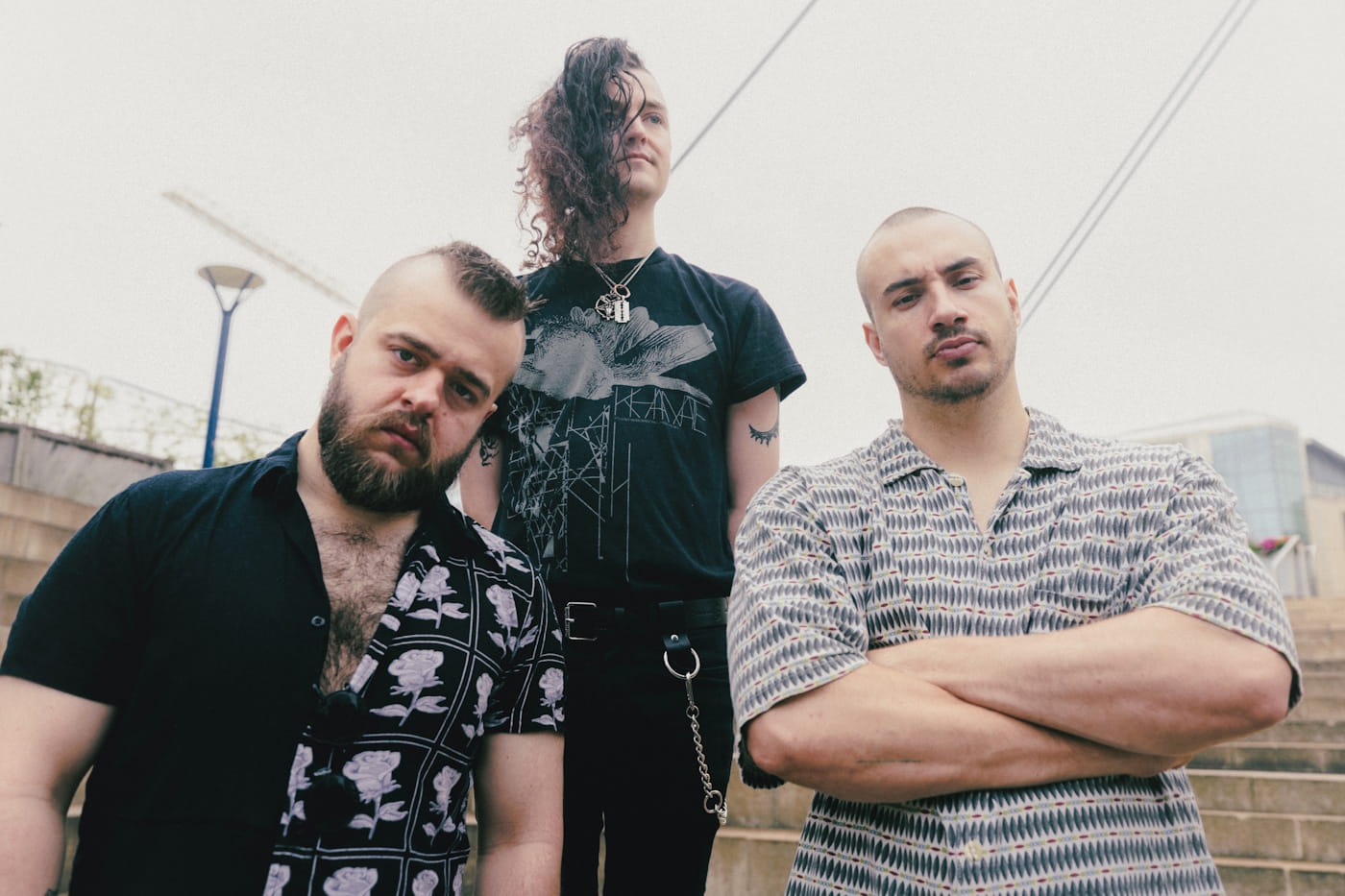
Epimetheus is: Ben Price (vocals, bass), Cillian Breathnach (guitar), James Jackson (drums, vocals). “Perseus 9” is out 6 February 2026 via self-release.