
A one-man instrumental project walks out of a decade-long drawer and straight into the kind of territory where post-rock trades notes with film scores, ambient textures meet symphonic percussion, and death metal influences show up uninvited but welcome.
Sadface is the work of Paweł Gregorczyk, a Warsaw-based musician and journalist who spent years composing in silence before deciding — around a milestone birthday and a brutally honest self-inventory — that his music either sees the world now, or never does.
The debut EP, “Draped in the Hollow,” just dropped. Four tracks. No vocals. No band. No genre loyalty. What holds it together is a thick, almost tactile atmosphere — dark, cinematic, and built on the kind of emotional logic that doesn’t care whether the sound underneath comes from orchestral swells, electronic drones, or distorted guitars standing in for riffs.
The EP opens with something mystical, film-score territory — slow, deliberate, pulling you into a space that feels composed rather than performed. Then things shift toward something more ominous, not in an oppressive way, but in a way that taps into something dangerous, almost forbidden. The accompanying music video for the title track amplifies that sense of threat, visualizing a danger that has a strange resolution sewn into it — a melodic release that arrives just when you need it. Whether that release comes before the end or after it is a question the track leaves open.
From there, Paweł moves into more progressive, orchestral territory. “Do Not Play With the Dark” carry a compositional weight that practically begs for a full live band — the kind of piece where you can hear the potential for an enormous stage performance buried inside what is, for now, a home-studio recording. He couldn’t afford a full ensemble this time, but maybe that’s exactly the constraint that keeps the project honest.
The whole thing closes with an ambient, drone-like reflection — the sonic equivalent of walking through foggy, half-lit streets from some unnamed horror setting. Or maybe it’s not fear at all. Maybe it’s hope. A warm, reflective wrapping that lingers after the last sound fades. Touching stuff. The kind of music that stops you mid-thought and holds you there.
Wyświetl ten post na Instagramie
Sadface has technically existed for over a dozen years — at least as a name and a logo. Paweł made music “for the drawer,” as he puts it, never showing it to anyone. The reason is almost textbook: the Dunning-Kruger effect in reverse. His earliest projects — now-forgotten names like Sinfonia Obscura and Prypiat — came with the euphoria of someone who doesn’t yet know what they don’t know. Tracks were in mono, everything cranked to max, no actual mix to speak of. He was happy. Then competence crept in, and with it, crippling doubt.
“I set up camp in that valley for many long years, convinced that my best time was behind me and that I had lost my artistic abilities along the way,” he says. “Only fragments of ideas were born, ending up forgotten in the depths of a hard drive.”
What broke the cycle was turning forty — or rather, the kind of honest personal audit that milestone birthdays tend to force. He made a list of things finished and unfinished. At the top of the unfinished column: one sentence. Show my music to the world. He sat down at the keyboard, and years’ worth of accumulated ideas started flowing. Within months, he had dozens of minutes of music — the foundation of what will eventually become the full-length debut, “Tenebra Omnia Regit,” expected in 2026.
The first single came together in two days. Paweł was testing a new virtual guitar, improvising, when the timbre transported him into a post-apocalyptic landscape — a lone figure walking through a devastated world after nuclear annihilation. A second guitar joined in, almost like a dialogue between metal guitarists. He describes the process using the word “medium” rather than “author.”
“If you added the characteristic black metal tremolo, drums, and vocals to these melodies, ‘The Last Radiance‘ would fit perfectly into a post-black metal aesthetic à la Mgła,” he notes — a nod to one of Poland’s most respected black metal exports.
The music video doesn’t show the post-apocalyptic vision directly. Instead, it pulls the listener into Cold War-era imagery and the anxiety of approaching catastrophe — a feeling that resonates uncomfortably well with the present.
The second single carries a quiet admonition about the thin line between fascination with darkness and its real presence in our lives. Paweł didn’t want to preach. “We all have free will and bear responsibility for our own choices. I was more interested in showing just how thin the line can be.” The comic-book-style music video follows a group of boys playing with a séance on Halloween, failing to notice the exact moment the game loses its innocence.
The title track — and the EP’s centrepiece — asks what happens if the afterlife is neither light nor punishment, but simply a hollow silence. Paweł calls it a “third way”: not non-existence, but suspension. “You search for voices, familiar faces, or any confirmation that you are not alone, yet you find nothing.”
It’s a pessimistic vision, he admits, but one with a practical takeaway: maybe it’s worth living, loving, and chasing your dreams now — because over there, nothing might be waiting.
The fourth track, “Faint Trace,” was a last-minute addition. Paweł felt the EP was incomplete, that a piece of the puzzle was missing. Rather than pull from material already earmarked for the debut album, he wrote something new — the most cinematic thing he’d composed to date, with a dark Scandinavian noir in mind. He’s not shy about its intended audience: “Attention Netflix, Disney+, HBO Max, Apple TV, Amazon Prime, Canal+, and others — if you’re planning a new crime drama, thriller, or horror, help yourselves to these sounds.”
The emotional logic behind Sadface is specific. Paweł doesn’t treat darkness as an aesthetic to put on. “Darkness is an inseparable part of my personality, so it doesn’t follow behind me — we walk through the world arm in arm.” He doesn’t equate it with evil, either. For him, it’s a form of self-awareness — “the knowledge that not everything in this world is good and that, as a species, we exhibit a startling tendency toward self-destruction.”
He quotes Jung: “Your visions will become clear only when you can look into your own heart. Who looks outside, dreams; who looks inside, awakes.” Then adds, dryly: “I have awakened, and I suffer from insomnia.”
The project’s visual identity reflects this duality. The Sadface logo, designed by Daniel Dostal — described by Paweł as an absolute master of calligraphy in Poland — is an ambigram: it reads the same upside down. Two natures in one form. Paweł references Goethe’s Faust (“Two souls, alas, dwell within my breast”), Tadeusz Miciński, and Hermann Hesse’s Steppenwolf to explain the dualism he carries — “black and white, which never touch to create shades of gray.”
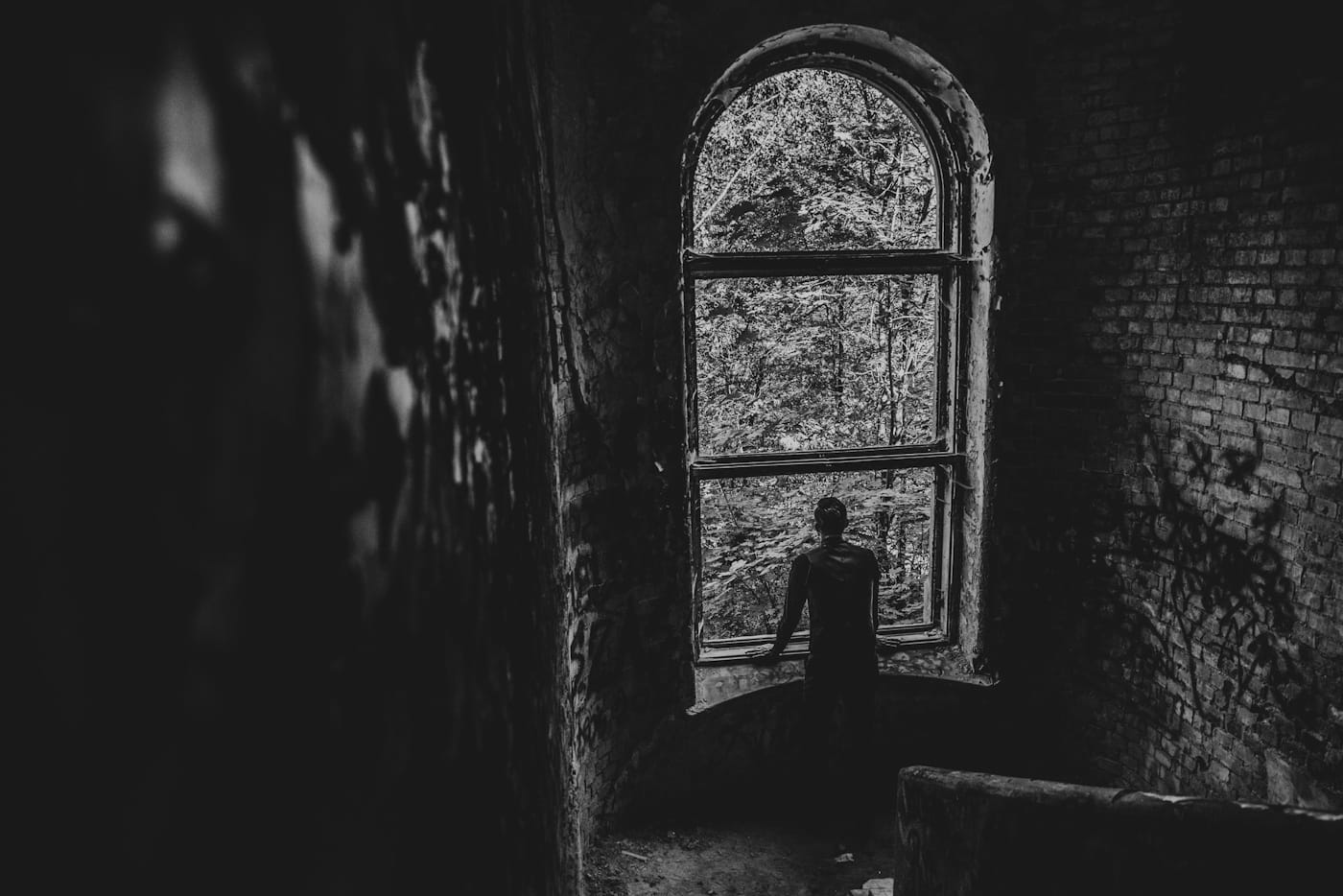
The photo sessions for Sadface were shot at Zofiówka, a former sanatorium for nervous and mentally ill Jewish patients in Otwock, near Warsaw. Before World War II, several hundred people were treated there. During the German occupation, it became part of the ghetto. Over a hundred lives were lost during its liquidation — some executed on the spot, others deported to Treblinka. The Germans later repurposed the facility for the Lebensborn programme. After the war, it served as a tuberculosis sanatorium.
View this post on Instagram
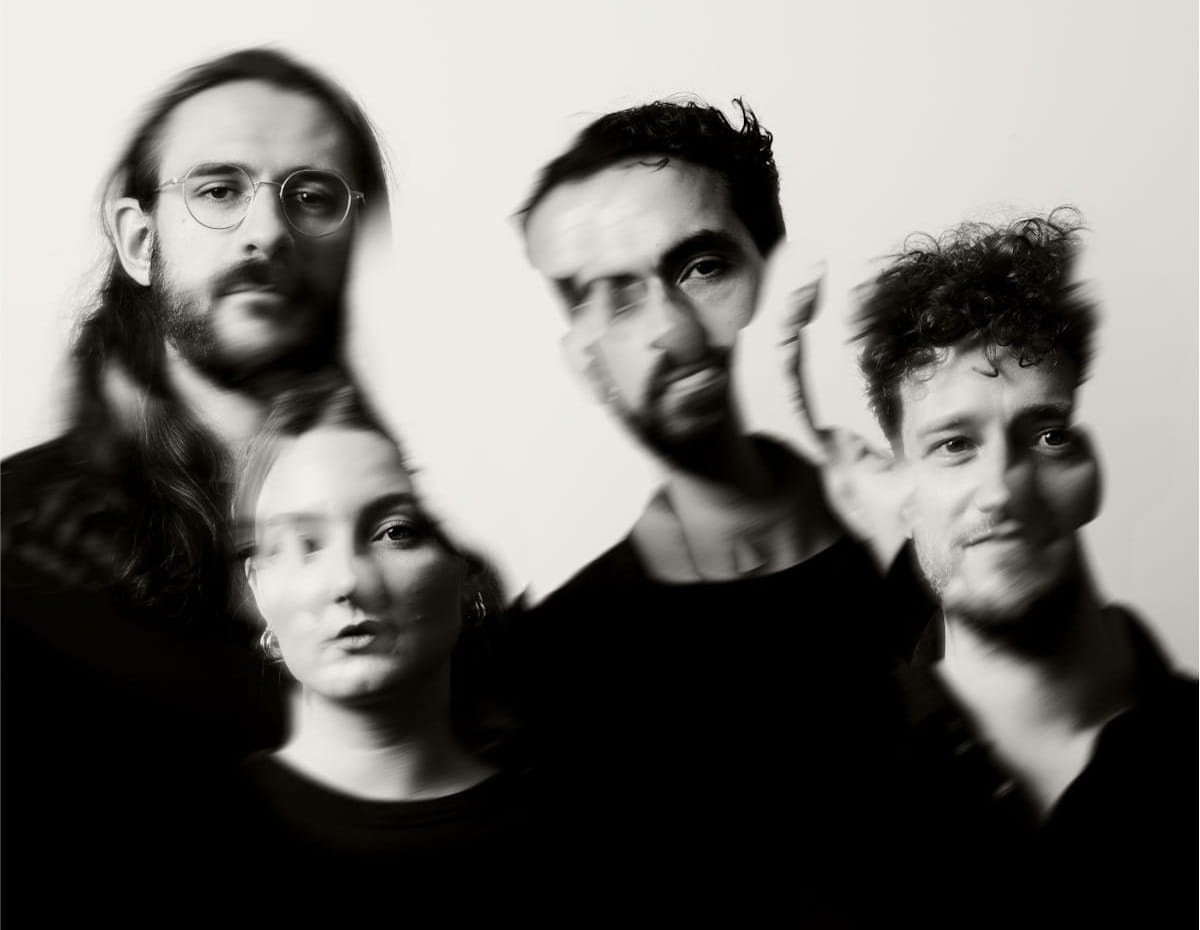
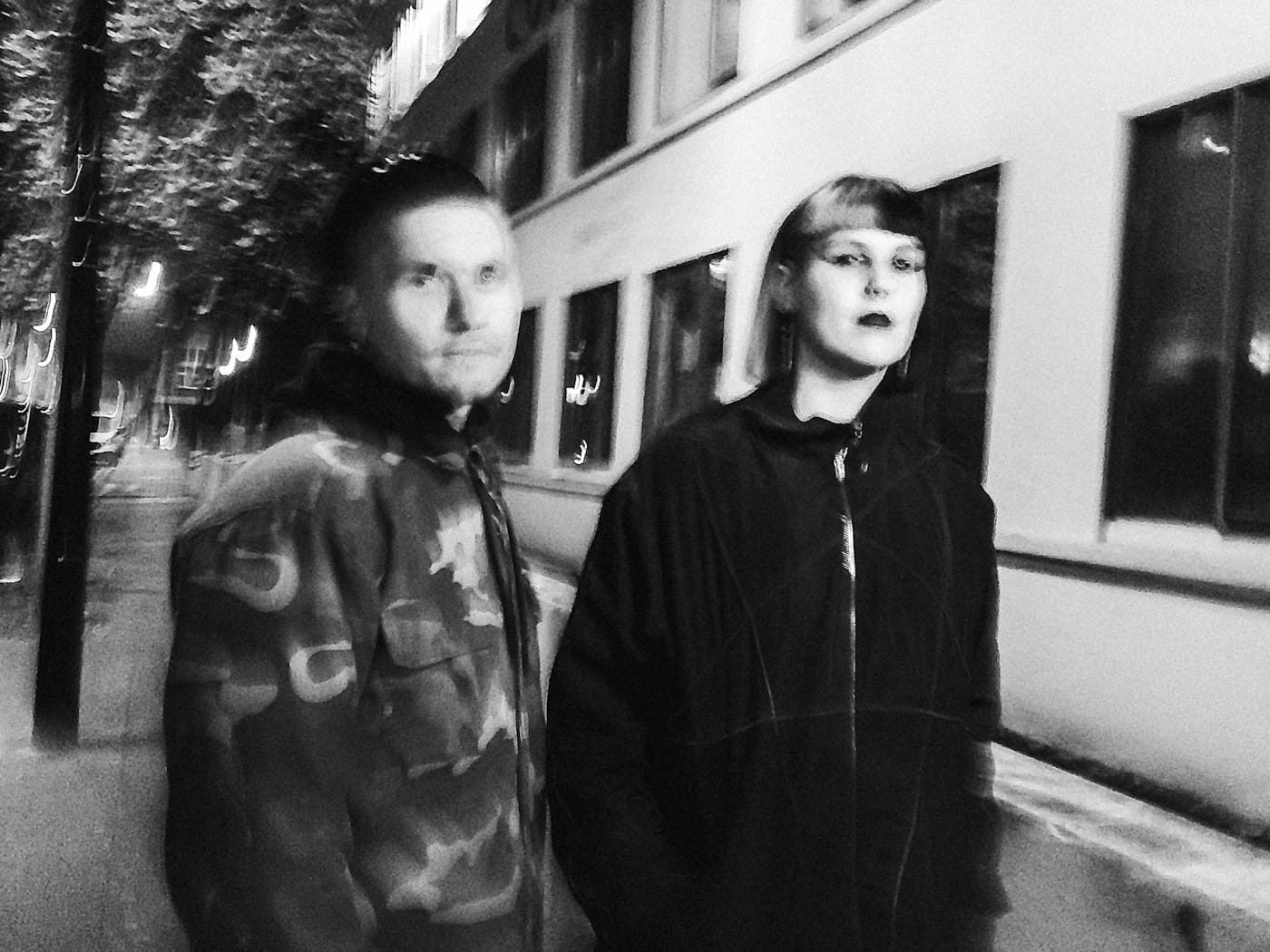
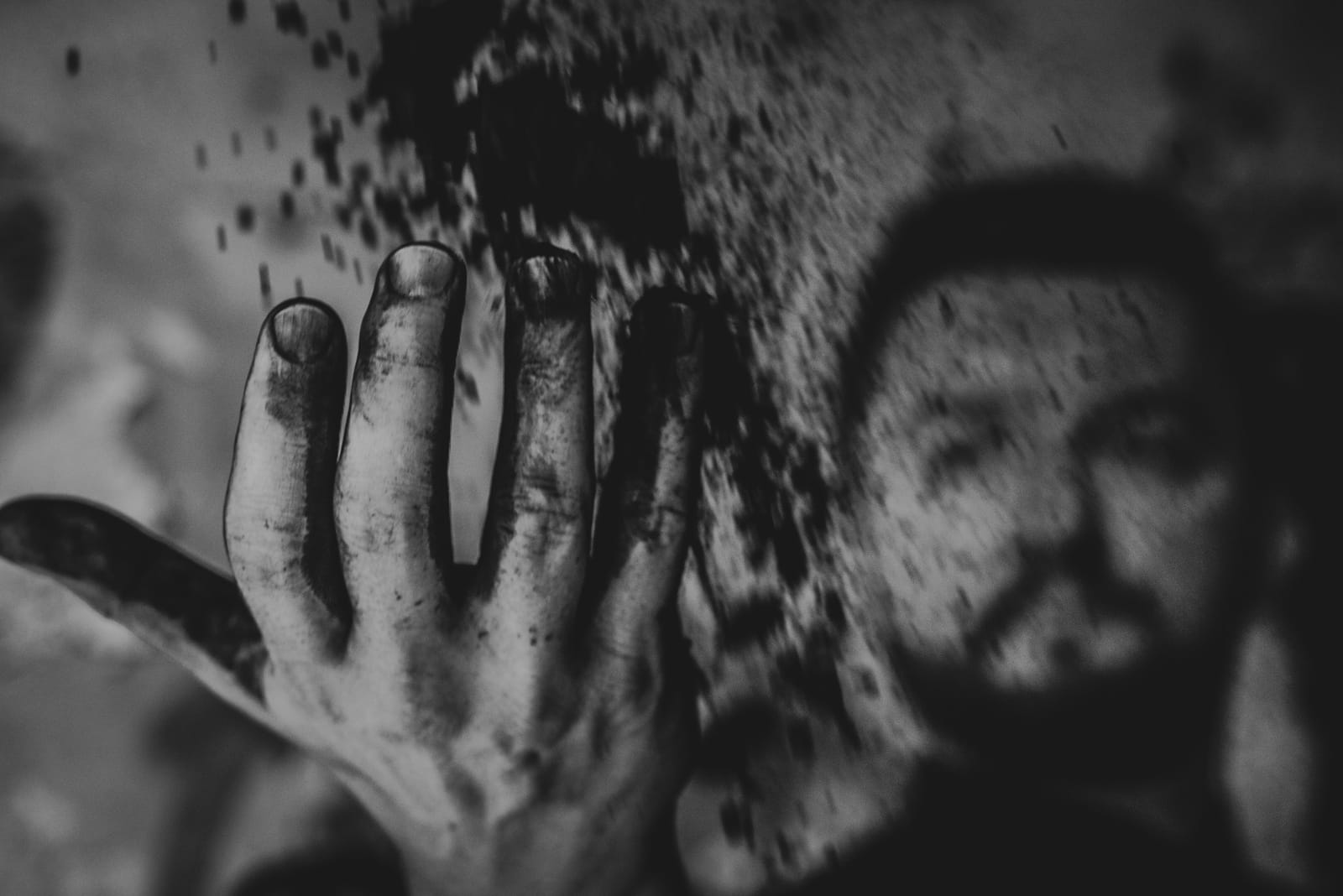
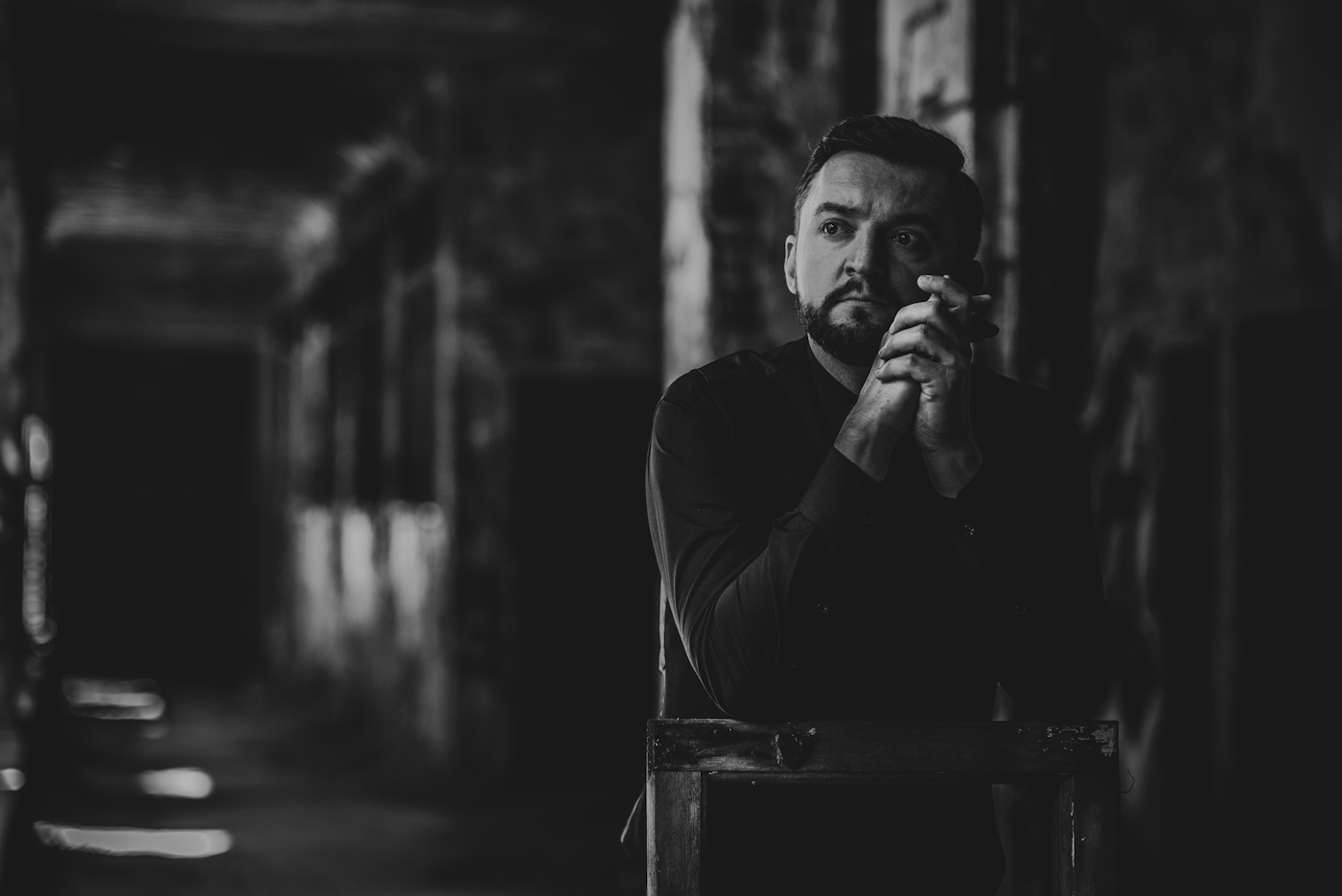
The photographer, Dominika Kudła, typically works concert photography but was chosen for her ability to capture emotional energy between artist and audience. The result, according to Paweł, places him not as the centrepiece of the images but as “merely a witness to its silent history.” The space itself is the protagonist.
Paweł runs Sadface with a daily-discipline approach: every single day, at least one thing that moves the project forward. Sometimes that’s composing. Sometimes it’s ten minutes of voice memos with ideas for cover art or lyrical concepts. When emotion isn’t available for channelling into sound, he works on social media content or video editing.
AI tools play a supporting role — speeding up logistics, helping with contextual learning about production techniques, translating visual ideas into graphics. But songwriting stays entirely human. “It’s too personal a process — a form of expression I’m not willing to delegate,” he says. “As it stands today, AI-generated content rarely holds any emotional or artistic value for me.”
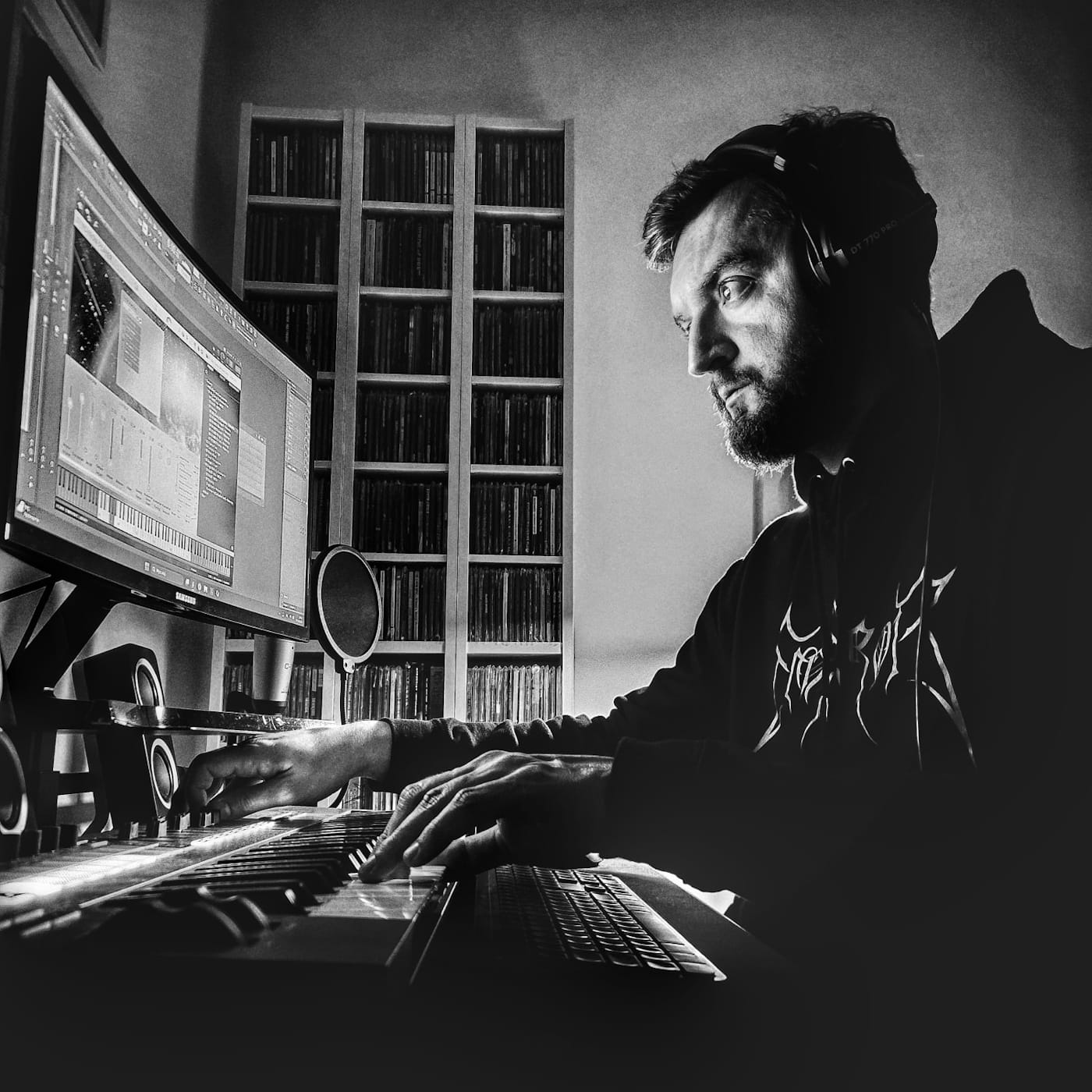
On the production side, the leap has been significant. Tools from FabFilter and iZotope let him “see” the music, not just hear it. He’s become a hunter of high-quality freeware and limited-time plugin promotions. “At some point, money stopped being a real barrier, and the home studio became a perfectly sufficient space for creating meaningful music.”
Paweł’s 2024 was dominated by Blood Incantation’s “Absolute Elsewhere” — a record that fuses death metal with Tangerine Dream and Pink Floyd influences into something unexpectedly cohesive.
Panzerfaust’s “The Suns of Perdition – Chapter IV: To Shadow Zion” set a benchmark for what black metal should sound like in the 21st century. Regular returns to Seth’s “La France des Maudits,” Gaerea’s “Coma,” and Ulcerate’s “Cutting the Throat of God.”
On the Polish scene, Hauntologist’s debut “Hollow” proved that black metal can leave Scandinavian forests and settle in the urban jungle.
Deus Mortem’s “Thanatos,” Blaze of Perdition’s farewell record “Upharsin,” and Brüdny Skürwiel‘s “Silesian Bastard” — whose unpretentious black/thrash made him move, possibly with bonus points for being fellow Silesians.
For 2025, the standout was Dormant Ordeal’s “Tooth and Nail” — a Kraków duo delivering death metal that balances brutality, melody, technicality, and hypnotic atmosphere.
Gorycz’s “Zasypia” overflowed with difficult emotions and defied genre classification.
Deafheaven’s “Lonely People with Power” lingered long after the last note.
Imperial Triumphant’s “Goldstar” hit like a hard drug — “simultaneously destructive and addictive.”
Outside of metal, the melancholy of Ethel Cain’s “Willoughby Tucker, I’ll Always Love You” and Max Richter’s score for the film “Hamnet.”
Warsaw-based Deamonolith got a special mention for their debut “The Monolithic Cult of Death” — formally six tracks, practically one thirty-minute composition.
Sophisticated death metal drawing from Morbid Angel’s Florida sound and Edge of Sanity’s Swedish approach, with saxophone and piano woven in, plus a characteristic motif recalling Emperor’s “IX Equilibrium” era.
So what comes next for Sadface? The full-length, “Tenebra Omnia Regit” — darkness rules everything — is on its way. And beyond that, Paweł already knows the title, thematic concept, and visual direction of the second album. Its central theme: war, and the question of why humanity, having experienced this particular trauma since the beginning, keeps gravitating back toward it.
His ultimate dream is simpler and more concrete: seeing Sadface music placed in a film or a series.
Below, you’ll find our full interview with Paweł Gregorczyk — an extended conversation covering the emotional mechanics of composing in darkness, the Dunning-Kruger trap that kept his music hidden for years, the haunted history of Zofiówka, what it means to write soundtracks for films that don’t exist, his relationship with imperfection, the Warsaw scene, and a detailed rundown of the albums that shaped his 2025. Read on.
Paweł, so let me start from the ground level—when you sit down to create something soaked in sadness and darkness, what actually brings you into that emotional space? I mean that real, everyday moment when something hits you and you think, yeah, this feeling is worth turning into sound, even if you know it’ll keep you in a heavy place for a while.
The element of darkness and sadness has always been within me. I’ve come to terms with the fact that where others see a glass half full, I see it as half empty, and I’ve stopped fighting it. Moreover, when I plan to sit down to create music, I begin to nurture that element within myself; I let it sprout and then bloom. Only then can I release the accumulated emotions in the form of sounds.
This, however, is only one side of the coin. The other is a sudden surge of feelings triggered by world events or contact with art – a film, a series, a play, a painting, or a sculpture. In such moments, something inside me truly breaks, and emotions pour out in a vast stream in the form of music. The creative process is difficult because you are constantly reopening emotional wounds, but once a track is finished, they heal instantly, without even leaving a scar. I believe that entering such a state for the sake of creation brings a sense of catharsis. The feeling of elation and pride in what has been created at the end of this journey compensates for the hardship of the entire process.
I keep thinking about how you once said that joy is easy, almost cheap, but sadness takes work. Do you feel that too when you compose—that certain emotions come out cleaner, more honest, while others feel almost decorative? How do you sense that moment when melancholy stops being just an aesthetic and becomes something that feels painfully true?
Making people laugh doesn’t require a huge amount of effort. Just look at the techniques used in comedies or sketch shows—often very simple means can trigger bursts of laughter. A far greater challenge is to evoke reflection, nostalgia, or genuine emotion in the audience. I don’t believe, however, that we should rank emotions as “better” or more authentic versus those that are somehow less worthy. What matters is that the creator works in alignment with their own feelings and mood. Only then can both joy and sadness avoid carrying any trace of falseness.
I’ve often been asked, “When will you create a happier track?” Meanwhile, most music in the world brings joy, makes people dance, and lifts moods. What fascinates me is the emotionally harder, rarer, and deeper side of music. I can’t translate happiness into sound, because it ends up sounding false and simply wrong. Let those who are experts in it make people dance. I invite listeners instead into musical darkness and a journey into the depths of their own emotions.
In SADFACE, this is neither an aesthetic device nor a preconception that I must create sad pieces. I always have in mind the words of Carl Gustav Jung: “Your visions will become clear only when you can look into your own heart. Who looks outside, dreams; who looks inside, awakes.” I have awakened, and I suffer from insomnia.
And when you’re writing, do you ever feel the pressure to brighten things up just because the world leans toward “easy listening”? Or is SADFACE the one corner of your life where you let the darkness stay exactly as it is, even if that means sitting with it longer than feels comfortable?
I try not to think of my music in such terms. I don’t create it according to a set formula where one section must be dark and the next lighter. If I had to stick to predetermined rules or conventions, I would probably stop creating altogether—passion would very quickly turn into something task-oriented and analytical.
In SADFACE, I not only allow darkness to remain exactly as it is. Every sound here has a green light to be itself. If it was made for SADFACE, then it is a SADFACE sound.
Let me slide a little deeper into that “no-labels” philosophy—was there a moment when you realized genre was holding you back more than helping you? Like, some day in the studio when you thought: yeah, I don’t need this box, I need space.
Fortunately, from the very beginning of SADFACE I abandoned any kind of label-driven thinking. I operate so far outside those categories that I actually find it very difficult to define the musical genre I move within. Because what is SADFACE, really? In some tracks there’s a hint of post-rock, in others it leans closer to film music, while elsewhere you can hear metal influences, where strings take the place of traditional riffs. There is also no shortage of dark electronics, ambient textures, or video-game soundtrack elements.
Genre is not the key factor here—the emotional charge that binds everything together is. It is this emotional core that defines the direction in which the project is heading.
I’m wondering how much you think in terms of “sound worlds” instead of genres. Like, when you pull a texture from film music, a mood from metal, or tension from electronic music—is that conscious archiving, or do you just follow the emotional gravity and let the song figure out what it wants to be?
I never allow my tracks to become “bamboccioni”—grown-up children.I release them into the world quite quickly, so they can gain their own experiences independently. Thanks to that, they decide fairly early on who they want to be. I’m convinced that every musician, in one way or another, archives their influences. What matters, however, is using them openly, without rigid preconceptions, because those easily lead to empty formulas. If a track were to suddenly turn from post-rock toward trip-hop, I see nothing wrong with that—as long as emotional coherence is preserved.
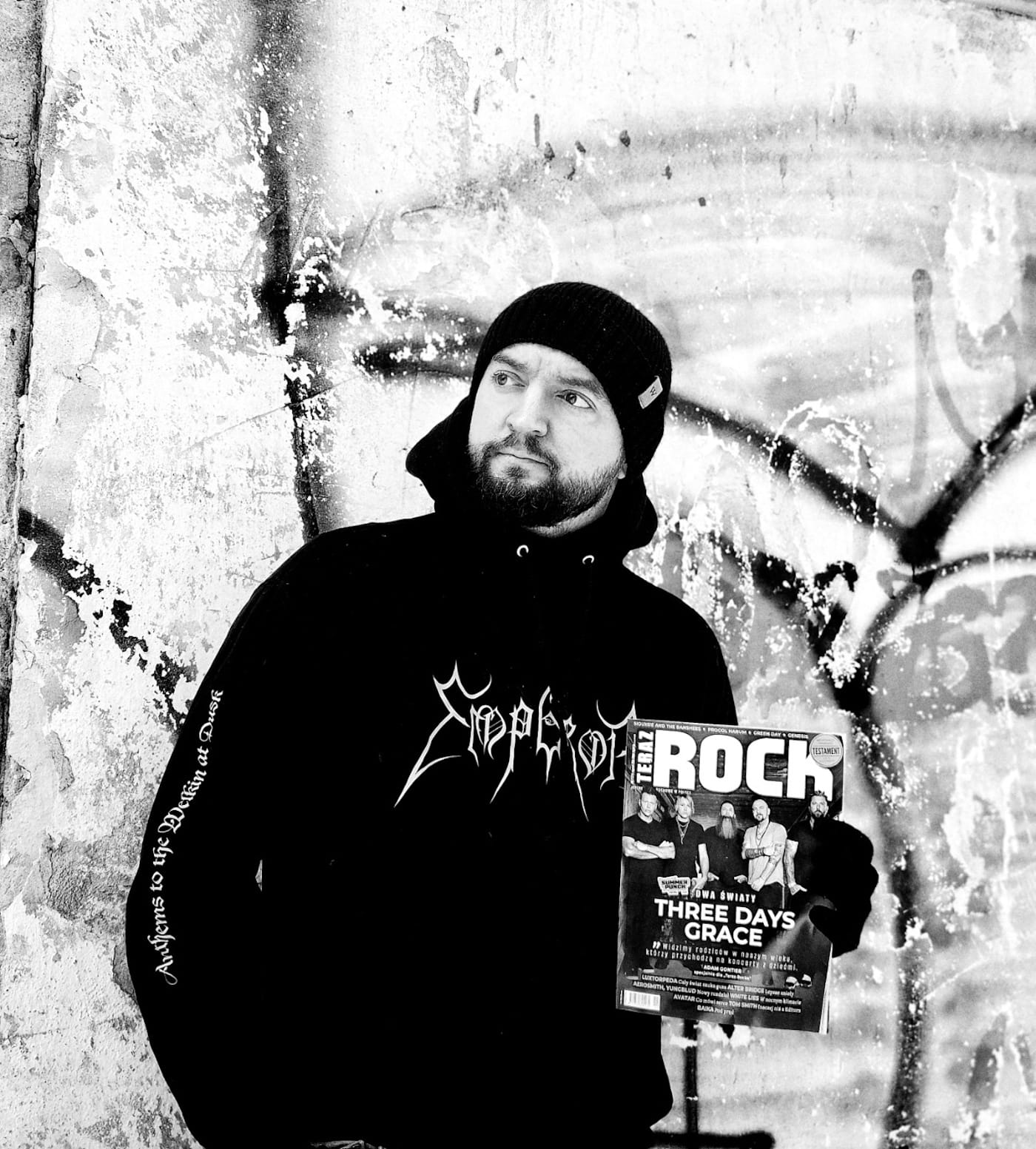
You often talk about music becoming a kind of movie in your head before it becomes a track. How early in the process do those scenes appear? Do you see landscapes, characters, or just some vague weather system hanging in the air that slowly becomes a narrative?
It’s a very complex process that takes many different forms. Sometimes I sit down at the keyboard with a specific idea, already accompanied by fully formed scenes and images. At that point, I know how the music should complete what remains unseen “on screen” and convey the atmosphere of a film. It’s at this stage that I decide on the instrumentation, the arrangement, the emotional arc of the entire piece, as well as its climax and finale.
At other times, everything begins with a particular sound or its timbre. I simply search for an instrument that will start a story I don’t yet know. This is how the first SADFACE single, “The Last Radiance,” came into being. The guitar tone immediately transported me to a desolate wasteland in a post-apocalyptic reality. The melody of the first guitar entered into a dialogue with the second, and the cinematic visions transformed into music. The rest flowed naturally, and the track was completed at a remarkable pace.
The third path takes the form of visualizing emotions. As an empathetic person, I immerse myself deeply in the feelings of others. Years of working as a journalist have intensified this trait—daily contact with other people’s tragedies has led me to strongly co-experience their emotions. Sometimes a single spark is enough for me to start thinking intensely about what others might be feeling in a given situation. Sometimes that same spark is enough for my mind—often subconsciously—to begin generating images connected to those emotions. At that point, a screenplay for an imagined film emerges, and the path toward its soundtrack becomes a natural one.
And when the track is finished—do you keep the film in your head to yourself, or do you like the idea that listeners might invent completely different scenes and maybe even ruin your original vision in the best possible way?
I hold a deep hope that, through SADFACE’s music, images will emerge in listeners’ minds that differ from my original intention. I even dream of the same piece being able to create different scenarios at different moments in a listener’s life. In this way, music lives within a person and makes them want to return to it.
I also know that my own vision remains intact, because other people’s interpretations never become my own. Even if external suggestions influence how I perceive a track, my personal, intimate images will always stay with me. Imagination is a powerful and deeply individual human tool, and art allows us to share it with others.
Speaking of imagery, this whole ambigram logo idea—this dance between light and shadow—does it represent where you are emotionally right now, or is it more of an anchor for the project itself, something that stays still while you shift around it?
The SADFACE logo doesn’t reflect anything from the “here and now.” Its first iteration was created over a dozen years ago, which goes to show just how long I’ve been making music for my own desk drawer. The author of this extraordinary, symmetrical lettering is Daniel Dostal—for me, an absolute master of calligraphy in Poland. After all these years, I reached out to him to prepare a new vector version, as the file I had was no longer up to today’s standards. Daniel made some cosmetic adjustments and sent back the final version, along with an alternative variant more deeply rooted in historical calligraphy. Both forms are beautiful, so the original logo became the centerpiece of the visual identity, while the alternative version appears as a graphic accent on the covers.
Wyświetl ten post na Instagramie
I’m not a big fan of astrology, so I’m not sure if it’s a matter of my zodiac sign (Gemini) or simply my character, but I have always carried two extreme natures within me. A kind of Yin and Yang that together form a single whole. The SADFACE ambigram is a symbolic reflection of this dualism—even when rotated 180 degrees, it still reads as the same word.
Nearly two hundred years ago, Goethe wrote in Faust: “Two souls, alas, dwell within my breast.” Tadeusz Miciński also devoted much attention to the theme of duality, and Hermann Hesse’s Steppenwolf is based on this very concept. So, it is neither a groundbreaking nor a peculiar trait, though I feel it is exceptionally intensified in my case. I carry within me black and white, which never touch to create shades of gray. The SADFACE logo is therefore both deeply personal and profoundly symbolic.
Even if my music were to undergo a drastic change in the future, the logo would still accurately depict the duality of existence. We might perform a volte-face, yet we will remain ourselves.
When you think about duality, does darkness feel like a place you’re exploring, or like something that’s been tagging along behind you for years, waiting for you to finally give it shape?
Darkness is an inseparable part of my personality, so it doesn’t follow behind me—we walk through the world arm in arm. I don’t believe that through music I give it shape; I simply describe it.
Darkness has accompanied humanity since the beginning. Without it, there is no light. It’s difficult to imagine religions if we didn’t juxtapose the bright side with the dark. However, I do not equate darkness with evil, as these are entirely different concepts. To me, darkness is a form of self-awareness—the knowledge that not everything in this world is good and that, as a species, we exhibit a startling tendency toward self-destruction.
It is remarkable how much harm we have inflicted upon others and ourselves since the dawn of time, despite being perfectly aware of the fragility of existence. Everyone possesses this awareness to some degree, but there are those upon whom this knowledge strikes with greater force and can become overwhelming. I belong to that group. To me, the human being is a creature that is simultaneously fascinating and terrifying.
Wyświetl ten post na Instagramie
I wanted to ask about the visual part of SADFACE, because those photos in Zofiówka carry a whole extra weight. When you walked through that abandoned place, did it change how you heard your own music? Or maybe it confirmed that the atmosphere you were building wasn’t just aesthetic but rooted in something painfully real?
“Zofiówka” was a Sanatorium for Nervous and Mentally Ill Jews in Otwock. Before World War II, several hundred people were treated here, and during the German occupation, the facility became part of the ghetto. During its liquidation, over a hundred lives were lost—some were executed on the spot, while others were deported to Treblinka. Subsequently, the Germans adapted the center for the “Lebensborn” program, using it for purposes such as racial selection and the forced Germanization of Polish children. After the war, “Zofiówka” functioned as a sanatorium specializing in the treatment of tuberculosis.
The history of this place is therefore marked by a tragic burden. I first encountered it nearly a decade ago, and since then, I began to delve into the fates of the facility itself, the medical team who worked there, the patients, and the children who resided there later. I even thought about creating a multimedia reportage dedicated to “Zofiówka” and its history, but in the end, I only managed to produce a short music video under the name SADFACE. In hindsight, this can be considered the first official seed of the project.
All of this made the abandoned facility an obvious location for a photo shoot. It is not a place that merely symbolizes darkness visually—it has truly experienced its presence. Unimaginable things happened within its walls, and that sense of weight is still palpable there.
Wyświetl ten post na Instagramie
I also knew that conveying this in an image would require exceptional sensitivity, which is why I invited Dominika Kudła to collaborate. Although she specializes in concert photography, she has an extraordinary gift for capturing the emotion of the moment—that energy the artist gives to the audience and which the audience gives back in return. I was convinced she could also capture the emotions accompanying a session for SADFACE. I was not mistaken.
This session resonates perfectly with what I mentioned earlier—darkness always accompanies light, and it is worth remembering that. I hope that one day humanity will start to draw wise conclusions from such stories, though for now, nothing points to that.
And how do you two—your sound and Dominika Kudła’s eye—meet in the middle? Do you send her moods and themes first, or is she the one who reflects something back to you that you didn’t entirely know was there?
It was a very creative encounter. First, I explained to her the concept behind SADFACE, as the photo shoot was planned even before the release of the debut single. Then, I showed her reference photos, including the work of renowned photographers like Yousuf Karsh, Arnold Newman, and Herb Ritts, as well as bands and artists whose image serves as a compelling point of reference for me. Of course, we also went over the specifics regarding the location itself.
I knew how I wanted to be dressed for the session and where it would take place, but the rest was in the hands of this talented photographer. Dominika perfectly captured the atmosphere I was aiming for. One might get the impression that I symbolize a contemplation of the site’s tragic fate rather than serving as its centerpiece. It is the space that is the protagonist here; I am merely a witness to its silent history.
There’s also something very personal in the way you describe years of hesitation, the Kruger-Dunning loop, the feeling of never being good enough. How did you break that trap? Was there one track, one day, where the doubt finally shut up long enough for you to finish something?
The Dunning–Kruger effect suggests that the less we know about something, the more confident we feel—the so-called “peak of mount stupid.” It is only as we acquire competence that we realize how long the road ahead truly is, at which point we fall into the “valley of despair.” Paradoxically, it is precisely this moment that allows the real climb up the “slope of enlightenment” to begin, where confidence no longer stems from ignorance, but from genuine skill.
I remember my musical beginnings in now-forgotten projects like Sinfonia Obscura or Prypiat. They were accompanied by the euphoria of creation and immense satisfaction from completed tracks. Back then, I was oblivious to how terrible it all sounded—how much the rhythm faltered, how poorly the arrangements were structured. However, once I crossed the “peak of mount stupid” and landed in the “valley of despair,” I began to mistakenly equate that early period with boundless creativity. I set up camp in that valley for many long years, convinced that my best time was behind me and that I had lost my artistic abilities along the way. Only fragments of ideas were born, ending up forgotten in the depths of a hard drive.
We often treat milestone birthdays as turning points. Turning twenty symbolically opens the door to adulthood, thirty brings order to it, and forty almost always provokes deeper reflection. It was the same for me. I did a personal soul-searching, listing the things I had managed to achieve and those that had been waiting for closure for years. At the very top of my “unfinished business” list was a single sentence: “show my music to the world.”
I knew it was the perfect moment. Musical self-awareness, a lack of fear regarding judgment, and a hunger for creation made me decide: it’s now or never. I sat down at the keyboard and began to write. It turned out that the ideas accumulated over the years began to flow in a wide stream—within a few months, dozens of minutes of music were created, forming the foundation of the debut album whose premiere is drawing ever closer.
I’m really curious about “The Last Radiance.” Since it came together so fast, did you feel more like the author or the medium? Because sometimes the best pieces feel like they wrote themselves while we just tried not to get in the way.
This question contains a very astute, if surprising, thesis. When I reflect on it, the word “medium” truly is the best way to describe that moment. As I mentioned before, this is one of those tracks where everything began with the sound of the instrument rather than a specific melody. I wanted to test out a new virtual guitar, so I simply started to improvise. Its timbre immediately transported me into a specific vision, which became the starting point for telling a sonic story.
A second guitar very quickly joined the main theme. I began to imagine a musical dialogue, almost as if it were being conducted by guitarists in metal bands. By the way, while listening to this piece, I’m constantly struck by the thought that if you added the characteristic black metal tremolo, drums, and vocals to these melodies, “The Last Radiance” would fit perfectly into a post-black metal aesthetic à la Mgła.
Within a single evening, the entire skeleton of the track was essentially ready. The next day, I recorded the choir parts, and the composition was complete. Such situations are rare for me, however. More often than not, I spend weeks creating music, rather than finishing it within twenty-four hours.
And the whole post-apocalyptic scenery behind it—was that something you had been carrying for a long time, or did it hit you suddenly while writing? Like someone walking in the ruins and hearing echoes—was that your starting point?
The post-apocalyptic atmosphere was more of a loose motif that had been drifting in the back of my mind for a while, but it hadn’t yet been paired with a specific musical vision. Everything changed because of the guitar sound, which fit that imagery perfectly. From that point on, the visuals just started coming together on their own.
The idea for the music video came just as quickly—the same night the skeleton of the track was born. The next day, I recorded the choir parts, and the whole thing came together in a form that felt very close to me from the start. The end result is exactly what I wanted to achieve.
Same with “Do Not Play With the Dark”—there’s a sly warning in that title. When you were writing it, were you thinking about real moments in your life where curiosity crossed into danger, or is it more universal—a message about how darkness seduces everyone eventually?
The more curious we are about the world, the more often we notice its dark side. This track carries a kind of warning—to observe the darkness without becoming one of its creators. It’s incredibly easy to cross that line today; you only have to look at the rising radicalisms, the conflicts breaking out almost daily, or the widespread acceptance of aggression—if not physical, then at least verbal, so prevalent online.
I didn’t want to lecture or explicitly warn anyone. We all have free will and bear responsibility for our own choices. I was more interested in showing just how thin the line can be between a fascination with darkness and its real presence in our lives—and that sometimes it’s worth pausing for a moment to ask ourselves if we’ve taken one step too far.
The music video for “Do Not Play With the Dark,” though presented in a comic-book style, captures this meaning well. A group of boys is playing with a séance on Halloween, failing to notice the exact moment when the game loses its innocence.
Now I want to drift into the album. “Tenebra Omnia Regit”—darkness ruling everything—sounds heavy even before you press play. How big is the concept in your head? Is it a world with its own rules? Or more like a mirror held up to the stuff we’re all trying not to think about?
You’ve put it beautifully—it is, above all, a mirror reflecting what we often choose to ignore. As a species, we have always been drawn to the forbidden. After all, the very concept of sin stems from dark desires, from the need to break rules and act against the established order. Wars, terrorism, xenophobia, or hatred are not extraterrestrial entities—they are the products of human actions. In this sense, darkness truly does seem to dictate its terms to us.
At the same time, on the album, darkness is not limited to this single dimension. There are questions about what awaits us after our physical existence ends—whether it is an absolute end and emptiness, or perhaps a meeting with loved ones who passed before us. I also venture into the darkest corners of the human mind, trying to understand what lies within the thoughts of serial killers.
Since SADFACE is an instrumental project, the texts serve as a kind of postscript—a hint or a trail leading to what guided me during the creation of a particular track. These visions are completed by the music videos. I believe that art should, above all, ask questions and provoke the search for answers, which is why each piece is accompanied by its own internal story.
And that EP before the album—those two singles plus “Draped in the Hollow”—when you think about that video and its symbolism, what’s the one meaning you hope slips through, even if people interpret the imagery in a completely different way?
I’d like to provoke a reflection on the very concept of eternity. We often imagine “the other side” as a place full of light (or punishment), whereas in “Draped in the Hollow,” I ask: what if there is only a hollow silence and solitude on the other side? It’s a vision of a “third way”—the titular void, which is not non-existence, but rather a state of suspension.
In this space, you search for voices, familiar faces, or any confirmation that you are not alone, yet you find nothing. The music video tells the story of being either the first or the last in a place where time and grace have ceased to exist. It’s about a fundamental uncertainty: whether anything at all awaits us on the other side. And while this is a pessimistic vision, perhaps it encourages the thought that it’s worth living, loving, and pursuing your dreams here and now—because “there,” there might be nothing left waiting for us.
Coming back to the EP itself, I was haunted by the thought that the premiere track and the two singles were somehow unfinished, that an important piece of the puzzle was missing. So, at the last minute, I decided to add one more track to the release. However, I didn’t choose any of the songs already prepared for the debut album that are just waiting for final production. Instead, I created something completely new. I wanted the release to open with a very intimate, atmospheric track, while also having this new recording close it like a compositional bookend.
That’s how “Faint Trace” was born, and it’s the most cinematic piece I’ve composed to date. While writing it, I had a dark, Scandinavian-style noir in mind. For me, this track is a showcase of the cinematic potential of SADFACE and a clear declaration: “Attention Netflix, Disney+, HBO Max, Apple TV, Amazon Prime, CANAL+, and others—if you’re planning a new crime drama, thriller, or horror, help yourselves to these sounds!”
Let me switch gears a bit because I love the practical side of art too. How do you actually balance all this with daily life—being a dad, having a job, keeping the creative door open without burning out? I feel like a lot of people in similar situations would want to know the unglamorous tricks that make the project possible.
Many classic pop-culture stories are based on the monomyth described by Joseph Campbell in The Hero with a Thousand Faces—a template where the hero’s everyday life is disrupted, and one of the key stages is a series of trials they must face. Creating music for SADFACE, I also feel like the protagonist of such a story, where these trials aren’t spectacular in form, but rather consist of struggling with the gray mundane—the greatest enemy of creation. However, I believe that the experience gathered so far will be helpful in the next stages of this journey.
When I decided to take SADFACE seriously, I promised myself that every day I would do at least one thing that brings me closer to my goal. It’s not always composing music; sometimes it’s side tasks that are still vital to the project. Even on my busiest day, I stick to this resolution. If I only have ten minutes, that’s enough to record ideas for cover art or a lyrical concept on my voice memos. If I have two free hours but lack the emotion worth channeling into sound, it’s a good time to prepare social media communication or start editing a music video.
AI-based tools have proven to be a huge support in this daily logistics. They allow me to speed up many processes, limit tedious research, translate visions into actual graphics, or create music videos without involving an entire film crew. Because of this, the project can function even when time and resources are scarce.
And finally, the most important part: none of this would be possible without the support of my loved ones. They cheer me on, listen, review, offer advice, and mobilize me to act. Special recognition goes to my partner, who gives me the space for artistic fulfillment. I often get so lost in a creative frenzy that only she senses the right moment to set a healthy boundary—ensuring that our relationship doesn’t suffer. This harmony gives me immense comfort while working on SADFACE.
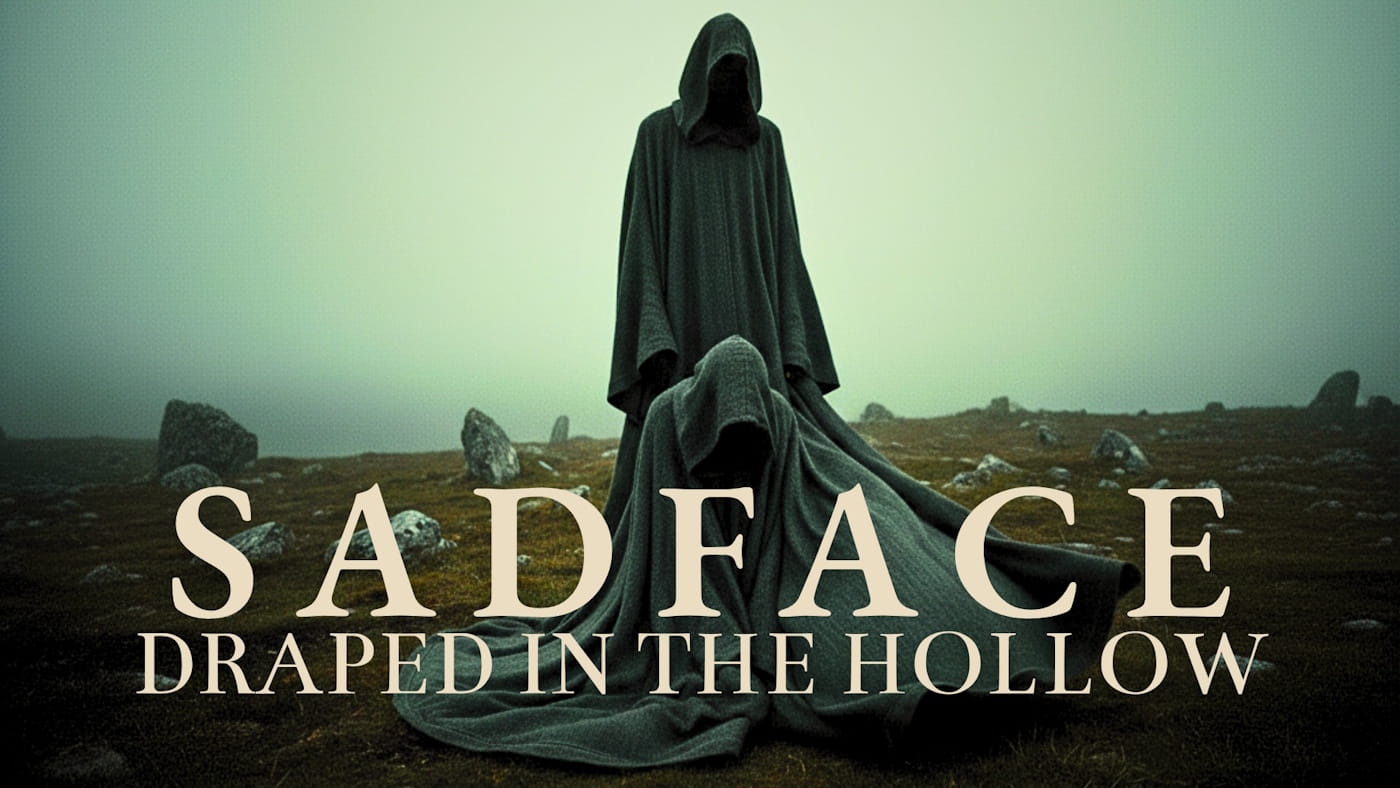
And with modern tools—AI, home-studio gear, digital workflows—what ended up helping you the most? Are there specific tools that saved you hours, or something that unlocked your sound in a way that wouldn’t have been possible ten years ago?
A decade ago, my music simply didn’t sound right. I was writing tracks, but I never actually produced them. The recordings were in mono, every instrument was cranked to maximum volume, and an actual mix simply didn’t exist. It’s only now, since I’ve taken production seriously, that I’ve learned how to pan instruments, set proper levels, and consciously shape the sound. The gulf between what I used to do and what I can achieve now is massive, though I still have a long road ahead in refining my craft. A road that, I suspect, will never truly end.
In the beginning, I gathered knowledge from online courses, e-books, and tutorials. However, they often failed to answer specific questions regarding my own tracks, which frequently left me at a standstill. It was AI that finally allowed me to learn contextually—I could not only find precise answers to immediate production hurdles but also deepen my understanding. I could ask what would happen and why if I changed a certain parameter, how others achieved a specific effect, or delve into music theory and arrangement logic. As a result, I began to better understand the principles behind my decisions, hearing their consequences and moving away from working blindly. From one track to the next, the process is becoming increasingly intentional.
That said, I don’t outsource the songwriting or the shaping of the sound to artificial intelligence. It’s too personal a process—a form of expression I’m not willing to delegate. I treat AI strictly as a tool for learning and analysis, not as an author or collaborator. As it stands today, AI-generated content rarely holds any emotional or artistic value for me.
At the same time, I keep a close eye on the latest instruments and VST plugins. Each new generation of tools offers a better workflow, more intuitive interfaces, and more refined presets. Solutions from companies like FabFilter or iZotope allow me to not just hear but also “see” the music, which significantly simplifies working on the stereo field or analyzing specific frequency bands. I’ve also learned to hunt for high-quality freeware—virtual instruments that don’t cost a cent but can sound beautiful and fully realize my musical visions. Often, commercial tools are also available for free during limited-time promotions. At some point, money stopped being a real barrier, and the home studio became a perfectly sufficient space for creating meaningful music.
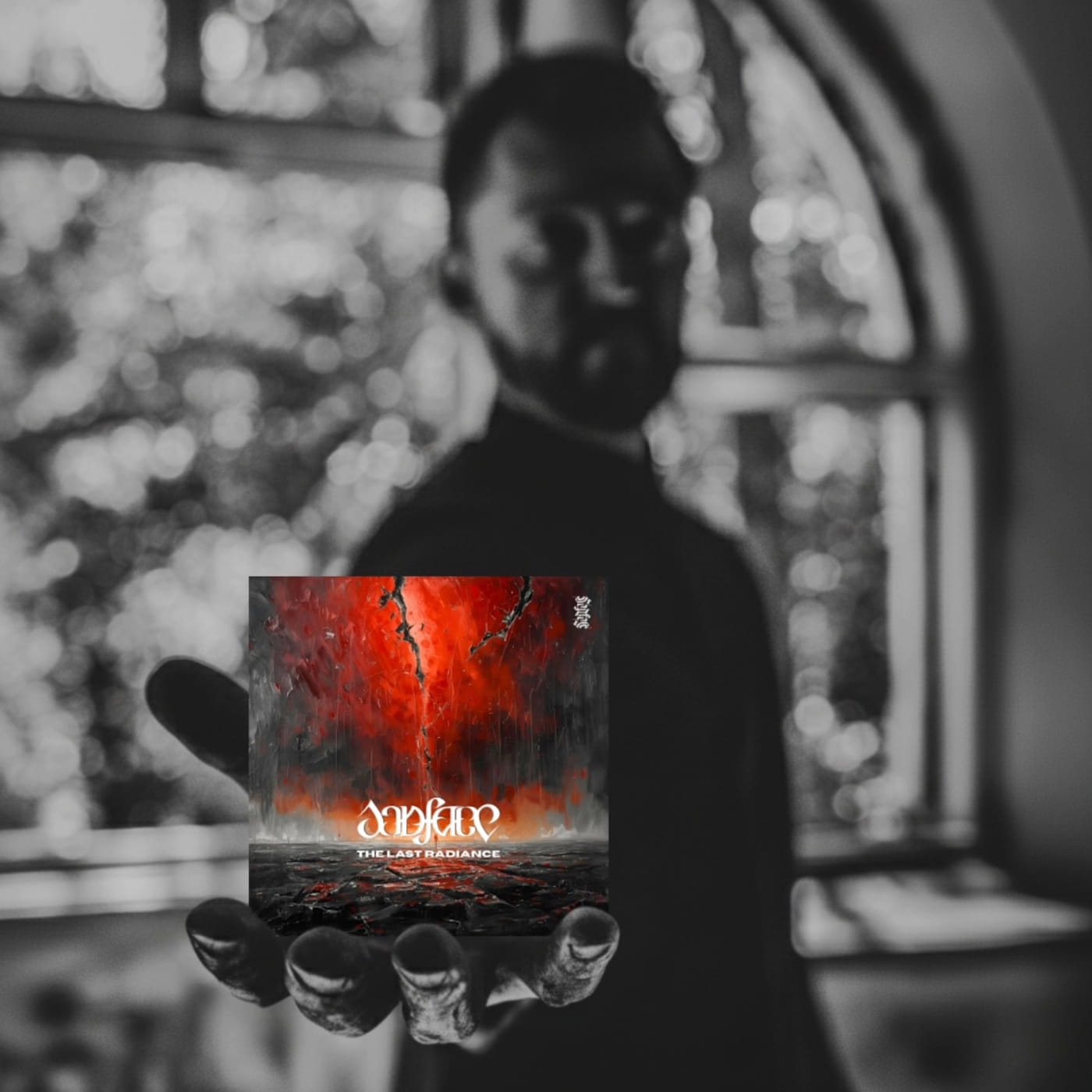
If someone out there is sitting on years of unfinished ideas, doubting themselves the way you once did—what would you tell them? I don’t mean motivational poster stuff, but the real advice, the things you learned the hard way.
Two key points stand out for me. I remember my past self, creating dozens of musical motifs that I never developed into full-fledged tracks. Our time and energy are limited, so sometimes it’s better to invest them in developing a single idea rather than spreading them across dozens of short fragments that will likely fade into oblivion anyway. From scattered pieces, you can’t even assemble a single, let alone an album.
The second point is a difficult but necessary lesson in saying “stop.” We can’t tinker endlessly with a track in search of the perfect formula. We’ll never find it, because there will always be some nuance we want to adjust, rearrange, boost, or cut by a decibel. I don’t want to end up like Frenhofer in Balzac’s story, who chased perfection so obsessively that his painting under the weight of constant corrections became a shapeless chaos. I struggled for a long time with the paralysis of perfectionism, until I realized that the authenticity of imperfection matters more than the constant fear that a piece isn’t good enough to share with the world.
Now let’s wander into community a bit—what’s your local Warsaw scene looking like these days from your perspective? Do you feel connected to it, or are you more of a quiet observer standing slightly outside the frame?
Just a few weeks ago, I would have said that I was merely observing the local scene from the outside—often attending shows where local support acts played. My level of involvement wasn’t particularly high. However, I’ve reached a point where I’ve shaken off the impostor syndrome and truly appreciate what I’ve managed to create so far.
I’ve decided that the time has come to collaborate with other artists. I’ve just written an intro for a very interesting band on the border between black and death metal, who are about to release their debut EP. I’m still dialing in the sound of the track, so I haven’t shared it with the band yet. Whether our artistic visions will align remains a mystery. Even if the collaboration doesn’t work out, I’ll certainly use the track on my second album—a journey that’s still a long way off, but now with a clearly defined thematic concept.
And since I know 2024 and 2025 brought a ton of new music—what artists or projects caught your attention lately? Anyone you’d point listeners to, maybe acts that explore darkness in a way you vibe with or people you feel deserve more visibility?
I’ll admit, I paused for a moment when faced with this question, because the answer turned out to be harder than it might seem. The reason lies in how differently I related to music in 2024 and 2025. For two years, I was mostly a listener, but last year I became a creator as well. Working on SADFACE consumed me to the point that I spent hundreds of hours writing music and then meticulously analyzing it, reflecting on arrangements and sound design choices. This is why it’s much easier for me today to point to the albums that dominated my musical world in 2024. For 2025, however, I find myself in a bit of a quandary: was it a weaker year musically, or did I simply not dedicate enough time to exploring new releases?
At the top of my 2024 list was Blood Incantation’s “Absolute Elsewhere.” I still marvel at how combining death metal with music inspired by Tangerine Dream and Pink Floyd could result in such a cohesive and captivating effect. Panzerfaust, with “The Suns of Perdition – Chapter IV: To Shadow Zion,” delivered a sonic assault of evil and aggression—a benchmark for how black metal can and should sound in the 21st century. I frequently returned to albums by Seth (“La France des Maudits”), Gaerea (“Coma”), and Ulcerate (“Cutting The Throat Of God”).
On the Polish scene, I was almost constantly accompanied by Hauntologist’s debut “Hollow,” which proved that black metal can emerge from Scandinavian forests and find a home in the urban jungle. In fact, 2024 was an exceptionally strong year for domestic artists in this genre. Notable releases included Deus Mortem (“Thanatos”) and Blaze of Perdition, who bid farewell to the scene in style with “Upharsin.” Special mention also goes to the debut album from Brüdny Skürwiel, “Silesian Bastard,” whose unpretentious black/thrash metal literally makes you want to move. Perhaps I give these devils bonus points, as they hail from Silesia—the region where I was born and raised.
For 2025, the album I devoted the most attention to was the fourth release from the Kraków duo Dormant Ordeal. “Tooth and Nail” is a masterful death metal record, perfectly balancing brutality, melody, technicality, and a hypnotic atmosphere. It was an absolute gem on the Polish scene last year, even with releases from Behemoth and Hate also hitting the shelves. Another important Polish release for me was Gorycz’s “Zasypia”—overflowing with intense, difficult emotions we usually try to avoid, while once again defying attempts to neatly categorize the music by genre.
It won’t be a surprise if I also include Deafheaven’s “Lonely People with Power” among the most important albums of 2025—a multidimensional record that lingers long after the last note fades. I continue to discover new layers in “Goldstar” by New York’s Imperial Triumphant, an extraordinary album that hits like a hard drug, simultaneously destructive and addictive. Outside of metal, I was particularly moved by the melancholy of Ethel Cain’s “Willoughby Tucker, I’ll Always Love You.” I also often returned to the delicate, haunting music of Max Richter, composed for the film “Hamnet.”
Also, are there any Warsaw or broader Polish underground artists who surprised you recently—maybe folks who bend genres the way you do or who build strong visual identities around their music?
I mentioned many of them just a moment ago, and I hope at least a few of your readers check out these recommendations, as they are well worth it. Since you mentioned Warsaw-based bands, Deamonolith undoubtedly deserves special attention; they released their debut album, “The Monolithic Cult Of Death,” in late 2024.
Although the record formally consists of six tracks, in practice, it’s one single composition spanning over thirty minutes. It’s an incredibly sophisticated death metal work, full of compositional courage, technical nuances, and unusual instrumentation—featuring, among other things, saxophone and piano. At the same time, the whole thing is deeply rooted in classic death metal, drawing from both the Florida style of Morbid Angel and the Swedish sound associated with Edge of Sanity. However, the inspirations go much deeper, which is evident in a certain characteristic motif that brings to mind Emperor from the “IX Equilibrium” era.
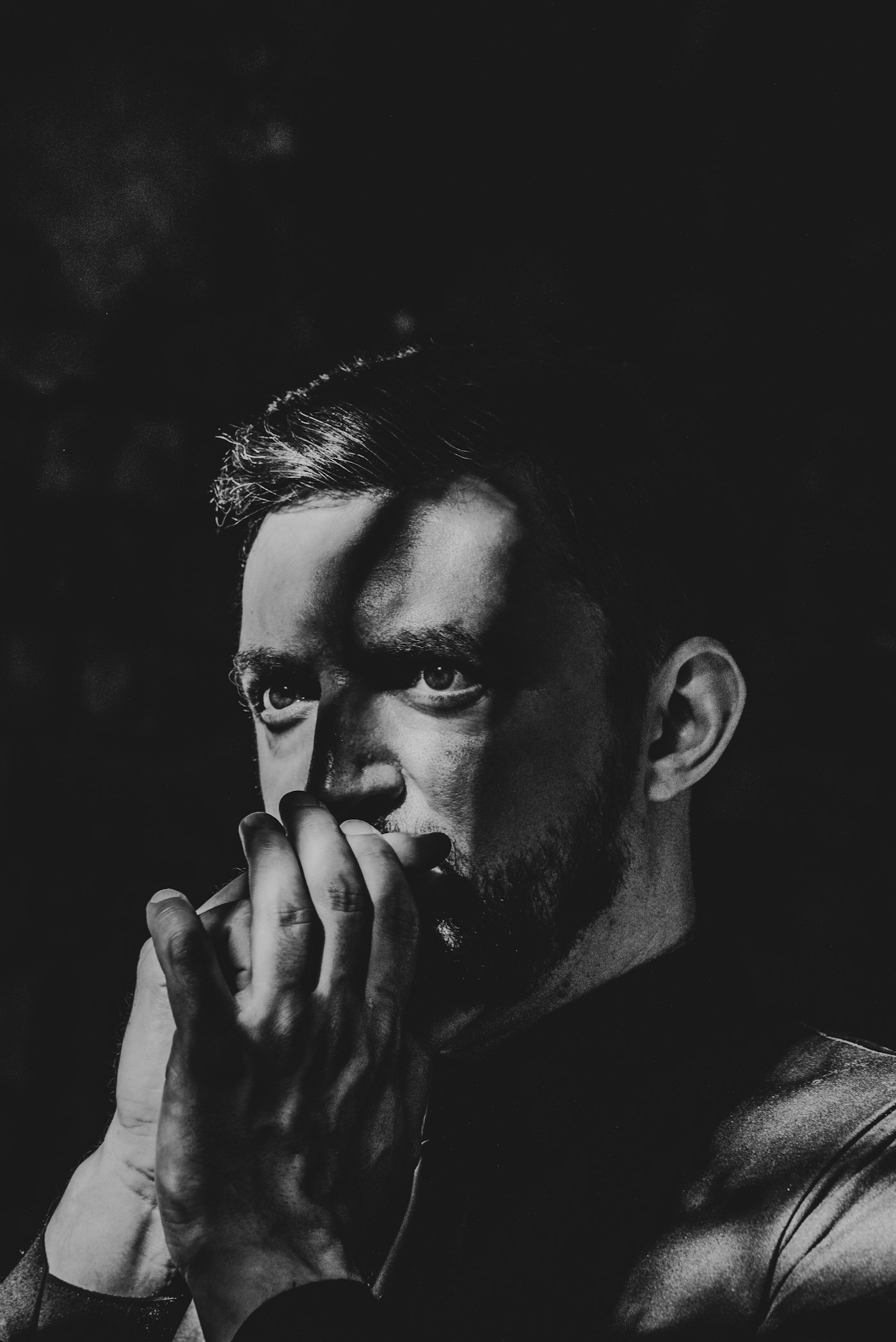
And just before we wrap, I’m curious—when you think about the future of SADFACE, not in a promotional sense but in that personal, internal one, what direction do you feel pulling you the strongest? What’s the next descent you’re preparing to take?
My primary goal is continuous development—finding new depths of emotion, seeking new means of expression, and telling even darker, sadder stories through sound. My ultimate dream, however, remains seeing SADFACE music featured in a series or a film.
Although I am currently dedicating all my time and attention to the debut album, I already know exactly what the successor to “Tenebra Omnia Regit” will look like. I have a precisely developed thematic and visual concept, and even a title. It’s too early for details, but I can reveal that the central theme will be war and the search for an answer to why humanity, having experienced this trauma since the dawn of time, continuously gravitates toward it.
Taking this opportunity, I would like to sincerely thank you, Karol, for the chance to present SADFACE on IDIOTEQ. Answering such interesting questions was a pure pleasure and an honor. If I may, I’d like to end by sending my regards to those without whom none of this would be possible: my partner Katarzyna, my daughter Ewa, and my parents Maryla and Marek. Without their faith and support, I would have given up halfway.
Keep in the loop!
🗞️ Subscribe on Substack
🔔 Join our Messenger and WhatsApp
📜 Get daily news via Instagram Stories
Your support keeps us alive!
IDIOTEQ is a one-man DIY operation, tirelessly spotlighting the local cultural scenes and independent bands that often go unreported elsewhere. Born in the early 00s, this platform has been committed to giving hard-working artists the high-quality coverage they truly deserve.
No ads, no distractions—just pure inspiration and a genuine focus on independent artists and their stories.
Please consider helping keep IDIOTEQ ad-free and in tune with the indie scene by donating today.
DONATE via PayPal 𝗈𝗋 SUPPORT via Patreon
100% of the funds collected go toward maintaining and improving this magazine. Every contribution, however big or small, is super valuable.
Your support ensures that we continue to be a place where you can discover, learn, and get inspired, without any advertising noise. Thank you for being a part of this musical journey.