
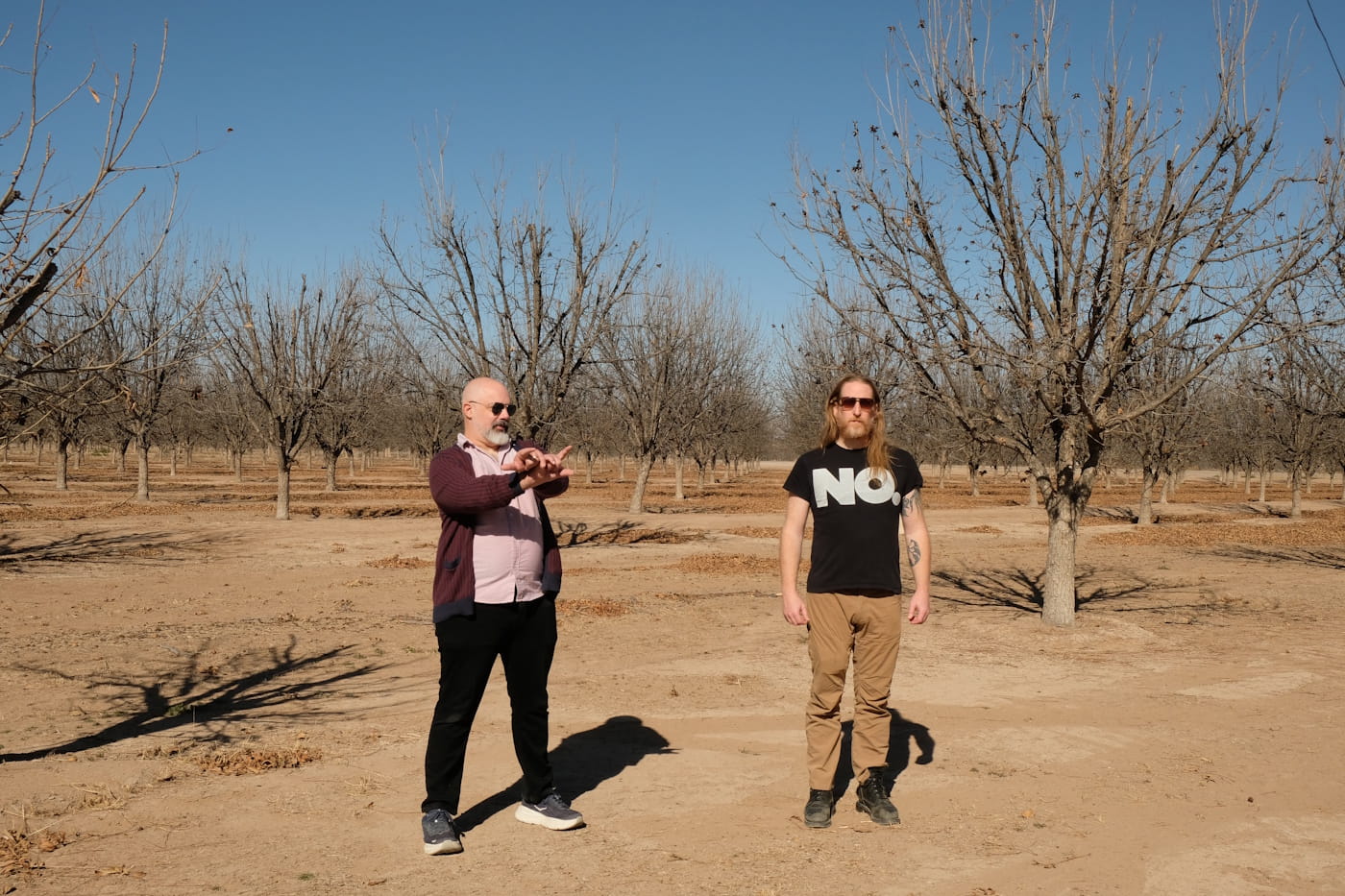
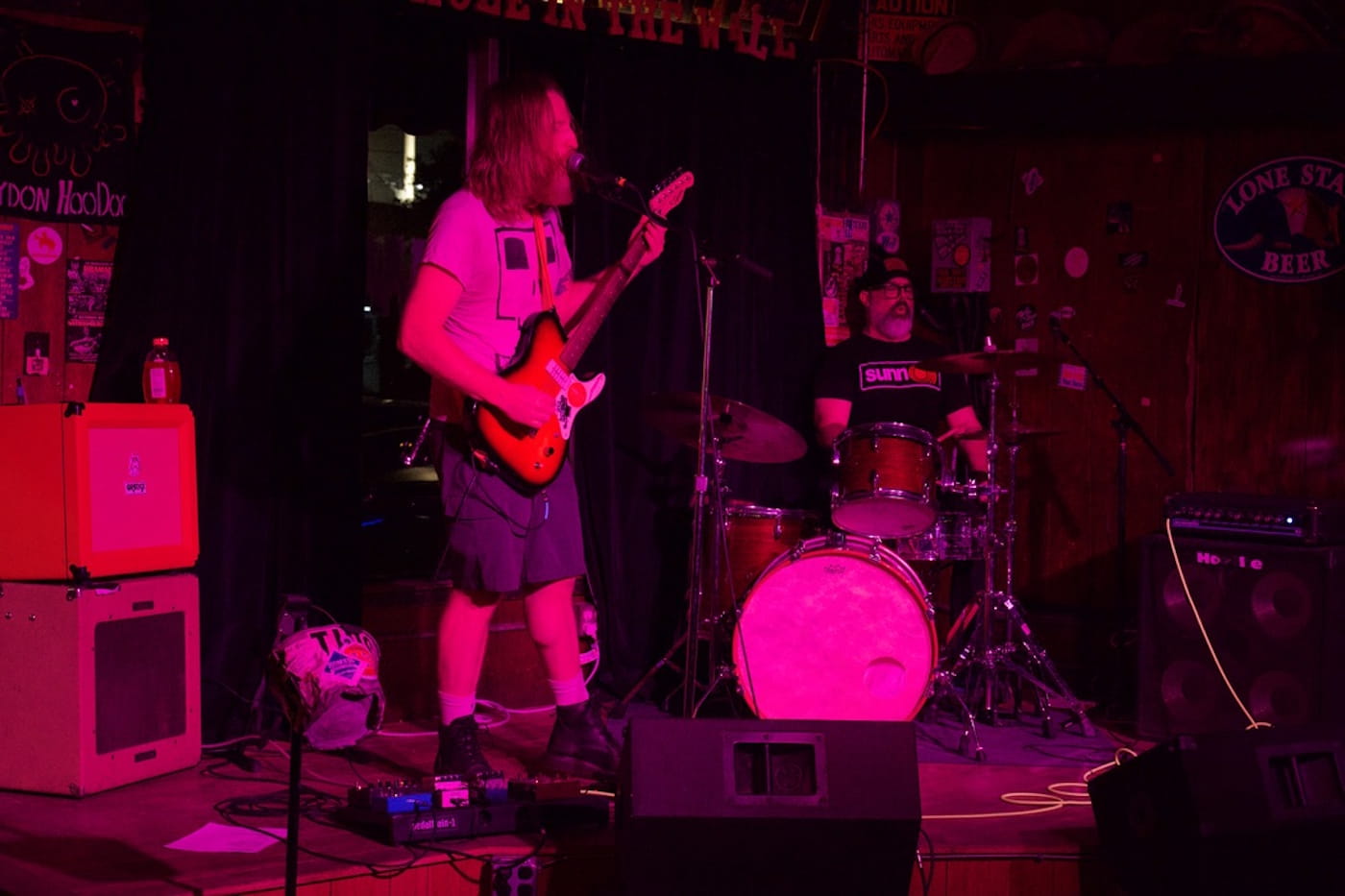
On Supercolony’s self-titled debut, ant warfare comes with odd time signatures, a spider hunt gets its own loud-quiet-loud arrangement, and a bunch of ants spraying acid at a cow turns into slow, funeral-style doom metal. The two-piece have taken Sir David Attenborough’s documentary “Ant Mountain” and written an entire heavy record around what the insects actually do. There’s plenty of killing, territorial violence and some seriously strange reproductive behaviour, all played out through Robert Inks’ baritone guitar and vocals and Scotty Loewen’s drums.
The most interesting part is how closely the music follows the animals. Supercolony have songs whose arrangements, rhythms and changes in pace were worked out from individual scenes in the documentary. They even have a track in 7/4 because of how Robert understood one particular method of ant warfare. The whole thing eventually ends up somewhere Attenborough probably wasn’t expecting, with the colony heading into outer space.
The documentary follows an enormous cooperative supercolony, whose many nests operate together, alongside a neighbouring colony living in near-constant conflict. That relationship fascinated Robert. Even within the larger cooperative society, the ants still spend much of their lives fighting enemies, hunting other creatures and defending themselves against animals several thousand times their size.
“In between all that, though, you have a species whose entire lives are still defined by conflict and violence, even if they are collaborating on an unheard-of scale. These ants fight other ants, but they also hunt and kill for food and fight off cows and, y’know, die immediately after mating. That constant struggle is where we found the coolest ideas to write songs about.”
It’s easy enough to imagine someone watching that footage and thinking it would make a decent metal song. Robert ended up with a full concept album, even though he couldn’t actually play guitar when he started.
He first watched “Ant Mountain” during one of his lockdown documentary binges. The moment that got him thinking about doom metal involved a group of ants firing formic acid at a curious cow. Then came the scene of a spider being hunted and killed.
“When I got to the part where the ants squirt acid at a cow, I said out loud, “Somebody should make a doom metal album about this.” When I got to the part where the ants hunt and kill a spider, I said, “I should make a doom metal album about this.””
The following day, Robert wrote a demo for “The Hive Alive” using an online sequencing tool. He was still a complete beginner when it came to guitar. A couple of weeks later, he asked Scotty for advice about buying one, and within fifteen minutes his friend had put an old Stratocaster into his hands.
Robert started learning to make riffs, while Scotty had recently taken up drumming as a hobby. They’d known each other since college, and Scotty had played in numerous bands before Supercolony. The two friends now had a shared obsession and enough ideas from the film to keep writing.
Robert has always liked records that tell a complete story. He mentions “Ziltoid”, “Year Zero” and “Midnite Vultures” among the albums that made him want to write something in that spirit. With Supercolony, the concept came first. The guitar playing, songwriting and eventual band followed.
They kept the lineup small. Robert handles baritone guitar and vocals, Scotty plays drums, and a Boss OC-5 Bass Octave pedal takes care of some of the low-end work. Robert likes to introduce the pedal as their bassist. Apparently the joke never gets a laugh, which only makes him like it more.
“Scotty’s been in about six thousand bands before this and can do you up something creamy on any instrument you wave in his face, whereas I bring a lot of experience pumping my fist while listening to Sabbath.”
That difference in experience hasn’t stopped the two from going pretty deep into the arrangements. “The Hive Alive”, the song that started everything, follows the opening sequence of the documentary as the colony wakes up and moves into the sunlight. “Faceful of Acid” takes on the cattle confrontation, and “Fear/Feast” follows the hunt for the spider.
The latter was written in three movements. First, the ants pour out of their nest to look for food, accompanied by a loud passage. The music quietens while the spider tries to hide and the hunters creep closer. Once they find her, the band return to full volume for the chase and eventual kill.
“Faceful of Acid” moves differently. Robert and Scotty used slow funeral doom to suggest the heavy steps of the cows approaching the colony. When the ants begin defending themselves, the song goes into chromatic disorder before reaching a triumphant finish as the cattle retreat.
For “Tres Pax”, Robert went with 7/4 because the ant attack he was writing about involved seven workers. In his account of the documentary, six hold an enemy’s limbs while the seventh bites into its body and delivers formic acid. A piece of insect behaviour became the reason the song has seven beats to the bar.
The individual scenes gave the pair plenty of ideas, but Robert wasn’t interested in turning the lyrics into detailed descriptions of everything already visible on film. Most of the words are written from within the colony’s perspective, with “The Hive Alive” and “Parasite Queen” telling more complete stories from something closer to a third-person view.
Elsewhere, the lyrics are shorter and less literal. “Faceful of Acid” has rhyming couplets about titans and symphonies, with little direct mention of the cattle or the ants themselves. Robert found that approach suited the way ants communicate through pheromones, passing around basic information about danger, food and directions.
“Moreover, if you look at the way ants communicate, it’s mostly just big broad strokes passed around via pheromones — kill this, eat that, food over here, hive back thataway — so keeping the lyrics as simple as possible felt appropriate for getting inside the hive mind.”
Not every song stayed close to its original idea, either. “Afid Pharm” began with a relatively peaceful sequence in which ants tend aphids, feed them and collect the liquid they produce to nourish their larvae. Robert had imagined a mellow acoustic piece, something closer to what “Radiation Bath” eventually became.
Wyświetl ten post na Instagramie
Scotty heard the initial riff and persuaded him to speed it up and turn the guitars up. The whole song changed once they started playing it that way. Robert’s original words about the little aphid farm disappeared, and he ended up singing about workers being exploited and discarded by a huge system that doesn’t care about them.
“Once we had it appropriately grunchy, whatever lyrics I had about tending to a cute little farm went out the window, and I found myself singing kind of a proletariat anthem about being used and discarded by an incomprehensibly vast and unfeeling system. So that was rad.”
It’s an amusing development for a song that began with ants looking after their food supply. It also shows how much room Robert and Scotty gave themselves to change things once the riffs and arrangements started taking on a life of their own.
The album’s central conflict comes through most clearly in “Tres Pax” and “Parasite Queen”. One concerns rival colonies attacking each other. The other follows a queen who infiltrates another anthill by repeatedly attacking its workers until she has acquired enough of their scent to pass as one of them. Once inside, she gets the colony to raise her offspring.
It’s some pretty grim stuff, although the band have no trouble finding the funny side of making heavy music about ants. Robert jokes that they could have saved themselves the trouble and simply pointed people towards the documentary. He clearly enjoys how far they can push the idea without losing sight of what interested him about the animals in the first place.
They recorded the album at Sonic Ranch in Tornillo, Texas, with Ross Ingram engineering and Diego Mendoza assisting. Ross also plays in El Paso shoegaze band EEP, and he has a long history with Scotty going back to their college days in Austin.
Their respective bands used to be friendly rivals, always trying to beat each other to writing the next “Siamese Dream”. Over the years, the two musicians kept working together, including records by Blistering Speeds, THEMM! and Sting Pain Index. Scotty remembers one earlier Sonic Ranch session especially fondly, and the pair have spent years trying to get back to that kind of experience with different lineups.
Ross was an easy choice for Supercolony. He’s used to working with noisy and unpredictable bands, and Scotty knew he would be happy to follow their more ridiculous ideas wherever they led. On the first evening at Sonic Ranch, all three sat down and watched “Ant Mountain” together.
“I knew that Ross would get it. The first night at the studio we all watched the doc together and you could tell he understood the assignment. He even helped us develop the ant metal horns, which is a sign that takes both hands to do.”
Wyświetl ten post na Instagramie
The studio’s space echo became another source of ideas. Robert reckons that Ross merely pointing towards the effect after an hour of guitar experimentation was enough to get a couple of entire songs going. Scotty liked the way Ross encouraged them to keep trying things once something unexpected began to happen.
“He doesn’t shy away from working with noisy, chaotic, and generally feral elements. What I like about working with him is it’s always a “yes, and”. The space echo is a great example of Ross goading us further into spontaneous moments of interest. Ross helps you surprise yourself, like all great engineers and producers.”
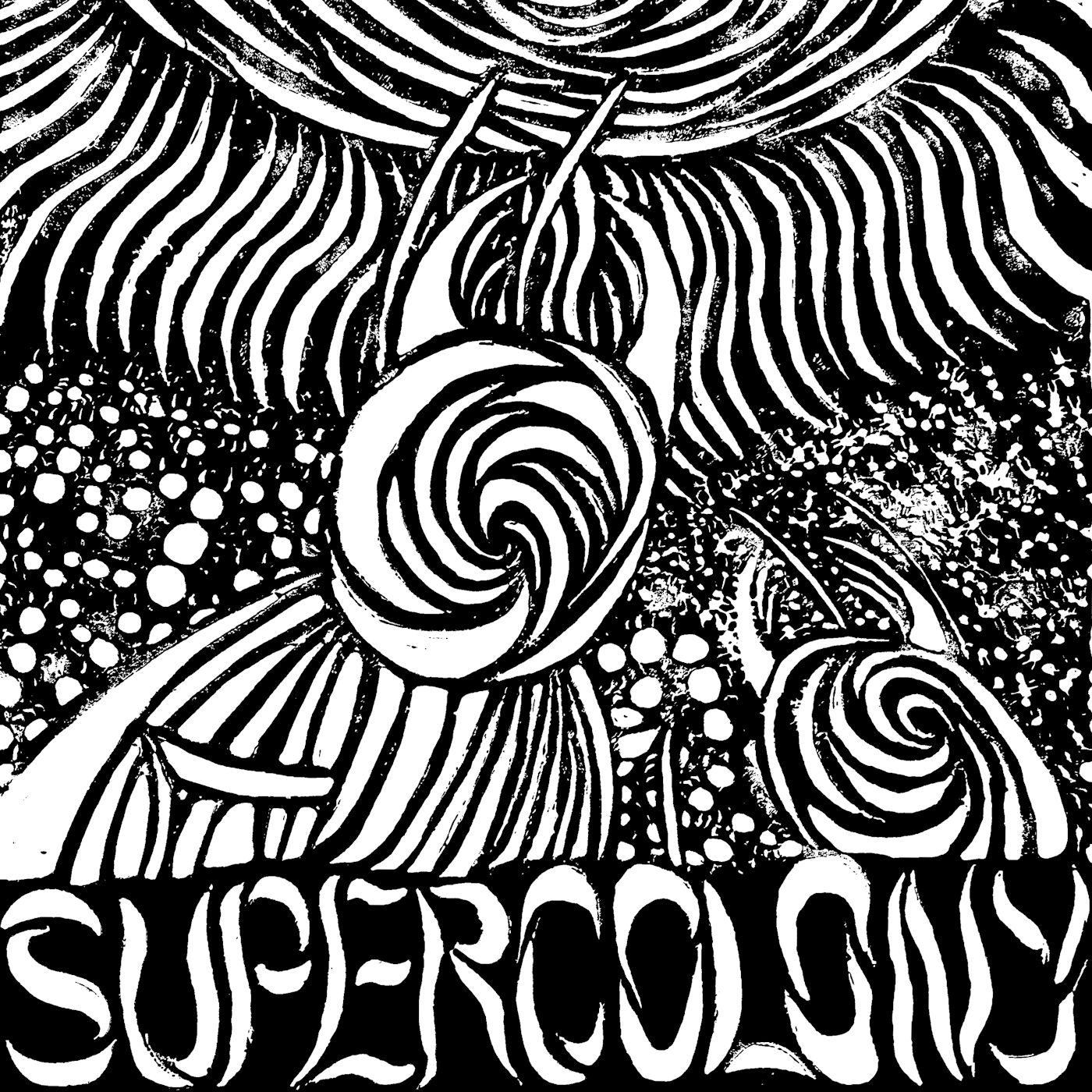
The finished debut is entirely written by Supercolony, with Robert also responsible for the album artwork. The band released the self-titled LP on 13 November 2026, with its Bandcamp page available for anyone wanting to follow the colony through the full story.
And the story gets properly strange towards the end. “Parasite Queen” finishes with the queen achieving what Robert quotes Attenborough calling the “social conquest of the Earth”. From there, the duo leave the documentary behind and send their supercolony into space.
They’ve already been discussing what might happen to it out there. Scotty imagines the ants encountering things they don’t understand and can’t easily defeat, with the music possibly heading towards the more expansive side of Kosmic Rock.
There’s another Supercolony album on the way, too. After recording their debut during a January session near El Paso, the pair got together with several other musicians over Memorial Day weekend and recorded ten new songs at a studio outside Austin. They had found another Attenborough sequence with enough unpleasant insect activity to keep them busy.
This time it was a five-minute section of “Planet Earth” set on Christmas Island. For millions of years, the island has been home to enormous populations of crabs. More recently, invasive yellow crazy ants have been threatening the ecosystem, attacking the crabs and causing serious ecological damage.
The band have already recorded the songs inspired by that story and are planning to release them in early 2027 under the title “Supercolony and Friends Present: Tales from Cancer Paradise, Vol. 1”.
Beyond that, Robert and Scotty have ideas for taking their fictional colony even further into space. They’re keeping most of those plans to themselves for now, although Scotty has mentioned one possible musical direction if they still have enough ideas left for another record.
“And if there’s still something left in the tank we want to make something that will probably end up sounding like Black Monk Time.”
🔔 IDIOTEQ is ad-free, independent, and runs on one person’s time. If you want it to stay that way: DONATE via PayPal or SUPPORT via Patreon.
NEW: IDIOTEQ Explore 🗺️ Browse 15+ years of our archive by city, country, and style. Find artists on the world map or trace related sounds through the styles map.
Stay connected via Newsletter · Instagram · Facebook · X (Twitter) · Threads · Bluesky · Messenger · WhatsApp.