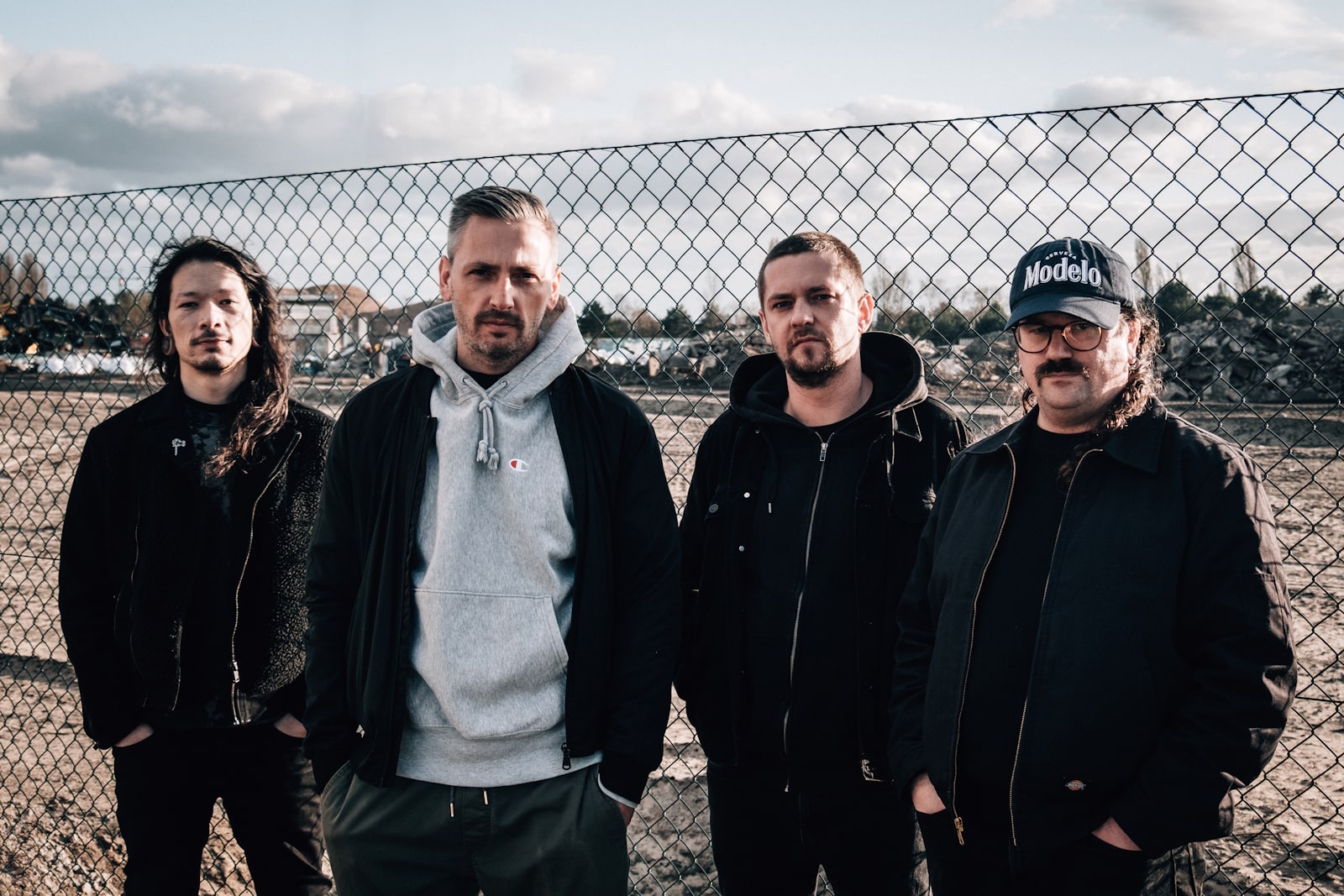


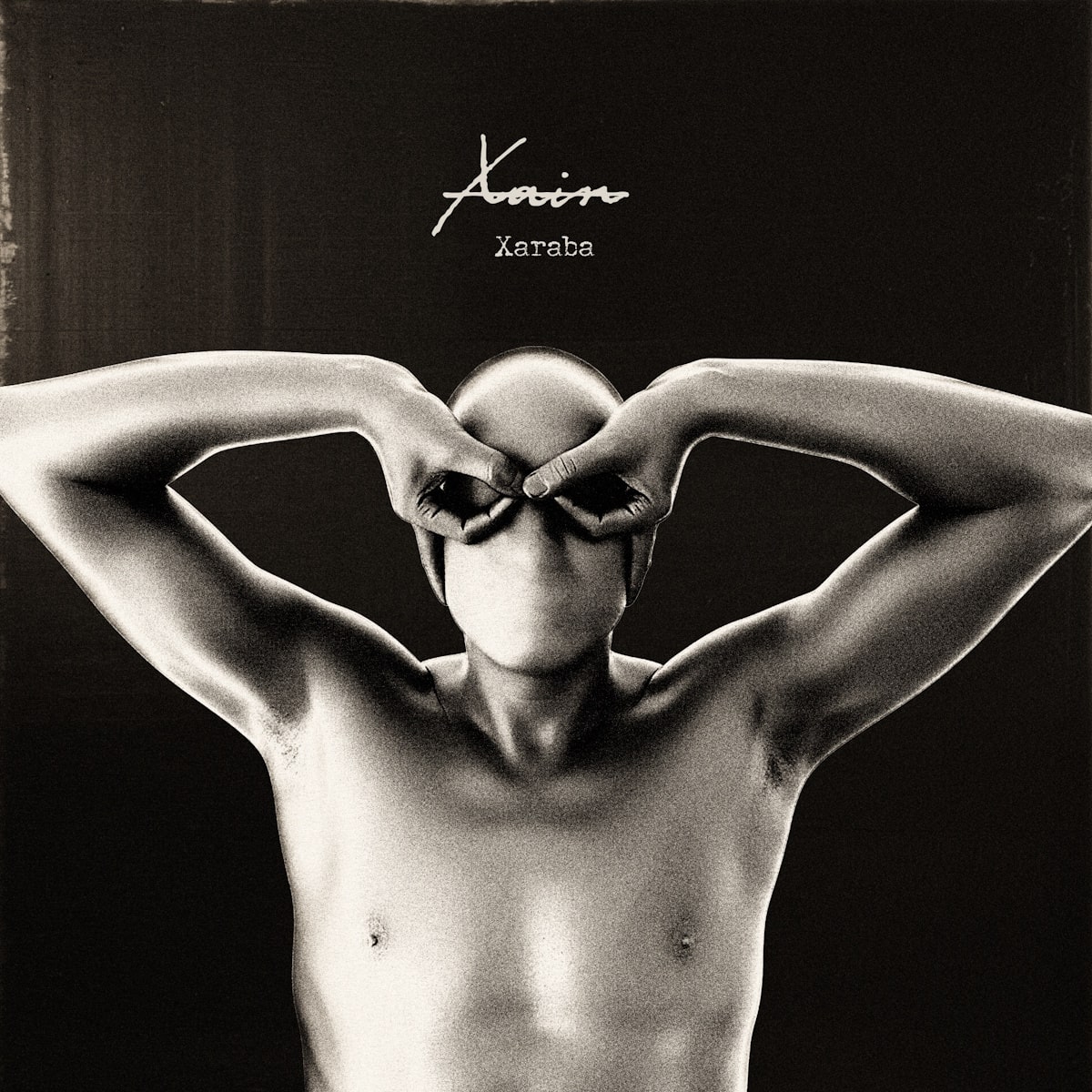
If you spend enough time digging through scenes that exist far from the usual Western hubs, you eventually hit a band whose backstory snaps everything into focus. Xain — split between Moscow and Vilnius but rooted in Baku — falls straight into that category. Their debut EP, “Xaraba”, lands with the force of artists who no longer wait for a local scene to hold them, mostly because that scene dissolved around them years ago.
The partnership at the center of the project goes back decades. Vocalist Toghrul and guitarist Elkhan grew up playing heavy music together in Baku, long before Xain had a name.
As he told No Echo, “Elkhan and I have been playing heavy music together since the early 2000s. We were part of Fatal Nation, one of the very few metal bands in Baku with real gear, a real rehearsal space, and real drive. The scene was tiny. Venues kept disappearing. Everything survived only because a handful of stubborn musicians refused to quit.”
That stubbornness is still the engine behind the band, even as life pulled them into different countries and whatever remained of Baku’s infrastructure slipped away.
By the time they started writing what would become “Xaraba”, the ground had already shifted beneath them. “Today we live in different cities, Moscow and Vilnius, and everything we create happens remotely,” they say.
There’s no rehearsal room, no circuit of venues, and no sense of a local community to lean on. The isolation ended up shaping the work. When you’re scattered across borders, Toghrul explains, you stop aiming for anyone’s template: “When you are scattered, you stop trying to fit anywhere. You simply create the thing you wish existed.”
View this post on Instagram
What they wished existed was a form of mathcore that carried the unresolved tension of Azerbaijani jazz. For anyone raised in the Caucasus, jazz isn’t a niche interest — it sits in the cultural air.
They refer to Vagif Mustafazadeh, whose blend of mugham and jazz still defines a certain musical sensibility in the region, and to Aziza Mustafazadeh, who continued that trajectory into contemporary forms. Those microtonal bends, swings in mood, and sudden harmonic pivots seeped into their ears long before the idea of combining them with aggressive music ever appeared.
At some point the two started asking questions that eventually framed the entire project. “What if Vagif had grown up on Converge instead of Coltrane? What would happen if mugham and mathcore smashed into each other at full speed?”
They were not trying to dress Western metal in regional accessories; they were trying to find a language that actually matched where they came from. The term they landed on — mughamcore — isn’t meant as a manifesto so much as a practical shorthand for a set of instincts that feel natural to them.
“Xaraba” became the container for those ideas, held in place by themes that stretch beyond music. The word itself means “ruin”, and for Toghrul it’s far more than a poetic image.
“It describes both Baku’s heavy scene and something far more personal,” he says. It ties back to his childhood, to the domestic violence he lived through, and to the way the word is used in Azerbaijan to describe an environment where everything inside feels toxic. His own xaraba was a small flat in Baku where he grew up — a place that left marks that found their way into the EP.
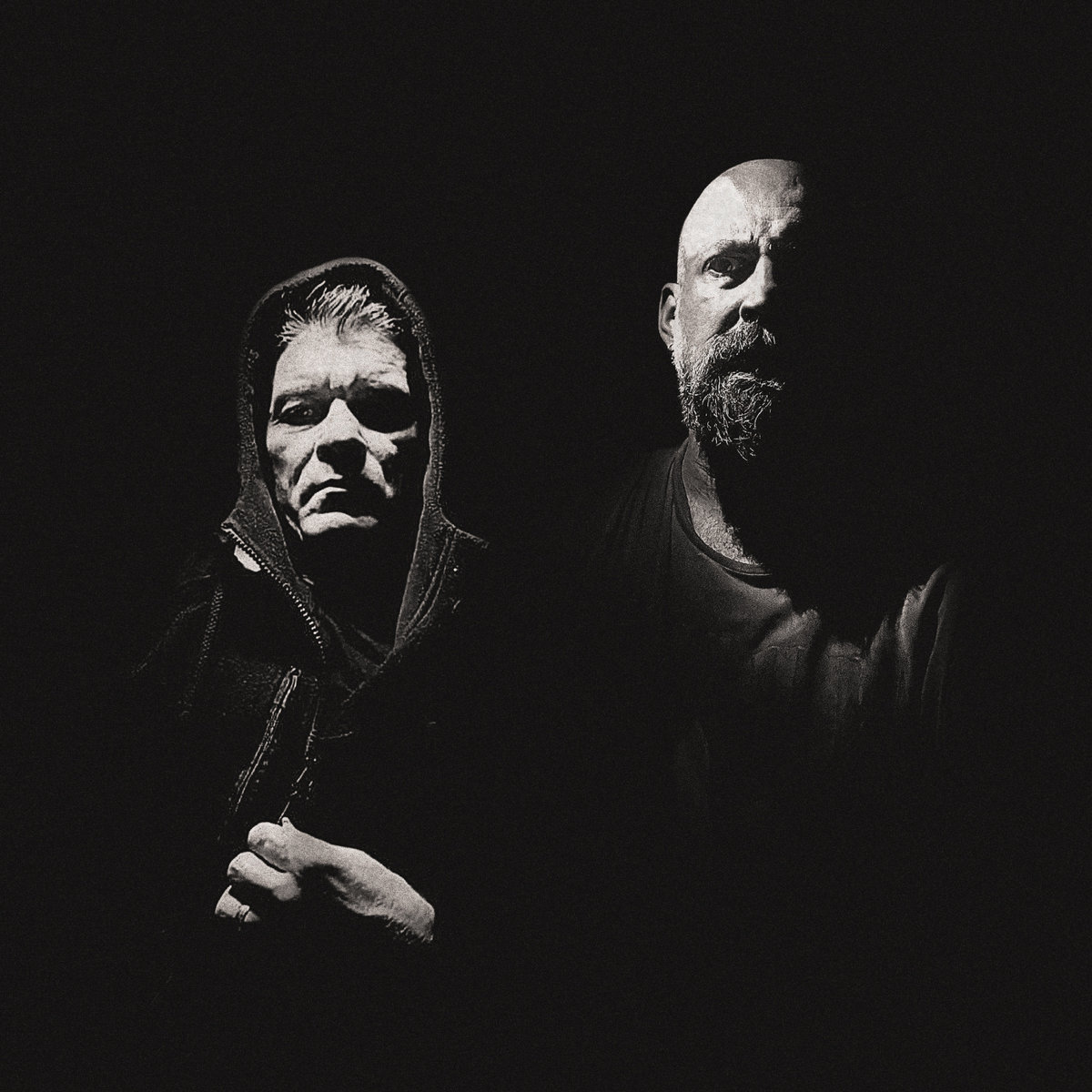
Around them, the broader heavy scene in Azerbaijan had eroded to almost nothing. Venues shut down, rehearsal spaces became too expensive, and musicians simply ran out of places to go. “The audience that existed was loyal but scattered,” he told No Echo. “It became impossible to build anything when the infrastructure kept collapsing beneath you.” Instead of fighting gravity, Xain opted to work outside of it altogether.
The recording process reflected that dispersion. Elkhan tracked guitars, bass, and effects at Roman Kosterin’s studio in Moscow. Drums were replayed in Novorossiysk by their friend Vladimir Udarnov, who expanded on programmed parts with small touches of his own. Vocals were captured in Vilnius with Lukas Jankauskas. Roman handled mixing and mastering back in Moscow.
What sounds on tape like a unified statement is, in reality, the product of multiple cities and a workflow placed in necessity rather than design.
Once the EP took shape, the band understood its odd position in the broader landscape. “We decided to stop waiting for a scene and build our own language instead,” they say. “Not Western metal with a borrowed accent. Not another copy of a copy. Something that sounds like the place we are actually from.” That refusal to conform to existing expectations — regional or Western — is part of what gives the project its weight.
They’re also frank about the limits. “Maybe it will confuse people. Maybe it will never be mainstream. Maybe it is too strange for metalheads and too intense for jazz listeners,” Toghrul says. But he stresses that the point was never about fitting in. “It feels honest. And that honesty matters more to us than belonging anywhere. If we do not try to create this sound, then who will?”
Xain sit in a small but growing set of artists reworking their local musical DNA into new edges of heavy music. The ingredients are familiar — mathcore chaos, regional jazz lineage, the DIY instinct that keeps underground culture alive — but the anatomy is their own. “Xaraba” doesn’t ask for a scene to receive it. It documents what happens when one no longer exists and two musicians keep going anyway.