
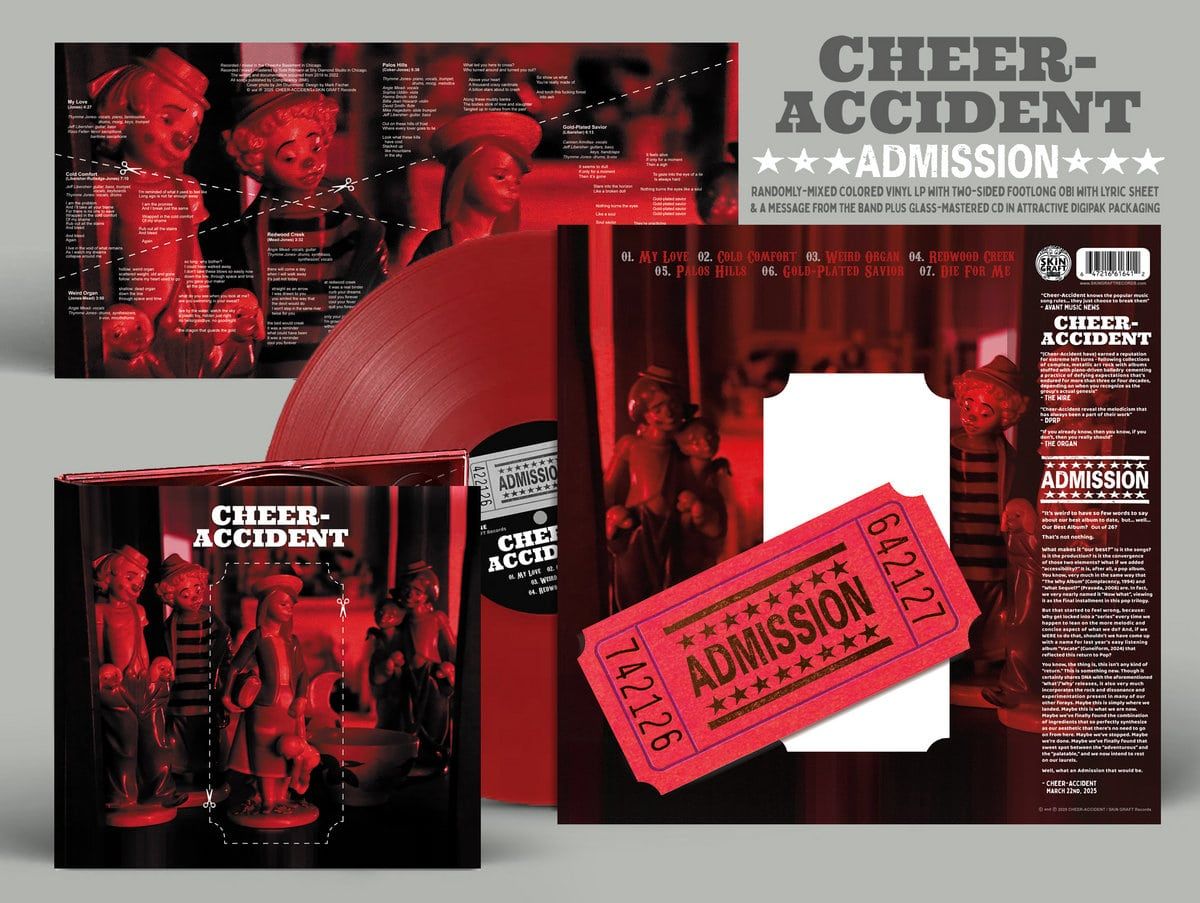
Cheer-Accident’s new album Admission, out June 27th, 2025 via SKiN GRAFT Records, marks what the band calls their “best album to date” — not a minor claim considering this is their 26th full-length. Described by the group as a pop record, it follows in the melodic footsteps of The Why Album (1994) and What Sequel? (2006), while folding in the rock dissonance and experimental edge they’ve explored elsewhere.
Initially imagined as the final part of a trilogy alongside those earlier pop-leaning releases, Admission was almost titled Now What. That idea was dropped. “Why get locked into a series every time we happen to lean on the more melodic and concise aspect of what we do?” they ask in the liner notes. Instead, the record leans into ambiguity: “Maybe this is simply where we landed. Maybe this is what we are now.”
The album was recorded, mixed, and mastered by Todd Rittmann (U.S. Maple / Dead Rider) at Shy Diamond Studio in Chicago.
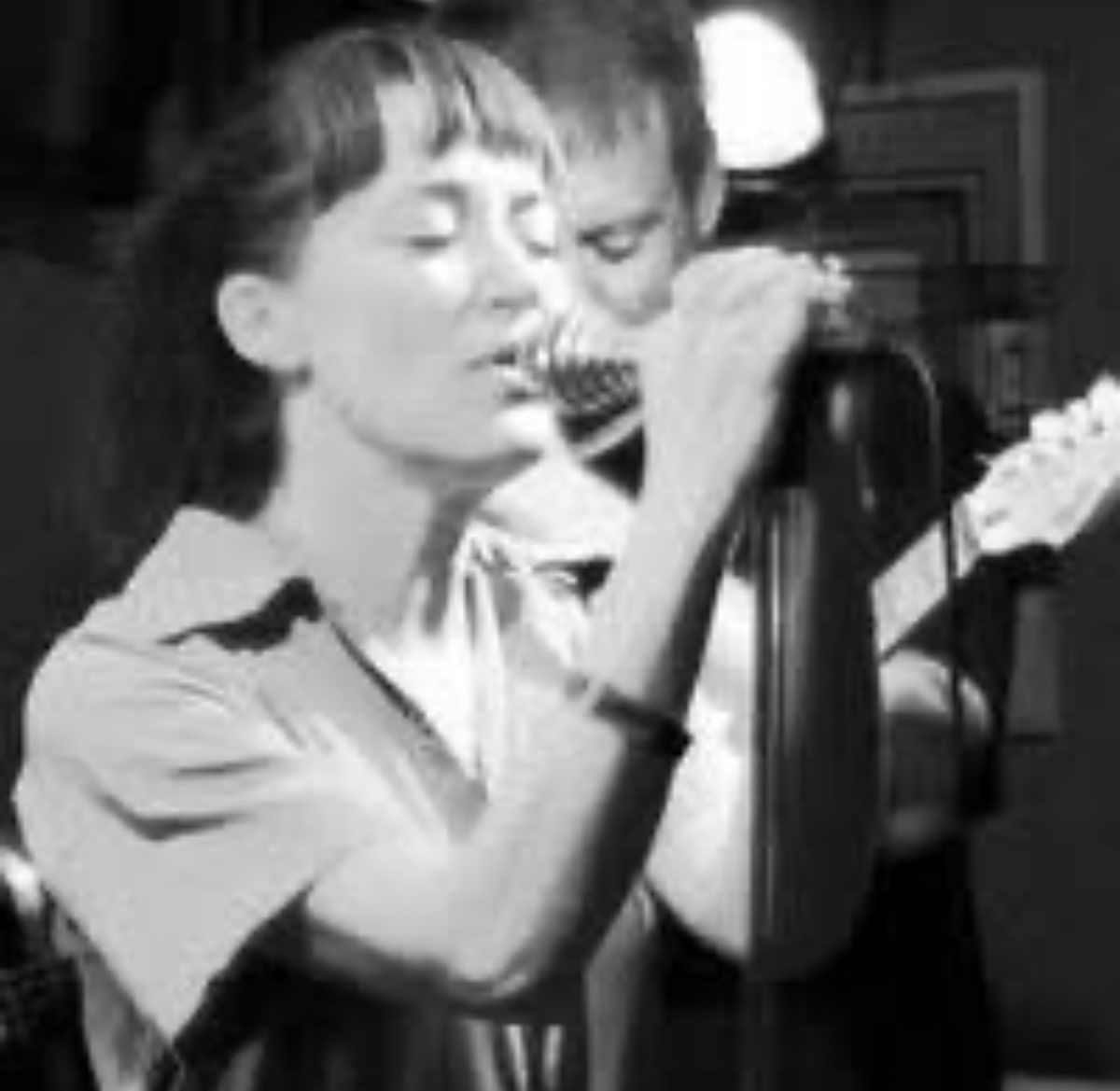
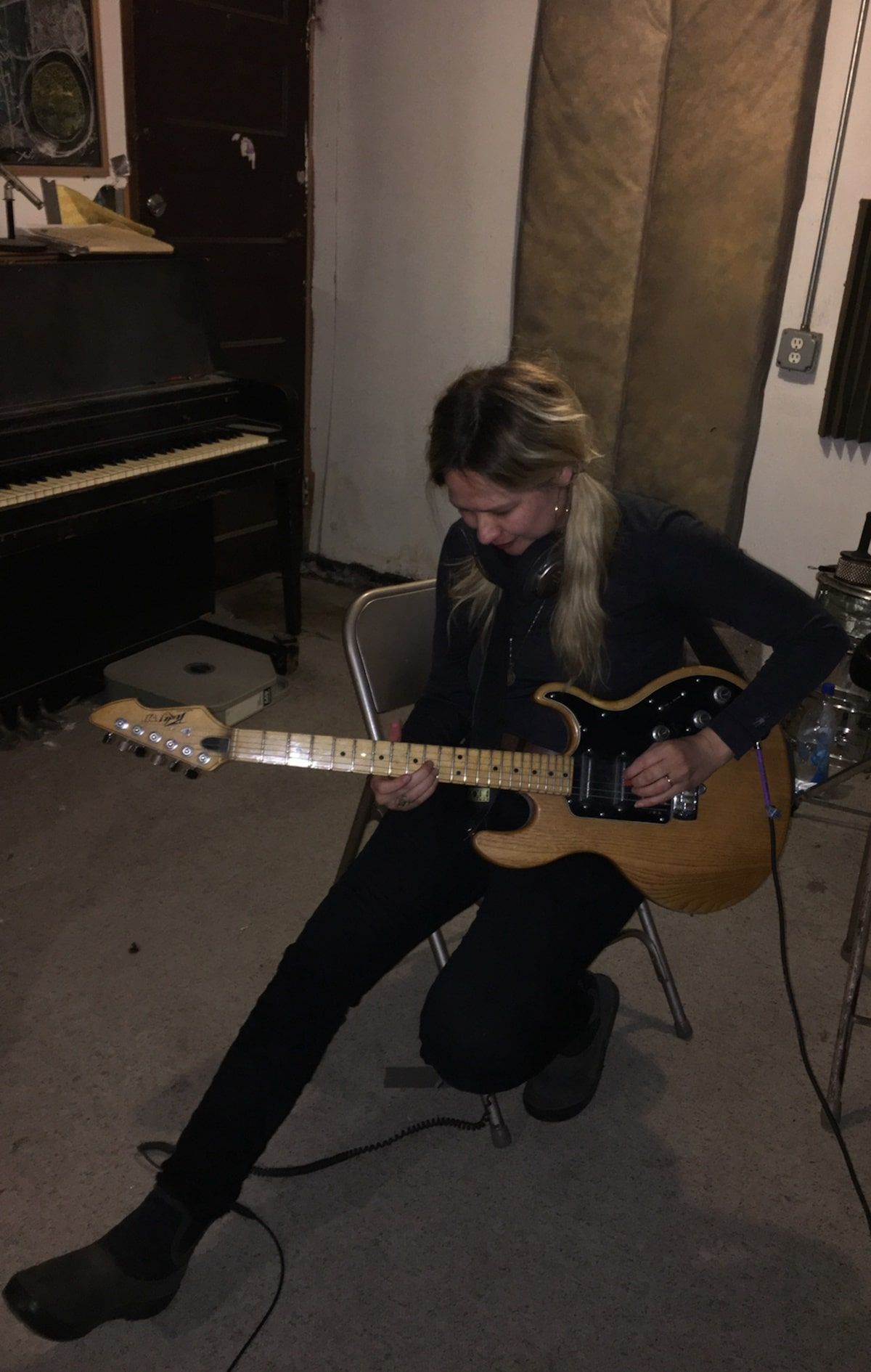
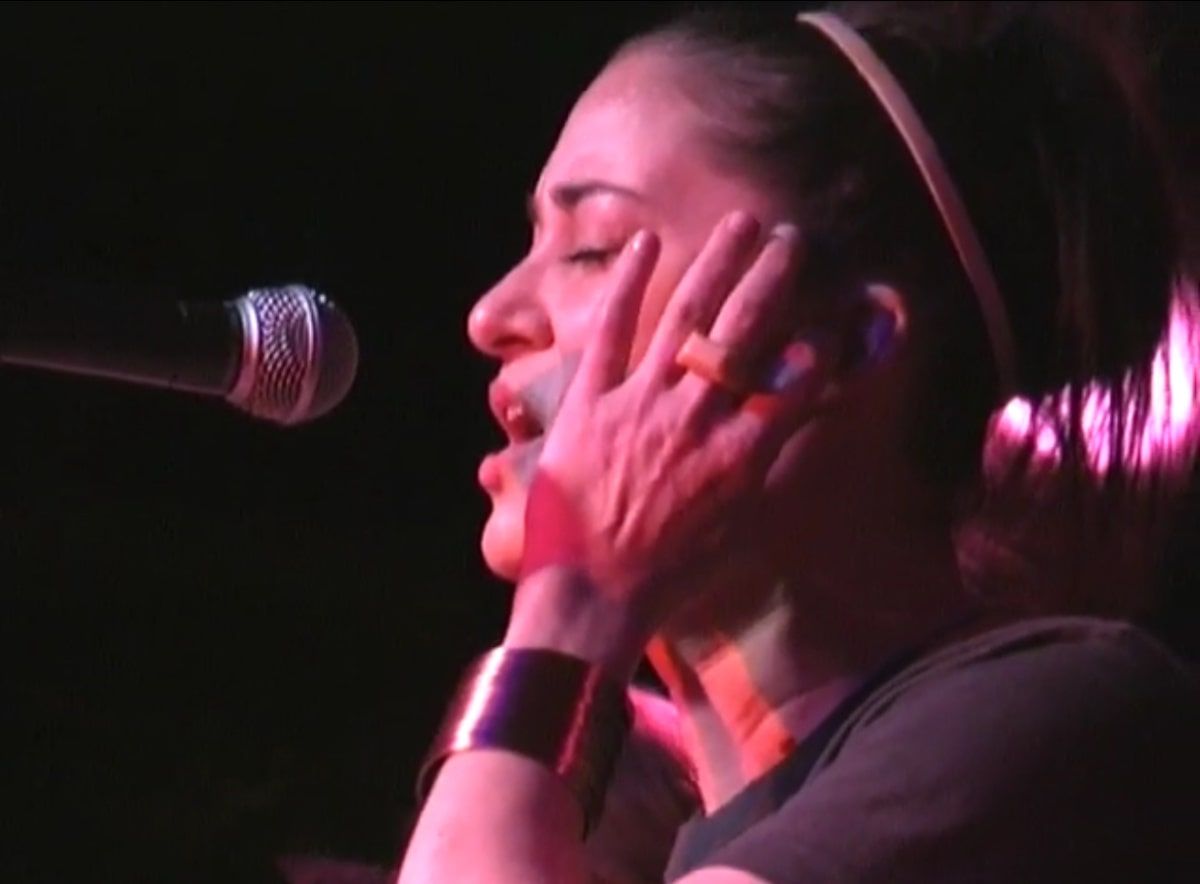
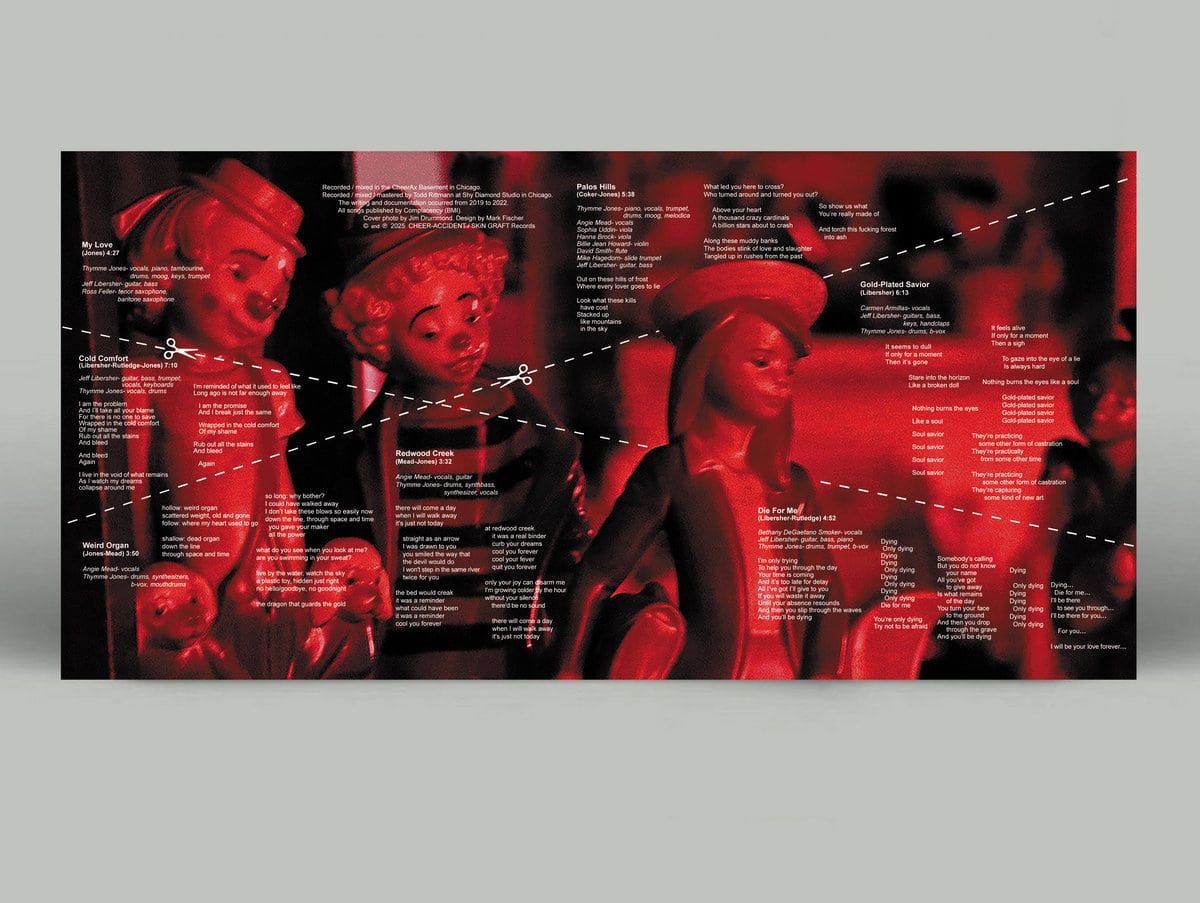
The personnel on Admission reflect the same breadth and unpredictability that define the record itself. Across its seven tracks, Cheer–Accident brings together a rotating cast of musicians and contributors, each adding their own character to the album’s eclectic framework. Founding members Thymme Jones and Jeff Libersher cover a wide range of instruments—trumpet, drums, guitar, moog, bass, piano, and more—while vocal duties are shared among Angie Mead, Carmen Armillas, and Bethany DeGaetano Smoker.
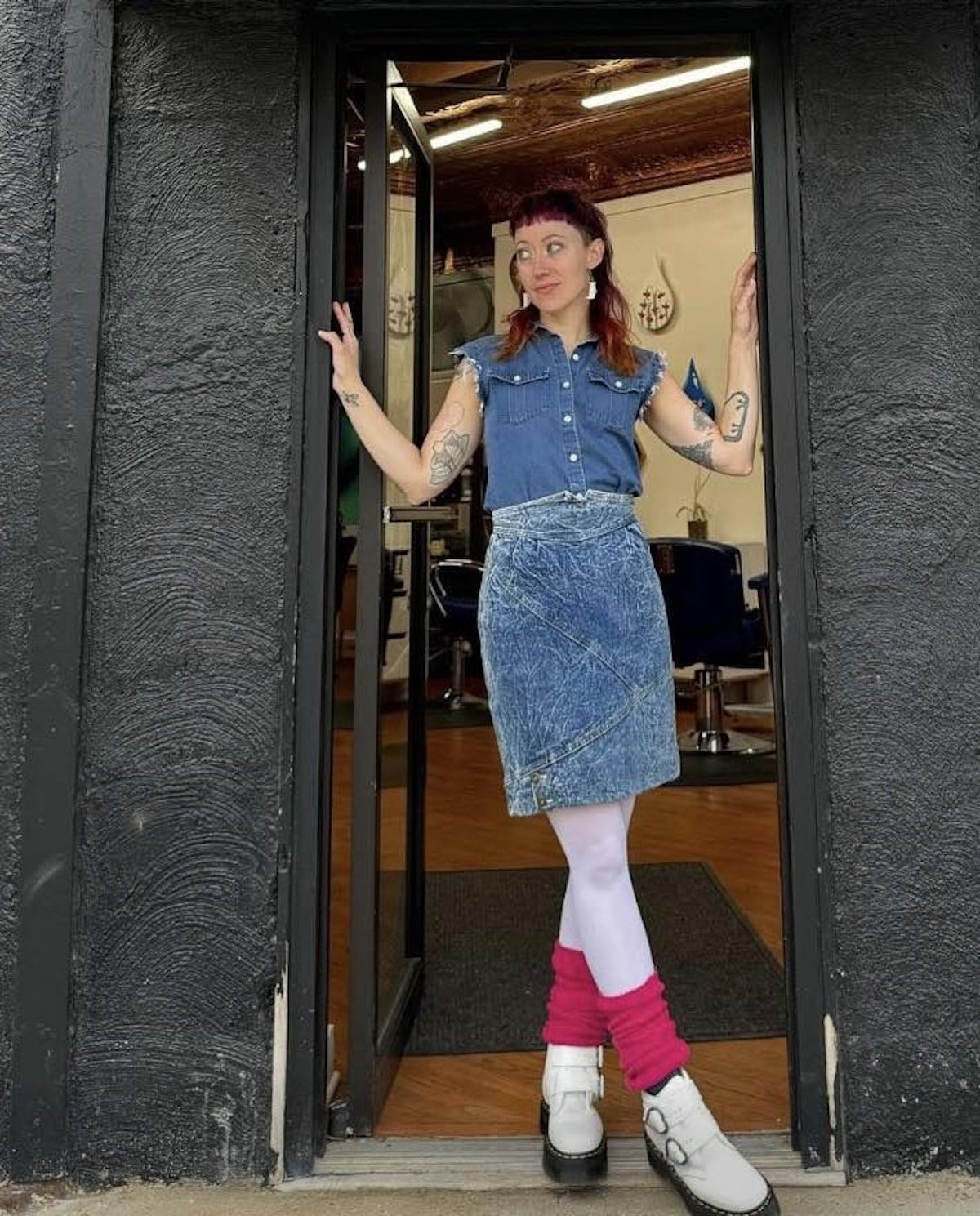
Instrumental textures are expanded with contributions from Ross Feller on saxophones, Mike Hagedorn on slide trumpet, David Smith on flute, and a string section featuring Sophia Uddin, Hanna Brock, and Billie Jean Howard.
Cheer–Accident will support it with a U.S. summer tour, kicked off with a release show in St. Louis on June 28th and now continuing through July and August. See the full list of dates below the track by track segment below.
Below is the full track-by-track commentary from the band, with song authorship noted. Thymme Jones contributed commentary for four tracks, Jeff Libersher for three.
Cheer-Accident will hit the road starting June 28th in St. Louis and continue through August 2nd, wrapping up in their home base of Chicago.
My Love
Thymme Jones: This song is a bit of a false start to the album… or maybe another way to look at it is to see it as an introduction that serves as a backdrop while the credits roll. The “film” doesn’t really start in earnest until the second song.
The particular pop approach of “My Love” hearkens back to an earlier era of my writing, and indeed the chord progressions and melodies were constructed all the way back in 2003. (Of course, you could also say that it merely hearkens back to our previous album, Vacate… but those songs were all written in the late ’90s!)
In any case, it had been striking me as a bit “lightweight” for what we’ve got goin’ on in 2025, and I’d never gone back and forth more times than I had with this one, in terms of whether or not to “someday include it on an album.”
Well, this wild oscillating came to a grinding halt when I decided that, not only should it be a part of this new album, it should BEGIN the album. As it turns out, this relatively straightforward song, with its chiming lo-fi microcassette intro, helps to perfectly foreshadow precisely what Admission is not at all about.
Cold Comfort
Jeff Libersher: This song emerged from a single guitar riff, a riff that appears and reappears throughout the tune, rising and decaying alongside the resolute, driving, machinery of bass, chunk-guitars, and drums.
While beginning to construct all the layers, counter-rhythms, and melodies that hover above and around that riff, the image of a young-adult, Claymation figure came to mind.
The figure moved in short, stilted, bursts of slow-motion and was wrapped in both acceptance and defiance – like some kind of insular, young-adult wind-up toy, hell bent on making it to the other side of the room, all the while knowing that nothing will be any different once he makes it there.
I shared none of this with Scott (Rutledge, lyricist) when handing off my demo to him, yet he managed to beautifully capture and convey the alien, isolation inherent in the song’s sonorities.
Weird Organ
Thymme Jones: I don’t know why, but this song, as it was being written, was screaming “the ’80s” at me. Maybe it’s because I somewhat think of Angie (Mead, the vocalist) as a bit of an ’80’s gal.
In fact, she does sound strikingly like Madonna on a phrase or two (and even Kate Bush, as her voice blends perfectly with a synthesizer on the song’s outro). I’d never written anything in quite this way before: All I had in the beginning was that sparse Moog Prodigy line and a bunch of Angie’s words from her journal. She gave me permission to sequence them and melodicize them in any way I saw fit.
I’m very happy with how this one turned out, and I don’t think it’s like any other CHEER-ACCIDENT song.
Redwood Creek
Thymme Jones: Angie popped by one day, after having jammed with her friend, Danny, and he had apparently been playing this simple/spare bass part that she still had in her head. I tweaked it slightly, playing it on the lowest octave of the Prodigy, as she tried out some primitive drumbeats.
After she went home, I recorded the Moogbass to a click and then overdubbed some rather big-sounding drums. A few people have mentioned that the main riff sounds like it shares some DNA with Dead Rider, and I don’t disagree. (It was I, after all, who played that very same Moog on a couple of their songs, so this makes almost too much sense.) Angie came over on another day and recorded some guitar to parts of the song. Again, after she departed, I had a field day editing her parts together.
Next, I came up with some vocal melodies (as with “Weird Organ”, using her words), sent her an mp3, and she stopped over a few days later to absolutely nail all of the vocal lines. (We retained my vocals for the “middle section.”)
Palos Hills
Thymme Jones: The creation of this song is an epic in itself. It all started at about 2:00 in the morning on New Year’s (2019), following a set of Black Sabbath songs that Angie, Jim Becker, Reid Coker and I performed at The Hideout for their New Year’s Eve party.
I was still buzzing from the gig, which was an incredible amount of fun. Accompanying this high, however, was an odd melancholia, partly brought on by suddenly finding myself in utter solitude, whereas (minutes before) I had been partaking in an energetic and celebratory social affair. In addition to that rather jarring juxtaposition, I had the Joni Mitchell album, For The Roses sitting on my turntable.
It had been a Christmas gift from Angie, and I suddenly felt compelled to hear the song that had stood out most to me after my first listen, the second to last song on side one. Directly after hearing that, I went to my bedroom and started playing the opening chords of “Palos” on my rather out-of-tune piano.
The music was matching the vibe of the moment perfectly, and I got rather lost in the meditation of listening to those chords over and over again. Knowing that I was on to something, I worked on that chord progression (and its somewhat peculiar and spacious rhythms) until about 6:00 in the morning. I woke up (two hours before our annual improv) and sang some melodic ideas into my phone.
A few days later, I had the entire song demo-ed up for Reid to write the lyrics to. Within a few weeks, he had written the whole thing, and it was brilliant. The most time consuming aspect of this song’s construction from my end was marrying the chords I’d recorded on my upstairs (out-of-tune) piano on my phone with the chords I’d re-recorded on my downstairs (in-tune) piano with Protools.
You see, the original was a few BPMs faster, so I had to stretch every single chord to line up with the newly recorded piano. I was intent on capturing that intonation disparity, and it was worth the effort: The two pianos battling it out with their conflicting overtones is what gives “Palos Hills its ghostly quality.
Gold-Plated Savior
Jeff: Once again, this one began as a simple-but-angular guitar riff (2 tracks an octave apart). This riff enters immediately then continues to meander along underneath Carmen’s haunting, evocative vocals and the blast and decay of the “kapow” guitar harmonics.
The emotion-packed, counter-punching drums almost serve as a warning to the narrator of the story, echoing up against the cracks in the seaside cliffs, yet all the while seamlessly propelling the track forward towards the second half depraved hootenanny that awaits him. This drum part might just be one of my favorite things Thymme has ever laid down on any of our songs.
When building this tune towards its final form, I kept envisioning the haunting image of a woman, walking alone on a windswept beach. The woman is draped in a white dress that flutters in the stiff breeze, and she is both simultaneously young and old.
The narrator attempts to reach out to her, but the harder he tries, the farther away she drifts, and as his words continue to dissolve into the nothingness of the late afternoon gray, he feels even more compelled to follow. She may or may not be a ghost, but she is for sure both a program of his past and a harbinger of his future.
She leads him towards a clearing – the second half of the tune – which was originally a separate, Neil-Diamond’s-less-fortunate-cousin kind of musical bit that I had laying around in LOGIC. Lord knows what prompted me to consider marrying these two seemingly disparate sections together aside from them both having the same bpm, but once I did, I was pretty darn happy with the odd cohesiveness that reared its head.
The ghost woman leading the narrator to the Neil Diamond hootenanny, where everyone who ever lied to his trusting heart awaits the promise of celebrating the new, timeless art form at his expense.
Die For Me
Jeff: This one started with the angular, repetitive, 3-chord pattern that continues throughout the verses, and I built everything else up from that.
To me, that chord pattern screamed out for a certain amount of melancholy to be present in the vocal melody, but as I continued throwing ideas at the wall, I began to see how those verses could easily slip their way into a 70s-soul kind of place, an approach which eventually informed both the bass part and bass approach.
Todd (Rittmann, engineer-and-guitarist-wizard, great friend, and Dead Rider pilot) tossed out the great idea of me playing the bass part using my fingers rather than my crutch-better-known-as-a-guitar-pick, which I tend to do on most if not all my songs when I have a bass in my hands. I think it was the right/only call for this tune.
The verse vocals do manage to land somewhere in the vicinity of the 70s-soul spaceship, but I wanted the choruses and the outro to elicit a slightly different vibe, more of a Todd Rundgren-meets-the-Beach-Boys kind of thing, and I really like the juxtaposition between the tenderness of the chorus and outro vocals against Scott’s weighted lyrics.
I think that Bethany DeGaetano Smoker’s soulful, haunting vocals perfectly capture all of this. She really sings the hell out of this song. I also think the tune makes a nice ending to the record.
CHEER-ACCIDENT “USA TOUR” Summer 2025
Friday, July 18. Muskegon, MI. The Credit Union.
Saturday, July 19. Columbus, OH. Cafe Bourbon St.
Sunday, July 20. Pittsburgh, PA. Poetry Lounge.
Monday, July 21. State College, PA. Manny’s.
Tuesday, July 22. Catskill, NY: Avalon.
Wednesday, July 23. Baltimore, MD. Wax Atlas.
Thursday, July 24. Philly. The Rotunda.
Friday, July 25. DC. Rhizome.
Saturday, July 26. Durham, NC. Fuzzy Needle.
Sunday, July 27. Columbia, SC. Transmission.
Monday, July 28. Athens, GA. Venue TBA.
Tuesday, July 29. Knoxville, TN. The Pilot Light.
Wednesday, July 30. Cincinnati, OH. Woodward Theater.
Thursday, July 31. Louisville, KY. Whirling Tiger.
Friday, August 1. Indy. The Healer.
Saturday, August 2. Chicago, IL. Martyrs’. Early show!