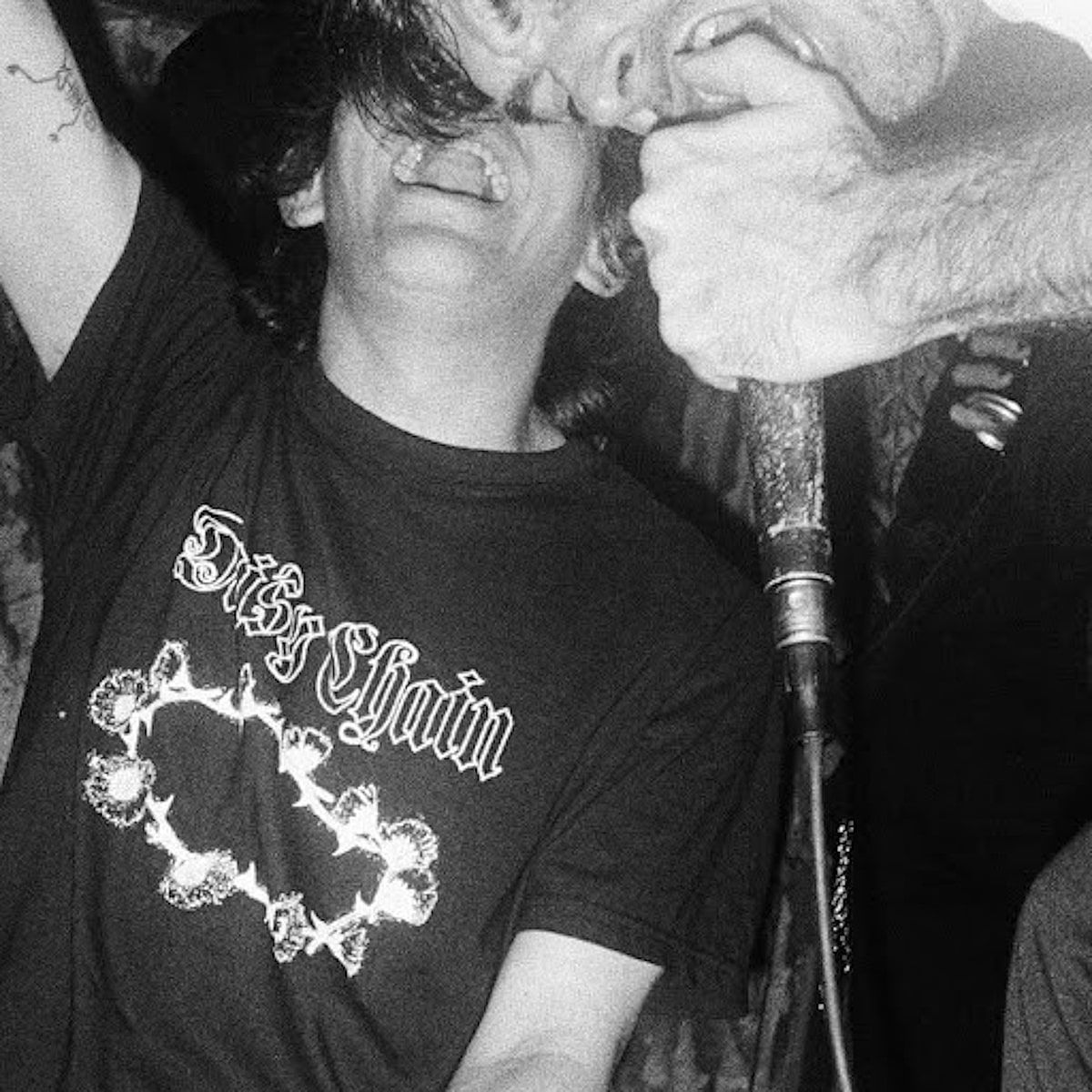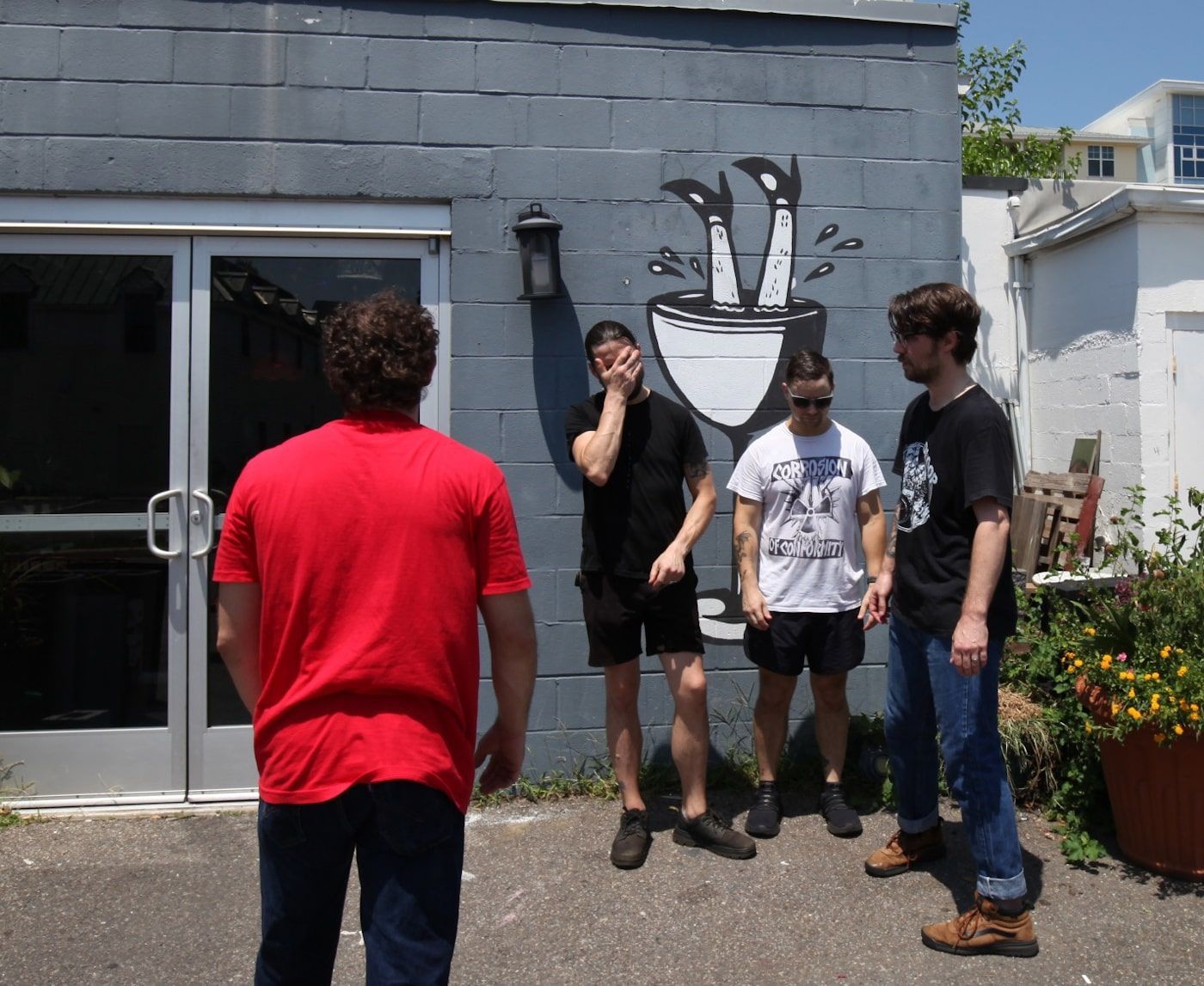


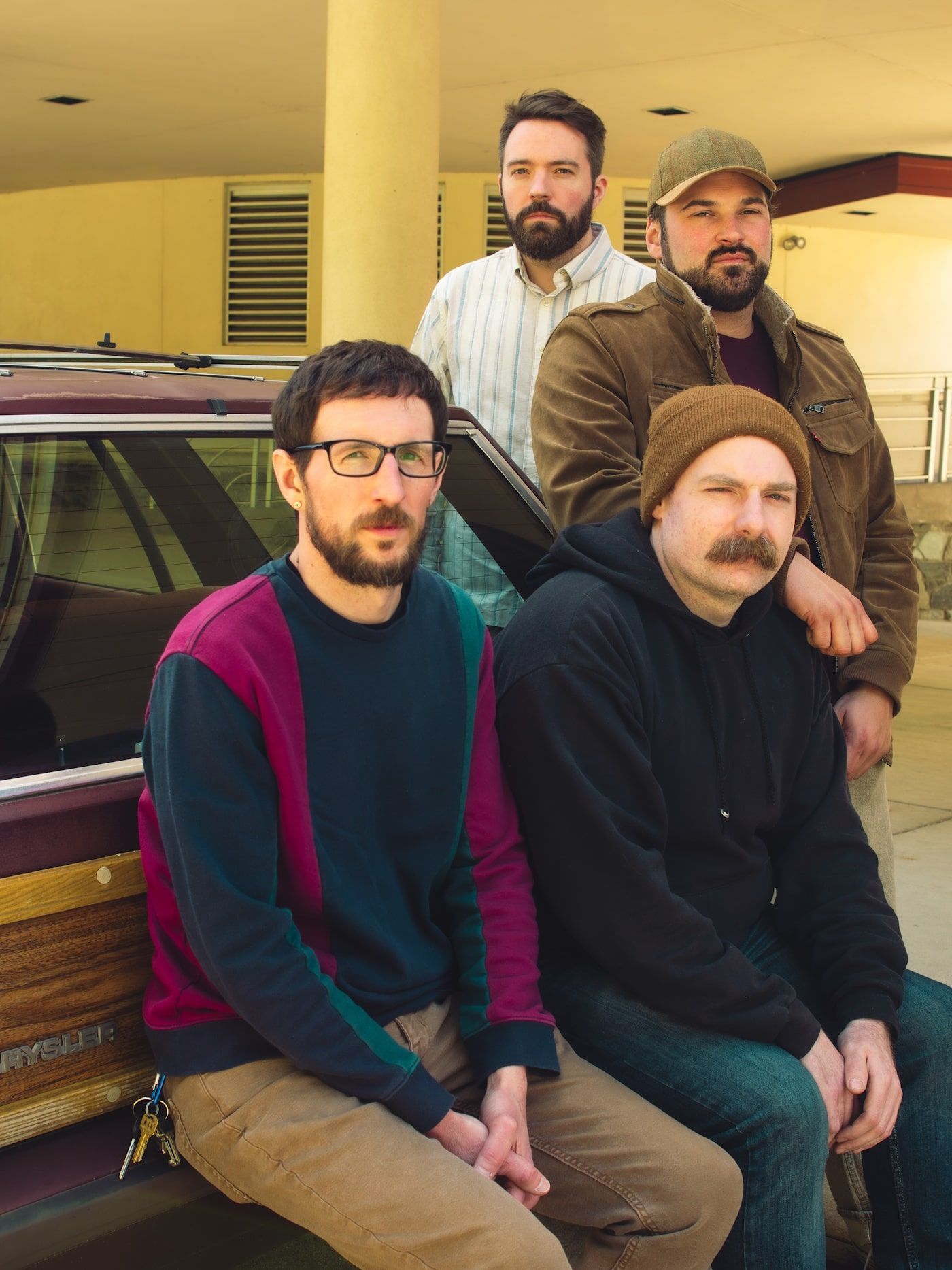
Sobriety leaves marks that don’t wash out easily. For Brian Swindle, frontman of Maryland’s Have Mercy, five years clean means songs that arrive sharper, more deliberate, and far closer to the bone. The band’s sixth album, “the loneliest place i’ve ever been”, released August 29 through Rude Records, is less about collapse than about the uneasy clarity that follows it. These are tracks built in reflection, carrying the weight of absence, apology, and the long process of stitching yourself back together.
The record is self-produced by Swindle, mixed by Paul Leavitt, and mastered by Nick Townsend, with creative direction from Benjamin Lieber. Ten songs move between confessions and fragments of hope, from the grief-stricken “august 17” to the slow rebuild of “little pieces”, a song Swindle calls “a poetic modern rock anthem that centers around a time in my life where I needed to put myself back together.” He adds, “The song is about hope for the future while simultaneously yearning for the past.”
Have Mercy mark the release with a Baltimore hometown show at Metro Gallery on September 7, joined by Bad Luck., latewaves, and Gabe Woodrow, before heading on the road in October with Boys Night Out’s Trainwreck anniversary tour. Dates span California, Arizona, Colorado, Oklahoma, Texas, Florida, Georgia, and North Carolina.
View this post on Instagram
In our conversation below, Swindle reflects on writing in sobriety, producing without chasing perfection, and the danger of turning pain into theatre. He speaks on Baltimore’s shifting hardcore landscape, the confessional pull of tracks like old selfish me, and the quiet moments that have always shaped Have Mercy’s sound.
Read the full interview below, where we talk about memory and relapse, scenes in Baltimore, touring with Emery, and what it means to create an “after the storm” kind of record.
View this post on Instagram
When you first sat down to write this record, what was the very first image or memory that really stuck to the wall and refused to come down?
There are a few images that kind of replayed in my mind. Without going into specifics, it’s my wife’s face during some of the darkest times of my life. The farewell tour replays in my mind a lot, how disappointed I was in myself and my habits. There were a lot of moments I had to relive during writing this record.
You’ve hit the five-year sobriety mark now. That’s a milestone most people outside of that path don’t fully grasp. How has that changed not just your day-to-day, but the way you actually approach a song? Does the process feel sharper, or just heavier in a different way?
It’s a milestone I think I still can’t fully grasp. It’s not like I’ll ever be “in the clear” so every day it’s in the back of my mind. My day-to-day is very structured and routine based now which I love. Even when we’re on the road, I have a routine. When it comes to songwriting I feel like I’m definitely more “on my game”. Lyrically I’m definitely writing with a different mindset but if anything it’s more honest than it’s ever been. I really didn’t like the way I wrote for a couple of years. It wasn’t for the right reasons and it wasn’t a healthy process.
There’s a certain clarity in these songs that almost feels like they’re written in the aftermath of a storm, when the streets are wet but the air is clear. How much of that is hindsight, and how much was you still in the middle of it?
You really nailed it with this question. It’s very much an “after the storm” type of record. It’s very reflective instead of being stuck in the thick of the emotions and unhealthy habits. I have a very good life now and the band is the tightest we’ve ever been. I would say half of this album is written around a 5 year period in my life where I hid a lot of what I was going through or tried to make it look cool. The second half is about where I’m at now and looking backwards.
When you’re dealing with heavy personal stuff, there’s always the danger of either sugar-coating it or turning it into theatre. How do you keep the writing honest without drifting into either of those traps?
I’ve fallen into that trap a lot in the past. I think writing lyrics as if you’re speaking aloud and talking to someone is a good way to keep yourself honest. The second you go back and try to manipulate the lyrics then it’s more of theatre and creating a narrative.
Baltimore’s been part of your story for a while now. If I walked into your scene today, where would you take me first to get the real pulse of it? A venue, a corner bar, some random basement?
To be honest, I’m pretty out of the scene nowadays. The other band members would have a better pulse on what’s happening in the scene. If you want to know where the good food is though, I’m your guy.
View this post on Instagram
Scenes change fast. Who in Baltimore right now is making noise that excites you, maybe in ways you didn’t expect?
I think hardcore music in Baltimore may be the most popular that it’s ever been due to bands like Turnstile and Angel Dust. It excites me to see any bands from our area creating noise outside of this city. Our drummer’s other band, Meth Rats, is super cool and makes some really good music. Ousted is another band that people should check out. Again, I’m not in this scene but lots of bands are getting a spotlight now because of what those bigger hardcore bands are doing.
Outside your city, who have you stumbled across in the last two years that made you stop mid-scroll and actually pay attention? Could be a band, a songwriter, even someone just putting out demos in their bedroom.
First band that comes to mind is Bike Routes. I found them on an old friend’s IG story and immediately stopped in my tracks. Someone just showed me Clover County the other day and that also floored me.
This new record carries a lot of quiet moments like tracks you could play to an empty room at 2 a.m. and still feel the weight. Was that a conscious choice in arranging the album, or did it just settle into that shape naturally?
I think that’s something that Have Mercy always was about. I really want people to listen to the lyrics and dive into it alone on their own. Those quiet moments help keep that vibe. I like soft music and those dynamics have just always been apart of our songwriting.
I noticed you’ve got “august 17” as a lead single. The way you described it, it’s loss but without the Hollywood ending. When you write something like that, do you keep the real person or event in sharp focus, or do you blur it enough so it becomes everyone’s story?
“august 17” was written on the last day that I saw a family member who I knew would soon pass. I didn’t have a choice really but to keep them in focus. That song was to help me cope and understand the brevity of the situation but every moment that I have isn’t exclusive to me. Everyone can relate to death and loss.
Production-wise, you took the reins this time. When you’re producing your own stuff, how do you know when a take is right? Is it about hitting the perfect sound, or about capturing that slightly unsteady moment where it feels alive?
Producing this record was truly about the moments and the feel. Not the tones or the playing the parts perfectly to a metronome. If you believe in your music and your art, you know when it’s right. You also know when it’s wrong. I think there were a lot of mistakes on our last two records and I was adamant that I wouldn’t make certain mistakes again.
There’s a thread of self-reckoning running through songs like “old selfish me.” Do you write those as confessions, or as warnings to yourself not to slip back?
“old selfish me” is very much a confession. It really wasn’t written as a warning to myself but I guess it is now. I just wanted to give people a glimpse into what my life was. There’s a four year span of my life and a lot of topics I will never speak about but I’d like to give people a window into my world and thought process. It’s an apology as well. The song is me telling the listener like…I don’t like me either.
Touring with Emery this summer. That’s a crowd who’s been around long enough to have their own scars. Do you think this record will hit differently for listeners who’ve lived through their own long gaps and rough rebuilds?
Emery’s fan’s were incredibly receptive to us. I think our whole catalog was meant for a crowd like that. Our older stuff has that nostalgia feeling and the new stuff has topics they can relate to at this point in their lives.
If you could press this album into the hands of your younger self – maybe the one just starting out, still figuring out what Have Mercy could be – what do you think they’d hear first?
I think they would go “holy moly, we wrote this? what happened? what did we go through?”. I think the lyrics are so heavy and the instrumentation is so catchy.
When all’s said and done, and this album has had its run, what’s the one scene or moment you hope sticks with people. Something they carry around long after they’ve stopped playing it?
Things can get better, you can get better. It’s okay to make mistakes but if you don’t fix the course of your life when you’re on the wrong path then you can lose everything. I want people to enjoy this album and I want them to feel this album.
View this post on Instagram