
“Black Avalanche” is the second full-length from Toronto band One Hundred Moons, out November 16, 2025. The nine-track album sits where shoegaze, dream pop, post-rock and ’90s alt-rock overlap, leaning into long arcs of tension and a steady, restrained weight rather than quick payoffs.
The band — Collin Young, Jen Vella, Justin Hunt, Matt Laplante and NJ Borreta — talk about the record as something “simultaneously expansive and intensely personal”, a set of songs that hover between “cosmic scale and human emotion” while staying grounded in lived-in detail and process.
Built on cascading guitars, hypnotic rhythms and low-key but deliberate vocals, One Hundred Moons operate in a space that makes sense for a group who’ve been compared to Slowdive, Radiohead, Mogwai and even Ennio Morricone.
Their own description has them mixing the emotion of Radiohead with “the haze of My Bloody Valentine”, pulling in post-rock gravity and the rougher edge of ’90s alternative. Melodic Mag summed it up as “creating a sonic experience that feels fresh without abandoning the emotional richness that defines the genre,” which feels in line with the way the band frame the LP: music you move through slowly, rather than something that chases your attention.
The title track “Black Avalanche” is the anchor and “mission statement”. It’s the most composed piece on the record going in, “built on the initial guitar riff and chord progression” before the usual layering began. The band see it as a kind of prologue, a takeoff sequence: “Sometimes I get the visual of a plane taking off, and the climax sort of feels like a rocket breaking through the earth’s atmosphere for the first time.” That sense of lift and pressure sets the tone for the rest of the album, establishing a slow, romanticized sadness that underpins everything that follows.
“Death of the Party” pulls the camera right back down to earth. Musically, it’s meant to “invoke a smoky, lounge vibe”, something like a dim room where time drags and nothing quite gets resolved. Lyrically, it “concern[s] someone’s demons catching up to them and the questionable catharsis of being an onlooker to that.” The band place it in a film noir palette, “with shady people whispering dark secrets over a scotch and cigar”. It’s less about big declarations and more about watching someone unravel in slow motion, and wondering what it says about the person who keeps watching.
View this post on Instagram
With “Chairman of the Bored”, One Hundred Moons loosen their grip on structure. They call it “an attempt at a more free flowing, jammed approach,” where “a lot of the ideas were born spur of the moment.”
Instead of another tightly plotted song, this one drifts into a more open, natural calm. Visually, they associate it with “the stillness of the outdoors, taking in fresh air and pushing away the daily grind” — an unhurried counterpoint to the record’s heavier, more claustrophobic moments.
“Ear to Ear” folds in more of the band’s history and listening habits. The starting point was a long-standing goal: “It was always a goal to work a Krautrock groove into a song,” drawing on that motorik repetition, “but couldn’t help taking a page from the hardcore days and diverging into a half-time breakdown in the ending.” In their visual shorthand, this is “about the grind coming crashing back and the frustrating absurdities of the modern system.” The walls of sound “threaten to overwhelm”, but, as they put it, “other times you just gotta whistle a merry tune as the world crumbles around you.” It’s one of the clearest moments where older punk instincts, German experimentalism and modern disillusion all sit in the same frame.
“Shade of Night” went through a long, slightly strange journey before landing where it is now. The song “had many iterations before its final form, initially starting with very jazz influenced instrumentation”, but Jen “called it out as having too much of a 90s softcore feel.” That critique pushed the band into “a trip-hop direction” instead, tightening the atmosphere and pulling it closer to their core sound. They still hear it in noir terms, “maybe with a bit of a nod to an old school spy flick,” and there’s even a future-facing thought in there: “If we were ever get the chance to do symphonic arrangements of our songs, I’d love to see how this one turns out.”
“Volodya” shifts the focus to the drummer. “This song had the drummer NJ in the driver’s seat of the song writing. While it was still hashed out with the rest of the band like all the songs are, it was his creative spark that set this in motion.” In visual language, they call it “the Sci-Fi detour of the record,” set “within a futuristic space ship” and “embracing the full John Carpenter” along with “other 80s futurism nods.” It’s one of the clearest examples of how they fold cinematic reference points directly into their writing, not just as mood boards but as structural cues.
“Hall of Mirrors” started even smaller. “This started as an attempt at an ambient interlude that stretched to a full song. Still tried to push our limits on minimalism.” Sonically, it stays sparse, but conceptually they still see it in the sci-fi camp, “lost in space, trying to find the human connection to the cosmos.” The song sits “like one of those astronaut movies that’s really just using space as a metaphor for expansive loneliness,” stretching quiet ideas out far enough that they start to feel unstable.
“The Architect” carries the album back to earth. Early on, the song revolved around a sample — “essentially an atheist rant” that ended with the line: in the absence of God “we are the architects of our own destiny.” The band eventually dropped the sample and rebuilt the lyrics, now “address[ing] someone overthinking themselves to oblivion.” Keeping the title “kind of makes things come full circle”: “if we are the architects of our own destiny, we must accept the responsibility to not let things go off the rails.” They frame it visually as “sinister or sneaky, like perhaps stepping into the villains lair who’s patiently plotting before unleashing the full fury.”
“Into Nowhere” closes the record in a way that underlines the band’s tendency to build entire songs from strange, everyday details. “The bathroom was making a weird noise one day, that got sampled and the song was built around that.” From there, it became a final descent and drift: “This one feels like getting sucked into a black hole and then drifting weightless through the void.” In the wider album notes, they extend that: distortion and reverb bloom into something “cinematic, infinite, and strangely peaceful,” an ending that “serves as a reminder of the vastness the band portrays: that odd sense of wonder you get when you suddenly realize how tiny and amazing everything is.”
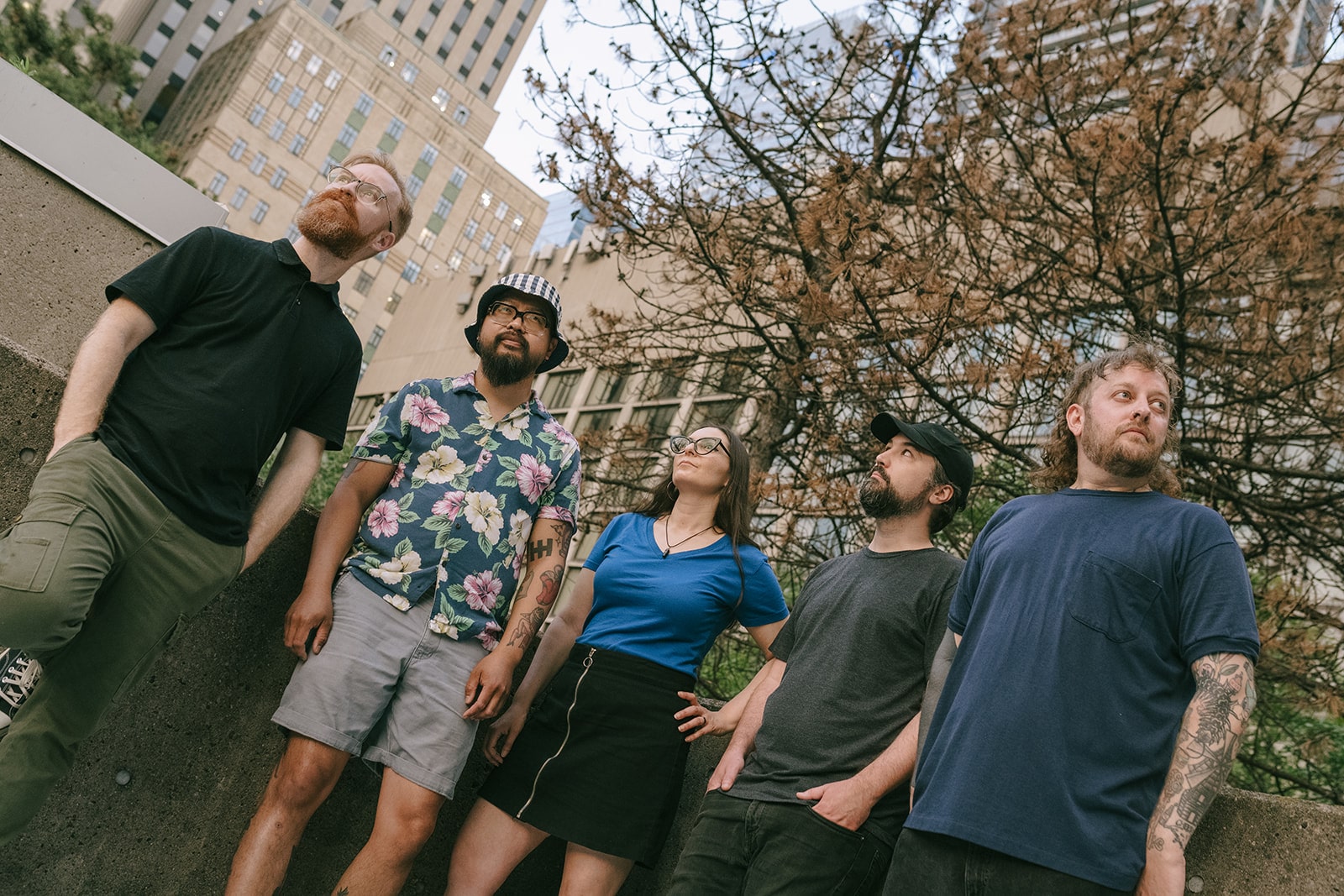
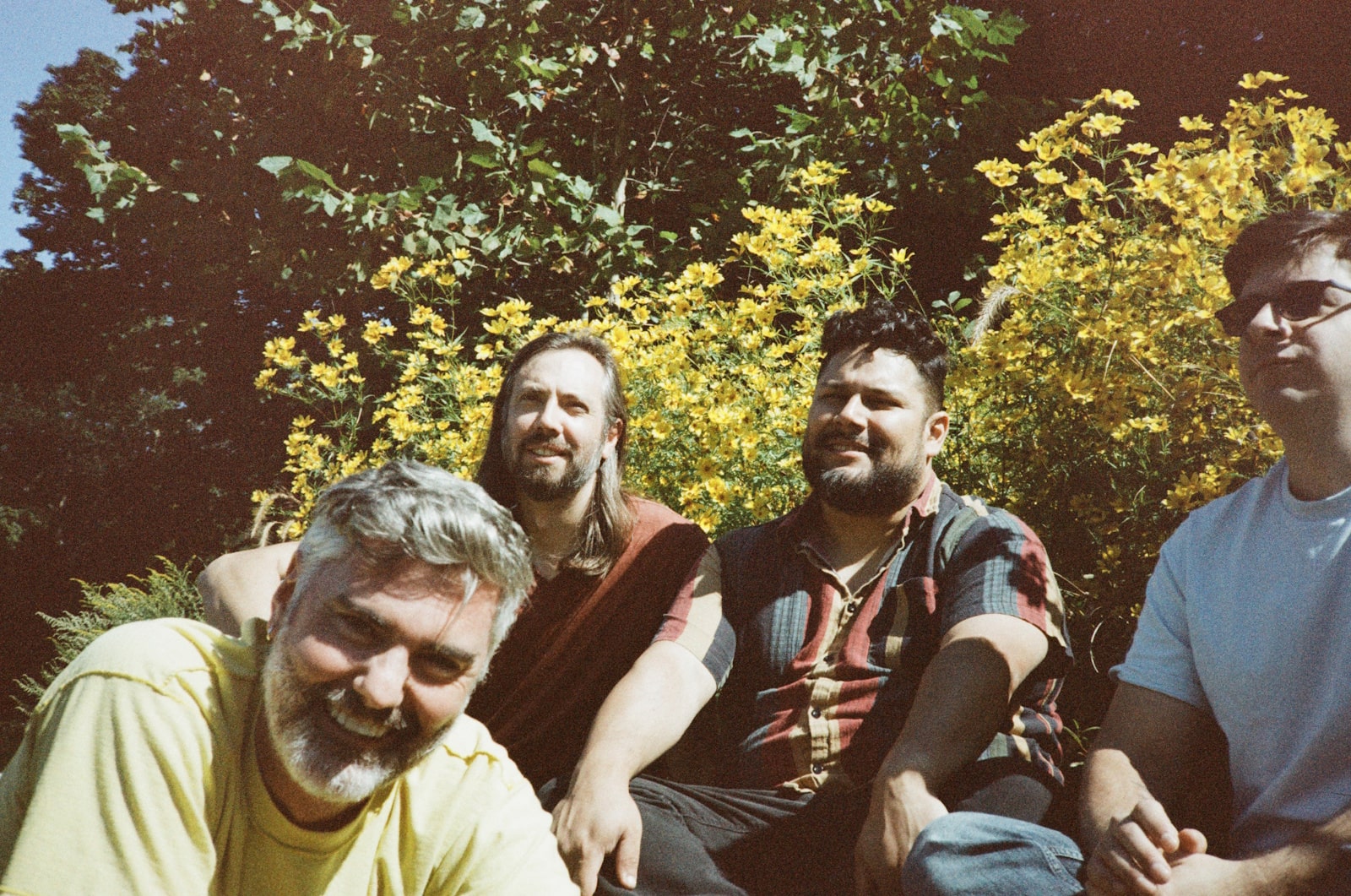
Underneath the individual songs, One Hundred Moons are very clear about the visual and film logic that shapes “Black Avalanche”. They treat the opener as prologue, talk about noir scenes with “shady people whispering dark secrets”, imagine sci-fi corridors and “expansive loneliness”, and even daydream about eventual symphonic reworks. The album art for “Black Avalanche”, credited to Justin Hunt, extends that cinematic framing, as does the band portrait by Whim and Willow Photography. It all feeds into their self-positioning as a band “guiding listeners through ethereal soundscapes and introspective melodies,” exploring “themes of longing, transformation, and inner reflection” without ditching the more physical, guitar-based side of what they do.
The context around the record is very much rooted in Toronto. “Toronto is finding itself in a resurgence of shoe gaze and grunge, especially among the younger musicians,” they explain. “I suppose it’s the cyclical nature and trend of style: the 90s feel like they’re back when you hear and see bands that are emulating MBV, Slowdive, and early Smashing Pumpkins in their music.”
One Hundred Moons place themselves “amongst that, albeit us being older and actually having lived through that era.” They describe the current moment as welcoming, with more shows and more compatible bands to play with, and they notice how “stylistic elements from eras succeeding the 90s like nu-metal of the 2000s and indie-hipster sounds of the 2010s” have been pulled into the mix. “Similarly, we draw from modern influences especially those from post / noise rock in our sound. These are the types of things that shape the identities of the bands in the space where we find ourselves: bits and pieces borrowed from post-millennia music mashed into a foundation of 90s alt rock.”
View this post on Instagram
Their listening habits back up that idea of layering eras.
“Having grown up in the 90s, most of the major players from that decade are already baked into my DNA,” they say, but making this record also meant “digging further back, tracing the lineage of post-punk.”
They talk about “seeing the greatness in bands like The Cure and Joy Division for the first time in my life,” and taking in records by Neu, Can and Eno to “really see what they brought to the table.” On the contemporary side, they namecheck “recent releases from familiar faces like The Smile, Slowdive and the latest Beth Gibbons, or totally fresh acts like Fontaines D.C., Rezn, J.R.C.G. Idles or Slift.”
One particular release stands out: “This year, ‘Seeking Darkness’ by Huremic has me floored. I think music discovery is important and I’m sure every new sound has an impact on the music I make.”
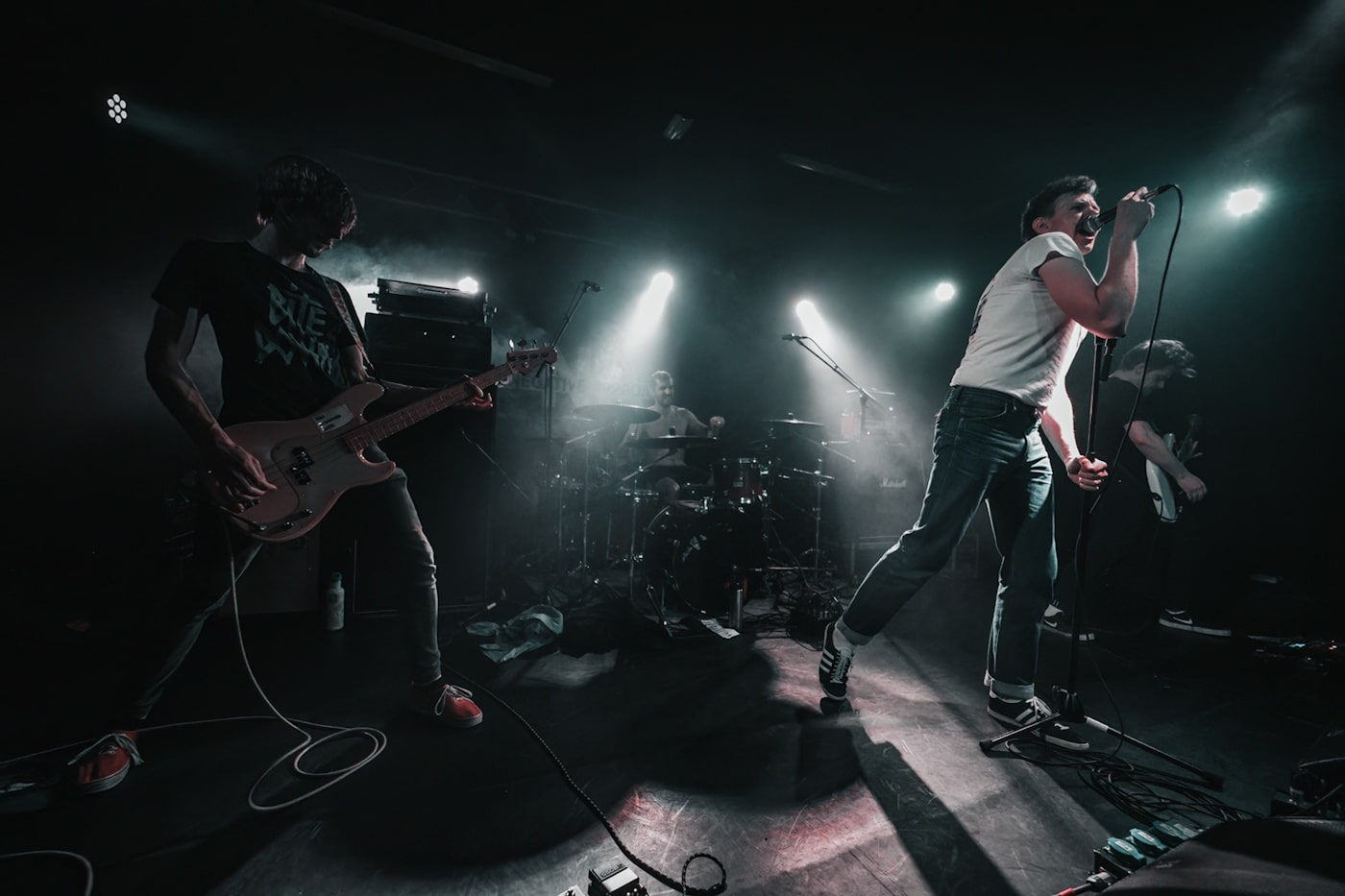
Live, the band are positioning “Black Avalanche” inside that Toronto ecosystem rather than outside of it.
Their fall tour of Ontario — Waterloo, Oshawa, Niagara, Toronto, Hamilton and Windsor — runs in step with the album’s release. The way they talk about themselves is measured but clear: a shoegaze band working with “lush, layered textures”, a group known for “immersive live performances” and a “critically acclaimed debut,” now using their second full-length to pull together 90s memories, post-millennial noise, film-score imagination and the current wave of local guitar music into one long, slow-moving statement.