
The story behind “fallow and cancer, it was the night sky” begins before the record existed, in a late-March winter of 2023, when noisy post rock / emoviolence / screamo act meandergreen had just finished writing “bilal crying ii” with its now-complete lineup. Instead of staying in the warehouse where they usually played, they decided to walk out into the landscape that had shaped Nick Hildenbrand’s earlier poetry collection The Marshwood Songs.
He calls that book a set of “trespass poems,” written during long walks that followed train tracks into woods, farmfields, and fading bushlots—an attempt to push back against the suburban sprawl he felt was “vivisecting the environment of the dreams of my childhood.”
He says those memories, sweet and sad in equal measure, had turned him into “a coward” because he didn’t want to see what had been taken away since he first wandered those places. But being with the band shifted something.
The nostalgia sharpened, and he wanted to show his “starry-eyed brethren” where all of it came from. So they walked the tracks—grey-rust rails, leaning phonelines, a sky rolling with frozen clouds—Bilal carrying his guitar case and Nick hauling “every book in the world.” Eventually they reached an old refuge of Nick’s: a trireme-shaped treehouse perched on a hill above a pond. It used to be hidden in dense woods, but now it stood alone on a bare mound. The sky had gone purplish-blue, “regal and apocalyptic,” and the pond was long dried out.

They climbed the tree. Nate and Bilal started playing, and the guitar lines seemed to thread through the branches, giving the scene a kind of temporary motion. Nick pulled out his beat-up copy of The Marshwood Songs—torn cover, flyleaf marked with old rain spots “giving it the appearance of tears”—and read every poem he had written.
He describes the moment as the three of them rebuilding something that had been cut apart by time and encroachment: “transforming my lament.” In that setting, Bilal looked at the ruined book and suggested that Nick should publish his next collection with its first poem as the cover, calling the idea “truly punk.” The record title came from that same poem, as did the cover image—built from a photo Bilal took of Nick and Nate standing on the tracks that night.
View this post on Instagram
For the band, this idea of turning loss into coherence is the spine of the album. Nick calls the record “the transmutation of pain and memory into the embedded promise of hopeful coherence through love in all its forms.”
The reference he reaches for is Whitman: “The pleasures of heaven are with me and the pains of hell are with me, / The former I graft and increase upon myself, the latter I translate into a new tongue.” The quote fits the way each member brings different histories into the project, but the collective act of creating the record becomes proof of a shared language.
View this post on Instagram
They recorded everything live in the warehouse where they write and throw shows, with microphones scattered around the space. Nate wanted to preserve what they see as the necessary fragility of their sound—“a rough and inextricable ephemerality” that would be hard to reproduce in a studio. All three pieces on the record lean into this sense of immediacy. Suddenness shapes the writing, the playing, and the way the songs unravel.
“bilal crying ii,” especially, holds a central place. Nick calls it the “barbaric yawp” at the heart of the record, a cry not just for their own transformation but for something larger. Bilal is Palestinian, and Nick says plainly: “I love my brother.” The piece captures what he describes as “the candid, blurted glimpse of an irrefutable spiritual reality,” ending in a surge that he frames as both personal and political—a rising, unfiltered “free Palestine.”
View this post on Instagram
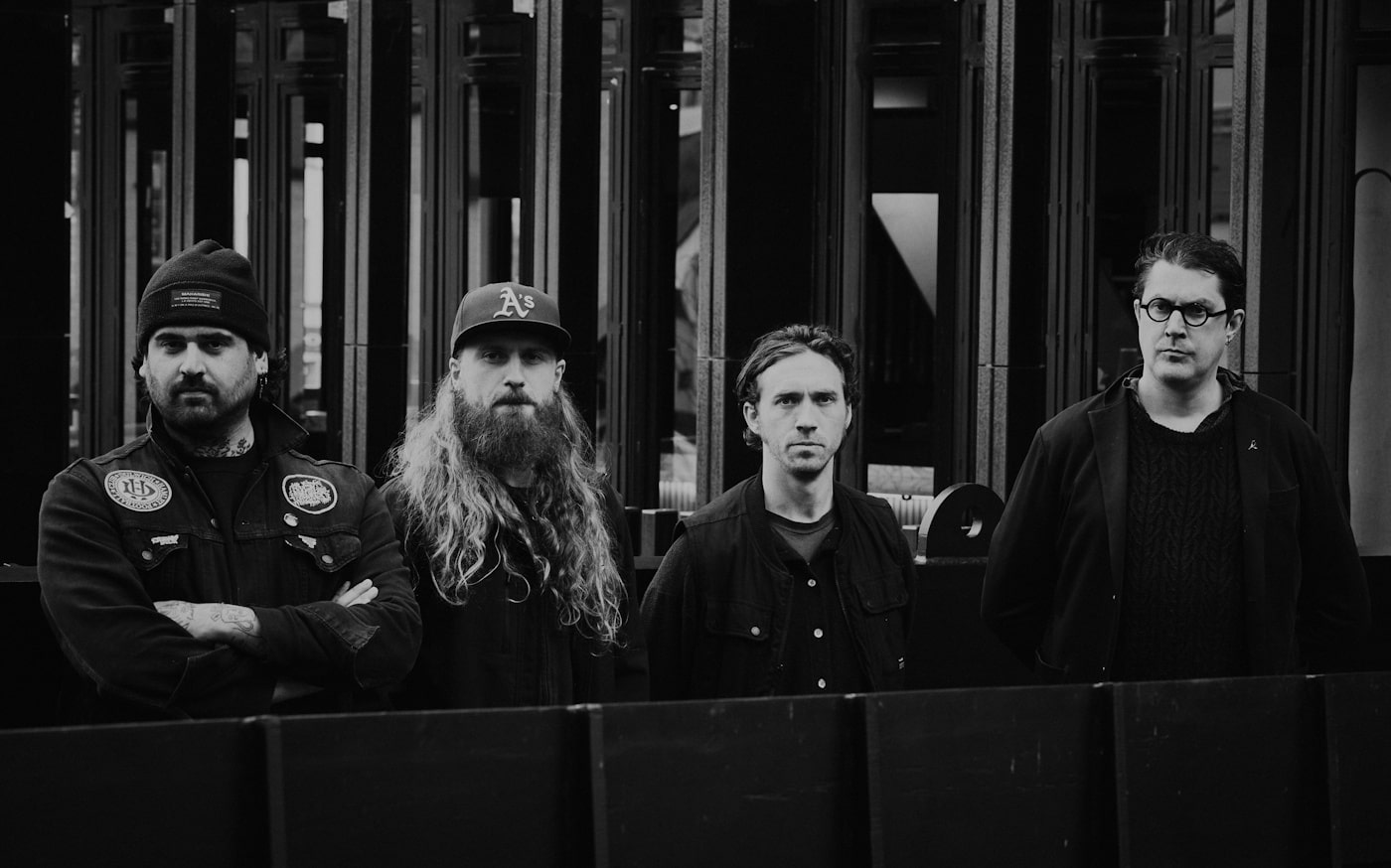
meandergreen—Nick Hildenbrand, Mike Barnett, Nate Blackton, and Bilal Nasser—released the digital version of “fallow and cancer, it was the night sky” on August 28, 2025, following three long-form pieces: “bilal crying ii,” “i think of how again,” and the live-take “warehouse improvisation, 12.23.2024.” The project moves between spoken memory, improvised passages, and dense, slow-building instruments that carry traces of post-rock, twinkly emo, and free-verse poetics. The physical release is coming later this year through Self-Versed Records and Oliver Glenn Records, with photography by Nat Willie and artwork by Hrista Stefanova.
View this post on Instagram