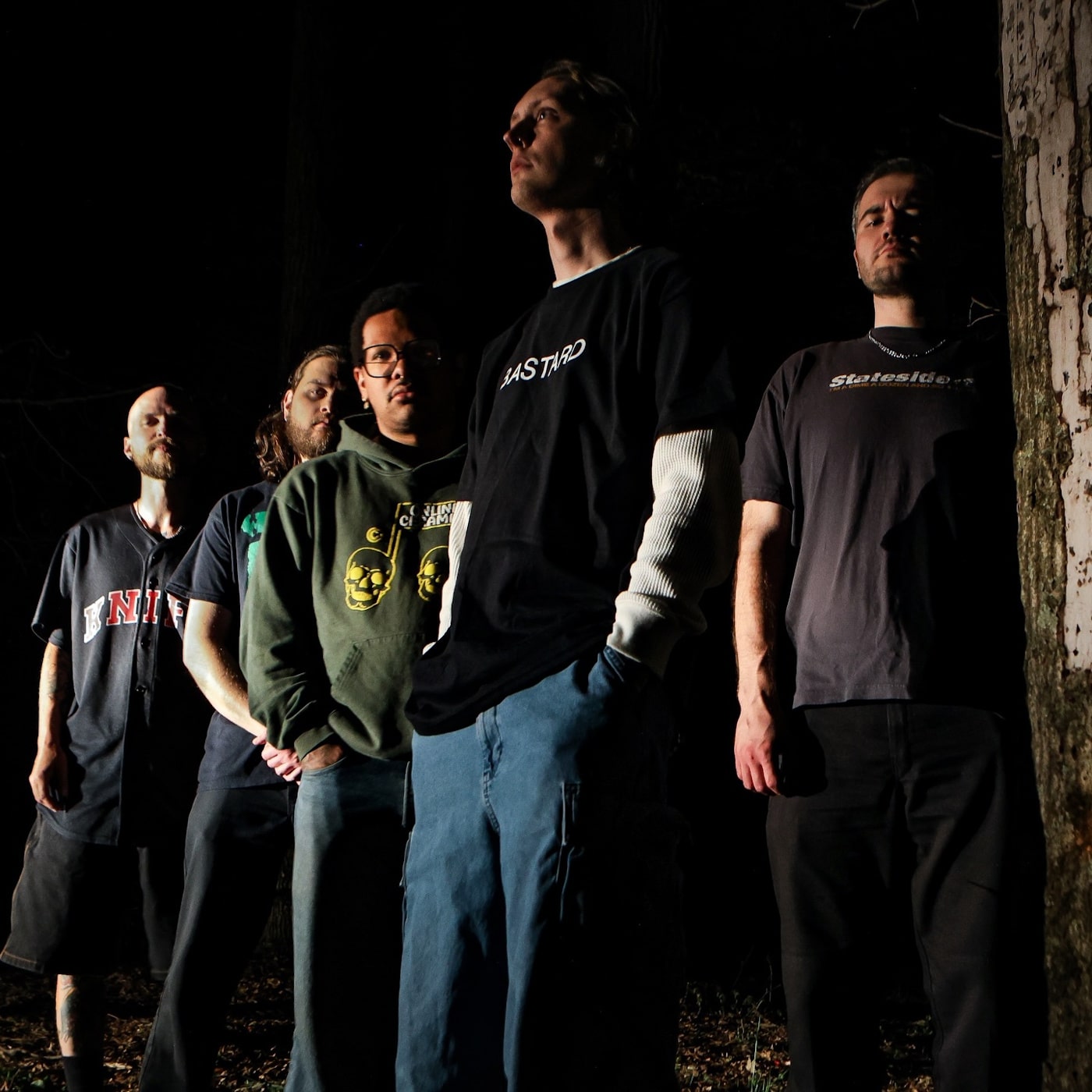


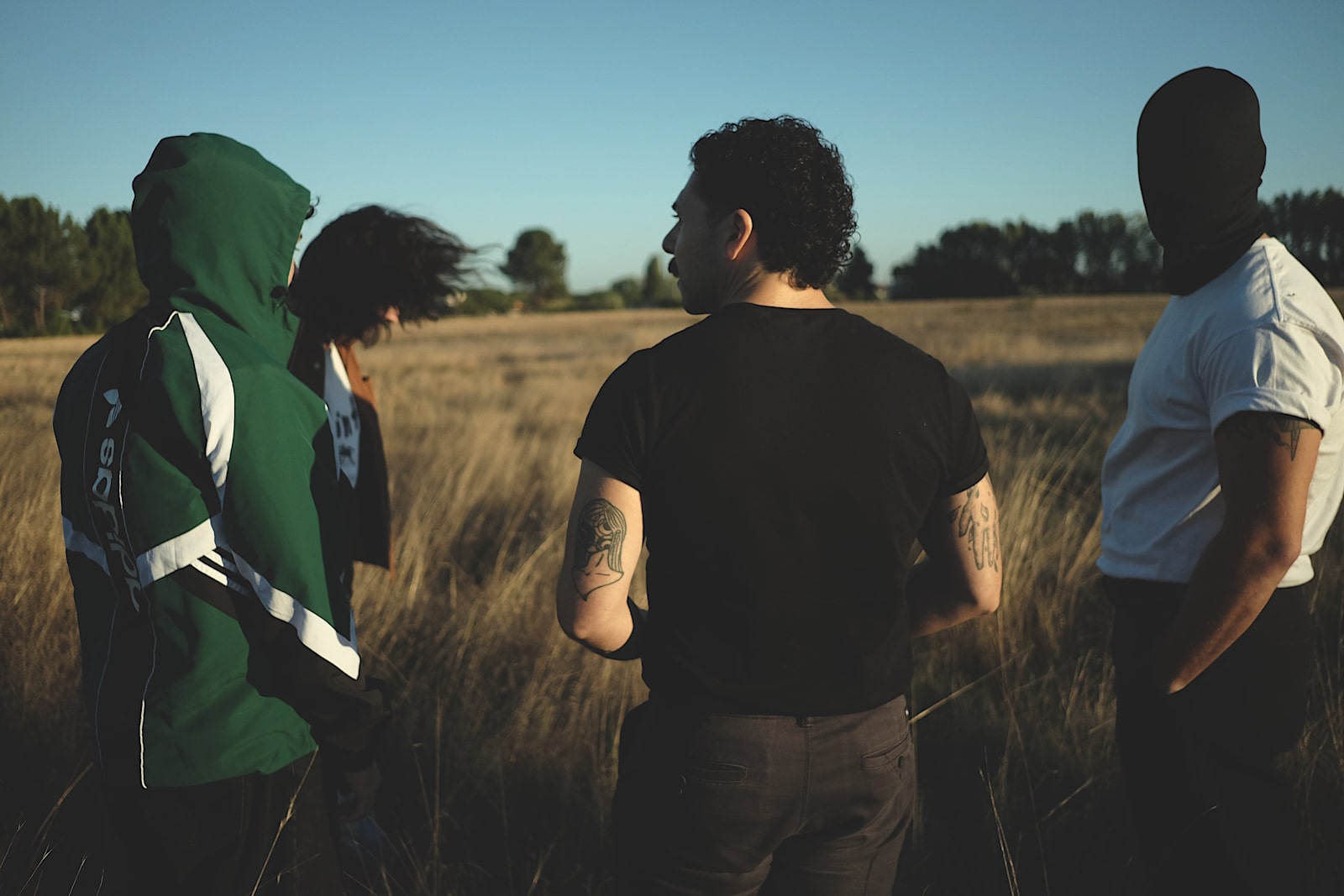
In Roy Batty, the voice is there, the person behind it isn’t. The band’s vocalist stays anonymous, while the vocals themselves are anything but hidden—screamed, spoken, sometimes clear, sometimes swallowed by the mix. The band describe it simply as a way to focus on the act of shaping sound, not the identity attached to it.
Roy Batty are a four-piece from Pinhal Novo, Portugal, made up of João Cunha, Fishbonn, Pedro Faria Cunha, and the unnamed vocalist. Their self-titled debut EP, “Roy Batty”, came out on November 28 and is currently being played live. It’s a short release that lays out how the band works, without trying to explain itself too much.
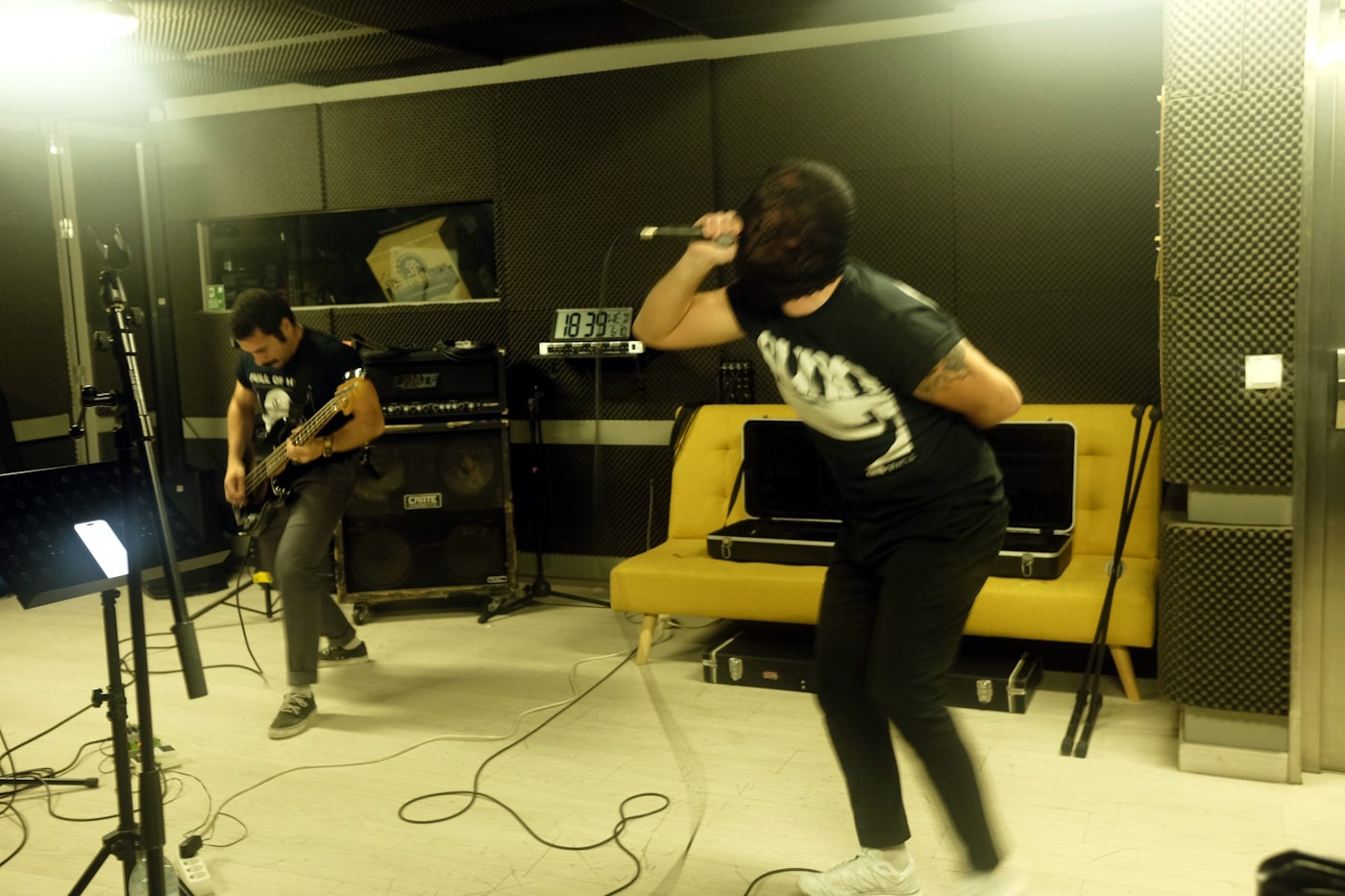
The EP sits in post-hardcore and noise rock territory, with elements of emoviolence, 90s noise, and contemporary screamo mixed in. Guitars are heavy on distortion and reverb, rhythms shift and snap into place, then loosen again. The songs don’t move toward big payoffs or clean endings. They hold tension, drop it briefly, then bring it back.
Vocals move back and forth between screams and spoken lines. Neither feels more important than the other. Screaming doesn’t signal a peak, and spoken parts don’t slow things down. They’re just different ways of pushing through the same material, used where they fit.
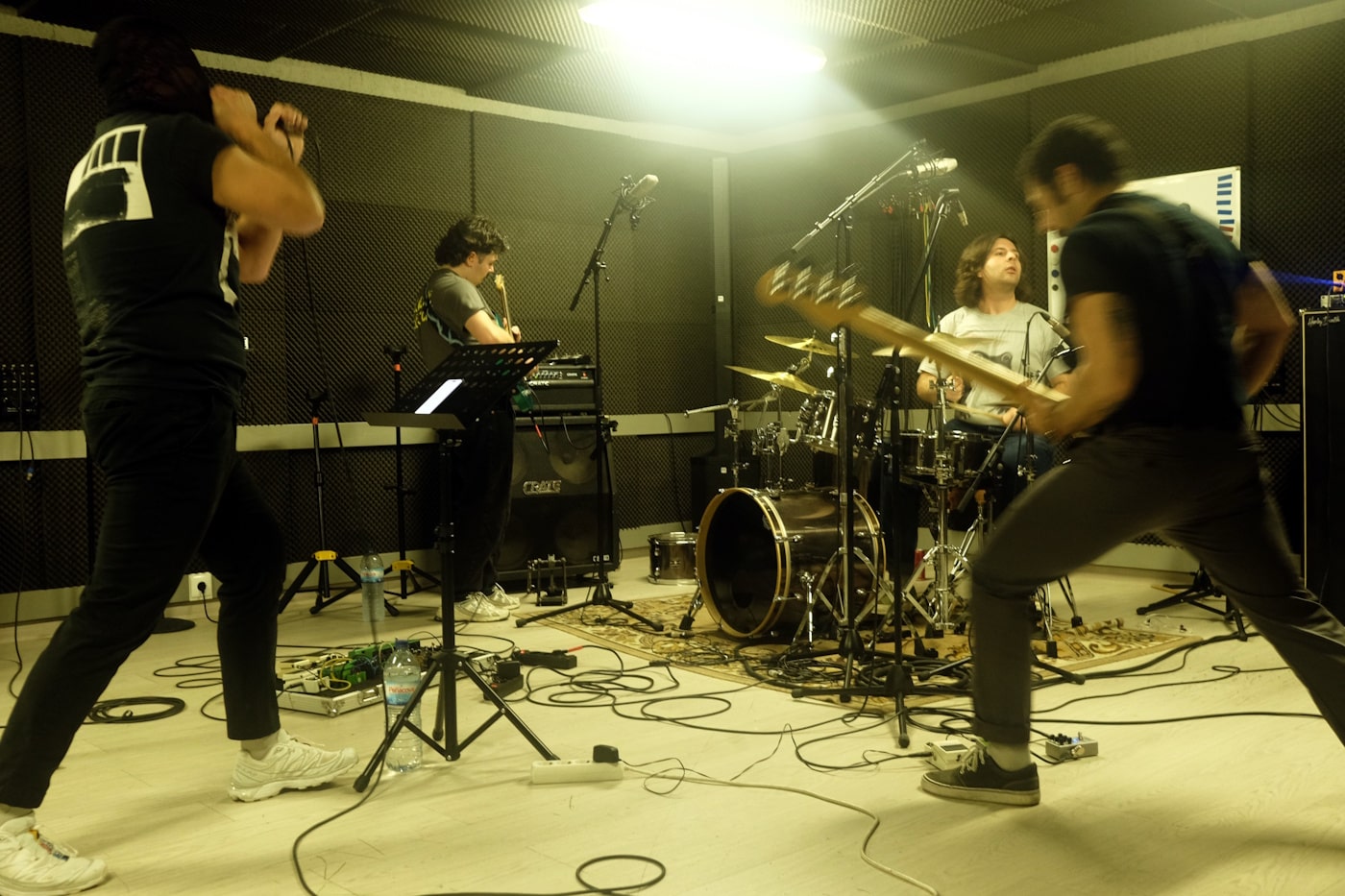
The band are direct about why the music sounds the way it does. “From the very start Roy Batty has always been about playing what we love,” says João Cunha.
“Dissonant not just for the sake of it, but coming from a place of passion for annoying and uncomfortable sounds.” That discomfort isn’t left messy. The band talk about working those sounds into something more familiar, shaping them rather than letting them run wild.
Influences come from different places, but they aren’t spelled out on the record. The band focus more on what overlaps than what separates them. “We draw influences from so many different places yet we thrive on finding common words in the midst of the noise.” That shows up in recurring rhythms and short moments of groove that hold the songs together without smoothing them out.

Lyrically, the EP stays close to internal tension and how that spills into the outside world. Nothing is explained directly. Lines feel cut short, repeated, or left hanging. The record doesn’t tell a story as much as it circles the same problems from different angles.
The band see “Roy Batty” as a starting point. It came from an urge to get the music out and to mark out what they want to keep working on. They sum it up without dressing it up: dissonance, cacophony, groove.
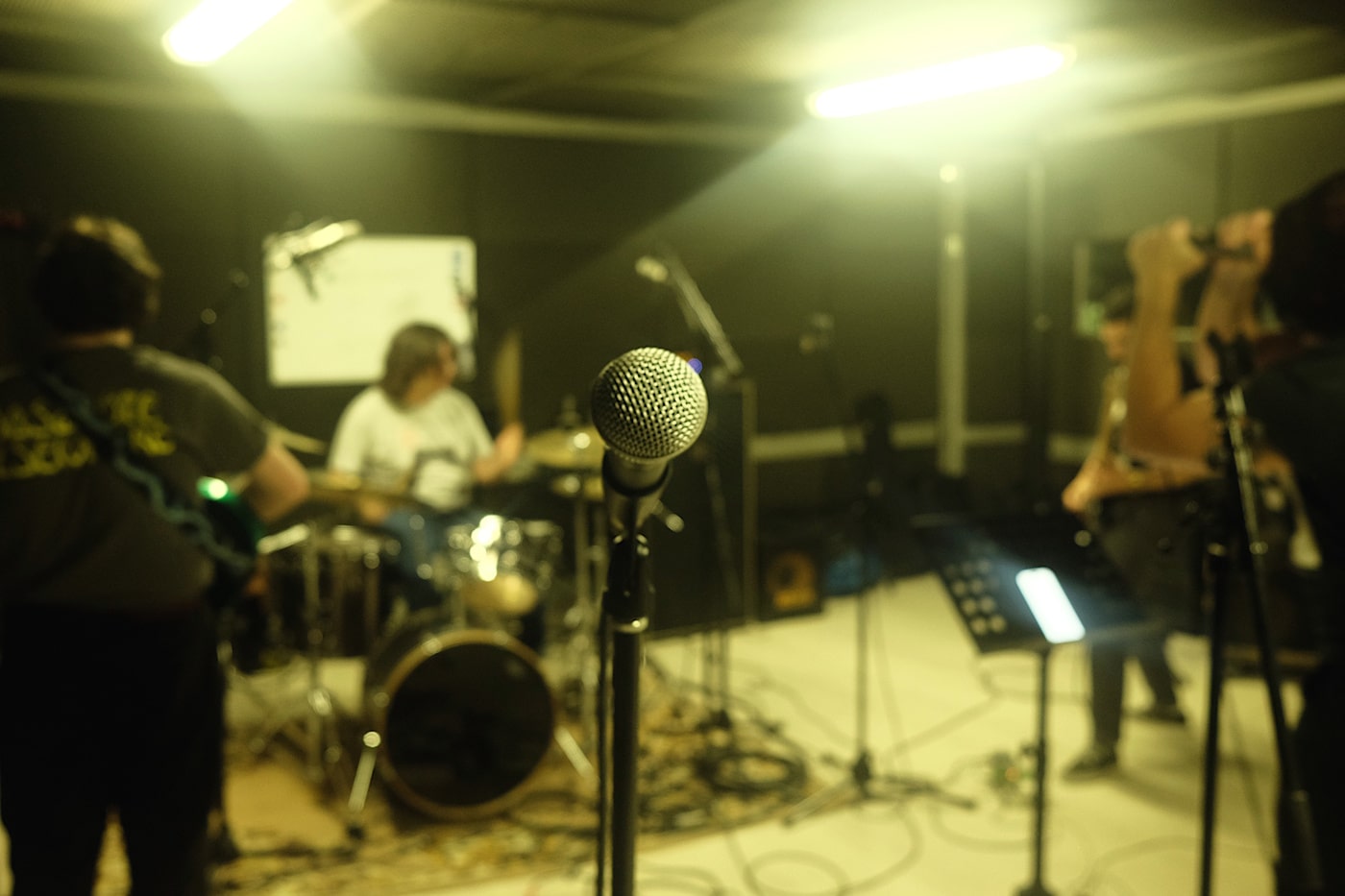
There’s no bigger framing attached to the EP. It exists as it is, already being tested live, already doing its job. The voice stays front and center, even without a name attached, and the noisy 4-tracker carries the weight without asking for anything extra.
View this post on Instagram