

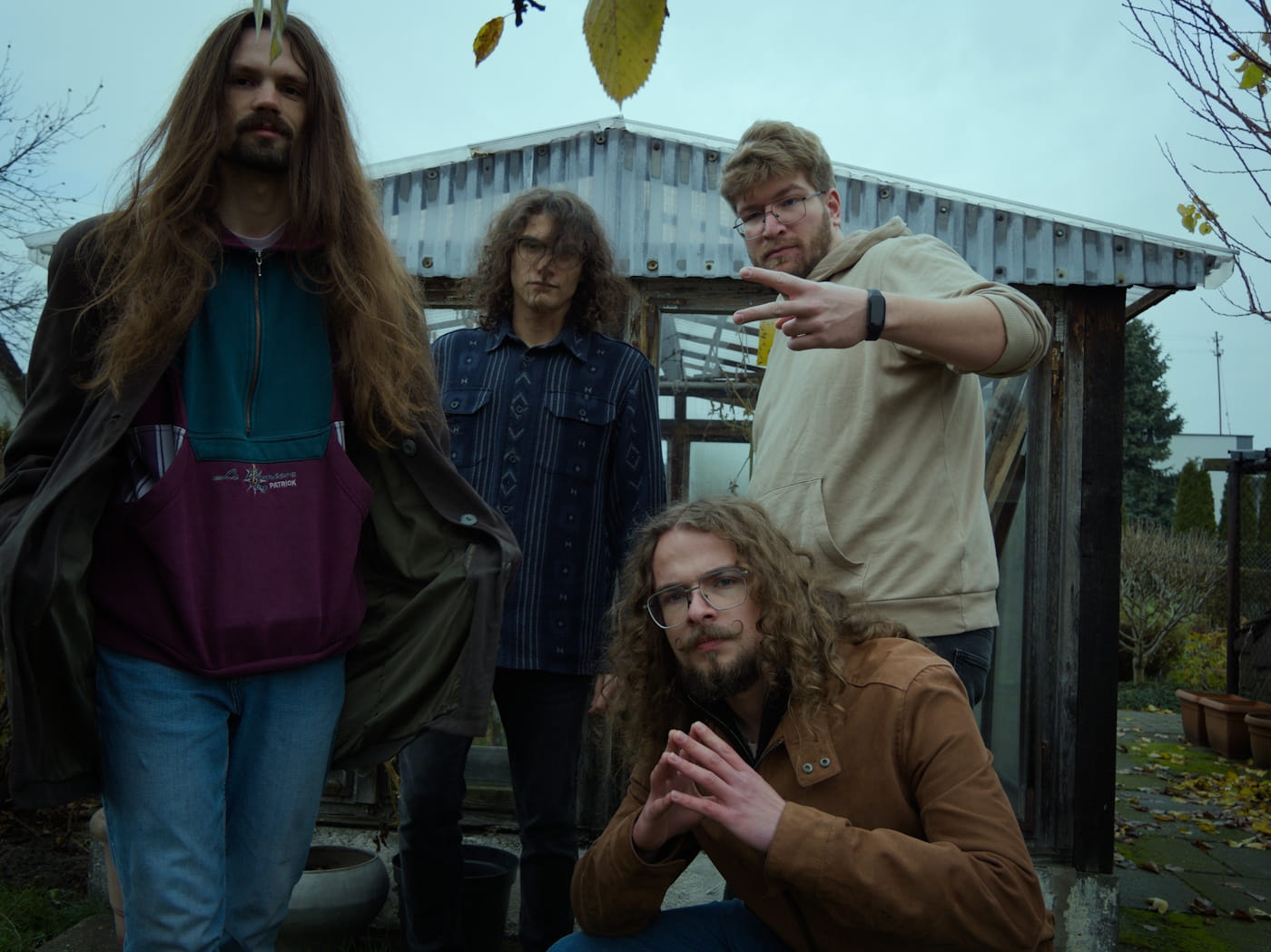
Thick, gloomy, dense — the kind of sound that drags you deep beneath the surface of murky swamp water. That’s where Opole’s Dense Haze landed after years of shifting shapes and shedding skin.
They started in 2019 playing cover sets, nothing serious. By autumn 2020, they had their own material and played their first show with original songs. But those early tracks sounded completely different from what ended up on “Galas.” Over time, they rearranged everything, tweaked lyrics, ditched a few songs entirely. What began as straightforward stoner rock gradually morphed into sludge and stoner doom territory.
“Creating songs, we always followed what brought us joy and what we liked,” says Dawid. “And since broadly understood slow, crushing playing always resonated in our hearts, well, that’s what came out.”
The EP dropped November 29, 2025, with hand-labeled cassettes — 39 numbered copies that shipped out fast. Each tape comes packaged with care, the kind of attention that matches the deliberate weight of the four tracks inside.
Four voices, one swamp
Each member of the quartet brought their own listening habits to the writing process.
Dawid was deep into Windhand’s entire discography, particularly “Grief’s Infernal Flower” and “Eternal Return.” YOB, Weedeater, and Bell Witch got heavy rotation.
German band Grin’s “Translucent Blades” influenced the arrangement tweaks.
But the real game-changers? Dolch’s “Feuer,” which sparked the most creative ideas and arrangement concepts.
Then Windhand’s “Eternal Return” again.
And crucially, Kall’s “Brand” — “without it, one particular song definitely wouldn’t have been created,” Dawid notes.
He also mentions Ofdrykkja’s “Gryningsvisor” and Harakiri for the Sky’s “Arson” as worth noting.
Michał drew heavily from Dopelord and Bongripper. “Children of the Haze” and “Black Arts, Riff Worship & Weed Cult” from Dopelord, plus Bongripper’s “Terminal.” “That’s where I got my love for expansive bass sound,” he explains, “and through Kall’s ‘Brand,’ black metal-tinged themes entered the picture.”
Jakub joined initially as a session musician through his friendship with Michał. The guys introduced him to stoner, doom, and sludge — before that, he was riding to rehearsals listening to hardcore, metalcore, and deathcore. Sleep, Bongripper, Dopelord, Electric Wizard, and Bell Witch became part of his education.
His inspirations came from everything he was absorbing then. The galloping section in “Blue Tongue” emerged from that whole mix. The melody in “Icy Desert” works as a subtle motif in the chorus. The core influences left their mark too, especially on “Wayside’s” ending. “I wanted to put a breakdown at the end of the song. Bass playing the riff before guitars enter, announcing the coming crush — I associate that mainly with hardcore and early metalcore.”
Gojira influenced the bridge in “Kolporter.” As for the solos — two in “Kolporter,” one in “Icy Desert” — he just wanted them to fit the songs, bring some variety. Some tapping (he mentions Eddie Van Halen, RIP), some recurring motifs. “What I’m saying is nothing particular drove me, what I created came from the moment and situation I was in when writing each part.” He doesn’t regret it and wants to hear more Crowbar.
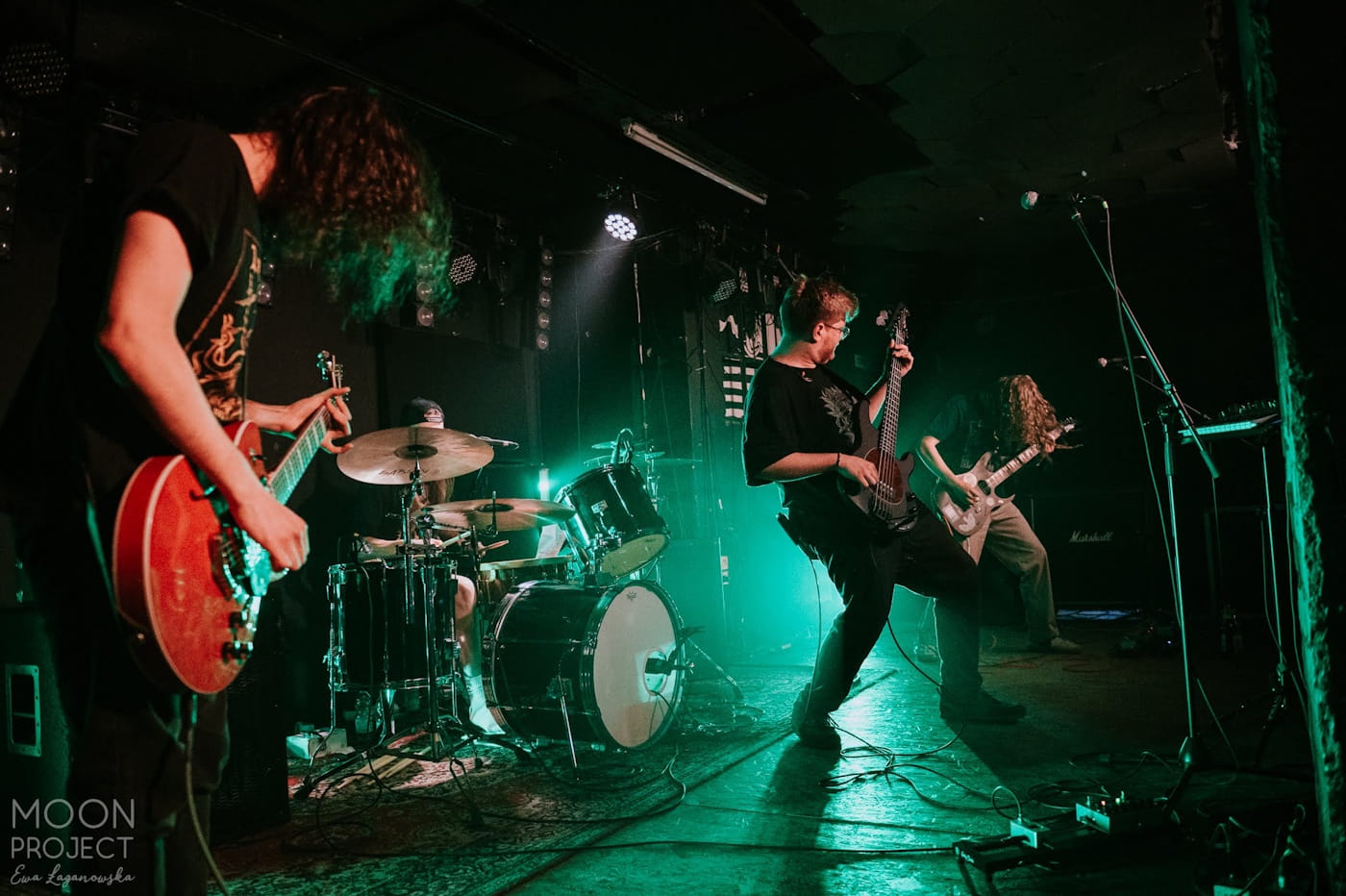
Mateusz keeps it simple: “Rearranging our earlier songs came down to one thing: creating the heaviest material we’re capable of. We added tons of fuzz, crushing weight, and general beatdown.” Hard to pinpoint narrow influences after years of playing together, but his core bands are Melvins, Electric Wizard, Sleep, Crowbar, and Acid Bath.
Track by track
“Wayside” originally had much longer lyrics forming a story, but when the arrangement changed, they realized less text would carry more emotion. And emotion is key here. Dawid was writing during a period of releasing experiences gathered while changing environments, partially moving out of his existing place. That theme runs through most of the EP. “Here specifically I’m addressing general helplessness and powerlessness while still in the old place, seeing on the horizon a possible change that could be positive but might bring even worse moments.” Doomy, melodic vocals with a slight church-like atmosphere were meant to introduce listeners to their world. Bell Witch’s “Longing” was on repeat during its creation.
“Blue Tongue” shifts away from that main motif slightly. The text came from a fever dream combined with, maybe even resulting from, maniacal listening to Mastodon. Dawid wanted to implement correspondence with a lyrical “beast” — a personification of his own problems, fears, and lack of will to do things. Basically, giving up.
“Kolporter” is an instrumental, but the title isn’t random. This track is meant to deliver. Deliver energy, strength. It’s a breathing moment for the listener, meant to supply them with will for the EP’s final part. The song also serves as a lyrical pause, a chance to process what came before and move forward with a clear head. Bongripper’s “Terminal” was the soundtrack to its creation.
“Icy Desert” returns to the main theme, but now from a place in time after the environment change. Fear of what was, worry that it all might come back — those are the main problems addressed here. The fact that it’s not enough to change location, you also need to change your approach, otherwise you won’t achieve results. Combining this with a slightly black metal atmosphere and coldness felt like the perfect solution for closing the release. Because as everyone knows, you can survive longer in the cold by slowing down your organism. And just as the EP began with a breath, it ends with one too. Kall’s “Fukta din Aska” was mined relentlessly during the writing.
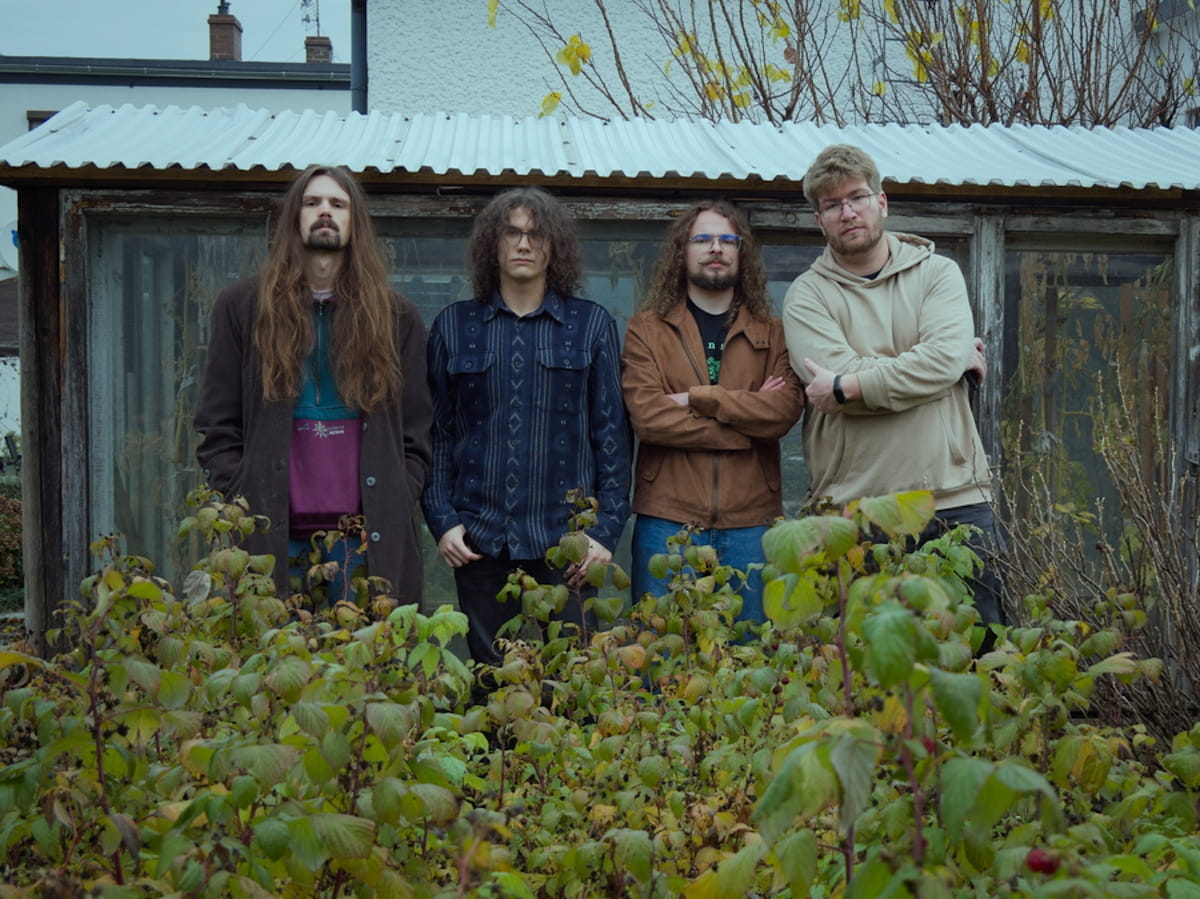
Dense Haze bill themselves as “4 guys stoner, doom, sludge, GRUZ” – that last word meaning rubble, debris, the weight of things falling apart. From covers to originals, from stoner rock to sludge doom, from one place to another. “Galas” is what came out when they stopped trying to be anything else.
May the heaviness be with you.
Keep in the loop!
🗞️ Subscribe on Substack
🔔 Join our Messenger and WhatsApp
📜 Get daily news via Instagram Stories
Your support keeps us alive!
IDIOTEQ is a one-man DIY operation, tirelessly spotlighting the local cultural scenes and independent bands that often go unreported elsewhere. Born in the early 00s, this platform has been committed to giving hard-working artists the high-quality coverage they truly deserve.
No ads, no distractions—just pure inspiration and a genuine focus on independent artists and their stories.
Please consider helping keep IDIOTEQ ad-free and in tune with the indie scene by donating today.
DONATE via PayPal 𝗈𝗋 SUPPORT via Patreon
100% of the funds collected go toward maintaining and improving this magazine. Every contribution, however big or small, is super valuable.
Your support ensures that we continue to be a place where you can discover, learn, and get inspired, without any advertising noise. Thank you for being a part of this musical journey.