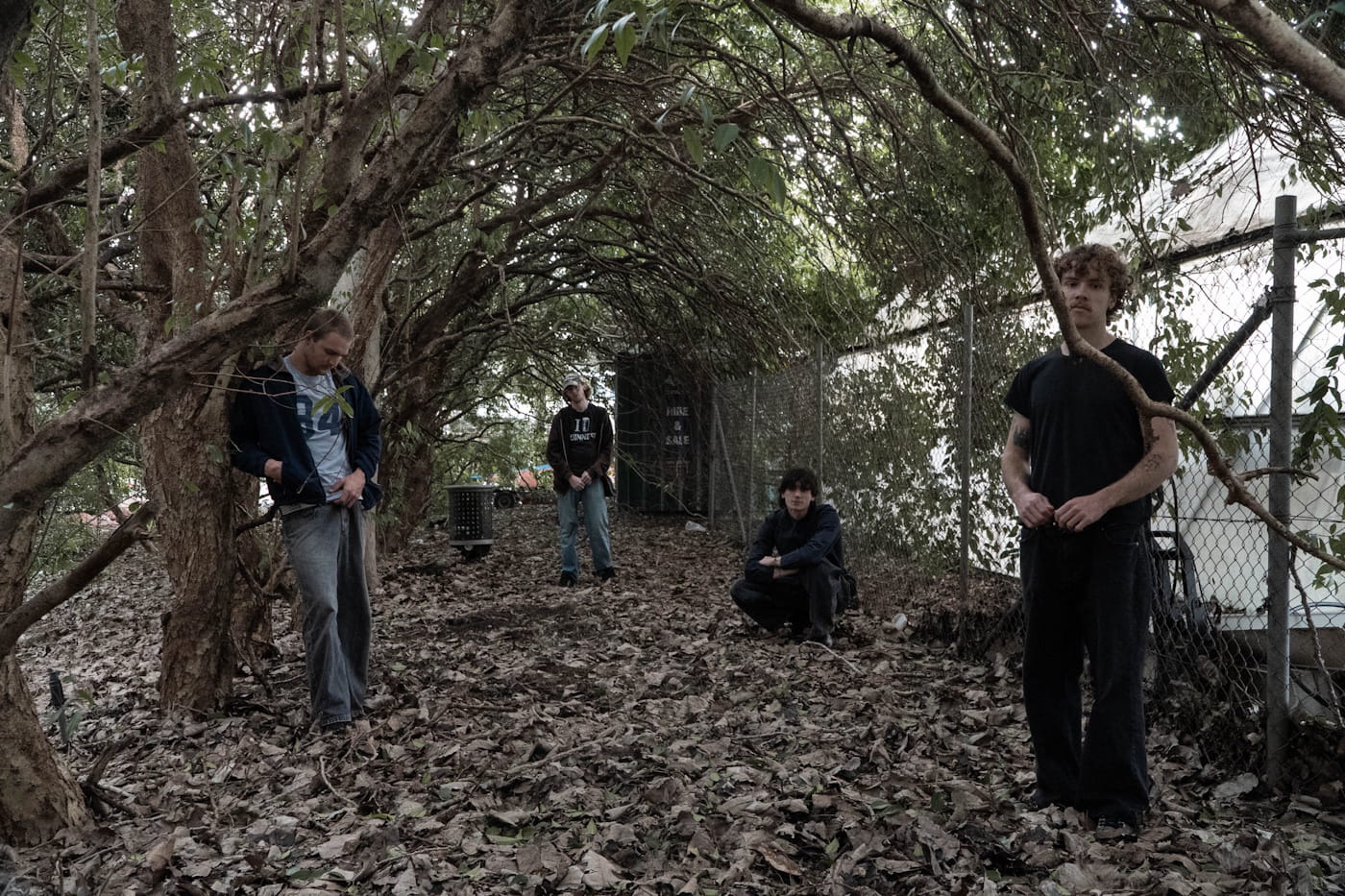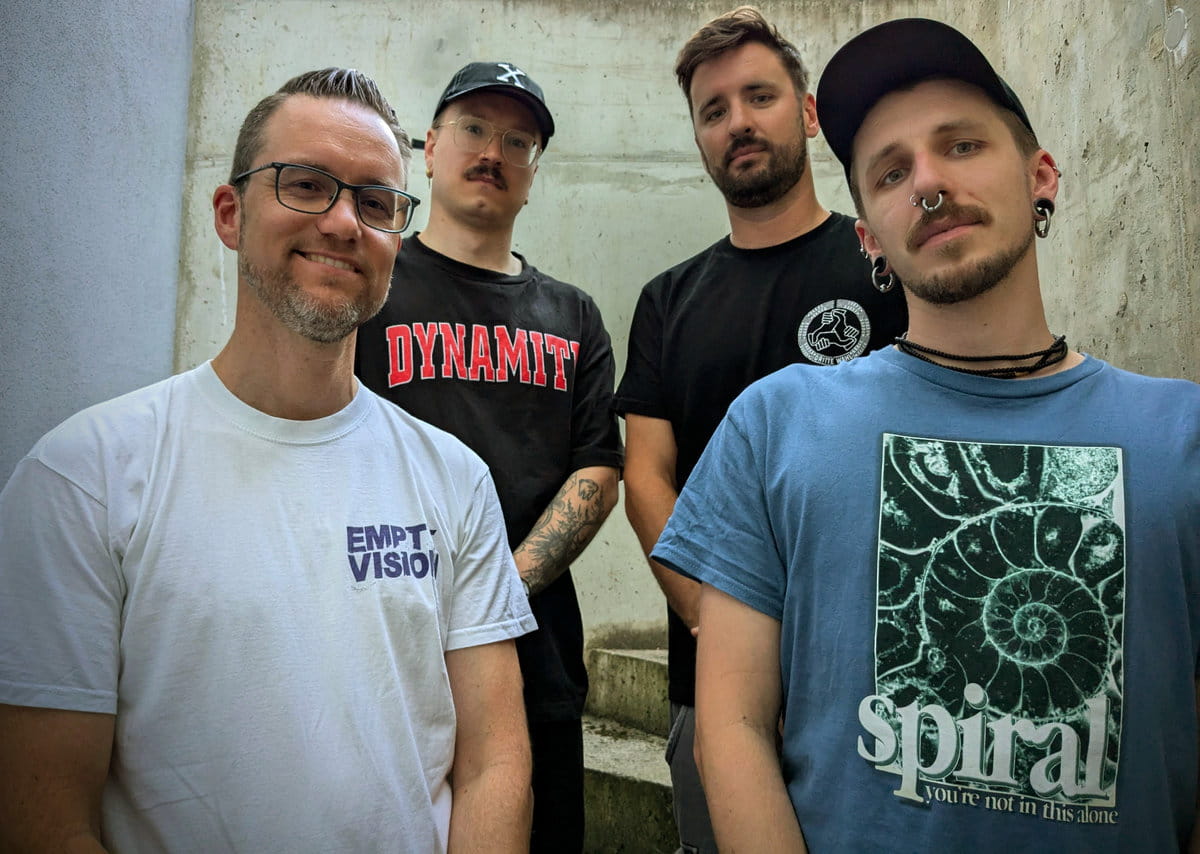


In “Long Con”, the newest video from Allapartus, high-intensity performance footage cuts against archival images of labor struggles, anti-colonial resistance, and protest, stitched together with visions once parked safely in science fiction: orbital shuttles, space probes, command modules returning home. It’s loud, fast, and direct, but very melodic and easy going, too. The idea lands quickly—it’s not despair. It’s an argument.
“Long Con” is positioned by Allapartus as what Adam Woodley calls “hope propaganda.” Not optimism for its own sake, but something deliberate, almost tactical. “Instead of just pointing out the faults in our institutions,” he explains, “I wanted to also point to the best parts of humanity. Resilience, solidarity, compassion, the will to fight, and how those attributes could build a better world.”
The song moves like a confrontation with the present tense. Lyrically, it leans into economic pressure, political cynicism, and the exhaustion of being told—again—that nothing better is possible. “No saving grace / Or living wage,” Woodley shouts early on, before the chorus tightens the focus: “Either call this out as a long con / Or any world worth saving is long gone.” The language is blunt, almost declarative, built for being shouted back in a room full of people.
Woodley doesn’t pretend the pessimism is imaginary. “It feels like every day we’re being presented with case after case for why there is no hope and how the future will likely only get worse,” he says. “The funny thing is that might be true. If we believe it.” That conditional matters. “Long Con” rests on the idea that belief isn’t passive—that the future hardens around what people collectively accept as inevitable.
The video extends that thinking visually. Alongside scenes of historical collective action—labor movements, resistance to exploitation, protests against the military-industrial complex—it pulls imagery from writers and thinkers who imagined futures that didn’t yet exist. Ursula K. Le Guin, Arthur C. Clarke, Carl Sagan, and Octavia Butler are named not as aesthetics but as proof of concept. “Once the work of science fiction,” Woodley says, “we wanted these images to communicate how humanity reached out into the cosmos and discovered that the shape of humanity is not defined by its limitations, but by its will to transcend them.”
Wyświetl ten post na Instagramie
That shape is careful not to drift into fantasy-for-fantasy’s-sake. Woodley acknowledges the reflexive backlash that comes with hopeful narratives. Living wages, universal healthcare, maternity leave, basic income—ideas routinely dismissed as naïve before becoming policy somewhere else. “It’s science fiction, it’s a fantasy,” he notes, before cutting the argument short: “So was the abolition of slavery.”
Rather than romanticizing progress, “Long Con” treats imagination as a prerequisite. “Just because something has never been done doesn’t mean it can’t be done,” Woodley says. The song doesn’t resolve that tension; it keeps it open, unresolved, something the listener has to carry.
Choosing pop punk as the vehicle is less ironic than it might sound. “Honestly? Because I like it, and I think it’s fun,” Woodley says without hesitation. He traces it back to getting into music at eleven, to still enjoying it live. But there’s a structural reason too. Punk spaces, for him, are one of the last places where people still gather physically, aggressively, joyfully, without mediation. “In a world sculpted by tech companies desperate to keep individuals isolated, you go to a punk show and you’ll see droves of young people showing up in person to support and celebrate a community of like minded people.”
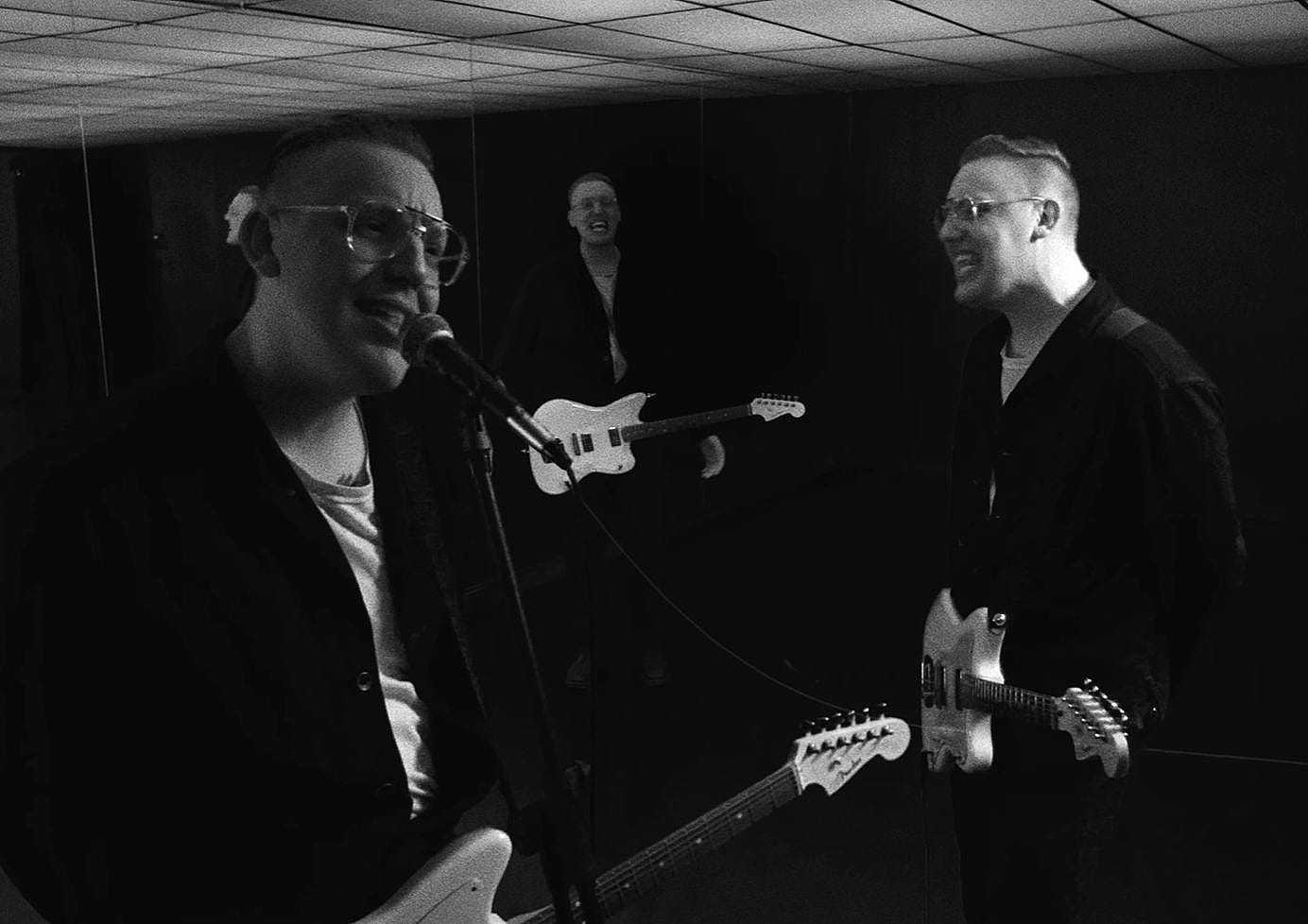
That community aspect mirrors the song’s thesis. Performance and message collapse into each other. “I think it’s beautiful when a performance and its community can themselves reflect the concepts that the songs are communicating,” he says. The confusion he sometimes gets—science fiction and pop punk sounding incompatible—doesn’t register as a problem. “For me it makes perfect sense.”
“Long Con” places a bet. Against inevitability. Against resignation. Against the idea that caring is naïve. As Woodley puts it clear at the end of his reflection: “So for now, we’re betting on hope.”