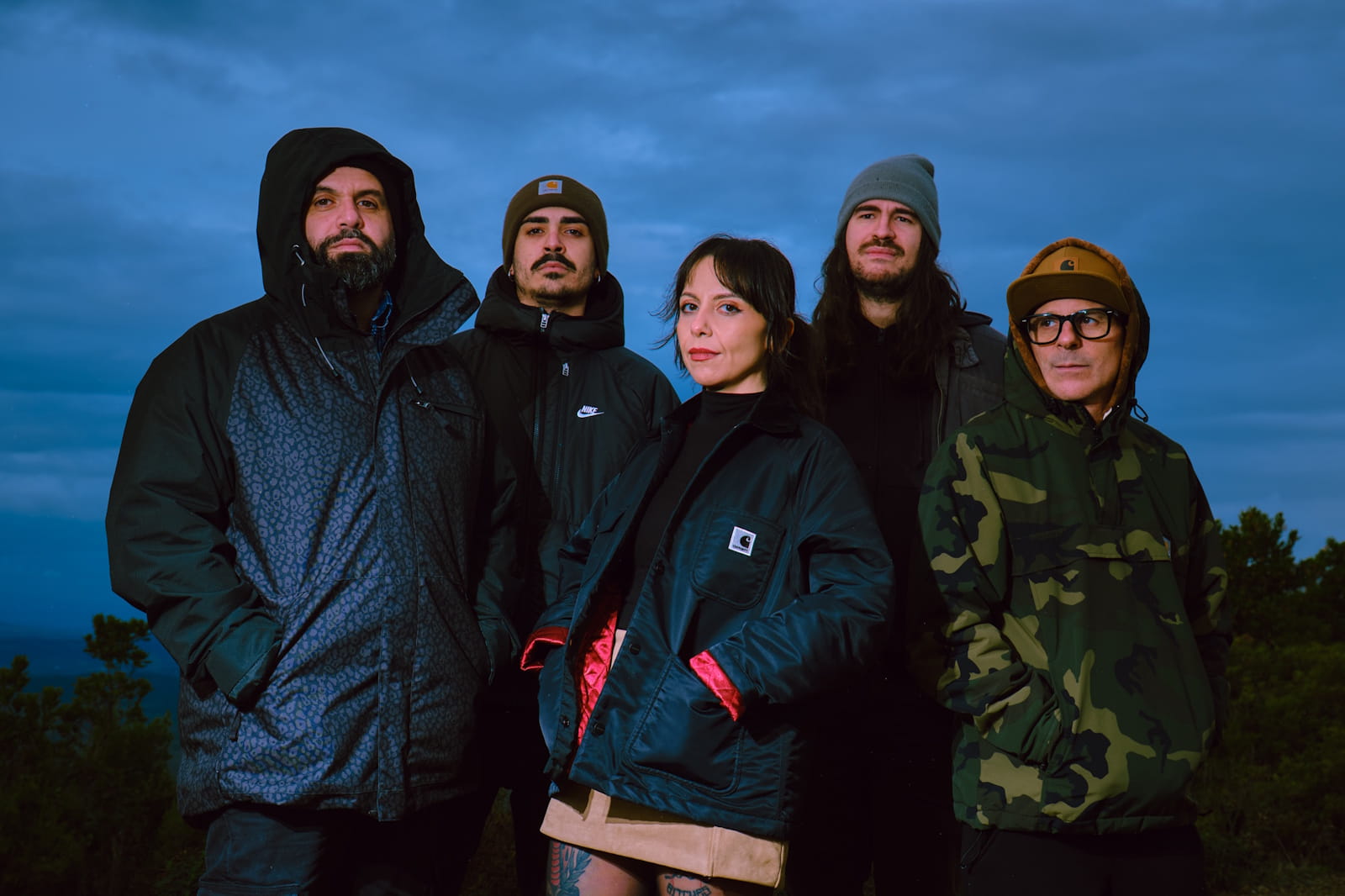



Post-hardcore these days is such a catch-all term that bands filed under it can sound like emotional pop-rock with extra pedals at one end, or like something three steps from black metal at the other. Oshira sit a lot closer to the second end of that.
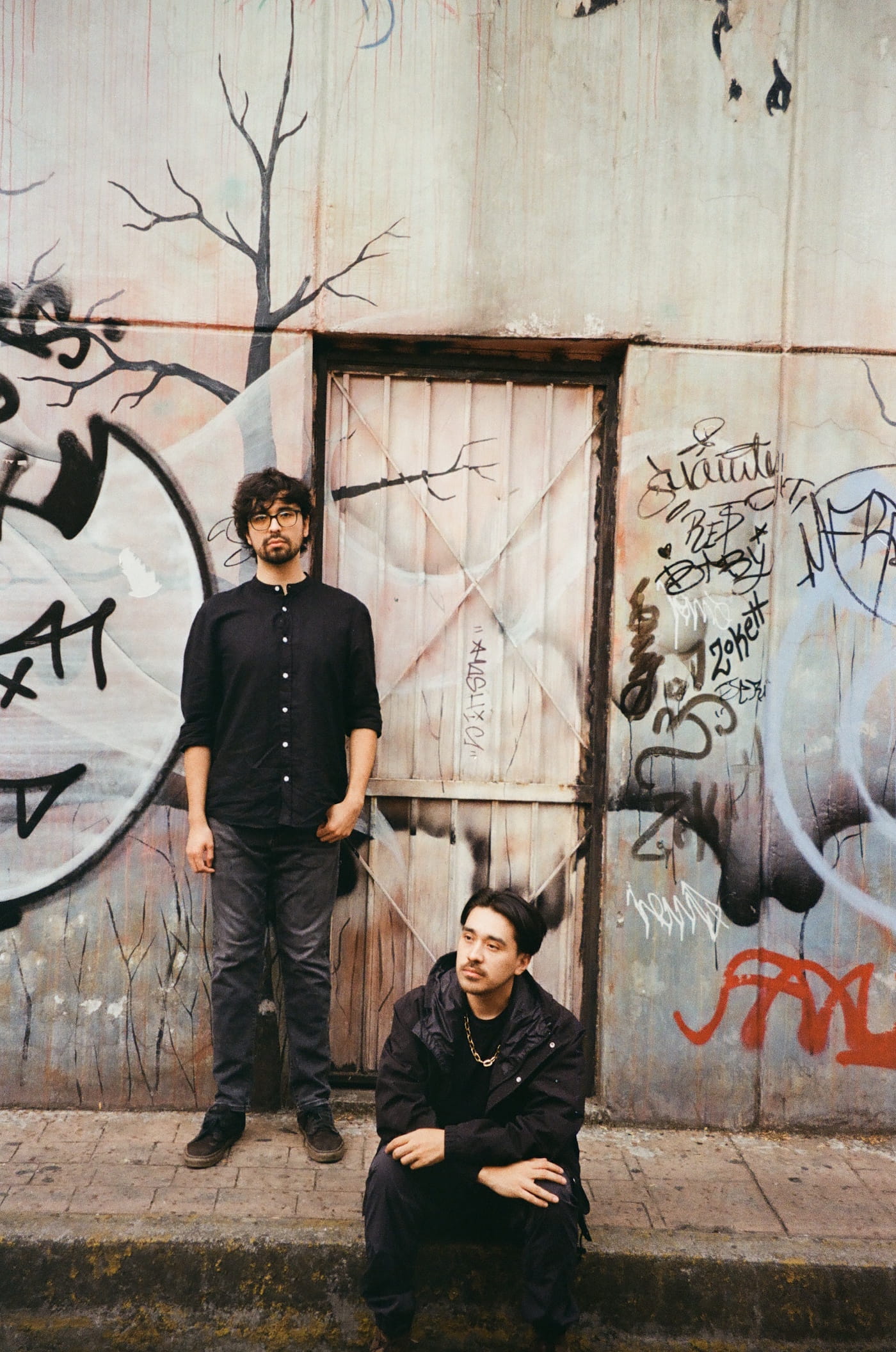
The Mexico City duo — Manuel Espinoza on drums, Ashel on guitar and vocals — are out today with debut EP “Vorágine,” a six-track move between screamo shriek, post-metal weight, and stretches of deeply uneasy stillness.
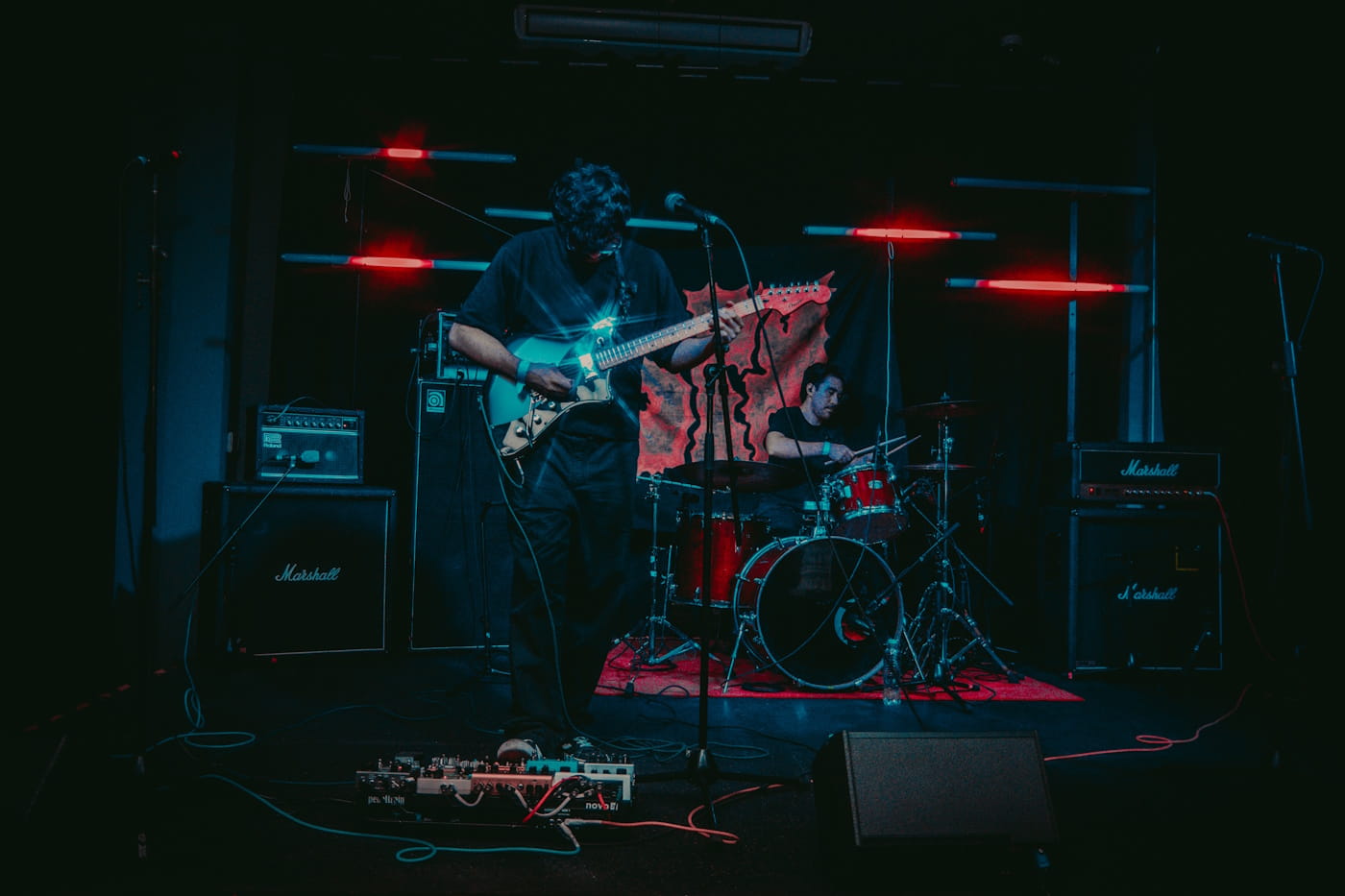
They’ve been building toward this for a while. Singles “Saber Desaparecer” and “Fisura” came out over the last couple of years — both are here in their proper sequence — and Oshira sharpened their live thing playing rooms like House of Vans in the city. Before Oshira, both members were doing work under other names — Emmet Romo, Dotzd, Recuerdos de un Sueño Perdido.
“Vorágine” is the first time their full shape gets committed to a single record.
Wyświetl ten post na Instagramie
The premise, in Ashel’s words: “not being on time for your own life. Like you are always arriving late to yourself.” The band describes it as going in circles between chaos, reflection, and short moments of peace that just pull you back into the same vortex.
The title translates to something between vortex and maelstrom, and the EP more or less behaves that way — six tracks closing the loop, each one its own angle on the same underlying knot. It comes billed with the tagline “At the edge of being,” which, after a couple of listens, lands as about as honest a pitch as you’ll get.
Opener “Umbral” was the last piece they wrote. Oshira felt the record needed a proper entrance, so they built it as an ambient intro with a voice excerpt from a conversation between Jesús Quintero and Antonio Gala — about solitude and silence as the kind of places where you can find yourself, set against modern life. It’s a patient, slightly strange beginning for a record that’s otherwise going to hit you in the sternum.
“Saber Desaparecer” is where the emotional line actually starts. It’s about disappearing as a quiet form of control — not dramatically, just becoming background, becoming decoration, just to belong somewhere. The song carries one of the EP’s sharpest lines: “seré sin estar / siendo el florero” — to be without really being there, becoming the vase. That’s the thesis of the whole EP in one image. “Las barreras de Babel” shows up later in the track, pointing at the communication breakdown underneath it all.
“Punto Ciego” is the band’s version of a trance break. Ashel describes it as doing what you’re supposed to do, walking the path that should make you feel okay, and still not feeling like yourself. If that’s not going to be enough, his take is he’d rather stay with the wind and feel the silence.
The middle section spirals inward: “buscar en el tiempo, sentir y más / buscar en el viento, sentir y dar.” Search in time, feel and more. Search in the wind, feel and give. It’s the EP’s one real moment of reaching for a way out, even if the wind isn’t going to answer.
“Sigilo” is about trying to please everyone and ending up with nothing left of yourself. Ashel mentions the idea of coming back to yourself, too — it’s not a one-way trip. The song also sits with how we remember people, how they change, how nobody is perfect. And it’s the track that admits the lies are part of the deal — the ones everyone tells to fit in, the ones you repeat to yourself until you stop noticing them.

Then the title track — the core of the record. “Vorágine” opens with the line “¿Cuánto tiempo he perdido?” (how much time have I lost?), a look back at time wasted blaming everything else instead of looking inward. It passes through a brief moment of self-recovery — “creo que puedo volver a brotar” (I think I can grow again) — and then turns on itself: “mal-digo ser yo.” I curse being myself. Even when it sounds like the song is searching for someone else, it’s really searching for the person Ashel used to recognize as himself.

Closer “Fisura” is where the whole thing detonates. The band describes it as the moment right after clarity, when everything seems to make sense and then immediately breaks. Musically it’s the most intense track on the record, and the lyrics match: “pensar, actuar, sentir, da igual, ser uno más” — thinking, acting, feeling, it doesn’t matter, being just another one. There’s no time, the band says — life starts to feel like it’s lying to you, and you’re not even sure what you feel anymore.
“Yo soy el fraude, todo el tiempo.” I am the fraud, all the time. The song ends in a scatter of questions that don’t land anywhere — “¿para qué? ¿para ti? ¿para mí? ¿es real?” What for? For you? For me? Is it real?
No resolution. Ashel has been clear about that — the EP is not about getting to the other side of the knot, it’s about living inside it.

Production-wise, “Vorágine” got made the hard way. Oshira handled the recording and mixing themselves, with zero formal training and what experience they had pulled from their older projects. Manuel tracked the drums in his home studio. Ashel cut the guitars at his place. The mixing was the more collaborative part — a lot of back and forth trying to meet somewhere between two players from fairly different backgrounds. Life got in the way too: work, responsibilities, the usual. Sessions ended up stretching over a couple of years.

Brad Boatright mastered the finished version at Audiosiege, which is what pulls the whole record into focus on the final listen.
Oshira themselves are honest about the result — not perfect, but a strong introduction to what the band actually sounds like.

The artwork came from Ethan Lee McCarthy, the artist behind a lot of Primitive Man’s visual output.
Oshira wanted something rough but also spacious and suffocating at the same time. They sent him the concept plus a rough sketch, and what came back — after a couple of revisions — fit the dual-identity, trapped-in-your-own-head read of the record almost too well.
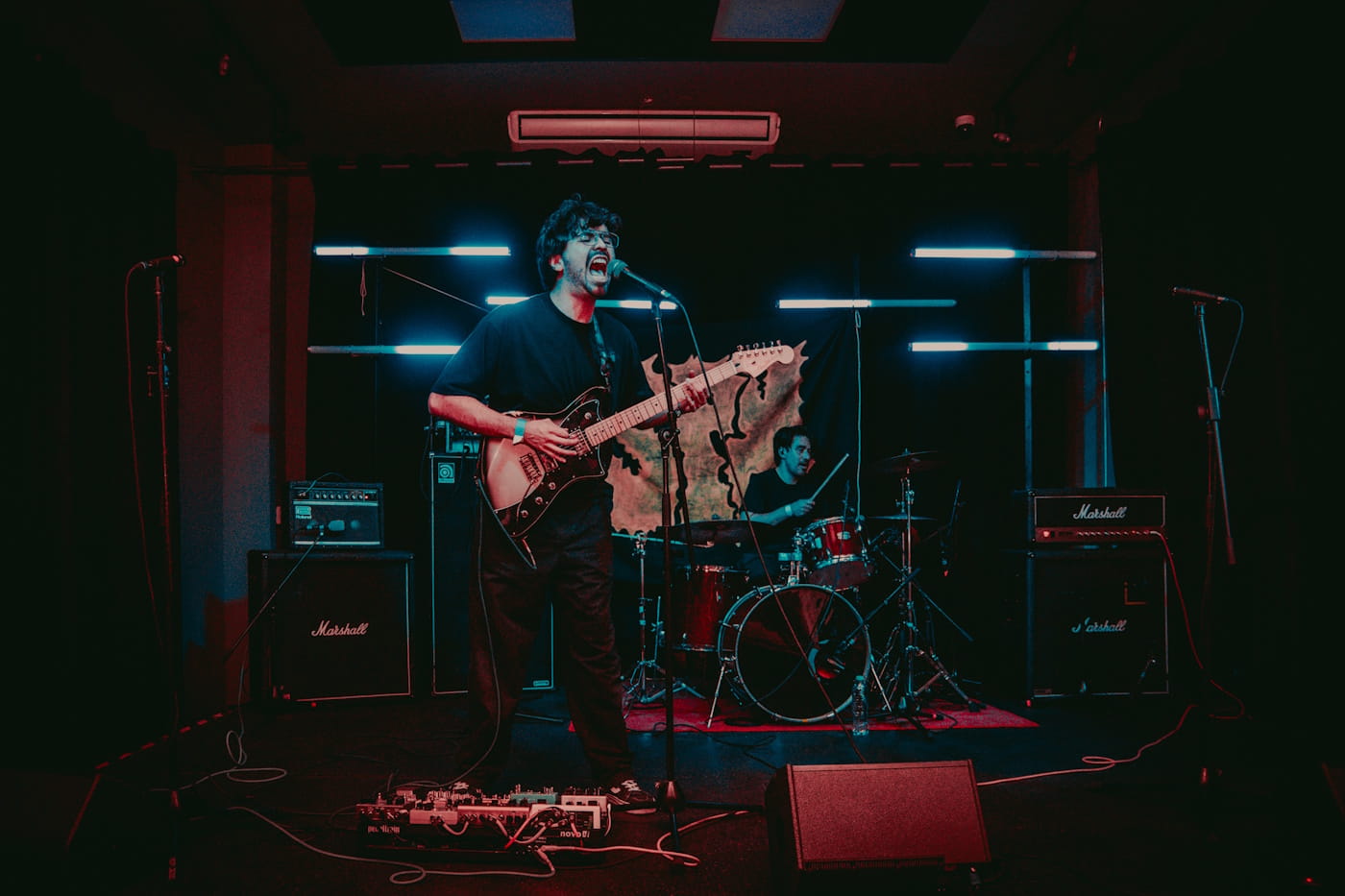
“Vorágine” is out April 24th. For fans of Portrayal of Guilt, Ostraca, Saetia, Respire, Infant Island, Lightning Bolt, Hella, and The Body.
🔔 IDIOTEQ is ad-free, independent, and runs on one person’s time. If you want it to stay that way: DONATE via PayPal 𝗈𝗋 SUPPORT via Patreon.
Stay connected via Newsletter · Instagram · Facebook · X (Twitter) · Threads · Bluesky · Messenger · WhatsApp.