


The atmospheric guitar parts on “I Know Better” — the focus track on By Million Wires’ new EP “Not Over” — were tracked years ago in Mirek Skrok’s home studio. When the four-piece finally booked the professional sessions to finish the record, those original takes were good enough to import straight in. It’s that kind of EP. Songs written roughly eight years ago, pulled out of long storage, given a trim and put on tape with as little fuss as possible.
Five tracks, self-produced, out May 1st on streaming.
The Tarnów-based band’s sound here lives somewhere between dreamlike post-rock and alternative rock proper. Dense, layered guitars; long, patient tension; outros that climb in stacked layers before opening up.
Mirek’s vocals are deep and lived-in rather than showy, and the band keeps the production close to live-room — four people in one space, breathing audibly. Reference points like Radiohead, Editors, Mogwai, Pedro the Lion, and Sam Fender give a roughly accurate map. It’s the most direct thing they’ve put out, and at five tracks it’s also the shortest.
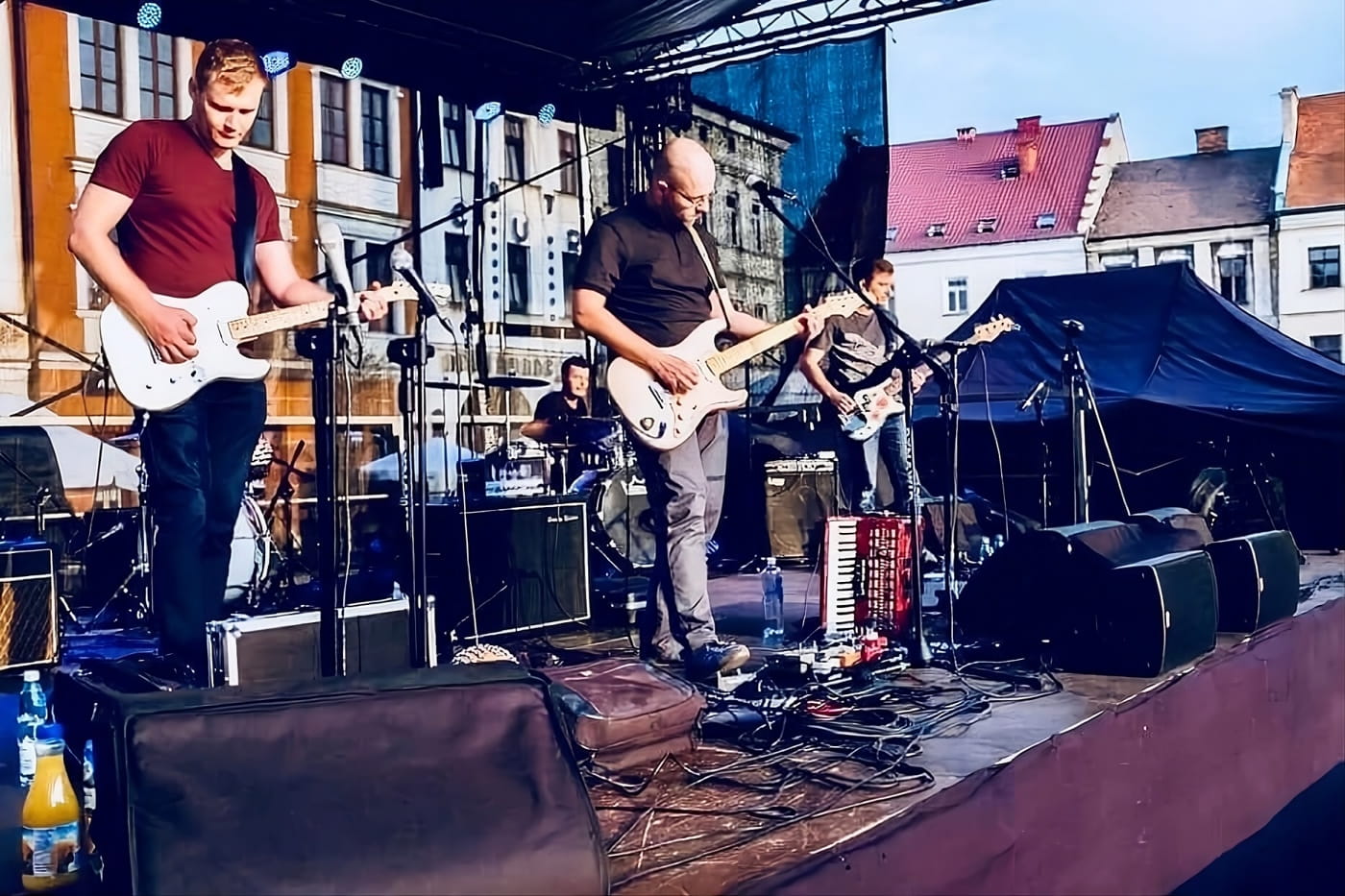
By Million Wires formed in 2007 in southern Poland, with what the band describes as an obsession with sound and emotional expression. They released their debut “Letters to the Absent” in 2012, when we featured the band in our interview here.
Cantara Music called it “spacious guitar sounds and ethereal atmosphere”; the British outlet The Sound Of Confusion described it as “skyscraping guitar psychedelia.” That record played the Grand Prix Stage at the Seven Festival in Węgorzewo and was, in the band’s own words, a snapshot of where they were then — ethereal, airy, built around the vocals of Anna. Then life happened.
“Music never truly left. For fourteen years, these sounds were humming in the background of my daily life,” Mirek says. “I realized that some stories simply don’t have an expiration date — they wait for the right emotional frequency to be told. Not Over felt like the perfect title and moment because it’s a statement of fact: the creative fire wasn’t extinguished, just dormant. Breaking the silence now feels like finishing a conversation that was interrupted mid-sentence over a decade ago.”
Wyświetl ten post na Instagramie
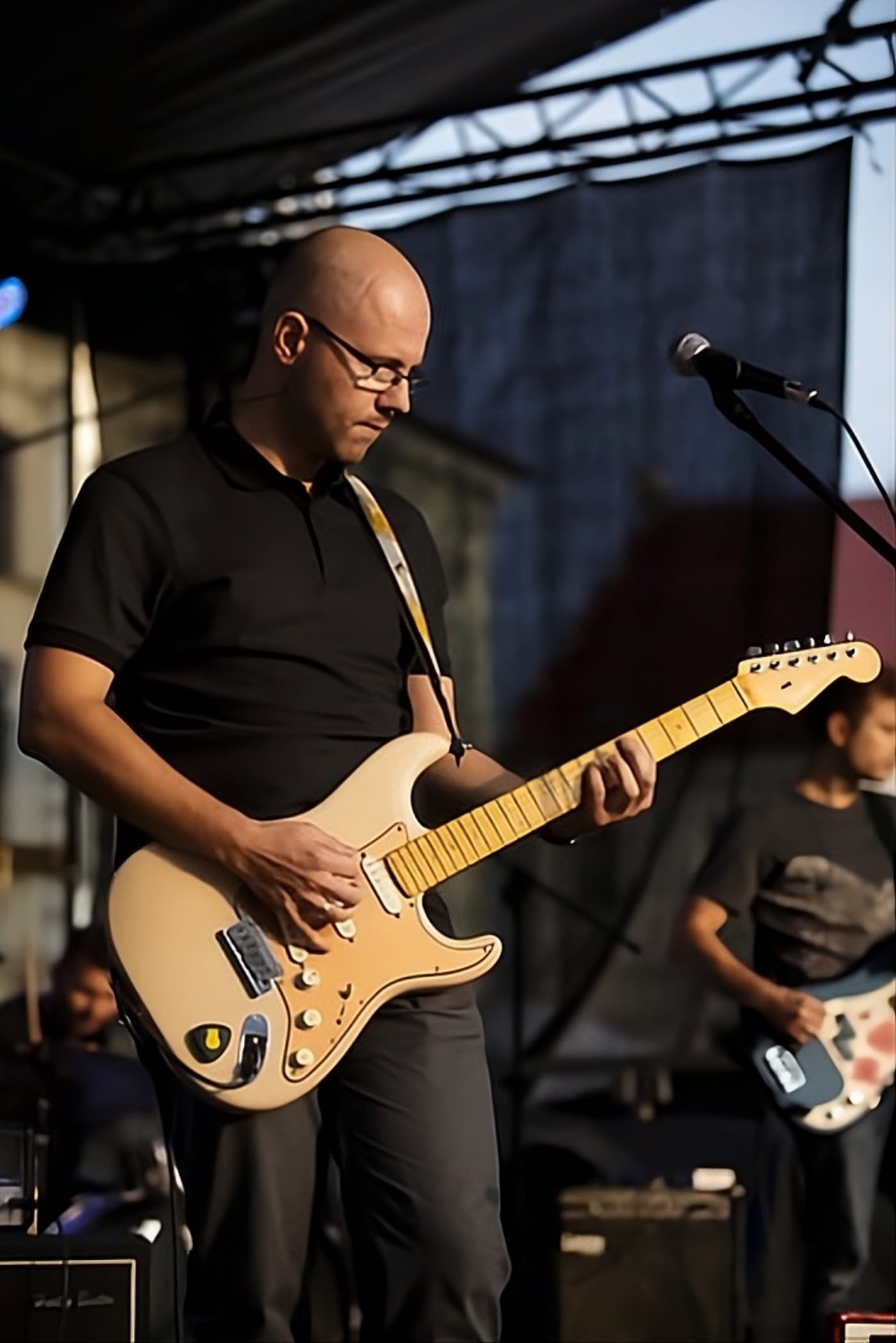
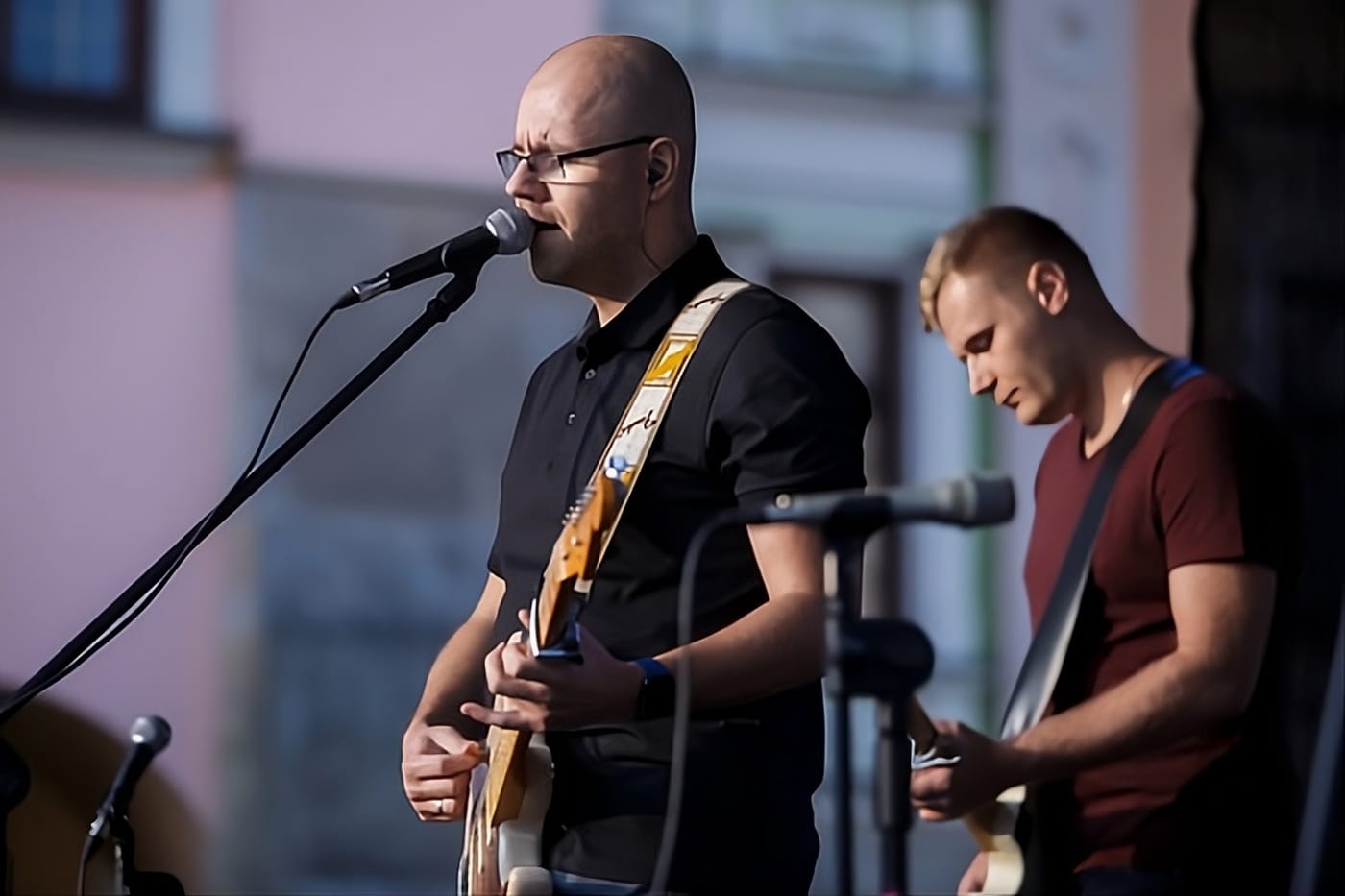
Anna’s exit from the band marked the end of one period. The years immediately after pulled the music toward a more decisive, instrumental post-rock direction — the single “87 Weeks” came out of that stretch. Then guitarist Mirek took the microphone. “Stepping into the frontman role was a significant evolution for me, though the seeds were sown long ago. Even before our debut album, I was already writing lyrics and vocal lines. In fact, a track like ‘I Know Better’ was written entirely by me — both the music and the lyrics — years ago. Ania even used to perform it during our live shows back then.” An early version of “I Know Better,” with Anna singing lead, is still on YouTube for anyone willing to dig.
The transition to lead vocals was its own problem. Mirek had to rethink his guitar playing from scratch. “I had to let go of focusing so much on complex effects and intricate parts. Instead, I had to learn how to ‘drive’ the song primarily with my voice and a solid chordal foundation. Interestingly, this shift opened up a lot of new space for Dawid to experiment and get more creative with his own guitar parts, which added a new dimension to our sound.”
On the debut album, he says, he obsessively multiplied guitar tracks, which didn’t make life easy for the mix engineer. Now he’s looking for one expressive vocal melody and one strong guitar part. On stage that means coming out of the shadow of the fretboard — no longer just a silhouette hunched over the neck. He’s the first to admit he wasn’t born a showman, but the emotions running through the singing get him past the internal barriers.
That economy in Mirek’s parts opened space for Dawid Moździerz on second guitar and Mateusz Ostafil on bass to build in more refined rhythmic and melodic ideas. Dawid Remian sits on drums. Their stated studio goal was to capture the feeling of a live rock quartet — the breathing, the tension, four musicians in one room.
“It’s less ‘polished’ and more ‘human.’ However, our post-rock roots are still there — you can hear it especially in the outros, where the atmospheric, layer-by-layer build-up takes over before the final eruption.” On the debut they had more time for solos, layering, and detail work; on “Not Over” they kept it to main parts with a few harmonies and a handful of overdubs. Mirek points out one regret — only five tracks made it. They had more songs written in rehearsals after Anna’s departure but ran out of time to finish them properly.
The EP wasn’t supposed to come out this late. The songs were tracked roughly eight years ago, written as the band’s emotional snapshot of that moment. Then work, family, and life pressed down on every member. “Every member of the band went through pivotal, life-changing moments during those years, and for a while, music simply had to take a backseat. However, this collection of songs never gave us any peace.” Listening back now, Mirek says, the songs feel more present than they did when written.
“Themes of survival and persistence resonate differently when you’re older. What used to be a song about a moment is now a song about a lifetime of experiences. Interestingly, we feel that as a conceptual whole, this material has become even more relevant to our lives today than when it was first written. It matured along with us.”
“I Know Better” gets the most attention on the EP and is the song Mirek is quickest to talk about. “It’s a song I personally feel most comfortable singing, so I was determined to include it on our upcoming release.” It sits in a triple-meter rhythm with atmospheric textures around it. The original arrangement was structured very differently — verse and chorus played in full at the beginning and end, a stripped-back middle section in between, long pauses, a slow build. “That version relied on long pauses and a slow, tense build-up of atmosphere. You can actually still find that early version on YouTube if you dig deep enough!” For the EP, he wanted something more song-oriented, more immediately accessible without losing the emotional weight. “Who knows, maybe we’ll return to that more experimental structure in the future?”
Lyrically the song is about looking for personal autonomy and the suffocation that comes when everyone around you wants to direct your life. The title was originally meant as a hopeful pushback — that this would change. Reading the lyrics now, Mirek says, the line about knowing best how to live his own life feels like more than just a song title.
The other four tracks pull from a similar emotional well. “Glass Houses” deals with looking back at a place that no longer exists, the wish to retreat into a comforting fiction. “Over” sits with stagnation and emptiness, with a sense of youth wasted and the world gone deaf and blind. “Lost or Won” treats victories and defeats as roughly the same thing and refuses to surrender to anyone. “Runaway” is exactly what its title suggests. Mirek describes the lyrical content as personal rather than political — autonomy, time slipping, longing for a place that once seemed beautiful — and notes that some of what felt hypothetical when the songs were written has become a record of actual experience.

Mirek doesn’t sugarcoat what’s happened to the Polish guitar scene around them since 2012. In their corner of southern Poland, he says, the local rock scene has practically ceased to exist — fewer clubs to play, harder to find bands doing similar things. By Million Wires, in his own words, are working from something close to a lonely island.
He’s also blunt about the industry shift: in 2012 the standards were Bandcamp and physical CDs; now it’s streaming and short-form video. He admits that until a few weeks before “Not Over” came out he had no real grasp of how Spotify playlists actually function — which is part of why “Letters to the Absent” only hit streaming services in January 2026, fourteen years after release. The visual demands now baked into being a band — video content, fast-image consumption, the death of the single-photo-plus-cover-graphic approach — worry him in a separate, related way.
“Not Over” isn’t the end of the comeback, in his telling — it’s the start.
“There is a bunch of already written songs that just need some polishing before their release. ‘Not Over’ is the bridge. Now that the bridge is built, we are ready to explore the new territory on the other side. Expect more music, more exploration, and certainly not another 14-year wait.”
“Coming back after 14 years is the ultimate act of survival in an industry that usually demands ‘new, new, new’ at every turn. For us, continuity means that the thread was never really broken; it just waited for the right moment to be pulled again.”
🔔 IDIOTEQ is ad-free, independent, and runs on one person’s time. If you want it to stay that way: DONATE via PayPal 𝗈𝗋 SUPPORT via Patreon.
Stay connected via Newsletter · Instagram · Facebook · X (Twitter) · Threads · Bluesky · Messenger · WhatsApp.