

A child is speaking, and the calm is the worst part. They came at night, the child says. They had fat eyes and terrible smiles. Mama hid us under the floor: me, my little brother, and my older sister. Mom and dad cried and begged. The turtle doves stopped showing up on the balcony two weeks ago and nobody knows where they went. The question that gives Czarny Las their debut album its title arrives in this voice. Jak się masz? How are you. The track is dedicated to children forced to grow up too early.
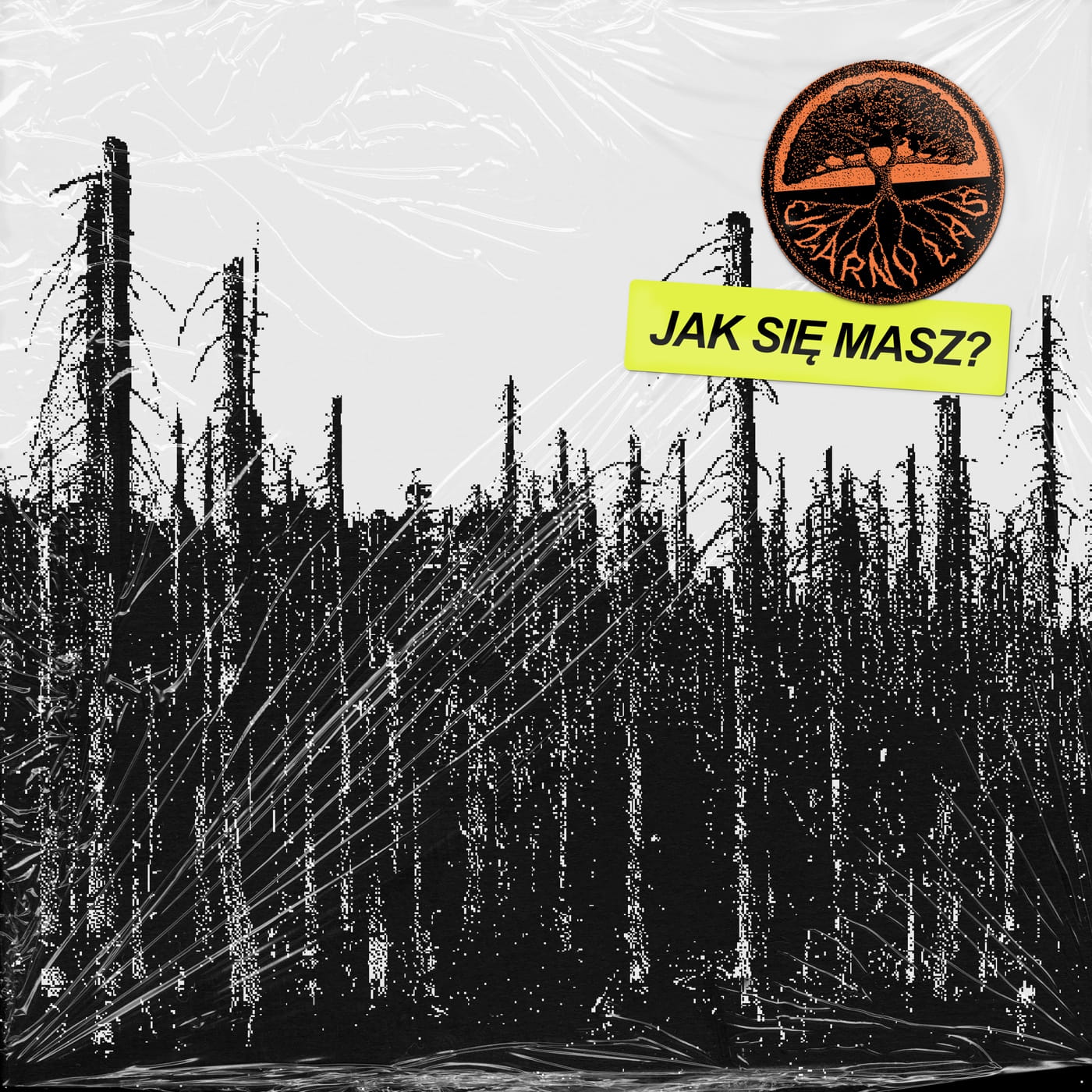
Eight songs, one recurring forest. The cover, by Maciej Misiewicz, shows trees being eaten by acid rain. The earlier project these two ran for a few years was called Neimar, and one of its EPs also had a tree on it. “Drzewa nas prześladują,” Tomek “Frejtag” Piątek says. Trees haunt us. He’s not entirely joking.

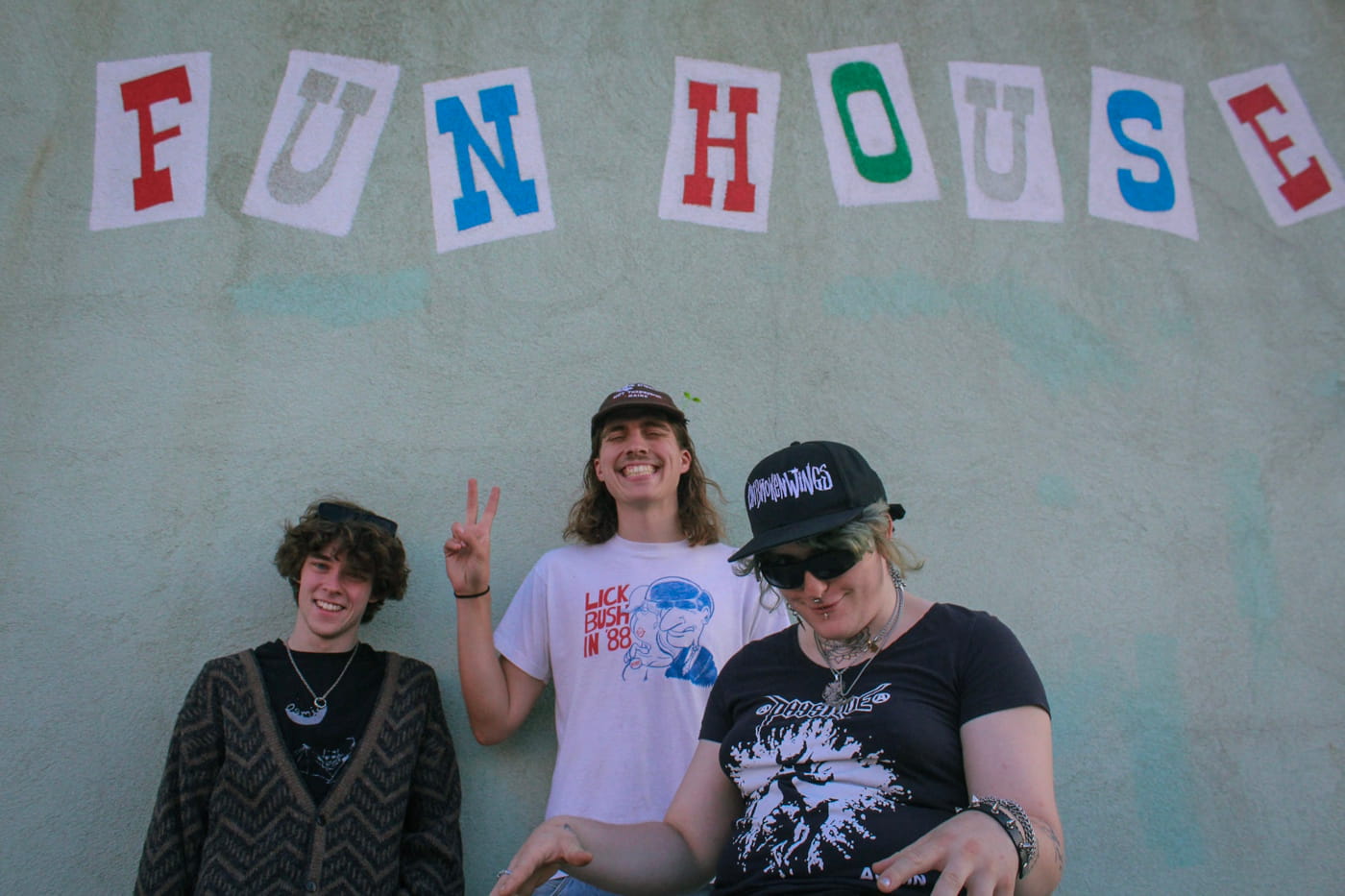
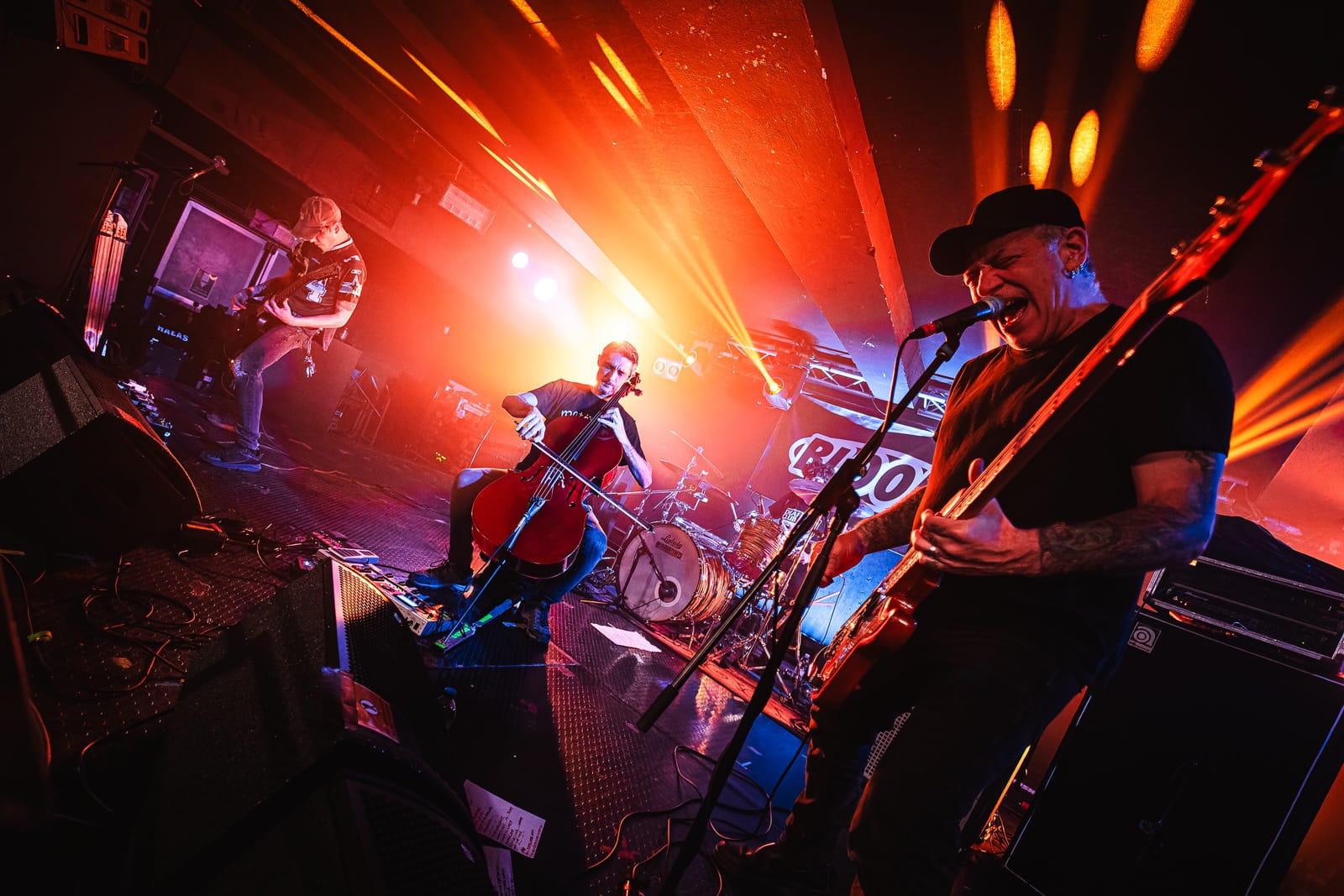
Czarny Las are Tomek (vocals, lyrics) and Piotr Orzechowski (beats, production). They’re split between Warsaw and Łódź, and they’ve known each other since the days when Tomek was organizing hardcore/punk shows in the city they both come from but neither lives in anymore.
They worked together over a decade ago as Neimar, a name Tomek pulled from a Balkan word meaning “builder of bridges of dialogue.”
That came from his fascination with writer and cultural animator Krzysztof Czyżewski, who in the mid-90s was building intercultural dialogue across the post-conflict Balkans.
Then Tomek dropped out of music for nearly ten years. Piotr kept going under his own banner, It Will Pass Quickly / Szybko Minie. Now they’re back as Czarny Las, eight tracks recorded between December 2025 and February 2026, mixed and mastered by Mariusz Menes at SeeSound Studio in Łódź, with guest vocals from Ania Alimowska of Spalone Mosty on “Infinityzm.” Out April 21st via Bandcamp.
The new name does work that “Neimar” couldn’t. “Czarny Las” already carries weight in Polish before anyone presses play. A forest. A darkness. A specific place. “It’s an invitation to come closer,” Tomek says. “To feel the atmosphere of a peculiar place that hides its darkness and its secrets, but also fragility and a kind of primal quality. And completely by accident: the tree motif appeared on one of the Neimar EPs, and it’s here too. Trees haunt us!”
The process between them was, by both their accounts, surprisingly smooth. “I almost can’t believe this happened,” Tomek says.
“For nearly ten years I had nothing to do with music, while Piotrek kept making his own things in his solo project. We didn’t fight once during the whole making of this stuff. He’d send me more beats, and I’d lock myself in a room and write. The whole record came together in a few months.”
Some of what came up surprised them: fragments of old noir, avant-garde films, and B-class horrors that fit the song themes and ended up in the clips. Tomek had to dig out his voice and remember how to write lyrics at all.
“I noticed it’s easier for me to express thoughts and touch on different subjects today. That came with age, with more self-awareness, with life experience.”
Piotr offers one tiny correction. “The only situation that was, let’s say, slightly contentious happened during the vocal arrangement on Nieromantik. But that was just a small friction. Tomek mostly hit the instrumentals well. If something didn’t sit right with me, I’d suggest things and he was open. Music is our hobby. If we’d started tearing each other apart over different visions, this album wouldn’t have happened. At least I wouldn’t have wanted to work that way.”
If you came here looking for verses chasing hooks, you won’t find them. Several of these tracks sit closer to short stories or interior monologues that happen to land on a beat. “Niespieszność,” Tomek calls it. Unhurriedness.
“We do this on our own terms, the way our intuition and imagination tell us. Without calculating which track or motif will catch listeners more. We’re self-taught, listening to all kinds of things, capable of getting excited about all kinds of things.” Over the past few years he’s been deep in audiobooks and recording his own radio plays, monologues, anything circling storytelling. “Jak się masz?”, “Nieromantik” and “Nie zapomniałem” come from that direction.
“An off-the-beat form like this opens up much more than the typical verse-chorus-verse-chorus split. It can work like a hidden compartment in a drawer, when we can quote someone, like in ‘Infinityzm,’ or spin a tale that seems to describe real events right up to the end, like ‘Nie zapomniałem.'”
That last one is, by his own admission, the most personal thing he’s ever written. He wanted listeners not to know what it was about until the end. “Letting the lyric out of me was another level of getting through mourning.”
The track sets up what reads, for almost its full run, as a memory of a father and son: a wet pier, a denim jacket, salty pretzel sticks pulled from a pocket and shared anyway. A whole vocabulary of small kindnesses. Then it turns. None of it happened. The pier, the trips, the man at the door waving you over to introduce you to his friends while you pretend you don’t know him: he was there in the way absent people are there.
“Nie zapomniałem, tato, o tym, że byłeś, mimo że nigdy ciebie nie było.” I haven’t forgotten, dad, that you were there, even though you never were.
The voice on these tracks doesn’t just deliver lines. It tells things. “Charlie” runs an idea Tomek had been carrying for over ten years.
The original concept was something about animal liberation: a chimpanzee taught to speak who one day stands at the lectern and throws back at humans every horror they’ve put animals through. On the album it becomes the story of a hybrid creature bred in a contemporary lab.
“Jeden z nas” tracks a predator, an acrobat over the ground, watching prey, learning the hungry, slipping rations onto the tray to feed someone’s ego. The reveal at the end isn’t framed as a confession. It just lands. “Jestem jednym z was.” I’m one of you.
“We live our quiet lives,” Tomek says, “and then suddenly someone we knew for months or years turns out to be capable of doing fucking awful things. We believed his assurances, his masks, his apparently good intentions. And then suddenly we became feed and a punching bag.
This mythical ‘he’ is just an ordinary manipulator with psychopathic or sociopathic features, for whom only his own pleasure and his sense of power over others count. The worst part is that he greeted the neighbors, smiled nicely, was usually from what’s called a ‘good home.’ He’s just one of us.”
“Toń” is about alcoholism, and the song’s own arc moves from “to dobry chłopak, zdolny młodzian” (he’s a good boy, a talented young man) to “nie da się z tą bestią żyć” (you can’t live with this beast). One of the most exact descriptions of addiction in recent Polish lyrics.
Tomek doesn’t write it from outside. “Alcoholism is a disease that has marked most families in Poland, and maybe in the world. In my family it has a long tradition too, the effects of which we feel to this day. I don’t want to judge addicts, because who am I to do that? Something must have happened in someone’s life for them to reach for alcohol, drugs, or gambling, and over time to drift completely into that depth.”
For him personally, putting alcohol and other psychoactive substances down nearly eleven years ago felt like winning a new life. (He sends greetings, in passing, to Diabolik, who made a zine years ago by the same name.) During his first round of psychotherapy he realized that even a small amount of alcohol triggered euphoria in him, made him another person: more cheerful, ready for risky behavior, unhealthily sentimental, just plain stupid.
“Alcohol made it so that, even though I was living on my own terms, something still kept me in the toxic place I grew up in. That was my toń, the deep, luring me with an unfulfilled promise.”
“Infinityzm” pulls in Søren Kierkegaard, the passage about being born old. Tomek picked it because, by his own description, he feels like the figure Kierkegaard describes.
He hands the lines over to Ania Alimowska’s voice instead of taking them himself. He’d been enchanted by what she did on Spalone Mosty’s recordings, and when he and Piotr were working on this stuff the idea to invite her in struck. “It’s a very pleasant feeling, when someone sings your lyrics.”
Wyświetl ten post na Instagramie
“Nieromantik” runs longest, just past seven minutes, and it’s the one Tomek will tell you is straight autobiographical. It’s about how he changed across the years. The boy whose head was a treehouse with nothing inside it that anyone would consider valuable. The head that programmed in a longing for romantic love full of sighs and mutual gazes. The head that eventually understood you can’t swap out the motherboard, only add RAM and maybe change the operating system. The kind of writing that stops being writing and turns into something a person mutters to themselves at four in the morning.
Stylistically these tracks pull from a wider range than most Polish records get away with. Rap, alt rock, electro, downtempo, spoken word, the occasional shout. That spread usually reads as indecision. Here it carries weight, every track picking the register it needs.
Piotr’s whole compositional path has been about mixing styles. He went through a metalhead phase where he liked welding death metal riffs in the spirit of Immolation with black or doom passages. For years now he’s been on rap, downtempo, post-rock, metal, industrial, and hardcore punk in equal measure. “I try, more or less awkwardly, to combine some of these fascinations. I like playing guitar and I like gluing samples together. I experiment without thinking about whether these ideas are legit by genre rules. I don’t know a similar hybrid.”
There is one. Or something close enough to flag. For me, listening to “Jak się masz?” pulls something from much further back in the Polish alternative scene, somewhere around Lenny Valentino’s “Zmysłowice” from 1998, the project Artur Rojek had going on the side, where he was already pushing into territory the rest of Polish alt rock at the time wasn’t ready for.
Czarny Las is a different form and a different level, but a few of the same strings get tugged: poetry meeting dark experiment, lyrical weight pressing down on arrangements that refuse to soften. And there’s something else here, harder to place, that echoes a strain of Polish rap. For a second the brain reaches for Eldo. It isn’t him. It’s something more haunted than that. More eerie. Whatever the right word is for music that sounds like it’s being narrated by someone slightly too still.
What makes this work is how often the writing turns to family weight and to commentary on the mundane that turns out, on closer look, not to be mundane at all. A boy who pretends he doesn’t know his father at the school gates. A neighbor who said hello every morning and was usually from a “good home.”
The doves missing from a balcony for two weeks. Trees that won’t leave anyone alone. Tomek will say, when asked, that the things he writes about are things that move him in some way, and that he carries a lot of anger about how nature and animals are treated. He tries to observe, to draw conclusions, to be a voice for those who don’t have one. Without moralizing. Without flashing high beams in anyone’s eyes.
For the visual identity Tomek went back to someone he’d worked with in the hardcore/punk show-organizing days.
“From Maciek I knew those days. After years, I wrote to him and asked if he’d design us a logo and later a cover. I described that we play something on the border of rap and spoken word, with heavier guitars and electro. Threw in a mention of rough lyrics, and that’s how he cooked up a forest destroyed by acid rain and a logo with a tree motif. We’re really happy with it because it perfectly fits what’s playing in our soul. And clearly there’s room there for black metal, new wave, and misanthropy.”
The Warsaw/Łódź split is, in practice, no split at all. Piotr handles it deadpan: “Tomek is a bit like Warsaw because he’s faster and better-looking, while I, as a resident of Łódź, am slower, darker, more dangerous, more neglected. A joke, of course. The difference doesn’t matter. The distance doesn’t either. We’ve been mates from the old days. We come from the same city, just neither of us has lived in it for over a decade.”
Tomek will say where you live can affect how you think and make things. He’s in Warsaw, a few minutes from the nearest forest, working freelance, often on the move. He doesn’t feel weary of the city, likes wandering into its less obvious corners.
Wyświetl ten post na Instagramie
As for what’s happening in Łódź’s underground in the corner where Czarny Las might plausibly sit, Piotr’s honest about not knowing. “I don’t know the Łódź underground all that well. My impression is there are loads of rock and metal bands here. I’m sure many of them are solid. But that’s just guesswork, because I haven’t been keeping track for a long time. I have a friend who plays in post-rock band Far Beyond, and that’s it. I’m absorbed by everyday problems. I’m also a bit bored of concerts. Maybe at some point that’ll pass, and then I’ll have more to say about this city in the underground sense.”
The two of them feed off different things. Piotr through 2024 and into 2025 was on a lot of post-rock, the Godspeed You! Black Emperor, Cult of Luna, Isis kind, with American hardcore (Mindforce, Zulu, Turnstile) running alongside, plus older fascinations like Paradise Lost.
Electronic stuff from Aphex Twin and JK Flesh, Dälek in alt-hip-hop territory, plenty of trip-hop and downtempo.
Plus the everyday life of Bałuty, Łódź’s most beat-up district.
Tomek was on a lot of film and instrumental stuff, naming Jóhann Jóhannsson, Hildur Guðnadóttir, The Kilimanjaro Darkjazz Ensemble, Kali Malone, Drew McDowall, plus a return to Tricky (both Massive Attack era and his solo work, including the album he put out last year with Marta Złakowska, “Out the way”). That record, he says, is really great. He found out he works best to gnostic shanties and deep techno. Seriously. Late last year he caught the Warsaw punk/cold-wave outfit Allarme, who he says do the work live. From rap, he stays current with Bisz: “my favorite uncompromising Polish rapper.”
The live version is being figured out. They’re slowly thinking about how and when to play this. There’s already another release on the horizon, an EP, and Piotr can already say it’ll go rougher and heavier, closer to “Jeden z nas.”
Tomek’s hopes for what live shows could look like don’t sound like most plans for live shows. He wants the songs from the record to be coated in verbal-musical improvisation, every meeting with an audience to be an invitation to co-create what’s happening on stage.
“Blurring the line between creator and listener. Honestly, making repetitive forms by playing the album one-to-one doesn’t excite me anymore. What interests me is the multiplicity and universality of the stories every person we meet carries with them. I’m interested in the creative process that happens around improv performance, and I’d like to use that potential in music too. Time will show what comes of this idea.”
Eight tracks. One forest. The doves haven’t come back to the balcony.
🔔 IDIOTEQ is ad-free, independent, and runs on one person’s time. If you want it to stay that way: DONATE via PayPal 𝗈𝗋 SUPPORT via Patreon.
Stay connected via Newsletter · Instagram · Facebook · X (Twitter) · Threads · Bluesky · Messenger · WhatsApp.