


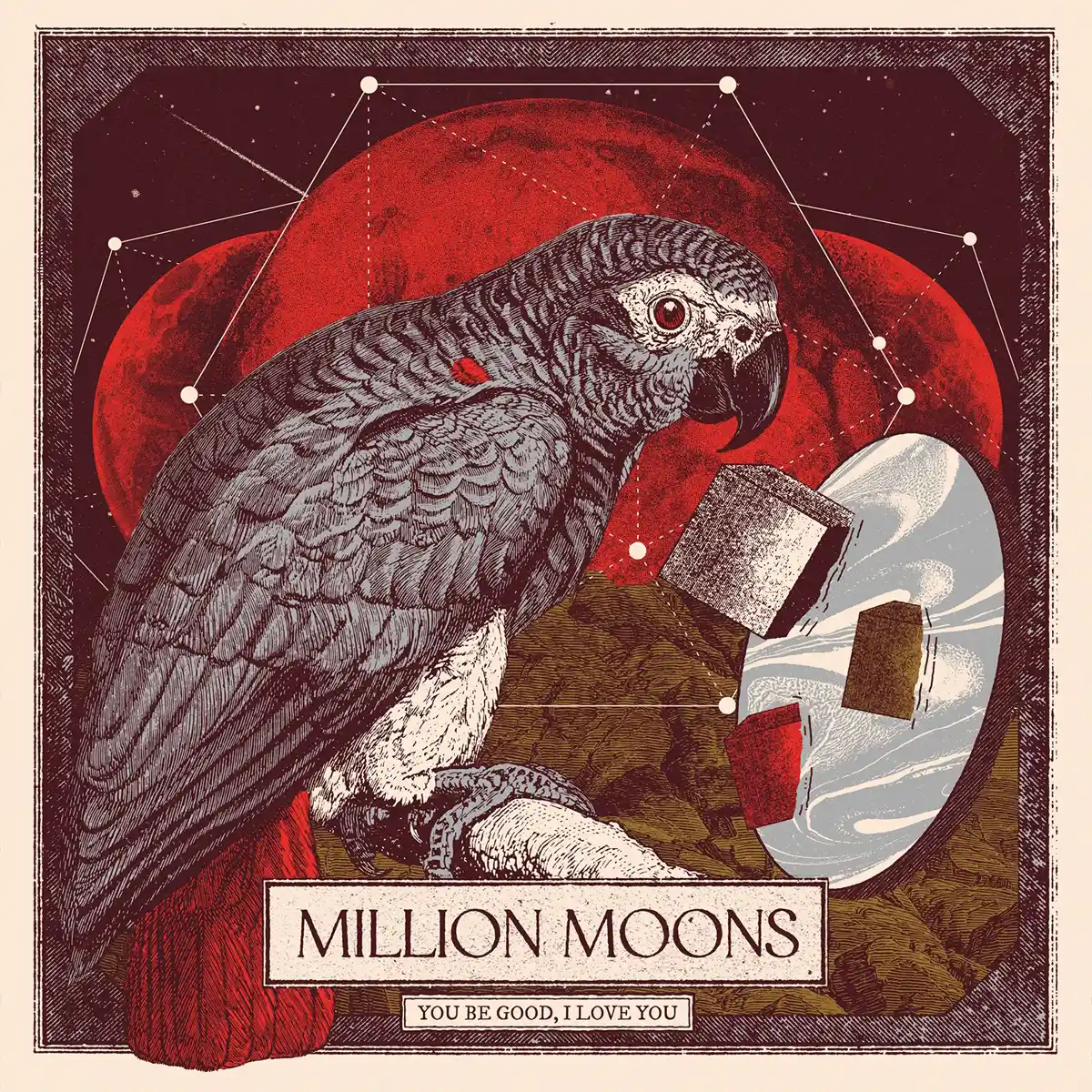
The last words an African grey parrot named Alex ever said to his handler were “You be good, I love you.” Decades after his death, those words sit on the front of a post-rock record from London.
“You Be Good, I Love You” is Million Moons’ third album, out 26 June 2026 via Ripcord Records, Dunk! Records, A Thousand Arms Music, and AnGoal Music, with a separate Chinese release through AnGoal planned for later in the year. Pre-orders have been open since 22 May.
The record is a concept album about consciousness in other species, written largely by guitarist, pianist, and composer Edward Thompson, who works in marine conservation outside the band. After 2022’s “A Gap In The Clouds” (a story about Alzheimer’s) and 2024’s “I May Be Some Time” (a fictional failed polar expedition that finished in the Top 5 of Where Post-Rock Dwells’ year-end audience poll), the band have turned outward into the inner lives of squid, parrots, dogs, caterpillars, jellyfish, and whales.
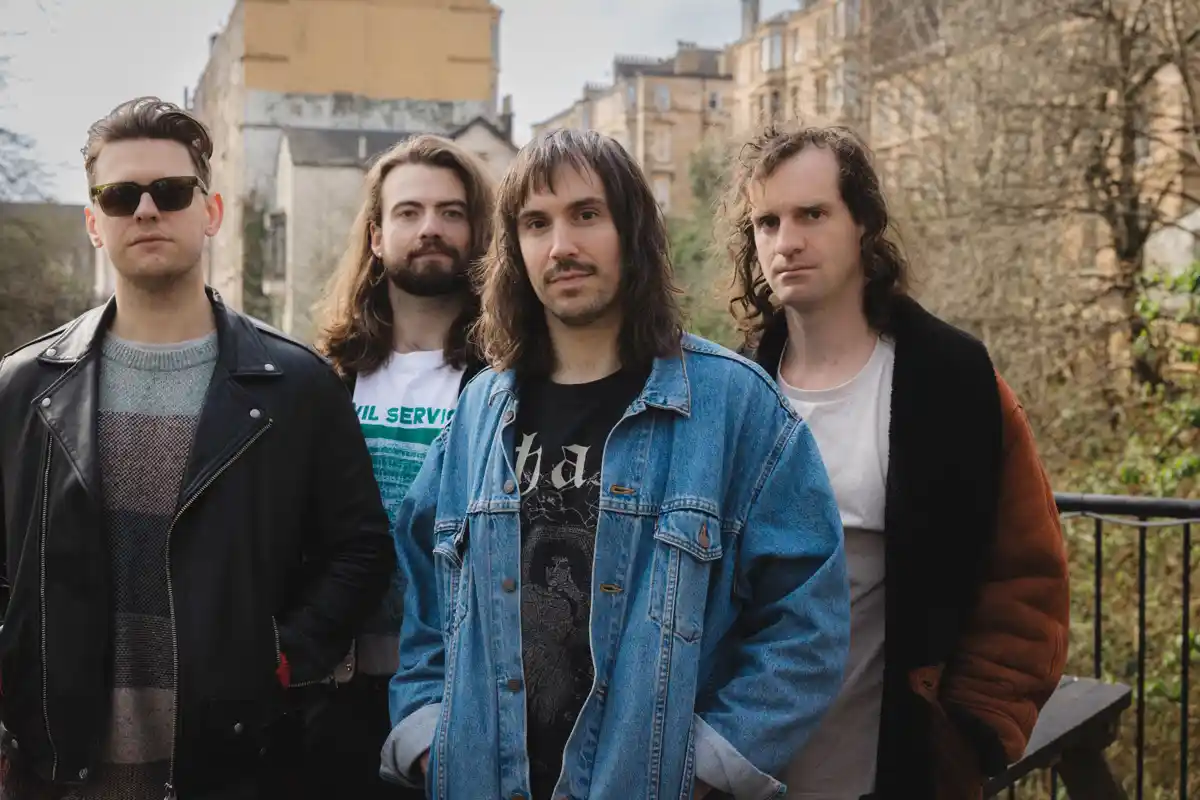
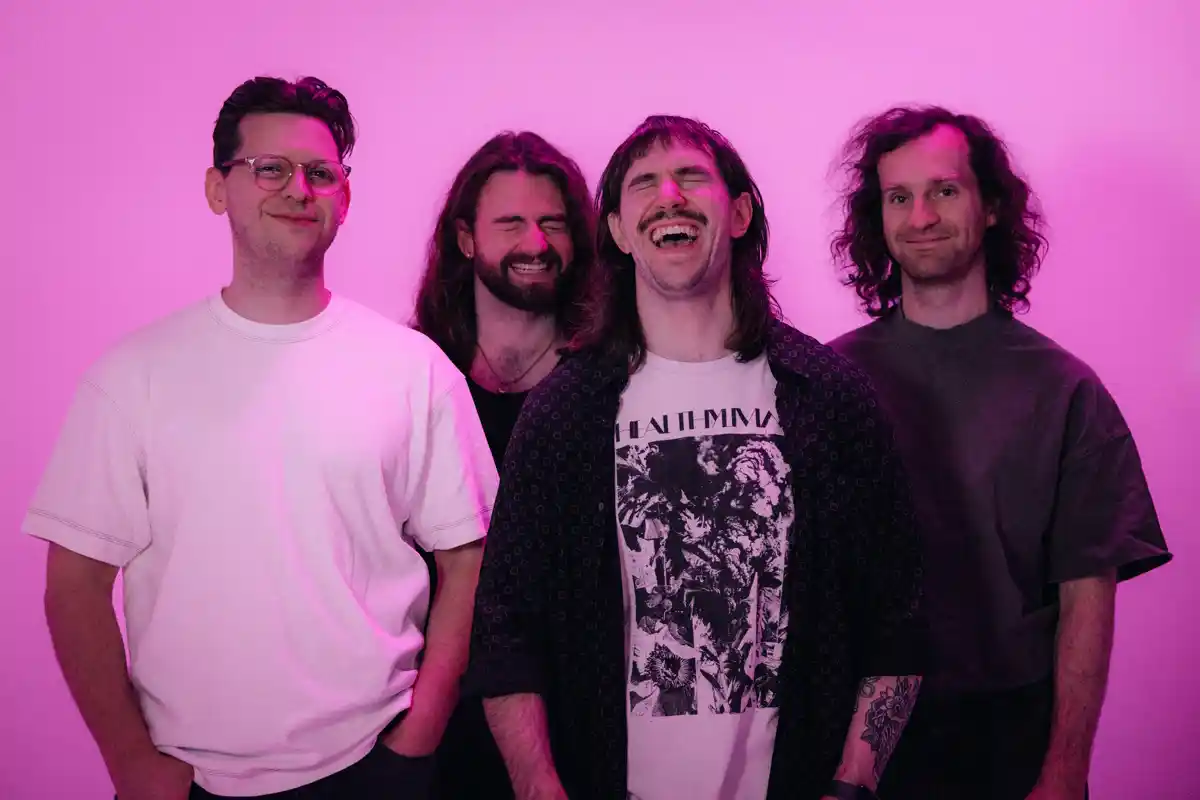
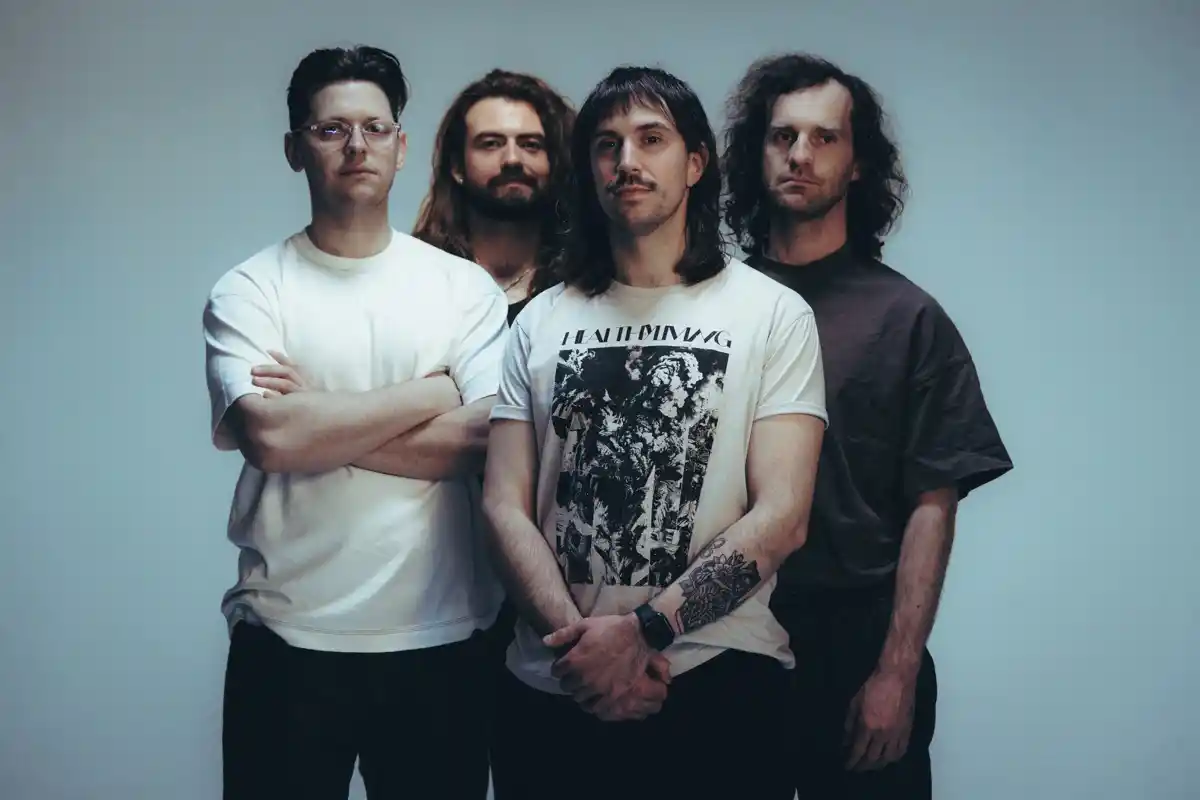
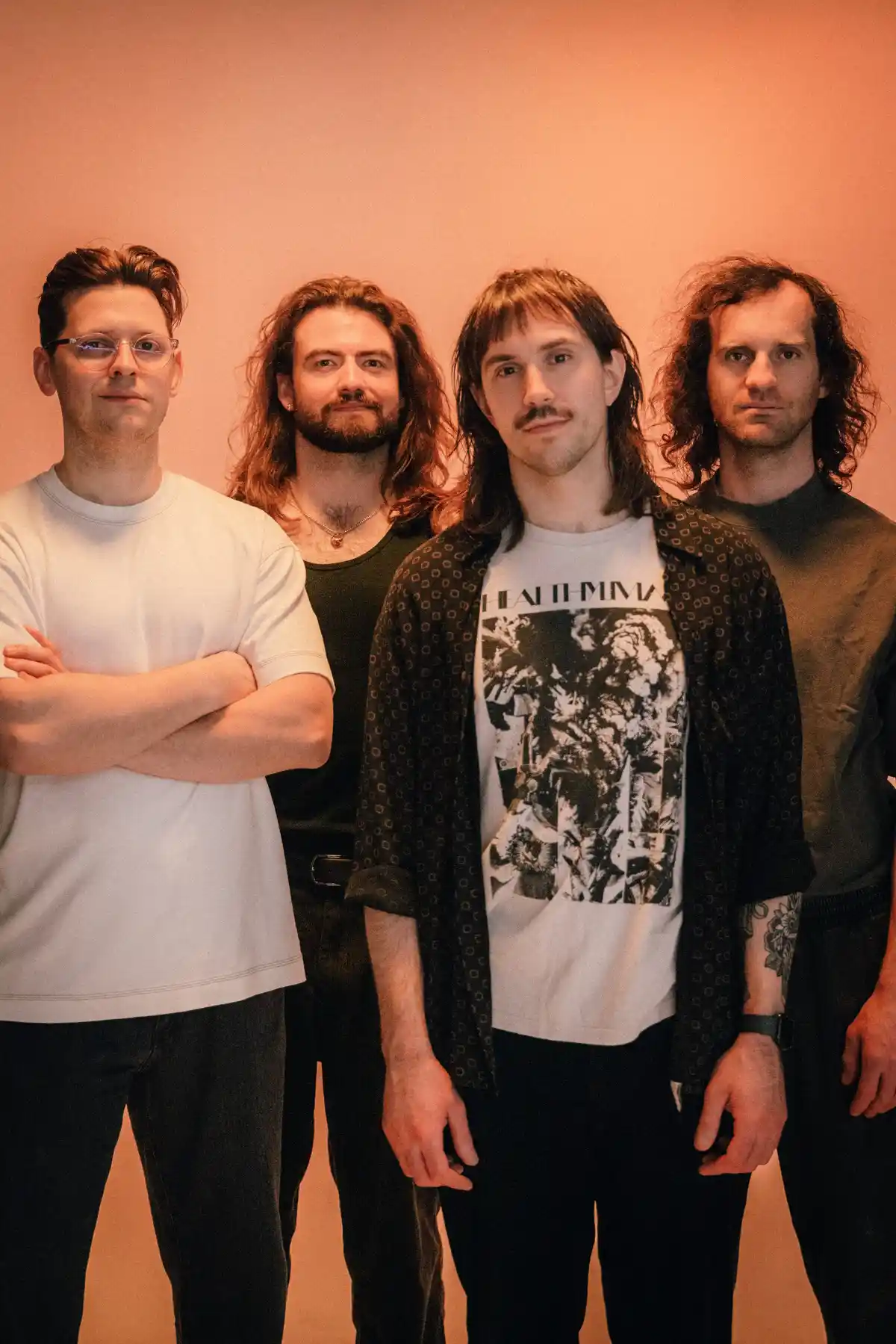
A few things have shifted since record two. Million Moons made their main stage festival debut in China at Offside Festival in front of thousands of people, signing a three-year deal with AnGoal that will bring them back this year. Ed moved to Mull. Long-time friend Jay Miller joined on bass, sitting alongside Edward Thompson on guitar/piano, Freddie Locock-Harrison on guitar, and Solomon Radley on drums. Lewis Johns (Rolo Tomassi, Slow Crush, Employed To Serve, Loathe) is producing again at The Ranch in Southampton, where they made their last record.
The instrumental palette has widened too: saxophone lines and a live church organ now sit alongside the band’s existing language of guitars, piano, glittering keys, and heavy percussion. Recent support slots with Maybeshewill, Hidden Mothers, Tokyo Shoegazer, Overhead, the Albatross, Din of Celestial Birds, A Burial at Sea, Indifferent Engine, Codespeaker, and Exxasens have travelled with them.
Ed on returning to Lewis: “We had such a great experience working with Lewis on our last record, coming back to him for album three was a bit of a no brainer. He knows how to get the best out of us, and we always have such a nice time hanging out together.”
Solomon Radley, on behalf of the band, walks through the album below. References to “Ed” are to Edward Thompson; references to Lewis are to Lewis Johns.
Wyświetl ten post na Instagramie
“A lot has changed since our last record. We made our festival debut in China, Ed moved to Mull and, of course, we have a new band member in the form of long-time friend of the band Jay Miller on bass.
The key thing with album three is that Ed really wanted to push himself musically, and that means a lot more than just shying away from more conventional song structures. He really poured his heart and soul into the songwriting, and I think it really shows. Expect bold musical decisions, grander instrumentation and a body of work that sounds both cohesive and distinctively ‘us’.
“Fans of our band will know how much we love a concept record, and ‘You Be Good, I Love You’ is no different. For this album, we are celebrating the variety and beauty of life on this planet. We want to encourage people to think about the inner lives of other animals, which are often as rich and meaningful as our own.
“The album title is a nod to Alex the parrot, the subject of a famous avian intelligence study. Alex showed that grey parrots can understand and use human language, demonstrating greater intelligence than most toddlers. On the night he died, the story goes that last thing he said to his handler was: ‘You be good, I love you.'”
1. “Titan of the Deep”
The opener owes a debt to David Grann’s piece “The Squid Hunter”, about a man who has dedicated his life to capturing a live colossal squid. Solomon: “It’s a beautiful piece of writing, and something of a joint fascination for Ed and me.”
His instructions for listening: “As the piece swirls into life, picture yourself floating at the bottom of the ocean. The currents pulling you this way and that. The feeling of something massive brushing against you in the dark. The glow of bioluminescence as it towers over you, illuminating its tentacles, its beak, its inquisitive eyes.”
2. “Last Days Together”
Released as a single on 11 May. Solomon sets up the premise: “When you get to know any animal deeply, you come to understand their personality. They can be playful or serious, excited or scared. They make jokes. Often, they recognise certain words, and I get the feeling they are genuinely trying to connect with us on an emotional level.”
The song itself came from Ed losing his rescue Labrador, Ralphy, adopted from The Arc Animal Sanctuary in 2020. Ralphy’s previous owner had kept him chained to their front porch for years before the family took him in.

Ed: “I wrote this track during a very difficult time in my life in Orkney. The original working title was ‘It Rained A Lot’, which I think sums up the kind of mindset I was in at the time. My Labrador, Ralphy, had recently passed away and this writing track definitely played a role in helping me to process those emotions.”
“We adopted Ralphy in 2020 via The Arc Animal Sanctuary. We don’t know exactly how old he was when we got him, but his previous owner had kept him chained to their front porch for years, so he’d missed out on a lot in life. It was a real privilege to know him and give him the retirement he truly deserved.”
3. “Black Sun Rising”
Working title: “The Quiet Disappearance of All That We Love.”
Solomon: “For me, that title brought to mind Rachel Carson’s Silent Spring, which of course looks at the impact of humanity’s use of pesticides and other industrial processes on the natural world. The title is a reference to a world without birdsong, without murmurations or birds coming home to roost at sunset.
“I wanted a title that embodies this idea, while also reflecting the nature of the music, which shimmers, soars and swoops with its lilting piano refrain and energetic tremolo lines. It’s one of the most dramatic pieces on the record, so it needed a name that embodied that energy. The Danish word for ‘murmuration’ is ‘sort sol’, which translates to ‘black sun’ in English.”
The track was the first single released ahead of the album. PROG Magazine made it Track of the Week, and the song picked up support from The Line of Best Fit, Buttonpusher DIY, Post-Rock Nation, Already Heard, Maximum Volume, Noizze, It’s Not A Phase, and Echoes & Dust.
4. “Thundering Footsteps”
The third and final pre-album single, released earlier this week. The track’s pounding war drums are written for the Great Nile Migration, the largest land mammal migration on Earth, in which millions of antelope — white-eared kob, Mongalla gazelle, tiang, Bohor reedbuck — move across the continent in search of water.
Solomon, who plays drums in the band, gives most of the credit on this one to Lewis: “Our producer, Lewis, deserves a lot of the credit for how this track came out. The drums sound massive, from the ‘war drums’ in the intro through to the cantering ride cymbal groove that sees the song to a close. Lewis also had the idea to layer on the analogue synth sounds in the outro, which really add to the richness and make the climax that much more satisfying.”
Guitarist Freddie Locock-Harrison on its place on the record: “This is definitely one of the most dramatic pieces on the album. It’s also one of the most technical! It’s taken a lot of practice to get this one ready to perform live, but it’s so satisfying when we really ‘lock in’ and nail the tricky sections. I can’t wait for people to hear it.”
Solomon’s wider mental image of the song goes beyond the Nile, into the rest of the continent: “This is one of my favourites. We had a lot of fun in the studio playing with Lewis’s analogue synths to layer everything up and make it sound as big and thundering as possible. But it’s the drums that were really the seed of the name. When I close my eyes listening to this track, I picture the great planes of Africa. Millions of gazelles, wildebeest, elephants, reedbuck and more crossing the continent, their feet pounding the ground in unison. Picture the snapping of crocodiles as they cross bodies of water, parents shielding their young from prides of lions, the dust from six million hooves filling the air.”
5. “Secret Histories”
The album’s only human subject.
Solomon: “Secret Histories is something of an outlier on the record in that it’s the only track that takes humanity as its subject matter. This track is an anthem for a species that is marching with its eyes closed towards its own destruction. It’s about the lies people tell themselves so they can justify staying on the same path, about overconsumption and the impact industrial activity has on the planet.”
6. “Memories of a Past Life”
Solomon, on the biology behind the title: “Did you know that caterpillars dissolve into a liquid while in the cocoon? Despite this, scientists have found that some of them can somehow retain memories from their larval state when they emerge as butterflies or moths.”
And on the form of the piece: “For this piece, Ed has used a structure that’s more common in classical music than in rock. The track is written in three movements, each of which is larger and more bombastic than the last. We end in a totally different place from where we begin, which is why this idea of metamorphosis feels so apt.”
7. “Echoes in the Abyss”
In 1989, the Woods Hole Oceanographic Institution detected a strange call during a hydrophone survey. The sound was close to that of a blue whale, only at the wrong pitch.
Solomon: “Researchers dubbed this whale ’52 Blue’ or ‘the 52-hertz whale’, and have theorised that it could be malformed, a hybrid species or perhaps even deaf. Some people call it the world’s loneliest whale, as its calls are unlikely to be audible by other members of its species.
“I think there’s something we can all relate to in that story. Aren’t we all, in a sense, drifting through life, trying our best to be heard?”

8. “Floating for Eternity”
The closer takes its subject from Turritopsis dohrnii, a small jellyfish that can revert to a sexually immature, colonial stage after reaching maturity, rendering it functionally immortal.
Solomon: “Something about the simple piano refrain and marching snare pattern on this number brings them to mind, for me. Imagine them floating with the currents for thousands of years, in true harmony with the world around them.”
“You Be Good, I Love You” comes out 26 June 2026 on Ripcord Records, Dunk! Records, A Thousand Arms Music, and AnGoal Music. Pre-orders are open at ffm.bio/ybgily-preorder, and a Chinese physical release plus dates in the territory are planned for later in the year. “Thundering Footsteps” is streaming everywhere at ffm.to/thundering-footsteps.
The album release tour kicks off the day the record drops, followed by a Glasgow show with in:tides in August and a Crowded Festival appearance in October.
Live dates:
26 June – London, The Black Heart
27 June – Leeds, Wharf Chambers
28 June – Sheffield, Mary St. Live, with Civil Service and Haunted Totem (matinee)
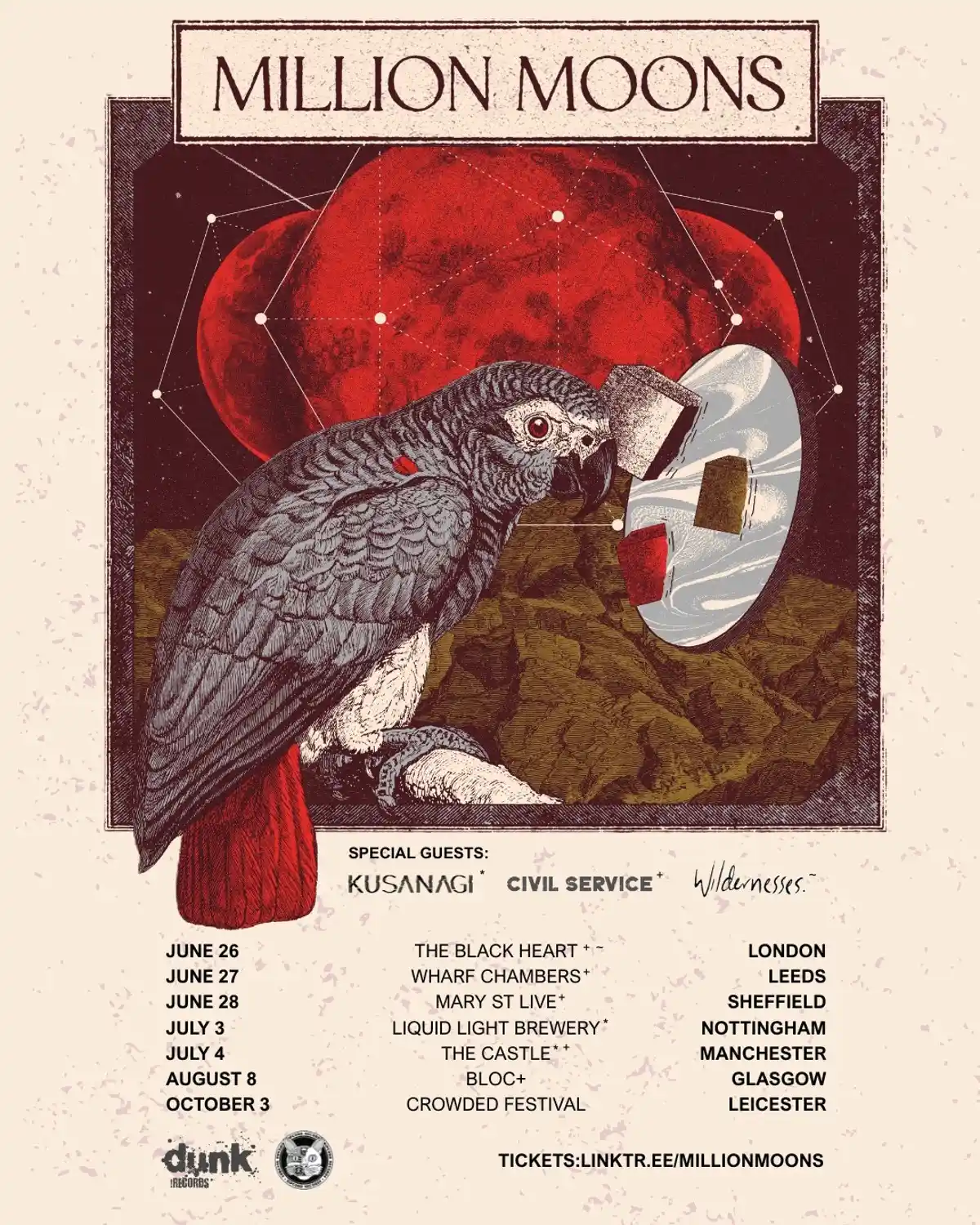
3 July – Nottingham, Liquid Light Brewery
4 July – Manchester, The Castle
8 August – Glasgow, Bloc+ (with in:tides)
3 October – Leicester, Crowded Festival
🔔 IDIOTEQ is ad-free, independent, and runs on one person’s time. If you want it to stay that way: DONATE via PayPal 𝗈𝗋 SUPPORT via Patreon.
Stay connected via Newsletter · Instagram · Facebook · X (Twitter) · Threads · Bluesky · Messenger · WhatsApp.