


So you went looking for something original, awkward, and wired slightly wrong again? Good. Here’s Boi Toi: grunge dragged through psych post-hardcore panic, freaked-out funk hardcore, Primus-level bodily discomfort, and a little Tool-adjacent tension, every part sounding like it has seen something it shouldn’t have.
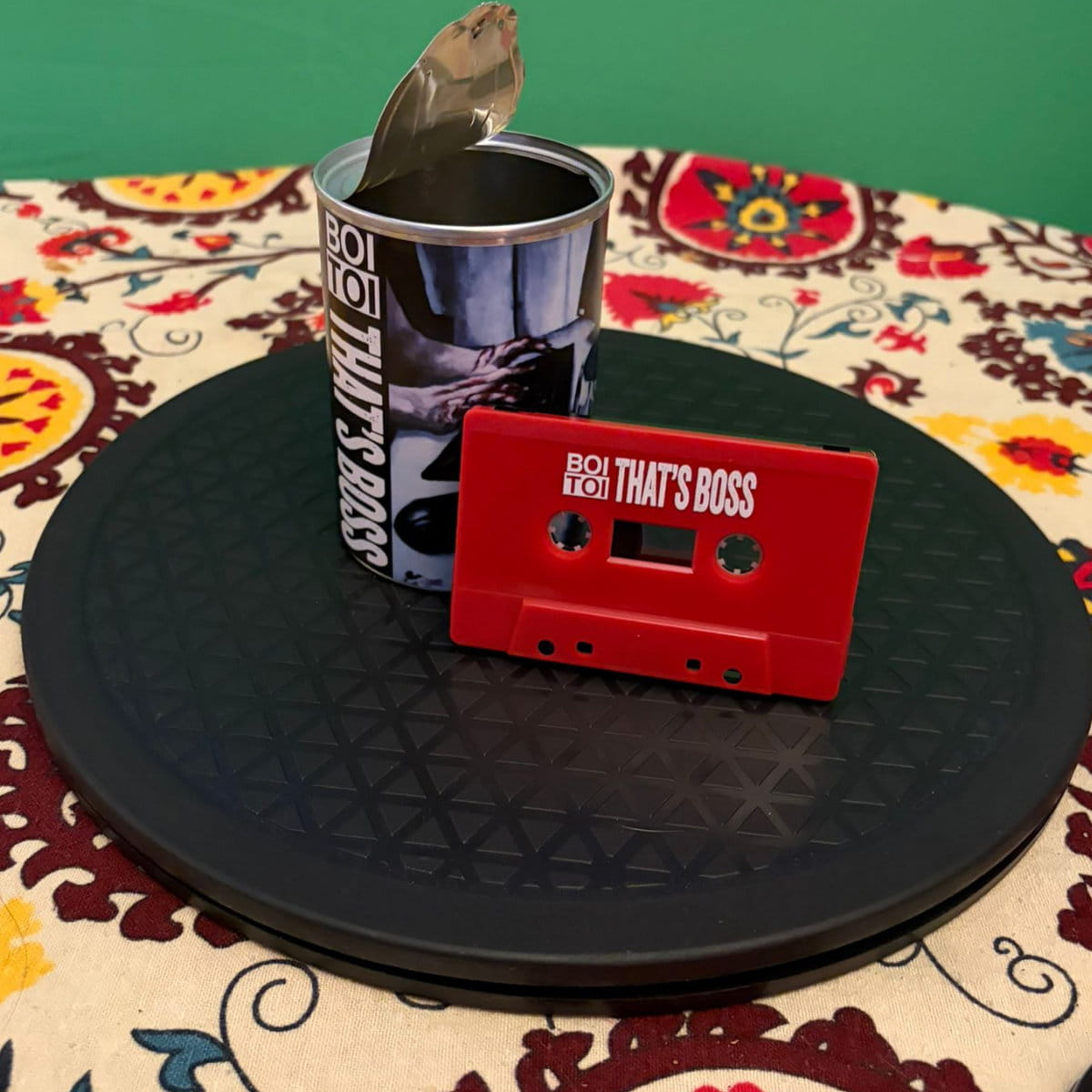
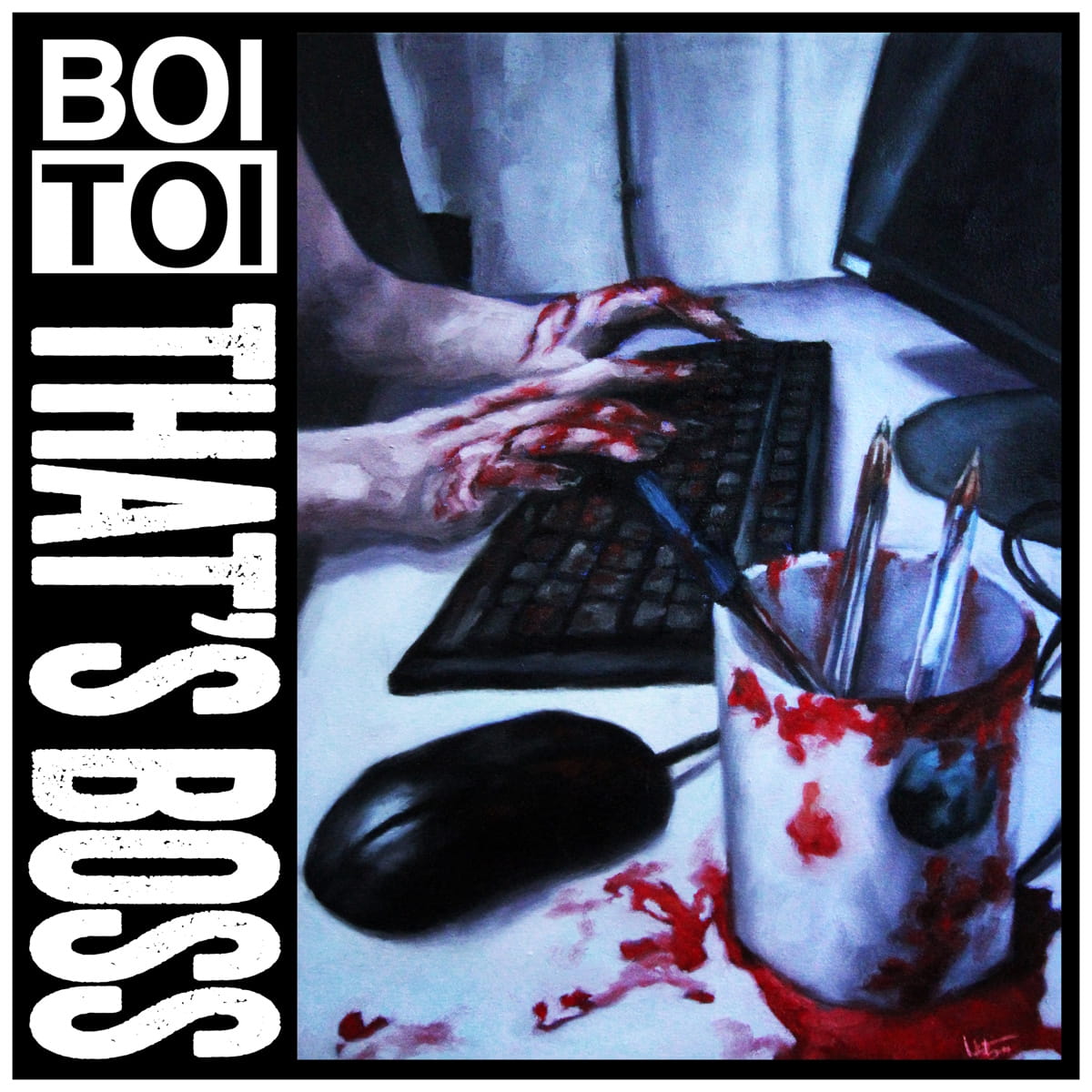
And then there’s the cassette sealed inside a replica food can — a stupid object, which is partly the point. It is also an oddly sexual, bizarre, very Boi Toi way to introduce “That’s Boss”: a five-track EP about work stress, self-critical drinking, macho fantasy, internet-age paranoia, and the sort of jokes that start funny before leaving something sour at the back of the throat.
The UK post-hardcore band release “That’s Boss” on July 10, following their debut EP with a louder, more bombastic set built through live shows rather than studio polish. Parts of the record are all over the place and its sits somewhere near The Dillinger Escape Plan, Blacklisters, and The Armed, though Boi Toi are less interested in fitting a lane than seeing how far they can push a song before it turns into a pub argument, a breakdown, or a chant shouted back by people holding pints too high.
Produced by Blake Crompton and Oli Wilkinson, and mixed and mastered by Anthony Booth, “That’s Boss” comes with a limited “cassette in a can” edition — literally a cassette sealed inside a replica food can — alongside a standard CD digipack. Both formats will be exclusive to Bandcamp and live shows.
Within Boi Toi, the joke has always had teeth. The band’s ideas often begin with something that makes them laugh, followed by the internal thud of “oof that’s savage.” That balance between the penitent and the daft runs through “That’s Boss,” but the temperature has risen. Anger toward rising fascism, intolerance, and AI feeds into the writing and delivery, without sanding down the absurdity that got them here in the first place.
“There is also a challenge to writing songs, concepts and artwork that can take a look at the world and say ‘I resent the people in it for the evil’ in one breath, and in another say ‘distract yourself doing something that yields results or makes connection’ and then in another will invoke feeling of talking with mates at the back of the pub over a kebab dinner,” says Blake Crompton.
That is about as clean a map as Boi Toi are likely to give anyone.
The EP opens with “Germany,” a song that started with a riff from guitarist Lewis and grew into the heaviest thing the band have released so far. Its core instinct is plain enough: a job is crushing your head, your routines are collapsing, you want to be left alone and held “so fucking tight,” and the only answer your brain can produce is to fuck off to Germany.
“The lyrical approach of the song came from the literal moment of: ‘This job is really stressing me out all the time, I want to be hugged and left alone at the same time, I’ll fuck off to Germany for a bit,’” the band says.
The punchline got better in Berlin, where the band spotted the Toi Toi portaloo brand looking suspiciously close to the Boi Toi logo. From there, “Germany” became less of a throwaway escape fantasy and more of a safe-space metaphor: activists, antifascists, punk shows, the history of synthesiser music, football teams, St. Pauli, and the strange delight of building a German fanbase from a song about running away there.
The chorus does not pretend to be elegant. “So I’ll just fuck off to Germany” is a pressure valve, a holiday request filed after the breakdown has already happened. By the end, the sign-off lands like a punchline and a genuine exit: “Auf Wiedersehen I’ve fucked off to Germany.”
“Carrot and the Stick” follows, before “Pisshead Paradise” turns the EP toward the weekend ritual of overtime, shifts, sambuca chasers, slurred speech, cirrhosis jokes, regret, and the slow walk home. It plays like celebration until it doesn’t. “Hold your pint high” is funny until the room tilts.
The band describe the first three tracks of “That’s Boss” as sitting on the line between irony and sincerity “like Grade 2 listed buildings in posh property development areas.” Those songs deal with workplace stress, self-critical hedonism, and the soundtrack to a hangover, but they avoid the false comfort of pretending the joke cancels the damage.
Boi Toi’s humour comes from a recognisable northern register: arguing couples in Primark, ostentatious 13-year-olds in Greggs, people turning pub routines into devotional practice, the kind of public behaviour that becomes folklore before the first drink is finished. Their earlier anthem “Guinness” turned that pub religion into a chant, with fans screaming “Guinness is my Religion” back at the band while necking pints.
Their stories can stretch much further into cartoon violence. “Woodstock Todger” imagines a sweet James Brown fan at Woodstock ’99 watching hypermasculine American thuggery unfold and setting off on a vigilante crotch-punching quest. That came out of frustration with friends talking about the Netflix “Trainwreck ’99” documentary and wondering what would happen if they had been there together.
The influences are just as messy and specific: Refused’s “The Shape of Punk to Come,” The Callous Daoboys, Big Black’s “Bulldozer,” The St. Pierre Snake Invasion’s lyrical bite, internet memes, “Big Fat Quiz of the Year,” Graham Linehan comedies, “Four Lions” at 10pm, Hunter S. Thompson after two pints, counterculture metal, hardcore, and the practical camaraderie of people with day jobs as retailers, technicians, and call centre operators.
“Humour as a coping mechanism is fairly ingrained into British working-class culture at times, especially within the neurodivergent among us,” the band says. “However, weaponizing it to point out hypocrisy and idiocy has taken patience.”

That weapon turns sharper on “Private Browsing.” The song began with a military snare-roll feel and grew into a character study of so-called “Patriots” erecting flags, spraying roundabouts, getting Georgia tattoos, and fantasising about conflict as identity. The character is both caricature and warning: someone aroused by the battlefield, someone who finds purpose in combat without understanding the damage that follows.
Elements of the final chorus were shaped by Pete Hegseth’s comments about American soldiers being “fat,” while still presenting the US military as unstoppable. The song also draws from social media footage of satirical reporters speaking with British public members and Reform UK voters claiming they would fight despite never having enlisted.
“As the song satirises aspects of military culture, to which many of our family friends and others have close affiliations, we wanted to be clear about the angle we were taking,” the band says. “We are describing a mentality that prioritises identity and fulfilment through conflict above all other needs.”
The EP closes with “VPN’ Name Of,” leaning into parody and a thicker northern voice while taking aim at everything that has gone a bit wrong. Its starting point is a simple, ridiculous frustration: face ID getting in the way of viewing the extended R-rated “Watchmen” scenes, the Leonard Cohen bit included. Then the joke opens into something meaner: a Prime Minister’s announcement treating VPN introduction as a priority over asylum seeker safety, disabled student support, or standing up to transphobes.
“In a world where people are not taking action to evil presented to them, straight faced, and often through feeds that are doomscrolled past them,” the band says, “the most effective method to cut through the noise that is either thrown from everyone else’s hustles, ours included, and biased news reporting: make people smirk, then laugh, then grimace, then it sticks better in their minds.”
Wyświetl ten post na Instagramie
That does not mean every line lands without risk. Boi Toi know satire can get twisted. They point to Ian MacKaye’s “Guilty of Being White” as an anti-racist song that some listeners still failed to understand, and admit that the same possibility gives them pause when writing and naming songs. They want the kind of listener who can hear a title like “Simpin’ on all I have access to” without assuming the band are misogynistic creeps.
There are internal checks too. If one member stops laughing or starts to squirm, the joke has probably pushed too far. Violent songs have already caused some crossed wires: “Pina Colada” led people to take a joke about the singer being the prime suspect if anyone went missing at face value. The band see its Takashi Miike-style ultra-violence as metaphor, closer to how extremity often functions in death metal lyrics.
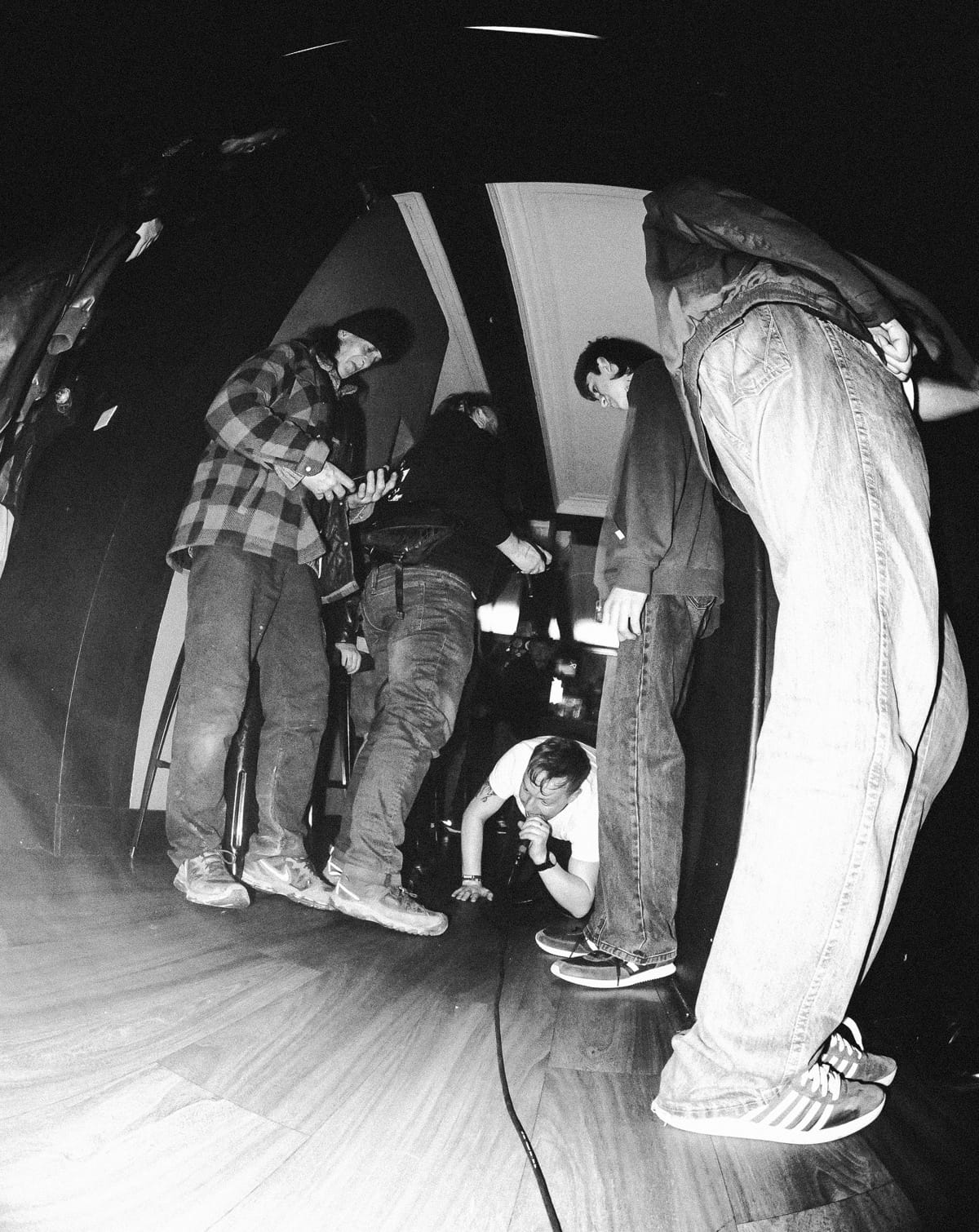
Live, Boi Toi are less controlled and better for it. Songs are written with one huge test in mind: will this work on stage? The recordings create a benchmark, but the band still see the life of the song as something born in the room — forgotten lyrics, guitar solos, drum fills, improvised movement, the physical strain of getting through the thing.
Their last EP was self-produced, which brought tension when they wanted to experiment but could not push as far as they wanted. In the studio, physical stillness forced the delivery into isolated takes. On stage, the whole body gets involved.
That is where “Guinness is my Religion” has earned its place as a set closer. The song ends with a huge build and a sudden cut. The band call it “the edging song,” which is exactly the kind of phrase Boi Toi would invent and then defend through repeated public use.
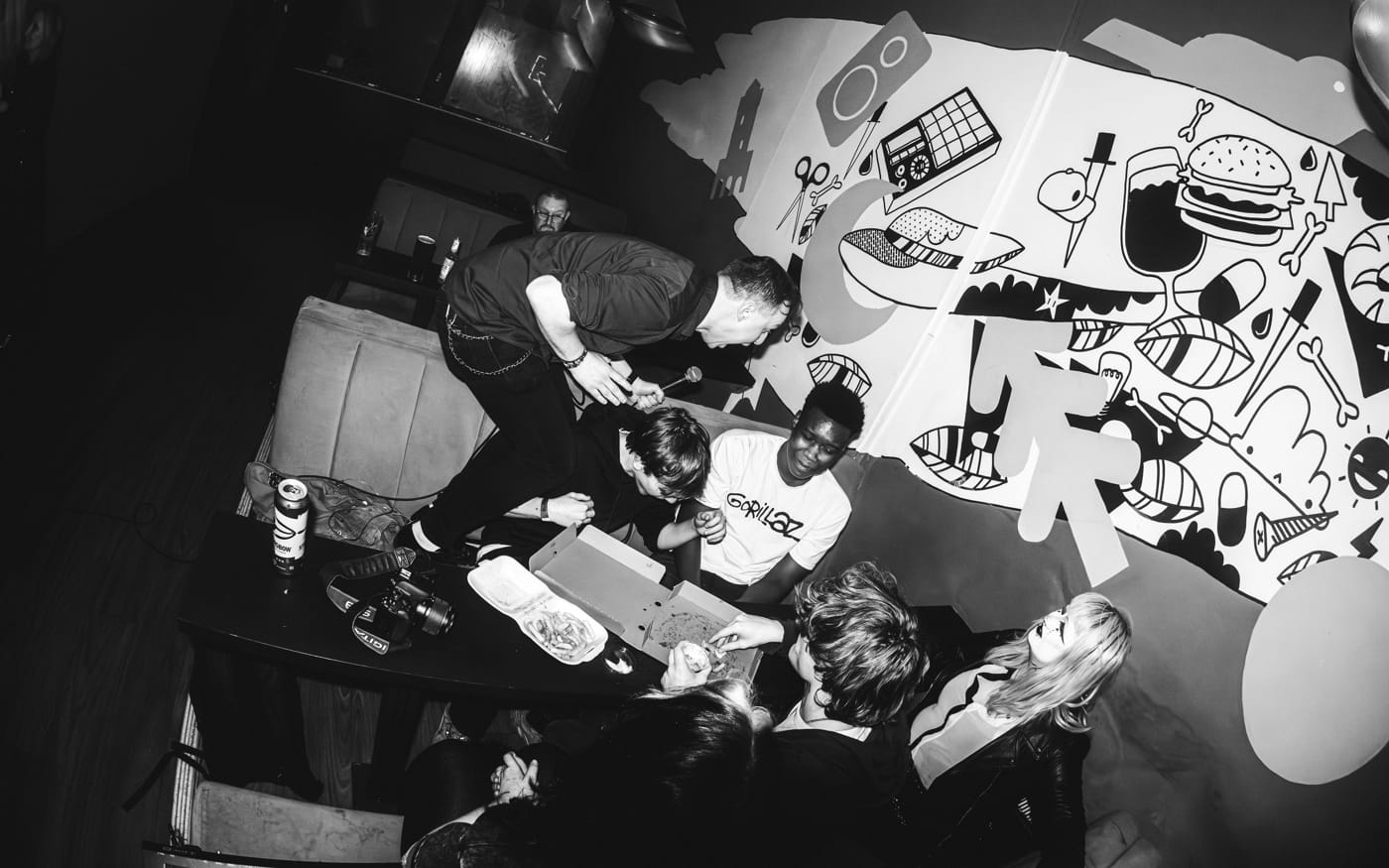
Their shows have involved audience members turning up in increasingly elaborate modifications of their merch, the vocalist running into the crowd and climbing over seated areas, stage invasions, projected images of the bassist’s face, a disassembled mannequin being thrown around, a friend in a chicken costume being kidnapped mid-set, and people getting the band name and logo signed on their necks. In Manchester, strangers in beer gardens have recognised them because, as one person put it, “The logo being in every single toilet, everywhere.”
Wyświetl ten post na Instagramie
Boi Toi formed in the late and post-adolescence of people who had already been in bands, then built this one around frustrating work shifts, the aftermath of social embarrassment, precoital jitters, vodka in Vimto bottles, synthesiser interludes, wailing vocals, and breakdowns big enough to make a bad idea feel briefly useful.
“It’s a step forward for us,” the band says. “More chaotic, more intentional, and more of what Boi Toi actually is.”
“That’s Boss” is out July 10. Boi Toi loves you. That’s Boss.
🔔 IDIOTEQ is ad-free, independent, and runs on one person’s time. If you want it to stay that way: DONATE via PayPal 𝗈𝗋 SUPPORT via Patreon.
Stay connected via Newsletter · Instagram · Facebook · X (Twitter) · Threads · Bluesky · Messenger · WhatsApp.