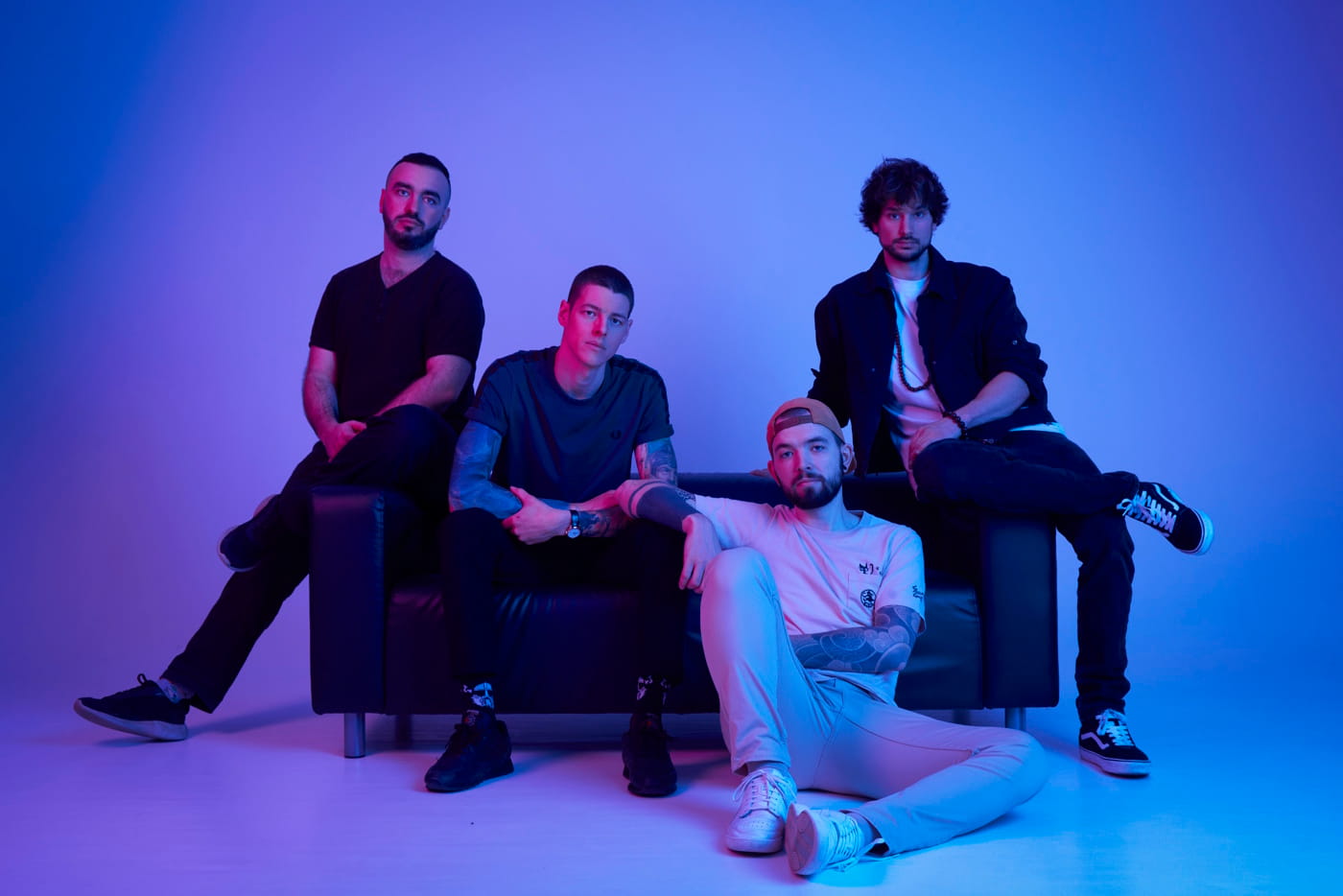


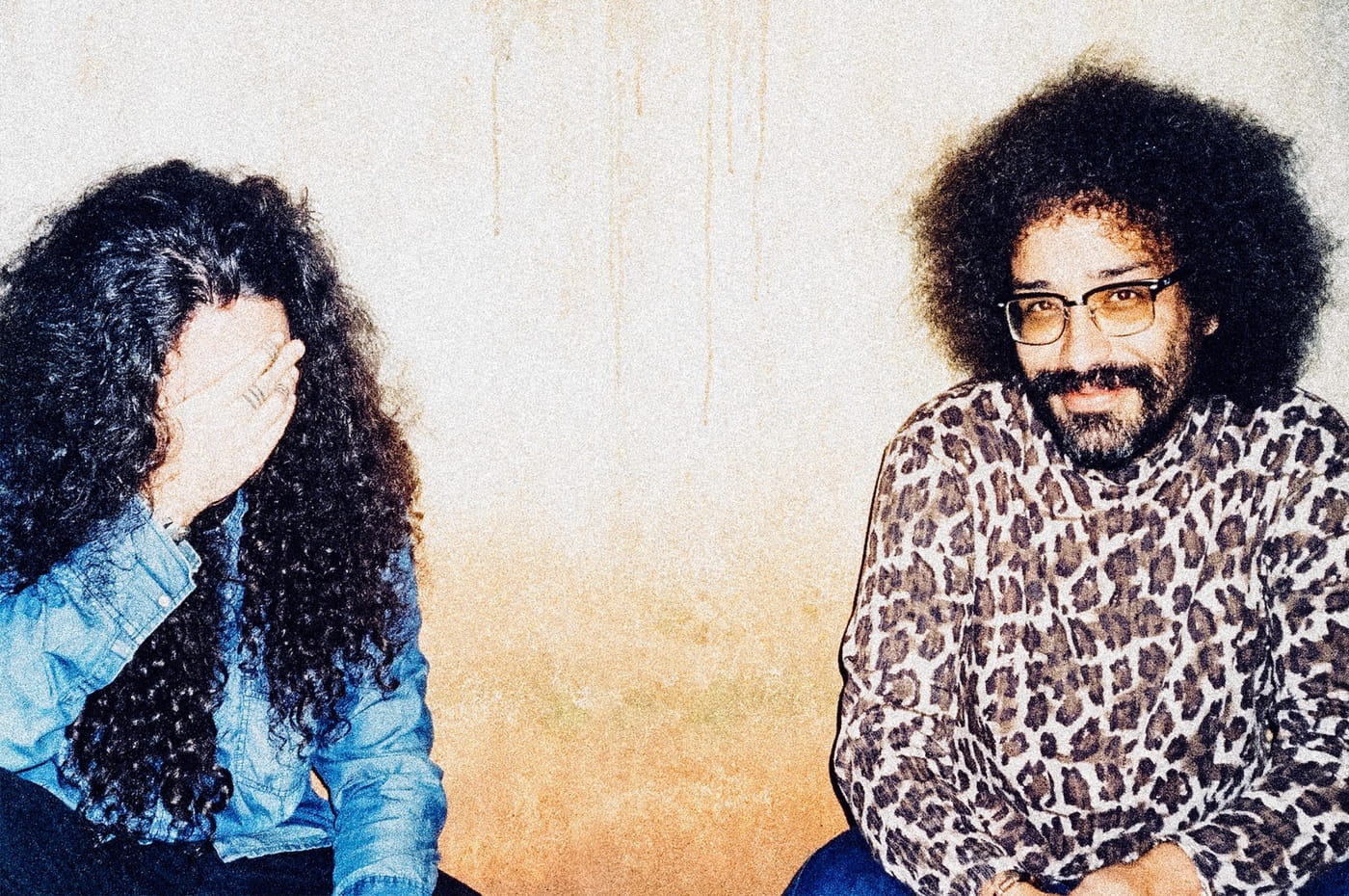
“PARASITA” opens DEAFKIDS’ new album with a guitar riff inspired by Moroccan Gnawa trance music, laid over the rhythm of Bumba-meu-boi, a Brazilian folkloric form that’s part of the country’s cultural heritage.
The next track is built on Guaguancó. The one after that is a 5/4 Mozambique groove with full-throttle Indian tabla and a Timbales solo à la Tito Puente. Marian Sarine wrote an essay alongside the record. It’s about the difference between borrowing those rhythms and living inside them.
“CICATRIZES DO FUTURO” (Scars of the Future) arrived 29 May on Neurot Recordings and Evil Greed, available on LP, CD, and digital. Nine tracks. The Brazilian duo’s first non-collaborative full-length since 2019’s “Metaprogramação”. The band describe the album as “a visceral diagnosis of a world intoxicated by its own fictions of power, tracing the anatomy of a systemic grand deception and exploring its mechanics of psychological, social, and material domination, the indelible marks imprinted on bodies and minds and it’s catastrophic consequences.”
DEAFKIDS started building the record in 2023, in what the duo describe as “the fractured spaces between tours and travels.” They say: “We carved out a sonic intention: urgent and danceable, loud and cathartic. The rhythms are the main thing… we dived deep into channeling Afro-Latin, Brazilian and African claves and rhythms through our own DEAFKIDS filter, which means, no rules for directions and experimentations! We immersed ourselves in the percussive genius of these musical heritages while inspired by the futuristic landscapes coming from the bold experiments pulsing through contemporary electronic music from the global south, throwing all of this into the melting pot of our own aesthetic and sonic language with a political intent.”
That filter runs through the whole record. “FEITIÇO” is absurdly fast salsa fused with Afro-Brazilian Jongo, riding a hypnotic bass riff in the Cuban Son Montuno tradition. “SIMULACRO” is monolithic Electro-Punk with fuzz-soaked guitars, Merengue patterns, and percussion lines from Sarine inspired by Ghanaian balafon.
In his essay, titled “Peaceful Irreverence, Feverish Respect”, Sarine traces the histories. Brazilian Samba rooted in Angolan Semba, transposed to European instruments, augmented by Iberic harmony sensibilities, kept alive by true believers, “in equal measure protectors of its traditions and its innovations.” The Jamaican mento-ska-reggae-dub-rocksteady pipeline. The Afro-Latin manifestations of African claves and patterns, Sons, Merengues, Cha-Cha-Chas, Bombas, Socas, and the African Afro-Latin heritage that came back to the continent in turn. The question Sarine keeps returning to is the one those traditions force on anyone reaching for them: “How is it that someone could claim belonging in such a tumultuous context?”
The answer he writes through is autobiographical. “When us as DEAFKIDS moved together, and went through the (ever ongoing) process of opening our minds past the shreds of an orthodox mentality regarding genres, one that preached that our feelings could only be expressed through three or four instruments, we felt like we tapped onto a well, full of the clearest waters. Both translucent and see-through, and at the same time, reflective of our own selves.” The forms of music they’d grown up with, “set aside in favour of aesthetics more superficially related to what we knew as DIY,” opened back up. “Suddenly revealed themselves not only reflective of that same daring and independent ethos, but also connected to a wealth of knowledge that pointed both inwards and outwards. Those rivers had deep waters, and their course also took us very far.”
His list of who got there before them is wide: “The sonic adventures of dub and kosmische musik, the foundation on rules as means to reach the cosmic in ever-evolving ways of Hindustani/Carnatic Ragas and Arabic Maqams, the ability to reaffirm the rhythm while constantly denying it that is the foundation of percussion itself, the roaring freedom present on the combination between past and future of bands and acts as distinct as Funkadelic, Can, Amanaz, Pedro Santos, Guelewar, Tribo Massahi.” What those names share is the part of the essay that lands hardest. “These were not purists or people trying to prevent external influence over their forms of living music. These were innovators that realized that their form of living music transcends form. It is an approach, a way of inhabiting music itself, and through it, both reach deep within themselves and beyond.”
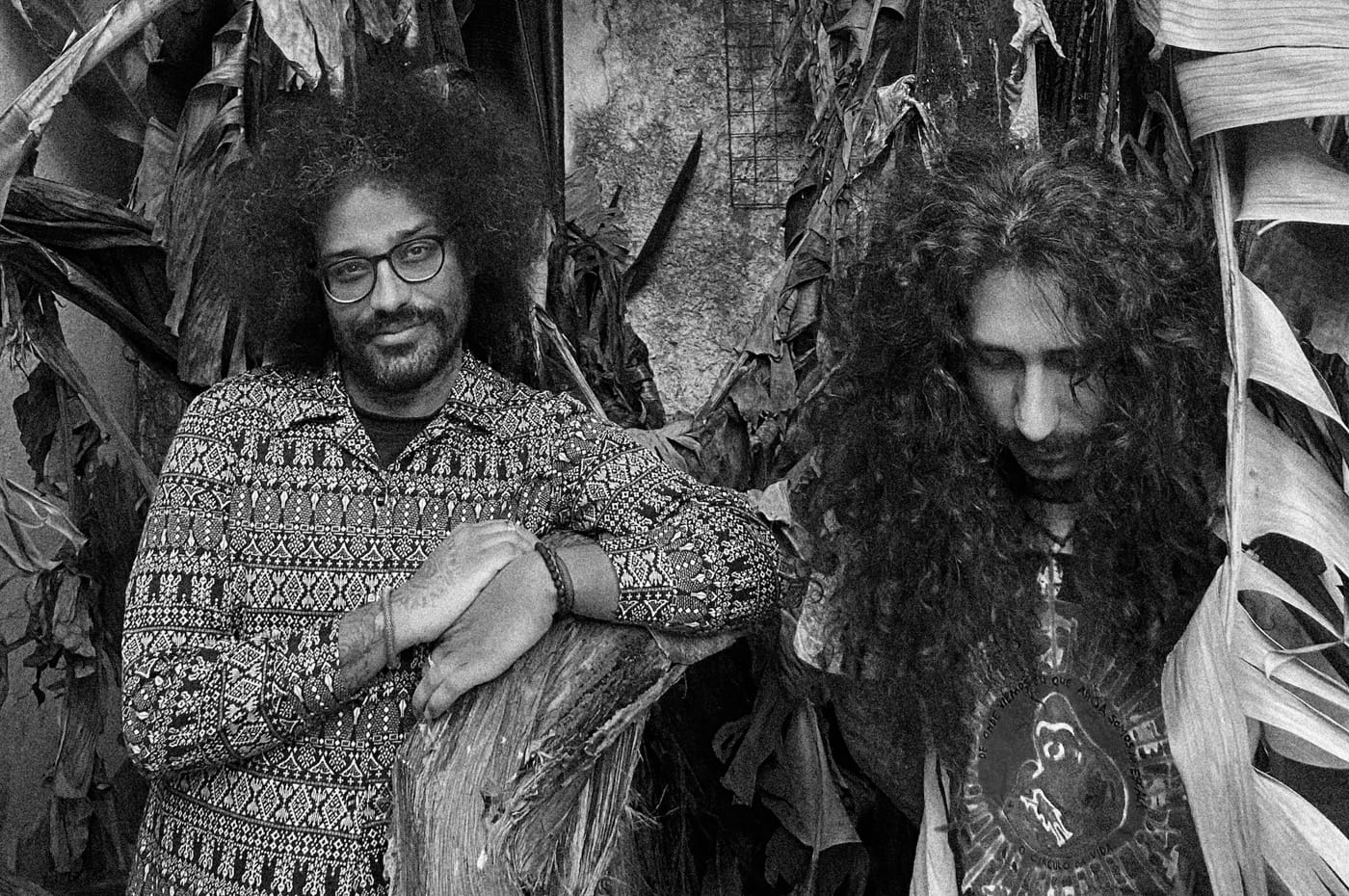
The duo became a duo in 2024 when bassist Marcelo dos Santos departed. Sarine and Douglas Leal condensed, locked into a shared vision, and built the electronic bedrock together with drum machines and synthesizers, alternating between electronic and organic bass lines, both played by either of them.
“This album was definitely the longest creative process we’ve ever had,” they say, “which allowed the ideas and tracks to condense and transform as much as possible while we adapted ourselves to our new format through it, until the moment we went into the studio.” They returned in 2025 to longtime partners at Estúdio Jukebox in Volta Redonda to track percussion, strings, and vocals. Andre Leal, Kleber Mariano, and Douglas Leal mixed. Wayne Adams mastered at Bear Bites Horse Studio in London.
Lead single “CICATRIZES” is where the method shows itself clearest. Heavy pulsating 808 bass drums hit hard as a D-beat foundation for Sarine’s ultrafast percussion played in the Guaguancó rhythm, driving a relentless Acid-House bassline and fuzzed walls of guitar, processed vocals screaming over the top.
“The lyrics of ‘CICATRIZES’ are like an eyewitness account of a world collapsing,” the band say, “facing its devastating material and psychological consequences. Describing the journey from apathy to traumatic perception, from alienation to incurable witnessing, the song captures the state of a consciousness that, awakening from the collective delusion, confronts the terrifying reality that has been concealed. The rhetorical question ‘Is it all a delirium?’ is quickly answered and amplified: it is not individual, but a collective ‘great delirium!’, a toxic and dominant narrative that normalizes the absurd and paralyzes action.”
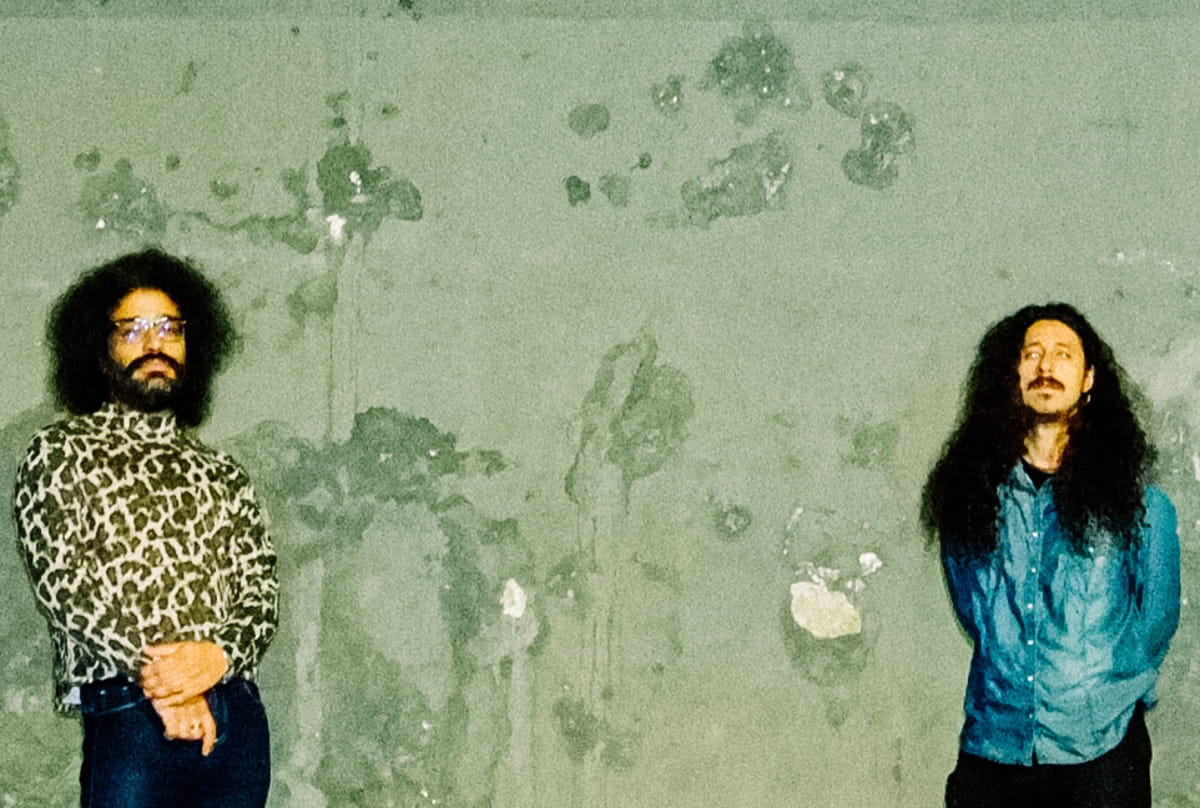
They add: “Our music comes from the perception of the environmental, political, and moral toxicity that permeates our realities under such conditions. In the context of the album, the scars are those of a brutally stolen past reflected in a wicked future. A permanent mark of violence is also a memory that will never be silenced!”
What Sarine’s essay refuses to do is treat any of that pulling-from as worldbuilding. He’s blunt about it. “It is obvious that nothing good can come out of adopting a whole history as set dressing, and cosplaying to augment your market reach. What is not you (even if a little) can never be yours. A blend of technical knowledge and interior comprehension is what makes us capable of channeling that river.”
The closing argument of the essay names the stakes for what happens when that work doesn’t get done. “For me, it is that realization that prevents us from becoming the algorithms of our own selves, self-referring machines that pay homage and use the teachings of our founding fathers and mothers as mere recombination puzzles. The ability to inhabit music both as feverishly and peacefully as possible. To have the irreverence to disrespect the canon, while ardently acknowledging it. To immerse yourself not with the fervor of a zealot, but as someone who repairs bridges that always were there, and to create bridges between what is and what will be.”
The album, the band say, is “hypnotically danceable. Physical and ritualistic music that demands body movement as a form of mental cleansing. The album doesn’t just reflect a fractured and violent world. It breathes desire to live and resist through new sonic paths.”
“CICATRIZES DO FUTURO” is out now on Neurot Recordings.
🔔 IDIOTEQ is ad-free, independent, and runs on one person’s time. If you want it to stay that way: DONATE via PayPal 𝗈𝗋 SUPPORT via Patreon.
Stay connected via Newsletter · Instagram · Facebook · X (Twitter) · Threads · Bluesky · Messenger · WhatsApp.