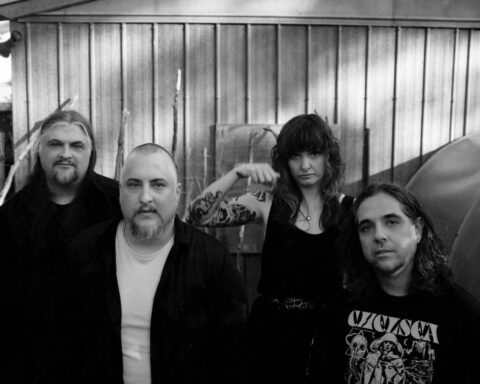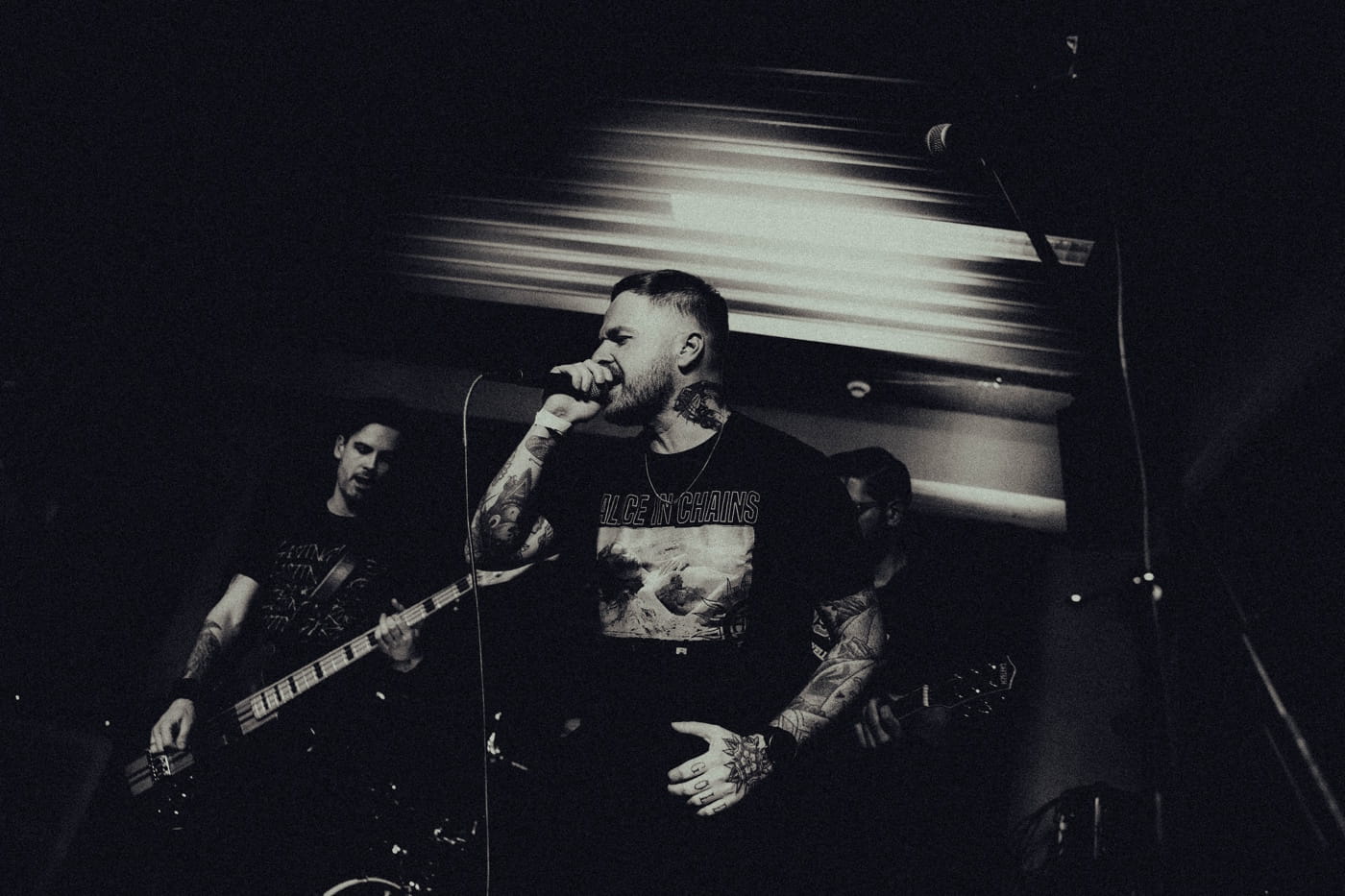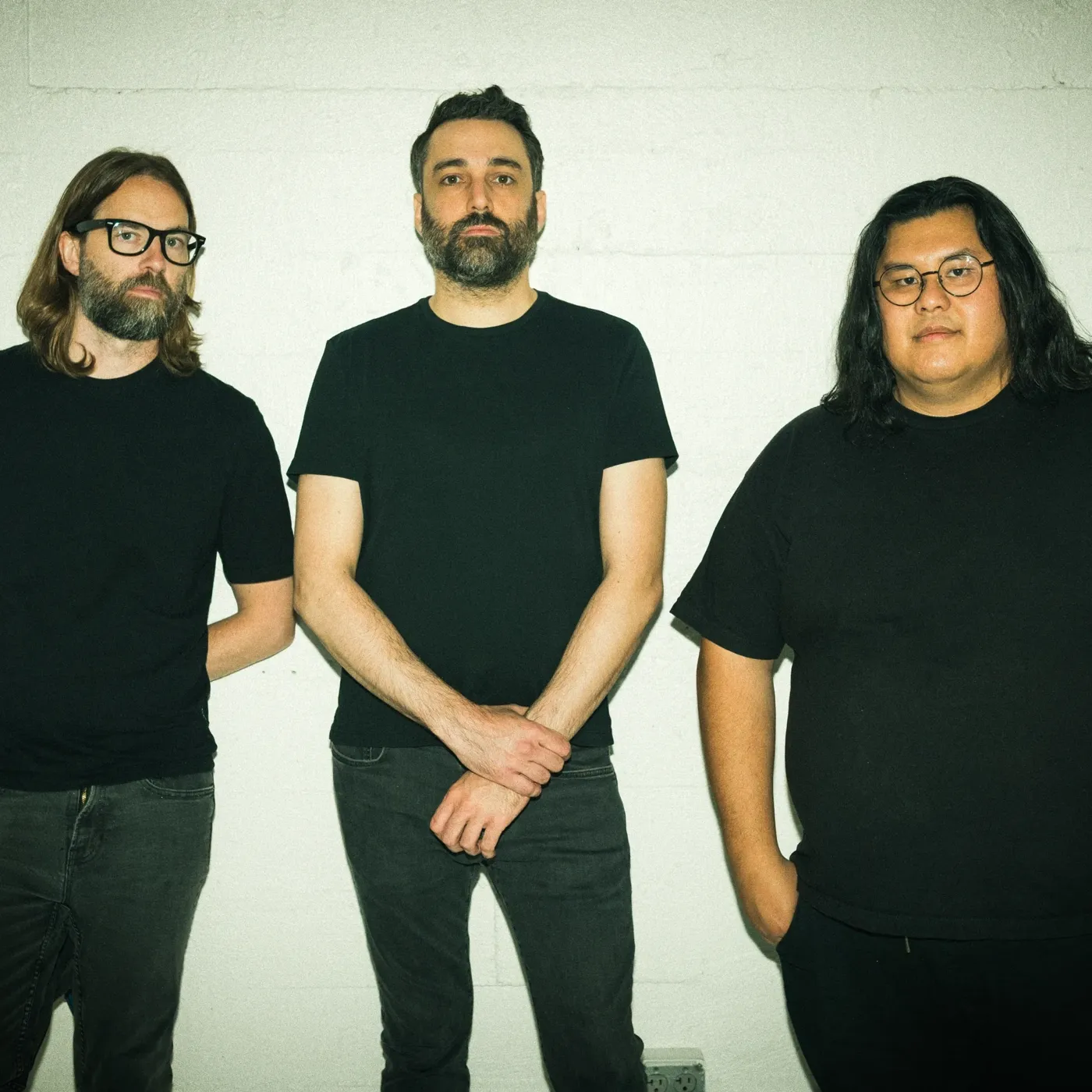


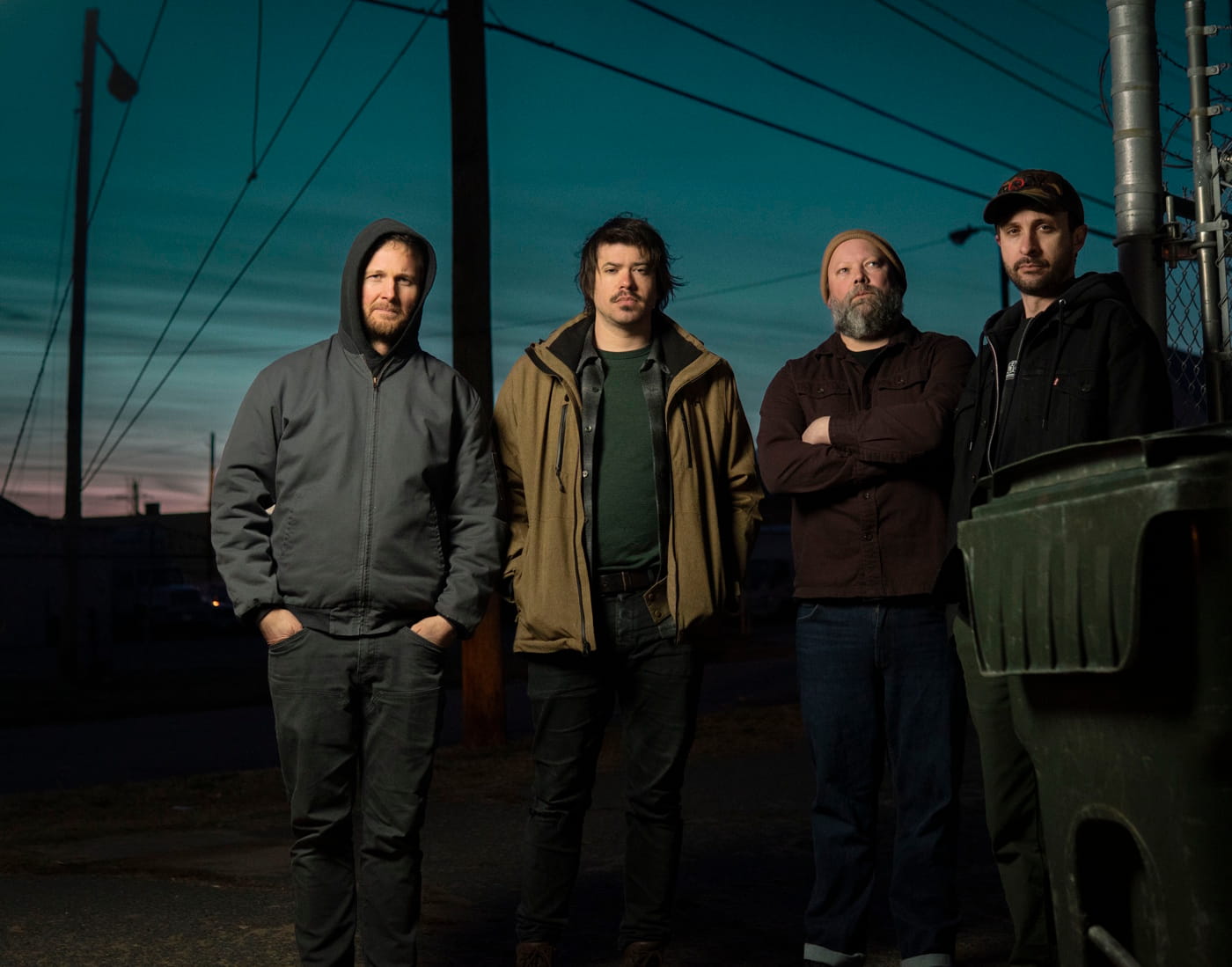
To call Dumb Waiter just another noise rock band is to say nothing at all. The Richmond, Virginia four-piece open their new record with a sombre, saxophone-led passage that sits still long enough to make you think you’re in for another instrumental album, the kind they built their name on. Then Nick Crider starts ranting. “There’s a hole where the sun used to be! Ah, forget it!” Blast beats kick in, the bass starts pounding, and whatever you thought this band was goes out the window in under a minute.
“Change” is Dumb Waiter’s sixth album, out July 31st through Ossein Records. Nick Crider (guitar/vocals), Tristan Brennis (saxophone/vocals), Keith Paul (bass/vocals) and Nathaniel Roseberry (drums/vocals) have been at this since 2012, most of that time as a high concept instrumental band. This record drops that entirely: pop structures carried by guitars processed until they read as synths, saxophone run through a wall of effects, vocals that sound worn out before the first chorus, and blast beats wherever the songs can hold them.
“I’ve really lost my love for complex music,” Nick said. “At some point, I realized that my ability wasn’t that interesting and my high concepts were more alienating than immersive.”
The road there started during the pandemic, when the band frantically wrote two records, “TSK” (2020) and “Gauche Gists” (2022), and ran out of room as an avant-garde instrumental act. “The existential crisis we were all having at the time was filled with excessive writing,” Tristan said. “Eventually we just hit a wall with subjective, instrumental music. What more is there to say without saying anything? We quickly realized that we had a whole lot to say about the current state of the world and this hyper-acceleration of society that I think we’re all feeling day in day out.”
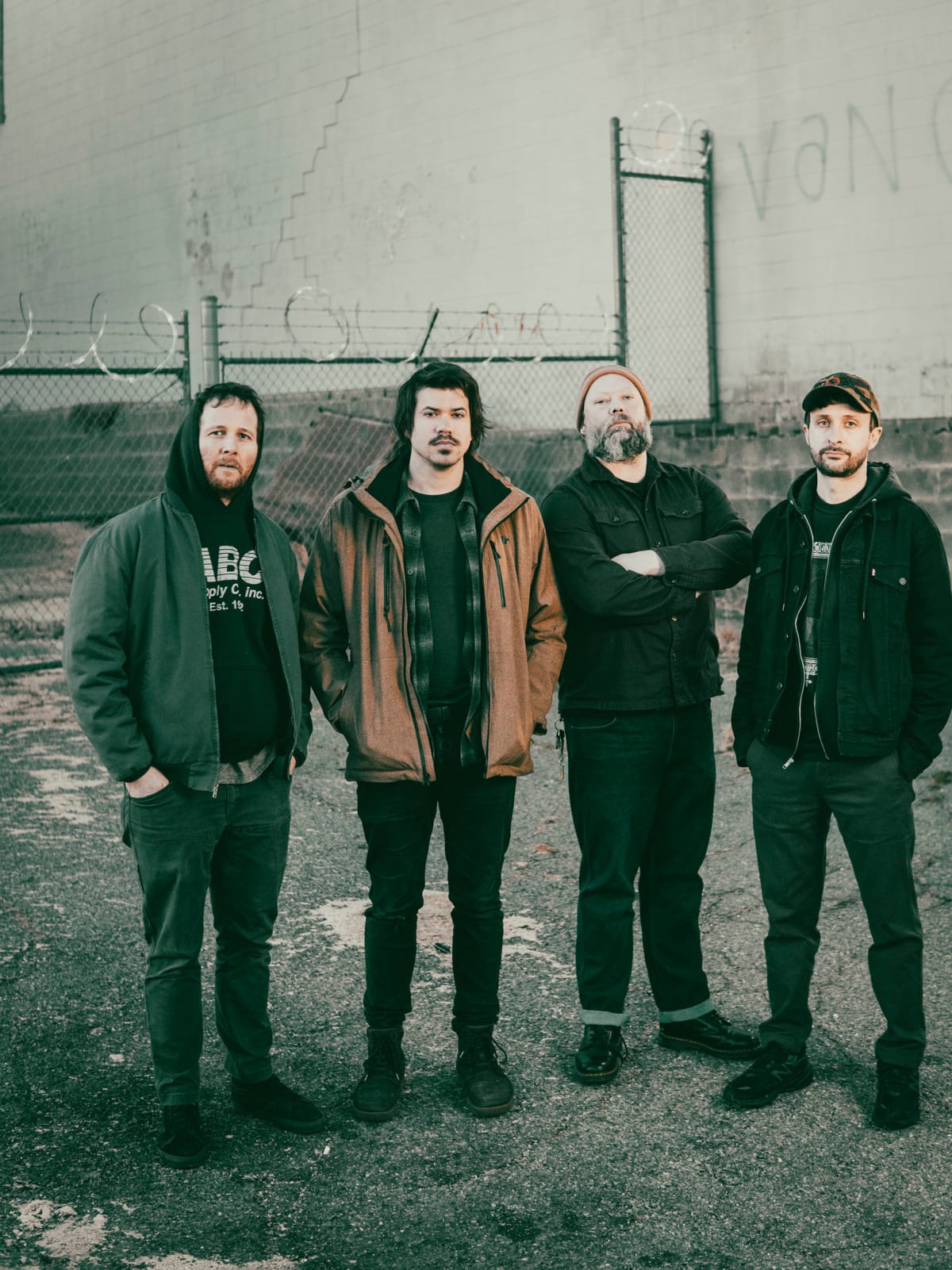
So they went looking for a singer, and spent several years scouring Richmond for one. “Everyone we tried was great,” Keith said. “I’d start a band with any of them if I had the time, but in the end, nobody was the perfect fit. It also didn’t help that there were no more seats in the minivan.”
They ended up using the four voices already in the room, which turned out to be the hard part. “I was worried about coming off disjointed,” Keith said. “It was a test of strength to find common ground between us. It took a mountain of edits and communication to get it right.” Nick slowly grew into the leading role. “The tonality of my vocals wasn’t something I struggled with. The real effort was in opening up enough to speak earnestly.” That earnestness is right on the surface: “I don’t like change, please don’t change on me” in the title track, “I can remember when you could remember” in “Memory”. After years of esoteric instrumental records, some of these lines hit you over the head on purpose.
The old band still leaks through everywhere. Clashing ideas run through the whole album, but this time they’re smuggled inside hooks instead of pointed at. “We put a lot of effort into creating multifaceted pop that didn’t present as complex,” Nathaniel said. “Even if there is ridiculous syncopation happening in the rhythm section, the other guys are smoothing it over to still keep that pop feel.”
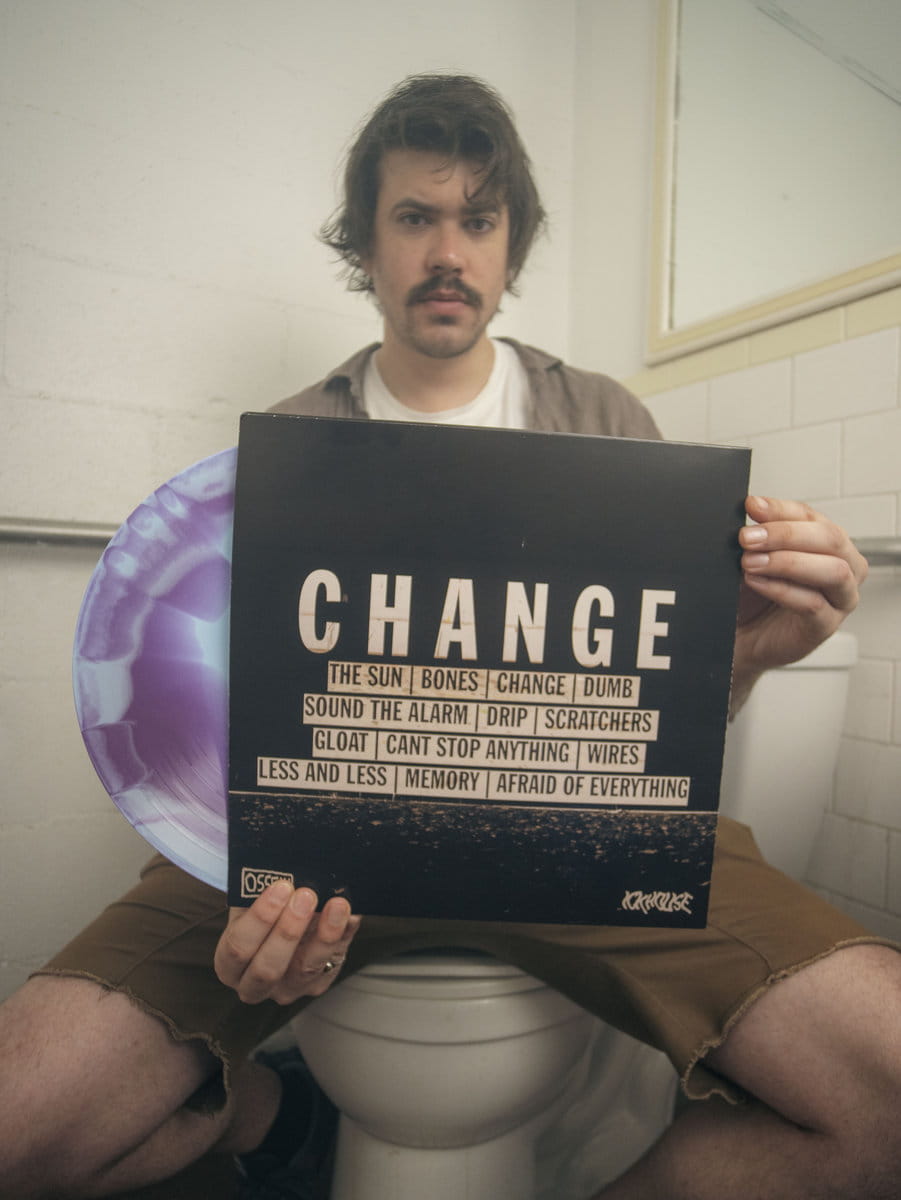
They recorded where they always do: Developing Nations in Baltimore, with Kevin Bernstein, the studio behind records by Full of Hell, Magrudergrind, Pianos Become the Teeth and Pig Destroyer. “Kevin brings a valuable level of healthy detachment from our own internal, chaotic writing process,” Tristan said.
“He’s solely focused on the final picture and knows exactly which tool each moment of capture calls for.” Mastering went to another regular, James Plotkin (Sunn O))), Isis, Pelican).
What got me first about this record is how dense the mood swings are. The atmosphere flips constantly, jovial into grim, tender into hostile, and the shifts come so thick that the album never settles into one temperature for long. The title track took me somewhere else entirely: the band’s oddities twist into a frantic, macabre-feeling dance that keeps brushing against black metal territory. There’s so much meat on this record that I can promise you won’t get bored. Underneath it all sits a quiet misanthropy: “Bones” is about work and death, “Change” about inertia and uniformity, “Drip” about indoctrination.
“This is an unusual album,” Keith said. “At the same time, it’s tangible and feels relatable. Lines get stuck in your head the same way a Top 40 pop song nails itself into your brain while pumping gas. You can’t help but hum the hooks whether you like it or not.”
The band walked us through the whole record, track by track.
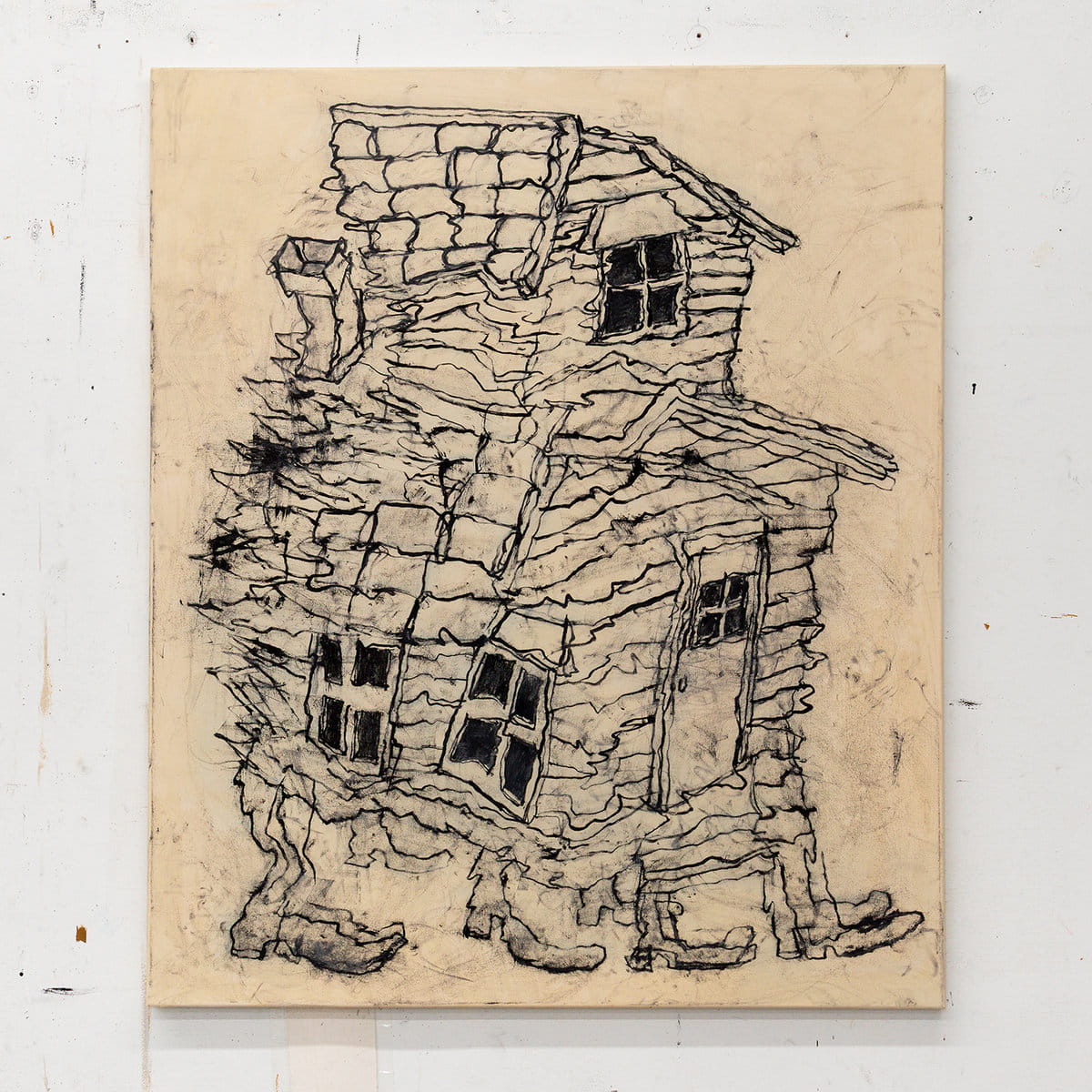
Nick set up the process first: For the most part we wrote these songs sequentially. We intuitively go from the ending of a song to the next. Part of that is the understanding that everything should have a juxtaposing counterpart. Jovial should be met with somber. Anger met with reflection. The ordering really came down to what will contrast the last thing we did.
The general writing process (until toward the end of writing when we finally understood our tonality) was bringing too many ideas to the table and shaving them down until they were their barest forms. There were tons of great ideas brought to the table but in the end we learned to only use what was necessary and had hit the hardest. This process of chopping great material was probably the hardest thing to grapple with as a band.
“The Sun”
The opener that took years, told by Tristan: The opening track of the album, “The Sun” is a funny story. We rewrote this song a thousand times in the years leading up to the release. Scrapping entire sections, frankenstein’ing the limbs back into some new, fleeting form before repeating the process in avid frustration.
It is fitting that we chopped the recorded song in half during mixing to honor its history of dissection. Despite this riddled path to completion, “The Sun” was the catalyst for this new direction of Dumb Waiter. The ambient, sweeping sax line erupting into hacking blast beats and vocal stabs felt like a fitting introduction to the new sound.
“Bones”
Road-tested on a short run to NYC, then rebuilt at home. Keith: We did a short run of shows to NYC testing vocal songs and this one was reconstructed upon arriving back home. The result was doing less. Nick, myself, and Nathaniel all have vocal sections. For my lyrics I aimed for imagery that was open for interpretation and not literal. Other songs are definitely very on the nose with the subject matter. Bass wise I’m not playing a ton of notes even during the blast beats. The focus was the texture of the notes and sitting in a good pocket of frequencies. Nathaniel’s lyrics at the end are pretty honest, I too have a few questions…
“Change”
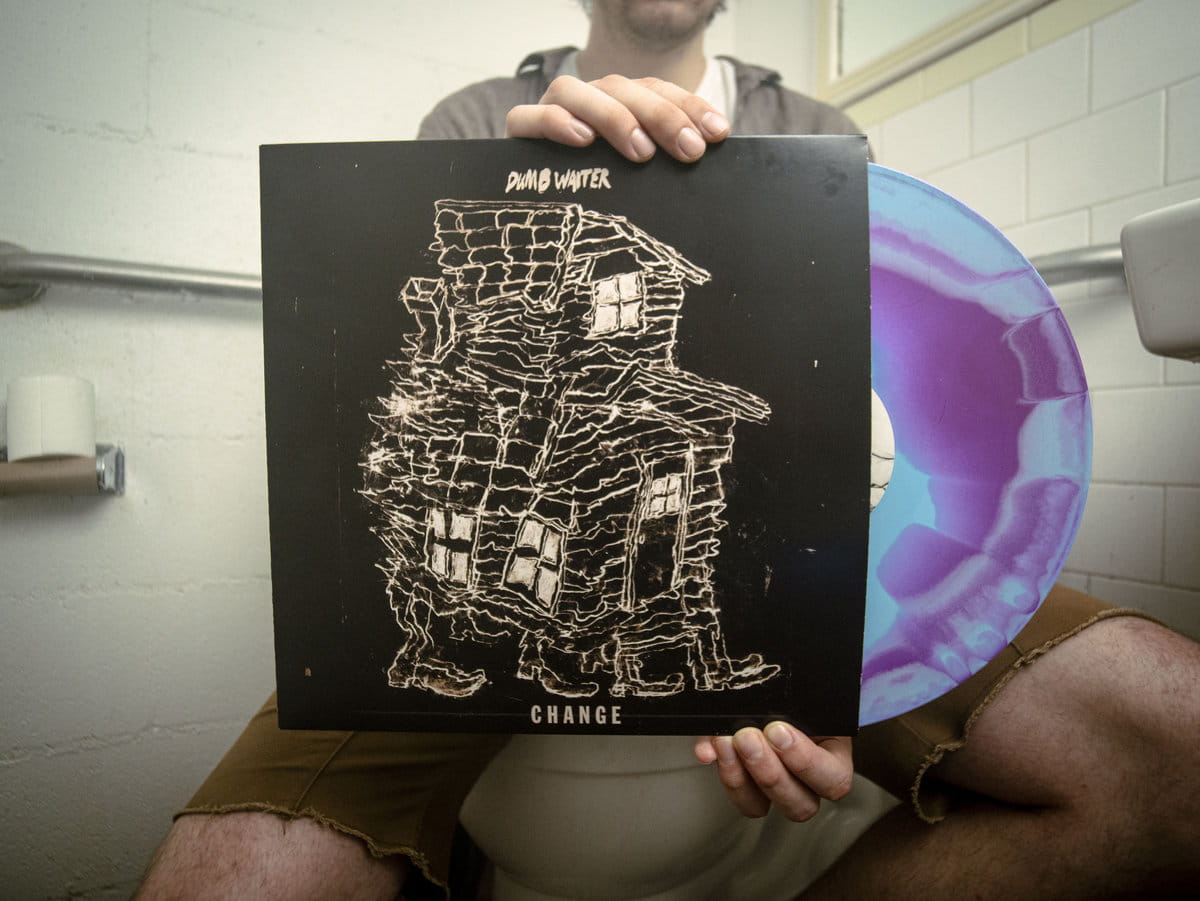
The title track, and the one that grabbed me hardest after the opener. Nick: I’ve gone through a ton of life changes and while they’ve been a mixed bag I think it’s important to lean into change. Everything has been so esoteric in the past that we’ve decided in some places to hit you over the head with direct lines.
This push toward vocals was pretty painful, a lot of fights and edits, but ultimately the change was healthy. This song has a few things wrapped in it but I think my waryness of conformity/unwillingness to change and my personal fears of growth are the main considerations.
“Dumb”
A song built from five random numbers on a dry erase board. Nathaniel: “Dumb” was an interesting piece of music to create. It began as almost a game, with each one of us suggesting a random number from 1 to 5. We took those 5 numbers and wrote them down on our dry erase white board. We were a little frustrated with the earlier stages of the writing process, so this felt fun and a little freeing. From that point, I took the numbers (2, 3, 1, 5, 3) and structured a syncopated rhythmic phrasing that could be interpreted as a 4/4 time signature. A two count rest between each set of pulses was needed to make the groove work. From there the guitar, sax, and vocals were able to create lines in 4/4 that fit over the extended phrase created by the rhythm section. The simplistic melodies on the guitar and sax grounded the pulses from the bass and drums to create a unique juxtaposition of complimentary polyrhythms.
Nick added where the words came from: My lines were specifically inspired by a news clip of Jared Kushner saying something like “If all those idiots would just be smarter and work harder they could be like me.”
“Sound the Alarm”
Tristan: “Sound the Alarm” was the band’s attempt at simplicity and short form. The repeating, forewarning lyrics of “Sound the alarm” and “Caught you yawning” clash with the chorus’ submissive declaration of a “I will fall in line.” The alarms fall silent, the yawns subside and all that is left is blind adherence.
“Drip”
The song where the whole album clicked. Nathaniel: One of the catalysts of the album was “Drip”. Assembling and tearing apart this song, time after time, practice after practice, really put into perspective what this album was going to be. “Drip” was one of the first few songs where the vocal ideas started to make sense. This was a proverbial light bulb moment for all of us. We realized we could use pop song structures, but with Dumb Waiter’s sonic aesthetic.
“Scratchers”
Nick keeps this one short: This song is about systems that exploit an already poor population. Scratchers can stand in for many damaging policies.
“Gloat”
A love letter to hometown heroes, from the whole band: “Gloat” is a direct homage to the legendary Richmond, VA grindcore/noisecore duo Suppression. This album has a lot of blast beats and fastcore influences, and everyone in the band is a huge Suppression fan, so we decided that it would be really fun to give a musical shout-out to our collective inspiration and good friends. Big love to Jason and Ryan!
“Can’t Stop Anything”
Nick: The aggressive and seemingly haphazardness of Gloat is juxtaposed by the rigidness and resignation of Can’t Stop Anything. It’s my ode to being stuck in cycles I don’t want to be stuck in.
“Wires”
Tristan’s longest entry, and the best image on the whole record: The calmer, melodic sections of the record all felt like territory for the saxophone and effects to paint. The side effect of this choice ensured that all of my vocal parts existed solely in the most intense, pounding, monolithic moments of the album. A fun assignment, but it felt a little restraining as far as the direction I could take the lyrics.
“Wires” is one of the most angular tracks on display and lives inside an almost psychotic syncopation. I went through a lot of iterations of the lyrics and vocal rhythms at the start before finding grounding in a visual metaphor that felt like it matched the intensity of the instrumental. An old man sits in a chair staring at a flickering tv, hearing unrest coming from outside, just behind him. “I can see the exit, I can hear the door.” He dares not look away from the screen to address the noise at his door. He can only ask the question to an empty room: “Who is it for? Who is it for?”
The track caves into an ethereal sax interlude that is uncomfortably patient in contrast to the earlier chaos before intersecting with a chant-like vocal and instrumental pattern on tragedy, perseverance, hope, and imminence.
“Less and Less”
Nick:
The line, “Blankness as a blanket, cover me up!” expresses a desire to remain in the comfort of ignorance rather than bear the responsibility of knowledge. Similarly, “Tuck me, never speak to me again” functions as a plea to be left uninformed. Less and Less explores both people’s inability and their unwillingness to stay informed.
“Memory”
Nick:
This song is about the terrifying moment of clarity that can occur when someone experiencing memory loss suddenly becomes aware of what they are losing. It’s like arriving at your own birthday party only to realize it’s actually Christmas Day.
“Afraid of Everything”
The closer, and the last song written. Keith:
Afraid of Everything was the last song written for the album and came together so fast it seemingly wrote itself. I think we had settled on twelve tracks but this one squeezed its way onto the album as the closing song. The passing of vocals back and forth between drummer, bassist, and guitar feels like a nod to Tribe Called Quest, at least for me. Minimal riffing on the bass, plenty of space, with nu-metal leanings. Korn’s first few albums influenced us children of the 90’s.
After 14 years, none of them really remembers life before the band, and they don’t seem to want to. “I’ll do this nonsense until I die,” Nick said. “Over the years as a band, we’ve gone through a lot together. Ailments. Work. Celebrations. Mourning. Partying. It’s all in there. I’m proud these songs carry so much of our identity. I don’t think we could have written this without the years we’ve had together.”

🔔 IDIOTEQ is ad-free, independent, and runs on one person’s time. If you want it to stay that way: DONATE via PayPal or SUPPORT via Patreon.
NEW: IDIOTEQ Explore 🗺️ Browse 15+ years of our archive by city, country, and style. Find artists on the world map or trace related sounds through the styles map.
Stay connected via Newsletter · Instagram · Facebook · X (Twitter) · Threads · Bluesky · Messenger · WhatsApp.