

Rawdon, Quebec, late 1980s. A quarry, a group of Montreal teenagers drinking warm beer and tearing up the empty cans, cliff jumping into the water below. One afternoon there were French girls swimming down there, and one of them had left a gold necklace out on a rock.
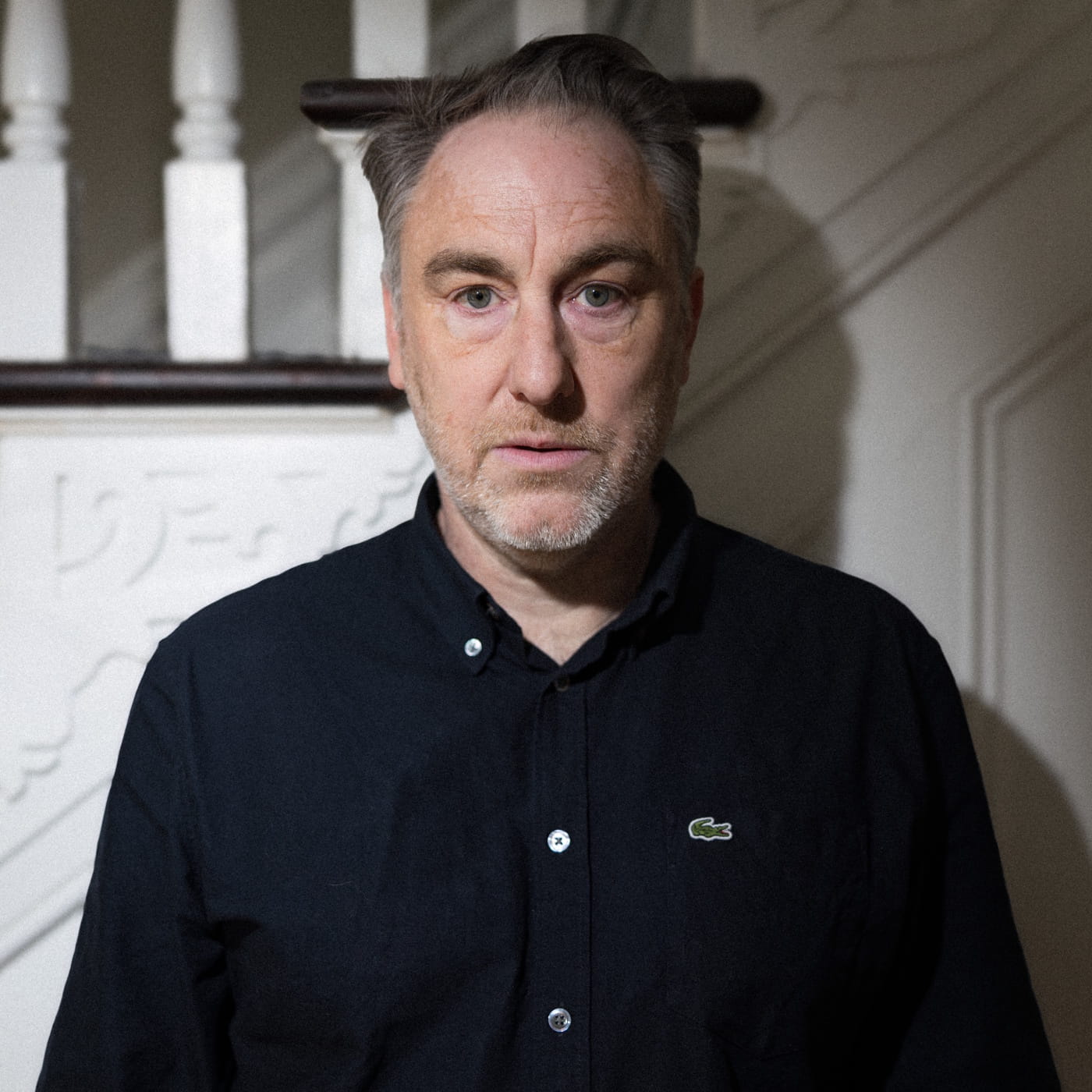
“It probably stayed with me because I was around 16, an impressionable age,” I.D. Brimacombe said.
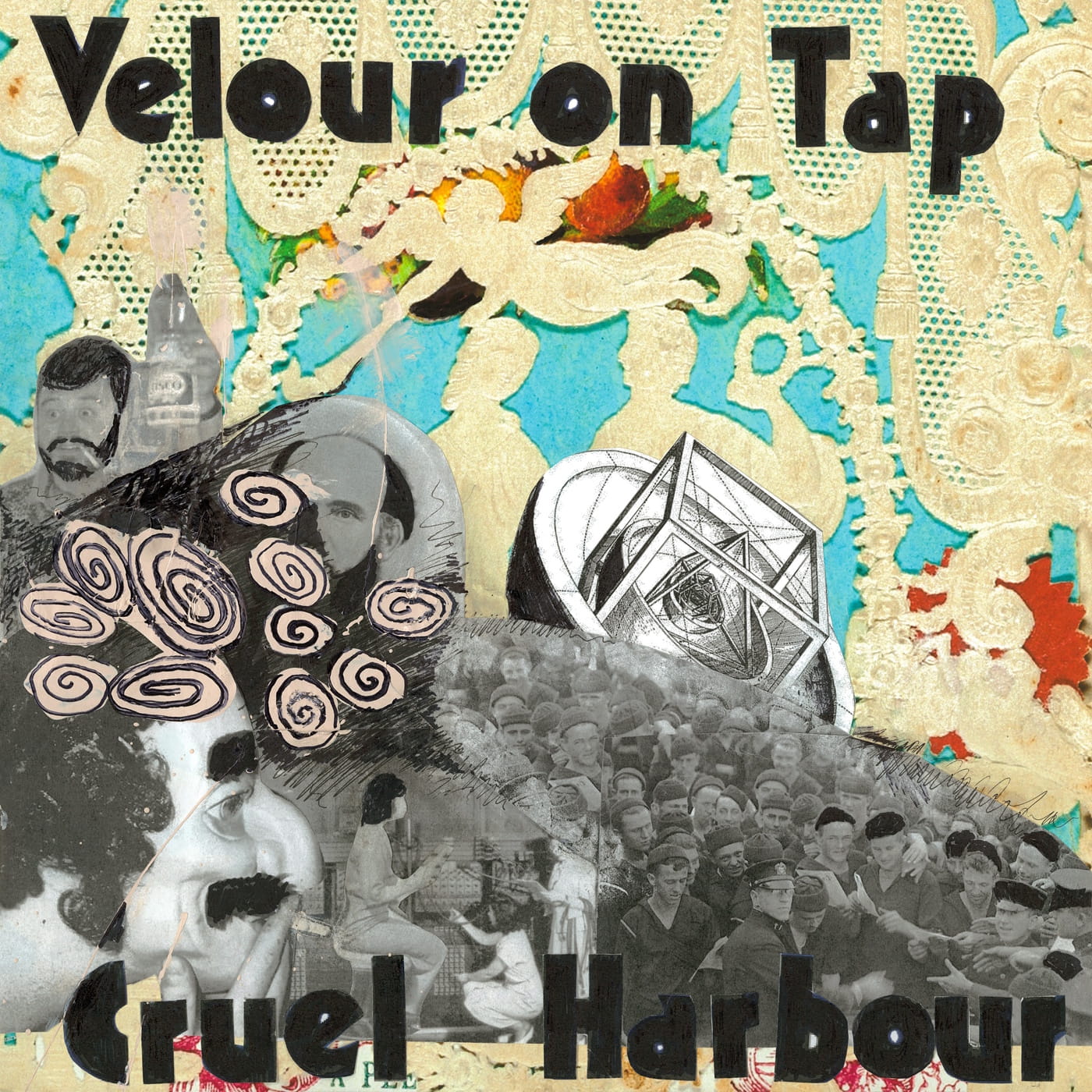
The necklace surfaced again nearly three decades later, on the Nova Scotia coast, in the last verse of a song. It sits at the end of “Hourglass Lake Ahead,” the opening track on “Cruel Harbour,” the debut EP from his Halifax project Velour On Tap, released on 22 May 2026. Gold necklaces left glistening out on the quarry rocks, no people anywhere in the frame.
“The total absence of people in the scene creates a moment of stillness that could be happening in 2026 or 1955,” I.D. said. “Gold doesn’t tarnish, and the quarry rocks won’t grow over them. They are two elements that will outlive the people who abandoned them there. The glistening is a ghost signal.”
He describes the EP as a Maritime Gothic psychogeography, which sounds like a lot until you hear what he means by it. He spent roughly 30 years in big cities, and cities, he reckons, flatten difference.
“With more recent gentrification, for all its faults, folks of different classes and backgrounds can sort of communicate through an international urban code of culture, money, and aspiration.” Nova Scotia does not run on that code.
“The contrasting worlds here, the sons of fishermen and drug dealers and working people and a handful of legacy families that have been running everything for decades, are not meeting in shared spaces or using a shared language. It’s been like this for generations.”
Asked how a recent arrival gets close enough to see that split, he was blunt about his own vantage point: he joined a country club, and he lives in a neighbourhood with a number of addicts and troubled people. “So I do have something of a window into some very different worlds that co-exist here and I am confident they seldom meet!”
His reference point for all this is the American Deep South rather than Toronto or Vancouver. Weary cynicism about elites, resignation born out of generational trauma, a troubled history with both race and class.
“So this was the world I immediately saw. It’s dark, it has layers of heavy history, and the deepest understandings are left completely unspoken.” None of which appears on the EP as commentary, and that is on purpose. “No, I do not get into social commentary, that would be a disaster! I guess I write from a feeling of something being off, and maybe that troubled history is just there in the background.”
The move that put him there was sudden. Twenty-three years on and off in London, neighbours who terrorised the household through lockdown, and by 2022 he was dreaming of leaving it all behind.
“They say London is a city for the young and the rich, and when you are neither, it’s time to move on.” He was reading Buddhist texts at the time and liked the idea of impermanence. He was also tracing Leonard Cohen and David Bowie through their geographical upheavals and wondering whether that kind of courage was simply part of the job. Cohen’s years in an LA monastery struck him hardest, a man who could have chosen anything choosing austerity. Nova Scotia, as it happens, has drawn Buddhist communities of its own, “in part because the terrain is so unforgiving.”

What he found there was harder than the plan. “My move to Nova Scotia was very difficult for a number of reasons. I was not prepared for the culture shock or the immediate impact of losing my entire network in London. It also tragically coincided with a serious illness in my family and losing my dad.”
That is also the point where the songwriting changed. “Until recently, I’ve considered myself a songwriter looking for something to say. My songs weren’t bad, but they came from a place of intellect and considered taste. This was entirely different.” He grew up in Canada, but he was now looking at it from angles he had never had access to, in a place he calls singular and evocative and full of cliches ripe for subverting. The songs came fast. He says he has enough for a few albums.
There is a long run-up behind this. Thirty years of playing, writing and recording: Montreal in the late 90s with Jack Rustle, part of a scene that also produced Pest 5000, Bran Van 3000, The Dears and Mishima. A year in Lisbon. London, and various projects including The Stir alongside Becky Jacobs, who went on to join Tunng. A year out in Chicago finishing a trilogy of indie-folk albums and an EP under the name Ian Pryde, recorded with musicians in the South Loop. Then back to London, playing again with Jason Breckenridge, an engineer and musician friend from Montreal, and through the 2010s writing and recording as part of the collective Mira Pardelha.
The sound of “Cruel Harbour” reaches back further still, and to the same ground he is standing on. He went to university in Halifax in 1994, when the city had, by his account, the best underground scene in Canada: Sloan, Jale, Hardship Post, and up the road in Moncton, Eric’s Trip and the side projects of Julie Doiron and Rick White.
Coming back made him want to pay respect to that melodic-dissonant Maritime indie rock sound as directly as he could. “It provided the perfect sonic chassis for these dark stories,” he said, and he was not shy about the referencing being intentional.
The production follows from that, with one useful qualification. “I actually wanted the production to sound good! I didn’t want it to sound too good though. I wanted it to have the spirit of DIY.” The 90s Halifax and Moncton records were lo-fi, the Moncton ones especially, so this one went to tape with some analog effects. Every guitar went through a Vox AC10 with the treble pushed hard, so the melodies would cut, which is where whatever harshness there is comes from.
It is why the EP lands close to Belle and Sebastian and Blur without sharing the weather of either, gloomier and further out on the alternative side, fitting the view through a window on a bad day the way very little writing about the North Atlantic manages to. The guitars are jangly, melodic and precise, warm on first contact and colder the longer you sit with them. If you want coordinates beyond the Halifax and Moncton records he grew up on, plus the lo-fi indie he loved as a teenager in Guided by Voices, there is the flat conversational delivery of a band like Lewsberg, and the hazy, place-fixated writing of The Clientele. The Weakerthans belong in there too, though that lineage runs through the lyric sheet more than the amps. Four songs, and they play as half-remembered scenes you drift through rather than a story you follow.
Wyświetl ten post na Instagramie
Most of the arrangements were finished before anyone else walked in. He charted all the parts and the band ran a single rehearsal before tracking. Shawn Cole, formerly of Little Mountain Sound in Vancouver, engineered the original demos, which stayed in as the structural base tracks, and put him in touch with the Dartmouth crew.
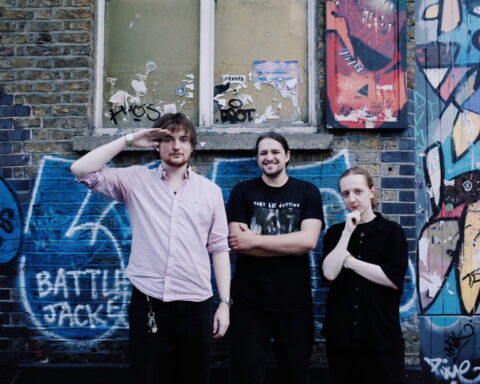
Matt Steele plays electric guitar, Devin Fox plays bass and lap steel, Spencer McPhee plays drums, and Emilie-Rose sings, all of them working locally in Halifax with bands including Sundae Girl and Tayler Jade. Devin and Matt mixed the EP in Dartmouth over a few days of a freezing Halifax winter, an easy session by his telling. Art is by Ella Brimacombe, photography by Dan Jardine and Nic Lehoux.
Mastering was the one thing he was set on from the beginning. He had loved what Greg Obis did with MJ Lenderman’s “Manning Fireworks,” and Chicago Mastering Services carries its own history, formerly run by Shellac’s Bob Weston before he relocated to Portugal. I.D. contacted Greg directly and he took the EP on.
Wyświetl ten post na Instagramie
For lineage, he puts three Canadian names on the table and then tells you exactly where he steps off each of them. Cohen “treats narrative like a secular scripture,” high-stakes relationships and cosmic spiritual debts filtered through metered grace, fragments that “always sound like a flawlessly preserved prayer book, even when he’s describing a betrayal.”
Cruel Harbour goes looking for the same sacred moments and refuses the fabric. “They are beautiful, but they are also brittle, cheap, and harsh.” John K. Samson gets described as the king of the selective jump cut, the writer who can make a library card or a specific intersection carry an entire isolation. I.D. takes the technique and drops the warmth: “I’m refusing his urban, cozy empathy. My landscape is cold, vast, industrial, and inherently hostile.” Dan Bejar he calls a massive influence and a true poet who works nothing like him, using fragmentation as a defensive shield. “When my narratives fracture, it’s because the characters are in a genuine panic.”
The name that actually explains the EP is the fourth one. David Berman is a constant, decades deep, and he still reads regularly from “Actual Air.” “When my songs run into the dangers of self-pity I reach for his sense of humour.” That is the mechanism behind the swerve in “Sand in the Hardest Shell,” a song about a couple holding together under some heavy, unnamed strain, told through fragments of 90s memory. The line was originally going to be “Godzilla and King Kong,” suggested by his writer friend Mark Paterson, who edits lyrics with him and is credited on the EP as Old Hat. I.D. rejected it because the nostalgia in the song is not childhood nostalgia. It is the start of a relationship, when everything still looks perfect. So the line became “Bridezilla and King Kong,” absurd enough to read as an inside joke between two people and pointed enough to give away where they are heading. “There may have been a bit of David Berman in that lyric.”
The shell in that title works the same way. Rigid, cold, coastal, built for defence, and then the sand gets in anyway. “It represents the tiny, gritty memory or realization that you can’t protect yourself from, no matter how thick your armour is.”
Each of the four tracks turns on an object like that. “Hourglass Lake Ahead” is the door into the world, an imagined wilderness full of characters from tight, protective communities, trying to make sense of a place he does not belong to.
The chorus is doing two jobs at once, honouring what tradition builds and marking where it stops a culture moving. The hourglass is a lake and also a description of repetition that keeps people where they are. Any risk of the song looking down on anyone is meant to collapse in the final verse, which stops on the indifferent beauty of the place itself. The tired mothers glazing by the lake, he admits, were probably lifted from a poolside scene at the country club. Everyone else in the song is invented. And though it is set in Nova Scotia, the wilderness he is picturing is Quebec, still the Rawdon of his teens.
“Gas Station Map” is a noir road movie on Nova Scotia highways where the crime never quite comes into focus. What does come into focus is a relationship collapsing over faulty navigation, which anyone who has argued in a moving car can fill in for themselves. The paper map is the object doing the leaking. “A map is supposed to offer salvation, truth, and certainty. But a physical paper map serving as a beacon for a tormented relationship at a dying roadside station becomes an artifact of a world that doesn’t exist anymore.”
“Eagles Have Angles” closes the EP and came out of a real afternoon. A friend has a house in Wolfville, near the Minas Basin where it joins the Bay of Fundy, with a view of the water and a small mountain. They watched eagles through binoculars from the back porch. At the same time I.D. was turning over the fact that the original French settlers built tidal dykes in the 1600s and farmed that coastline into submission. “I reasoned that if they could do that in the dead of winter, I could deal with whatever shit I was dealing with.” The song puts field guides and coffee on the porch mats, a quiet domestic setup for a man trying to watch his own fear from somewhere comfortable, and then lets the outside in. “The eagles aren’t postcards, they represent a predatory geometry. The field guides and coffee are a fragile human attempt to classify and contain a coastal landscape that is inherently wild and ancient, and uniquely Maritime.”
None of it, he insists, is really about Atlantic Canada. “They are about relationships. But I don’t think they could have been written anywhere else.”
Four tracks, a little over eleven minutes, and it leaves you short. Which is a problem he says he has already solved: “I’ve got enough material now for a few albums.”
🔔 IDIOTEQ is ad-free, independent, and runs on one person’s time. If you want it to stay that way: DONATE via PayPal or SUPPORT via Patreon.
NEW: IDIOTEQ Explore 🗺️ Browse 15+ years of our archive by city, country, and style. Find artists on the world map or trace related sounds through the styles map.
Stay connected via Newsletter · Instagram · Facebook · X (Twitter) · Threads · Bluesky · Messenger · WhatsApp.