


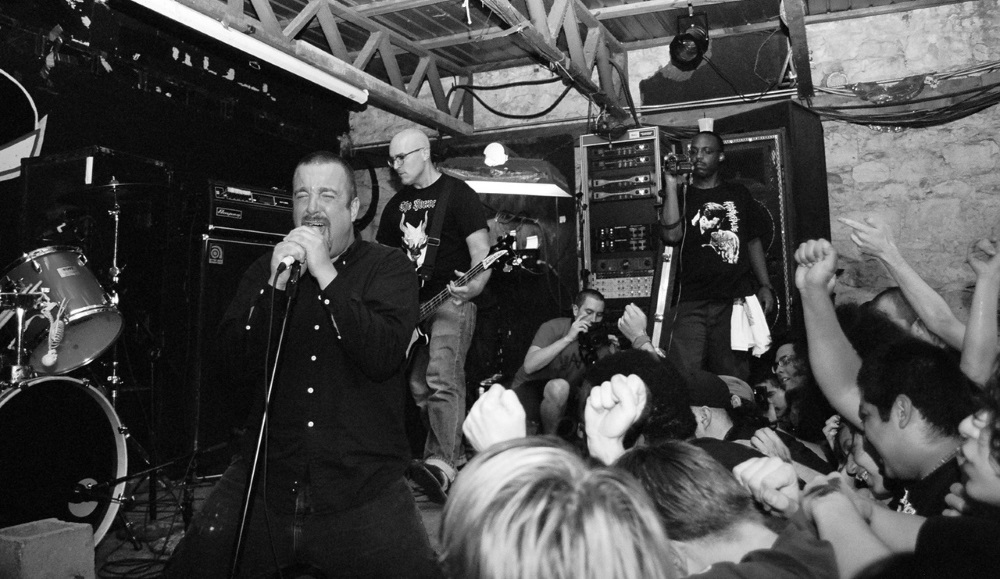
Every few months, another headline declares DIY touring dead. Gas prices, streaming, inflation — pick your villain. But talk to anyone actually booking basement shows and VFW halls right now, and a different picture emerges: bands are adapting, routing smarter, and in some regions, touring more than ever.
The narrative of collapse ignores how resourceful this scene has always been. Hardcore and punk bands didn’t build their networks on major-label budgets. They built them on shared vans, borrowed gear, and a willingness to play anywhere that would have them. That instinct hasn’t gone away — it’s just evolving.
This piece looks at how bands are restructuring their income, why the “dying scene” story misses key data, and why Texas of all places is becoming a proof point for regional touring’s staying power.
How Bands Are Diversifying Tour Income Streams
Fewer bands are relying purely on door money and merch tables anymore. Bundled runs with local promoters, split bills that share travel costs, and tighter regional loops instead of coast-to-coast slogs have become the norm. Bands are treating touring less like a single long grind and more like a series of connected regional pushes, which cuts fuel costs and keeps crowds consistent through scene overlap.
This kind of routing depends heavily on understanding the local economies bands pass through — which cities have disposable income, active nightlife, and venues willing to take a chance on an out-of-town bill. Entertainment options in fast-growing states are expanding fast. Live music venues have multiplied across Dallas, Austin and San Antonio as the state’s population has grown. Independent record stores and merch shops have followed the same consumer spending surge. Online gambling platforms have expanded alongside — recommended online casinos in Texas with flexible registration and a broad game selection reflect how far the local and global economies have matured. That local spending capacity matters when a band is deciding whether a stop in a mid-size Texas city is worth the drive.
The Myth of the Dying DIY Circuit
The mainstream press narrative isn’t baseless — it’s just incomplete. A 2026 feature in Rolling Stone described touring as increasingly unaffordable for indie acts, pointing to cancellations tied to what it called hostile economic conditions, and framed the entire independent touring business as broken for indie acts. That’s real pressure, and no one in this scene would deny rising costs.
But cost pressure and collapse aren’t the same thing. Independent venues generated more than $153.1 billion in total economic impact across the U.S. last year, according to a nationwide venue impact study. That’s not the profile of a dying ecosystem — it’s one under strain but still enormous, still functioning, and still worth building a touring strategy around.
Texas Hardcore Scene’s Unexpected Touring Boom
Texas keeps surfacing as proof that regional density beats scattered national runs. Austin’s Red River Cultural District alone generated more than $2.3 billion in economic impact over the past five years, a figure that reflects just how deep the state’s live-music infrastructure runs, well beyond any single festival or genre.
Dallas, Austin, and San Antonio have become active nodes for punk and hardcore shows, letting bands build tight loops instead of isolated one-off dates. Scene coverage has documented this shift directly, describing how Texas punk history has always leaned on community-first networks rather than national label support — the exact model bands are now leaning back into.
What This Growth Means for Underground Music
None of this means touring got easier. It means bands stopped waiting for the old model to fix itself and started building something more sustainable instead. Denser regional routing, shared bills, and community-driven booking are proving more durable than the long, expensive national runs that defined an earlier era of touring.
The underground isn’t shrinking — it’s reorganizing around smarter geography and stronger local scenes. If Texas is any indication, that reorganization is working, and it’s giving hardcore bands a real path forward that doesn’t depend on streaming numbers or major-label backing to survive.